
The Impact of Colonialism on Hindu Philosophical Thought


Welcome to Ancient India History, where we embark on a journey through the rich tapestry of ancient Indian civilizations. From the ingenuity of the Indus Valley to the grandeur of the Gupta Empire, we delve into the diverse history, culture, and profound contributions that have shaped today's world. In our featured article, "The Impact of Colonialism on Hindu Philosophical Thought," we explore how colonial influences have transformed Hindu philosophy and redefined its essence.
Prepare to uncover the intricate connections between past and present, as we invite you to dive deeper into this fascinating topic that promises to challenge your understanding and ignite your curiosity. Let's begin this exploration together!

Introduction to Colonialism and Hindu Philosophy
The intersection of colonialism and Hindu philosophy represents a pivotal chapter in the broader narrative of ancient Indian history. This relationship profoundly influenced the evolution of Hindu thought and shaped the philosophical discourse that emerged in the wake of colonial encounters. Understanding this impact offers valuable insights into how external forces transformed indigenous traditions, leading to a complex tapestry of beliefs and practices that continue to resonate today.
In this exploration, we will dissect the term colonialism, examine the foundations of Hindu philosophical thought, and articulate the significance of this study in understanding the broader implications of colonial influence on Indian spirituality and culture.
Definition of Colonialism
Colonialism is broadly defined as the practice of acquiring partial or full control over another country, often by establishing settlements and exploiting resources. This domination typically entails the subjugation of local populations, the imposition of foreign governance, and cultural hegemony. In the context of India, colonialism primarily refers to British rule, which began in the 18th century and lasted until the mid-20th century. The British colonial enterprise significantly disrupted traditional socio-political structures and introduced Western ideologies that challenged indigenous worldviews.
Overview of Hindu Philosophical Thought
Hindu philosophy is a rich and diverse intellectual tradition that encompasses a wide range of schools, beliefs, and practices. It includes six primary darshanas (philosophical systems) — Nyaya, Vaisheshika, Samkhya, Yoga, Mimamsa, and Vedanta — each offering unique perspectives on metaphysics, epistemology, ethics, and spirituality. Central to Hindu thought are concepts such as dharma (duty/righteousness), karma (action and its consequences), and moksha (liberation from the cycle of rebirth). Throughout history, these philosophies have evolved, responding to various cultural and societal changes.
Importance of the Study
Studying the impact of colonialism on Hindu philosophical thought is crucial for several reasons:
- Cultural Preservation: The colonial era brought about significant changes that threatened the continuity of traditional practices and philosophies. Understanding these shifts helps in preserving the essence of Hindu thought.
- Philosophical Evolution: The dialogue between colonial influences and indigenous philosophies led to the emergence of new ideas and reinterpretations, enriching Hindu philosophy.
- Contemporary Relevance: Insights gained from this study can inform current discussions on identity, spirituality, and the ongoing interplay between tradition and modernity in India.
Historical Context of Colonialism in India
Arrival of Colonial Powers in India
The arrival of colonial powers in India began with the Portuguese in the late 15th century, followed by the Dutch and the British in the early 17th century. The British East India Company established its dominance through trade and military conquests, culminating in the formal colonization of India after the Sepoy Mutiny in 1857, which marked a significant turning point in British rule.
Initial Interactions with Hindu Philosophical Traditions
The initial interactions between colonial powers and Hindu philosophical traditions were marked by curiosity and misunderstanding. British colonial administrators and missionaries often viewed Hindu thought through a Western lens, interpreting it in ways that aligned with their own cultural paradigms. This led to a complex relationship where traditional beliefs were both challenged and sometimes appropriated to serve colonial narratives.
Key Historical Events Influencing Hindu Philosophy
Several key historical events significantly influenced Hindu philosophy during the colonial period:
- The Bengal Renaissance: This cultural movement in the 19th century saw a revival of interest in Hindu philosophy, catalyzed partly by colonial education systems and the introduction of Western philosophical ideas.
- Reform Movements: Leaders like Raja Ram Mohan Roy and Swami Vivekananda sought to reconcile Hindu traditions with modern values, advocating for a reinterpretation of philosophical concepts in light of colonial critique.
- The Freedom Struggle: The struggle for independence fostered a resurgence of pride in indigenous philosophies, as thinkers drew from Hindu thought to inspire a collective national identity against colonial oppression.
By examining these elements, we can uncover the profound transformation of Hindu philosophical thought under colonialism, revealing a dynamic interplay of adaptation, resistance, and evolution.
Changes in Hindu Philosophical Thought Due to Colonialism
Colonialism brought profound changes to the landscape of Hindu philosophical thought. The encounter with Western ideas and the subsequent socio-political changes reshaped traditional beliefs and practices. This transformation was not merely a rejection of ancient philosophies but rather a complex interaction that led to the evolution of new philosophical frameworks.
The impact of colonialism can be observed in various dimensions, including the introduction of Western philosophical concepts, shifts in religious practices, and alterations in the interpretation of traditional texts. These changes prompted Hindus to re-evaluate their cultural identity, leading to a renaissance in Hindu philosophy that sought to synthesize indigenous traditions with foreign influences.
Introduction of Western Philosophical Concepts
The arrival of colonial powers in India ushered in exposure to Western philosophical traditions, prominently featuring Enlightenment thought, empiricism, and rationalism. These concepts often contrasted sharply with traditional Hindu beliefs, which emphasized spiritual experience and revelation over empirical observation.
Prominent Western thinkers like John Stuart Mill, Immanuel Kant, and Friedrich Nietzsche introduced ideas that encouraged critical thinking and individualism. This exposure prompted Hindu philosophers to engage with these concepts, leading to a re-examination of ideas such as dharma (duty), moksha (liberation), and the nature of reality. Thinkers like Swami Vivekananda and Rabindranath Tagore began to incorporate these Western ideas, advocating for a modern reinterpretation of Hindu philosophy that emphasized both spiritual and rational aspects.
Shifts in Religious Practices and Beliefs
Colonial rule also precipitated significant shifts in religious practices and beliefs among Hindus. The imposition of Western education systems and legal reforms led to a questioning of traditional rituals and practices that were seen as superstitious or outdated.
With the rise of social reform movements, many Hindus sought to align their beliefs with contemporary values such as equality and rationality. Movements led by figures like Raja Ram Mohan Roy aimed to eliminate practices considered regressive, such as sati (the practice of widow immolation), and to promote a more rational approach to spirituality. This shift also encouraged a focus on ethical living and social responsibility, leading to a reformation of core Hindu beliefs.
Impact on Traditional Hindu Texts and Interpretations
The colonial period saw a renewed interest in the study and interpretation of traditional Hindu texts, such as the Vedas, Upanishads, and Puranas. Scholars began to analyze these texts through a critical lens, often drawing comparisons with Western literature and philosophy.
This scholarly engagement led to various reinterpretations of ancient texts, emphasizing their relevance to contemporary philosophical and ethical issues. For instance, scholars like Max Müller and Arthur Avalon translated key texts into English, making them accessible to a broader audience and influencing both Indian and Western thought. However, this also raised concerns about the potential misinterpretation or oversimplification of complex philosophical ideas, leading to debates about authenticity and representation in Hindu philosophy.
Key Figures in Hindu Philosophy During Colonialism
Colonialism not only impacted the overall philosophical landscape but also brought forth a new generation of thinkers who played crucial roles in shaping Hindu thought during this period. These philosophers and reformers navigated the challenges posed by colonialism while striving to maintain the essence of Hindu philosophy.
Notable Philosophers and Thinkers
Several key figures emerged during the colonial period, each contributing uniquely to the evolution of Hindu philosophy. Swami Vivekananda became a prominent voice for Hindu thought, advocating for a synthesis of Western rationalism and Eastern spirituality. His speeches at the Parliament of the World's Religions in 1893 highlighted the universality of religious experience and aimed to present Hinduism as a rational and modern faith.
Another influential figure, Mahatma Gandhi, incorporated philosophical principles from both Hinduism and Western thought, emphasizing non-violence and truth. His approach to social reform and political activism was deeply rooted in his interpretation of Hindu philosophy, demonstrating its adaptability in the face of colonial oppression.
Contributions of Reform Movements
The period of colonialism also saw the rise of various reform movements that sought to revitalize Hindu philosophy in response to Western influences. The Brahmo Samaj, founded by Raja Ram Mohan Roy, aimed to reformulate Hindu practices and beliefs by emphasizing monotheism and rationality. Similarly, the Arya Samaj, founded by Swami Dayananda Saraswati, sought to return to the original teachings of the Vedas while rejecting idolatry and superstition.
These movements not only challenged existing orthodoxy but also encouraged a more inclusive and progressive interpretation of Hindu philosophy. They inspired a generation of thinkers and reformers to engage critically with both tradition and modernity, promoting a vision of Hinduism that was dynamic and relevant to contemporary society.
Influence of Colonial Education on Hindu Scholars
The introduction of Western-style education during the colonial era significantly influenced Hindu scholars and intellectuals. The establishment of universities and colleges exposed Indian students to Western philosophical ideas and methodologies, fostering a new intellectual environment.
Many scholars, such as Sri Aurobindo and Rabindranath Tagore, synthesized Western philosophical concepts with traditional Hindu thought, leading to innovative interpretations and a broader engagement with global philosophical discourses. This educational transformation also encouraged critical thinking and debate, allowing Hindu philosophers to articulate their views in a context that resonated with both Indian and Western audiences.
The impact of colonialism on Hindu philosophical thought was multifaceted, leading to both challenges and opportunities for rethinking and redefining Hindu identity and philosophy. The interactions between Western and Indian thought during this period laid the groundwork for a vibrant and evolving philosophical tradition that continues to shape contemporary Hinduism.
The Role of Colonialism in the Evolution of Hindu Identity
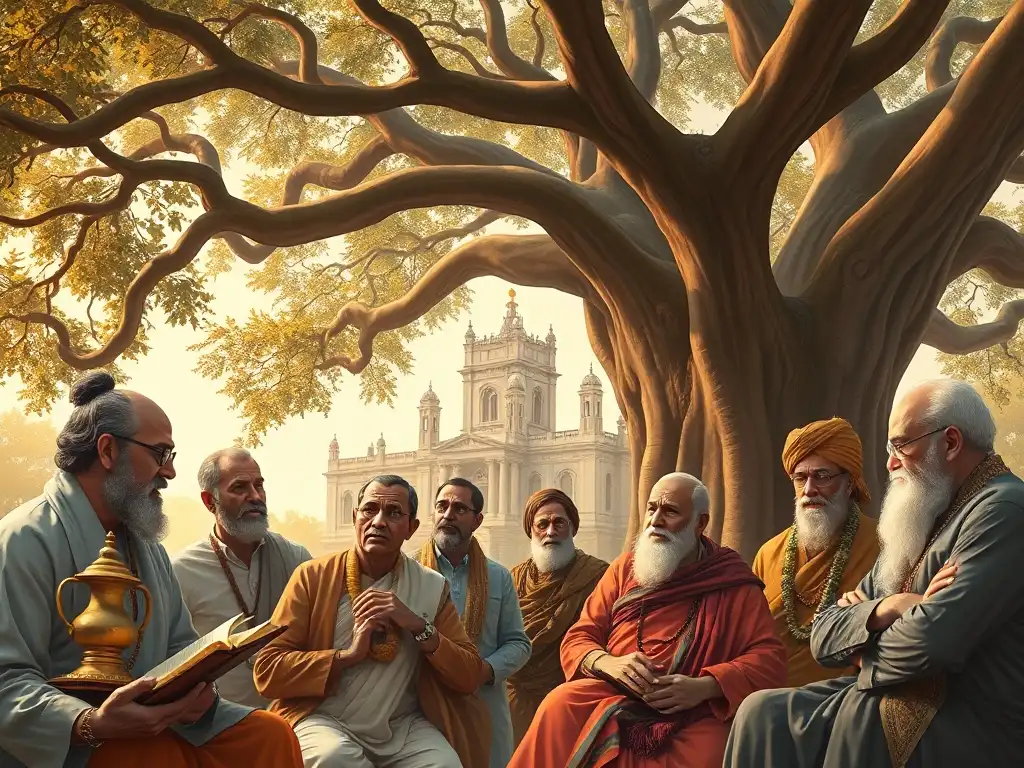
Colonialism had a profound impact on the evolution of Hindu identity, significantly altering how Hindus perceived themselves and their traditions. As British colonial rule expanded in India during the 18th and 19th centuries, it brought about not just political and economic changes but also cultural and ideological shifts. The encounter with Western thought and philosophy forced Hindu intellectuals and leaders to reevaluate their traditions, beliefs, and practices.
The introduction of Western education and the English language led to the rise of a new class of Indian thinkers who began to articulate a modern Hindu identity. They sought to reconcile traditional Hindu values with the contemporary ideals of rationality, scientific thinking, and human rights. This dialogue often positioned Hinduism in contrast to Western norms, leading to a dual identity where modernity and tradition coexisted.
Furthermore, colonial narratives often portrayed Hinduism as primitive and superstitious, prompting Hindu reformers to respond by emphasizing the rational and philosophical aspects of their faith. This led to movements aimed at revitalizing Hindu identity, such as the Brahmo Samaj and the Arya Samaj, both of which sought to purify Hindu practices and align them with modern values.
Transformation of Hindu Identity in Response to Colonial Rule
The transformation of Hindu identity during colonial rule was marked by a complex interplay of resistance and adaptation. Hindu leaders recognized the need to assert their cultural heritage in the face of colonial criticism, leading to a resurgence of interest in ancient texts, rituals, and philosophies. This movement was not merely about preserving traditions but also about redefining what it meant to be a Hindu in a rapidly changing world.
The introduction of the concept of 'Hinduism' as a singular religion was largely a colonial construct, which unified various sects and practices under one umbrella. This was a significant departure from the more pluralistic and diverse understanding of Hindu practices prior to colonization. The efforts to create a cohesive Hindu identity also involved the reinterpretation of scriptures to emphasize themes of unity and resistance against colonial oppression.
As a result, Hindu identity became increasingly politicized, with figures like Swami Vivekananda advocating for a revival of Hindu pride and the assertion of India's cultural uniqueness. This transformation laid the groundwork for future movements, including the struggle for independence, where Hindu identity played a central role in mobilizing the masses against colonial rule.
Impact of Colonialism on Hindu Social Structures
Colonialism significantly altered the social structures within Hindu society, leading to both fragmentation and reorganization. Traditional caste hierarchies were scrutinized and challenged during the colonial period, as British officials implemented policies that inadvertently undermined these age-old structures.
For instance, the British codification of laws related to marriage, inheritance, and property disrupted the fluidity of caste practices, leading to a more rigid and defined caste system. Additionally, the introduction of Western education created new social dynamics, enabling lower castes to access education and employment opportunities, which had traditionally been denied to them. This shift contributed to social movements aimed at reforming caste relations and advocating for equality, such as the efforts led by figures like B.R. Ambedkar.
Moreover, the colonial period saw the rise of social reform movements that sought to eliminate social injustices within Hindu society, such as child marriage and the treatment of widows. These movements, often led by reformist intellectuals, aimed at creating a more equitable society while simultaneously reaffirming Hindu cultural identity in opposition to colonial narratives.
Reinterpretation of Hindu Philosophy in the Modern Era
The reinterpretation of Hindu philosophy in the modern era was catalyzed by the challenges posed by colonialism. Engaging with Western philosophical traditions led Hindu thinkers to explore new interpretations of dharma, karma, and moksha, integrating contemporary ideas with ancient wisdom.
Prominent figures like Sri Aurobindo and Mahatma Gandhi played pivotal roles in this reinterpretation. Aurobindo synthesized Western thought with Vedantic principles, promoting a vision of spiritual evolution that was both modern and rooted in Indian philosophy. Gandhi, on the other hand, emphasized the ethical dimensions of Hindu philosophy, advocating for non-violence and truth as fundamental tenets derived from ancient texts.
This era also saw the rise of Hindu nationalism, which sought to reframe Hindu philosophy as a guiding force for social and political action. The reinterpretation of texts such as the Bhagavad Gita became instrumental in articulating a philosophy of resistance against colonial oppression and an inspiration for the independence movement.
Comparative Analysis of Pre-Colonial and Colonial Hindu Philosophy
Key Differences in Philosophical Thought
Pre-colonial Hindu philosophy was characterized by a diverse and pluralistic approach, encompassing various schools of thought such as Vedanta, Samkhya, and Nyaya. These schools often engaged in dialogues with local traditions and other religious philosophies, leading to a rich tapestry of ideas.
In contrast, colonial Hindu philosophy faced a significant external challenge, leading to a more defensive posture. The colonial encounter forced Hindu thinkers to clarify and sometimes reformulate their ideas in response to Western critiques. This often resulted in a more homogenized understanding of Hindu philosophy, where certain aspects, like spiritual practices, were emphasized over others, such as ritualistic elements, to present a more coherent and rational image.
Moreover, colonialism introduced an element of political urgency to philosophical discourse, prompting thinkers to align their ideas with the national struggle for independence. This shift towards activism marked a departure from the more contemplative and metaphysical focus of pre-colonial philosophy.
Similarities Despite Colonial Influence
Despite the profound changes brought about by colonialism, certain core aspects of Hindu philosophical thought remained intact. The emphasis on concepts such as dharma (duty), karma (action), and moksha (liberation) continued to resonate through both pre-colonial and colonial contexts.
Many colonial-era thinkers sought to reinterpret these concepts in light of modern challenges, indicating a continuity of thought despite the external pressures. For example, while the context changed, the pursuit of spiritual knowledge and ethical living remained central to Hindu philosophy.
Additionally, the enduring legacy of ancient texts and commentaries allowed for a dialogue between traditional and modern interpretations. This continuity ensured that, while the philosophy evolved, its foundational principles continued to guide discussions on ethics, morality, and the nature of existence.
Lasting Effects on Contemporary Hindu Philosophy
The effects of colonialism on Hindu philosophy are still evident in contemporary thought. Modern Hindu philosophers often grapple with the legacies of colonialism, seeking to reconcile traditional teachings with contemporary issues such as globalization, environmentalism, and social justice.
The resurgence of interest in indigenous philosophies and practices reflects a desire to reclaim and revitalize Hindu thought in the light of its colonial past. Contemporary movements often emphasize the need for a critical examination of both ancient texts and modern realities, advocating for a philosophy that is both relevant and rooted in tradition.
Furthermore, the dialogue between Eastern and Western philosophies continues to shape contemporary Hindu thought, with many modern thinkers exploring how ancient wisdom can inform current social and ethical dilemmas. This synthesis of ideas not only honors the past but also propels Hindu philosophy into the future, ensuring its continued relevance in a rapidly changing world.
Conclusion: The Legacy of Colonialism on Hindu Philosophical Thought
Colonialism has left an indelible mark on Hindu philosophical thought, reshaping its landscape and influencing its trajectory in profound ways. The encounter with Western ideas challenged traditional Hindu philosophies, prompting both resistance and adaptation. This legacy is visible in the synthesis of indigenous and foreign ideas, leading to new interpretations and developments within Hindu thought. The repercussions of this historical interaction continue to resonate in contemporary discussions of philosophy, spirituality, and identity within the Indian context.
Summary of Key Impacts
The impacts of colonialism on Hindu philosophical thought can be summarized as follows:
- Introduction of Western Ideologies: Colonial rule brought Western philosophies, particularly empiricism and rationalism, which prompted Hindu thinkers to reassess and reinterpret their own traditions.
- Critique and Reform Movements: The challenges posed by colonial critiques led to the emergence of reform movements within Hinduism, emphasizing modernity, social justice, and rationality.
- Cultural Hybridization: The fusion of Western and Indian ideas resulted in a hybrid philosophical paradigm, influencing figures like Swami Vivekananda and Mahatma Gandhi, who incorporated Western concepts into their interpretations of Hindu philosophy.
- Educational Reforms: The establishment of modern education systems under colonial rule facilitated the spread of new ideas, leading to a transformation in how Hindu philosophy was taught and understood.
Reflection on the Future of Hindu Philosophy
Looking forward, Hindu philosophy is poised to continue evolving in response to both historical legacies and contemporary challenges. The dialogue between traditional philosophies and modern global influences will likely deepen, creating opportunities for innovative interpretations and practices. As Hindu thinkers engage with global philosophical discourses, the potential for enriched understandings of spirituality, ethics, and social responsibility remains significant. Furthermore, the resurgence of interest in indigenous knowledge systems and practices may foster a renewed appreciation for the depth and diversity of Hindu philosophical traditions.
Final Thoughts on Colonialism and Hindu Philosophy
The interplay between colonialism and Hindu philosophy is complex and multifaceted. While colonialism introduced significant challenges, it also served as a catalyst for growth and transformation within Hindu thought. Acknowledging this dual impact allows for a more nuanced understanding of the philosophical landscape of modern India. As scholars and practitioners continue to explore the legacy of colonialism, the potential for revitalizing and reinterpreting Hindu philosophy in the contemporary world remains an exciting avenue for inquiry and practice.
References and Further Reading
Suggested Books and Articles on Colonialism and Hindu Philosophy
- "Hindu Philosophy and Colonialism: A Study of the Impact of Western Thought": by [Author Name Pending]
- "The Hindu Renaissance: The Impact of Colonialism on Hindu Thought": by [Author Name Pending]
- "Colonialism and the Modern Indian Mind: A Philosophical Perspective": by [Author Name Pending]
- "Spirituality and Colonialism: The Transformation of Hindu Thought": by [Author Name Pending]
Resources for Understanding Hindu Philosophical Traditions
- Digital Archives of Hindu Texts: Online repositories offering access to classical Hindu philosophical texts.
- Hindu Philosophy Online Courses: Various platforms providing courses on Hindu philosophy and its evolution.
- Webinars and Lectures: Recorded sessions from scholars discussing the intersections of colonialism and Hindu philosophy.
These resources provide a foundation for further exploration of the intricate relationship between colonialism and Hindu philosophical traditions, fostering a deeper understanding of their historical and contemporary significance.
- Introduction to Colonialism and Hindu Philosophy
- Historical Context of Colonialism in India
- Changes in Hindu Philosophical Thought Due to Colonialism
- Key Figures in Hindu Philosophy During Colonialism
- The Role of Colonialism in the Evolution of Hindu Identity
- Comparative Analysis of Pre-Colonial and Colonial Hindu Philosophy
- Conclusion: The Legacy of Colonialism on Hindu Philosophical Thought
- References and Further Reading
- What is the main focus of the article "The Impact of Colonialism on Hindu Philosophical Thought"?
- How did colonialism affect Hindu philosophical thought?
- What contributions did Hindu philosophy make in response to colonialism?
- Are there specific Hindu philosophers mentioned in the article?
- How does the article connect colonialism with the broader context of ancient Indian history?
Frequently Asked Questions
What is the main focus of the article "The Impact of Colonialism on Hindu Philosophical Thought"?
The article explores the influence of colonialism on Hindu philosophy, examining how Western perspectives reshaped traditional beliefs and practices in India.
How did colonialism affect Hindu philosophical thought?
Colonialism introduced new ideologies and critiques that challenged established Hindu concepts, leading to a re-evaluation and transformation of traditional philosophical frameworks.
What contributions did Hindu philosophy make in response to colonialism?
In response to colonial pressures, Hindu philosophers began to synthesize traditional ideas with modern concepts, promoting a revival of interest in Indian identity and culture.
Are there specific Hindu philosophers mentioned in the article?
Yes, the article highlights several key figures who contributed to the discourse, such as Ramakrishna Paramahamsa and Swami Vivekananda, who reinterpreted Hindu thought in light of colonial experiences.
How does the article connect colonialism with the broader context of ancient Indian history?
The article situates colonialism as a pivotal moment in ancient Indian history, illustrating how it profoundly influenced not only Hindu philosophy but also the cultural landscape of India as a whole.
Final Reflection: The Enduring Legacy of Colonialism on Hindu Philosophy
The intricate relationship between colonialism and Hindu philosophy continues to resonate profoundly in today's global discourse. As we navigate a world shaped by historical injustices, the echoes of colonial thought still influence contemporary interpretations of Hindu philosophy. The colonial encounter not only altered the trajectory of philosophical inquiry but also prompted a reevaluation of cultural identity and spiritual expression. The impact of these changes is not merely historical; it is a living dialogue that shapes our understanding of self and society in the modern era.
Hindu philosophy, with its rich tapestry of ideas, has been significantly influenced by the colonial experience, leading to a dynamic interplay of tradition and modernity. This ongoing evolution reflects a broader cultural resilience and adaptability that challenges simplistic narratives of colonial dominance. As philosopher Gauri Ma puts it, ">The true essence of a culture is not lost in the face of adversity; rather, it transforms and finds new expressions." This transformation is a testament to the enduring spirit of Hindu thought, which continues to inspire individuals to explore their roots while engaging with contemporary challenges.
As we reflect on the lessons drawn from the impact of colonialism on Hindu philosophy, I invite you to consider your own journey within this rich philosophical landscape. How can you engage with these ideas to foster a deeper understanding of your own beliefs and values? Embrace the opportunity to explore the intersections of history, culture, and philosophy in your life. By doing so, you not only honor the legacy of those who came before us but also contribute to the ongoing dialogue that shapes our collective future.
Unveil the Legacy: Take Action on Hindu Philosophy!
Thank you for immersing yourself in the intricate relationship between colonialism and Hindu philosophical thought! You've delved into a topic that not only shapes our understanding of history but also influences contemporary discourse. Now, let’s transform your newfound knowledge into meaningful actions.
- Join a community discussion: Engage with local or online groups focused on Hindu philosophy to explore these themes more deeply.
- Read a related book: Discover works by contemporary scholars and philosophers that address the impact of colonialism on Eastern thought.
- Share your reflections on social media: Post a thought-provoking quote or insight from your readings to spark a conversation!
Which aspects of Hindu philosophy resonate most with you, and how do you believe they can shape modern thought?