
The Legacy of the Upanishads: Influencing Eastern and Western Philosophies

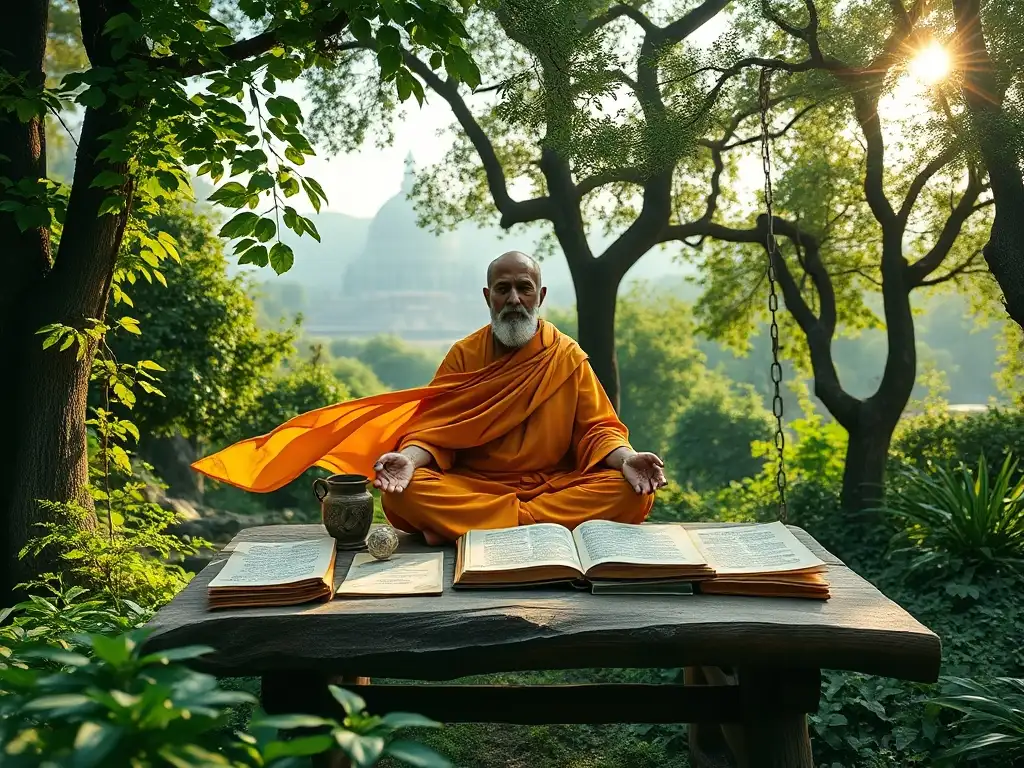
Welcome to Ancient India History, where we delve into the rich tapestry of ancient Indian civilizations, exploring their profound contributions to culture, philosophy, and beyond. In this journey, we invite you to uncover the legacy of the Upanishads, a cornerstone of spiritual thought that has shaped both Eastern and Western philosophies. What secrets do these ancient texts hold, and how have they influenced thinkers across ages? Join us as we unravel the fascinating impact of the Upanishads and discover their enduring relevance in today's world. Your exploration begins here!
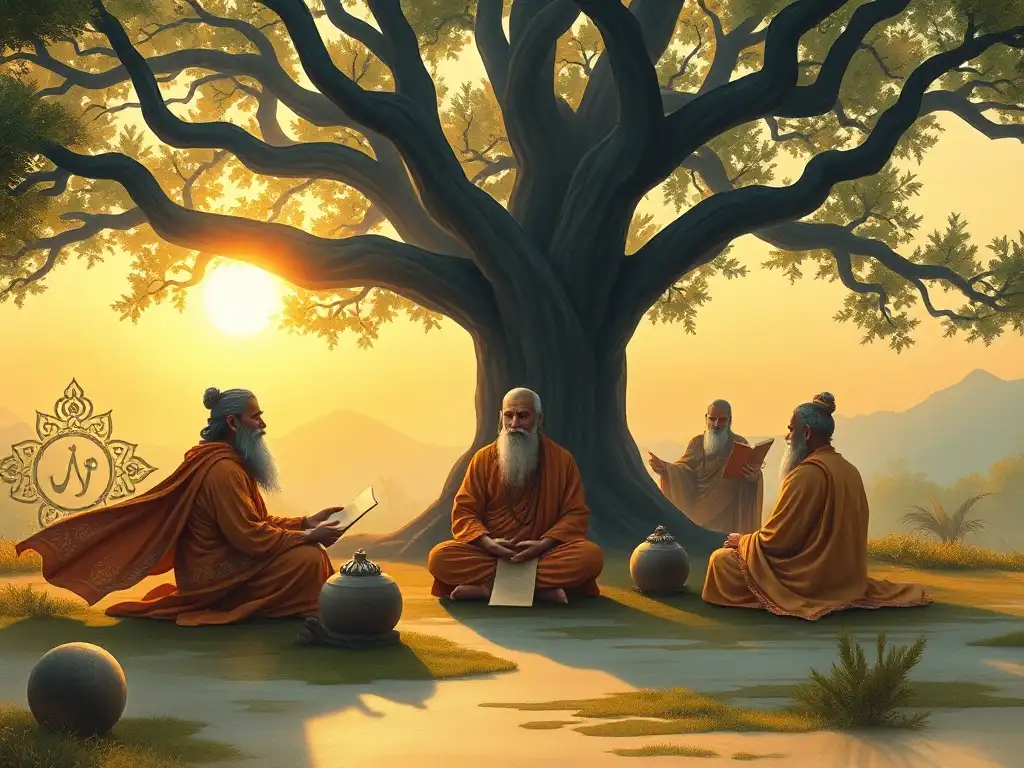
The Upanishads stand as one of the most significant and profound texts in the history of philosophy, shaping the intellectual landscapes of both Eastern and Western thought. Emerging from the rich tapestry of ancient Indian civilization, these texts delve into the nature of reality, the self, and the ultimate purpose of human existence. As part of the broader corpus of Vedic literature, the Upanishads explore complex themes that resonate across various philosophical traditions, fostering a dialogue between differing worldviews.
Their influence extends beyond the confines of Hindu thought, permeating into the realms of Buddhism, Jainism, and even Western philosophical discourses. This article seeks to unravel the intricate legacy of the Upanishads, examining their philosophical significance and the ways they have shaped diverse cultural narratives throughout history.
Introduction to Upanishads and Their Philosophical Significance
Definition of Upanishads
The Upanishads, derived from the Sanskrit term upa-niṣad (meaning "to sit down near"), are a collection of ancient texts that signify the culmination of Vedic thought. Comprising over 200 individual texts, the Upanishads explore metaphysical concepts and ethical guidelines, providing insights into the nature of the self ( Atman) and its relationship with the ultimate reality ( Brahman). They serve as a bridge between ritualistic practices of the Vedas and the philosophical inquiries that characterize later Indian philosophies.
Historical Context of the Upanishads
The composition of the Upanishads spans several centuries, generally dated between 800 BCE and 200 BCE. This period marked a significant shift in ancient Indian society, transitioning from a focus on external rituals to introspection and personal realization. The Upanishads emerged during a time of increasing philosophical inquiry, coinciding with the rise of urban centers and the questioning of traditional Vedic practices. This historical backdrop laid the groundwork for the profound ideas that would influence not only Indian philosophy but also later global thought.
The Core Philosophical Concepts of the Upanishads
Atman and Brahman: The Fundamental Unity
One of the most pivotal concepts in the Upanishads is the relationship between Atman (the individual self) and Brahman (the ultimate reality). The assertion that "Atman is Brahman" encapsulates the idea that the individual soul is fundamentally connected to the cosmic consciousness. This radical notion challenges the duality often present in other philosophies, suggesting a profound unity underlying the apparent diversity of existence.
Karma and Reincarnation: Moral Implications
The principles of Karma and Reincarnation are intricately woven into the fabric of Upanishadic thought. According to these texts, every action carries moral weight, influencing future lives through the cycle of birth and rebirth. This ethical framework encourages individuals to live virtuously, fostering a sense of responsibility and interconnectedness with all life. The implications of this belief system extend far beyond personal morality, impacting societal structures and cultural practices within Indian civilization.
Moksha: Liberation and Enlightenment
Moksha, or liberation, represents the ultimate goal of human existence according to Upanishadic philosophy. It is the realization of one's true nature and the dissolution of the illusion of separateness. The texts outline various paths to achieve this state, including meditation, ethical living, and philosophical inquiry. The pursuit of Moksha has inspired countless individuals throughout history, influencing not only Hindu thought but also the spiritual aspirations of diverse cultures worldwide.
The Influence of Upanishads on Eastern Philosophies
The Upanishads, which form the concluding part of the Vedic texts, have significantly shaped various Eastern philosophies, particularly Buddhism and Jainism, while also influencing the broader spectrum of Hindu philosophical traditions. Their focus on metaphysical concepts, the nature of reality, and the self has led to profound insights that resonate across different philosophical schools.
The core principles elucidated in the Upanishads, such as Brahman (the ultimate reality) and Atman (the individual self), serve as foundational ideas that have been interpreted and reinterpreted within various Eastern philosophical frameworks. The emphasis on meditation, personal experience, and ethical living has fostered a rich dialogue among these traditions, highlighting the interconnectedness of thought in ancient Eastern philosophies.
The Upanishads and Buddhism: Shared Concepts
Buddhism, which emerged around the 5th century BCE, shares several philosophical concepts with the Upanishads, despite its distinct doctrines. Both traditions explore themes like the nature of suffering, self-realization, and the quest for enlightenment. For example, the Upanishadic concept of "Moksha" (liberation) parallels the Buddhist goal of "Nirvana," which represents the cessation of suffering and the cycle of rebirth.
Additionally, the idea of "Anatta" or non-self in Buddhism resonates with the Upanishadic teaching of the illusory nature of the self. Both traditions encourage the practitioner to look beyond the material world and recognize a higher truth, fostering a path toward spiritual awakening. The shared emphasis on meditation techniques further exemplifies their interconnectedness, as both systems prioritize introspection and personal experience as means of achieving insight.
Upanishadic Thought in Jainism: Ethical Dimensions
Jainism, another ancient Indian philosophy, has also been influenced by the Upanishads, particularly in its ethical framework and metaphysical concepts. The Upanishadic focus on non-violence (Ahimsa) and truthfulness is mirrored in Jain principles, which hold non-violence as the highest virtue. This ethical dimension fosters a profound respect for all living beings, promoting a path of compassion and asceticism.
Moreover, the Upanishads' exploration of the soul and its journey aligns with Jain beliefs regarding the soul's liberation through right knowledge, right faith, and right conduct. The concept of "Karma" in both traditions emphasizes the moral implications of one's actions, further intertwining their philosophical landscapes. This ethical foundation not only shapes individual behavior but also informs community practices in Jainism, reflecting the enduring legacy of Upanishadic thought.
Influence on Hindu Philosophy: Vedanta and Sankhya
The Upanishads have profoundly influenced the development of Hindu philosophy, particularly the schools of Vedanta and Sankhya. Vedanta, which literally means "the end of the Vedas," is deeply rooted in Upanishadic teachings about Brahman and Atman. It emphasizes the unity of the individual soul with the ultimate reality, advocating for self-inquiry and realization as paths to liberation.
Sankhya, another significant philosophical system, delineates the distinction between Purusha (consciousness) and Prakriti (matter), a dualism that can be traced back to the metaphysical inquiries found in the Upanishads. This framework not only provides a systematic approach to understanding the nature of existence but also complements the ethical teachings of the Upanishads, fostering a comprehensive worldview that integrates knowledge, ethics, and metaphysics.
The Impact of Upanishads on Western Philosophies
The influence of the Upanishads extends beyond Eastern philosophies, reaching into Western thought and philosophy, particularly during the 19th and 20th centuries. Their profound insights into the nature of reality, consciousness, and ethics have inspired numerous Western philosophers and movements.
As Western intellectuals began to engage with Eastern philosophies, the Upanishads became a vital source of inspiration, bridging cultural and philosophical divides. Their impact is evident in various philosophical movements, which have adopted and adapted key concepts from Upanishadic thought.
Transcendentalism and the Upanishads: Key Connections
Transcendentalism, a philosophical movement that emerged in the early 19th century in America, drew heavily from Eastern philosophies, particularly the Upanishads. Thinkers like Ralph Waldo Emerson and Henry David Thoreau emphasized self-reliance, individual intuition, and the connection between humanity and nature—ideas that resonate with the Upanishadic emphasis on personal experience and the divine presence in the natural world.
Emerson, in his essay "Nature," elucidates the idea that nature reflects a universal spirit, akin to the Upanishadic notion of Brahman pervading all existence. This connection to nature encourages individuals to seek deeper truths beyond societal conventions, mirroring the Upanishadic call for inner exploration and spiritual awakening.
The Influence on Existentialism: Freedom and Responsibility
The existentialist movement, particularly through the works of philosophers like Jean-Paul Sartre and Martin Heidegger, reflects themes found in Upanishadic thought. The Upanishads grapple with the nature of existence, the self, and the quest for meaning—core concerns of existential philosophy.
Sartre's emphasis on freedom and responsibility echoes the Upanishadic assertion of individual agency in seeking truth and liberation. The idea that existence precedes essence aligns with the Upanishadic view that individuals must uncover their true nature through introspection and personal experience, highlighting a shared focus on the individual's role in defining their existence.
Upanishadic Ideas in Modern Western Thought
In contemporary Western philosophy, the Upanishads continue to influence various fields, including psychology, spirituality, and holistic health. Figures such as Carl Jung acknowledged the psychological insights embedded in Upanishadic teachings, particularly regarding the unconscious and the quest for self-awareness.
Moreover, the growing interest in mindfulness and meditation practices in Western societies can trace its roots back to the contemplative traditions found in the Upanishads. The emphasis on inner peace, self-discovery, and the interconnectedness of all beings resonates with modern spiritual seekers and psychologists, illustrating the enduring legacy of Upanishadic thought in shaping contemporary philosophical and spiritual landscapes.
Comparative Analysis: Eastern vs. Western Philosophical Influences

The Upanishads, ancient Indian texts that delve into the nature of reality and the self, have significantly influenced both Eastern and Western philosophical thought. Their teachings emerge as a bridge between these two philosophical traditions, underscoring a shared quest for understanding existence, knowledge, and the cosmos while also highlighting distinct paths taken by each tradition.
Similarities in Philosophical Foundations
Both Eastern and Western philosophies seek to explore profound questions about existence, morality, and the nature of the universe. The Upanishads emphasize concepts such as Brahman (the ultimate reality) and Atman (the individual soul), which resonate with Western philosophical inquiries into the essence of being. Notable parallels can be drawn with:
- Existentialism: The Upanishads’ focus on self-realization and the quest for meaning aligns with existentialist themes in Western philosophy, which stress individual experience and the search for purpose.
- Platonism: The idea of an ultimate reality in the Upanishads echoes Plato's Theory of Forms, where the material world is seen as a reflection of a higher truth.
- Mysticism: Both traditions explore mystical experiences and the transcendence of ordinary perception, emphasizing a direct experience of the divine or ultimate truth.
These foundations create a philosophical landscape where dialogue and exchange between Eastern and Western thought can flourish, fostering a mutual understanding of life's deeper meanings.
Differences in Interpretations and Applications
Despite their similarities, the interpretations and applications of philosophical concepts differ significantly between the East and West. In the context of the Upanishads:
- Nature of Reality: Eastern philosophies tend to embrace a non-dualistic approach, asserting that Atman and Brahman are one, whereas many Western philosophies often delineate a clear distinction between God and humanity, leading to dualistic frameworks.
- Methodologies: The Upanishads promote introspective practices such as meditation and self-inquiry as primary means to attain knowledge, contrasting with the Western emphasis on rational discourse and empirical evidence.
- Ethical Implications: The Upanishadic philosophy emphasizes an intrinsic unity that fosters compassion and interconnectedness, while Western philosophies often prioritize individualism and the role of reason in ethical decision-making.
These differences illustrate how cultural contexts shape philosophical inquiry, leading to unique interpretations and applications of similar foundational ideas.
The Relevance of Upanishadic Philosophy Today
The teachings of the Upanishads continue to resonate in contemporary society, offering insights that are relevant to modern philosophical discourse and spiritual practices. Their influence can be observed across various fields, including psychology, spirituality, and ethics.
Contemporary Philosophical Movements Inspired by Upanishads
Several modern philosophical movements have drawn inspiration from Upanishadic teachings:
- Transcendentalism: This 19th-century movement, led by thinkers like Ralph Waldo Emerson, emphasizes the inherent goodness of people and nature, reflecting Upanishadic principles of inner divinity and the interconnectedness of all beings.
- New Age Spirituality: Many New Age philosophies incorporate concepts from the Upanishads, such as meditation, consciousness exploration, and holistic views of the universe, making these ancient teachings accessible to contemporary spiritual seekers.
- Humanistic Psychology: Figures like Abraham Maslow and Carl Rogers have integrated ideas about self-actualization and the search for meaning, which echo the Upanishadic emphasis on personal growth and realization of the true self.
These movements showcase how the Upanishads continue to inspire and challenge modern thinkers, integrating ancient wisdom into new contexts.
Upanishads in Modern Spiritual Practices
The Upanishads play a crucial role in shaping modern spiritual practices, particularly in the context of yoga and meditation. Their teachings inform various aspects of spiritual life today:
- Meditation: Techniques derived from Upanishadic philosophy, such as Dhyana (meditative absorption), are widely practiced in contemporary mindfulness and meditation practices, fostering mental clarity and emotional well-being.
- Yoga Philosophy: The philosophical underpinnings of yoga, rooted in Upanishadic texts, emphasize the pursuit of self-knowledge and union with the divine, influencing how yoga is taught and practiced globally.
- Holistic Wellness: The Upanishadic view of the interconnectedness of mind, body, and spirit aligns with modern holistic approaches to health and wellness, encouraging individuals to seek balance and harmony in their lives.
As such, the Upanishads not only contribute to philosophical discourse but also continue to shape and enrich spiritual practices in today’s world, proving their enduring legacy in the exploration of consciousness and existence.
Conclusion: The Enduring Legacy of the Upanishads
The Upanishads, as foundational texts of Indian philosophy, present a profound exploration of human consciousness, the nature of reality, and the pursuit of ultimate truth. Their teachings have transcended time and geographical boundaries, influencing both Eastern and Western philosophical traditions. By emphasizing concepts such as Brahman (the ultimate reality) and Atman (the individual self), the Upanishads invite seekers to delve deeper into the interconnectedness of existence. This exploration fosters a sense of unity among diverse thoughts and cultures, ensuring that the wisdom of the Upanishads remains relevant even in contemporary philosophical discourse.
Moreover, the Upanishads encourage critical inquiry and personal experience over dogma, a principle that resonates with modern philosophical movements. Their teachings inspire countless individuals to engage in self-exploration and meditation, contributing to a growing interest in Eastern philosophies across the globe. As we move forward, the legacy of the Upanishads serves as a bridge, connecting ancient wisdom with contemporary questions about existence, ethics, and consciousness.
Summary of Upanishads Influence on Philosophy
The influence of the Upanishads on philosophy is both profound and multifaceted. They have played a pivotal role in shaping various philosophical systems, including Hinduism, Buddhism, Jainism, and even aspects of Western thought. Key contributions include:
- Metaphysical Insights: The Upanishads introduce concepts that explore the relationship between the individual and the universe, notably the idea that Atman is Brahman. This principle has shaped metaphysical discussions in both Eastern and Western contexts.
- Ethical Frameworks: The texts advocate for ethical living and self-realization, which informed the moral philosophies of later Indian thinkers and have resonated with Western philosophers like Immanuel Kant and Friedrich Nietzsche.
- Influence on Other Philosophical Traditions: Elements of Upanishadic thought can be seen in the works of various philosophers, including those in the existential and phenomenological traditions, who grapple with questions of self, reality, and consciousness.
The Upanishads have provided a rich philosophical foundation that has influenced thinkers across cultures and epochs, making their teachings a crucial part of the global philosophical landscape.
The Future of Upanishadic Thought in Global Philosophy
As we look to the future, the Upanishads are poised to continue their influence on philosophy worldwide. Several factors contribute to this enduring relevance:
- Interdisciplinary Engagement: The rise of interdisciplinary studies that combine philosophy, psychology, and spirituality allows for a deeper understanding of Upanishadic concepts. This holistic approach may lead to innovative interpretations and applications in contemporary contexts.
- Globalization of Ideas: As philosophical ideas travel across borders, the Upanishads are increasingly being integrated into discussions about consciousness, ethics, and metaphysics in various global philosophical communities. This cross-pollination encourages a rich dialogue that can enhance our understanding of both Eastern and Western philosophies.
- Modern Reinterpretations: Contemporary philosophers and spiritual leaders are reexamining Upanishadic texts, drawing parallels with modern existential inquiries and scientific discoveries, particularly in areas such as consciousness studies and quantum physics.
The Upanishads will likely maintain a significant presence in global philosophy, continuing to inspire and challenge seekers of truth for generations to come. Their timeless teachings on the nature of reality and the self provide a crucial framework for addressing the profound questions that humanity faces today.
- Introduction to Upanishads and Their Philosophical Significance
- The Core Philosophical Concepts of the Upanishads
- The Influence of Upanishads on Eastern Philosophies
- The Impact of Upanishads on Western Philosophies
- Comparative Analysis: Eastern vs. Western Philosophical Influences
- The Relevance of Upanishadic Philosophy Today
- Conclusion: The Enduring Legacy of the Upanishads
Frequently Asked Questions
What are the Upanishads?
The Upanishads are ancient Indian texts that form the philosophical foundation of Hinduism. They explore concepts such as Brahman (ultimate reality) and Atman (soul), profoundly influencing Eastern and Western philosophical thought.
How did the Upanishads influence Eastern philosophy?
The Upanishads introduced ideas of meditation, self-realization, and the interconnectedness of all beings, shaping schools of thought like Buddhism and Taoism. Their emphasis on spiritual inquiry has inspired many Eastern philosophical traditions.
In what ways have the Upanishads impacted Western philosophy?
The Upanishads have influenced Western thinkers like Schopenhauer and Einstein, who recognized the texts' insights into existence and reality. Their exploration of the self and consciousness has enriched Western philosophical discourse.
What are the key themes of the Upanishads?
Key themes include the nature of reality, the relationship between Atman and Brahman, and the pursuit of knowledge through meditation and self-reflection. These themes have laid the groundwork for various philosophical traditions.
Why are the Upanishads considered significant in philosophy?
The Upanishads are significant because they address fundamental questions about existence, knowledge, and the nature of reality. Their profound teachings continue to resonate within both Eastern and Western philosophical debates.
Final Reflection: The Enduring Influence of the Upanishads on Philosophy
The Upanishads stand as a timeless beacon of wisdom, illuminating the paths of both Eastern and Western philosophies. Their profound insights into the nature of reality, consciousness, and the self resonate powerfully in today's world, where the quest for meaning and understanding is more pertinent than ever. As we navigate the complexities of modern life, the teachings of the Upanishads remind us of the interconnectedness of all beings and the importance of introspection in our philosophical pursuits.
The impact of the Upanishads extends far beyond their historical context, shaping cultural and social landscapes across the globe. Their teachings encourage a deep exploration of existence, prompting individuals to question their beliefs and seek a higher understanding. This ongoing influence is echoed in the words of Carl Jung, who stated, The Upanishads are the most profound and the most beautiful of all the scriptures.
Such reflections highlight how these ancient texts continue to inspire thinkers, artists, and seekers of truth, fostering a dialogue that transcends geographical and temporal boundaries.
As we contemplate the legacy of the Upanishads, I invite you to engage with their teachings in your own life. Consider how their insights can enrich your understanding of yourself and the world around you. Reflect on the questions they pose about existence and consciousness, and allow these ancient philosophies to guide you toward a deeper connection with your own journey. In doing so, you not only honor the legacy of the Upanishads but also contribute to the ongoing evolution of philosophical thought in our ever-changing world.
Unveil the Wisdom of the Upanishads Today!
Thank you for exploring the profound insights of the Upanishads with us! We hope you gained a deeper appreciation for how these ancient texts continue to shape modern thought across various cultures.
Now, it's time to deepen your understanding and share this wisdom with others. Here are some meaningful actions you can take:
- Explore the teachings of the Upanishads by reading a translated text; you might uncover concepts that resonate deeply with you or challenge your perspective.
- Join a discussion group focused on Eastern philosophies to engage with others and exchange ideas; community learning can greatly enhance your understanding!
- Share this article with friends and family to spark conversations about the lasting impact of ancient philosophies on today’s world!
What insights from the Upanishads do you believe could influence contemporary thinking? We would love to hear your thoughts!