
Upanishads Unveiled: The Philosophical Depth of Hindu Thought

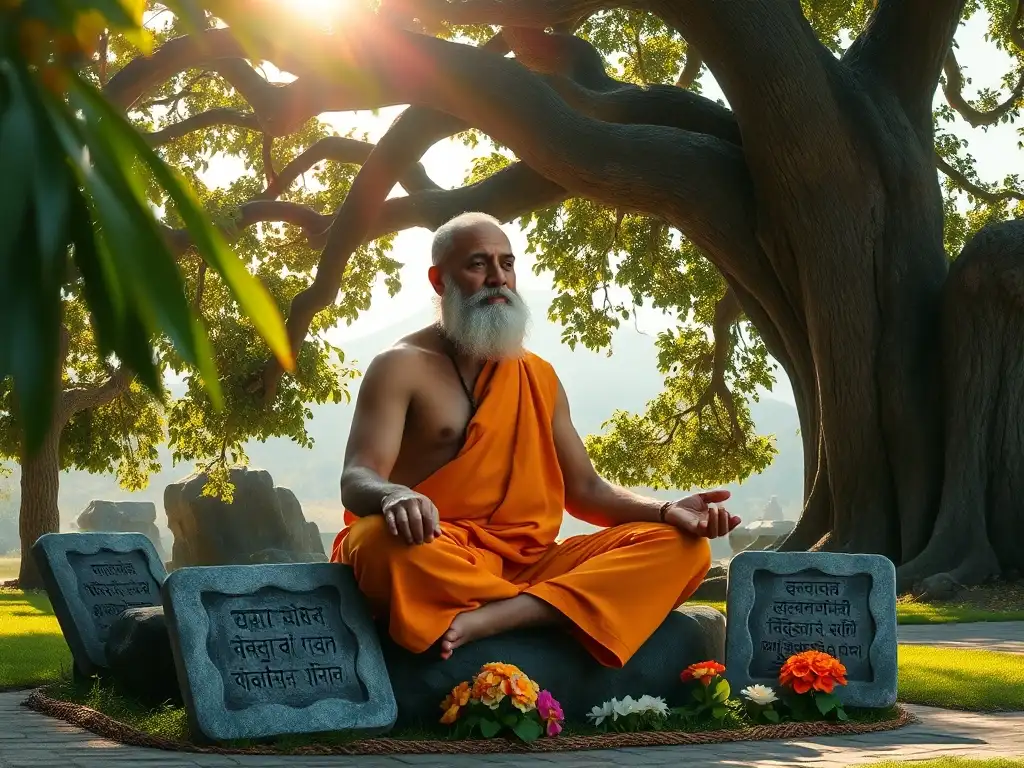
Welcome to Ancient India History, where we embark on a fascinating journey through the rich tapestry of ancient Indian civilizations. Here, we delve into the profound intellectual and cultural contributions that have shaped not only India but the entire world. Our featured article, "Upanishads Unveiled: The Philosophical Depth of Hindu Thought," offers a compelling exploration of the philosophy of Upanishads explained.
Discover how these ancient texts unlock the mysteries of existence and consciousness, inviting you to ponder the deeper questions of life. Join us as we unravel the wisdom of the ages and inspire your curiosity about the remarkable heritage of ancient India!
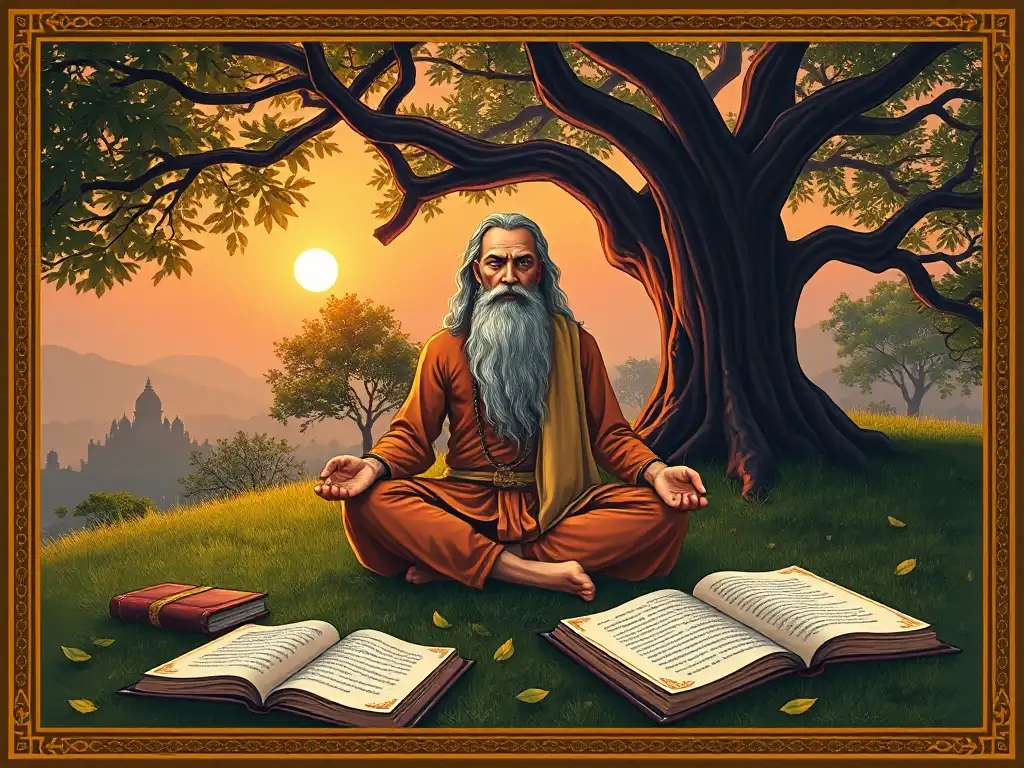
The Upanishads represent some of the most profound and influential texts in the history of Hindu philosophy, offering deep insights into the nature of reality, existence, and the self. These ancient scriptures, which are considered the culmination of Vedic thought, delve into complex metaphysical concepts that have shaped the spiritual landscape of not only India but also the entire world. As we explore the philosophy of Upanishads explained, we will uncover how these texts articulate the relationship between the individual and the universal, challenging and expanding our understanding of existence.
Through this article, we will navigate the historical context and significance of the Upanishads within Hinduism, followed by an examination of their core philosophical concepts. By the end, readers will gain a comprehensive understanding of the Upanishads' enduring relevance in ancient Indian philosophy and beyond.
Introduction to the Upanishads
Overview of the Upanishads in Hinduism
The Upanishads, a collection of philosophical texts composed between 800 and 400 BCE, serve as the concluding part of the Vedas, which are the oldest sacred scriptures of Hinduism. These texts encapsulate the inquiries and reflections of sages and philosophers seeking to understand the nature of reality and the self. Unlike the ritualistic focus of the earlier Vedic texts, the Upanishads pivot towards introspection and philosophical discourse, emphasizing knowledge (jnana) over mere ritualistic practice.
They are often described as the "end of the Vedas," and their teachings form the foundation of various schools of Indian philosophy, influencing not only Hindu thought but also Buddhist and Jain traditions. Their significance lies in their ability to transcend cultural and temporal boundaries, offering wisdom that resonates with seekers of truth across ages.
Historical Context of the Upanishads
To appreciate the depth of the Upanishads, it is essential to consider the historical milieu in which they were composed. The period of their emergence coincides with significant socio-political changes in ancient India, marked by the rise of urban centers, trade, and new philosophical inquiries. As societal structures evolved, thinkers began to question the nature of existence beyond traditional rituals, leading to a more personal and philosophical exploration of spirituality.
This transformative era witnessed the influence of various schools of thought, including Samkhya, Yoga, and early forms of Buddhism, which all contributed to the intellectual environment that nurtured the Upanishadic teachings. The dialogues within the Upanishads reflect this dynamic interplay of ideas, embodying a search for universal truths amidst diverse perspectives.
Importance of Upanishads in Ancient Indian Philosophy
The Upanishads hold a central place in ancient Indian philosophy, serving as a bridge between the ritualistic practices of the Vedas and the more abstract, philosophical discourse that characterizes later Hindu thought. Their teachings on concepts such as Brahman (the ultimate reality) and Atman (the individual soul) laid the groundwork for various philosophical interpretations and spiritual practices.
Moreover, the Upanishads have inspired countless scholars and spiritual leaders throughout history, including philosophers like Adi Shankaracharya and Ramanuja, who interpreted and expanded upon their teachings. Their impact extends beyond Hinduism, influencing global philosophical traditions and inviting dialogue about the nature of existence, consciousness, and the cosmos.
Core Philosophical Concepts in the Upanishads
The Concept of Brahman: The Ultimate Reality
One of the most fundamental concepts articulated in the Upanishads is that of Brahman, often described as the infinite, unchanging reality that underlies all existence. Brahman transcends the physical universe, embodying the essence of everything that is and will be. The Upanishads assert that understanding Brahman is crucial for realizing the true nature of existence and one's place within it.
Brahman is often depicted through various attributes:
- Nirguna Brahman: The formless aspect of Brahman, beyond all attributes and qualities.
- Saguna Brahman: The personal aspect of Brahman, manifesting with attributes that can be worshipped.
This duality invites seekers to explore both the abstract and personal dimensions of divinity, paving the way for a rich spiritual experience.
Atman: The Individual Soul and Its Relation to Brahman
Closely intertwined with the concept of Brahman is the notion of Atman, which refers to the individual soul or self. The Upanishads emphasize that Atman is not separate from Brahman but rather an expression of the same ultimate reality. This profound realization—that the essence of one’s being is fundamentally connected to the cosmos—forms the core of Upanishadic philosophy.
Key tenets regarding Atman include:
- Unity of Atman and Brahman: The famous maxim "Tat Tvam Asi" (That Thou Art) encapsulates the idea that realizing the oneness of Atman and Brahman is the path to liberation (moksha).
- Transcendence of Ego: The Upanishads teach that the individual ego is an illusion, and true understanding lies in recognizing the divine essence within oneself.
Maya: The Illusion of the Material World
Another critical concept explored in the Upanishads is Maya, which refers to the illusionary nature of the material world. The text argues that our perceptions, shaped by ignorance and attachment, often lead us to misidentify the transient world as the ultimate reality.
Understanding Maya involves recognizing:
- The impermanence of worldly phenomena: Everything in the material realm is subject to change, decay, and dissolution.
- The need for discernment: The Upanishads encourage practitioners to cultivate knowledge and insight to see beyond the illusions, ultimately leading to liberation.
The philosophy of the Upanishads provides a rich tapestry of thought that invites readers to explore the depths of existence, consciousness, and the cosmos. The profound teachings on Brahman, Atman, and Maya continue to inspire seekers and scholars alike, affirming the Upanishads' place as a cornerstone of ancient Indian philosophy.
The Philosophy of Upanishads Explained
The philosophy of the Upanishads is a profound exploration of metaphysical concepts that shape Hindu thought. Rooted in ancient Indian spirituality, the Upanishads serve as the culmination of Vedic literature, marking a transition from ritualistic practices to a focus on meditation and introspection. They delve into the nature of reality, the self (Atman), and the ultimate reality (Brahman), fostering a quest for knowledge and self-awareness.
Central to Upanishadic philosophy is the concept of non-duality (Advaita), which posits that individual souls are not separate from the universal soul. This understanding emphasizes that the essence of all beings is interconnected and that realizing this unity is key to liberation (moksha). In this context, the Upanishads offer a framework for understanding existence, encouraging individuals to look beyond the material world and explore their inner selves.
The teachings of the Upanishads have influenced various facets of Indian philosophy, including metaphysics, ethics, and cosmology. They present a holistic view of life, urging followers to engage in self-inquiry and meditation to attain deeper insights into existence. The profound dialogues and poetic verses found in these texts continue to inspire philosophical discourse and spiritual practice today.
Key Teachings of the Upanishads
The Upanishads encapsulate several key teachings that form the foundation of Hindu philosophy:
- Brahman and Atman: The central tenet is the identity of Brahman, the ultimate reality, with Atman, the individual self. The realization that "Tat Tvam Asi" (That Thou Art) emphasizes the oneness of all existence.
- Moksha: The Upanishads advocate for liberation from the cycle of birth and rebirth (samsara) through self-realization, knowledge, and detachment from worldly desires.
- Karma and Dharma: They stress the importance of karma (action) and dharma (duty) in shaping one's destiny and spiritual progress, highlighting the ethical dimensions of human existence.
- Meditative Practices: The texts encourage meditation (dhyana) as a means to achieve self-knowledge and connect with the divine, illustrating the significance of inner contemplation.
These teachings provide a comprehensive framework for understanding life's complexities and guide individuals on their spiritual journeys.
The Nature of Existence According to Upanishadic Philosophy
Upanishadic philosophy presents a unique understanding of existence, which can be summarized in several core ideas:
- Reality as a Unity: Existence is perceived as an interconnected web of life, where everything is a manifestation of the same underlying reality, Brahman. This perspective challenges dualistic views and encourages a holistic approach to understanding the universe.
- Perception and Illusion: The Upanishads discuss the concept of Maya, which refers to the illusion that veils the true nature of reality. They assert that what is perceived through the senses is often misleading, and true knowledge comes from introspection and realization of the self.
- Transcendence and Immanence: The texts explore the relationship between the transcendent Brahman and the immanent world. While Brahman is beyond all forms and concepts, it also pervades the material world, manifesting in every being.
- Eternal Soul: The Upanishads assert that Atman, or the individual soul, is eternal and unchanging. This notion leads to the understanding that physical existence is temporary, and realizing one's true nature is essential for spiritual liberation.
Through these concepts, the Upanishads offer profound insights into the nature of existence, encouraging seekers to transcend superficial understanding and embark on a journey towards self-realization.
The Role of Meditation and Self-Realization
Meditation is a pivotal aspect of Upanishadic philosophy, serving as a tool for self-realization and spiritual awakening. The Upanishads emphasize the importance of inner stillness and contemplation to attain deeper insights into one's nature:
- Path to Knowledge: Meditation is viewed as a means to quiet the mind and transcend the distractions of the material world. Through focused practice, individuals can access higher states of consciousness and connect with the divine essence within.
- Experiencing Non-Duality: The practice of meditation facilitates the direct experience of the non-dual reality of Brahman and Atman. Through this experiential knowledge, practitioners can dissolve the sense of separation and realize their inherent unity with all existence.
- Cultivation of Inner Peace: Regular meditation fosters a sense of inner peace and clarity, allowing individuals to navigate life's challenges with equanimity. This tranquility is essential for cultivating compassion and understanding towards oneself and others.
- Spiritual Transformation: The transformative power of meditation is emphasized in the Upanishads, which suggest that sustained practice leads to profound shifts in perception, ultimately resulting in liberation from the cycle of birth and death.
In essence, meditation is not merely a practice but a pathway to realizing the profound truths articulated in the Upanishads, guiding individuals towards their true nature and ultimate purpose.
Major Upanishads and Their Philosophical Contributions
The Upanishads are a collection of texts that showcase diverse philosophical insights. Among them, several stand out for their profound contributions to Hindu thought:
Chandogya Upanishad: Understanding Sound and Reality
The Chandogya Upanishad explores the significance of sound, particularly the sacred syllable "Om," as a representation of the ultimate reality. It posits that sound is not merely a sensory experience but is deeply connected to the cosmos and the nature of existence.
- The Om Principle: The text teaches that Om encompasses the essence of the universe, symbolizing the connection between the individual and the collective. Meditating on Om enables individuals to align themselves with the fundamental vibrations of reality.
- Philosophical Dialogues: Through dialogues between a student and teacher, the Chandogya Upanishad presents philosophical inquiries about existence, urging seekers to ponder the nature of reality and their place within it.
This Upanishad emphasizes the importance of sound as a means to engage with the spiritual realm, illustrating how auditory experiences can lead to deeper understanding.
Brihadaranyaka Upanishad: Dialogues on Existence
The Brihadaranyaka Upanishad is one of the oldest and most comprehensive Upanishads, containing profound philosophical dialogues that delve into the nature of existence:
- Exploration of Self: The text presents various discussions on the nature of the self and the relationship between Atman and Brahman. It asserts that understanding the self is crucial for grasping the essence of the universe.
- Concept of Sat: It introduces the idea of "Sat," representing truth and reality, and contrasts it with the transient nature of the material world. This distinction encourages seekers to discern the eternal from the ephemeral.
- The Role of Questioning: The dialogues emphasize the importance of inquiry and reflection in the pursuit of knowledge, showcasing how philosophical questioning can lead to greater understanding and insight.
The Brihadaranyaka Upanishad serves as a foundational text that engages readers in deep contemplation about existence and the nature of reality.
Taittiriya Upanishad: The Layers of Being
The Taittiriya Upanishad offers a unique perspective on existence by exploring the concept of the layers of being, known as the "Pancha Kosha" or the five sheaths:
- Annamaya Kosha: The physical sheath, representing the body made of food.
- Pranamaya Kosha: The vital sheath, encompassing the life force and breath.
- Manomaya Kosha: The mental sheath, associated with thoughts and emotions.
- Vijnanamaya Kosha: The intellectual sheath, linked to knowledge and wisdom.
- Anandamaya Kosha: The blissful sheath, representing the essence of joy and spiritual realization.
- Holistic Understanding: This framework illustrates the multi-faceted nature of human existence, encouraging individuals to transcend the physical and mental layers to reach the core of their being.
- Unity with Brahman: Ultimately, the Taittiriya Upanishad teaches that beyond these layers lies the realization of Brahman, reinforcing the idea of unity in diversity.
Through its exploration of the layers of being, the Taittiriya Upanishad provides valuable insights into the complexity of existence and the journey towards self-realization.
Comparative Analysis: Upanishads and Other Hindu Texts

The Upanishads represent a significant philosophical shift within Hindu literature, marking a transition from ritualistic practices emphasized in the Vedas to a more introspective and metaphysical exploration of existence. This comparative analysis will elucidate the distinctions between the Upanishads and other Hindu texts, particularly the Vedas, as well as highlight the influence of Upanishadic thought on later philosophical schools and its contextual relevance within other ancient Indian texts.
Differences Between Upanishads and Vedas
While both the Upanishads and Vedas are foundational texts of Hindu philosophy, they serve different purposes and embody distinct themes. The Vedas consist of four primary texts—Rigveda, Samaveda, Yajurveda, and Atharvaveda—primarily focusing on rituals, hymns, and sacrificial rites. In contrast, the Upanishads delve into metaphysical inquiries and philosophical concepts, aiming to explore the nature of reality, the self (Atman), and the ultimate reality (Brahman).
- Content Focus: The Vedas emphasize external rituals and worship, while the Upanishads prioritize internal contemplation and understanding.
- Language and Style: Vedic texts often employ a more formal and poetic structure, whereas Upanishadic writings use prose to convey philosophical dialogues and arguments.
- Purpose: The Vedas aim to instruct on rituals for societal and cosmic order; the Upanishads seek personal liberation (moksha) and enlightenment through self-knowledge.
The Influence of Upanishads on Later Philosophical Schools
The philosophical insights of the Upanishads have profoundly influenced various schools of thought within Hinduism and beyond. The ideas of non-dualism (Advaita) articulated by Adi Shankaracharya draw heavily from the Upanishadic teachings, particularly the unity of Atman and Brahman. Similarly, the concepts of dualism (Dvaita) and qualified non-dualism (Vishishtadvaita) in later philosophies reflect the diverse interpretations of Upanishadic thought.
- Advaita Vedanta: Emphasizes the non-dual nature of reality, where the individual self is seen as identical to the universal consciousness.
- Bhakti Movements: Many Bhakti poets and saints integrated Upanishadic themes, focusing on personal devotion as a means to realize the divine.
- Modern Philosophy: The Upanishads have also influenced contemporary philosophers and thinkers, including those in the Western philosophical tradition, who explore concepts of consciousness and reality.
Upanishadic Philosophy in Context of Other Ancient Indian Texts
In the broader landscape of ancient Indian literature, the Upanishads interact with various texts, including the Bhagavad Gita and the Puranas. The Gita, often considered a synthesis of Upanishadic philosophy and practical ethics, incorporates key concepts like karma, dharma, and moksha while providing a narrative framework for their application in life.
- Intertextuality: The Upanishads serve as a philosophical foundation upon which the Gita builds, presenting a dialogue between Arjuna and Krishna that explores the application of Upanishadic principles in action.
- Puranic Texts: While the Puranas focus on mythological narratives and devotional practices, they occasionally reflect Upanishadic ideas, particularly regarding the nature of divinity and the universe.
The Relevance of Upanishadic Philosophy Today
The teachings of the Upanishads resonate with contemporary audiences, offering timeless wisdom applicable to modern existential questions. Their exploration of self-awareness, the nature of reality, and the pursuit of inner peace provides a philosophical framework that remains relevant in today's fast-paced world.
Contemporary Interpretations of Upanishadic Thought
Modern scholars and spiritual leaders are revisiting Upanishadic ideas, reinterpreting them through contemporary lenses. This includes applying their insights to psychology, ethics, and holistic living. The emphasis on meditation, mindfulness, and self-inquiry in modern spirituality draws heavily from Upanishadic principles, allowing individuals to explore their inner landscapes in search of meaning and connection.
- Psychological Applications: Concepts of self-realization and consciousness have found a place in psychology, with therapeutic practices incorporating mindfulness and self-reflection inspired by Upanishadic teachings.
- Interfaith Dialogue: The universal themes within the Upanishads foster interfaith discussions, highlighting commonalities in spiritual pursuits across various traditions.
Upanishads in Modern Spiritual Practices
The Upanishads have also found their way into various modern spiritual practices, particularly in yoga and meditation. Many contemporary yoga practitioners integrate Upanishadic philosophy into their routines, emphasizing the connection between the physical and the spiritual.
- Meditative Practices: Techniques such as mantra chanting and meditation are often rooted in Upanishadic teachings, promoting self-awareness and transcendence.
- Yoga Philosophy: The principles of yoga align closely with Upanishadic thought, advocating for a holistic approach to well-being that encompasses body, mind, and spirit.
Lessons from Upanishads for Modern Society
The Upanishads impart valuable lessons that can guide modern society in navigating challenges and fostering a sense of interconnectedness. Their focus on self-knowledge, ethical living, and the quest for truth encourages individuals to seek deeper understanding and compassion in their interactions.
- Ethical Framework: The Upanishadic emphasis on truth (Satya) and righteousness (Dharma) provides a moral compass for personal and societal conduct.
- Holistic Living: By promoting awareness of the unity of all existence, the Upanishads inspire a more compassionate approach to environmental and social issues, advocating for a harmonious relationship with nature and each other.
The enduring wisdom of the Upanishads challenges us to reflect on our values and encourages a deeper connection to our surroundings and ourselves. In a world often marked by fragmentation, their teachings remind us of the profound interconnections that bind us all together.
Conclusion: The Enduring Legacy of Upanishadic Philosophy
The Upanishads stand as a monumental testament to the philosophical inquiry and spiritual depth of ancient Indian thought. Their exploration of metaphysical concepts, the nature of the self (Atman), and the ultimate reality (Brahman) has shaped not only Hindu philosophy but has also influenced various schools of thought across the globe. As we reflect on the enduring legacy of Upanishadic philosophy, it is evident that their teachings continue to resonate with seekers of truth, providing a framework for understanding the self and the universe.
The Upanishads encourage a journey inward, promoting introspection and self-realization. Their philosophical inquiries are not confined to a specific historical context; rather, they transcend time and culture, inviting individuals from all walks of life to engage with profound questions about existence, consciousness, and the nature of divinity. This timeless relevance is a central reason why the philosophy of the Upanishads remains a cornerstone of spiritual and philosophical discourse.
Summary of Key Insights from the Upanishads
The Upanishads encapsulate a wealth of philosophical insights that have had a lasting impact on both Indian and global thought. Some of the key insights include:
- Unity of Atman and Brahman: One of the most profound teachings of the Upanishads is the concept that the individual self (Atman) is fundamentally connected to the universal spirit (Brahman). This realization fosters a sense of unity and interconnectedness among all beings.
- Moksha (Liberation): The Upanishads articulate the path to liberation from the cycle of birth and death (samsara) through knowledge (jnana) and realization of the self. This pursuit of Moksha is central to the spiritual journey in Hindu philosophy.
- Meditative Practices: The Upanishads emphasize meditation as a means to attain higher states of consciousness and understanding. This practice is seen as essential for realizing the truth of one’s existence and the nature of reality.
- Ethical Living: The teachings of the Upanishads also underscore the importance of living a life grounded in dharma (righteousness), which aligns personal conduct with universal principles.
These insights not only provide a philosophical framework but also serve as a guide for ethical living and spiritual development.
The Influence of Upanishads on Global Philosophy
The philosophical depth of the Upanishads has transcended geographical and cultural boundaries, significantly influencing various global philosophical traditions. Key influences include:
- Western Philosophy: The ideas presented in the Upanishads, particularly concerning the nature of consciousness and the self, have resonated with Western philosophers such as Arthur Schopenhauer and Friedrich Nietzsche. Schopenhauer, for instance, praised the Upanishads for their profound insights into metaphysics and the nature of reality.
- Transcendentalism: In the 19th century, American transcendentalists like Ralph Waldo Emerson and Henry David Thoreau drew inspiration from the Upanishadic texts. They embraced the concept of an interconnected universe and the importance of individual intuition and experience.
- Modern Spiritual Movements: The resurgence of interest in Eastern philosophies during the 20th century saw the Upanishads gaining prominence in various spiritual movements worldwide. Their teachings have been integrated into New Age philosophies, emphasizing personal enlightenment and holistic living.
The Upanishads continue to serve as a bridge between Eastern and Western thought, fostering a dialogue that enriches both traditions.
Further Reading and Resources on Upanishadic Philosophy
For those interested in delving deeper into the philosophy of the Upanishads, a variety of resources are available that provide comprehensive insights and interpretations. Below are some recommended books and online resources.
Recommended Books on Upanishads
-
"The Upanishads" translated by Eknath Easwaran
A highly accessible translation that captures the essence of the original texts while providing context and commentary.
-
"The Principal Upanishads" by S. Radhakrishnan
This work offers in-depth analysis and commentary on the key Upanishadic texts, highlighting their philosophical significance.
-
"Upanishads: A New Translation" by Patrick Olivelle
An authoritative translation that brings forth the nuances of the original Sanskrit, accompanied by insightful commentary.
-
"The Essence of the Upanishads: A Key to Indian Philosophy" by Swami Ranganathananda
This book distills the core messages of the Upanishads, making them relevant to contemporary readers.
Online Resources for Deeper Exploration of Upanishadic Thought
- Stanford Encyclopedia of Philosophy: An extensive entry on the Upanishads that covers their historical context, philosophical themes, and influence on later thought.
- Internet Archive: A collection of various translations and commentaries on the Upanishads, allowing readers to access a range of interpretations.
- YouTube Lectures: Numerous lectures by scholars and practitioners discussing the philosophy of the Upanishads, offering insights into their practical applications in modern life.
- Online Courses: Platforms like Coursera and edX often offer courses on Indian philosophy, including modules dedicated to the Upanishads, providing structured learning experiences.
These resources provide a solid foundation for anyone looking to explore the philosophical depths of the Upanishads further.
- Introduction to the Upanishads
- Core Philosophical Concepts in the Upanishads
- The Philosophy of Upanishads Explained
- Major Upanishads and Their Philosophical Contributions
- Comparative Analysis: Upanishads and Other Hindu Texts
- The Relevance of Upanishadic Philosophy Today
- Conclusion: The Enduring Legacy of Upanishadic Philosophy
- Further Reading and Resources on Upanishadic Philosophy
Frequently Asked Questions
What are the Upanishads?
The Upanishads are ancient Indian texts that form the philosophical basis of Hinduism, exploring concepts such as Brahman (the ultimate reality) and Atman (the self).
How do the Upanishads contribute to Hindu philosophy?
The Upanishads lay the groundwork for Vedanta, a major school of Hindu philosophy, emphasizing the relationship between individual consciousness and universal reality.
What themes are prominently featured in the Upanishads?
Key themes include self-realization, the nature of reality, meditation, and the pursuit of knowledge, all aimed at understanding the cosmic connection of life.
Yes, the Upanishads are part of the Vedas, which are the oldest sacred texts in Hinduism, and they often reference and expand on Vedic rituals and philosophies.
How do the teachings of the Upanishads influence modern thought?
The philosophical insights of the Upanishads continue to inspire contemporary discussions in spirituality, psychology, and philosophy, emphasizing universal truths and the quest for inner peace.
Final Reflection: The Enduring Wisdom of Upanishadic Philosophy
The philosophy of the Upanishads remains profoundly relevant in today's world, offering insights that transcend time and culture. In an age marked by rapid change and uncertainty, the teachings of the Upanishads invite us to explore the depths of our own consciousness and the interconnectedness of all existence. Their profound inquiries into the nature of reality and the self challenge us to seek understanding beyond the surface, reminding us that the quest for knowledge is as vital now as it was thousands of years ago.
Culturally and socially, the Upanishads have left an indelible mark on the landscape of philosophical thought. Their ideas continue to inspire not only spiritual seekers but also thinkers across various disciplines, from psychology to environmental ethics. The Upanishads encourage us to reflect on our place in the universe and our relationship with others. As Mahatma Gandhi once said, The Upanishads are the essence of the Indian spirit.
This essence resonates today, urging us to cultivate a deeper awareness of ourselves and our responsibilities to the world around us.
As we conclude this exploration of the Upanishadic philosophy, I invite you to reflect on how these ancient teachings can inform your own life. Consider how the principles of self-inquiry and interconnectedness can guide your actions and thoughts in a modern context. Let the wisdom of the Upanishads inspire you to embark on your own journey of discovery, fostering a sense of unity and purpose in a world that often feels fragmented. Embrace the teachings of the Upanishads, and allow them to illuminate your path toward greater understanding and compassion.
Dive Deep into Your Spiritual Journey!
Thank you for exploring the profound philosophical depths of the Upanishads with us! We hope you’ve found insights that resonate with your spiritual journey and inspire a deeper understanding of Hindu thought. Now, it’s time to put those insights into action!
Here are some exciting steps you can take right now:
- Engage in Daily Reflection: Set aside time each day to contemplate a specific teaching from the Upanishads. Allow it to guide your thoughts and actions!
- Join a Discussion Group: Seek out or create a community where you can share and explore interpretations of the Upanishads with others.
- Explore Related Texts: Venture into other ancient texts or commentaries that expand on these philosophies to enrich your understanding.
Which principle from the Upanishads will you incorporate into your life starting today? Share your thoughts below!