
The Philosophical Underpinnings of Hindu Cosmology and Creation Myths

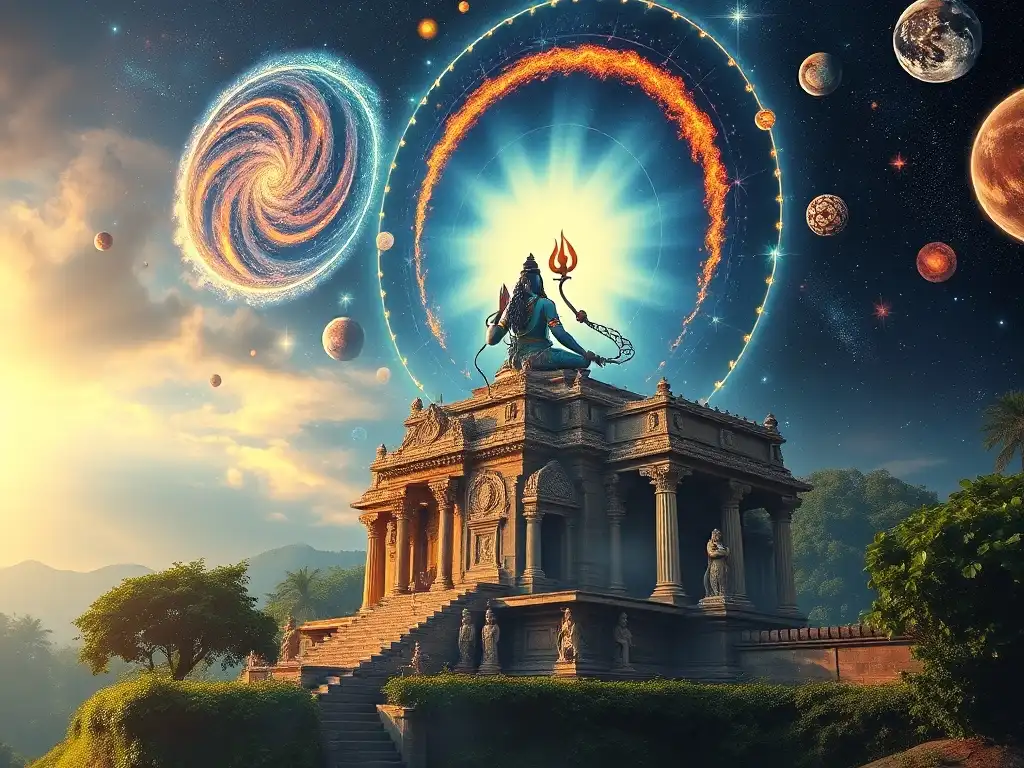
Welcome to Ancient India History, where we embark on a captivating journey through the intricate tapestry of one of the world's oldest civilizations. In our featured article, "The Philosophical Underpinnings of Hindu Cosmology and Creation Myths," we delve into the profound narratives that shape Hindu thought and spirituality. What secrets do these ancient stories hold about the universe and our place within it?
As we explore the rich landscape of Hindu cosmology, you’ll discover how these creation myths not only reflect the beliefs of a bygone era but continue to resonate in the cultural fabric of modern India. Join us as we uncover the layers of meaning and significance behind these timeless tales, inviting you to dive deeper into the wisdom of ancient Indian religions.
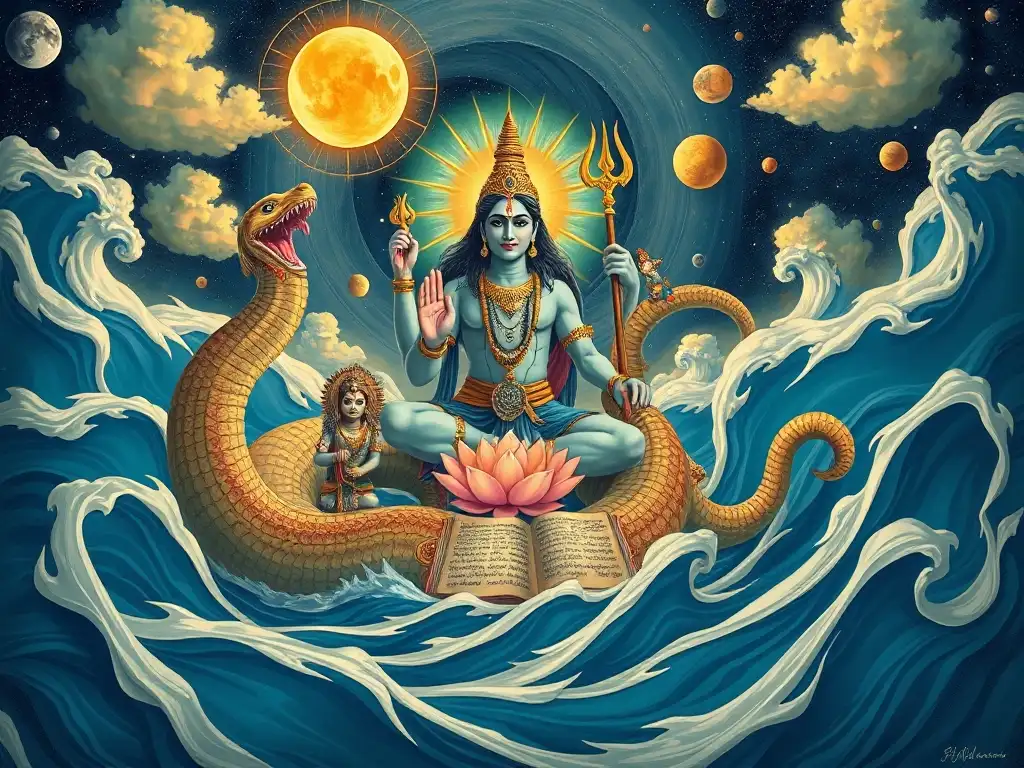
Introduction to Hindu Cosmology and Creation Myths
Hindu cosmology and creation myths represent a profound and intricate aspect of ancient Indian philosophy, offering insights into the universe's nature, origin, and structure. Rooted in a rich tapestry of texts, beliefs, and traditions, these concepts have shaped the spiritual and philosophical landscape of India throughout the ages.
Hindu cosmology is not merely a scientific explanation of the cosmos; it encompasses metaphysical, ethical, and existential dimensions that reflect the values and aspirations of a culture steeped in spirituality and inquiry. The significance of these creation myths extends beyond mere storytelling; they provide a framework for understanding the relationship between the divine, the cosmos, and humanity itself.
In this article, we will explore the philosophical underpinnings of Hindu cosmology and creation myths, examining their historical context, the evolution of these ideas, and the profound influence of Vedic texts on the development of Hindu thought. Through this exploration, we aim to illuminate the ways in which these ancient narratives continue to resonate within the broader context of Hindu philosophy.
Overview of Hindu Cosmology
Hindu cosmology is characterized by a cyclical understanding of time and existence, contrasting with linear perspectives found in other traditions. Central to this cosmology is the concept of Kalpa, a vast period encompassing the creation, preservation, and destruction of the universe. This cyclical model is often depicted in the form of the Yugas, or ages, which illustrate the moral and spiritual decline of humanity over time.
Key elements of Hindu cosmology include:
- Brahman: The ultimate reality or cosmic spirit, representing the source of all creation.
- Maya: The illusion that veils the true nature of reality, leading to the perception of a fragmented universe.
- Atman: The individual soul, which is ultimately one with Brahman, emphasizing the interconnectedness of all existence.
Through these concepts, Hindu cosmology presents a complex interplay between the material and spiritual realms, inviting practitioners to seek understanding and enlightenment beyond the physical world.
Significance of Creation Myths in Hindu Philosophy
Creation myths occupy a vital role in Hindu philosophy, serving as both symbolic narratives and profound metaphysical teachings. These myths are not just stories of how the universe came into being; they encapsulate deeper truths about existence, consciousness, and the divine.
Key points of significance include:
- Moral Lessons: Creation myths often convey ethical and moral lessons, guiding individuals on their spiritual journey.
- Cultural Identity: These narratives help shape the cultural identity of Hindu communities, instilling a sense of belonging and continuity.
- Philosophical Inquiry: The exploration of creation myths prompts philosophical questions about existence, purpose, and the nature of reality.
By reflecting on these myths, practitioners can gain insights into their own lives and the universe, fostering a sense of harmony with the world around them.
Historical Context of Hindu Cosmology
Understanding the historical context of Hindu cosmology is essential for appreciating its development and significance. Ancient Indian civilizations contributed to a rich intellectual tradition that influenced various aspects of philosophy, science, and spirituality.
Evolution of Cosmological Ideas in Ancient India
The evolution of cosmological ideas in ancient India can be traced through various phases, beginning with the early Indus Valley Civilization, where rudimentary understandings of astronomy and natural phenomena emerged. As Vedic culture flourished, more sophisticated cosmological concepts developed, integrating observations of the cosmos with religious thought.
During the Upanishadic period, philosophical inquiry deepened, leading to a more abstract understanding of the cosmos and the nature of existence. This period saw the introduction of key ideas such as the unity of Atman and Brahman, which would become foundational to Hindu thought.
Influence of Vedic Texts on Hindu Cosmology
Vedic texts, particularly the Rigveda, Yajurveda, and Atharvaveda, play a crucial role in shaping Hindu cosmology. These texts contain hymns, rituals, and philosophical discourses that articulate the relationship between the cosmos and the divine.
Significant contributions of Vedic texts include:
- Cosmic Order (Rta): The concept of Rta embodies the natural order and harmony of the universe, emphasizing the interconnectedness of all beings.
- Creation Hymns: Texts such as the Nasadiya Sukta explore the mysteries of creation, questioning the origins of the universe and the nature of existence.
Through these texts, ancient Indian thinkers laid the groundwork for a cosmological framework that continues to influence Hindu philosophy and spirituality today.
Core Concepts of Hindu Cosmology
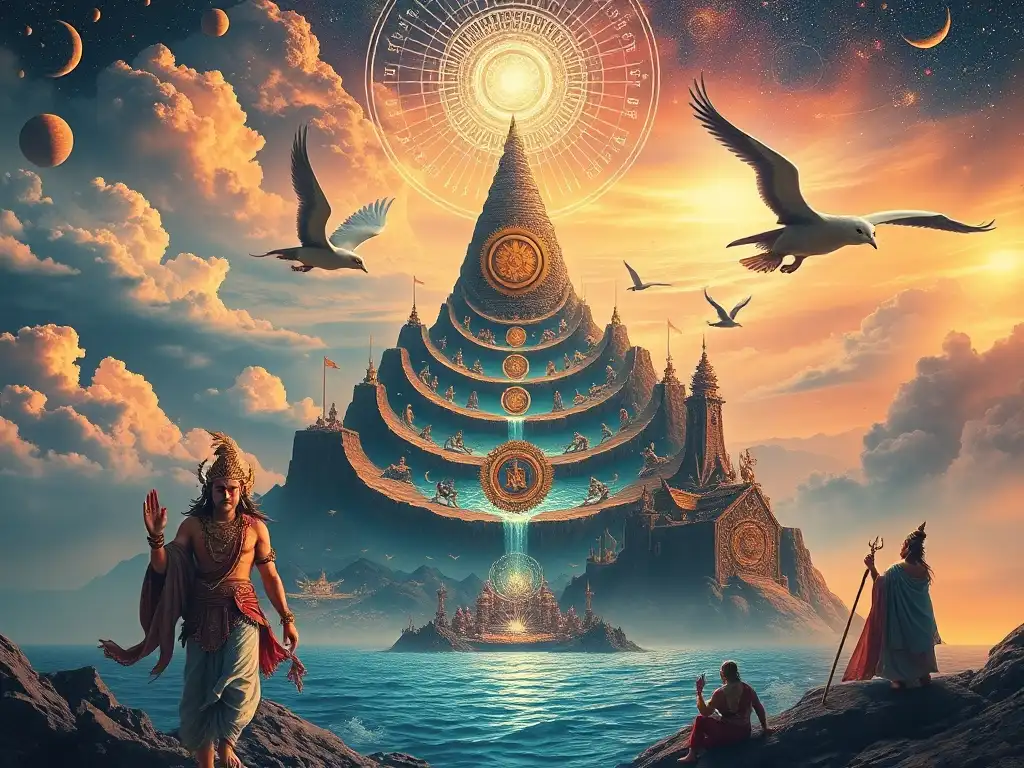
Hindu cosmology is deeply rooted in a vast and intricate understanding of the universe, encompassing various philosophical, spiritual, and scientific elements. At its core, Hindu cosmology revolves around the concepts of Brahman, the ultimate reality, and Maya, the illusion of the material world. Brahman is seen as the eternal, unchanging foundation of existence from which everything emanates, while Maya represents the transient nature of the physical universe.
Another key concept is Dharma, the moral order that sustains the universe, guiding individual actions and their consequences across lifetimes. This interconnectedness underscores the belief that every entity, whether living or non-living, plays a vital role in the grand cosmic design. Additionally, the cyclical nature of existence is a foundational idea, emphasizing that creation and destruction occur in a continuous loop, reflecting the principles of balance and harmony in the universe.
The Universe in Hindu Thought
In Hindu cosmology, the universe is often depicted as a vast, multi-layered structure. It comprises several realms, including the physical world (Prithvi), the celestial realms (Svarga), and the underworld (Patala). This layered approach reflects a belief in both the tangible and intangible aspects of existence. The Trimurti, comprising Brahma (the creator), Vishnu (the preserver), and Shiva (the destroyer), illustrates the dynamic processes of cosmic creation, maintenance, and dissolution.
The Cosmic Egg (Hiranyagarbha) is another pivotal notion, symbolizing the universe's origin. According to some texts, the universe emerged from this primordial egg, which contained all elements of existence. The universe is also described in terms of its Yugas (ages), which represent different epochs in the cosmic cycle, each with distinct characteristics influencing human behavior and spiritual progress.
The Cycles of Creation and Destruction (Kalpa)
Hindu cosmology describes the universe's existence in terms of cycles known as Kalpas, which represent vast periods of time encompassing creation, preservation, and dissolution. Each Kalpa lasts for 4.32 billion years, according to some interpretations, and is further divided into Mahayugas, which are made up of four Yugas: Satya, Treta, Dvapara, and Kali.
At the end of each Kalpa, the universe undergoes a process of destruction, often attributed to the divine influence of Shiva. This destruction is not viewed as a negative event but rather as a necessary step for renewal and regeneration, allowing for the re-emergence of creation in a new form. This cyclical pattern underscores the Hindu belief in the impermanence of the material world and the eternal nature of the soul (Atman), which transcends these cycles.
The Role of Time in Hindu Cosmology
Time in Hindu cosmology is perceived as a circular rather than a linear concept. It is integral to the understanding of the universe's cyclical nature. This perspective is characterized by the belief that time is divided into vast epochs (Yugas), with each age reflecting the moral and spiritual decline or ascent of humanity.
The Kalachakra, or wheel of time, illustrates this cyclical concept, emphasizing that past, present, and future are interconnected. Moreover, Hindu philosophy posits that individual actions (Karma) within these time frames significantly influence one's spiritual evolution and destiny across lifetimes. Thus, the understanding of time in Hindu cosmology is not merely a measure of passing moments but a profound element that shapes existence and the soul's journey.
Key Texts and Sources of Hindu Cosmology
The rich tapestry of Hindu cosmology is woven through various texts that provide insights into its philosophical underpinnings. These texts range from ancient scriptures to epic narratives, each contributing uniquely to the understanding of creation myths and cosmic principles.
The Vedas and Upanishads
The Vedas, as the oldest sacred scriptures of Hinduism, lay the foundational framework for Hindu cosmology. They encompass hymns, rituals, and philosophical discourse, exploring the nature of the universe and humanity's relationship with the divine. The Upanishads, which are philosophical texts that emerged later, delve deeper into metaphysical concepts, emphasizing the unity of Atman and Brahman.
Notably, the Nasadiya Sukta from the Rigveda contemplates the origins of the universe, posing questions about creation that remain central to philosophical inquiry. The Upanishads further expand on these themes, discussing the cyclical nature of existence and the eternal quest for knowledge and enlightenment.
The Puranas: A Repository of Creation Myths
The Puranas serve as a critical source of Hindu cosmological narratives, chronicling creation myths, genealogies of gods, and descriptions of the universe's structure. Texts like the Bhagavata Purana and Vishnu Purana detail the creation process, often involving the divine interplay between various deities.
These texts not only recount the mythological aspects of creation but also embed moral and ethical teachings, providing guidance on how to live in harmony with cosmic laws. The Puranas emphasize the cyclical nature of time and existence, reinforcing the belief that creation and destruction are integral parts of the cosmic order.
The Mahabharata and Ramayana: Cosmological Insights
The epics, Mahabharata and Ramayana, are not only significant literary works but also offer profound cosmological insights. In the Mahabharata, themes of Dharma, justice, and the moral dilemmas faced by characters reflect the broader cosmic principles governing human existence. The Bhagavad Gita, a part of the Mahabharata, addresses the nature of the self and the universe, emphasizing the importance of righteous action in alignment with cosmic order.
Similarly, the Ramayana explores the impact of divine intervention in the world, presenting narratives that illustrate the relationship between humans and divine beings. The actions of deities in these epics often serve as metaphors for cosmic principles, highlighting the interplay of fate, free will, and the cyclical nature of life.
The texts and narratives of Hindu cosmology provide a rich and diverse understanding of creation myths and the philosophical foundations that shape Hindu thought. They illuminate the intricate relationships between the cosmos, humanity, and the divine, offering profound insights into the nature of existence.
Major Creation Myths in Hinduism
Hinduism encompasses a rich tapestry of creation myths that illustrate the diverse philosophical perspectives that define its cosmology. Among these myths, the Hiranyagarbha (Golden Womb) and the Purusha Sukta (Cosmic Being) stand out as foundational narratives that reflect the intricate relationships between the divine, the cosmos, and humanity. These myths not only serve to explain the origins of the universe but also provide insight into the underlying principles that govern existence according to Hindu philosophy.
The creation myths within Hinduism are not mere stories; they encapsulate deeper truths about the nature of reality, existence, and the divine. Each myth carries its own significance and philosophical implications, contributing to the overall understanding of Hindu cosmology and its view of the universe's cyclical nature.
The Hiranyagarbha: The Golden Womb Concept
The concept of Hiranyagarbha, or the "Golden Womb," is one of the oldest creation myths found in the Rigveda. This myth describes the universe as emerging from a cosmic womb, symbolizing a source of life and creation. Hiranyagarbha is often depicted as a primordial entity that embodies the essence of the universe, from which all beings and phenomena originate.
In this narrative, the Golden Womb is not just a physical space; it symbolizes the potentiality of creation. This myth emphasizes the idea that the universe is born from a singular source, reflecting the interconnectedness of all existence. Philosophically, this aligns with the concept of Brahman, the ultimate reality in Hindu thought, which underlies and transcends all creation. The Hiranyagarbha thus serves as a reminder of the unity and sacredness of life, inviting individuals to contemplate their own origins and place within the cosmos.
The Purusha Sukta: The Cosmic Being's Sacrifice
The Purusha Sukta, another significant creation myth, presents the idea of creation through the sacrifice of the cosmic being, Purusha. Described in the Rigveda, Purusha is a primordial man whose body is dismembered, and from his parts, the universe and its various elements are created. This act of sacrifice is not merely a destructive act but is seen as a transformative process that brings order and structure to the chaos of existence.
Each part of Purusha's body corresponds to different aspects of the universe: from his mind came the moon, from his eyes the sun, and from his feet the earth. The Purusha Sukta illustrates the interconnectedness of all beings, suggesting that humanity, nature, and the cosmos are all woven from the same divine fabric. This myth encapsulates the Hindu belief in the sacredness of sacrifice and the idea that creation involves both destruction and renewal, aligning with the cyclical nature of time in Hindu cosmology.
The Role of Deities in Creation Myths
In Hindu cosmology, deities play a crucial role in the creation myths, acting as agents of creation, preservation, and destruction. Major deities such as Brahma, Vishnu, and Shiva embody different aspects of the cosmic cycle. Brahma is often regarded as the creator, Vishnu as the preserver, and Shiva as the destroyer, representing the cyclical nature of existence—creation, sustenance, and dissolution.
These deities are not only involved in the act of creation but also symbolize various philosophical concepts. For instance, Brahma's role emphasizes the importance of knowledge and creativity, while Vishnu’s preservation signifies the sustenance of order and harmony in the universe. Shiva’s destructive nature, on the other hand, highlights the necessity of change and transformation, allowing for new creation to emerge. Thus, the interplay of these deities within the creation myths reflects the complex philosophical underpinnings of Hindu cosmology, illustrating the dynamic relationships within the universe.
Philosophical Implications of Hindu Cosmology
The philosophical implications of Hindu cosmology extend beyond mere narratives; they provide profound insights into the nature of reality, existence, and the human experience. Through its creation myths, Hinduism offers a framework for understanding the interconnectedness of all beings, the essence of reality, and the principles that govern life and rebirth.
The Nature of Reality (Brahman and Atman)
Central to Hindu philosophical thought is the relationship between Brahman (the ultimate reality) and Atman (the individual self). Hindu cosmology posits that while Brahman represents the unchanging, infinite reality, Atman is the individual soul that is ultimately one with Brahman. This duality underscores the belief that the essence of each individual is divine, reflecting the holistic nature of existence.
The recognition that Atman is a manifestation of Brahman leads to the understanding that all beings are interconnected. This realization encourages individuals to seek unity with the divine and fosters a sense of responsibility towards others and the environment, as harming another is akin to harming oneself. Thus, the philosophical exploration of Brahman and Atman within Hindu cosmology invites deeper contemplation of one’s spiritual journey and the quest for enlightenment.
The Interconnectedness of All Beings
Hindu cosmology emphasizes the interconnectedness of all beings, highlighting that every element of the universe is part of a larger whole. This perspective is rooted in the belief that all life forms are expressions of the same divine reality. The creation myths, like the Hiranyagarbha and Purusha Sukta, reinforce this idea by illustrating how diverse forms of existence arise from a singular source.
This interconnectedness fosters a sense of compassion and respect for all life. It promotes the understanding that individual actions have implications for the broader cosmos, echoing the principles of ahimsa (non-violence) and dharma (righteousness). By recognizing the web of life that connects all beings, individuals are encouraged to act responsibly and harmoniously within their environments.
Karma and Rebirth in the Context of Creation
The concepts of karma and rebirth are integral to Hindu cosmology, providing a framework for understanding the consequences of actions in the context of creation. Karma, the law of cause and effect, dictates that every action has repercussions that shape an individual’s current and future existences. This belief is intricately tied to the cyclical nature of creation as depicted in the myths.
Rebirth, or samsara, is seen as a continuous cycle of life, death, and rebirth, where the soul undergoes numerous incarnations. Each life presents opportunities for growth and learning, influenced by the accumulated karma from past actions. Thus, the creation myths serve to contextualize the journey of the soul, highlighting the importance of ethical conduct and spiritual development in the quest for liberation (moksha) from the cycle of rebirth. This philosophical approach provides a profound understanding of existence and the responsibilities inherent in being part of a larger cosmic order.
Comparative Analysis of Hindu Cosmology with Other Traditions
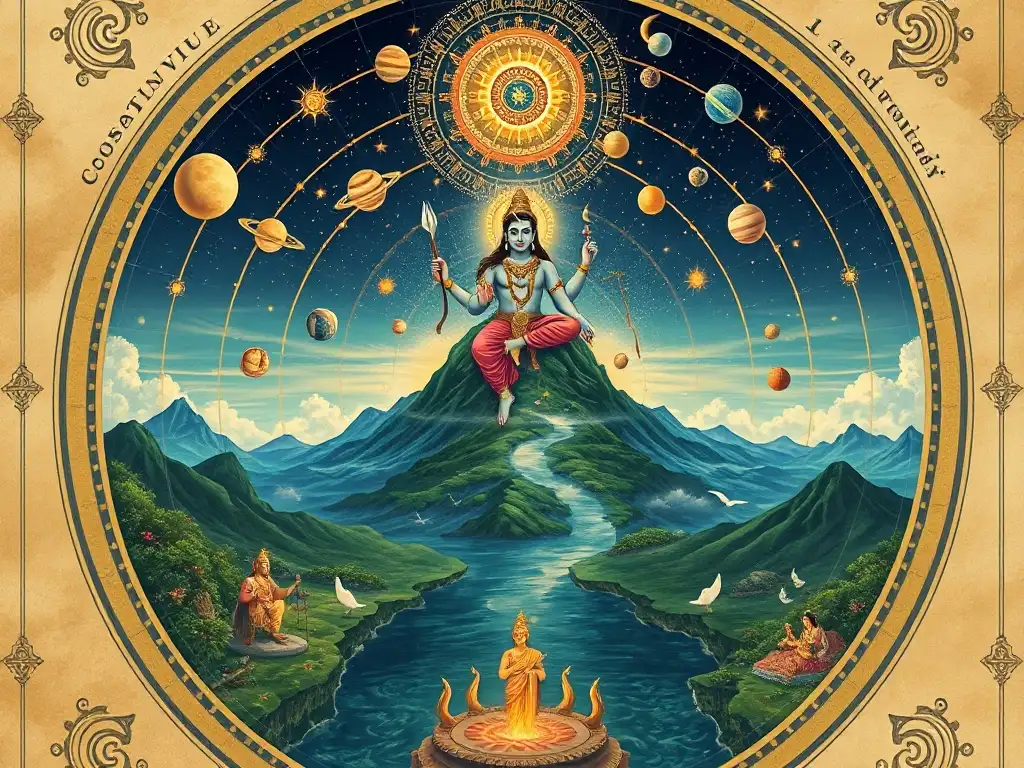
Hindu cosmology presents a fascinating tapestry of beliefs about the universe’s origin, structure, and ultimate purpose. By analyzing its principles alongside other ancient cosmologies—such as those found in Greek, Egyptian, and Mesopotamian traditions—scholars can uncover both shared motifs and distinctive characteristics. While many ancient civilizations sought to explain the cosmos through mythological narratives, Hindu cosmology stands out due to its intricate metaphysical framework, which blends cosmological, philosophical, and theological elements.
Similarities with Other Ancient Cosmologies
Hindu cosmology shares notable similarities with various ancient cosmological frameworks. For instance, many cultures, including the Greeks and Egyptians, also envisioned the universe as having cyclical phases of creation and destruction. The concept of cyclical time, or Kalachakra, in Hindu thought resonates with the ancient Greek notion of the eternal return, where the world undergoes endless cycles of birth, death, and rebirth.
Additionally, both Hindu and Mesopotamian myths often depict a primordial chaos from which order emerges. In Hindu texts, the Cosmic Ocean (Kshira Sagara) serves as the chaotic backdrop from which creation unfolds, paralleling the Abzu in Babylonian mythology. Such parallels highlight a common human endeavor to articulate the complexities of existence, emphasizing the movement from chaos to order.
Unique Features of Hindu Creation Myths
Hindu creation myths are uniquely characterized by their profound philosophical depth and diverse narratives. Unlike many other traditions that typically focus on a singular act of creation by a deity, Hindu texts present multiple creation stories, such as those found in the Rigveda and the Upanishads. One of the most notable tales is that of Purusha, the cosmic being whose sacrifice leads to the creation of the universe and all living entities, symbolizing the interconnectedness of life.
Furthermore, Hindu cosmology incorporates the concept of Brahman, the ultimate reality, which transcends and pervades the universe. This philosophical underpinning distinguishes Hindu thought from other traditions, as it emphasizes the unity of all existence and the cyclical nature of creation, preservation, and destruction through divine manifestations like Brahma, Vishnu, and Shiva.
The Influence of Hindu Cosmology on Other Philosophical Traditions
The philosophical concepts inherent in Hindu cosmology have significantly influenced various philosophical traditions both within and outside India. The cyclical view of time and the idea of an eternal universe have found resonance in Buddhist thought, which borrows elements from Hindu cosmology while developing its own interpretations of existence and non-existence.
Moreover, the metaphysical discussions surrounding Brahman and Atman have permeated into the discourse of Western philosophy, particularly during the Enlightenment and the rise of transcendentalism. Thinkers like Ralph Waldo Emerson and Henry David Thoreau drew from Hindu texts to explore concepts of individualism and the interconnectedness of life, thus showcasing the reach and impact of Hindu cosmological thought.
Conclusion: The Lasting Impact of Hindu Cosmology and Creation Myths
The exploration of Hindu cosmology and its creation myths reveals a rich and layered understanding of existence. This framework not only informs spiritual practice but also contributes to broader philosophical discussions.
Relevance in Contemporary Spirituality
In contemporary spirituality, Hindu cosmology continues to resonate with seekers of meaning and purpose. The cyclical nature of creation and the emphasis on interconnectedness find expression in modern ecological movements that advocate for sustainable living and respect for all forms of life. Additionally, concepts like Karma and Dharma provide ethical guidelines that are relevant in today's globalized society, offering insights into personal responsibility and social harmony.
Contributions to Global Philosophical Thought
Hindu cosmology has made significant contributions to global philosophical thought, enriching the dialogue between Eastern and Western philosophies. The interplay of metaphysical ideas, the exploration of consciousness, and the quest for ultimate reality encourage a more holistic understanding of existence. As cultures continue to intersect and exchange ideas, the principles of Hindu cosmology remain a vital part of the conversation surrounding the nature of the universe and humanity's place within it.
References and Further Reading
Studying Hindu cosmology and creation myths offers profound insights into the philosophical and spiritual fabric of ancient Indian thought. The following resources provide a comprehensive exploration of these themes, catering to both academic interests and personal curiosity.
Recommended Texts on Hindu Cosmology
-
"The Upanishads"
A collection of ancient texts that form the philosophical basis of Hinduism, the Upanishads delve into concepts of the universe, the self, and ultimate reality (Brahman). They provide foundational insights into Hindu cosmology.
-
"The Bhagavad Gita"
This revered scripture not only addresses moral dilemmas and philosophical inquiries but also touches upon the nature of the cosmos and the relationship between the divine and the material world.
-
"Cosmology in Hinduism" by David Kinsley
Kinsley’s work offers an overview of Hindu cosmological concepts, examining how they relate to ritual practices and theological beliefs, making it a valuable resource for understanding the broader context of Hindu cosmology.
-
"Hindu Mythology: A Reader" by W.J. Johnson
This anthology compiles various myths and legends, providing insights into how these narratives shape Hindu cosmological views and reflect the beliefs of ancient Indian society.
-
"The Puranas"
A genre of ancient Indian literature that includes mythological narratives, cosmological descriptions, and genealogies of gods, heroes, and sages. The Puranas are essential for understanding the evolution of Hindu cosmological thought.
Online Resources for Understanding Hindu Creation Myths
-
The Internet Sacred Text Archive
A comprehensive collection of sacred texts from various religions, including pivotal Hindu scriptures. This archive offers free access to texts that outline Hindu creation myths and cosmological theories.
-
Hinduwebsite.com
An online resource that provides articles, essays, and information on various aspects of Hinduism, including detailed explanations of creation myths and cosmological concepts in Hindu philosophy.
-
The Oxford Hinduism Series
This series features academic articles and resources that can be accessed online, covering a wide range of topics related to Hindu philosophy, including cosmology and creation myths.
-
BBC Religion - Hinduism
The BBC’s religion section provides insightful articles and explanations of Hindu beliefs, including an overview of creation myths, cosmological views, and their significance in Hindu thought.
-
YouTube Lectures and Documentaries
Numerous scholars and educators have created video content that explores Hindu cosmology and creation myths. Channels such as "The School of Life" and "Hindu Academy" offer engaging and informative material that can enhance understanding of these complex topics.
These recommended texts and online resources serve as valuable tools for anyone interested in delving deeper into the philosophical underpinnings of Hindu cosmology and creation myths. They illuminate the intricate beliefs and narratives that have shaped Hindu thought throughout history.
- Introduction to Hindu Cosmology and Creation Myths
- Overview of Hindu Cosmology
- Significance of Creation Myths in Hindu Philosophy
- Historical Context of Hindu Cosmology
- Core Concepts of Hindu Cosmology
- Key Texts and Sources of Hindu Cosmology
- Major Creation Myths in Hinduism
- Philosophical Implications of Hindu Cosmology
- Comparative Analysis of Hindu Cosmology with Other Traditions
- Conclusion: The Lasting Impact of Hindu Cosmology and Creation Myths
- References and Further Reading
Frequently Asked Questions
What is Hindu cosmology?
Hindu cosmology refers to the philosophical framework that explains the structure and origin of the universe according to Hindu beliefs. It encompasses various creation myths and concepts about time, space, and existence.
How do creation myths in Hinduism differ from other cultures?
Hindu creation myths often emphasize cyclical time and the concept of eternal recurrence, contrasting with many cultures that have linear narratives of creation. This reflects a unique understanding of life, death, and rebirth.
What role do texts like the Vedas play in Hindu cosmology?
The Vedas are foundational texts that provide insights into Hindu cosmology and creation myths. They contain hymns and philosophies that explore the nature of the universe and the divine.
How does the concept of Brahman relate to Hindu creation myths?
In Hindu cosmology, Brahman is the ultimate reality or cosmic spirit. Creation myths often depict the emergence of the universe from Brahman, highlighting the relationship between the divine and the material world.
Why is understanding Hindu cosmology important for cultural studies?
Understanding Hindu cosmology offers a deeper insight into the philosophical and spiritual traditions of India. It reveals how ancient civilizations viewed the universe, influencing their art, literature, and social structures.
Final Reflection: Embracing the Depth of Hindu Cosmology and Creation Myths
The exploration of Hindu cosmology and creation myths reveals profound insights into our existence and the universe, making it increasingly relevant in today's fast-paced world. As we grapple with existential questions and the complexities of life, these ancient narratives offer a rich tapestry of understanding that transcends time and culture. They remind us that our search for meaning is not a solitary journey but a shared human experience that connects us to our roots and to one another.
Hindu cosmology and creation myths have significantly shaped cultural and social landscapes, influencing art, literature, and spiritual practices across the globe. The intricate philosophies embedded within these myths encourage us to reflect on our place in the cosmos and the cyclical nature of life. As Carl Jung once said, “Myth is a fact that is not a fact.” This highlights how these narratives, while not always literal truths, resonate deeply with our collective psyche and continue to inspire generations in their quest for understanding and connection.
As you ponder the lessons of Hindu cosmology and creation myths, I invite you to reflect on how these ancient teachings can inform your own life. Consider how the themes of creation, destruction, and rebirth resonate with your personal journey. Embrace the wisdom of these narratives and let them guide you in navigating the complexities of modern existence, fostering a deeper appreciation for the interconnectedness of all life.
Unveil the Depths of Hindu Cosmology Today!
Thank you for diving into the fascinating world of Hindu cosmology and creation myths with us! Your interest helps keep this rich tradition and its philosophical insights alive. Now, it’s time to take your exploration even further. Here are some key actions you can take:
- Dive deeper by reading various texts or interpretations on Hindu cosmology. Explore ancient scriptures or contemporary analyses that resonate with your understanding.
- Share what you’ve learned! Engage with your friends or online communities to inspire others to appreciate the beauty of these myths and their profound philosophies.
- Join our community discussions or forums at ancientindiahistory.com , where you can connect with others who share your passion and curiosity about this subject.
What aspect of Hindu cosmology resonates most with you, and how might it influence your own understanding of the universe? Your insights could spark a meaningful conversation!