
The Role of Yoga in Hindu Philosophy: A Path to Enlightenment

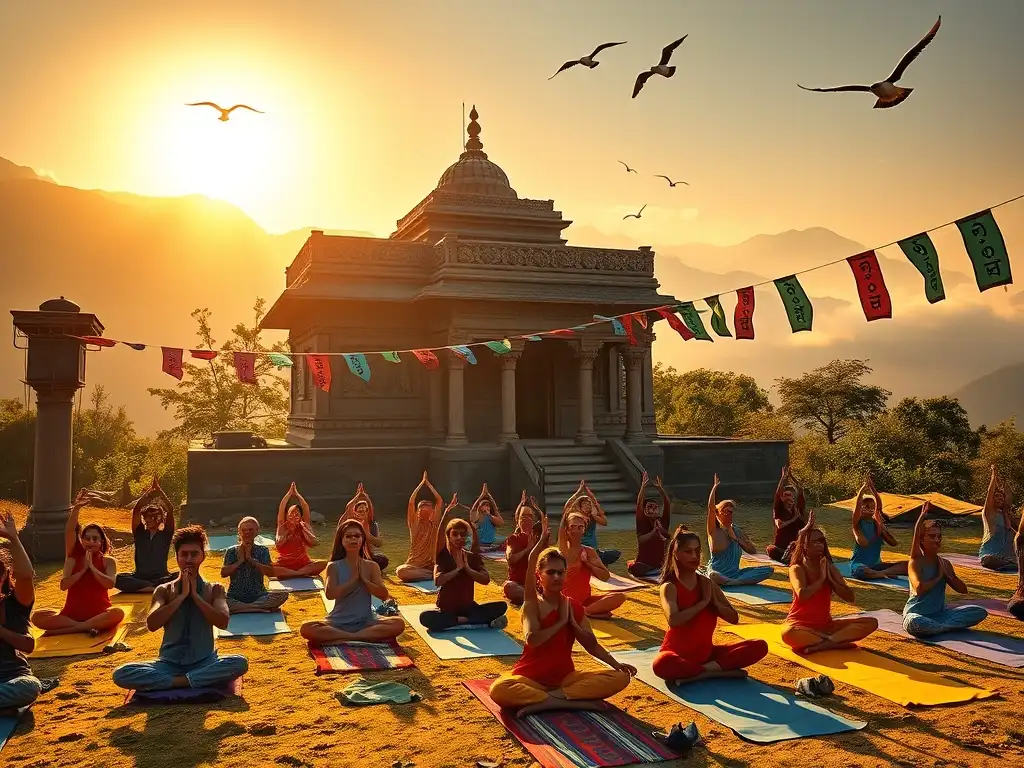
Welcome to Ancient India History, where we embark on a fascinating journey through the rich tapestry of ancient Indian civilizations. From the enigmatic Indus Valley to the dynamic Gupta Empire, we uncover the profound contributions that have shaped not only India but the world. In this exploration, we delve into the intricate relationship between Yoga and Hindu philosophy, a practice that has transcended time and culture, offering a pathway to enlightenment. Prepare to be captivated as we reveal the historical significance and transformative power of yoga—stay curious, and let your journey into the depths of ancient wisdom begin!
Introduction to Yoga in Hindu Philosophy History
Yoga, a term that resonates deeply within the spiritual and philosophical landscape of ancient India, serves as a pivotal bridge between the physical and the metaphysical. In the context of Hindu philosophy, yoga is much more than a mere set of physical postures; it is a profound discipline aimed at achieving spiritual enlightenment and self-realization.
The history of yoga in Hindu philosophy is rich and complex, intertwining with various philosophical schools and practices that have evolved over millennia. Understanding this intricate relationship is essential not only for comprehending the essence of yoga itself but also for appreciating its transformative potential in the quest for spiritual awakening.
The practice of yoga within Hinduism can be traced back to the Vedic texts and has been continuously shaped by various philosophies and traditions over time. From the early references in the Vedas to the more structured frameworks found in the Upanishads and the Bhagavad Gita, yoga has played a fundamental role in the spiritual discourse of ancient Indian civilization. This article aims to explore the historical context of yoga in Hindu philosophy, shedding light on its origins, significance, and the key texts that have shaped its practice and understanding.
Definition of Yoga in Hinduism
In Hinduism, yoga is derived from the Sanskrit root word "yuj," which means "to unite" or "to join." This unification typically refers to the connection between the individual self (Atman) and the universal consciousness (Brahman). Thus, yoga represents a holistic approach to life that integrates physical, mental, and spiritual practices. It encompasses various paths, including:
- Karma Yoga (the path of action)
- Bhakti Yoga (the path of devotion)
- Jnana Yoga (the path of knowledge)
- Dhyana Yoga (the path of meditation)
Each of these paths offers a unique approach to achieving spiritual enlightenment, emphasizing different aspects of the human experience. Through these diverse practices, yoga in Hinduism encourages individuals to cultivate self-awareness, discipline, and a deeper understanding of their place within the cosmos.
Importance of Philosophy in Yoga Practice
The significance of philosophy in yoga practice cannot be overstated. Philosophy provides the foundational principles and ethical guidelines that inform the practice of yoga, offering practitioners a framework to navigate their spiritual journeys. Key philosophical concepts such as Dharma (duty), Karma (action and consequence), and Moksha (liberation) are integral to the practice of yoga. These ideas serve to guide practitioners in their pursuit of enlightenment, ensuring that their actions are aligned with a higher moral and spiritual purpose.
The philosophical underpinnings of yoga also encourage a holistic understanding of the self, promoting the development of virtues such as compassion, humility, and perseverance. By integrating these philosophical principles into their practice, individuals can cultivate a deeper connection with themselves and the world around them, ultimately leading to a more profound experience of spiritual awakening.
Historical Context of Yoga in Hindu Philosophy
The historical context of yoga in Hindu philosophy reveals a fascinating evolution of thought and practice that has shaped the spiritual landscape of ancient India. From its origins in the Vedic period to its comprehensive articulation in later philosophical texts, yoga has consistently served as a vital component of Hindu thought.
Origins of Yoga in Ancient India
The roots of yoga can be traced back to the Vedic texts, which date back to around 1500 BCE. These texts contain hymns, rituals, and philosophical discussions that lay the groundwork for the spiritual practices that would later evolve into yoga. The concept of meditation and the use of breath control (Pranayama) are early indications of yogic practices. Over time, these ideas were further developed in the Upanishads, where the focus shifted towards the exploration of the self and the nature of reality.
By the time of the Bhagavad Gita, composed around the 2nd century BCE, yoga had become a well-established discipline, emphasizing the importance of selfless action and devotion. This period marked a significant turning point in the integration of yoga with philosophical thought, providing a comprehensive understanding of the relationship between the individual and the universal.
Key Texts Discussing Yoga and Philosophy
Several key texts have played a crucial role in shaping the discourse on yoga within Hindu philosophy. Notable among these are:
| Text | Description |
|---|---|
| Vedas | The oldest scriptures of Hinduism, mentioning early meditative practices. |
| Upanishads | Philosophical texts that delve into the nature of self and ultimate reality. |
| Bhagavad Gita | A dialogue that explores various paths of yoga, merging action with spirituality. |
| Yoga Sutras of Patanjali | A foundational text outlining the principles and practices of yoga. |
These texts not only provide philosophical insights but also practical guidance on the paths of yoga, establishing a rich tradition that continues to influence spiritual seekers to this day. By studying these texts, one can gain a deeper understanding of how yoga functions within the broader scope of Hindu philosophy, fostering a journey towards enlightenment and self-discovery.
Different Schools of Thought on Yoga in Hindu Philosophy
In the rich tapestry of Hindu philosophy, yoga occupies a central role across various schools of thought. Each school provides unique interpretations and methodologies surrounding yoga, influencing spiritual practices and the understanding of the self. The most notable schools include Vedanta, Samkhya, and Tantra, each contributing its perspective to the broader discourse on yoga and its significance in the pursuit of enlightenment.
Vedanta and Its Perspective on Yoga
Vedanta, one of the six orthodox schools of Hindu philosophy, primarily focuses on the teachings found in the Upanishads. This school emphasizes the ultimate reality, Brahman, and the individual soul, Atman, positing that understanding the relationship between the two is key to liberation (moksha).
In Vedanta, yoga is seen as a means of self-realization and a way to attain knowledge of Brahman. The most significant form of yoga within this framework is Jnana Yoga, or the path of knowledge. Practitioners engage in self-inquiry (atma-vichara) and contemplation, seeking to discern the true nature of reality.
Moreover, Bhakti Yoga, the path of devotion, is also prevalent in Vedantic thought, emphasizing love and devotion to a personal deity as a means to achieve union with the divine. Both paths ultimately aim for the realization of oneness with Brahman, reflecting the holistic nature of yoga in Vedanta.
Samkhya Philosophy and the Role of Yoga
Samkhya philosophy, founded by Sage Kapila, provides a dualistic framework that distinguishes between purusha (consciousness) and prakriti (matter). In this system, yoga serves as a practical tool to achieve liberation by understanding and separating the self from the material world.
The Samkhya-Yoga system, as articulated by Patanjali in the Yoga Sutras, emphasizes the importance of mental discipline and ethical living as prerequisites for spiritual growth. The eight limbs of yoga (Ashtanga Yoga) outlined by Patanjali include ethical precepts (yamas and niyamas), physical postures (asanas), breath control (pranayama), sensory withdrawal (pratyahara), concentration (dharana), meditation (dhyana), and ultimately, samadhi (absorption).
For Samkhya, the practice of yoga is crucial for overcoming ignorance and achieving clarity, enabling practitioners to realize their true nature as purusha, thus attaining liberation.
The Influence of Tantra on Yoga Practices
Tantra represents a complex and often misunderstood aspect of Hindu philosophy that significantly influences yoga practices. Unlike the more ascetic and renunciatory approaches found in other schools, Tantra embraces the material world as a means to attain spiritual goals. It views the body and its energies as fundamental to the spiritual path.
In Tantra, various yogic practices are employed, including mantra (sacred sounds), mudra (hand gestures), and bandha (body locks), to awaken the latent energies within the body, particularly the kundalini energy lying at the base of the spine. This approach emphasizes the use of rituals and meditative techniques to achieve a direct experience of the divine.
Tantric yoga serves as a bridge between the physical and spiritual realms, encouraging practitioners to explore their inner selves and the universe through the sacredness of their existence, ultimately leading to enlightenment.
The Path to Enlightenment through Yoga
Yoga, as a spiritual discipline, offers a structured path toward enlightenment, guiding individuals through various practices that foster self-awareness, discipline, and connection to the divine. This journey is not merely physical; it encompasses the mind, emotions, and spirit, creating a holistic approach to spiritual growth.
Understanding Enlightenment in Hindu Philosophy
In Hindu philosophy, enlightenment is often described as moksha, the liberation from the cycle of birth and death (samsara). It is characterized by the realization of one's true nature and unity with the cosmos. Enlightenment involves transcending the illusions of the material world and understanding the eternal essence of the self.
Different schools interpret enlightenment through their lenses. For Vedanta, it is the realization of the oneness of Atman and Brahman. In Samkhya, enlightenment means recognizing the distinction between purusha and prakriti. Tantra views it as the realization of the divine in every aspect of existence. Regardless of the perspective, the essence of enlightenment lies in understanding the ultimate truth and experiencing profound inner peace.
How Yoga Facilitates Spiritual Awakening
Yoga facilitates spiritual awakening by providing a framework for self-discipline, introspection, and connection to the divine. Through regular practice, individuals cultivate mindfulness, enhance their emotional well-being, and develop a deeper understanding of their thoughts and actions.
As practitioners engage in various yogic techniques—such as asanas for physical strength, pranayama for breath control, and meditation for mental clarity—they begin to clear the fog of ignorance that clouds their perception. This process fosters a greater awareness of the self and the interconnectedness of all beings.
Moreover, the ethical principles inherent in yoga, such as non-violence (ahimsa) and truthfulness (satya), encourage practitioners to lead a life of integrity and compassion. These values not only enhance personal growth but also contribute to a harmonious society, reflecting the transformative power of yoga in the quest for enlightenment.
Types of Yoga in Hindu Philosophy
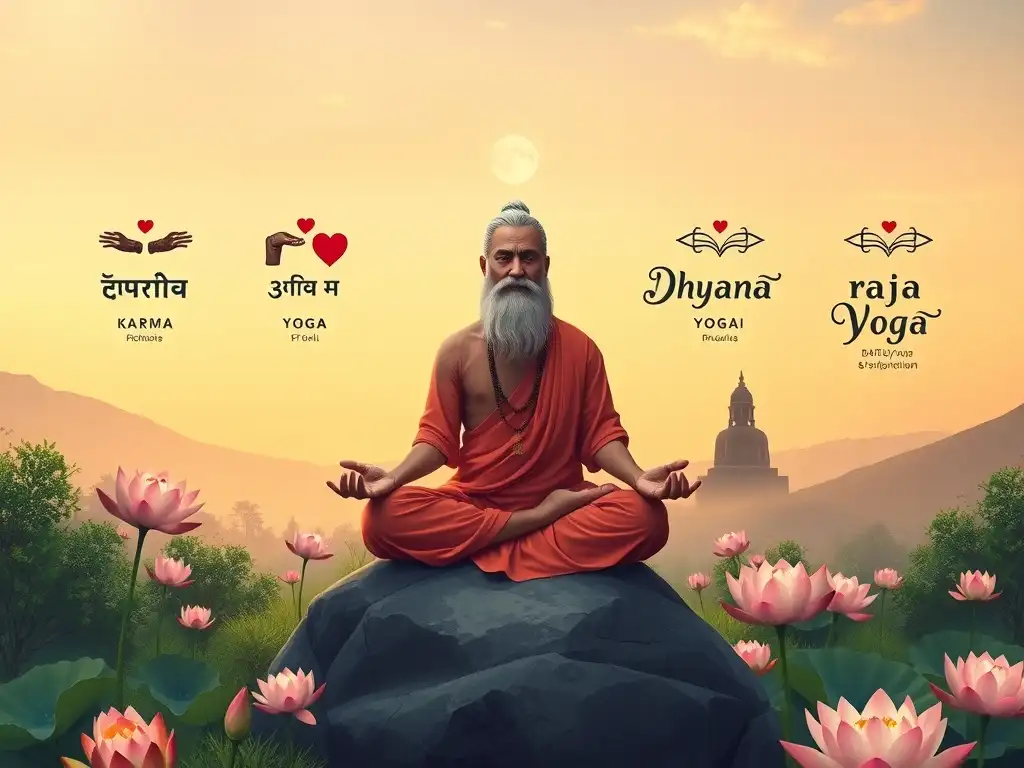
Hindu philosophy recognizes several types of yoga, each offering unique pathways to spiritual growth and self-realization. These paths are designed to cater to different temperaments and inclinations of individuals. The four primary types of yoga—Karma Yoga, Bhakti Yoga, Jnana Yoga, and Raja Yoga—represent diverse yet interrelated approaches to achieving enlightenment and understanding one's true nature.
Karma Yoga: The Path of Action
Karma Yoga, often referred to as the "Path of Action," emphasizes selfless service and the importance of performing one's duties without attachment to the results. This practice is rooted in the Bhagavad Gita, where Lord Krishna imparts wisdom to Arjuna regarding the significance of righteous action. The core tenets of Karma Yoga include:
- Selflessness: Engaging in actions for the benefit of others rather than for personal gain.
- Detachment: Understanding that the fruits of one's labor are not within one’s control, thus reducing anxiety and stress.
- Duty (Dharma): Fulfilling one's responsibilities in accordance with one's role in society.
By practicing Karma Yoga, individuals cultivate a sense of purpose and develop a deeper connection with the world around them, paving the way for spiritual growth and enlightenment.
Bhakti Yoga: The Path of Devotion
Bhakti Yoga, known as the "Path of Devotion," centers around the love and devotion towards a personal deity or the divine. This form of yoga is characterized by:
- Surrender: Devotees offer their actions, thoughts, and emotions to God, fostering a deep sense of connection and love.
- Prayer and Rituals: Engaging in devotional practices such as chanting, singing hymns, and participating in religious ceremonies.
- Community: Bhakti Yoga often involves communal worship, enhancing the sense of belonging and shared spiritual experience.
The practice of Bhakti Yoga encourages emotional and spiritual fulfillment, allowing practitioners to experience divine love and grace, ultimately leading to liberation (moksha).
Jnana Yoga: The Path of Knowledge
Jnana Yoga, or the "Path of Knowledge," emphasizes the pursuit of wisdom and self-inquiry as means to attain enlightenment. This path involves:
- Study of Scriptures: Engaging deeply with texts such as the Upanishads and the Bhagavad Gita to gain insights into the nature of reality.
- Meditation and Contemplation: Reflecting on philosophical concepts and questioning the nature of the self and existence.
- Discrimination (Viveka): Developing the ability to discern between the eternal (Brahman) and the transient (the material world).
Through Jnana Yoga, practitioners seek to understand their true essence and the nature of the universe, fostering a profound connection with the ultimate reality.
Raja Yoga: The Path of Meditation
Raja Yoga, often referred to as the "Royal Path," focuses on meditation and the cultivation of mental discipline. It is primarily outlined in the Yoga Sutras of Patanjali, which detail an eightfold path (Ashtanga) comprising:
- Yama: Ethical disciplines.
- Niyama: Personal observances.
- Asana: Physical postures.
- Pranayama: Breath control.
- Pratyahara: Withdrawal of the senses.
- Dharana: Concentration.
- Dhyana: Meditation.
- Samadhi: Absorption or enlightenment.
Raja Yoga emphasizes the importance of inner peace and mental clarity as a means to achieve spiritual awakening, allowing practitioners to realize their true nature through disciplined practice.
The Impact of Yoga on Personal Development in Hindu Philosophy
The practice of yoga plays a pivotal role in personal development within Hindu philosophy, serving as a transformative tool for individuals on their spiritual journeys. Emphasizing self-awareness, ethical living, and mental discipline, yoga fosters profound changes within practitioners.
Yoga as a Means of Self-Realization
Yoga serves as a powerful means of self-realization, allowing individuals to uncover their true selves beyond the ego and societal conditioning. Through consistent practice, practitioners gain insights into their nature and purpose, leading to:
- Increased Self-Awareness: Understanding personal strengths, weaknesses, and desires.
- Inner Peace: Cultivating a calm mind and emotional stability.
- Empowerment: Realizing one's potential and taking responsibility for one's life.
This journey of self-discovery ultimately guides individuals towards enlightenment, aligning their lives with their true essence.
The Relationship between Yoga and Dharma
The practice of yoga is intrinsically linked to the concept of dharma, or one's duty in life. By engaging in yoga, individuals learn to align their actions with their responsibilities, leading to:
- Moral Integrity: Acting in accordance with ethical principles and values.
- Balance: Harmonizing personal aspirations with societal obligations.
- Fulfillment: Achieving a sense of purpose through the pursuit of one's dharma.
This relationship underscores the importance of living a balanced life, where spiritual practice complements one’s duties and responsibilities.
Cultivating Mindfulness and Awareness through Yoga
Yoga is a profound practice for cultivating mindfulness and heightened awareness. Through techniques such as meditation, breath control, and physical postures, practitioners learn to:
- Focus on the Present: Developing the ability to remain anchored in the current moment.
- Enhance Concentration: Sharpening mental clarity and attentiveness.
- Emotional Regulation: Gaining skills to manage stress and emotional responses effectively.
These benefits not only improve overall well-being but also pave the way for deeper spiritual insights and connection to the divine, making yoga an essential component of personal development in Hindu philosophy.
Conclusion: The Integral Role of Yoga in Hindu Philosophy
Yoga holds a fundamental place in Hindu philosophy, serving as a bridge between the physical realm and spiritual enlightenment. Its practice is not merely about physical postures but encompasses a holistic approach that integrates mind, body, and spirit. Throughout the history of Hinduism, various philosophical schools have elaborated on the nature and significance of yoga, delineating its paths—such as Karma, Bhakti, and Jnana yoga—that cater to different spiritual inclinations. This multifaceted approach allows individuals to explore their relationship with the universe, cultivating a deeper understanding of themselves and their place within the grand tapestry of life.
The teachings of ancient texts like the Bhagavad Gita and the Yoga Sutras of Patanjali illuminate the transformative power of yoga, demonstrating how it can lead to self-realization and tranquility. As practitioners engage in yoga, they embark on a journey that not only enhances their physical well-being but also fosters a profound connection with the divine. Thus, yoga is not just a practice; it is a way of life that embodies the essence of Hindu philosophy.
Summary of Key Insights on Yoga and Enlightenment
- Historical Context: Yoga's origins can be traced back to ancient Indian scriptures, where it was described as a discipline for achieving higher states of consciousness.
- Philosophical Underpinnings: Different schools of Hindu philosophy interpret yoga through various lenses, emphasizing its role in attaining moksha (liberation) and self-realization.
- Paths of Yoga: The diverse paths—such as Raja, Karma, Bhakti, and Jnana yoga—offer tailored approaches that cater to distinct spiritual aspirations, making yoga accessible to a wide audience.
- Practical Applications: Yoga is not solely a spiritual practice; it includes physical exercises, meditation, and ethical precepts that contribute to holistic well-being.
- Impact on Spiritual Growth: Engaging in yoga facilitates a deeper understanding of oneself and the universe, ultimately guiding practitioners toward enlightenment.
The Continuing Relevance of Yoga in Contemporary Hindu Thought
In contemporary Hindu thought, the relevance of yoga has only grown, as it resonates with the increasing global quest for spirituality and self-improvement. Modern practitioners often seek yoga not just for physical fitness but as a means to achieve mental clarity, emotional stability, and spiritual connection. This evolution reflects a broader trend in which ancient practices are being adapted to meet the needs of modern life.
Many contemporary Hindu leaders and spiritual teachers emphasize the importance of yoga in daily life, advocating for its integration into personal and community practices. The communal aspect of yoga reinforces social bonds and collective well-being, making it a vital component of contemporary Hindu identity. Furthermore, as the world grapples with stress and disconnection, yoga offers a path to mindfulness and peace, reaffirming its timeless significance in the spiritual landscape.
Further Reading and Resources on Yoga in Hindu Philosophy
To deepen your understanding of yoga's role in Hindu philosophy, the following texts and online resources are recommended.
Recommended Texts and Commentaries
- The Yoga Sutras of Patanjali: This foundational text outlines the principles of yoga and its eight limbs, providing insights into its philosophical dimensions.
- Bhagavad Gita: A key scripture that discusses various forms of yoga within the context of duty and devotion, illustrating the interplay between action and spirituality.
- Hatha Yoga Pradipika: A classic text that details the practices and techniques of Hatha yoga, emphasizing the importance of physical postures and breathing.
- The Upanishads: These ancient texts explore the nature of reality and the self, offering philosophical insights that are crucial for understanding yoga's spiritual goals.
Online Resources and Communities for Yoga Practitioners
- Yoga Alliance: A professional association that offers resources for yoga teachers and students, including educational materials and community support.
- The Himalayan Institute: Provides online courses and resources focused on the philosophical and practical aspects of yoga.
- Insight Timer: A meditation app that features guided sessions, including practices rooted in yoga philosophy, helping practitioners cultivate mindfulness.
- Yoga International: Offers a variety of classes and articles that explore different styles and philosophies of yoga, catering to all levels of practitioners.
By engaging with these resources, individuals can enhance their understanding of yoga in Hindu philosophy and apply its teachings to their own spiritual journeys.
- Introduction to Yoga in Hindu Philosophy History
- Historical Context of Yoga in Hindu Philosophy
- Different Schools of Thought on Yoga in Hindu Philosophy
- The Path to Enlightenment through Yoga
- Types of Yoga in Hindu Philosophy
- The Impact of Yoga on Personal Development in Hindu Philosophy
- Conclusion: The Integral Role of Yoga in Hindu Philosophy
- Further Reading and Resources on Yoga in Hindu Philosophy
- What is the significance of Yoga in Hindu philosophy?
- How did ancient Indian civilizations influence the development of Yoga?
- What are the different types of Yoga mentioned in Hindu texts?
- How does Yoga contribute to the concept of enlightenment in Hindu philosophy?
- What are some key texts that discuss Yoga in Hindu philosophy?
Frequently Asked Questions
What is the significance of Yoga in Hindu philosophy?
Yoga in Hindu philosophy serves as a practice for spiritual growth, promoting a deeper understanding of the self and the universe, ultimately leading to enlightenment.
How did ancient Indian civilizations influence the development of Yoga?
Ancient Indian civilizations, particularly during the Indus Valley and Vedic periods, laid the foundational texts and practices that shaped Yoga, integrating it into the broader context of Hindu philosophy.
What are the different types of Yoga mentioned in Hindu texts?
The major types of Yoga discussed in Hindu texts include Bhakti (devotion), Karma (action), Jnana (knowledge), and Raja (meditation), each offering unique paths to personal and spiritual development.
How does Yoga contribute to the concept of enlightenment in Hindu philosophy?
Yoga is viewed as a transformative journey that helps individuals transcend the ego and achieve self-realization, aligning their consciousness with the universal spirit.
What are some key texts that discuss Yoga in Hindu philosophy?
Key texts such as the Yoga Sutras of Patanjali, the Bhagavad Gita, and the Upanishads provide essential insights into the principles and practices of Yoga within the framework of Hindu philosophy.
Final Reflection: The Transformative Power of Yoga in Hindu Philosophy
Yoga in Hindu philosophy history serves not only as a spiritual practice but as a profound pathway to enlightenment that resonates deeply in our contemporary world. As we navigate the complexities of modern life, the principles of yoga remind us of the importance of inner peace and self-awareness. The teachings of ancient sages continue to illuminate our paths, urging us to cultivate mindfulness and harmony in an age often marked by chaos and distraction.
The influence of yoga extends far beyond physical postures; it has woven itself into the very fabric of our cultural and social landscape. The practice encourages individuals to connect with their true selves, fostering a sense of community and shared purpose. As we embrace yoga, we also embrace the wisdom of the ages, which emphasizes the interconnectedness of all beings. Yoga is the journey of the self, through the self, to the self.
– The Bhagavad Gita. This quote encapsulates the essence of yoga as a transformative journey that transcends mere physicality, inviting us to explore the depths of our consciousness.
As you reflect on the insights shared in this article, consider how you can integrate the principles of yoga into your daily life. Embrace the opportunity to cultivate mindfulness, compassion, and self-discovery. Let the teachings of yoga inspire you to embark on your own journey toward enlightenment, fostering a deeper connection with yourself and the world around you. Remember, the path to inner peace and understanding begins with a single breath—take that step today.
Embrace Your Journey to Enlightenment Today!
Thank you for exploring the profound connection between yoga and Hindu philosophy. By diving into this topic, you’ve unlocked the wisdom that can lead you toward personal growth and enlightenment. Now, it’s time to take actionable steps on your path!
- Begin a daily yoga practice: Set aside time each morning or evening to connect your mind, body, and spirit through yoga.
- Engage with a local community: Find a yoga class or group to share your experiences and deepen your practice with others.
- Explore sacred texts: Dedicate a weekend to immerse yourself in important writings such as the Bhagavad Gita or Upanishads, discovering the teachings that resonate with your yoga journey.
As you take these steps, remember: consider how you will integrate the principles of yoga into your daily life to foster a deeper connection and continuous growth.