
The Vedic Gods: Understanding the Divine in Ancient Hinduism

Welcome to Ancient India History, where we invite you to embark on a captivating journey through the rich tapestry of ancient Indian civilizations. From the enigmatic Indus Valley to the illustrious Gupta Empire, our exploration unveils the profound cultures and enduring contributions that have shaped modern society.
In our featured article, “The Vedic Gods: Understanding the Divine in Ancient Hinduism,” we delve into the fascinating realm of Vedic gods, illuminating their significance and influence in the spiritual landscape of ancient Hinduism. Prepare to uncover the mysteries that lie within our heritage and ignite your curiosity as you navigate the depths of our ancient past.
Introduction to Vedic Gods in Ancient Hinduism
The Vedic gods hold a central place in the spiritual and cultural landscape of ancient Hinduism. Emerging from the sacred texts known as the Vedas, these divine figures represent various natural and cosmic forces, reflecting the early Indian civilization's attempts to understand and explain the world around them. The Vedic pantheon is rich and diverse, featuring deities such as Indra, Agni, and Varuna, each embodying important aspects of life, nature, and morality. Understanding these gods not only offers insights into ancient rituals and beliefs but also lays the foundation for the evolution of Hindu theology and philosophy.
The significance of the Vedic gods extends beyond mere worship; they are integral to understanding the early philosophical concepts that shape the core of Hindu thought. Each deity is associated with specific hymns and rituals, which were composed in the Vedic texts, and these hymns serve as a means of communication between humans and the divine. Thus, the study of Vedic gods is essential for grasping the intricate relationship between spirituality and everyday life in ancient India.
Importance of Vedic Religion in Hinduism
The Vedic religion is often regarded as the predecessor of modern Hinduism, laying the groundwork for its beliefs, practices, and rituals. With the composition of the Vedas, a vast body of knowledge was created that encompasses not only theology but also philosophy, cosmology, and ethics. The rituals performed in honor of the Vedic gods were seen as essential for maintaining cosmic order (Rita) and ensuring prosperity and harmony within the community.
- Ritual Importance:
- Vedic rituals involved complex ceremonies and offerings aimed at appeasing the gods, thus ensuring their favor.
- These rituals were often performed by priests (Brahmins) who were responsible for maintaining the sacred traditions.
- Cultural Significance:
- The Vedic religion contributed to the development of various cultural practices, including music, poetry, and dance, which are integral to Indian heritage.
- Festivals rooted in Vedic traditions continue to be celebrated in modern Hinduism, reflecting the continuity of cultural practices.
The significance of the Vedic gods and their associated rituals cannot be overstated; they not only shaped the spiritual lives of individuals but also influenced the social and political structures of ancient Indian society.
Overview of the Vedas and Their Significance
The Vedas, composed around 1500 to 500 BCE, are the oldest sacred texts of Hinduism and serve as the foundational scriptures for understanding Vedic gods and their worship. There are four primary Vedas:
| Veda | Description |
|---|---|
| Rigveda | A collection of hymns dedicated to various deities, focusing on praise and invocation. |
| Samaveda | Primarily a compilation of melodies and chants for rituals, emphasizing the musical aspect of worship. |
| Yajurveda | Contains prose mantras for rituals, guiding priests in performing sacrifices. |
| Atharvaveda | A diverse collection of hymns, spells, and incantations, addressing daily life and healing. |
The Vedas are not merely religious texts; they encapsulate a wealth of knowledge that covers various domains, including:
- Philosophy: They explore profound questions about existence, ethics, and the nature of the divine.
- Science: The Vedas contain insights into ancient Indian science, including astronomy, mathematics, and medicine.
- Cultural Heritage: They serve as a record of the socio-political landscape of ancient India, shedding light on the life and customs of that era.
The Vedas provide an essential framework for understanding the Vedic gods and their importance in shaping the spiritual landscape of ancient Hinduism, ultimately influencing the course of Indian history and culture.
- Introduction to Vedic Gods in Ancient Hinduism
- Importance of Vedic Religion in Hinduism
- Overview of the Vedas and Their Significance
The Pantheon of Vedic Gods
Major Vedic Deities
The Vedic gods in ancient Hinduism represent a complex pantheon that played a crucial role in the spiritual and cultural life of early Indian civilization. The Vedas—considered the oldest sacred texts of Hinduism—offer a rich tapestry of hymns, prayers, and philosophical discourses centered around these divine figures. Each deity embodies specific natural forces and societal values, reflecting the worldview of the Vedic people.
Indra: The King of Gods
Indra, often hailed as the King of Gods, occupies a central position in Vedic mythology. As the god of thunder, rain, and war, Indra is frequently depicted wielding a thunderbolt, known as Vajra, which symbolizes his power over the heavens. His primary role involves defeating the demon Vritra, a serpent that represents chaos and drought, thereby restoring order and fertility to the earth.
Indra's victories not only signify triumph over evil but also the cyclical nature of life and the dependence of humans on divine interventions for sustenance.
Indra's significance extends beyond mere warfare; he is also considered a protector of the rishis (sages) and a vital figure in rituals aimed at ensuring prosperity and harmony within society. His character encapsulates bravery, leadership, and the protective nature of divine governance.
Agni: The God of Fire
Agni, the god of fire, is another prominent deity within the Vedic pantheon. Serving as a mediator between humans and gods, Agni embodies the transformative power of fire. He is invoked in numerous rituals, especially yajnas (sacrificial offerings), where he acts as a conduit for the offerings made to other deities.
Agni is often portrayed in three forms:
- Agni Jatavedas: The fire within the hearth.
- Agni Vishwa: The universal fire, representing cosmic energy.
- Agni Bhaskara: The solar fire, associated with the sun.
His role highlights not only the physical aspect of fire as a source of warmth and sustenance but also its spiritual significance in purification and transformation.
Varuna: The God of Cosmic Order
Varuna, the god of cosmic order (or Rita), is associated with the moral and ethical laws of the universe. He governs the waters and is often depicted as a figure who maintains the balance of natural and moral law. Varuna is not just a deity of the oceans but also embodies the cosmic order that sustains the universe.
His hymns emphasize:
- The importance of truth and honesty.
- The role of Dharma (righteousness) in human life.
- The interconnectedness of all beings under divine law.
Varuna's omniscience and omnipresence serve as a reminder of the moral responsibilities humans hold towards each other and the cosmos.
Surya: The Sun God
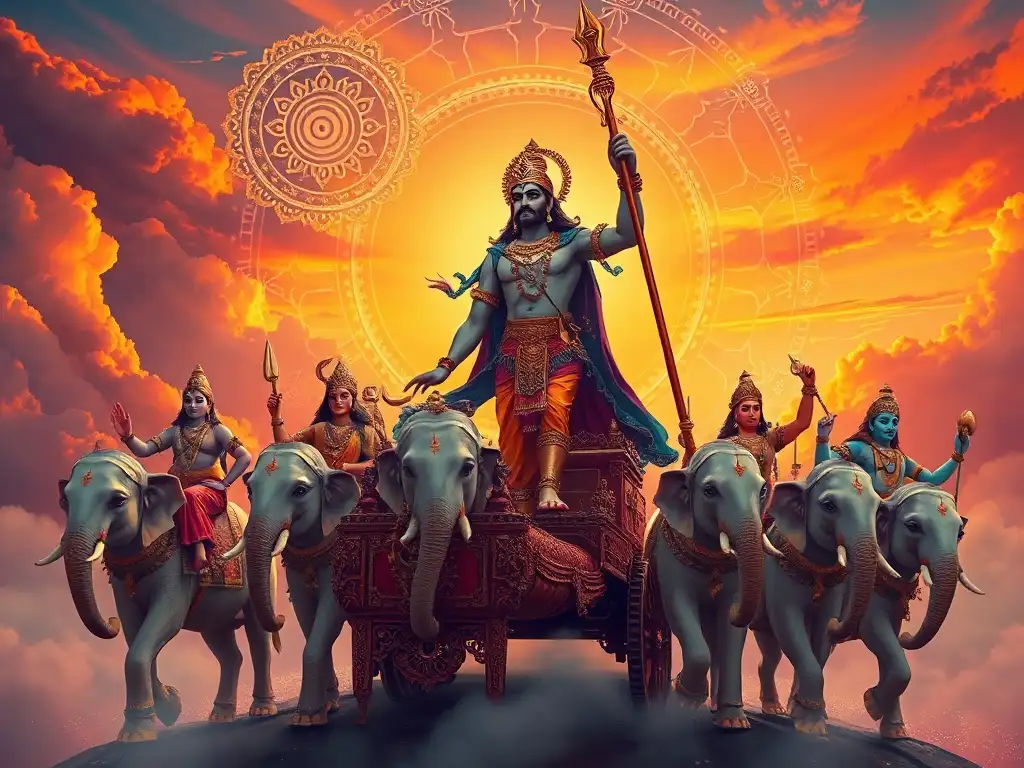
Surya, the Sun god, is a vital figure in the Vedic tradition, often personified as a radiant, golden figure who rides a chariot drawn by seven horses. As the source of light and energy, Surya represents life, health, and wisdom. He is frequently invoked for blessings of vitality and clarity in various aspects of life.
Surya's significance is also evident in his association with:
- The cycle of day and night.
- The passage of time and seasons.
- Agricultural prosperity, as sunlight is essential for crops.
His hymns, like the Gayatri Mantra, emphasize the importance of enlightenment and spiritual awakening.
Minor Deities and Their Roles
While the major Vedic deities play significant roles in the pantheon, several minor gods also contribute to the spiritual and practical aspects of Vedic life. These deities, though less prominent, embody essential elements of nature and human experience.
Vayu: The Wind God
Vayu, the god of wind, is integral to the Vedic understanding of the natural world. Often depicted as a swift and powerful force, Vayu represents the breath of life and is associated with the movement of air, which is vital for sustaining life.
His attributes include:
- Speed: Symbolizing the swift passage of time.
- Life Force: As the breath that animates living beings.
- Cleansing: Representing purification and the dispersal of negativity.
Vayu is frequently invoked in rituals to ensure favorable winds for travel and to seek blessings for health and vitality.
Ushas: The Goddess of Dawn
Ushas, the goddess of dawn, embodies the beauty and renewal of each new day. She is celebrated in various hymns, often depicted as a radiant maiden who chases away darkness and heralds the arrival of light. Ushas symbolizes hope, new beginnings, and the cyclical nature of time.
Her attributes include:
- Illumination: Bringing light to the world.
- Renewal: Signifying the promise of new opportunities and experiences.
- Fertility: Associated with the growth of crops and the onset of the agricultural cycle.
Ushas' role underscores the importance of light in dispelling ignorance and guiding individuals towards knowledge and enlightenment.
The exploration of the Vedic gods in ancient Hinduism provides a fascinating insight into the spiritual consciousness of early Indian civilization. Each deity, from the major to the minor, represents a distinct aspect of life, nature, and morality, contributing to a rich tapestry of beliefs that continue to influence Hindu thought and practice today.
Characteristics of Vedic Gods
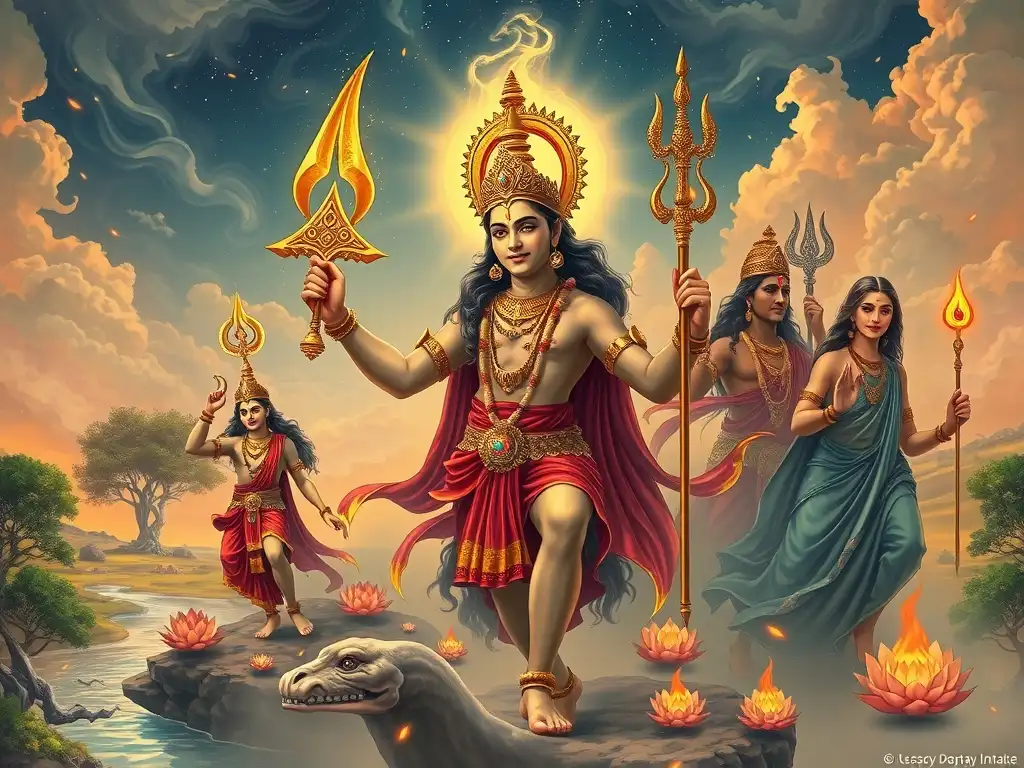
The Vedic gods in ancient Hinduism exhibit a wide array of characteristics that reflect the diverse beliefs and practices of the time. These deities were not just abstract entities but were deeply intertwined with the natural world, human experiences, and the cosmic order. The Vedic gods personified various elements of life, nature, and the universe, embodying concepts that were essential to understanding existence in ancient India.
Nature of Vedic Deities
The Vedic deities are primarily characterized by their anthropomorphic nature, meaning they possessed human-like qualities and forms. However, they also held divine attributes that set them apart from mortals. Key features of the nature of Vedic deities include:
- Polytheism: Ancient Hinduism was polytheistic, with a pantheon of gods and goddesses, each governing specific aspects of the cosmos. Notable Vedic deities include:
- Indra: The king of gods, associated with thunderstorms and war.
- Agni: The fire god, representing both physical and spiritual fire.
- Varuna: The god of cosmic order (Rta) and the waters.
- Ushas: The goddess of dawn, symbolizing new beginnings.
- Cosmic Functions: Each deity had particular roles that were crucial to the functioning of the universe. For instance, Agni served as a mediator between the human and divine realms through fire sacrifices, while Indra was often invoked for victory in battles and abundance.
- Mythological Narratives: The characteristics of these gods were vividly depicted in the Vedas through various myths and hymns. These narratives explained their origins, powers, and interactions with one another, providing insights into their significance in ancient Vedic society.
Relationships Among the Gods
The Vedic gods were not isolated entities; their relationships were complex and often reflected social structures within human communities. These relationships included:
- Hierarchical Structures: The gods were often arranged in a hierarchy, with Indra at the top as the chief deity, followed by other important gods like Agni and Varuna. This hierarchy mirrored the social order of ancient Indian society.
- Collaborative Roles: Many deities worked together to maintain cosmic balance. For example, Indra would often rely on Agni to enact sacrifices that pleased the gods and ensured prosperity for the people.
- Conflict and Rivalry: Just like humans, the Vedic gods also experienced conflict. The tales of battles among gods, such as Indra's conflicts with the serpents (Nagas) or the demon Vritra, symbolize the struggle between order and chaos in the universe.
These relationships highlight not only the interdependence among the deities but also serve as allegories for human experiences and societal dynamics.
Symbolism and Iconography of Vedic Gods
The symbolism and iconography associated with Vedic gods play a crucial role in understanding their attributes and significance. Key aspects include:
- Natural Elements: Many Vedic deities are symbolized by natural elements that they govern:
- Indra is often depicted with a thunderbolt, representing his control over storms.
- Agni is illustrated as a red figure with flames, signifying his nature as the fire god.
- Animal Symbols: Animals were frequently associated with Vedic deities, providing further insight into their characteristics:
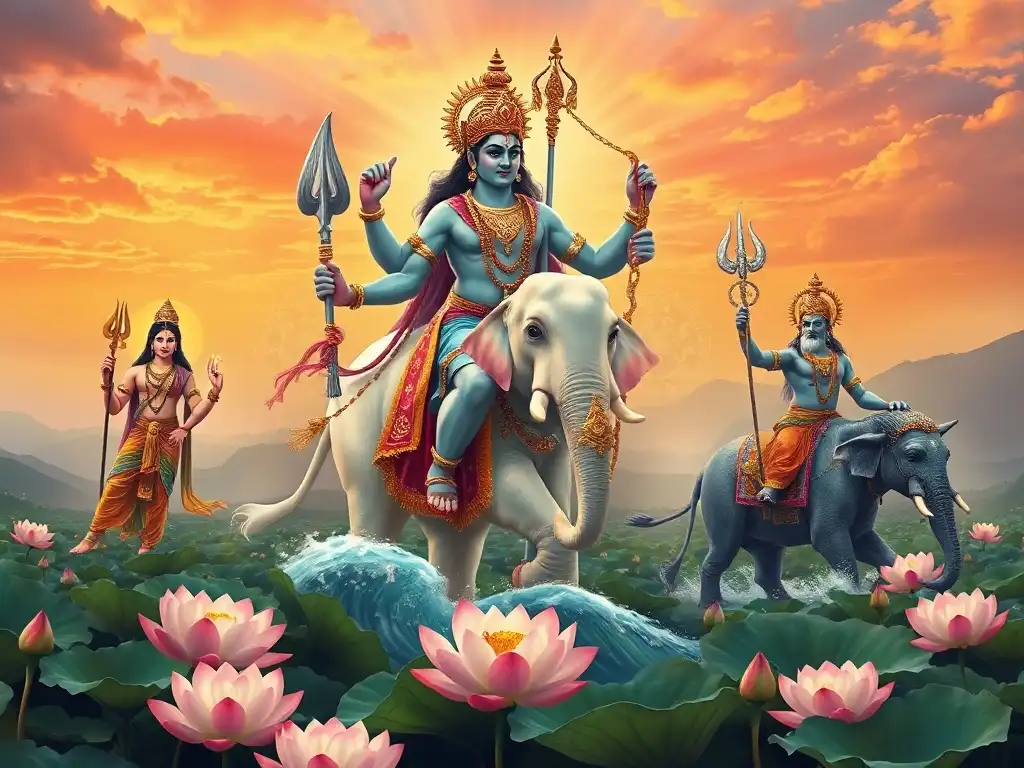
- Indra rides a white elephant, representing strength and majesty.
- Agni is often accompanied by two deer or a ram, symbolizing his swift and transformative nature.
- Sacred Geometry and Rituals: The worship of Vedic gods often involved specific rituals and symbols, such as the sacred fire (Agni), which was central to Vedic sacrifices (Yajnas). The geometrical designs used in altars and offerings were believed to reflect the cosmic order inherent in the universe.
The Vedic gods in ancient Hinduism are characterized by their multi-faceted nature, complex relationships, and rich symbolism. These attributes not only highlight their divine qualities but also serve to connect the spiritual and physical worlds, illustrating the profound impact of these deities on the lives of ancient Indians.
The Role of Vedic Gods in Rituals and Sacrifices
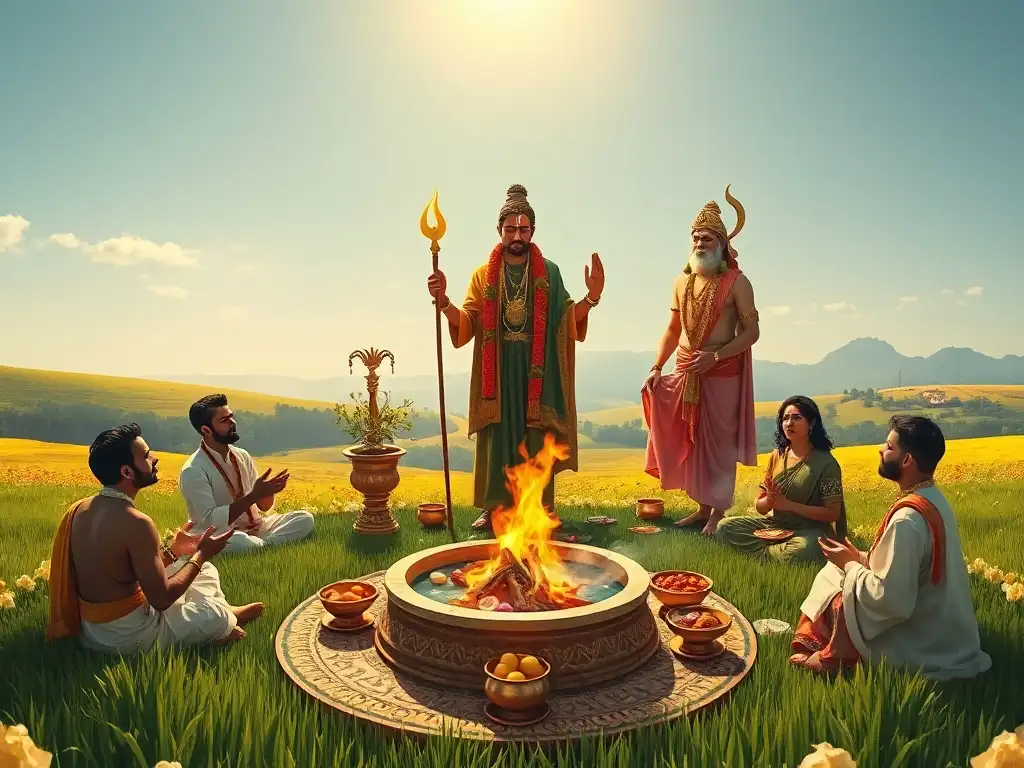
In ancient Hinduism, the Vedic gods played a central role in the performance of rituals and sacrifices, known as yajnas. These divine figures were not only seen as supreme beings but also as essential participants in the spiritual and communal life of the Vedic society. The rituals conducted in their honor served to maintain cosmic order (ṛta), ensure prosperity, and foster a connection between the earthly realm and the divine.
Importance of Yajnas in Vedic Practices
Yajnas were elaborate sacrificial ceremonies that involved offerings to Vedic gods, performed by priests (ṛtvik) following specific rituals detailed in the Vedas. These ceremonies were considered crucial for several reasons:
- Cosmic Harmony: Yajnas were believed to restore and maintain the cosmic order. By performing these rituals, practitioners sought to appease the gods and secure their favor, which was essential for sustaining the balance of nature.
- Community Cohesion: The communal aspect of yajnas fostered social unity. Members of the community would gather to participate, reinforcing social bonds and shared beliefs. This collective effort was vital for the survival and prosperity of the society.
- Spiritual Benefits: Engaging in yajnas was thought to lead to spiritual elevation and enlightenment. The performance of these rituals was believed to purify not only the participants but also the environment, thus attracting divine blessings.
- Wealth and Prosperity: Many yajnas were aimed at ensuring prosperity. Offerings made during these rituals were seen as a way to invoke divine favor for bountiful harvests and material wealth.
Offerings and Invocations to Vedic Gods
The process of offering and invocation in Vedic rituals was meticulous and deeply symbolic. The offerings included:
- Food Offerings: Grains, ghee, and milk were commonly used in yajnas, symbolizing nourishment and sustenance. These offerings were seen as a way to feed the gods, who in return would bless the devotees.
- Fire Sacrifices: The ritual fire (agni) was considered a mediator between humans and the divine. Offerings were made into the flames, which were believed to carry them to the gods. This act represented the connection between the mortal and the immortal realms.
- Mantras and Chants: Specific hymns (suktas) from the Vedas were recited during sacrifices to invoke the presence of the gods. These mantras were thought to possess inherent power, and their correct recitation was essential for the efficacy of the ritual.
- Symbolic Gestures: Actions such as pouring libations and making gestures of surrender (āhuti) were integral to the rituals, symbolizing devotion and the recognition of divine authority.
The Concept of Dharma and Its Connection to Vedic Deities
The concept of dharma, which refers to duty, righteousness, and moral order, is intricately connected to the worship of Vedic gods. Each deity represented different aspects of dharma, and their worship was seen as essential for maintaining personal and social order.
- Divine Guidance: Vedic deities were viewed as guides who provided the moral compass for individuals. Following their teachings and honoring them through yajnas was believed to align one's actions with cosmic law.
- Interconnectedness of Ritual and Morality: The performance of rituals was not only about appeasing the gods but also about fulfilling one's dharma. Each act of worship was a manifestation of commitment to the greater good and the well-being of the community.
- Karma and Consequences: The relationship between dharma and the Vedic gods underscores the importance of actions. By adhering to dharma and honoring the gods, individuals could accumulate positive karma, leading to favorable consequences in this life and beyond.
The Vedic gods in ancient Hinduism were pivotal to the rituals and sacrifices that defined Vedic practices. Their worship, through yajnas, offerings, and invocations, was not just a means of seeking divine favor, but also a way to uphold the moral and cosmic order inherent in the ancient Indian worldview.
Vedic Texts and Their Insights on the Divine
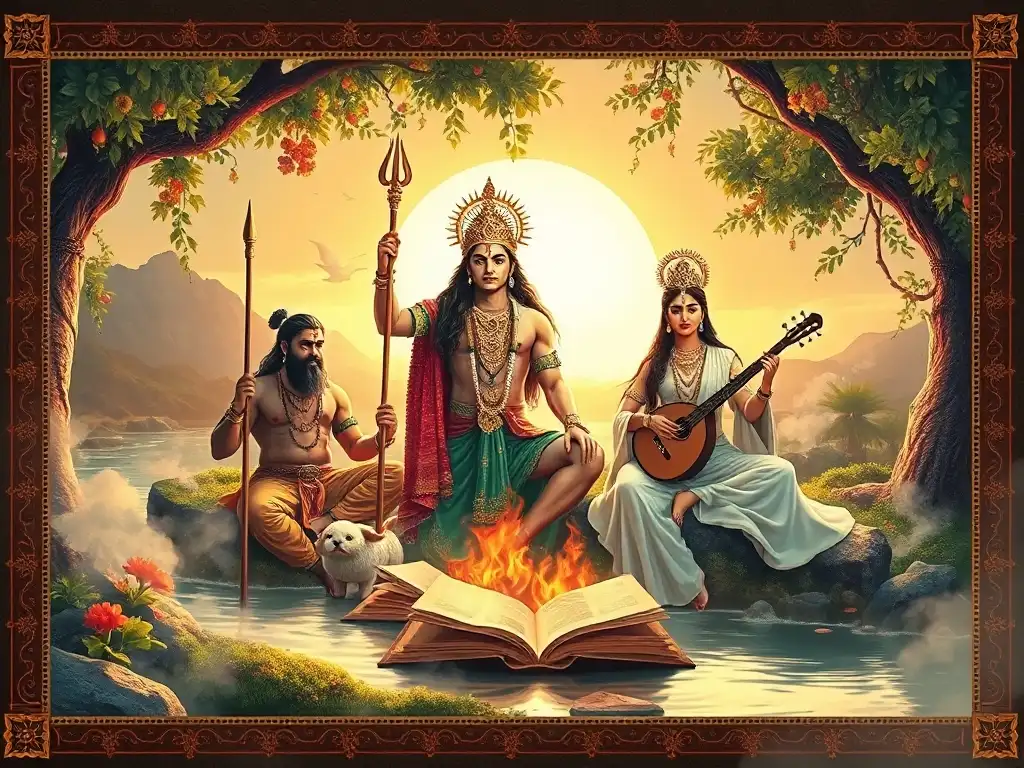
The Vedic texts serve as the foundational scriptures of ancient Hinduism, offering profound insights into the nature of the divine and the relationship between humanity and the gods. Composed in Sanskrit, these texts encapsulate various hymns, rituals, and philosophical inquiries that reflect the beliefs and practices of early Indian civilizations. The Vedic gods in ancient Hinduism are depicted not just as celestial beings but as integral to the fabric of existence, embodying natural forces, virtues, and cosmic principles that govern the universe.
The Rigveda: Hymns of Praise and Worship
The Rigveda, the oldest of the four Vedas, contains a rich collection of hymns (suktas) dedicated to various deities. It consists of 1,028 hymns divided into ten books (mandalas), each representing a different aspect of life and nature. The hymns are primarily in praise of the Vedic gods such as Indra, Agni, and Soma, reflecting the deep reverence ancient Indians held for the divine.
- Indra: Often referred to as the king of the gods, Indra is celebrated for his strength and valor, particularly in his battles against demonic forces. His exploits are detailed in numerous hymns, showcasing him as a protector and provider of rain, which was vital for agriculture.
- Agni: The fire god, Agni, is another prominent figure in the Rigveda. He symbolizes transformation and is central to sacrificial rituals. The hymns dedicated to him emphasize his role as a mediator between the divine and humans, consuming offerings and conveying them to the gods.
- Soma: This deity is associated with a sacred ritual drink, believed to confer immortality and divine insight. The hymns reflect the importance of this drink in Vedic rituals, symbolizing the connection to the divine.
The Rigveda not only serves as a liturgical text but also provides insights into the social, political, and spiritual milieu of ancient India, illustrating how the Vedic gods influenced daily life and societal norms.
The Samaveda: Melodies Dedicated to the Gods
The Samaveda, often referred to as the "Veda of Melodies," is primarily a collection of chants and melodies intended for use in rituals. It draws heavily from the Rigveda, repurposing many of its hymns into musical forms that enhance their spiritual significance during sacrificial ceremonies.
- Chanting and Ritual: The emphasis on melody and rhythm in the Samaveda underscores the belief that sound plays a crucial role in invoking the divine. The correct pronunciation and intonation of these hymns are believed to attract the favor of the Vedic gods, enhancing the efficacy of rituals.
- Connection to Nature: The melodies often draw inspiration from natural phenomena, reinforcing the Vedic view of the gods as manifestations of the cosmos. The act of singing these hymns creates a harmonious relationship between the worshippers and the divine, fostering a sense of unity with the universe.
The Samaveda thus highlights the artistic expression of devotion, illustrating how the Vedic gods are approached through the beauty of sound, rhythm, and collective participation in worship.
The Yajurveda: Instruction for Sacrifices
The Yajurveda serves as a manual for rituals and sacrifices, providing detailed instructions on how to perform various ceremonies dedicated to the Vedic gods. It is divided into two primary parts: the Shukla (White) and Krishna (Black) Yajurveda, each presenting different forms of ritual knowledge.
- Sacrificial Rituals: The Yajurveda emphasizes the importance of sacrifices (yajnas) as a means to appease the gods and ensure cosmic order. It outlines the procedures, materials, and mantras required, illustrating the significance of correct practice in achieving desired outcomes.
- Divine Connection: The text emphasizes the idea that through sacrifice, practitioners can establish a direct connection with the divine. The Vedic gods are portrayed as recipients of these offerings, who in turn provide blessings, prosperity, and protection to the worshippers.
- Philosophical Insights: Beyond the practical instructions, the Yajurveda also delves into philosophical discussions about the nature of the self and the universe, further enriching the understanding of the Vedic gods in ancient Hinduism.
The Vedic texts collectively provide a comprehensive view of the divine as understood in ancient Hinduism. They illustrate the multifaceted nature of the Vedic gods, intertwining worship, music, and ritual practice, and laying the groundwork for the spiritual and philosophical evolution of Hindu thought.
How Vedic Gods Influence Modern Hinduism
Continuity of Vedic Traditions in Contemporary Worship
The Vedic gods play a crucial role in shaping the beliefs and practices of modern Hinduism. Many of the rituals, prayers, and deities worshipped today can be traced back to the Vedic period, which spans from approximately 1500 BCE to 500 BCE. The continuity of these traditions is evident in several key aspects:
- Ritual Practices:
- The yajna (sacrificial fire ritual) remains central to many Hindu ceremonies, echoing the elaborate fire rituals described in the Vedas.
- Offerings to deities, often made during these rituals, reflect ancient practices aimed at pleasing the Vedic gods.
- Sanskrit Hymns:
- Many contemporary prayers and invocations draw directly from Vedic hymns. For example, the Gayatri Mantra, a revered chant from the Rigveda, is commonly recited during daily prayers.
- The continued use of Sanskrit in religious contexts helps preserve the linguistic and spiritual heritage of the Vedic texts.
- Deity Representation:
- Key figures such as Indra, Agni, and Varuna are still recognized and worshipped, albeit often in a more localized or symbolic manner.
- Modern interpretations of these gods may differ from their Vedic representations, but the core attributes and mythologies remain influential.
- Festivals and Celebrations:
- Many Hindu festivals can be linked to Vedic traditions. For instance, Makar Sankranti, which celebrates the sun's transition, has roots in the solar worship found in Vedic texts.
- Specific rituals performed during these festivals often invoke the blessings of Vedic deities, showcasing their enduring significance.
The Vedic gods thus continue to inspire and shape the spiritual landscape of modern Hindu worship, reinforcing a connection to ancient traditions.
The Evolution of Deity Worship from Vedic Times to Present
The evolution of deity worship in Hinduism illustrates a dynamic transformation that has occurred from the Vedic period to contemporary practices. The Vedic gods, originally associated with natural elements and cosmic phenomena, have undergone significant adaptations over time:
- Transition from Abstract to Anthropomorphic:
- Vedic gods were often conceptualized as abstract forces of nature (e.g., the sky, the earth). However, over centuries, many deities became anthropomorphized, taking on human-like forms and attributes.
- This shift allowed for a more personal connection between worshippers and their divine figures, facilitating individual devotion.
- Integration of Local Deities:
- As Hinduism spread across different regions, local deities were integrated into the pantheon, creating a more diverse and inclusive worship practice.
- Many local gods and goddesses adopted characteristics of Vedic deities, leading to a rich tapestry of beliefs that reflect regional cultures.
- Philosophical Developments:
- The rise of philosophical schools, particularly the Upanishads, brought new ideas about the nature of divinity and the relationship between the individual soul ( Atman) and the universal spirit ( Brahman).
- This philosophical shift encouraged a more abstract understanding of the divine, influencing how deities were worshipped and conceptualized.
- Modern Movements and Reform:
- The 19th and 20th centuries saw the emergence of reform movements that sought to return to Vedic principles or reinterpret them in light of contemporary values.
- Figures like Ramakrishna and Swami Vivekananda emphasized a more universal approach to worship, advocating for the respect of all deities as manifestations of a single ultimate reality.
This evolution demonstrates the adaptability of Hinduism, allowing it to remain relevant and meaningful across different historical contexts while still honoring its Vedic roots. The Vedic gods, though transformed, continue to be a foundational aspect of Hindu spirituality, bridging the ancient and the modern.
Conclusion: The Legacy of Vedic Gods in Ancient Hinduism
Summary of Vedic Spirituality and Its Impact
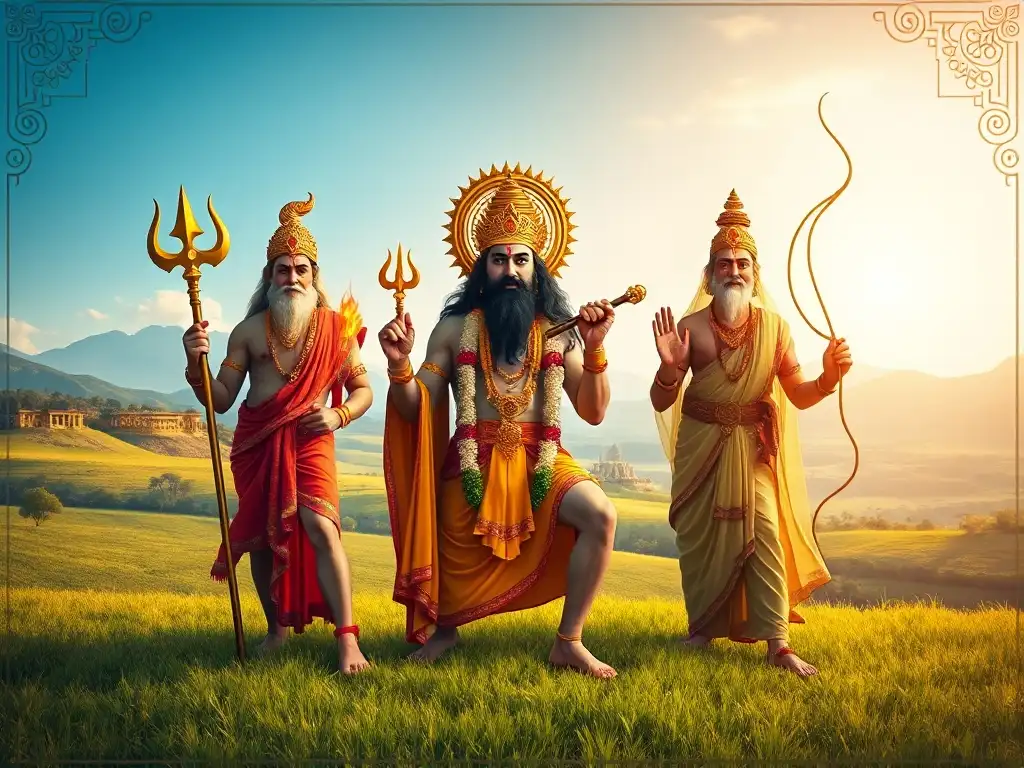
The Vedic gods in ancient Hinduism represent a profound aspect of spirituality that has shaped not only religious practices but also the cultural ethos of India. The Vedic texts, primarily the Rigveda, Samaveda, Yajurveda, and Atharvaveda, introduce a pantheon of deities, each embodying various natural forces and human experiences. Gods such as Agni (the fire god), Indra (the king of gods), and Varuna (the god of cosmic order) illustrate the Vedic understanding of the divine as interconnected with the universe's natural rhythms.
Key Contributions of Vedic Gods:
- Nature Worship: The Vedic gods exemplify a deep reverence for nature, demonstrating how ancient Indians sought to live in harmony with their environment.
- Ritual Practices: The worship of these deities was integral to Vedic rituals, which often involved elaborate ceremonies aimed at invoking divine blessings for prosperity, health, and success.
- Philosophical Foundations: The interplay between deities and philosophical inquiries laid the groundwork for later Hindu thought, influencing concepts of dharma (duty) and karma (action).
As these spiritual narratives evolved, they facilitated the transition from ritualistic worship to more abstract philosophical interpretations found in the Upanishads.
Final Thoughts on the Divine in Ancient Indian Culture
The legacy of the Vedic gods in ancient Hinduism is not limited to their historical significance; rather, it resonates through contemporary practices and beliefs. The Vedic pantheon continues to inspire worship, literature, and art in India today, illustrating the enduring nature of these divine figures.
The Vedic gods served as a bridge between the material and spiritual realms, reflecting the complexities of human existence and the universe. Their multifaceted representations highlight the dynamic interplay of spirituality, culture, and philosophy in ancient Indian society.
As we explore the depths of Vedic spirituality, it becomes evident that understanding these deities is crucial for appreciating the rich tapestry of ancient Indian culture and its lasting influence on modern Hinduism. The Vedic gods remain a testament to the quest for understanding the divine, encouraging both scholars and practitioners to delve deeper into the historical roots of their beliefs.
Frequently Asked Questions
What are the Vedic gods in ancient Hinduism?
The Vedic gods refer to the deities mentioned in the Vedas, the oldest sacred texts of Hinduism. Key figures include Indra, Agni, and Varuna, each representing different aspects of nature and cosmic order.
How did Vedic gods influence ancient Indian culture?
The Vedic gods played a crucial role in shaping rituals, philosophies, and social structures in ancient Indian society. They were often worshipped during sacrificial rites to ensure prosperity and harmony.
What is the significance of rituals associated with Vedic gods?
Rituals dedicated to the Vedic gods were essential for maintaining the cosmic balance and ensuring the favor of the deities. These rituals often involved offerings and chanting, believed to invoke divine blessings.
How do Vedic gods compare to later Hindu deities?
While many Vedic gods have been integrated into later Hinduism, such as Shiva and Vishnu, they differ in their attributes and worship practices. The Vedic period focused more on sacrificial rituals, whereas later traditions emphasize devotion and personal connection to deities.
Can you name some key texts that discuss Vedic gods?
Key texts that explore the Vedic gods include the Rigveda, which is primarily a collection of hymns, and the Atharvaveda, which contains more practical knowledge and rituals. These texts provide insights into the spiritual beliefs of ancient Hinduism.
Final Reflection: Embracing the Wisdom of the Vedic Gods
The exploration of the Vedic gods in ancient Hinduism reveals not only the rich tapestry of spiritual beliefs but also their profound relevance in today's world. As we navigate the complexities of modern life, the teachings and attributes of these divine figures offer timeless wisdom that can guide us through our personal and collective challenges. The Vedic gods serve as reminders of the interconnectedness of existence and the importance of balance, both within ourselves and in our relationships with others.
The influence of the Vedic gods extends far beyond ancient texts; they continue to shape cultural narratives and spiritual practices across the globe. Their stories and teachings resonate with individuals seeking meaning and connection in an increasingly fragmented world. As noted by the scholar David Kinsley, The Vedic deities are not just relics of the past; they are living symbols that inspire and inform contemporary spirituality.
This ongoing relevance underscores the importance of understanding these divine figures, as they embody values that can enrich our lives and foster a deeper appreciation for the diversity of human experience.
As you reflect on the insights gained from the Vedic gods, consider how their teachings can inspire you to cultivate a more harmonious existence. Take a moment to meditate on the qualities of these divine figures—wisdom, strength, compassion—and think about how you can embody these traits in your daily life. Let the lessons of ancient Hinduism guide you toward a more meaningful connection with yourself and the world around you, encouraging you to honor the divine within and beyond.
Unveil the Mysteries of Vedic Wisdom!
Thank you for diving deep into the fascinating world of Vedic Gods with us! We hope you’ve gathered valuable insights into the divine fabric of ancient Hinduism and feel inspired to explore further. Now, let’s take those insights and turn them into action!
Here’s how you can continue your journey:
- Dive deeper into Vedic texts: Select a specific Veda or Upanishad and read a chapter to connect with its teachings.
- Join a discussion group: Seek out a local or online community that explores Vedic philosophy and share your thoughts and discoveries.
- Create your own ritual: Incorporate elements of Vedic worship into your daily routine, and observe how it influences your spiritual path.
What aspect of the Vedic tradition resonates most with you—its deities, philosophies, or rituals? We’d love to hear your reflections!