
The Influence of Ancient Rishis on Hindu Philosophical Concepts


Welcome to Ancient India History, where we embark on an enlightening journey through the rich tapestry of ancient Indian civilizations. Today, we delve into the profound impact of Ancient Rishis on Hindu philosophical concepts—a topic that unveils the depths of spiritual wisdom and intellectual rigor that shaped the very essence of Indian thought. As you explore this fascinating article, prepare to uncover how these venerable sages not only influenced religious practices but also laid the groundwork for enduring philosophical discussions.
What secrets of wisdom do they hold? Join us as we unravel the intricate connections between ancient teachings and their lasting legacy on modern spirituality.
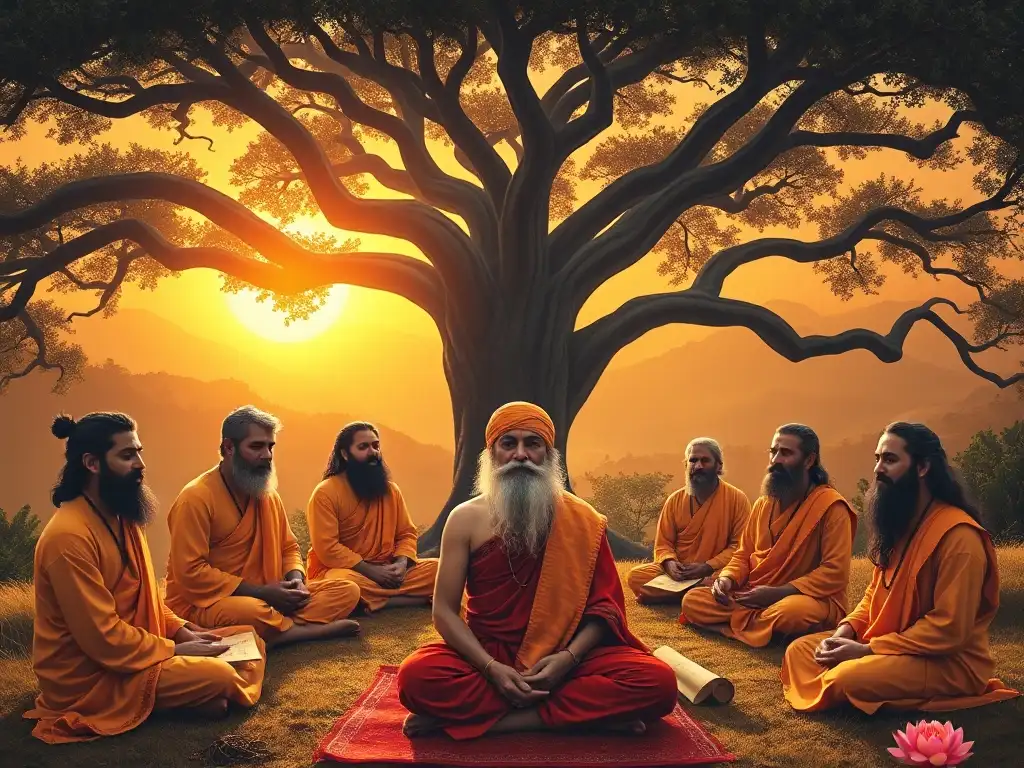
Introduction to Ancient Rishis and Hindu Philosophy
The ancient Rishis of India have played a pivotal role in shaping the landscape of Hindu philosophy, serving as the spiritual and intellectual architects of a rich tradition that continues to influence millions today. These revered sages, often considered seers or wise men, were instrumental in the formulation of key philosophical concepts that underpin Hindu thought.
Their insights into the nature of existence, the self, and the universe have laid the groundwork for various schools of philosophy and spiritual practices within Hinduism. Understanding the influence of these ancient Rishis provides profound insights into how their teachings have resonated through centuries, molding the philosophical discourse of one of the world's oldest religions.
Definition of Ancient Rishis
Ancient Rishis are typically characterized as enlightened sages who possessed deep spiritual knowledge and insight. The term "Rishi" itself is derived from the Sanskrit root "rish," meaning "to see." Thus, Rishis are often regarded as those who have attained a higher state of consciousness and have the ability to perceive truths beyond ordinary perception. They are credited with composing significant texts, including the Vedas, Upanishads, and various philosophical treatises that explore the nature of reality and the self. Rishis were not merely philosophers; they were also practitioners of meditation and yoga, seeking to experience the ultimate truth firsthand.
Overview of Hindu Philosophy
Hindu philosophy is a diverse and complex system of thought that encompasses various schools, each with its unique perspectives and methodologies. Generally categorized into six orthodox (Astika) schools—Nyaya, Vaisheshika, Samkhya, Yoga, Mimamsa, and Vedanta—Hindu philosophy seeks to address fundamental questions about the nature of reality, the self (Atman), and the ultimate purpose of life (Moksha).
The core philosophical tenets often revolve around concepts such as Dharma (duty/righteousness), Karma (action and its consequences), and the cycle of birth and rebirth (Samsara). The works of the Rishis are foundational texts in this discourse, providing the philosophical underpinnings for both the ritualistic and meditative aspects of Hinduism.
Significance of Rishis in Ancient Indian Thought
The Rishis are considered the custodians of ancient wisdom, and their teachings have had a lasting impact on the trajectory of Indian spirituality and philosophy. They not only contributed to the religious texts but also influenced the ethical and moral frameworks within which societal norms were established. Their meditative practices and philosophical inquiries have inspired countless followers, leading to the emergence of various spiritual movements throughout history. The significance of Rishis lies not only in their teachings but also in their embodiment of the ideal seeker—devoted to the pursuit of truth and self-realization.
Historical Context of Ancient Rishis
Time Period of Ancient Rishis
The period of the ancient Rishis is traditionally associated with the Vedic age, which dates back to approximately 1500 BCE to 500 BCE. This era marks the composition of the Vedas, the oldest sacred texts of Hinduism, attributed to the Rishis. As wandering sages, these Rishis engaged in profound meditation and spiritual practices, often in natural settings conducive to introspection. The societal structure during this time was predominantly tribal and pastoral, allowing Rishis to travel freely and share their insights across various communities.
Major Schools of Thought Influenced by Rishis
The philosophical contributions of the Rishis have led to the emergence of several major schools of thought within Hindu philosophy. For instance:
- Vedanta: Focuses on the nature of reality and the relationship between Atman and Brahman.
- Samkhya: Explores the duality of consciousness and matter, emphasizing knowledge as a means to liberation.
- Yoga: Integrates physical and spiritual practices aimed at achieving self-realization and union with the divine.
Each of these schools has drawn heavily from the insights and teachings of the Rishis, reflecting their profound influence on the development of Hindu philosophical thought.
Key Texts Associated with Rishis
The ancient Rishis are credited with the authorship of several foundational texts that continue to shape Hindu philosophy. Some of the key texts include:
| Text | Description |
|---|---|
| Vedas | The oldest scriptures of Hinduism, comprising four collections (Rigveda, Samaveda, Yajurveda, Atharvaveda). |
| Upanishads | Philosophical treatises exploring the nature of reality and the self, often considered the culmination of Vedic thought. |
| Brahmanas | Prose texts that provide explanations of the rituals and ceremonies described in the Vedas. |
| Aranyakas | Texts that serve as a bridge between the ritualistic and philosophical aspects of the Vedas. |
These texts not only embody the philosophical insights of the Rishis but also serve as a testament to their enduring legacy in the realm of Hindu thought.
Core Philosophical Concepts Introduced by Rishis
The ancient Rishis of India, revered sages and seers, played a pivotal role in shaping the philosophical landscape of Hinduism. Through their profound insights and meditative practices, they introduced core concepts that laid the foundation for later philosophical developments. Their teachings were primarily transmitted through the Vedas and Upanishads, which encapsulated the essence of their thoughts. This section delves into the fundamental philosophical ideas introduced by these influential figures.
Concept of Dharma (Righteousness)
Dharma, often translated as righteousness or duty, is a cornerstone of Hindu philosophy and was significantly articulated by the Rishis. They emphasized that every individual has a unique role in society, and fulfilling one's dharma is essential for maintaining cosmic order (Rta). The concept of dharma is multifaceted, encompassing ethical and moral duties, social responsibilities, and personal conduct. Rishis taught that adhering to dharma leads to harmony within the self and the universe, forming a basis for ethical living and social justice.
Additionally, the Rishis highlighted the importance of situational ethics, where the dharma of an individual could vary depending on context, age, and social standing. This flexible interpretation allowed for a dynamic understanding of righteousness, accommodating the complexities of human life and interactions.
Understanding Karma (Action and Consequence)
The law of karma, or the principle of action and consequence, is another critical concept introduced by the Rishis. They articulated the idea that every action (karma) has a corresponding reaction, shaping one's future experiences. This philosophy underscores the importance of intention behind actions, as righteous actions lead to positive outcomes, while negative actions result in suffering.
The Rishis taught that understanding karma is vital for spiritual growth, as it encourages individuals to act ethically and mindfully. This concept not only influenced personal behavior but also provided a framework for understanding the cyclical nature of life, where one’s current circumstances are a result of past actions.
The Idea of Moksha (Liberation)
Moksha, or liberation from the cycle of birth and rebirth (samsara), is a central theme in the teachings of the Rishis. They proposed that the ultimate goal of human existence is to achieve moksha, which signifies a state of eternal bliss and union with the divine. The Rishis emphasized that this liberation is attainable through self-realization, meditation, and the pursuit of knowledge.
The path to moksha involves transcending the illusions and attachments of the material world. Rishis stressed the importance of self-inquiry and understanding one's true nature (Atman), which is intrinsically linked to Brahman, the universal spirit. This philosophical exploration laid the groundwork for various spiritual practices aimed at realizing this liberation.
Exploration of Brahman (Universal Spirit)
The concept of Brahman, the ultimate reality or universal spirit, was profoundly explored by the ancient Rishis. They described Brahman as the source of all existence, transcending the material world and encompassing everything. Through meditation and introspection, Rishis sought to understand and experience Brahman, emphasizing that realizing this truth leads to enlightenment and liberation.
This exploration of Brahman also gave rise to the idea of non-dualism (Advaita), where the distinction between the individual self (Atman) and the universal self (Brahman) dissolves. The Rishis articulated that realizing the oneness of Atman and Brahman is crucial for attaining spiritual liberation, significantly influencing later philosophical thought.
The Impact of Ancient Rishis on Later Philosophical Developments
The teachings of the ancient Rishis not only shaped the early philosophical concepts of Hinduism but also had a profound impact on subsequent philosophical developments. Their insights laid the groundwork for various schools of thought, influencing a wide range of philosophical traditions that emerged in ancient India.
Influence on Vedanta Philosophy
Vedanta, one of the six orthodox schools of Hindu philosophy, owes much to the foundational concepts introduced by the Rishis. Their exploration of Brahman and the nature of reality became central themes in Vedanta philosophy. The Rishis’ teachings on the relationship between Atman and Brahman provided a framework for later thinkers to elaborate on the nature of consciousness and existence.
Prominent philosophers such as Adi Shankaracharya built upon these teachings, articulating the principles of non-dualism and advocating for the realization of the self’s unity with the universal spirit. This philosophical lineage continues to influence modern interpretations of Vedanta, emphasizing the relevance of Rishi teachings in contemporary spiritual discourse.
Contributions to Samkhya and Yoga Systems
The Rishis also significantly contributed to the development of the Samkhya and Yoga systems, which focus on the duality of purusha (consciousness) and prakriti (matter). Their insights into the nature of the mind, consciousness, and the path to spiritual realization laid the groundwork for these philosophies.
In Yoga, the Rishis emphasized the importance of meditation and self-discipline, advocating practices that lead to self-awareness and liberation. The Yoga Sutras of Patanjali, which emerged later, reflect many of these early teachings, showcasing how Rishi philosophy influenced systematic approaches to spiritual practice.
Rishis' Role in Shaping Upanishadic Thought
The Upanishads, regarded as the culmination of Vedic thought, were heavily influenced by the teachings of the Rishis. They encapsulated the philosophical inquiries and mystical experiences of the Rishis, exploring themes such as the nature of reality, the self, and the universe. The dialogue format of the Upanishads reflects the Rishi tradition of inquiry and discourse, fostering a deep understanding of existential questions.
The Rishis’ emphasis on experiential knowledge and self-realization became foundational to Upanishadic philosophy, paving the way for later interpretations and spiritual practices within Hinduism. Their legacy continues to resonate in contemporary discussions of spirituality and philosophy, underscoring the timeless wisdom of the ancient Rishis.
Comparative Analysis of Rishis' Teachings with Other Philosophical Traditions
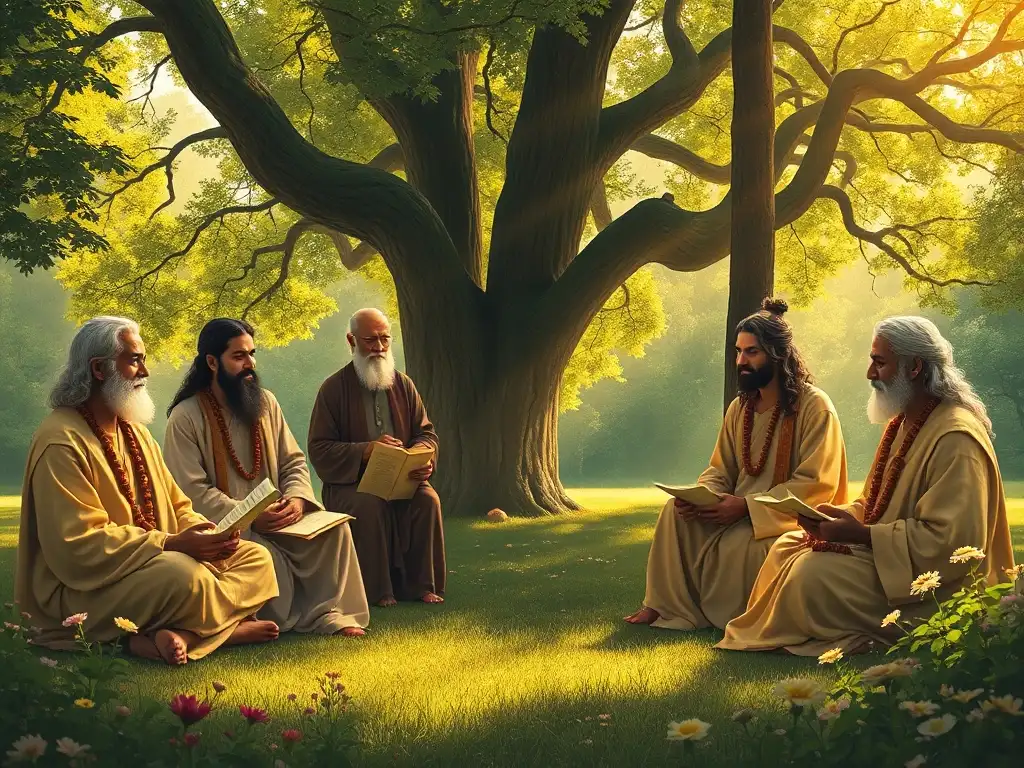
The teachings of ancient Rishis are foundational to Hindu philosophy, offering profound insights into various aspects of life, nature, and the cosmos. A comparative analysis reveals both unique elements and shared themes with other philosophical traditions around the world. This examination helps in understanding the distinct contributions of Rishis while also highlighting how their ideas resonate with or diverge from other philosophical frameworks.
Rishis vs. Western Philosophical Thinkers
Ancient Rishis approached philosophical questions through introspection and spiritual practice, focusing on the nature of reality, consciousness, and the self. In contrast, many Western philosophers, such as Socrates, Plato, and Descartes, emphasized rational inquiry and empirical observation. For example, while Rishis like Vyasa and Patanjali articulated their insights through texts like the Vedas and the Yoga Sutras, Western thinkers often engaged in dialectical methods to explore ethical and metaphysical concepts.
Moreover, the Rishis’ holistic view of life, integrating ethics, spirituality, and the pursuit of knowledge, contrasts with the often compartmentalized approach seen in Western philosophy. Where Western thought might prioritize logical reasoning, Rishis emphasized experiential knowledge and direct realization, suggesting that ultimate truths can be grasped through meditation and spiritual discipline.
Similarities with Buddhist Philosophical Concepts
The philosophies of ancient Rishis and early Buddhism share several similarities, particularly in their views on suffering, the nature of existence, and the path to liberation. Both traditions recognize the impermanence of worldly experiences and the importance of transcending attachments to achieve spiritual awakening.
For instance, concepts such as Moksha in Hinduism and Nirvana in Buddhism both represent ultimate liberation from the cycles of birth and rebirth (samsara). Additionally, both traditions advocate for ethical living and mindfulness, promoting practices that lead to inner peace and understanding of one's true nature. However, while Rishis emphasize the divine aspect of the self, Buddhism often focuses on the non-self (Anatta) concept.
Divergences from Jain Philosophical Ideas
While there are overlaps in the ethical teachings of Rishis and Jains, significant divergences exist, particularly regarding metaphysics and the nature of the soul. Jain philosophy places a strong emphasis on Ahimsa (non-violence) and the strict adherence to self-discipline, viewing the soul as inherently separate from the material world. Rishis, on the other hand, explore the relationship between the individual soul (Atman) and the universal spirit (Brahman), often suggesting that realizing this unity is key to liberation.
Furthermore, Jainism’s rigorous ascetic practices contrast with the Rishis' more varied approaches to spirituality, which can include devotion (Bhakti), meditation (Dhyana), and ethical living. While both traditions advocate for a path to liberation, their conceptual frameworks and methodologies reflect different understandings of the self and the universe.
Modern Relevance of Ancient Rishis' Philosophical Insights
The insights of ancient Rishis continue to hold relevance in contemporary society, influencing various fields, including spirituality, psychology, and ethics. Their teachings provide a framework for addressing modern existential dilemmas, promoting well-being, and fostering a deeper understanding of the self and the universe.
Adaptation of Rishi Teachings in Contemporary Hinduism
In modern Hinduism, the teachings of ancient Rishis are often adapted to align with contemporary values and lifestyles. The revival of interest in yoga, meditation, and spiritual practices can be traced back to the Rishis' insights into the mind-body connection and the pursuit of inner peace. Many contemporary spiritual leaders draw upon Rishi teachings to inspire holistic health and mental well-being, emphasizing their timeless nature and applicability in today's fast-paced world.
Moreover, the integration of Rishi philosophies into daily life encourages individuals to cultivate awareness, compassion, and ethical living, reflecting the core principles that have guided Hindu thought for millennia.
Influence on Modern Indian Thinkers
Ancient Rishis have significantly influenced modern Indian thinkers and reformers, including figures like Swami Vivekananda, Mahatma Gandhi, and Aurobindo Ghose. These leaders drew upon Rishi teachings to address contemporary social issues, emphasizing the importance of spirituality in promoting social justice, harmony, and self-realization.
For instance, Gandhi's practice of Ahimsa and his emphasis on ethical living resonate deeply with the teachings of Rishis, who viewed non-violence as a crucial aspect of spiritual development. This synthesis of ancient wisdom and modern thought illustrates the enduring legacy of Rishis in shaping Indian philosophy and societal progress.
Rishis and Global Philosophical Discourse
The philosophies of ancient Rishis have transcended regional boundaries, contributing to global philosophical discourse. Their ideas about consciousness, the nature of reality, and the interconnectedness of all beings resonate with contemporary discussions in fields such as psychology, ecology, and quantum physics.
As scholars and practitioners from diverse backgrounds engage with Rishi teachings, there is a growing recognition of their relevance in addressing global challenges, including environmental sustainability and mental health. The Rishis' holistic approach encourages a deeper understanding of the relationship between humanity and the cosmos, promoting a more integrative perspective in addressing the complexities of modern life.
The influence of ancient Rishis on Hindu philosophical concepts not only shaped the spiritual landscape of India but also continues to inspire and inform contemporary thought on a global scale.
Conclusion: The Enduring Legacy of Ancient Rishis in Hindu Philosophy
The ancient Rishis of India have left an indelible mark on Hindu philosophy, shaping its core tenets and influencing the spiritual and intellectual landscape for millennia. Their profound insights into the nature of existence, consciousness, and the divine continue to resonate throughout various strands of Hindu thought and practice. By exploring the depths of meditation, ethics, and metaphysics, these sages laid the groundwork for a philosophical tradition that remains vibrant and relevant in contemporary discourses.
The teachings of the Rishis emphasize the interconnectedness of all life and the importance of self-realization. This holistic view invites practitioners and philosophers alike to seek knowledge not just through intellectual inquiry but through direct experience and introspection. The enduring legacy of these ancient thinkers is reflected in modern interpretations of Hindu philosophy, which continue to draw upon their wisdom while adapting to new contexts and challenges.
Summary of Key Contributions
The ancient Rishis contributed significantly to various aspects of Hindu philosophy, including:
- Vedic Literature: The Rishis were instrumental in composing the Vedas, which serve as foundational texts for Hindu spiritual and philosophical thought. Their hymns contain deep reflections on the nature of the cosmos and the divine.
- Meditative Practices: They developed various techniques of meditation and yoga, emphasizing the importance of inner experience and self-awareness as pathways to spiritual enlightenment.
- Ethics and Dharma: The Rishis articulated concepts of dharma (moral duty) and ethics, guiding individuals on how to live harmoniously within society and the universe.
- Philosophical Schools: Influenced by the teachings of the Rishis, numerous philosophical schools emerged, such as Vedanta and Samkhya, each exploring different aspects of existence and consciousness.
These contributions not only shaped ancient Indian philosophy but also laid the foundation for future philosophical explorations across cultures.
Final Thoughts on Rishis' Influence on Modern Philosophy
The influence of ancient Rishis extends beyond historical scholarship; it permeates modern philosophical discussions and spiritual practices. Many contemporary thinkers and spiritual leaders draw inspiration from the Rishis' teachings, advocating for a return to self-exploration and inner wisdom in a fast-paced, materialistic world.
The emphasis on experiential knowledge and ethical living resonates with many global philosophies, promoting a universal understanding of human experience. Thus, the teachings of the Rishis remain a vital source of inspiration for those seeking deeper meaning in life and a connection to the cosmos.
References for Further Reading
Suggested Books and Articles on Ancient Rishis and Hindu Philosophy
- "The Upanishads": A collection of ancient texts that explores philosophical concepts and meditative practices attributed to the Rishis.
- "Hindu Philosophy: A Very Short Introduction" by Kim Plofker: This book provides an overview of Hindu philosophical thought, including the contributions of ancient Rishis.
- "The Philosophy of the Upanishads" by Paul Deussen: A comprehensive study of the philosophical implications of the Upanishadic texts.
- "Meditations on the Sūtras" by Swami Sivananda: Offers insights into the teachings of the Rishis with practical applications for modern readers.
Recommended Online Resources and Lectures
- The Great Courses: "The Philosophy of Eastern Religions": A lecture series that includes discussions on the philosophies rooted in the teachings of ancient Rishis.
- YouTube Channels like "Sadhguru" and "Brahma Kumaris": These channels provide accessible content on meditation, yoga, and the philosophies inspired by the Rishis.
- Online Courses on Hindu Philosophy from platforms such as Coursera or edX: Look for specialized courses that delve into ancient texts and their philosophical significance.
These resources offer a wealth of knowledge for anyone interested in exploring the profound influence of ancient Rishis on Hindu philosophy and beyond.
- Introduction to Ancient Rishis and Hindu Philosophy
- Historical Context of Ancient Rishis
- Core Philosophical Concepts Introduced by Rishis
- The Impact of Ancient Rishis on Later Philosophical Developments
- Comparative Analysis of Rishis' Teachings with Other Philosophical Traditions
- Modern Relevance of Ancient Rishis' Philosophical Insights
- Conclusion: The Enduring Legacy of Ancient Rishis in Hindu Philosophy
- References for Further Reading
- What is the significance of Ancient Rishis in Hindu philosophy?
- How did the Rishis contribute to the understanding of karma and dharma?
- In what ways did Rishi teachings influence later philosophical schools?
- Can you name some prominent Rishis and their contributions?
- How do the teachings of Ancient Rishis remain relevant today?
Frequently Asked Questions
What is the significance of Ancient Rishis in Hindu philosophy?
Ancient Rishis are revered sages whose teachings profoundly shaped Hindu philosophical concepts. They are credited with the formulation of Vedic texts that explore the nature of reality, ethics, and spirituality.
How did the Rishis contribute to the understanding of karma and dharma?
The Rishis emphasized the principles of karma (action) and dharma (duty) as essential components of life. Their teachings highlight how these concepts guide individuals towards moral living and spiritual growth.
In what ways did Rishi teachings influence later philosophical schools?
The teachings of Rishis laid the foundation for various philosophical schools in Hinduism, such as Vedanta and Samkhya. Their insights into self-realization and the nature of the universe continue to inform these traditions.
Can you name some prominent Rishis and their contributions?
Prominent Rishis include Vasishtha, Vishwamitra, and Patanjali. Each contributed to yoga, meditation, and the compilation of sacred texts, enriching Hindu philosophy.
How do the teachings of Ancient Rishis remain relevant today?
The insights of Ancient Rishis continue to resonate in modern spiritual practices and philosophical discussions. Their focus on inner wisdom and ethical living remains a guiding principle for many seeking personal and collective growth.
Final Reflection: The Enduring Legacy of Ancient Rishis in Hindu Philosophy
The profound insights of ancient Rishis continue to shape our understanding of Hindu philosophy today. Their teachings, rooted in deep spiritual wisdom and practical ethics, resonate with contemporary issues such as mindfulness, self-awareness, and the pursuit of truth. As we navigate a world filled with distractions and complexities, the timeless principles imparted by these sages remind us of the importance of introspection and a balanced life.
The influence of ancient Rishis extends beyond historical texts; it permeates our cultural and social landscape, inspiring countless individuals to seek deeper meaning in their lives. Their philosophies encourage a holistic approach to existence, blending spirituality with everyday living. As Mahatma Gandhi once said, "> The best way to find yourself is to lose yourself in the service of others." This sentiment echoes the teachings of the Rishis, emphasizing selflessness and the interconnectedness of all beings, which remains crucial in our increasingly individualistic society.
As we reflect on the teachings of the ancient Rishis, let us embrace their wisdom and apply it to our daily lives. Consider how you can incorporate their principles of compassion, mindfulness, and self-inquiry into your own journey. By doing so, we not only honor their legacy but also foster a more harmonious and enlightened world. The path laid by these sages is not just a historical narrative; it is an invitation to awaken the Rishi within us all.
Embrace the Wisdom of Ancient Rishis!
Thank you for immersing yourself in the profound teachings of ancient Rishis and their impact on Hindu philosophy. You've uncovered layers of timeless wisdom that continue to guide our understanding today. Now, it's time to turn that knowledge into action!
Here's how you can dive deeper into this rich heritage:
- Engage with ancient texts: Choose a classic scripture or a significant work influenced by the Rishis, and dedicate some time to reading and reflecting on its teachings.
- Join a local discussion group or online forum: Connect with others who share your interest, exchanging insights and interpretations to broaden your understanding.
- Create or share content: Write a blog post, produce a video, or share your favorite concepts from your readings on social media— most importantly, inspire others to explore Hindu philosophy as well!
Which aspect of the teachings from the ancient Rishis resonates with you the most, and how do you plan to incorporate it into your daily life?