
Exploring the Foundations of Nyaya: Ancient Indian Logic and Its Relevance Today


Welcome to Ancient India History, where we embark on a fascinating journey through the tapestry of time, unraveling the rich and diverse heritage of ancient Indian civilizations. In our featured article, “Exploring the Foundations of Nyaya: Ancient Indian Logic and Its Relevance Today,” we delve into the intricate principles of Ancient Indian logic that have shaped philosophical thought and discourse. Prepare to discover how these enduring concepts not only illuminate the past but also resonate profoundly in our modern world. Join us as we uncover the wisdom of ages and inspire your curiosity to explore more!

Introduction to Nyaya: The Essence of Ancient Indian Logic
The philosophy of Nyaya represents a cornerstone of ancient Indian logic, providing a systematic framework for understanding reasoning, argumentation, and knowledge acquisition. This school of thought, which emerged around the 6th century BCE, is not only pivotal in the realm of philosophical discourse but also plays a significant role in various aspects of Indian culture, including law, ethics, and epistemology.
By exploring the ancient Indian logic principles inherent in Nyaya, we can appreciate its enduring relevance, particularly in contemporary discussions around logic and reasoning. This article delves into the fundamental tenets of Nyaya, tracing its historical context and examining its core principles, all of which highlight its profound impact on both ancient and modern intellectual landscapes.
Understanding the Concept of Nyaya in Ancient Indian Philosophy
Nyaya, which translates to "rule" or "method," is primarily concerned with the means of obtaining valid knowledge (prama). Its practitioners, known as Nyaya philosophers, sought to establish a rigorous framework for evaluating arguments and discerning truth from falsehood. The Nyaya Sutras, attributed to the sage Gautama (also known as Akshapada), serve as the foundational text of this philosophical school. They outline various approaches to logic, reasoning, and epistemology, emphasizing the importance of critical inquiry and dialectics.
The Nyaya system is characterized by its meticulous classification of different forms of knowledge and methods of inference. It posits that knowledge can be attained through a combination of perception, inference, comparison, and postulation. This multi-faceted approach not only contributes to a deeper understanding of logical processes but also enhances the ability to engage in meaningful discourse.
The Historical Context of Nyaya and Its Development
The roots of Nyaya can be traced back to the intellectual milieu of ancient India, where it coexisted with other philosophical schools such as Sankhya and Vaisheshika. As a response to the epistemological challenges posed by these contemporaries, Nyaya evolved to address the complexities of knowledge and reasoning.
The development of Nyaya was significantly influenced by the socio-political climate of the time, which necessitated a structured approach to debate and conflict resolution. Additionally, the interactions between various schools of thought contributed to the refinement of Nyaya's principles, making it a dynamic and evolving field of study. Over centuries, Nyaya scholars engaged in rigorous debates, leading to the establishment of robust methodologies that are still relevant in philosophical discourse today.
Key Principles of Ancient Indian Logic
At the heart of Nyaya are several key principles that form the foundation of ancient Indian logic. These principles not only dictate the framework of logical reasoning but also illustrate the sophistication of Nyaya's approach to epistemology.
The Four Types of Validity (Prama)
Nyaya identifies four primary types of valid knowledge, or prama, which are essential for logical reasoning:
- Pratyaksha (Perception): Knowledge gained through direct sensory experience.
- Anumana (Inference): Knowledge derived from logical reasoning based on observations.
- Upamana (Comparison): Knowledge obtained through analogy or comparison with known entities.
- Arthapatti (Postulation): Knowledge that arises from inferred conclusions based on circumstantial evidence.
These types of knowledge serve as the building blocks for logical conclusions and are crucial for establishing the validity of arguments.
The Role of Anumana (Inference) in Nyaya
Anumana, or inference, is a critical element of Nyaya philosophy. It allows individuals to draw conclusions based on premises and observations, forming a logical connection between cause and effect. Anumana follows a structured format, typically comprising:
- Pratijna (Proposition): The assertion to be proven.
- Hetu (Reason): The justification for the proposition.
- Udaharana (Example): An illustrative case that supports the reasoning.
- Upanaya (Conclusion): The logical conclusion drawn from the premises.
This systematic approach to inference underscores the importance of logical reasoning in the pursuit of knowledge.
The Importance of Pratyaksha (Perception) in Logical Reasoning
Pratyaksha, or perception, is regarded as the most authoritative source of knowledge in Nyaya. It emphasizes the significance of direct experience and observation in understanding reality. Nyaya philosophers argue that reliable knowledge must start with perceptual evidence, which serves as the foundation upon which other forms of knowledge are built. This principle reinforces the idea that empirical evidence is paramount in the quest for truth.
The Significance of Upamana (Comparison) and Arthapatti (Postulation)
Upamana and Arthapatti play vital roles in the Nyaya framework, complementing the other forms of valid knowledge.
- Upamana (Comparison) allows for the understanding of new concepts by relating them to familiar ones, facilitating the learning process through analogy.
- Arthapatti (Postulation) addresses situations where direct observation is insufficient, enabling logical conclusions based on circumstantial evidence. This principle is particularly useful in resolving ambiguities and establishing truths that are not immediately observable.
Together, these principles highlight the comprehensive nature of ancient Indian logic and its applicability to various fields of knowledge and inquiry. By appreciating these foundational aspects of Nyaya, we can better understand its impact on philosophical thought and its continued relevance in modern discourse.
The Structure of Nyaya Arguments
The Nyaya school of philosophy is renowned for its systematic approach to logic and reasoning, which underpins its arguments. The structure of Nyaya arguments is meticulously crafted to ensure clarity and validity in philosophical discourse. Central to this structure is the concept of a syllogism, which consists of several components that work together to establish a logical proposition.
A Nyaya argument typically follows a format that includes premises leading to a conclusion. This structured format allows for a rigorous examination of ideas, ensuring that conclusions are substantiated by sound reasoning. The importance of each component within the argument cannot be overstated, as they collectively contribute to the overall effectiveness and persuasiveness of the argument. Through careful consideration of evidence and logical connections, the Nyaya framework provides a robust method for arriving at truth and understanding.
Components of a Nyaya Argument: Pratijna, Hetu, and Udaharana
Within the Nyaya framework, arguments are composed of three essential components: Pratijna (proposition), Hetu (reason), and Udaharana (example).
- Pratijna serves as the assertion or claim being made. It presents the main point that the argument seeks to establish.
- Hetu provides the reasoning behind the assertion. This component explains why the claim is valid, typically involving logical connections and evidence supporting the assertion.
- Udaharana offers illustrative examples that reinforce the argument. These examples serve to clarify the reasoning and provide concrete instances that exemplify the claim, making it more relatable and understandable.
This triadic structure not only enhances the clarity of arguments but also facilitates critical engagement with ideas. By presenting a claim, supporting it with reasoning, and illustrating it with examples, Nyaya arguments are designed to be comprehensible and persuasive, reflecting the school’s commitment to rigorous intellectual inquiry.
The Process of Critical Thinking in Nyaya
Critical thinking in the Nyaya tradition involves a systematic evaluation of knowledge and beliefs. This process is rooted in a few key principles:
- Analysis of Perception and Inference: Nyaya emphasizes the importance of valid sources of knowledge, such as perception (pratyaksha) and inference (anumana). The critical thinker must analyze the reliability of these sources to form sound conclusions.
- Disputation and Debate: Engaging in formal debates is a hallmark of Nyaya philosophy. Through dialectical methods, practitioners can refine their thoughts, challenge assumptions, and clarify understanding. This process not only tests the validity of arguments but also encourages open-mindedness and the pursuit of deeper knowledge.
- Evaluation of Fallacies: Recognizing logical fallacies is crucial in Nyaya. By identifying errors in reasoning, scholars can disarm misleading arguments and strengthen their own positions. This evaluative aspect fosters a critical mindset that values precision and clarity in thought.
Through these processes, Nyaya promotes a method of critical thinking that is analytical, evaluative, and dialogue-oriented, laying a foundation for rational discourse that remains relevant in contemporary philosophical discussions.
Comparison of Nyaya with Other Philosophical Schools
The Nyaya school of thought stands distinct among ancient Indian philosophical traditions, characterized by its rigorous logic and analytical approach. Comparing Nyaya with other philosophical schools reveals both intersections and divergences in their principles and methodologies, offering a richer understanding of ancient Indian thought.
Nyaya vs. Vaisheshika: The Intersection of Logic and Metaphysics
Nyaya and Vaisheshika are often studied together due to their complementary nature. While Nyaya focuses primarily on logic and epistemology, Vaisheshika delves into metaphysical inquiries regarding the nature of reality.
- Common Ground: Both schools emphasize the importance of valid knowledge. They share foundational concepts, such as the notion of categories (padarthas) which classify reality and facilitate understanding.
- Differences: Nyaya prioritizes the logical structure of arguments and the process of reasoning, whereas Vaisheshika is more concerned with the categorization of existence and the nature of substances. This leads to differing methodologies, with Nyaya employing a more rigorous approach to argumentation and Vaisheshika focusing on ontological inquiries.
The interplay between these schools enriches the philosophical landscape of ancient India, showcasing how logic and metaphysical thought can inform and enhance one another.
Nyaya vs. Sankhya: Epistemology and Ontology in Contrast
The contrast between Nyaya and Sankhya is particularly striking, as they embody different philosophical focuses—epistemology and ontology, respectively.
- Epistemology in Nyaya: Nyaya’s primary concern is the nature and validity of knowledge. It seeks to establish reliable methods for acquiring truth, emphasizing logical reasoning and the evaluation of evidence.
- Ontology in Sankhya: Sankhya, on the other hand, is largely metaphysical, exploring the nature of existence and the relationship between the material (prakriti) and the spiritual (purusha). It posits a dualistic framework that explains the cosmos through the interplay of these two fundamental realities.
The differing emphases of Nyaya and Sankhya illustrate the diversity of thought within ancient Indian philosophy. While Nyaya’s logical inquiries provide a framework for understanding knowledge, Sankhya’s metaphysical explorations offer insights into the nature of existence itself, making both schools essential to the broader philosophical discourse.
The Relevance of Ancient Indian Logic Principles Today
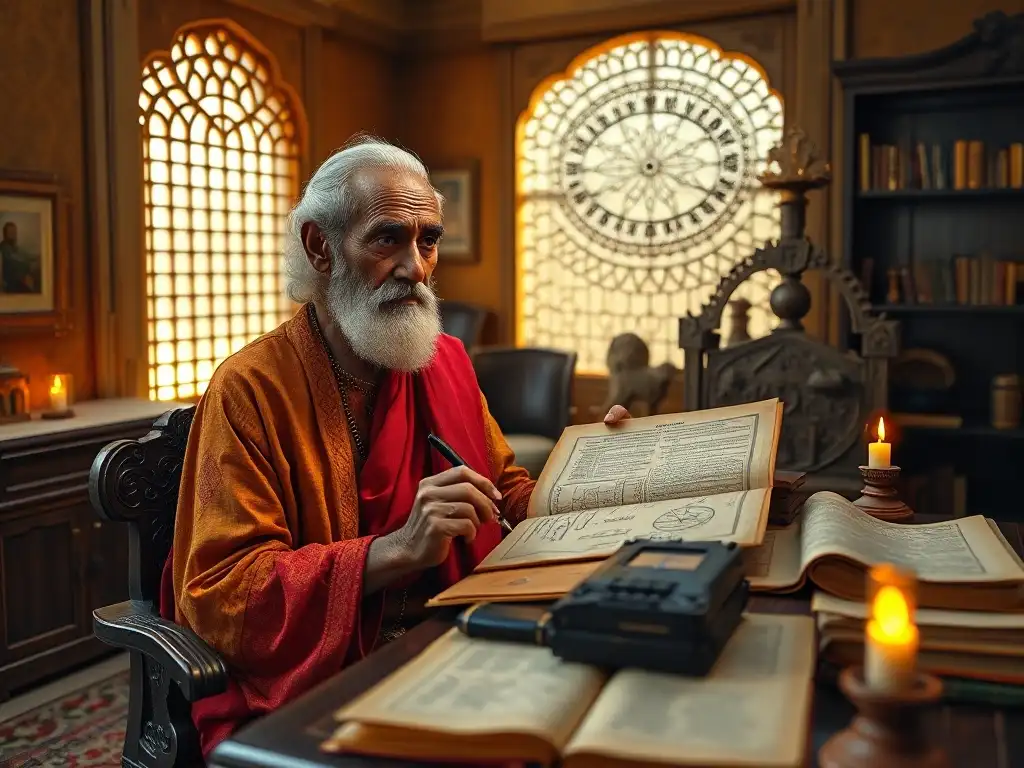
The principles of ancient Indian logic, particularly those articulated by the Nyaya school, continue to resonate profoundly in contemporary discourse. These principles offer foundational insights into logical reasoning, epistemology, and the nature of knowledge that remain relevant across various fields, including philosophy, law, and artificial intelligence. As we navigate complex arguments and engage in critical thinking today, the methodologies established by Nyaya provide a structured approach to reasoning that emphasizes the importance of evidence, inference, and clarity in thought processes.
Furthermore, the Nyaya framework advocates for a systematic analysis of arguments, encouraging individuals to dissect reasoning into premises and conclusions. This analytical approach is crucial in a world increasingly driven by information overload, where discerning valid arguments from fallacies is essential. By revisiting these ancient principles, we enhance our ability to engage in meaningful dialogue, fostering a culture of rational discourse.
Applications of Nyaya in Modern Logical Reasoning
Nyaya's influence can be observed in various modern logical systems, particularly in the realms of formal logic and critical thinking. The key tenets of Nyaya, such as the concept of pramanas (means of knowledge), provide a robust framework for evaluating the validity of arguments. For instance, in legal contexts, the rigorous standards of evidence established by Nyaya can enhance judicial reasoning, ensuring that conclusions are drawn from sound premises.
Moreover, the Nyaya method of classification and categorization is echoed in contemporary analytical philosophy and logic. Its emphasis on defining terms and concepts with precision aids in avoiding ambiguities that can lead to misinterpretations. The structured approach of Nyaya also encourages the development of algorithms in computer science, particularly in artificial intelligence, where logical reasoning is paramount.
The Impact of Nyaya on Contemporary Indian Philosophy
Nyaya's impact extends deeply into the fabric of contemporary Indian philosophy. As one of the six orthodox schools of Indian thought, Nyaya has shaped philosophical inquiry and discourse in India for centuries. Modern philosophers in India often draw upon Nyaya principles to engage with contemporary issues, including ethics, metaphysics, and epistemology.
In recent years, there has been a resurgence of interest in integrating Nyaya's logical frameworks into philosophical discussions around justice, morality, and governance. This integration highlights the relevance of ancient thought in addressing modern dilemmas, illustrating how Nyaya can inform and enrich contemporary philosophical debates. Scholars are increasingly recognizing the need to incorporate these principles into a broader philosophical context, facilitating a dialogue that bridges ancient wisdom with modern challenges.
Integrating Nyaya Principles into Modern Education Systems
The integration of Nyaya principles into modern educational curricula can significantly enhance critical thinking and reasoning skills among students. By incorporating the methodologies of Nyaya, educators can foster an environment that encourages logical inquiry and analytical thinking. Curricula designed around Nyaya can help students learn to structure arguments, assess evidence, and engage in rational debate.
Workshops and courses focusing on the principles of Nyaya can be introduced at various educational levels, promoting a culture of questioning and exploration. By teaching students how to apply these ancient principles in contemporary contexts, we can equip them with essential skills for problem-solving and decision-making, preparing them for the complexities of modern life.
Challenges and Critiques of Nyaya in the Modern Context
While Nyaya offers valuable insights, it is not without its challenges and critiques in the modern context. One significant challenge is the perception that ancient philosophies may not adequately address contemporary issues. Critics argue that the rigid structures of Nyaya may limit its adaptability to the fluid nature of modern philosophical discourse.
Additionally, the historical context in which Nyaya developed raises questions about its applicability in a globalized world. As societies become increasingly diverse, the universal relevance of Nyaya's principles may be scrutinized, necessitating a re-evaluation of its foundational concepts in light of contemporary values and beliefs.
Common Misunderstandings of Nyaya Logic
One common misunderstanding of Nyaya logic is the belief that it is solely a system of formal logic, devoid of practical application. In reality, Nyaya emphasizes the importance of contextual understanding and the application of logical principles to real-life scenarios. This misunderstanding can lead to a dismissal of Nyaya's relevance in contemporary discussions on logic and reasoning.
Another misconception is that Nyaya is incompatible with modern scientific thought. However, the Nyaya school has historically been open to incorporating empirical evidence into its logical frameworks, illustrating a compatibility that deserves further exploration in contemporary scientific discourse.
Addressing Critiques of Nyaya's Relevance Today
To address critiques of Nyaya's relevance, it is essential to engage with its principles critically and constructively. This involves demonstrating how Nyaya can be applied to modern philosophical and practical challenges. Scholars and practitioners can showcase case studies and real-life applications of Nyaya principles to highlight their enduring value.
Moreover, fostering interdisciplinary dialogue between ancient philosophies and contemporary thought can bridge gaps in understanding. By actively integrating Nyaya principles into discussions on ethics, governance, and social issues, we can reaffirm their significance in today's world. Engaging with Nyaya in a manner that respects its historical context while adapting it to contemporary realities will ensure its continued relevance in the discourse of modern logic and philosophy.
Conclusion: The Enduring Legacy of Nyaya
Nyaya, as one of the six orthodox schools of Indian philosophy, has left a profound impact on the intellectual landscape of ancient India and continues to resonate in contemporary thought. The principles of ancient Indian logic, particularly those articulated by the Nyaya philosophers, emphasized the necessity of rigorous reasoning and the systematic acquisition of knowledge. This legacy is evident in various fields, including epistemology, ethics, and even modern legal systems, where logical reasoning and argumentation are paramount.
The meticulous approach of Nyaya towards establishing validity in arguments and the classification of different types of knowledge underscores its relevance even today. By adhering to precise definitions and rigorous methods of inquiry, Nyaya provides a framework that encourages critical thinking and reasoned debate, essential tools in an age dominated by information overload and misinformation. The enduring legacy of Nyaya serves as a reminder of the timeless value of logical reasoning and its foundational role in the pursuit of truth and understanding.
Reflecting on the Importance of Ancient Indian Logic Principles in Today’s World
In our rapidly evolving society, the principles of ancient Indian logic are increasingly important. The critical examination of arguments, understanding fallacies, and the quest for knowledge are vital skills that transcend cultural boundaries and historical contexts. The Nyaya system's rigorous analysis of perception, inference, and testimony offers a robust methodology for discerning truth in various domains, including science, philosophy, and everyday decision-making.
Moreover, as global challenges arise, the logical frameworks established by Nyaya can guide ethical reasoning and decision-making processes. The emphasis on the interconnectedness of knowledge and the importance of context in reasoning highlights the need for a nuanced approach to problem-solving in contemporary issues. By integrating these ancient principles, individuals and societies can foster a more thoughtful, reflective, and informed community.
Encouraging Further Exploration of Nyaya and Its Contributions to Philosophy
Engaging with the Nyaya school of thought presents a unique opportunity for philosophical inquiry and personal growth. Scholars, students, and enthusiasts alike are encouraged to delve deeper into the texts and commentaries that articulate Nyaya principles. Understanding the nuances of Nyaya logic not only enhances one’s philosophical knowledge but also cultivates a more critical and analytical mindset.
Additionally, exploring Nyaya's interactions with other philosophical schools, such as Vaisheshika and Sankhya, can yield insights into the rich tapestry of Indian philosophy. This comparative study fosters a broader comprehension of how these systems influence each other and contribute to overarching philosophical questions, making it a fertile ground for academic research and discourse.
Additional Resources for Studying Nyaya
To facilitate a deeper understanding of Nyaya and its contributions to ancient Indian logic, various resources are available for students and scholars. These resources encompass recommended texts, academic commentaries, and interactive learning platforms that provide comprehensive insights into the principles and applications of Nyaya.
Recommended Texts and Commentaries on Nyaya
- "Nyaya Sutras" by Gautama: This seminal text lays the groundwork for Nyaya philosophy, outlining fundamental concepts and logical principles.
- "Tattva Chintāmaṇi" by Gangesha Upadhyaya: A critical commentary that expands upon the Nyaya Sutras, offering interpretations and explanations of complex ideas.
- "An Introduction to Nyaya Philosophy" by S. C. Chatterji: This work presents a beginner-friendly overview of Nyaya principles and their implications for modern thought.
- "Advaita Vedanta and Nyaya Philosophy" by K. N. Upadhyaya: A comparative analysis that explores the relationship between Nyaya and other philosophical systems.
Online Courses and Lectures on Ancient Indian Logic
Several platforms offer online courses and lectures that delve into the principles of Nyaya and ancient Indian logic:
- Coursera: Look for courses on Indian philosophy that include modules on Nyaya, providing lectures from esteemed scholars in the field.
- edX: Offers courses on comparative philosophy that explore ancient Indian logic alongside other philosophical traditions.
- YouTube: Various educational channels feature lectures and discussions on Nyaya principles, providing accessible insights into its concepts and applications.
- Academic Institutions: Many universities provide online resources and recorded lectures focusing on Nyaya and its philosophical significance.
By utilizing these resources, learners can engage with the rich intellectual heritage of Nyaya and appreciate its contributions to both ancient and contemporary philosophical discourse.
- Introduction to Nyaya: The Essence of Ancient Indian Logic
- Key Principles of Ancient Indian Logic
- The Structure of Nyaya Arguments
- Comparison of Nyaya with Other Philosophical Schools
- The Relevance of Ancient Indian Logic Principles Today
- Challenges and Critiques of Nyaya in the Modern Context
- Conclusion: The Enduring Legacy of Nyaya
- Additional Resources for Studying Nyaya
Frequently Asked Questions
What is Nyaya in Ancient Indian philosophy?
Nyaya is a system of logic that originated in ancient India, focusing on the principles of reasoning and knowledge acquisition. It plays a crucial role in philosophical discussions and debates.
How does Nyaya relate to Ancient Indian logic principles?
Nyaya outlines important logic principles that govern reasoning processes, emphasizing valid inference, evidence, and the classification of knowledge. It serves as a foundation for other Indian philosophical schools.
Why is Nyaya considered relevant today?
Nyaya's logical frameworks are still applicable in contemporary philosophy, law, and debate, providing tools to analyze arguments and enhance critical thinking skills in modern contexts.
What contributions did ancient Indian civilizations make to logic?
Ancient Indian civilizations, particularly through Nyaya, contributed significantly to the development of formal logic, argumentation techniques, and concepts of epistemology, influencing both Eastern and Western thought.
How can one study Nyaya and its principles?
To study Nyaya, one can explore primary texts like the Nyaya Sutras, engage with contemporary interpretations, and participate in academic discussions or courses focused on Indian philosophy and logic.
Final Reflection: The Timeless Relevance of Ancient Indian Logic
The principles of ancient Indian logic are not just relics of the past; they are vital tools for navigating today's complex world. In an age characterized by rapid information exchange and diverse viewpoints, the ability to think critically and reason effectively is more crucial than ever. The teachings of Nyaya offer a framework for understanding the intricacies of argumentation and the pursuit of truth, reminding us that logic is not merely an academic exercise but a necessary skill for fostering meaningful dialogue and resolving conflicts.
The impact of ancient Indian logic extends beyond philosophical discourse; it resonates deeply within our cultural and social landscapes. As we grapple with issues of misinformation and polarized opinions, the principles of Nyaya encourage us to seek clarity and coherence in our thoughts and discussions. This ancient wisdom serves as a beacon, guiding us toward a more rational and empathetic society. Logic is the beginning of wisdom, not the end.
This quote encapsulates the essence of how ancient Indian logic can inspire us to cultivate wisdom in our everyday lives.
As you reflect on the insights shared in this article, consider how you can incorporate the principles of ancient Indian logic into your own life. Embrace the challenge of questioning assumptions, seeking evidence, and engaging in constructive dialogue. Let the teachings of Nyaya inspire you to become not only a better thinker but also a more compassionate communicator. The journey toward understanding and enlightenment is ongoing, and each of us has a role to play in shaping a more thoughtful and harmonious world.
Unveil the Power of Ancient Logic Today!
Thank you for delving into the fascinating world of Nyaya with us! We hope you found inspiration in the rich frameworks of ancient Indian logic and its relevance in modern times. Now, it's time to take that knowledge and turn it into action.
Here are some ways you can deepen your understanding and share your excitement about Nyaya:
- Dive Deeper: Explore historical texts and contemporary interpretations of Nyaya to gain a more comprehensive understanding. Consider enrolling in online courses or attending local seminars to enhance your learning experience.
- Join the Conversation: Share your insights on social media or forums focused on philosophy and logic. Engaging with a community can broaden your perspective and inspire new ideas.
- Apply the Principles: Incorporate Nyaya’s logical frameworks into your everyday reasoning—whether in conversations, debates, or decision-making processes—to sharpen your critical thinking skills.
What aspect of Nyaya resonates with you the most, and how do you believe it can influence your daily life? We invite you to share your thoughts in the comments below!