
The Legacy of Sankhya: How Ancient Thought Shaped Modern Philosophy

Welcome to Ancient India History, where we invite you to embark on a journey through the rich tapestry of ancient Indian civilizations. In this exploration, we delve into the profound Sankhya philosophy, a cornerstone of Indian thought that has not only influenced its culture but also laid the groundwork for modern philosophical discourse. What secrets does this ancient framework hold, and how has it shaped our understanding of the universe today? Join us as we uncover the legacy of Sankhya, revealing the intricate connections between past insights and contemporary ideas. Let the journey begin!
The intricate tapestry of ancient Indian philosophy reveals a profound legacy that continues to influence contemporary thought. Among the various philosophical schools that emerged, Sankhya philosophy stands out as a pivotal framework that not only shaped the intellectual landscape of ancient India but also laid foundational principles that resonate in modern philosophical discourse.
Originating during the early centuries of the Common Era, Sankhya presents a dualistic approach to understanding the cosmos, distinguishing between consciousness (Purusha) and matter (Prakriti). This article explores the rich contributions of Sankhya, examining its core tenets, historical context, and its enduring impact on modern philosophical thought.
Historical Context of Sankhya Philosophy
The historical roots of Sankhya philosophy can be traced back to the Vedic texts, but it gained prominence through the Sankhya Karika, attributed to the sage Ishvara Krishna in the 4th century CE. This philosophy emerged as a response to various existential inquiries prevalent in ancient Indian society, aiming to provide a systematic understanding of reality and the self.
- Key Developments:
- The influence of Upanishadic thought on Sankhya's metaphysical framework.
- The interaction of Sankhya with other philosophical schools, such as Yoga and Nyaya.
- The role of Sankhya in shaping the Indian epistemological landscape.
Core Principles of Sankhya Philosophy
At the heart of Sankhya philosophy lies the dualism between Purusha (consciousness) and Prakriti (matter). This dichotomy serves as a foundation for various philosophical discussions regarding the nature of existence, knowledge, and liberation.
- Purusha:
- Represents the unchanging, eternal consciousness.
- Is distinct from the material world, emphasizing individual self-awareness.
- Prakriti:
- Comprises the mutable, physical universe.
- Is the source of all phenomena and experiences, deeply entwined with the concept of evolution.
- Evolution of the Universe:
- The Sankhya framework posits that the universe evolves through a process governed by three Gunas (qualities):Sattva (purity), Rajas (passion), and Tamas (ignorance).
- These qualities interact to create the diverse manifestations of reality.
Influence on Modern Philosophy
The contributions of Sankhya extend beyond ancient texts; its principles have permeated various aspects of modern philosophical thought. Scholars and thinkers have drawn upon Sankhya to address contemporary issues in metaphysics, ethics, and epistemology.
- Key Areas of Influence:
- The dialogue between Eastern and Western philosophical traditions.
- The impact of Sankhya on psychology, particularly in concepts of consciousness and perception.
- The integration of Sankhya ideas in holistic and integrative approaches to philosophy and science.
By delving into the legacy of Sankhya philosophy, we uncover a rich tradition that not only elucidates ancient Indian thought but also offers valuable insights for navigating the complexities of modern philosophy. This exploration invites us to reflect on how ancient wisdom can inform and enrich contemporary understanding and practices.
- Historical Context of Sankhya Philosophy
- Core Principles of Sankhya Philosophy
- Influence on Modern Philosophy
Introduction to Sankhya Philosophy in Ancient India
Sankhya philosophy stands as one of the cornerstone schools of thought within ancient Indian philosophy, providing insights into the nature of reality and the self. It is characterized by a dualistic approach that distinguishes between consciousness (Purusha) and matter (Prakriti). This ancient system of thought has profoundly influenced various aspects of Indian philosophy, including the development of other schools such as Yoga, Nyaya, and Vaisheshika. Understanding the principles of Sankhya is essential for grasping the broader philosophical landscape of ancient India, as it offers foundational concepts that reverberate through time.
Definition and Overview of Sankhya Philosophy
Sankhya, which translates to "number" or "enumeration," is primarily known for its enumeration of principles that define reality. At its core, Sankhya philosophy articulates a systematic framework that categorizes the universe into distinct elements. The primary tenets of Sankhya include:
- Purusha (Consciousness): The eternal, unchanging self or spirit that perceives but does not interact with the material world.
- Prakriti (Matter): The dynamic, ever-changing aspect of existence that embodies the physical universe and its properties.
The Sankhya system is famously articulated in the Sankhya Karika, composed by Ishvara Krishna in the 4th century CE, where the philosophy is laid out systematically through verses that categorize the elements of existence.
Sankhya philosophy is characterized by:
- A dualistic worldview separating consciousness from matter.
- A categorization of the universe into 25 fundamental principles (tattvas), which include the five elements, the mind, and the senses, among others.
- An emphasis on knowledge (jnana) as a means to liberation (moksha) from the cycles of birth and rebirth (samsara).
Historical Context of Sankhya in Ancient Indian Thought
The origins of Sankhya philosophy can be traced back to the Vedic texts, where early notions of reality began to take shape. During the period of the Upanishads (around 800-200 BCE), the philosophical discourse evolved, leading to more structured frameworks such as Sankhya. The historical development of Sankhya can be summarized through key phases:
- Vedic Foundations: The early Vedic texts introduced concepts of the self (Atman) and the ultimate reality (Brahman), which influenced later philosophical thought.
- Upanishadic Influence: The Upanishads explored the nature of existence and consciousness, laying the groundwork for dualistic interpretations found in Sankhya.
- Systemization in Classical Period: During the classical period (around the 4th century CE), Ishvara Krishna's Sankhya Karika provided a systematic exposition of Sankhya, distinguishing it from other philosophies and establishing its significance in the philosophical canon of ancient India.
- Interconnection with Other Schools: Sankhya's principles were integral to the development of the Yoga school, which built upon its metaphysical framework. The debates between Sankhya and other schools like Nyaya and Vaisheshika further enriched the philosophical dialogue of ancient India.
This historical backdrop underscores Sankhya's role as a pivotal philosophy, influencing various other schools and shaping the intellectual landscape of ancient Indian thought.
Importance of Sankhya in the Development of Philosophical Schools
Sankhya philosophy has played a crucial role in the development of numerous philosophical schools and spiritual practices in ancient India. Its significance can be highlighted through several key points:
- Foundation for Yoga: Sankhya provided the metaphysical groundwork for the Yoga school, emphasizing the need for knowledge and meditative practices to transcend the duality of Purusha and Prakriti. The Yoga Sutras of Patanjali reflect this synthesis.
- Influence on Nyaya and Vaisheshika: The analytical methods of Nyaya and the categorizations of Vaisheshika drew upon Sankhya's systematic approach to understanding reality, showcasing its foundational impact on logical reasoning and epistemology.
- Integration into Buddhist Thought: Elements of Sankhya philosophy can also be found in early Buddhist texts, where its concepts of the self and reality were adapted and critiqued, illustrating its pervasive influence across different traditions.
- Contemporary Relevance: The principles of Sankhya continue to resonate in modern philosophical discussions, particularly in areas concerning consciousness, self-identity, and the nature of reality. Its dualistic framework provides a lens through which contemporary philosophical inquiries can be examined.
The legacy of Sankhya philosophy in ancient India is not confined to its historical existence; rather, it serves as a foundational pillar that has shaped the intellectual discourse and philosophical evolution across various schools of thought, continuing to inspire contemporary reflections on life's fundamental questions.
Core Principles of Sankhya Philosophy
Sankhya philosophy, one of the six orthodox schools of Indian philosophy, is a dualistic system that emphasizes the distinction between consciousness and matter. Central to its teachings are the concepts of Purusha (the true self or consciousness) and Prakriti (nature or the material world). This ancient philosophical framework not only forms the foundation of various spiritual practices but also influences modern philosophical thought.
The Concept of Purusha and Prakriti
At the heart of Sankhya philosophy lies the dualism of Purusha and Prakriti.
- Purusha: Represents the eternal, unchanging essence of the self. It is pure consciousness, devoid of attributes and is the observer of all experiences. In Sankhya, it is considered the ultimate reality that exists beyond the physical realm. The existence of multiple Purushas indicates the diversity of individual consciousnesses, each having its own unique experiences and perspectives.
- Prakriti: In contrast, Prakriti is the ever-changing, dynamic aspect of existence encompassing the material world and all its phenomena. It is characterized by three fundamental qualities, or gunas: Sattva (purity, harmony), Rajas (activity, chaos), and Tamas (inertia, darkness). These qualities interact in various combinations to create the diverse experiences of life.
The interplay between Purusha and Prakriti is essential for understanding the Sankhya worldview. While Prakriti undergoes constant transformation, Purusha remains untouched, serving as the observer of the material changes. This dualistic perspective provides insights into the nature of reality, consciousness, and personal identity.
The Classification of the Gunas (Qualities)
The gunas, or qualities, form a crucial aspect of Sankhya philosophy, influencing not only individual behavior and thought processes but also the entire cosmic order. Each guna has distinct characteristics and impacts the nature of reality:
- Sattva:
- Represents purity, knowledge, and harmony.
- Associated with qualities like clarity, wisdom, and tranquility.
- Promotes enlightenment and spiritual growth.
- Rajas:
- Represents activity, passion, and dynamism.
- Characterized by desire, ambition, and restlessness.
- Drives individuals towards action and worldly pursuits but can lead to attachment and suffering if not balanced.
- Tamas:
- Represents darkness, inertia, and ignorance.
- Associated with lethargy, confusion, and delusion.
- Can obstruct growth and understanding, leading to stagnation.
The interplay of these gunas shapes individual personalities and societal dynamics. For example, a predominance of Sattva in an individual may lead to a peaceful and contemplative life, while a dominance of Rajas could manifest in a driven, competitive personality. Understanding the balance of these qualities is essential for personal development and achieving a harmonious existence.
The Role of Knowledge in Sankhya Philosophy
Knowledge, or jnana, plays a pivotal role in Sankhya philosophy, serving as the means to liberation ( moksha). The acquisition of knowledge is viewed as the key to understanding the distinction between Purusha and Prakriti.
- Types of Knowledge: Sankhya philosophy categorizes knowledge into two main types:
- Aparā Vidyā (Lower Knowledge): This includes knowledge of the material world and its phenomena. It is practical and necessary for everyday life, yet it is ultimately transient and limited.
- Parā Vidyā (Higher Knowledge): This represents the realization of the ultimate truth—that Purusha is separate from Prakriti. It leads to self-realization and liberation from the cycle of birth and death.
- Path to Liberation: The journey towards liberation requires discernment, or viveka, which enables individuals to differentiate between the eternal truth of Purusha and the fleeting nature of Prakriti. Through meditation, self-inquiry, and philosophical contemplation, individuals can cultivate this knowledge, ultimately leading to the cessation of suffering and the realization of one's true self.
Sankhya philosophy provides profound insights into the nature of reality, the self, and the path to liberation. Its core principles, focusing on the duality of Purusha and Prakriti, the classification of gunas, and the transformative power of knowledge, continue to resonate through ancient texts and modern philosophical discourse alike.
The Influence of Sankhya on Other Philosophical Schools
The Sankhya philosophy, one of the six orthodox schools of Indian philosophy, has had a profound influence on various other philosophical traditions and schools in ancient India. Its dualistic approach, which distinguishes between purusha (consciousness) and prakriti (matter), has not only shaped the contours of philosophical discourse but has also contributed significantly to the development of metaphysical and epistemological frameworks in subsequent schools of thought.
Sankhya and Yoga: A Comparative Analysis
The relationship between Sankhya and Yoga is particularly noteworthy, as they share a common philosophical foundation while diverging in practice and emphasis.
- Philosophical Foundations:
- Sankhya posits that the universe is composed of two fundamental realities: purusha (the self or consciousness) and prakriti (the material world). This dualism leads to a complex understanding of existence, consciousness, and the nature of reality.
- Yoga, as articulated in the Yoga Sutras of Patanjali, builds upon these Sankhya concepts but emphasizes practical application through meditation and ethical living. The ultimate goal in Yoga is to attain liberation (moksha) through the unification of purusha and prakriti.
- Methods and Practices:
- While Sankhya is largely theoretical, focusing on the nature of reality and the self, Yoga provides a practical framework for achieving self-realization. It includes practices such as meditation (dhyana), ethical observances (yama and niyama), and physical postures (asanas).
- The Yoga philosophy incorporates Sankhya's views on the distinction between the self and the material world but stresses the importance of experiential realization through disciplined practice.
- Influence on Each Other:
- Yoga draws heavily from Sankhya’s metaphysical framework, particularly in its understanding of the nature of consciousness. Conversely, Sankhya philosophy has been enriched by the practical insights and methods proposed by Yoga, leading to a more holistic understanding of human experience.
The interplay between Sankhya and Yoga exemplifies how philosophical schools can inform one another, leading to a more robust understanding of the human condition and the path to liberation.
The Relationship Between Sankhya and Nyaya Philosophy
The Nyaya school, primarily concerned with logic and epistemology, offers a fascinating contrast to Sankhya's metaphysical assertions. The relationship between these two schools can be examined through several lenses:
- Epistemological Foundations:
- Sankhya emphasizes the importance of knowledge (jnana) as a means to discern the nature of reality. Its focus on the distinction between purusha and prakriti provides a unique perspective on how knowledge is acquired and its role in achieving liberation.
- Nyaya, on the other hand, is dedicated to the study of valid reasoning and the means of correct knowledge (pramanas). It categorizes sources of knowledge, such as perception (pratyaksha) and inference (anumana), and emphasizes the importance of logical reasoning in arriving at truth.
- Methodological Differences:
- While Sankhya relies on a philosophical framework that seeks to understand the essence of existence, Nyaya employs rigorous logical analysis to validate claims and beliefs. This methodological divergence has led to rich dialogues between the two schools, particularly in discussions surrounding the nature of reality and the processes of knowledge acquisition.
- Mutual Influence:
- The interaction between Sankhya and Nyaya has been beneficial for both schools; Sankhya's metaphysical insights provide a substantive backdrop for Nyaya's logical investigations, while Nyaya's emphasis on reasoning enhances the clarity and rigor of Sankhya's philosophical positions.
Through their engagement, Sankhya and Nyaya have contributed to a deeper understanding of philosophy in ancient India, showcasing the importance of dialogue between different schools of thought.
How Sankhya Influenced Vaisheshika and Other Schools
The impact of Sankhya philosophy extends beyond Yoga and Nyaya, notably influencing the Vaisheshika school and other philosophical traditions in ancient India:
- Metaphysical Contributions:
- Vaisheshika, which focuses on the classification of reality and the nature of substances, integrates Sankhya’s dualistic framework into its ontological schema. The recognition of purusha and prakriti in Sankhya has informed Vaisheshika's understanding of the nature of individual souls and the material world.
- Categorization of Reality:
- Sankhya’s influence can be seen in the Vaisheshika categorization of substances (dravya). The emphasis on distinguishing between different elements of reality in both schools has led to a richer discourse on the nature of existence and the material universe.
- Impact on Other Schools:
- The philosophical insights of Sankhya have also permeated other schools, including Mimamsa and Advaita Vedanta. For example, the concepts of dualism and the nature of consciousness have been pivotal in shaping the metaphysical discussions in these schools.
- Additionally, Sankhya’s analytical approach to understanding the self has influenced later philosophical thought, contributing to the development of medieval and modern Indian philosophy.
The legacy of Sankhya philosophy in ancient India is evident in its profound influence on various philosophical schools. Its metaphysical insights and analytical rigor have shaped the discourse on reality, consciousness, and knowledge, leaving an indelible mark on the landscape of Indian philosophy.
The Impact of Sankhya Philosophy on Modern Thought
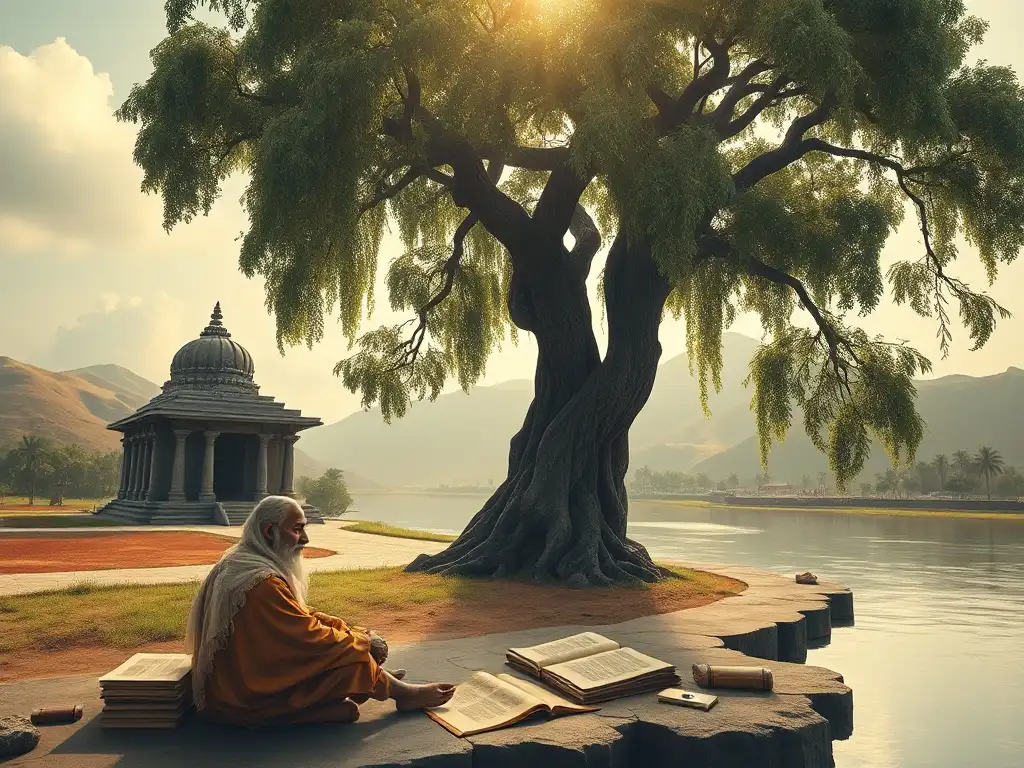
Sankhya philosophy, one of the six orthodox schools of Indian philosophy, has profoundly influenced not only ancient Indian thought but also modern philosophical frameworks. Its dualistic approach—distinguishing between consciousness (Purusha) and matter (Prakriti)—has provided a robust foundation for various contemporary philosophical discussions. By examining the core tenets of Sankhya, we can trace its lasting impact on modern thought, especially in fields such as psychology, metaphysics, and ethics.
Modern Interpretations of Sankhya Philosophy
In contemporary academia, Sankhya philosophy has been reinterpreted in various ways, aligning its ancient principles with modern scientific insights. Scholars have noted the parallels between Sankhya's dualism and the mind-body problem in Western philosophy. The notion that consciousness exists independently of the material world resonates with modern psychological theories that explore the nature of the self and consciousness.
Furthermore, modern interpretations often emphasize the systematic categorization found in Sankhya. The philosophy’s enumeration of the 24 principles (Tattvas) that constitute reality has inspired contemporary philosophical discussions around ontology and epistemology. For instance, the classification of elements in Sankhya can be likened to modern scientific categorization in fields such as biology and physics, providing a framework for understanding complex systems.
Contributions of Sankhya to Contemporary Philosophical Discourse
Sankhya philosophy contributes significantly to contemporary philosophical discourse, particularly in the realms of metaphysics and ethics. Its emphasis on discernment (Viveka) between the eternal and the transient has led to critical dialogues on existentialism and the nature of reality. The ethical implications of Sankhya, particularly the concept of liberation (Moksha) through knowledge (Jnana), continue to influence modern discussions on moral philosophy and the pursuit of a meaningful life.
Moreover, the Sankhya approach to suffering and ignorance (Avidya) provides a framework for psychological resilience and mental health. This is increasingly relevant in today's context, where mindfulness and self-awareness are emphasized in therapeutic practices. The recognition of the interplay between the self and the material world echoes in contemporary discussions about personal identity and the human experience.
The Relevance of Sankhya in Current Philosophical Debates
The relevance of Sankhya philosophy in current philosophical debates cannot be overstated. As the world grapples with issues such as environmental crisis, technological advancement, and the quest for holistic understanding, the Sankhya perspective offers valuable insights. Its recognition of the interconnectedness of all existence invites a more integrated approach to addressing global challenges.
Additionally, in discussions around artificial intelligence and consciousness, the Sankhya differentiation between Purusha and Prakriti raises essential questions about the nature of consciousness itself. Can machines possess a form of consciousness akin to Purusha, or is that inherently a human (or sentient) quality? These inquiries echo the ancient debates rooted in Sankhya philosophy, proving its enduring relevance.
Sankhya philosophy in ancient India not only shaped its contemporary philosophical landscape but continues to resonate in modern thought across various disciplines. Its insights into the nature of reality, consciousness, and ethics remain pivotal as we navigate the complexities of the modern world.
Conclusion: The Enduring Legacy of Sankhya Philosophy in Ancient India
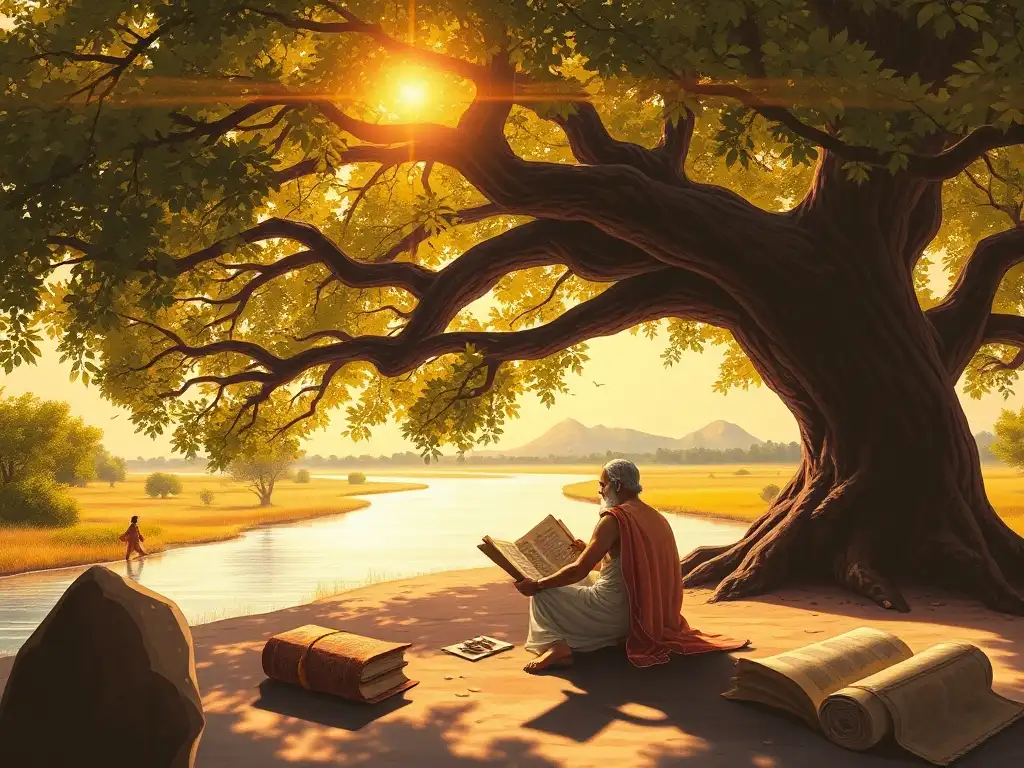
Summary of Key Contributions of Sankhya Philosophy
Sankhya philosophy, one of the six orthodox schools of Indian philosophy, has had a profound influence on various aspects of thought and culture in ancient India. Its contributions can be distilled into several key areas:
- Dualistic Framework: Sankhya introduces a dualistic approach that distinguishes between Purusha (consciousness) and Prakriti (matter). This framework has laid the groundwork for understanding the relationship between the mind and the body, influencing later philosophical discussions.
- Theory of Evolution: The Sankhya system presents a unique theory of cosmic evolution, outlining how the universe manifests from the interplay of Purusha and Prakriti. This conceptualization of evolution has parallels in modern scientific thought, particularly in discussions about the origins of the universe.
- Epistemology: The school has significantly contributed to the understanding of knowledge and perception. It categorizes knowledge into three types: Pratyaksha (perception), Anumana (inference), and Shabda (testimony), which has influenced various philosophical debates regarding the nature of truth and knowledge.
- Influence on Yoga: Sankhya's insights into the nature of consciousness and the mind have deeply influenced the development of Yoga philosophy. The integration of Sankhya concepts is evident in the Yoga Sutras of Patanjali, where the path to liberation is articulated in the context of understanding the self.
- Ethics and Morality: The implications of Sankhya philosophy extend into ethical considerations, emphasizing the importance of understanding one's nature and the pursuit of liberation ( moksha). This moral framework has informed various schools of thought within ancient Indian culture.
Reflections on the Relevance of Ancient Indian Philosophy Today
The relevance of Sankhya philosophy in contemporary discourse cannot be overstated. As we navigate the complexities of modern life, the insights offered by ancient Indian philosophy resonate in several ways:
- Mind-Body Connection: The dualistic framework of Sankhya encourages a deeper exploration of the mind-body relationship, which is increasingly relevant in fields such as psychology, cognitive science, and holistic health practices. Understanding this connection can lead to improved mental wellness and a more integrated approach to healthcare.
- Environmental Philosophy: The Sankhya perspective on the interplay between Purusha and Prakriti can inform current discussions on environmental ethics. Recognizing the intrinsic connection between consciousness and nature may inspire more sustainable practices and a greater respect for ecological systems.
- Philosophical Dialogue: The epistemological contributions of Sankhya provide a rich ground for dialogue between Eastern and Western philosophies. By examining the nature of knowledge and perception, contemporary philosophers can bridge cultural divides and foster a more inclusive understanding of truth.
- Personal Development: The ethical dimensions of Sankhya philosophy, particularly its emphasis on self-awareness and self-realization, promote personal growth and introspection. In an age marked by rapid change and uncertainty, these ancient principles offer timeless guidance for individuals seeking meaning and purpose in their lives.
The legacy of Sankhya philosophy in ancient India continues to shape modern thought across various domains. Its contributions to understanding consciousness, ethics, and the nature of reality remain vital as we seek to navigate the challenges of contemporary existence.
References and Further Reading on Sankhya Philosophy
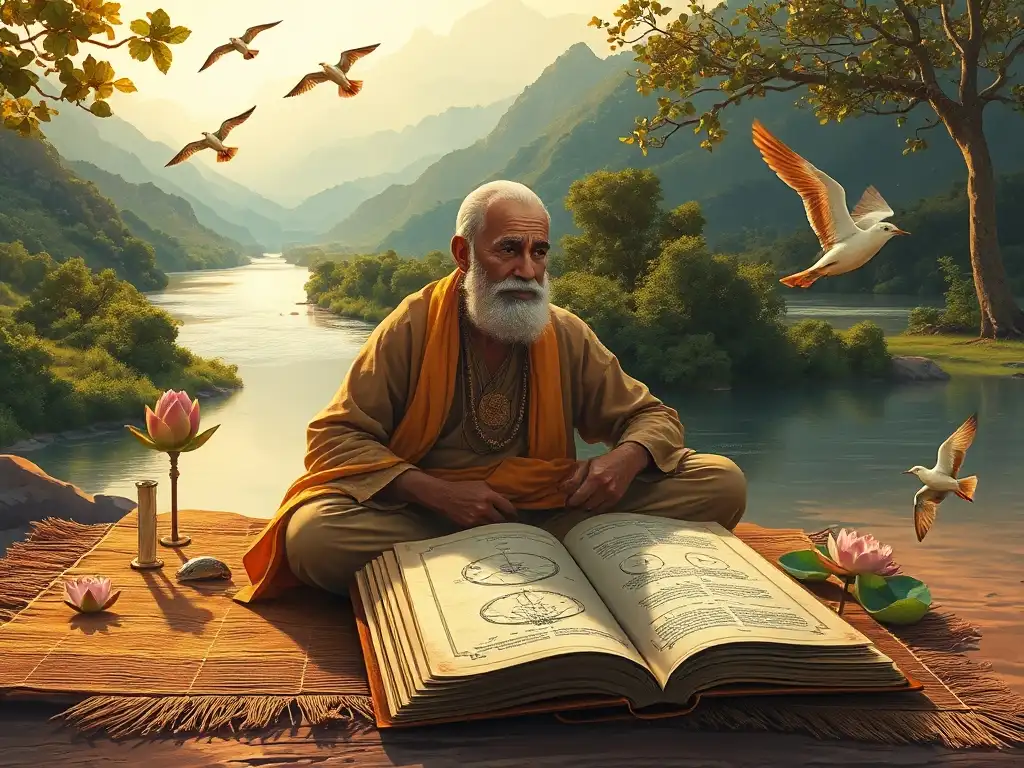
Recommended Texts on Sankhya Philosophy in Ancient India
Sankhya philosophy holds a pivotal position in the landscape of ancient Indian thought, and several texts contribute to its understanding and evolution. Here are some seminal works that are essential for anyone looking to delve deeper into this philosophical school:
- Sankhya Karika: Authored by Ishvara Krishna, this foundational text is considered the core scripture of Sankhya philosophy. It systematically outlines the principles of Sankhya, including the concepts of Purusha (consciousness) and Prakriti (matter), and delves into the process of evolution and liberation.
- Yoga Sutras of Patanjali: While primarily focused on the practice of yoga, this text draws heavily on Sankhya concepts, particularly regarding the nature of the mind and the path to enlightenment. Understanding the Yoga Sutras provides insight into how Sankhya philosophy influences practical spirituality.
- Brahma Sutras: This important text addresses various philosophical schools, including Sankhya. It provides a comparative analysis and critiques of Sankhya's doctrines, making it vital for understanding its place within the broader context of Indian philosophy.
- Samkhya Philosophy: A Critical Analysis by S. R. Bhatt: This modern scholarly work offers an in-depth analysis of Sankhya philosophy, exploring its historical development and its impact on subsequent philosophical thought in India.
- The Samkhya System: A History of Indian Philosophy by N. N. Bhattacharyya: This comprehensive volume traces the historical evolution of Sankhya, situating it within the greater framework of Indian philosophical traditions.
These texts collectively form a robust foundation for understanding the intricacies of Sankhya philosophy and its lasting influence on both ancient and modern thought.
Online Resources for Exploring Ancient Indian Thought
With the evolution of digital technology, a plethora of online resources are available for those interested in exploring Sankhya philosophy and other aspects of ancient Indian philosophy. Here are some valuable resources:
- Internet Encyclopedia of Philosophy: This online resource features an extensive entry on Sankhya philosophy, detailing its key concepts, historical context, and its significance within Indian philosophy.
- Stanford Encyclopedia of Philosophy: A reputable resource that includes articles on various Indian philosophical systems. Its detailed entries on Sankhya provide insights into its doctrines and the philosophical debates surrounding it.
- Academia.edu: This platform includes numerous scholarly papers and articles related to Sankhya philosophy, allowing users to engage with contemporary academic discussions and research findings.
- Sankhya Philosophy Blogs: Various academic and philosophical blogs discuss aspects of Sankhya philosophy, including interpretations and critiques. Following these blogs can offer fresh perspectives and interpretations.
- YouTube Lectures and Seminars: Numerous scholars and educators share lectures on Sankhya philosophy. These resources can help visualize complex ideas and foster a deeper understanding through discussions and Q&A sessions.
Leveraging these resources can greatly enhance one’s comprehension of Sankhya philosophy, bringing ancient thought into contemporary discussions and applications.
Frequently Asked Questions
What is Sankhya philosophy in ancient India?
Sankhya philosophy is one of the six orthodox schools of Indian philosophy, focusing on the dualism between consciousness (Purusha) and matter (Prakriti), and exploring the nature of existence and reality.
How did Sankhya influence modern philosophy?
The principles of Sankhya have significantly shaped modern philosophical discussions, particularly in areas like ontology and epistemology, highlighting the importance of distinguishing between subjective experience and the objective world.
What are the main texts associated with Sankhya philosophy?
The primary text of Sankhya philosophy is the Sankhya Karika, written by Ishvara Krishna. Additionally, the teachings are often referenced in other texts such as the Bhagavad Gita and the Yoga Sutras.
How does Sankhya relate to yoga practices?
Sankhya provides a philosophical foundation for many yogic practices, emphasizing the need for self-realization and the understanding of the mind-body relationship, which is crucial for achieving liberation (moksha).
What are the key concepts of Sankhya philosophy?
Key concepts include Prakriti (matter), Purusha (spirit), the evolution of the universe, and the three gunas (qualities) that influence human behavior and experiences. These concepts form the basis for understanding human existence and consciousness.
Final Reflection: The Enduring Influence of Sankhya Philosophy
The legacy of Sankhya philosophy in ancient India continues to resonate profoundly in our contemporary world, reminding us that the foundations of modern thought are often rooted in ancient wisdom. As we navigate the complexities of modern life, the principles of Sankhya offer a lens through which we can better understand the interplay between the material and the spiritual, the known and the unknown. This ancient philosophy not only enriches our intellectual landscape but also challenges us to reconsider our place in the universe.
Sankhya philosophy has profoundly influenced not only the realms of philosophy and spirituality but also the very fabric of our cultural identity. Its emphasis on dualism and the nature of reality encourages a deeper exploration of existence and consciousness, shaping dialogues in both Eastern and Western thought. As philosopher and historian of ideas, David Loy, once said, The greatest challenge of our time is to realize that we are not separate from the world, but rather an integral part of it.
This insight echoes the core tenets of Sankhya, urging us to recognize our interconnectedness and the shared responsibility we hold for our world.
As we reflect on the teachings of Sankhya, I invite you to consider how these ancient insights can inform your own journey. What lessons can you draw from this philosophy to enhance your understanding of self and reality? Embrace the opportunity to engage with these timeless ideas, allowing them to inspire personal growth and a deeper connection to the world around you. The legacy of Sankhya is not just a relic of the past; it is a guiding light for the future, urging us to seek balance, clarity, and wisdom in our lives.
Uncover the Wisdom of Sankhya Today!
Thank you for delving into the profound legacy of Sankhya! Through this exploration, you’ve gained valuable insights into how ancient philosophies continue to shape modern thought. Now, let's harness that wisdom to inspire our everyday lives.
- Dive deeper: Explore the influential philosophers who have been shaped by Sankhya and see how their ideas continue to resonate in today's world.
- Share your insights: Engage in discussions about this article with friends or on social media to broaden the conversation surrounding ancient thought and its ongoing relevance.
- Join the community: Subscribe to our newsletter for more enriching articles and updates on the connection between ancient wisdom and contemporary philosophy!
What aspect of Sankhya’s teachings resonates most with your own worldview?