
The Philosophical Debates of Ancient India: Nyaya vs. Charvaka

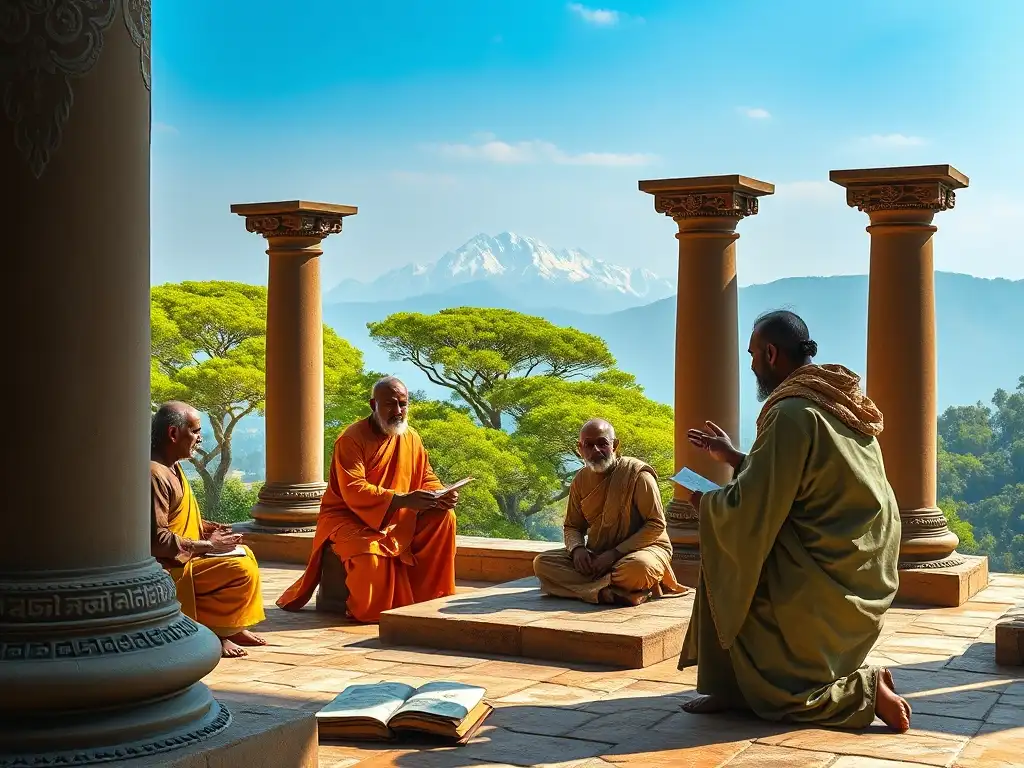
Welcome to Ancient India History, where we invite you to embark on an enlightening journey through the rich tapestry of ancient Indian civilizations. From the sophisticated urban planning of the Indus Valley to the intellectual flourishing of the Gupta Empire, every facet of this era offers a treasure trove of knowledge. In this article, we delve into the provocative philosophical debates that shaped thought in ancient India, focusing on the intriguing clash between Nyaya and Charvaka.
Prepare to uncover the profound ideas and compelling arguments that emerged during this vibrant period, challenging your perceptions and igniting your curiosity. Ready to explore? Let's dive into the philosophical depths of ancient Indian thought!
Introduction to Ancient Indian Philosophical Debates
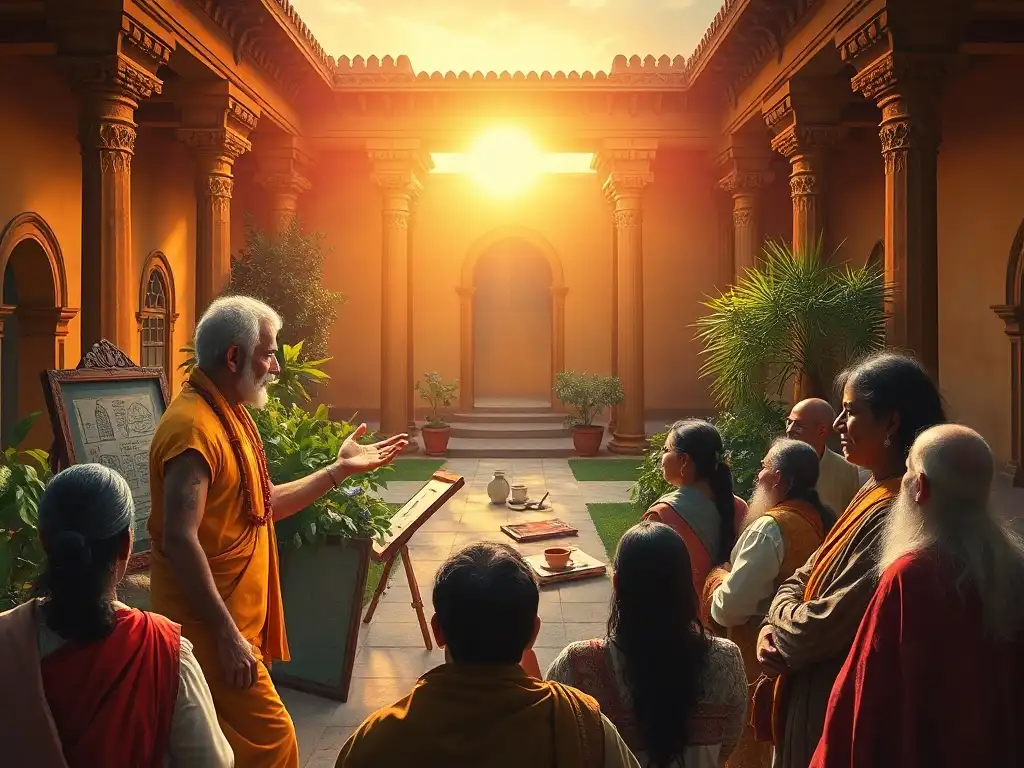
The philosophical landscape of ancient India is a vibrant tapestry woven with diverse schools of thought, each contributing to a rich discourse that has shaped the intellectual heritage of the country. Among these, the debates between the Nyaya and Charvaka schools stand out as pivotal moments in the evolution of Indian philosophy.
These discussions not only reflect the diverse perspectives of ancient Indian thinkers but also delve into fundamental questions about knowledge, reality, and existence. As we explore the intricacies of these philosophical debates, we unlock insights into how ancient Indian civilizations grappled with profound existential inquiries, laying the groundwork for future philosophical explorations.
Overview of Ancient Indian Philosophy
Ancient Indian philosophy encompasses a vast array of thoughts and ideas that emerged over millennia, characterized by a deep engagement with metaphysical questions and ethical dilemmas. It includes six orthodox (astika) systems, such as Nyaya, Vaisheshika, Sankhya, and others, which seek to understand the nature of reality, the self, and the universe. In contrast, heterodox (nastika) schools, such as Charvaka, challenge these established beliefs, emphasizing empirical evidence and materialism.
- Key Schools of Ancient Indian Philosophy:
- Astika (Orthodox): Nyaya, Vaisheshika, Sankhya, Yoga, Mimamsa, Vedanta
- Nastika (Heterodox): Charvaka, Buddhism, Jainism
This rich philosophical milieu fosters a vibrant environment for debate, leading to the refinement of ideas and the emergence of distinctive viewpoints.
Importance of Philosophical Discourse in Ancient India
Philosophical discourse in ancient India served as a critical framework for intellectual exploration and societal development. Engaging in debates allowed scholars to challenge prevailing assumptions, refine their thoughts, and seek truth through rational inquiry. This tradition of dialogue not only enriched individual understanding but also contributed to a collective intellectual evolution.
- Key Functions of Philosophical Discourse:
- Critical Thinking: Encouraging rigorous analysis of ideas
- Cultural Identity: Shaping the moral and ethical fabric of society
- Knowledge Transmission: Preserving and advancing wisdom across generations
The significance of these debates resonates through time, influencing not only contemporary philosophical thought but also the broader cultural and spiritual landscape of India.
Understanding the Nyaya School of Thought
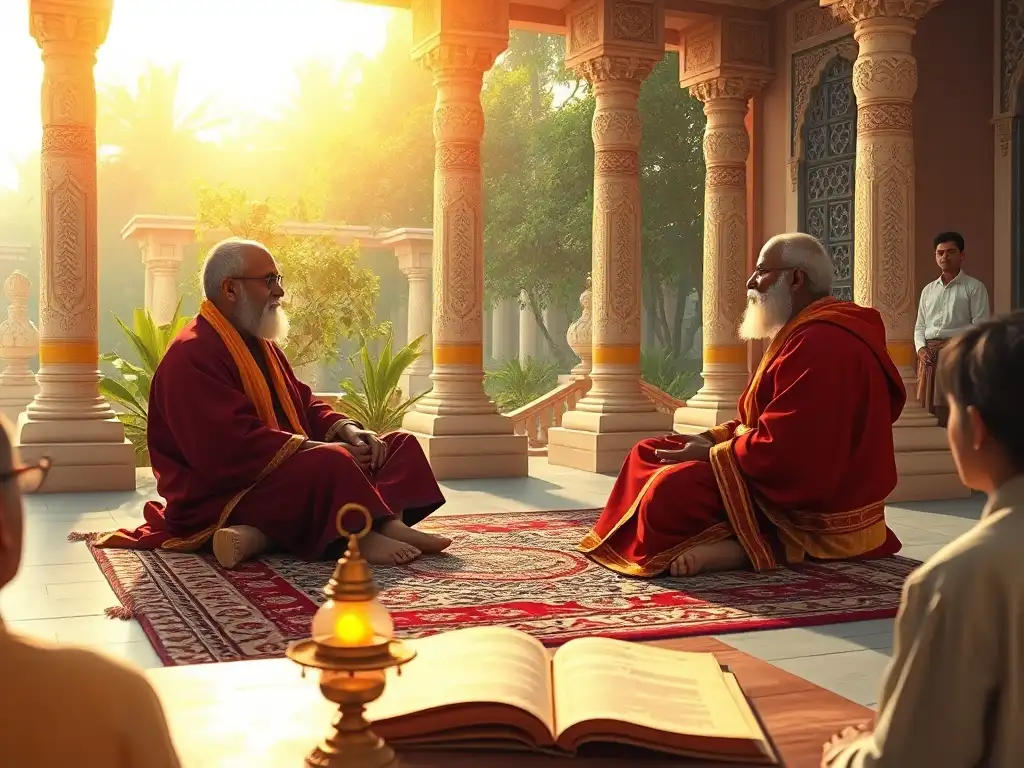
The Nyaya school of thought is one of the foundational philosophical systems in ancient India, primarily concerned with the principles of logic and epistemology.
Historical Context of the Nyaya Philosophy
Emerging around the 2nd century BCE, Nyaya philosophy was primarily articulated in the "Nyaya Sutras" by Aksapada Gautama. The historical context during this period was marked by significant socio-political changes, including the rise of new religious movements and the flourishing of trade, which fostered intellectual exchanges and debates.
Core Principles of Nyaya Philosophy
At its core, Nyaya philosophy emphasizes the importance of logic and reasoning in the pursuit of knowledge. It outlines a systematic approach to understanding reality through the means of valid reasoning (pramana) and inference.
- Key Principles:
- Pramanas (Means of Knowledge): Perception, inference, comparison, and testimony
- Anumana (Inference): A critical tool for establishing truth through logical deduction
Nyaya philosophers argue that knowledge is attainable through rigorous logical analysis, setting the stage for robust debates with rival schools like Charvaka.
Key Figures in Nyaya School
Several prominent figures have played crucial roles in the development and propagation of Nyaya philosophy. Key contributors include:
- Aksapada Gautama: The founder of Nyaya, known for the "Nyaya Sutras."
- Vatsyayana: An influential commentator who expanded on Nyaya principles in his works.
- Uddyotakara: A later philosopher who contributed significantly to the interpretation of Nyaya logic.
These thinkers laid the intellectual groundwork for subsequent discussions and debates, enriching the philosophical landscape of ancient India.
Contributions of Nyaya to Ancient Indian Thought
The contributions of the Nyaya school extend beyond mere logical analysis; they have profoundly influenced various aspects of Indian philosophy, including ethics, epistemology, and metaphysics. The emphasis on logical reasoning cultivated a culture of critical inquiry that resonated across different philosophical traditions.
- Influence on Other Schools:
- Interdisciplinary Dialogues: Engaged with Buddhist and Charvaka thinkers, refining their own arguments.
- Legal and Ethical Frameworks: Provided a basis for reasoning in legal and moral contexts.
Understanding Nyaya's contributions offers valuable insights into the broader philosophical debates of ancient India, particularly its dynamic interactions with the Charvaka school.
Exploring the Charvaka School of Thought
The Charvaka school of thought, often considered one of the most significant materialistic philosophies in ancient India, challenges the metaphysical frameworks offered by other philosophical traditions. Unlike the spiritual or religious approaches of its contemporaries, Charvaka is grounded in empiricism and materialism. It invites exploration into the nature of reality through a lens that prioritizes sensory experience and tangible existence, rejecting the notions of an afterlife or spiritual entities.
Historical Background of Charvaka Philosophy
The origins of Charvaka philosophy can be traced back to the early centuries of the first millennium BCE. It emerged as a counter-narrative to the dominant religious and philosophical schools of thought, particularly Brahmanism and Buddhism. Charvaka is often associated with the broader category of Lokayata, which signifies a worldly or secular worldview. The foundational texts of Charvaka, though largely lost, are believed to have been compiled by philosophers such as Brihaspati. These thinkers emphasized skepticism towards religious dogma and the supremacy of rational thought.
Fundamental Tenets of Charvaka Philosophy
Charvaka philosophy is characterized by several fundamental tenets:
- Materialism: It posits that only the physical world is real, dismissing the existence of an eternal soul or supernatural beings.
- Empiricism: Knowledge is derived from direct sensory experience; anything that cannot be perceived is considered non-existent.
- Hedonism: The pursuit of pleasure and avoidance of pain are central to human existence, advocating for a life of enjoyment.
- Rejection of Afterlife: Charvaka philosophy denies the existence of an afterlife, encouraging individuals to focus on the material world.
These principles challenge traditional views and encourage a pragmatic approach to life, emphasizing the importance of living in the moment.
Prominent Philosophers of Charvaka
Some of the notable figures associated with Charvaka philosophy include:
- Brihaspati: Often considered the founder of Charvaka, his teachings laid the groundwork for its materialistic stance.
- Ajita Kesakambali: Another significant philosopher, he is known for his arguments against metaphysical doctrines and his advocacy for a life based on direct experience.
- Parasarabhatta: Although less documented, he contributed to the discussions surrounding Charvaka thought, emphasizing its relevance in philosophical debates.
These philosophers played a crucial role in shaping Charvaka's identity and its lasting legacy in ancient Indian thought.
Charvaka's Influence on Ancient Indian Thought
The Charvaka school significantly influenced philosophical discourse in ancient India by promoting critical thinking and skepticism. While it faced opposition from more established schools like Nyaya and Vedanta, its emphasis on empirical evidence and rejection of dogma sparked debates that enriched Indian philosophy. Charvaka's materialism paved the way for later philosophical movements that sought to explore human experiences without supernatural explanations, thus contributing to a broader understanding of secular ethics in Indian thought.
Comparing Nyaya and Charvaka Philosophical Perspectives
The philosophical debates between the Nyaya and Charvaka schools represent a fundamental clash between differing epistemologies and methodologies. While Nyaya emphasizes logic and reasoning, Charvaka prioritizes sensory experience, creating a rich tapestry of dialogue that explores the nature of knowledge and reality.
Methodologies: Logic vs. Empiricism
Nyaya philosophy is rooted in a rigorous logical framework that seeks to establish truth through inference, perception, and testimony. It employs a systematic approach to argumentation and analysis, using syllogisms and logical constructs to arrive at conclusions. In contrast, Charvaka adopts an empirical methodology, asserting that knowledge must be grounded in sensory experience. This divergence highlights the tension between rationalism and empiricism, as each school advocates for its own path to understanding reality.
Epistemological Differences in Nyaya and Charvaka
The epistemological foundations of Nyaya and Charvaka reveal stark contrasts. Nyaya recognizes four valid means of knowledge: perception, inference, comparison, and verbal testimony. It argues that knowledge can be acquired through logical reasoning and dialogue. Conversely, Charvaka dismisses all forms of knowledge that cannot be directly observed, insisting that only sensory experiences are valid. This fundamental difference in epistemology shapes their respective views on truth, existence, and the nature of reality.
Ethical Implications of Nyaya and Charvaka Teachings
The ethical implications stemming from Nyaya and Charvaka philosophies further illustrate their contrasting worldviews. Nyaya promotes an ethical framework based on rational deliberation, emphasizing moral duties and the pursuit of justice through logical reasoning. It encourages adherents to act in accordance with dharma (moral law). In opposition, Charvaka's hedonistic tendencies advocate for personal pleasure and fulfillment as the primary ethical considerations. This focus on individual experience raises questions about social responsibility and the implications of a purely materialistic ethical stance, fostering rich discussions on morality in ancient Indian philosophy.
Key Philosophical Debates Between Nyaya and Charvaka
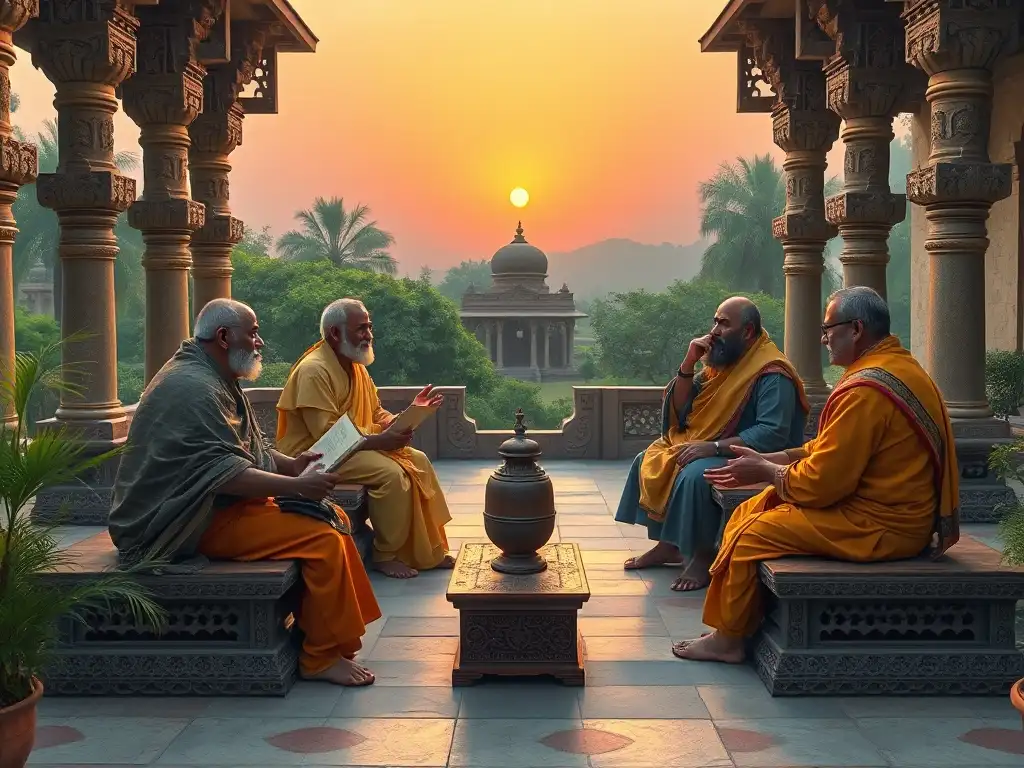
The philosophical debates between Nyaya and Charvaka represent a crucial aspect of ancient Indian thought, highlighting contrasting views on the nature of reality, knowledge, and the essence of existence. Nyaya, founded by Gautama (also known as Akshapada), is known for its formal logic and epistemology, advocating for a systematic approach to understanding truth and reality. In contrast, Charvaka, often associated with atheism and materialism, challenges the metaphysical assumptions made by Nyaya philosophers, emphasizing empirical observation and sensory experience as the primary sources of knowledge.
Merging debates on epistemology and ontology, these philosophical schools examined profound questions that shaped the intellectual landscape of ancient India. The discussions often revolved around issues such as the existence of God, the nature of the soul, and the validity of inference versus perception, showcasing the vibrant intellectual climate of the time.
The Nature of Reality: Idealism vs. Materialism
At the heart of the debates between Nyaya and Charvaka lies the question of reality's fundamental nature. Nyaya posits an idealist view, suggesting that reality comprises an interplay of the material and the abstract, including concepts like the soul (atman) and ultimate truth (Brahman). For Nyaya philosophers, the existence of an eternal, unchanging reality is essential for understanding the universe and human existence.
Conversely, Charvaka adopts a materialistic stance, asserting that only the physical world is real. They argue that anything beyond what can be perceived through the senses is either non-existent or irrelevant. This materialism leads to a rejection of spiritual concepts such as the soul and an afterlife, emphasizing that life is finite and should be lived in the present moment, governed by pleasure and experience rather than metaphysical speculation.
The Role of Perception in Knowledge Acquisition
Perception plays a pivotal role in the epistemological frameworks of both Nyaya and Charvaka, yet their interpretations diverge significantly. Nyaya philosophers advocate for a comprehensive framework of knowledge acquisition, which includes perception, inference, comparison, and testimony. They propose that valid knowledge arises from a combination of these sources, emphasizing that perception is foundational but not sufficient on its own.
In contrast, Charvaka champions perception as the sole means of acquiring knowledge, rejecting inference and testimony as unreliable. For the Charvaka school, if something cannot be demonstrated through direct sensory experience, it is deemed false or irrelevant. This strict adherence to empiricism leads to a rejection of many philosophical constructs upheld by Nyaya, including the existence of abstract entities and metaphysical principles.
Arguments on Afterlife and Rebirth
The debates surrounding the afterlife and rebirth illustrate the fundamental ideological divides between Nyaya and Charvaka. Nyaya philosophers argue for the existence of an eternal soul that undergoes rebirth based on karma, the moral law of cause and effect. They maintain that actions in this life determine future existences, thus providing a moral framework that transcends temporal life.
Conversely, Charvaka refutes these notions, asserting that since there is no empirical evidence for an afterlife or rebirth, such beliefs are mere constructs of imagination. They emphasize the importance of living a fulfilling life in the present, without concern for future consequences. This rejection of post-mortem existence leads to a hedonistic approach to life, prioritizing immediate pleasures and experiences.
Impact of Nyaya vs. Charvaka Debates on Ancient Indian Philosophy
The debates between Nyaya and Charvaka significantly influenced the trajectory of ancient Indian philosophy, shaping subsequent philosophical inquiries and schools of thought. The rigorous nature of their discussions prompted later philosophers to explore and refine their own positions on epistemology, ontology, and ethics, thereby contributing to a rich intellectual tradition.
Influence on Subsequent Philosophical Schools
The contrasting views of Nyaya and Charvaka set the stage for the development of later philosophical schools in India. For instance, the Vaisheshika school, which focused on categorizing reality, drew from Nyaya's emphasis on logic and epistemology, while also integrating materialist elements reminiscent of Charvaka. Similarly, the Sankhya school adopted a dualistic framework that acknowledged both matter and consciousness, influenced by the debates surrounding the nature of reality and the soul.
Additionally, the discussions on perception and knowledge acquisition initiated by Nyaya and Charvaka paved the way for further exploration of epistemology in schools such as Advaita Vedanta, which would later incorporate and expand upon these ideas.
Legacy of Nyaya and Charvaka in Modern Philosophy
The legacy of Nyaya and Charvaka extends into modern philosophical discussions, where their core debates continue to resonate. The emphasis on empirical observation and skepticism of metaphysical claims by Charvaka aligns closely with contemporary scientific inquiry and materialist philosophy. Meanwhile, Nyaya's rigorous logical framework has influenced various fields, including formal logic, analytical philosophy, and epistemology.
In contemporary discussions about the nature of knowledge, consciousness, and ethics, the foundational arguments presented by Nyaya and Charvaka provide valuable insights. Their philosophical debates exemplify the enduring quest for understanding that characterized ancient Indian philosophy, and their influence can be seen in the ongoing dialogues in both Eastern and Western philosophical traditions today.
Conclusion: The Significance of Ancient Indian Philosophical Debates
The philosophical debates of ancient India, particularly between schools like Nyaya and Charvaka, represent a vibrant intellectual tradition that has greatly influenced the development of philosophical thought in the region. These debates were not merely academic exercises; they reflected the cultural, spiritual, and ethical dilemmas faced by individuals and society at large. The Nyaya school, with its emphasis on logic and epistemology, sought to establish a framework for understanding truth through rigorous argumentation, while Charvaka challenged the validity of metaphysical claims and emphasized empirical observation and materialism.
One of the significant contributions of these philosophical debates is their role in shaping the discourse on knowledge and belief systems. Nyaya's focus on logical reasoning laid the groundwork for critical thinking, which is essential in various fields today, including science, law, and ethics. Conversely, the Charvaka school's stance encourages a grounded approach to existence, advocating for a life based on tangible experiences rather than abstract theorization. Together, these schools illustrate the richness of ancient Indian thought and its relevance in contemporary discussions around reason, belief, and the nature of reality.
Reflection on the Relevance of Nyaya and Charvaka Today
In today's context, the relevance of Nyaya and Charvaka extends beyond historical interest; these schools provide valuable insights into ongoing philosophical and practical debates. The analytical methods developed by the Nyaya philosophers resonate in modern logic and critical thinking, prompting scholars and practitioners to evaluate arguments systematically and rigorously. This approach is particularly significant in an era where misinformation can spread rapidly; the ability to discern truth through logical analysis is more critical than ever.
On the other hand, the Charvaka perspective emphasizes the importance of empirical evidence and skepticism towards unfounded beliefs. In a world filled with diverse ideologies and dogmas, the Charvaka school encourages individuals to seek evidence and question the status quo. This approach can be seen in modern scientific inquiry, which values data and observable phenomena over conjecture. The Charvaka school's materialist philosophy also prompts discussions about ethics and morality based on human well-being rather than religious or supernatural claims, making it relevant in contemporary debates regarding secularism and humanism.
Final Thoughts on the Diversity of Ancient Indian Philosophical Thought
The debates between Nyaya and Charvaka exemplify the diversity and richness of ancient Indian philosophical thought. Each school, with its unique perspectives and methodologies, contributed to a broader discourse that encompassed various aspects of human experience—knowledge, ethics, and the nature of reality. This intellectual pluralism is a hallmark of ancient Indian philosophy, which often embraced divergent viewpoints rather than seeking to eradicate them.
The interplay between rationalism and skepticism represented by Nyaya and Charvaka not only highlights the complexity of philosophical inquiry but also reflects the broader cultural and spiritual milieu of ancient India. The ability of these schools to coexist and engage in constructive debate is a testament to an inclusive philosophical tradition that valued discourse as a means of arriving at deeper understanding.
As we continue to explore ancient Indian philosophical debates, we uncover not just historical insights but also timeless wisdom that can inform our current understanding of philosophy, ethics, and the pursuit of knowledge. The legacy of these debates continues to inspire thinkers and seekers, encouraging a continued exploration of diverse perspectives in the quest for truth.
- Introduction to Ancient Indian Philosophical Debates
- Overview of Ancient Indian Philosophy
- Importance of Philosophical Discourse in Ancient India
- Understanding the Nyaya School of Thought
- Exploring the Charvaka School of Thought
- Comparing Nyaya and Charvaka Philosophical Perspectives
- Key Philosophical Debates Between Nyaya and Charvaka
- Impact of Nyaya vs. Charvaka Debates on Ancient Indian Philosophy
- Conclusion: The Significance of Ancient Indian Philosophical Debates
- What are the main philosophical schools discussed in the article?
- How did Nyaya and Charvaka differ in their approach to knowledge?
- What historical context is provided for these philosophical debates?
- Why are these debates significant in the study of ancient Indian philosophy?
- How did these philosophical traditions influence later thought?
Frequently Asked Questions
What are the main philosophical schools discussed in the article?
The article focuses on Nyaya and Charvaka, two significant schools of thought in ancient Indian philosophical debates. Nyaya emphasizes logic and epistemology, while Charvaka advocates a materialistic worldview.
How did Nyaya and Charvaka differ in their approach to knowledge?
Nyaya believes in the importance of logical reasoning and perception as valid sources of knowledge, while Charvaka dismisses metaphysical concepts and relies solely on empirical evidence.
What historical context is provided for these philosophical debates?
The article situates the debates within the broader framework of ancient Indian civilization, highlighting the cultural and intellectual flourishing that occurred during this period, particularly around the Gupta Empire.
Why are these debates significant in the study of ancient Indian philosophy?
The Nyaya vs. Charvaka debates are crucial for understanding the evolution of philosophical thought in India and illustrate the diversity of perspectives on knowledge, reality, and ethics.
How did these philosophical traditions influence later thought?
Both Nyaya and Charvaka laid the groundwork for subsequent philosophical discussions in India, influencing later schools like Vedanta and impacting modern philosophical discourse on materialism and epistemology.
Final Reflection: The Enduring Legacy of Ancient Indian Philosophical Debates
The philosophical debates of ancient India, particularly the contrasting views of Nyaya and Charvaka, remain profoundly relevant in today's discourse on knowledge, belief, and skepticism. As we navigate an era filled with information overload and competing ideologies, the insights from these ancient schools of thought challenge us to critically evaluate our beliefs and the foundations upon which they stand. In a world where certainty often feels elusive, the exploration of these philosophical traditions invites us to embrace inquiry and doubt as essential components of intellectual growth.
The influence of these debates extends far beyond the confines of historical scholarship; they resonate deeply within our cultural and social landscapes. The clash between rationalism and empiricism, as embodied by Nyaya and Charvaka, continues to shape contemporary discussions on science, ethics, and the nature of reality. As we grapple with questions of truth and perception, we can draw inspiration from the words of the Charvaka philosopher, who boldly asserted, "> The only truth is what can be perceived." This perspective encourages us to ground our beliefs in observable reality while remaining open to new evidence and interpretations.
As we reflect on the lessons drawn from the philosophical debates of ancient India, let us commit to a path of continuous inquiry and open-mindedness. Consider how these ancient perspectives can inform your own understanding of the world. Embrace the spirit of debate and dialogue in your daily life, fostering a culture of curiosity and respect for differing viewpoints. In doing so, we not only honor the rich legacy of Nyaya and Charvaka but also empower ourselves to navigate the complexities of modern existence with wisdom and discernment.
Unleash Your Curiosity: Dive Deeper into Ancient Philosophies!
Thank you for exploring the rich landscape of philosophical debates in ancient India with us! You've uncovered valuable insights into the contrasting views of Nyaya and Charvaka. Now, it’s time to take that knowledge further and ignite your own journey of exploration!
Here are a few ways you can deepen your understanding and engage with these fascinating ideas:
- Embark on your own critical analysis: Choose a philosophical concept from the debates you've studied and write a short essay or blog post sharing your reflections.
- Join a discussion group: Connect with others who share your interest in philosophy by finding or forming a local or online group to debate these ideas and their relevance in today’s world.
- Explore related texts: Dive into more ancient Indian philosophies by reading foundational works like the Upanishads or examining texts that highlight their significance in contemporary society.
What philosophical debate resonates with you the most, and how do you see its influence manifesting in the modern world? Join the conversation below and share your insights!