
The Role of Debate in Nyaya: Fostering Intellectual Growth in Ancient India

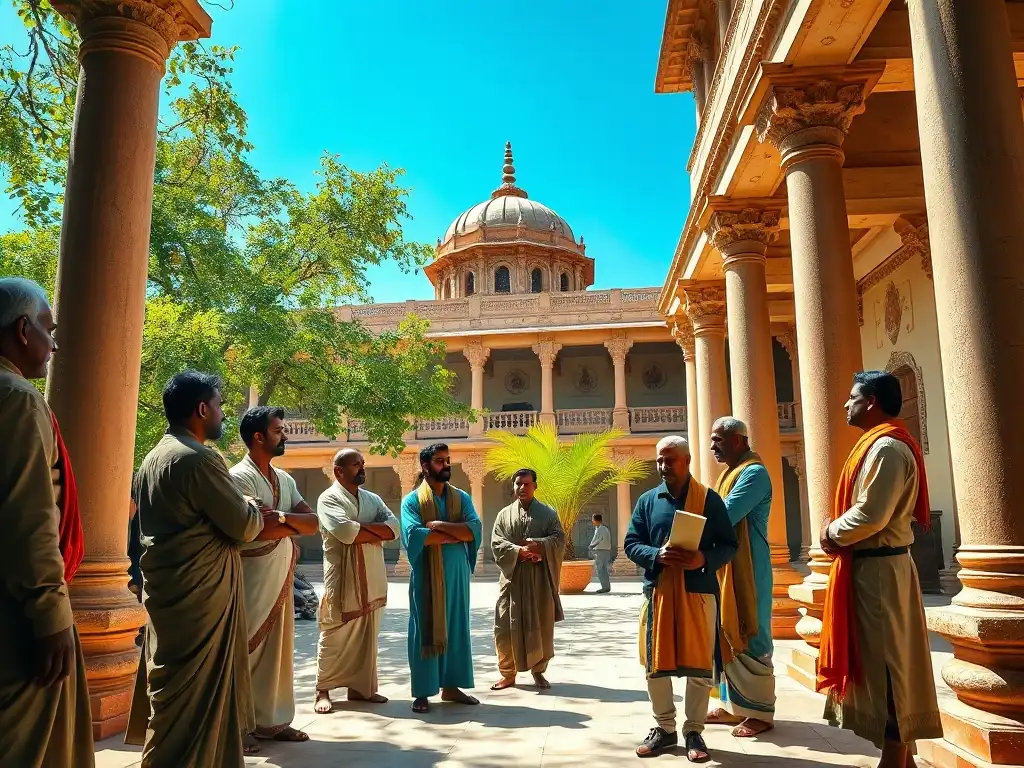
Welcome to Ancient India History, where we invite you to journey through the intricate tapestry of one of the world's oldest civilizations. In our featured article, "The Role of Debate in Nyaya: Fostering Intellectual Growth in Ancient India," we delve into the profound impact that spirited discussions and philosophical arguments had on shaping the intellectual landscape of ancient India. Discover how the art of debate not only influenced the realms of philosophy and science but also laid the groundwork for a culture that valued critical thinking and discourse.
Are you ready to unlock the secrets of this vibrant era? Join us as we explore the fascinating interplay of ideas that defined ancient Indian thought!
Introduction to Debate and Intellectual Growth in Ancient India
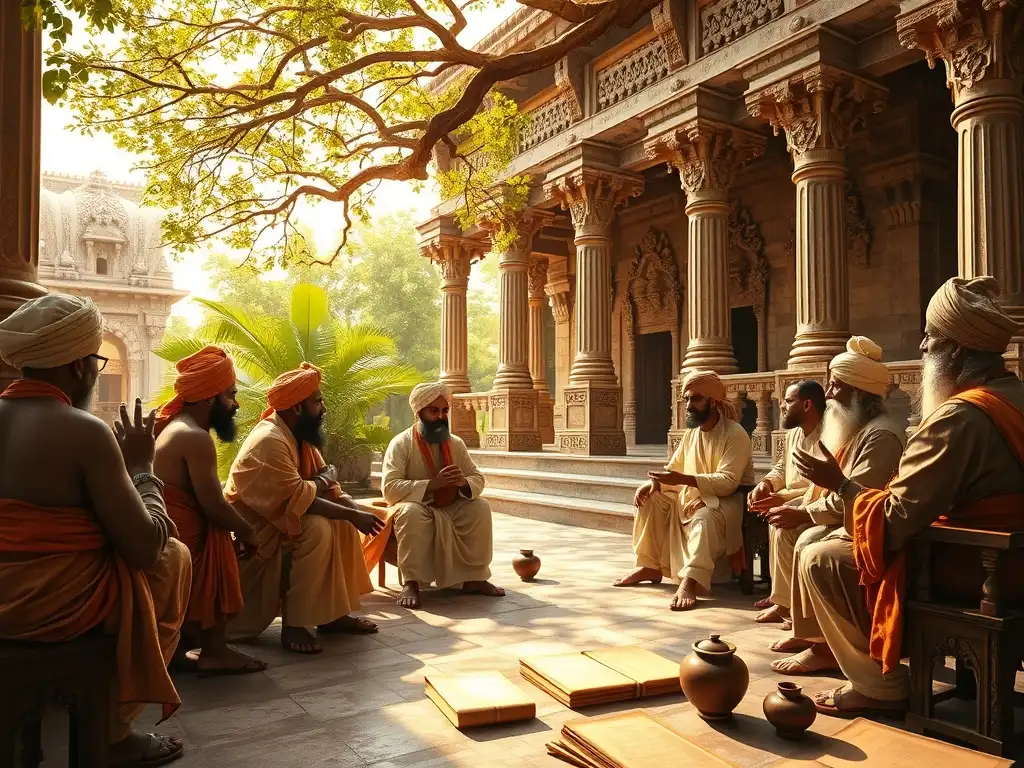
In the vast expanse of ancient Indian civilization, the pursuit of knowledge and intellectual discourse played a pivotal role in shaping philosophical thought and societal norms. One significant aspect of this intellectual landscape was the practice of debate, which not only served as a means of exploring philosophical ideas but also fostered intellectual growth among thinkers and scholars.
The Nyaya school of philosophy, renowned for its rigorous analytical approach, exemplifies how debate was instrumental in cultivating critical thinking and enhancing understanding of complex concepts. Through a structured methodology that emphasized logical reasoning and dialectical engagement, Nyaya contributed to the development of a rich intellectual tradition that continues to influence contemporary thought.
Definition of Debate in Ancient Indian Context
In ancient India, debate (known as vada or jalpa) was more than a mere exchange of opposing views; it was a formalized process of inquiry aimed at uncovering truth. This method involved not just argumentation but also the careful weighing of evidence, logical reasoning, and the articulation of counterarguments. The ancient texts describe various forms of debate, such as anvita (positive assertion), pratipaksha (counter-argument), and siddhanta (conclusive statement), each serving a distinct purpose in the pursuit of knowledge. The significance of this structured dialogue lies in its ability to refine ideas and enhance the understanding of philosophical principles.
Importance of Intellectual Growth in Ancient Indian Philosophy
Intellectual growth in ancient Indian philosophy was paramount, as it laid the groundwork for various fields of study, including logic, ethics, and metaphysics. Philosophers believed that through rigorous debate and discourse, individuals could transcend ignorance and attain wisdom. The emphasis on intellectual growth encouraged the exploration of diverse perspectives, fostering an environment where ideas could be challenged and refined. This dynamic interplay of thought not only enriched individual scholars but also contributed to the overall development of philosophical traditions in ancient India, making it a vibrant hub of intellectual activity.
Overview of Nyaya Philosophy
Nyaya, one of the six orthodox schools of Indian philosophy, is primarily concerned with logic and epistemology. It serves as a foundational framework for understanding the nature of knowledge, reality, and the processes of reasoning. The Nyaya system emphasizes the importance of debate as a vehicle for intellectual growth and aims to establish a clear methodology for discerning truth through logical analysis.
Historical Context of Nyaya in Ancient India
Emerging around the 6th century BCE, Nyaya philosophy arose in response to the need for a systematic approach to understanding the complexities of the world. Rooted in the Vedic traditions, Nyaya was shaped by the cultural and intellectual milieu of ancient India, which valued inquiry and debate. The historical context of Nyaya is marked by interactions with other philosophical schools, such as Vaisheshika and Mimamsa, leading to a rich tapestry of ideas that influenced its development.
Key Principles of Nyaya Philosophy
The core principles of Nyaya revolve around the concept of pramana (means of knowledge) and the process of tarka (logical reasoning). Nyaya posits that knowledge must be derived from valid sources, and it categorizes these sources into perception, inference, comparison, and testimony. Additionally, the philosophy emphasizes the importance of establishing definitions, classifications, and distinctions, which are critical in the practice of debate and intellectual discourse.
Major Thinkers and Contributors to Nyaya
Nyaya philosophy boasts a lineage of influential thinkers who contributed extensively to its development. Among them, Gautama, the founder of Nyaya, is renowned for his seminal work, the Nyaya Sutras, which outlines the principles of logic and reasoning. Other prominent figures include Vatsyayana, known for his commentary on the Nyaya Sutras, and Uddyotakara, who further refined the arguments within the Nyaya framework. These scholars exemplified the role of debate in their works, engaging with both contemporaneous and earlier philosophical ideas, thus fostering intellectual discourse and growth.
The Role of Debate in Nyaya
Debate played a crucial role in the Nyaya school of philosophy, which emerged around the 6th century BCE in ancient India. Central to Nyaya is the pursuit of knowledge through logical reasoning and disputation. The term "Nyaya" itself translates to "justice" or "rule," which reflects its emphasis on establishing truth through rigorous debate. This practice was not merely an intellectual exercise; it was a means to achieve a deeper understanding of reality, ethics, and existence. The debates facilitated a dynamic intellectual environment where ideas could be challenged, refined, and validated.
Nyaya philosophers believed that through systematic argumentation, one could uncover errors in reasoning and arrive at sound conclusions. Not only did this foster individual intellectual growth, but it also contributed to the collective knowledge of society. The methodology of Nyaya encouraged diverse viewpoints, which enriched philosophical discussions and led to the development of sophisticated theories in epistemology and metaphysics.
Debate as a Methodological Tool in Nyaya
In Nyaya philosophy, debate is considered a methodological tool that underpins the quest for knowledge. The Nyaya Sutras, authored by Gautama, outline the rules and structures for conducting debates effectively. This systematic approach includes defining terms, establishing premises, and drawing logical conclusions. The focus is on clarity and precision, ensuring that arguments are robust and coherent.
Debate serves multiple purposes within Nyaya:
- Clarification of Concepts: Engaging in debate helps clarify complex philosophical ideas, making them more accessible and understandable.
- Error Identification: Through critical examination and counterarguments, participants can identify flaws in reasoning, thus refining their thought processes.
- Consensus Building: Debate fosters a collaborative atmosphere where individuals can negotiate differing perspectives, leading to a more nuanced understanding of philosophical issues.
The structured nature of Nyaya debates ensures that discussions remain focused and productive, allowing participants to explore intricate concepts without digressing into irrelevant topics.
Types of Debate in Nyaya Philosophy
The Nyaya tradition recognizes several types of debates, each serving distinct purposes within philosophical inquiry. These can be categorized into the following types:
- Prakarana (Expository Debates): These debates aim to elucidate specific philosophical issues, often involving the interpretation of texts or doctrines.
- Vada (Constructive Debate): This type emphasizes constructive dialogue aimed at arriving at the truth. Participants engage in mutual exploration of ideas rather than merely attempting to defeat one another.
- Jalpa (Contentious Debate): In contrast to Vada, Jalpa is characterized by a more adversarial approach, where each participant seeks to overpower the other’s arguments. While it may not foster cooperative dialogue, it can reveal weaknesses in reasoning.
- Tidha (Conclusive Debate): This type aims to reach a definitive conclusion on a philosophical issue. It often requires extensive knowledge and mastery of the subject matter.
Understanding these types of debates is essential for grasping how Nyaya philosophers approached intellectual discourse, as they provide a framework for engaging with complex philosophical questions.
The Process of Argumentation in Nyaya
The process of argumentation in Nyaya is meticulously structured and follows a logical sequence. The key components of this process include:
- Pratijna (Claim): The initial assertion or proposition that one seeks to establish.
- Hetu (Reason): The reasoning or evidence provided to support the claim.
- Udaharana (Example): Illustrative examples or analogies that reinforce the argument.
- Upanaya (Application): The application of the argument to demonstrate its relevance and validity in specific contexts.
- Nigamana (Conclusion): The final resolution that encapsulates the argument's findings and implications.
This structured methodology not only enhances the clarity of arguments but also allows for the systematic dismantling of opposing views. By adhering to this framework, Nyaya philosophers cultivated a culture of rigorous intellectual inquiry that prioritized logical consistency and empirical validation.
Intellectual Growth Through Debate in Nyaya
The intellectual growth fostered by debate in Nyaya is profound and multifaceted. By engaging in rigorous discussions, philosophers honed their reasoning skills and expanded their understanding of various concepts. The emphasis on logical discourse also encouraged a culture of inquiry that was vital for the development of ancient Indian philosophy.
Enhancing Critical Thinking Skills
One of the most significant contributions of debate in Nyaya was the enhancement of critical thinking skills among its practitioners. Through engaging with opposing viewpoints, philosophers learned to analyze arguments critically, evaluate evidence, and identify logical fallacies. This practice not only sharpened their intellectual faculties but also prepared them to tackle complex philosophical dilemmas with confidence.
The cultivation of critical thinking skills had lasting effects beyond the realm of philosophy, influencing various fields such as ethics, law, and governance. The ability to think critically was essential for addressing societal issues and making informed decisions.
Promoting Rational Discourse and Dialogue
Debate in Nyaya also played a vital role in promoting rational discourse and dialogue. By fostering an environment where differing opinions could be expressed and examined, Nyaya philosophers contributed to the development of a culture that valued reasoned discussion over dogmatic assertions. This approach encouraged participants to approach disagreements as opportunities for learning rather than conflicts to be won.
Rational discourse facilitated the blending of ideas across various philosophical schools, leading to enriched dialogues that transcended individual traditions. This spirit of cooperation and mutual respect among scholars laid the groundwork for a vibrant intellectual landscape in ancient India.
The Impact of Debate on Knowledge Acquisition
The impact of debate on knowledge acquisition in Nyaya cannot be overstated. The process of engaging in structured argumentation allowed philosophers to refine their own beliefs while critically examining the beliefs of others. This interplay of ideas led to significant advancements in various fields of knowledge, including logic, epistemology, and metaphysics.
Moreover, the emphasis on debate encouraged the documentation of philosophical thought and the preservation of knowledge. The Nyaya Sutras and other texts emerged as essential resources for future generations, ensuring that the insights gained through debate continued to influence philosophical discourse long after their inception.
The role of debate in Nyaya was paramount in fostering intellectual growth in ancient India. By enhancing critical thinking, promoting rational discourse, and impacting knowledge acquisition, debates within this philosophical tradition have left an indelible mark on the history of Indian philosophy.
Case Studies: Notable Debates in Nyaya Philosophy
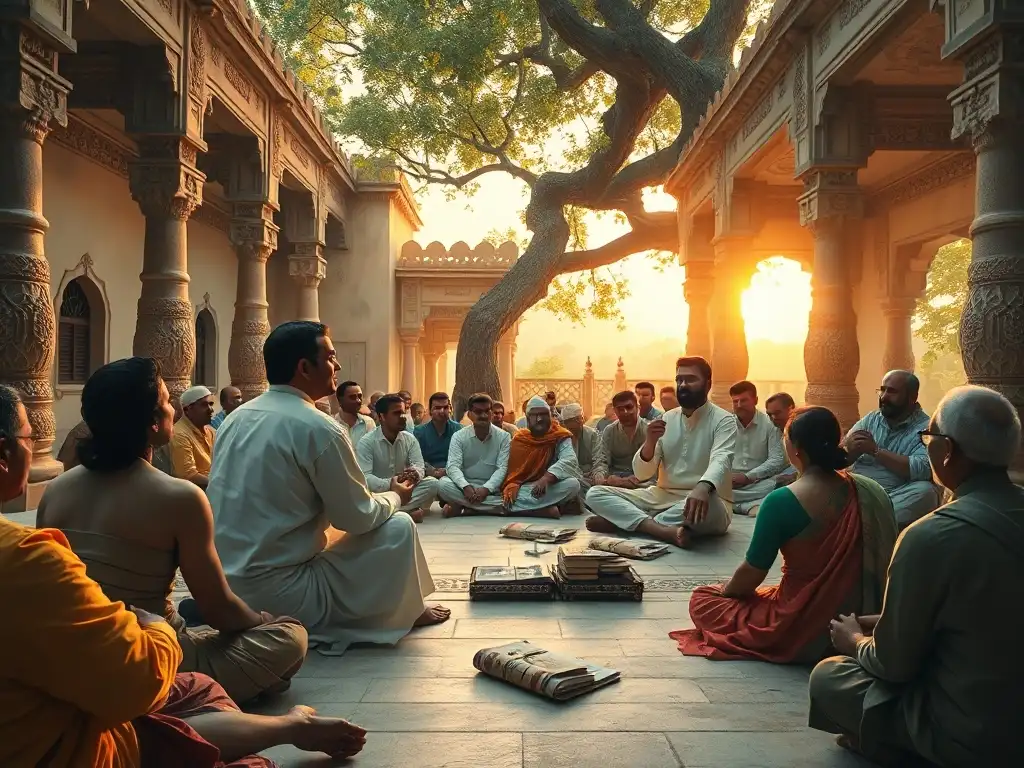
The Nyaya school of philosophy, known for its systematic approach to logic and epistemology, is rich in case studies that showcase the importance of debate in fostering intellectual growth. These debates were not just academic exercises; they were vital in shaping the philosophical landscape of ancient India. They helped clarify concepts, challenge established norms, and promote a deeper understanding of reality through rigorous analysis and argumentation.
The Debate between Gautama and the Buddhists
One of the most significant debates in Nyaya philosophy was between Gautama, the founder of the Nyaya school, and the proponents of Buddhism. This debate primarily revolved around the nature of perception, inference, and the existence of an external world. While Gautama argued for the validity of pratyaksha (direct perception) and anumana (inference) as reliable means of knowledge, the Buddhists, particularly the Madhyamaka school, questioned the nature of reality itself.
The Nyaya philosophers posited that knowledge arises from the interaction of the perceiver with the external world, while the Buddhists, led by thinkers like Nagarjuna, introduced the concept of emptiness (shunyata), arguing that all phenomena are devoid of inherent existence. This fundamental disagreement on epistemology and metaphysics not only highlighted the strengths and weaknesses of both schools but also advanced the discussions on knowledge and existence in Indian philosophy.
Through their debates, both sides contributed to a richer understanding of concepts such as truth, perception, and reasoning, influencing the trajectory of Indian philosophical thought for centuries to come.
The Influence of Nyaya Debates on Later Philosophical Developments
The debates engaged in by Nyaya philosophers laid the groundwork for subsequent philosophical discourse in India. The dialectical methods employed by Nyaya thinkers influenced later schools such as Vaisheshika, Sankhya, and even Advaita Vedanta. These schools adopted and adapted Nyaya's logical rigor, integrating its principles into their own frameworks.
For instance, the Vaisheshika school, which focuses on categories of reality, utilized Nyaya’s logical techniques to refine its metaphysical arguments. Similarly, Advaita Vedanta philosophers like Adi Shankaracharya engaged with Nyaya ideas to bolster their own interpretations of non-dualism, particularly in the realm of epistemology.
This cross-pollination of ideas through debate ensured that the intellectual growth fostered by Nyaya was not confined to its own framework but permeated various philosophical traditions, enriching the overall landscape of Indian philosophy.
The Legacy of Debate in Ancient Indian Philosophy
The legacy of debate in ancient Indian philosophy, particularly within the Nyaya tradition, extends far beyond its historical context. It laid a foundation for a culture of critical thinking and reasoned discourse that is still relevant today.
Influence on Other Philosophical Schools
The Nyaya school's emphasis on logic and debate inspired other philosophical traditions in India. Its methodologies were adopted by the Jain tradition, which also engaged in rigorous debates concerning epistemology and ethics. The Jain philosophers recognized the importance of logical reasoning and often employed Nyaya techniques to assert their views on non-violence and the nature of reality.
Furthermore, the interactions between Nyaya and other schools fostered a climate of intellectual inquiry where ideas could be contested and refined. This cross-disciplinary engagement contributed to a robust philosophical tradition characterized by diversity and depth, fostering a rich tapestry of thought that addressed various existential and ethical questions.
Lasting Impact on Modern Indian Intellectual Traditions
The impact of Nyaya debates and their methodologies can be traced through modern Indian intellectual traditions. The emphasis on logical reasoning, critical analysis, and structured argumentation found in contemporary philosophy, law, and education has its roots in the debates of ancient India. Modern scholars often draw upon Nyaya principles when addressing contemporary issues, demonstrating the enduring relevance of these ancient discussions.
Moreover, the tradition of debate is reflected in modern Indian society’s engagement with philosophical, political, and social issues. The practice of public discourse, critical evaluation of ideas, and the search for truth are hallmarks of both ancient and modern Indian intellectual traditions, showcasing the profound and lasting impact of Nyaya philosophy on the intellectual growth of India.
The role of debate in Nyaya not only fostered intellectual growth during ancient times but continues to influence contemporary thought, embodying a legacy that champions the pursuit of knowledge through reasoned discourse and critical inquiry.
Conclusion: The Lasting Importance of Debate for Intellectual Growth in Ancient India
The tradition of debate in ancient India, particularly within the Nyaya philosophical framework, has left an indelible mark on intellectual growth and the evolution of thought. It emerged as a powerful tool for understanding complex ideas, promoting rigorous analysis, and fostering a culture of inquiry. The dialectical method employed by Nyaya scholars not only refined logical reasoning but also encouraged the examination of varied perspectives, thus cultivating a rich intellectual environment that transcended mere argumentation.
Debate served as a catalyst for the exchange of ideas across different philosophical schools, such as Vaisheshika and Sankhya, leading to a holistic development of thought. The emphasis on structured debate helped in the delineation of truth, instilling a critical approach towards knowledge and understanding. Furthermore, the impact of this tradition resonates even today, reminding us of the importance of dialogue and discourse in the pursuit of knowledge.
Summary of Key Points
- Intellectual Catalyst: Debate was integral to the Nyaya school, promoting analytical thinking and structured reasoning.
- Cross-Pollination of Ideas: Interactions among different philosophical schools enriched the intellectual landscape of ancient India.
- Critical Examination: The debate methodology encouraged a critical examination of concepts, leading to deeper insights into epistemology and metaphysics.
- Legacy: The enduring influence of this tradition is seen in contemporary discussions around the importance of dialogue in academia and beyond.
Final Thoughts on the Role of Debate in Nyaya and Beyond
The role of debate in the Nyaya school exemplifies how intellectual growth can flourish through structured dialogue. This tradition not only shaped philosophical discourse in ancient India but also laid the groundwork for subsequent schools of thought. The principles of debate cultivated a spirit of inquiry and skepticism, essential for any thriving intellectual community.
In today’s context, the lessons learned from Nyaya’s debate culture remain relevant. Emphasizing respectful discourse and critical engagement can enhance our understanding of diverse perspectives in a rapidly changing world. By revisiting these ancient practices, we can foster a more profound appreciation for intellectual growth and collaboration, ensuring that the legacy of debate continues to inspire future generations.
- Introduction to Debate and Intellectual Growth in Ancient India
- Overview of Nyaya Philosophy
- The Role of Debate in Nyaya
- Intellectual Growth Through Debate in Nyaya
- Case Studies: Notable Debates in Nyaya Philosophy
- The Legacy of Debate in Ancient Indian Philosophy
- Conclusion: The Lasting Importance of Debate for Intellectual Growth in Ancient India
- What was the significance of debate in ancient Indian philosophy?
- How did the Nyaya school contribute to intellectual growth?
- What are some key contributions of ancient Indian civilizations to intellectual thought?
- How did debate influence the development of other schools of thought in ancient India?
- What modern implications can we draw from the debate culture of ancient India?
Frequently Asked Questions
What was the significance of debate in ancient Indian philosophy?
Debate played a crucial role in ancient Indian philosophy, particularly in the Nyaya school, where it was used to refine arguments and enhance intellectual growth.
How did the Nyaya school contribute to intellectual growth?
The Nyaya school emphasized logic and reasoning, fostering a culture of critical thinking that encouraged scholars to engage in rigorous debate and analysis of ideas.
What are some key contributions of ancient Indian civilizations to intellectual thought?
Ancient Indian civilizations contributed significantly to fields like mathematics, astronomy, and logic, with a strong emphasis on debate as a method of inquiry and knowledge expansion.
How did debate influence the development of other schools of thought in ancient India?
The practice of debate not only shaped the Nyaya school but also influenced other philosophical traditions, leading to a rich tapestry of intellectual discourse across various disciplines.
What modern implications can we draw from the debate culture of ancient India?
The debate culture of ancient India highlights the importance of critical thinking and open dialogue, values that are essential for intellectual growth and innovation in today’s society.
Final Reflection: The Enduring Legacy of Debate in Fostering Intellectual Growth
The role of debate in ancient India was not merely a tool for argumentation; it was a catalyst for intellectual growth that shaped philosophical discourse and societal norms. Today, as we navigate an increasingly polarized world, the principles of constructive debate remain crucial. The ability to engage in respectful dialogue fosters understanding and innovation, reminding us that the exchange of ideas can lead to profound insights and progress.
Clearly, the tradition of debate in ancient India has left an indelible mark on our cultural and social landscape. It has influenced not only the way we approach knowledge but also how we interact with differing perspectives. The essence of debate encourages critical thinking and nurtures a spirit of inquiry that is vital in today's fast-paced world. Debate is the lifeblood of democracy; it is through discourse that we find common ground.
As we reflect on the lessons of ancient Indian debate, let us embrace the challenge of engaging with diverse viewpoints in our own lives. I invite you to consider how you can incorporate the principles of respectful debate into your daily interactions, fostering an environment where ideas can flourish and intellectual growth can thrive. The legacy of debate is not just a relic of the past; it is a living practice that can empower us to build a more thoughtful and inclusive future.
Embrace the Power of Debate for Your Growth!
Thank you for joining us on this enlightening journey through the significance of debate in ancient Indian philosophy. We hope you’ve uncovered valuable insights into how dialogue and discussion fostered intellectual growth in Nyaya philosophy.
Now, it’s time to take that inspiration and put it into action! Here’s how you can embrace the spirit of debate in your own life:
- Engage in Thoughtful Discussions: Start a conversation with a friend or family member on a topic that interests you. Share your ideas and be open to contrasting viewpoints.
- Join a Debate Club or Online Forum: Seek out communities where you can actively participate in discussions or debates. This will expose you to diverse perspectives and enhance your argumentation skills.
- Reflect and Write: Consider keeping a journal about topics that inspire you. This practice will help you consolidate your thoughts and articulate them more clearly.
What topic would you love to debate, and how do you believe it could lead to a deeper understanding or change in your perspective? Let's share your ideas in the comments!