
The Sankhya Framework: Bridging the Gap Between Philosophy and Spirituality


Welcome to Ancient India History, where we embark on a captivating journey through the vibrant tapestry of India's past. Here, we delve into the profound depths of Sankhya philosophy and spirituality, exploring how this ancient framework intricately weaves together the threads of thought and belief that have shaped Indian civilization. As you navigate through our pages, prepare to uncover the enlightening principles of Sankhya that not only illuminate philosophical discourse but also resonate deeply within the realms of spirituality.
Join us as we bridge the gap between mind and soul, and discover the transformative power of ancient wisdom. Your exploration awaits!
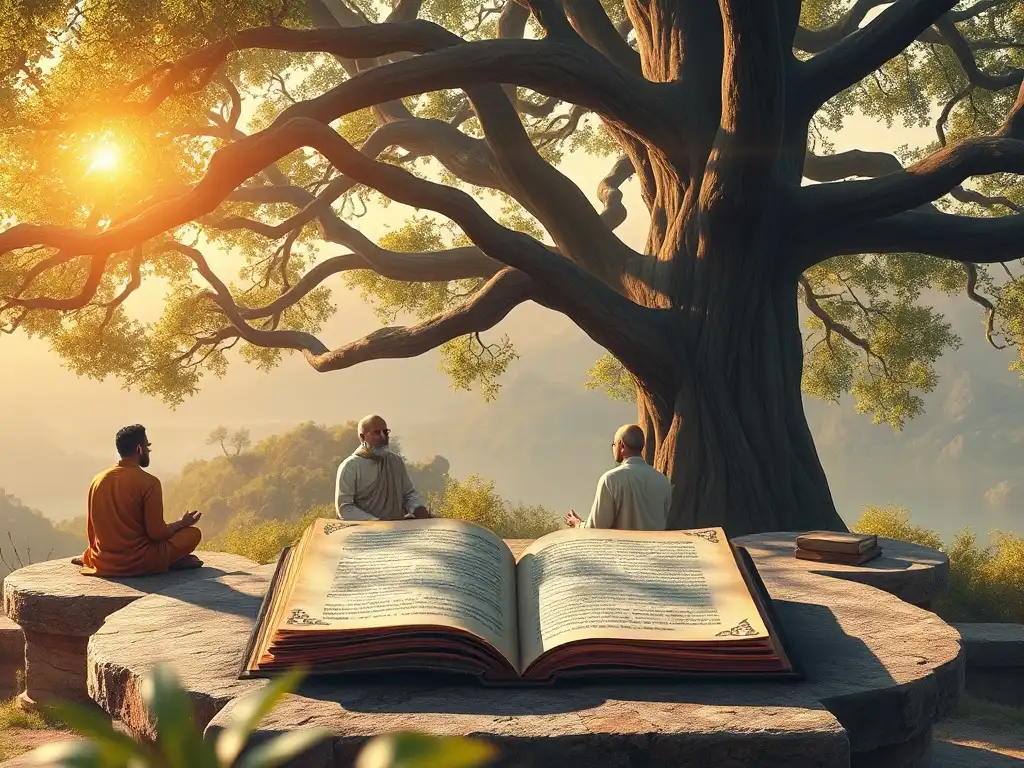
Introduction to Sankhya Philosophy
The Sankhya philosophy stands out as one of the oldest systems of thought in ancient India, serving as a foundational pillar for various philosophical and spiritual traditions. Rooted in a dualistic worldview, Sankhya offers profound insights into the nature of existence, consciousness, and the interplay between the material and spiritual realms. As we explore the Sankhya framework, we uncover how this ancient philosophy not only addresses metaphysical questions but also provides practical guidance for spiritual growth. By examining the intricate relationship between Sankhya philosophy and spirituality, we can appreciate its enduring relevance in contemporary discourse on self-realization and enlightenment.
Overview of Sankhya Philosophy
Sankhya is traditionally attributed to the sage Kapila and is often considered a rationalistic approach that emphasizes the importance of knowledge. This philosophy delineates between two fundamental realities: Purusha (consciousness) and Prakriti (matter). Through a systematic exploration of these concepts, Sankhya seeks to explain the nature of the universe, the self, and the paths to liberation.
Key tenets of Sankhya include:
- Dualism: The distinction between the eternal, unchanging Purusha and the dynamic, changing Prakriti.
- Analysis of Reality: The division of existence into various categories or elements known as Tattvas.
- Emphasis on Knowledge: The pursuit of true knowledge (Jnana) as a means to overcome ignorance (Avidya) and attain liberation (Moksha).
Historical Context of Sankhya in Ancient India
The origins of Sankhya philosophy can be traced back to the early texts of Indian thought, notably the Upanishads and the Bhagavad Gita. During the classical period of Indian philosophy, Sankhya emerged as a distinct school, often engaging in dialogues with other philosophical systems such as Nyaya and Vaisheshika. Its influence rippled across various aspects of Indian culture, including yoga, Ayurveda, and meditation practices.
The evolution of Sankhya can be summarized as follows:
- Early Texts: Initial references in the Upanishads, particularly concerning the nature of the self.
- Sankhya Sutras: Compilation of core principles by Kapila, establishing a structured philosophical discourse.
- Integration with Yoga: The later association with yogic practices, particularly in the Yoga Sutras of Patanjali, where Sankhya's metaphysical insights are applied to spiritual practice.
Core Concepts of Sankhya Philosophy
The richness of Sankhya philosophy lies in its core concepts that provide a framework for understanding the complexities of existence and consciousness.
The Dualism of Purusha and Prakriti
At the heart of Sankhya philosophy is the dualistic relationship between Purusha and Prakriti. Purusha represents the eternal, unchanging self, while Prakriti embodies the material world, characterized by change and impermanence. This dualism forms the basis for understanding human experience, where the ultimate goal is to realize the distinction between the two and attain liberation from the cycles of birth and rebirth.
- Purusha: The essence of consciousness, beyond physical existence.
- Prakriti: The source of all physical forms and phenomena, governed by the three gunas (qualities) – sattva (purity), rajas (activity), and tamas (inertia).
The 24 Tattvas: Understanding the Elements of Existence
Sankhya philosophy categorizes existence into 24 Tattvas, which are fundamental elements that comprise the universe. These Tattvas are divided into three primary categories:
- Prakriti (1): The primordial nature.
- Buddhi (2): Intellect or discernment.
- Ahamkara (1): Ego or sense of individuality.
- Manas (1): Mind.
- Five Jñānjānendriyas (5): Senses of perception (sight, hearing, touch, taste, smell).
- Five Karmendriyas (5): Senses of action (speech, hands, feet, procreative organ, and excretory organ).
- Five Tanmātras (5): Subtle elements (sound, touch, form, taste, and smell).
- Five Mahābhūtas (5): Gross elements (earth, water, fire, air, and space).
Understanding these Tattvas helps in comprehending the nature of reality and the pathways towards self-realization.
The Role of Knowledge (Jnana) and Ignorance (Avidya)
In Sankhya philosophy, the journey towards enlightenment is marked by the interplay between knowledge (Jnana) and ignorance (Avidya). While Avidya represents the misunderstanding and misidentification of the self with the material world, Jnana is the realization of one's true nature as Purusha.
- Jnana: The ultimate insight that leads to liberation and freedom from the cycle of birth and death.
- Avidya: The root cause of suffering and bondage, perpetuating the cycle of samsara (the cycle of life and death).
By cultivating Jnana through study, meditation, and discernment, one can transcend Avidya, thus bridging the gap between philosophy and spirituality in the Sankhya framework.
The Relationship Between Sankhya and Spirituality
Sankhya philosophy serves as a foundational element in the understanding of spirituality within ancient Indian thought. It is a dualistic framework that posits two primary realities: Purusha (consciousness) and Prakriti (matter). This distinction is pivotal as it encourages individuals to recognize their spiritual essence apart from the material world.
The teachings of Sankhya emphasize the need for knowledge (jnana) as a means of liberation (moksha), thus establishing a profound link between philosophical inquiry and spiritual practice. By understanding the nature of the self and the universe, practitioners can cultivate a deeper connection to spiritual truths, ultimately aiming for self-realization and enlightenment.
Spiritual Implications of Sankhya Philosophy
The spiritual implications of Sankhya philosophy extend beyond mere theoretical knowledge. It offers a comprehensive framework for understanding the nature of existence and the mechanics of suffering. By analyzing the interplay between Purusha and Prakriti, Sankhya provides insights into the causes of human suffering, emphasizing ignorance (avidya) as the root problem. The philosophy suggests that through self-knowledge and discernment, one can overcome this ignorance, leading to spiritual liberation. Furthermore, Sankhya's categorization of the elements of existence enables practitioners to engage in meditation and introspection, fostering a direct experience of the spiritual dimension of life.
Sankhya as a Pathway to Self-Realization
Sankhya philosophy is regarded as a pragmatic pathway to self-realization. It emphasizes the importance of discernment (viveka) between the eternal self (Purusha) and the transient material world (Prakriti). Through this discernment, individuals can cultivate awareness of their true nature, which is beyond physical and mental identities. The practices aligned with Sankhya, such as meditation and self-reflection, are designed to facilitate this journey of self-discovery. By systematically unraveling misconceptions about the self, practitioners can achieve a state of enlightenment, whereby they experience unity with the cosmos and transcend the limitations of the ego.
The Interplay Between Philosophy and Spiritual Practice
The interplay between Sankhya philosophy and spiritual practice is dynamic and reciprocal. While the philosophical tenets provide a theoretical foundation, it is through practical application that individuals can realize these concepts in their lives. Spiritual practices informed by Sankhya encourage practitioners to engage with their inner selves, fostering a deeper understanding of their consciousness and its relationship to the material world. This synthesis of philosophy and practice not only enriches one’s spiritual journey but also enhances the comprehension of Sankhya as a holistic system that bridges the gap between intellectual understanding and experiential knowledge.
Comparative Analysis: Sankhya and Other Philosophical Schools
Comparative analysis of Sankhya with other philosophical schools reveals both distinctive features and shared principles within Indian philosophical traditions. This analysis is vital for understanding Sankhya's unique contributions and its influence on other schools of thought.
Sankhya vs. Nyaya: Epistemology and Logic
When comparing Sankhya and Nyaya, significant differences emerge in their approaches to epistemology and logic. Nyaya, primarily concerned with the theory of knowledge, emphasizes the role of argumentation and perception as pathways to knowledge acquisition. In contrast, Sankhya focuses on the internal realization of truth through direct experience and introspection. While Nyaya asserts that knowledge can be obtained through logical reasoning, Sankhya posits that true understanding arises from the realization of one’s spiritual essence, thus prioritizing experiential knowledge over rational discourse. This divergence illustrates the varying methodologies employed by different philosophical traditions in their quest for understanding reality.
Sankhya vs. Vaisheshika: Metaphysical Differences
Sankhya and Vaisheshika present contrasting metaphysical views that highlight their respective focuses. Vaisheshika emphasizes atomism and the categorization of objects in the physical world, positing that the universe is composed of indivisible particles (paramanu). In contrast, Sankhya's dualistic framework prioritizes the distinction between consciousness and matter, focusing on the qualitative aspects of experience rather than the quantitative analysis of physical elements. This metaphysical divergence underscores the unique perspectives each school offers on the nature of reality and existence, with Sankhya providing a more abstract and philosophical approach to understanding the self and the universe.
How Sankhya Influences Other Spiritual Traditions
Sankhya philosophy has had a profound influence on various spiritual traditions beyond its own framework. Its concepts of dualism and the nature of consciousness have permeated other philosophical systems, including Yoga and Advaita Vedanta. In Yoga, the principles of Sankhya inform the practices aimed at achieving self-realization and liberation, while Advaita Vedanta adopts the idea of non-duality, building on Sankhya's understanding of Purusha. Additionally, elements of Sankhya philosophy can be found in various Eastern spiritual movements, demonstrating its lasting impact on the broader landscape of spiritual thought and practice in India and beyond.
Practical Applications of Sankhya in Modern Spirituality
Sankhya philosophy, with its systematic approach to understanding consciousness and the nature of reality, has found significant relevance in modern spirituality. By providing a framework that distinguishes between the physical and metaphysical realms, Sankhya enables practitioners to explore their spiritual paths with clarity and depth. One of its key contributions is the emphasis on the dualism of Purusha (consciousness) and Prakriti (matter), which allows individuals to appreciate the interplay between their inner experiences and the external world.
In today's context, many spiritual practices draw upon Sankhya's principles to enhance self-awareness and personal growth. Techniques such as meditation and yoga can be infused with Sankhya's insights, leading to a more profound understanding of the self and one's purpose in the universe. This integration has led to a resurgence of interest in Sankhya as a viable path for those seeking spiritual enlightenment.
Meditation and Mindfulness through Sankhya Principles
Meditation, a cornerstone of many spiritual practices, can be significantly enriched by the insights of Sankhya philosophy. By understanding the nature of Purusha and its separation from Prakriti, practitioners can cultivate a more profound sense of detachment during meditation. This detachment fosters a state of mindfulness, allowing individuals to observe their thoughts and emotions without becoming entangled in them.
Sankhya encourages practitioners to focus on the stillness of consciousness, which aids in quieting the mind and enhancing the meditative experience. Techniques inspired by Sankhya often involve deep contemplation on the nature of the self, leading to transformative insights about existence and the universe. As individuals delve deeper into these practices, they often report heightened states of awareness and connection to a larger reality.
Integrating Sankhya Philosophy into Daily Life
Integrating Sankhya philosophy into everyday life involves applying its principles to enhance decision-making, emotional regulation, and interpersonal relationships. By recognizing the dual nature of existence, individuals can better navigate the complexities of daily challenges. For example, acknowledging the distinction between the eternal self (Purusha) and the transient experiences (Prakriti) can lead to a more balanced response to life's ups and downs.
Practitioners can engage in reflective practices, such as journaling or discussions, to explore their thoughts in the light of Sankhya. This reflective process encourages individuals to recognize patterns in their behavior and thoughts, facilitating personal growth and emotional resilience. Moreover, fostering a mindset grounded in Sankhya principles can enhance compassion and empathy in interpersonal relationships, promoting a deeper understanding of others' experiences.
Case Studies: Personal Transformations Using Sankhya
Numerous individuals have documented their transformative journeys through the application of Sankhya philosophy in their spiritual practices. For instance, a case study involving a corporate executive revealed how the principles of Sankhya helped her navigate high-stress situations. By practicing mindfulness rooted in Sankhya, she developed a deeper understanding of her emotional responses, ultimately leading to better stress management and improved overall well-being.
Another inspiring example is that of a young artist who utilized Sankhya's dualistic framework to overcome creative blocks. By recognizing the interplay between her inner self and external influences, she was able to tap into her creative potential more freely, leading to a flourishing artistic career. These case studies highlight the practical benefits of Sankhya philosophy in fostering personal transformations and enhancing spiritual growth.
Conclusion: The Relevance of Sankhya Philosophy and Spirituality Today
As contemporary society grapples with existential questions and the quest for meaning, Sankhya philosophy emerges as a relevant and profound guide. Its teachings encourage individuals to explore the nature of consciousness and the material world, fostering a deeper understanding of their place in the universe. The relevance of Sankhya in today's fast-paced, often chaotic world is evident in the growing interest in mindfulness practices that uphold its principles.
Sankhya as a Bridge for Understanding Human Existence
Sankhya philosophy serves as a bridge for individuals seeking to understand the complexities of human existence. By providing a structured approach to examining the self and the universe, it enables practitioners to navigate their spiritual journeys with clarity. The dualistic nature of Sankhya invites individuals to contemplate their experiences, leading to a richer understanding of their existence and purpose.
Furthermore, the relevance of Sankhya extends beyond personal exploration; it also offers insights into collective human experiences. By recognizing the shared nature of existence, individuals can cultivate a sense of unity and compassion, emphasizing the interconnectedness of all beings.
Final Thoughts on the Evolution of Sankhya Philosophy
The evolution of Sankhya philosophy reflects its adaptability and timelessness. As it intersects with modern spiritual practices, it continues to evolve, finding new expressions and interpretations that resonate with contemporary seekers. The integration of Sankhya into various forms of meditation, mindfulness, and self-improvement showcases its enduring relevance.
Ultimately, the journey through Sankhya philosophy is one of discovery and transformation. As individuals explore its depths, they not only uncover insights about themselves but also contribute to the broader discourse on spirituality and consciousness in the modern world. This ongoing evolution ensures that Sankhya remains a vital part of the spiritual landscape, bridging the gap between ancient wisdom and contemporary understanding.
References and Further Reading on Sankhya Philosophy and Spirituality
To gain a deeper understanding of Sankhya philosophy and its intersection with spirituality, several key texts and scholarly works can offer valuable insights. These resources cover both the foundational principles of Sankhya and its practical applications in spiritual practices.
- Primary Texts:
- Sankhya Karika by Ishvara Krishna: This foundational text of the Sankhya school outlines the essential doctrines of the philosophy. It provides a systematic exposition of the dualistic nature of reality and the process of liberation through knowledge.
- Yoga Sutras of Patanjali: While primarily a text on yoga, it incorporates Sankhya principles in discussing the nature of the mind and consciousness, making it an essential read for understanding its spiritual implications.
- Scholarly Works:
- "The Philosophy of the Upanishads" by Paul Deussen: This book discusses the relationship between Sankhya philosophy and the Upanishads, highlighting how these ancient texts frame spiritual concepts within a philosophical context.
- "Sankhya: A Dualist Tradition in Indian Philosophy" by Karl H. Potter: Potter’s work provides a comprehensive analysis of Sankhya's philosophical system, exploring its historical development and its relevance to modern philosophical discussions.
- Comparative Studies:
- "Philosophy of Yoga: A Study of the Sankhya Yoga Tradition" by R. K. Sinha: This study compares Sankhya with other philosophical schools, particularly its connection to yoga, offering insights into how these systems complement each other in spiritual practice.
- "The Sankhya System: A Critical Exposition" by S. R. Bhattacharya: This critical exposition delves into the nuances of Sankhya, illustrating its philosophical arguments and spiritual significance in contemporary contexts.
- Articles and Journals:
- Journal of Indian Philosophy: This academic journal frequently publishes articles on various Indian philosophical traditions, including Sankhya. It serves as a good resource for recent scholarly discussions and interpretations.
- "Sankhya Philosophy: An Overview" - Stanford Encyclopedia of Philosophy: This online entry provides a thorough overview of Sankhya philosophy, summarizing its principles and relevance to both philosophy and spirituality.
- Online Resources:
- The Internet Encyclopedia of Philosophy: This resource offers articles on various philosophical topics, including Sankhya, making it a convenient starting point for beginners.
- Podcasts and Lectures: Numerous online platforms host discussions and lectures on Sankhya philosophy, where scholars discuss its implications and applications in modern spiritual practices.
By exploring these references and further readings, individuals interested in the intricate relationship between Sankhya philosophy and spirituality can gain a rich and nuanced understanding, fostering both intellectual and spiritual growth.
- Introduction to Sankhya Philosophy
- Overview of Sankhya Philosophy
- Historical Context of Sankhya in Ancient India
- Core Concepts of Sankhya Philosophy
- The Relationship Between Sankhya and Spirituality
- Comparative Analysis: Sankhya and Other Philosophical Schools
- Practical Applications of Sankhya in Modern Spirituality
- Conclusion: The Relevance of Sankhya Philosophy and Spirituality Today
- References and Further Reading on Sankhya Philosophy and Spirituality
Frequently Asked Questions
What is Sankhya philosophy?
Sankhya philosophy is one of the six orthodox schools of Indian philosophy, emphasizing a dualistic understanding of matter and consciousness. It explores the nature of reality and the path to liberation.
How does Sankhya relate to spirituality?
Sankhya provides a framework for understanding spiritual concepts, focusing on the distinction between the eternal self (Purusha) and the material world (Prakriti). This helps in achieving spiritual realization.
What are the key texts associated with Sankhya philosophy?
The foundational text of Sankhya philosophy is the Sankhya Karika, attributed to Ishvara Krishna. This text outlines the principles of Sankhya and its implications for spiritual growth.
How did Sankhya influence other Indian philosophies?
Sankhya has had a significant impact on other schools like Yoga, which incorporates its principles into practices aimed at achieving spiritual enlightenment and self-realization.
Can Sankhya philosophy be applied to modern life?
Yes, the principles of Sankhya can be applied to modern life by promoting self-awareness and a deeper understanding of the mind-body connection, leading to improved mental health and spiritual well-being.
Final Reflection: Embracing the Unity of Sankhya Philosophy and Spirituality
In today's fast-paced world, the need for a deeper understanding of our existence is more relevant than ever. The Sankhya framework offers a profound lens through which we can explore the intricate relationship between philosophy and spirituality. As we navigate the complexities of modern life, the wisdom of Sankhya reminds us that true knowledge transcends mere intellectual understanding; it invites us to experience life holistically, integrating our thoughts, emotions, and spiritual essence.
The influence of Sankhya philosophy on contemporary culture is undeniable. It serves as a guiding light for those seeking clarity in a world filled with distractions and superficial pursuits. The principles of Sankhya encourage introspection and self-awareness, fostering a sense of connection with the universe. As the philosopher Jiddu Krishnamurti once said, The ability to observe without evaluating is the highest form of intelligence.
This observation resonates deeply within the Sankhya framework, urging us to cultivate a space for reflection and understanding in our daily lives.
As we conclude this exploration of Sankhya philosophy and spirituality, I invite you to take a moment for personal reflection. Consider how the teachings of Sankhya can be woven into the fabric of your own life. Whether through meditation, self-inquiry, or simply pausing to appreciate the present moment, let the insights gained from this ancient wisdom inspire you to bridge the gap between your thoughts and your spiritual journey. Embrace the opportunity to grow, evolve, and connect with the deeper truths that lie within you.
Embrace the Wisdom of the Sankhya Framework!
Thank you for exploring the enlightening world of the Sankhya Framework with us! We hope you found fresh insights that bridge the essence of philosophy and spirituality. Now, let's put that knowledge into action and deepen your understanding even further!
Take these steps to enhance your journey:
- Dive deeper: Read a recommended book or article about Sankhya philosophy to uncover its layers and applications in daily life.
- Join a discussion group: Connect with others who share your passion for philosophy and spirituality by participating in online forums or attending local meetups.
- Practice mindfulness: Incorporate daily meditation or reflective practices that align with the principles of Sankhya to foster self-awareness and balance.
What unique insights or experiences have you encountered that resonate with the principles of Sankhya? We invite you to share your thoughts below!