
Sankhya Philosophy: A Comprehensive Guide to Dualism in Ancient India


Welcome to Ancient India History, your gateway to the fascinating tapestry of one of the world's oldest civilizations. Here, we delve into the profound Sankhya philosophy in ancient India, a pivotal framework that shaped the spiritual and intellectual landscape of its time. What mysteries lie within the dualism that defines this ancient thought? Join us as we unravel the intricacies of Sankhya, exploring its impact on art, architecture, and philosophy throughout the ages. Prepare to embark on a journey that not only enlightens but also deepens your appreciation for the rich heritage of ancient Indian civilizations.
- Introduction to Sankhya Philosophy in Ancient India
- Historical Context of Sankhya Philosophy
- Core Concepts of Sankhya Philosophy
- Sankhya Philosophy: Textual Foundations
- The Influence of Sankhya Philosophy on Indian Thought
- Modern Interpretations of Sankhya Philosophy
- Conclusion: The Legacy of Sankhya Philosophy in Ancient India
- Frequently Asked Questions
- Final Reflection: Embracing the Wisdom of Sankhya Philosophy in Modern Life
- Embrace the Wisdom of Sankhya: Take Action Today!
Introduction to Sankhya Philosophy in Ancient India
Sankhya philosophy, one of the six orthodox schools of Indian philosophy, offers profound insights into the nature of reality, consciousness, and existence. Rooted in ancient texts, particularly the Sankhya Karika by Ishvara Krishna, this philosophical system presents a dualistic framework that distinguishes between Purusha (consciousness) and Prakriti (matter).
By exploring these fundamental concepts, Sankhya philosophy not only provides a unique perspective on human existence but also influences various aspects of Indian thought, including yoga, meditation, and spiritual practices. As we delve into the intricacies of Sankhya philosophy in ancient India, we will uncover its historical significance and intellectual contributions to the broader philosophical landscape.
Overview of Dualism in Ancient Indian Thought
Dualism, as a philosophical concept, posits the existence of two distinct realities: the mental and the physical, the spiritual and the material. In ancient Indian thought, this dualism is exemplified through various schools of philosophy, with Sankhya standing out due to its systematic approach to categorizing existence.
- Purusha vs. Prakriti: At the core of Sankhya philosophy lies the distinction between Purusha and Prakriti.
- Purusha represents the eternal, unchanging consciousness, while
- Prakriti embodies the dynamic, ever-changing material world.
This dualistic understanding encourages a deep exploration of the self and the universe, leading to insights about the nature of suffering and the path to liberation (moksha).
- Influence on Other Philosophical Systems: The dualistic principles of Sankhya have significantly influenced other schools of thought, such as Yoga and Vedanta, promoting a comprehensive understanding of existence that continues to resonate in contemporary discussions on spirituality and philosophy.
Importance of Sankhya in the Philosophical Landscape
Sankhya philosophy holds a pivotal position within the broader framework of Indian philosophy. Its analytical approach and emphasis on knowledge (jnana) have made it a cornerstone for subsequent philosophical developments.
- Foundation for Other Schools: The principles of Sankhya have laid the groundwork for other significant philosophical systems:
- Yoga Philosophy: The integration of Sankhya concepts into Yoga underscores the importance of understanding the relationship between the mind and body in achieving spiritual enlightenment.
- Vedanta: Sankhya's dualism provides a contrasting viewpoint that enriches the discussions in Vedanta regarding the nature of Brahman and individual souls.
- Practical Applications: Beyond theoretical implications, Sankhya philosophy has practical applications in various aspects of life:
- Meditation and Mindfulness: The understanding of the dualistic nature of existence fosters practices aimed at achieving mental clarity and spiritual awakening.
- Ethical Living: By recognizing the interplay between Purusha and Prakriti, individuals are encouraged to lead lives that are in harmony with the fundamental principles of existence.
Sankhya philosophy serves as a vital link in the intricate tapestry of ancient Indian thought, offering insights that continue to inspire philosophical inquiry and spiritual exploration. As we proceed in this guide, we will further dissect the nuances of Sankhya and its enduring legacy in the realm of philosophy.
Historical Context of Sankhya Philosophy
Origins of Sankhya Philosophy in Ancient India
Sankhya philosophy, one of the oldest philosophical systems in India, traces its roots back to the Vedic period, approximately around 1200 to 600 BCE. The term "Sankhya" itself means "number" or "count," reflecting the system's analytical approach to understanding the universe. It is primarily concerned with the enumeration of principles that constitute reality, differentiating between the material and the spiritual.
The foundational texts of Sankhya philosophy are the "Sankhya Sutras," attributed to the sage Kapila, who is often regarded as the father of this philosophical school. Kapila's teachings provided a systematic framework that categorized the elements of existence into two distinct realities: Purusha (the conscious self) and Prakriti (the material world). This dualistic approach laid the groundwork for further philosophical inquiry and established a profound influence on subsequent schools of Indian thought.
The earliest mentions of Sankhya concepts can be found in the Upanishads, where the distinction between the eternal self and the transient material world is articulated. This philosophical view later evolved, incorporating various elements from other schools, leading to the emergence of a more structured philosophy that became influential during the post-Vedic period.
Key Historical Figures in Sankhya Tradition
Throughout its development, several key figures emerged who significantly contributed to the evolution of Sankhya philosophy:
- Kapila:
- Considered the founder of Sankhya philosophy, Kapila's teachings emphasized the dualism of Purusha and Prakriti. His work served as a vital reference point for later philosophers.
- Ishvara Krishna:
- A prominent figure in the classical period of Sankhya, Ishvara Krishna authored the "Sankhya Karika," which is regarded as one of the most important texts in the tradition. This text further elaborated on the metaphysical aspects of the philosophy and provided a systematic exposition of Sankhya principles.
- Gaudapada:
- Although primarily known for his Advaita Vedanta contributions, Gaudapada engaged with Sankhya concepts, particularly in his commentaries, which helped bridge the gap between these philosophical schools.
- Buddhism and Jainism contemporaries:
- Philosophers from these traditions interacted with Sankhya ideas, leading to mutual influences that enriched the philosophical discourse of ancient India. The debates and exchanges between these schools fostered a complex intellectual environment.
Relationship Between Sankhya and Other Philosophical Schools
The relationship between Sankhya philosophy and other philosophical schools in ancient India is characterized by both influence and contrast. Notably, the following connections can be observed:
-
Sankhya and Yoga:
The Yoga school, particularly as expounded in the "Yoga Sutras" of Patanjali, draws heavily from Sankhya philosophy, especially regarding the nature of consciousness and the process of liberation. While Sankhya focuses on the theoretical aspects of dualism, Yoga provides practical methods for achieving self-realization.
-
Sankhya and Nyaya:
The Nyaya school, known for its emphasis on logic and epistemology, engaged with Sankhya principles, particularly in discussions about the nature of knowledge and reality. While Nyaya offers a more analytical approach to understanding truth, Sankhya provides a metaphysical framework that complements Nyaya's epistemological inquiries.
-
Sankhya and Vaisheshika:
Vaisheshika, with its focus on categorizing and classifying reality, shares common ground with Sankhya in its analytical approach. However, while Vaisheshika emphasizes the individuality of objects, Sankhya emphasizes the dualism of consciousness and matter.
Sankhya philosophy not only contributed significantly to the intellectual landscape of ancient India but also fostered a rich intertextual dialogue with other philosophical traditions. Its enduring legacy continues to influence modern interpretations of dualism and metaphysics.
Core Concepts of Sankhya Philosophy
Sankhya philosophy is one of the six orthodox schools of Indian philosophy, deeply rooted in the concept of dualism. It offers a systematic framework for understanding the universe, the self, and the interactions of various elements that constitute existence. This philosophy primarily emphasizes a dualistic approach, distinguishing between consciousness and matter, which is critical in grasping the essence of Sankhya.
The Dualism of Purusha and Prakriti
At the heart of Sankhya philosophy lies the distinction between Purusha and Prakriti, which serves as the foundational dualism:
- Purusha:
- Represents pure consciousness or the eternal self.
- Is unchanging, passive, and beyond the influence of the material world.
- It is the observer, the essence of individual consciousness, and is not subject to birth or death.
- Prakriti:
- Refers to the material nature or the physical world that encompasses everything that is manifest.
- Is characterized by change, dynamism, and is responsible for the creation of the universe.
- Comprises the three fundamental qualities known as Gunas: Sattva (goodness, harmony), Rajas (passion, activity), and Tamas (darkness, inertia).
The interplay between Purusha and Prakriti is central to understanding Sankhya philosophy. Purusha observes the activities and transformations of Prakriti but remains unaffected by them. This dualism reflects the philosophical stance that liberation (moksha) is achieved when one recognizes the distinction between the self (Purusha) and the material world (Prakriti).
Understanding the Nature of the Self (Atman)
In the context of Sankhya philosophy, the concept of Atman is crucial. Atman is often equated with Purusha, representing the true self beyond physical existence. Here are some key points regarding Atman:
- Eternal and Immutable: Atman is not subject to the cycles of birth and death; it is eternal and remains unchanged amidst the changing phenomena of Prakriti.
- Self-Knowledge: Understanding Atman is essential for achieving liberation. This knowledge allows individuals to transcend the limitations of the material world and attain a state of pure awareness.
- Relation to the Universe: While Atman is individual, it is also interconnected with the universal consciousness, implying that recognizing one’s true nature leads to understanding the oneness of all existence.
Sankhya philosophy posits that through self-inquiry and meditation, individuals can realize their Atman, leading to liberation from the cycles of suffering and ignorance.
The Role of Gunas in Sankhya Philosophy
The concept of Gunas is vital in Sankhya philosophy, as it explains the nature of Prakriti and how it influences human behavior and experience. The three Gunas—Sattva, Rajas, and Tamas—interact in various ways, shaping the material world and the individual's mental and emotional states:
- Sattva:
- Associated with purity, knowledge, and harmony.
- Promotes clarity, wisdom, and peacefulness.
- Individuals dominated by Sattva tend to be calm, reflective, and virtuous.
- Rajas:
- Linked to activity, passion, and restlessness.
- Drives ambition, desire, and action.
- While Rajas can be productive, excessive Rajas leads to agitation and dissatisfaction.
- Tamas:
- Connected with darkness, ignorance, and inertia.
- Results in confusion, lethargy, and delusion.
- A predominance of Tamas can lead to stagnation and a lack of motivation.
The interplay of these Gunas in an individual’s life influences their thoughts, actions, and spiritual progress. Sankhya teaches that by cultivating Sattva and reducing Rajas and Tamas, one can achieve balance and ultimately realize the true nature of the self.
Sankhya philosophy presents a robust framework for understanding existence through the dualism of Purusha and Prakriti, the nature of the self (Atman), and the dynamic interplay of the Gunas. Each of these core concepts is essential for comprehending the philosophical underpinnings of ancient Indian thought and the pathways to spiritual liberation.
Sankhya Philosophy: Textual Foundations
The Sankhya Karika: An Overview
The Sankhya Karika, attributed to Ishvara Krishna, serves as the foundational text for Sankhya philosophy in ancient India. Composed in the 5th century CE, this work is a systematic exposition of the dualistic nature of existence, detailing the concepts of Purusha (consciousness) and Prakriti (matter).
The text comprises 72 verses that succinctly encapsulate the essence of Sankhya thought, presenting a clear delineation between the material and the spiritual. The Karika is divided into various sections, each addressing critical aspects of existence, including:
- The nature of Purusha and Prakriti
- The evolution of the universe
- The process of liberation (moksha)
Notably, the Sankhya Karika introduces the concept of the Twenty-Four Tattvas, which are the fundamental principles that constitute the universe. These include:
- Prakriti (Matter)
- Mahattva (Intellect)
- Ahamkara (Ego)
- The Five Subtle Elements (Tanmatras)
- The Five Gross Elements (Mahabhutas)
By outlining these components, the Sankhya Karika provides a framework for understanding the interplay between consciousness and the material world, emphasizing the importance of discernment in achieving liberation.
Key Texts Influencing Sankhya Philosophy
The development of Sankhya philosophy in ancient India was significantly influenced by several key texts, which not only shaped its doctrines but also interacted with other philosophical traditions. Some of these pivotal texts include:
- The Upanishads: These ancient scriptures lay the groundwork for metaphysical inquiry, exploring themes of Brahman (ultimate reality) and Atman (self). The Upanishads introduce the idea of dualism and the distinction between the eternal and the transient, which resonate deeply with Sankhya thought.
- Yoga Sutras of Patanjali: While primarily associated with the practice of yoga, the Yoga Sutras incorporate Sankhya principles, particularly the notion of dualism between the observer (Purusha) and the observed (Prakriti). This text emphasizes the importance of mental discipline and meditation in realizing the distinction between these two entities.
- Bhagavad Gita: This sacred text of Hindu philosophy integrates Sankhya concepts, particularly in its discourse on the nature of the self and the material world. The Gita elucidates the relationship between action (karma) and knowledge (jnana), reinforcing the Sankhya perspective on liberation through understanding.
- Samkhya Sutra: Although less well-known, this work serves as a concise summary of Sankhya doctrines, further elucidating the metaphysical underpinnings of the philosophy.
These texts collectively enriched the discourse surrounding Sankhya philosophy, allowing it to flourish as a distinct school of thought while engaging with other philosophical traditions.
Interpretations of Sankhya Philosophy in Ancient Scriptures
Sankhya philosophy in ancient India did not exist in isolation; it was interpreted and elaborated upon in various scriptures, each contributing to its understanding and evolution. The interpretations can be categorized as follows:
- Philosophical Commentaries: Scholars like Gaudapada and Shankara provided commentaries on the Sankhya Karika, interpreting its verses through the lens of Advaita Vedanta. Their analyses often emphasized the non-dual nature of reality, which contrasts with the dualism espoused by Sankhya.
- Integration with Other Schools: The interplay between Sankhya and other philosophical schools such as Nyaya and Vaisheshika led to nuanced interpretations. The Nyaya school, for instance, engaged with Sankhya's epistemology, enriching the discourse on the nature of knowledge and perception.
- Cultural Narratives: Ancient texts like the Puranas and Mahabharata reflect Sankhya concepts in their narratives, often illustrating the principles of dualism through mythological stories. These narratives serve as a means of making complex philosophical ideas accessible to a broader audience.
- Practical Applications in Yoga: The practical implications of Sankhya philosophy are evident in various yogic texts, which emphasize the dualistic understanding of self and matter as a basis for achieving spiritual liberation through disciplined practice.
The interpretations of Sankhya philosophy in ancient scriptures reveal its dynamic nature, as it was continually reinterpreted and integrated with other philosophical doctrines, enriching the tapestry of ancient Indian thought.
The Influence of Sankhya Philosophy on Indian Thought
Sankhya philosophy, one of the six orthodox schools of Indian philosophy, has profoundly influenced various aspects of Indian thought. Its dualistic framework, which distinguishes between Purusha (consciousness) and Prakriti (matter), provides a foundational understanding that permeates Indian philosophical discourse, spirituality, and even science. The systematic categorization of reality into these two components laid the groundwork for subsequent philosophical developments and practices, particularly in yoga and meditation.
Contributions of Sankhya to Yoga and Meditation
The relationship between Sankhya philosophy and yoga is deeply intertwined. The foundational principles of Sankhya, particularly its dualistic nature, serve as a critical underpinning for yoga practices. Here are several key contributions of Sankhya to these disciplines:
- Understanding of Consciousness: Sankhya posits that Purusha is the true self, distinct from the physical body and mind. This understanding encourages practitioners to transcend physical limitations through meditation and yoga, aiming for a union with the ultimate reality.
- Framework for Meditation: The Sankhya model categorizes experiences and states of being, helping practitioners navigate their mental states during meditation. By recognizing the distinction between the observer ( Purusha) and the observed (thoughts, emotions, sensations), practitioners can cultivate detachment and foster deeper meditative states.
- Ethical Foundations: The Sankhya philosophy emphasizes the importance of ethical living as a precursor to successful meditation. By adhering to ethical precepts ( Yamas and Niyamas), practitioners align themselves with the principles of Sankhya, enhancing their spiritual practices.
- Holistic Approach: Sankhya's categorization of the mind's functions (buddhi, ahamkara, manas) provides a comprehensive framework for understanding the complexities of human experience, allowing for a more focused approach to yoga and meditation practices.
Impact of Sankhya on Later Philosophical Traditions
The influence of Sankhya philosophy extends beyond its immediate context, shaping various later philosophical traditions in ancient India. Its principles resonate in several schools, particularly those that emphasize dualism and the nature of reality:
- Yoga Philosophy: The Yoga Sutras of Patanjali draw heavily from Sankhya concepts, particularly its analysis of the mind and the process of liberation ( kaivalya). The alignment of Sankhya’s dualism with the goal of yoga—achieving liberation through self-realization—illustrates its profound impact.
- Advaita Vedanta: While Advaita Vedanta presents a non-dualistic view, it still engages with Sankhya's ideas by addressing the nature of Brahman and Maya. The critiques and adaptations of Sankhya concepts illustrate its foundational role in the evolution of Indian metaphysical thought.
- Buddhism: Although distinct in its doctrines, elements of Sankhya's ontology can be seen in Buddhist philosophy, especially in the classification of phenomena and the focus on the nature of suffering. The interplay between Sankhya and early Buddhist thought demonstrates a shared intellectual heritage in ancient India.
- Jain Philosophy: Jains also borrowed from Sankhya's dualistic framework, emphasizing the distinction between the soul ( jiva) and matter ( ajiva). This relationship highlights the cross-pollination of ideas among Indian philosophical schools.
Sankhya's Role in Ethical and Moral Philosophy
Sankhya philosophy significantly contributes to ethical and moral philosophy in ancient India, emphasizing the relationship between knowledge and ethical behavior. Its perspectives on ethics can be analyzed through the following lenses:
- Knowledge as Liberation: Sankhya teaches that true knowledge ( jnana) leads to liberation ( moksha). This intrinsic connection between knowledge and ethics forms the basis for moral conduct, as understanding the nature of reality encourages individuals to act righteously.
- Detachment and Ethical Living: The Sankhya framework promotes the idea of detachment from the fruits of actions. This principle encourages individuals to engage in ethical behavior without attachment to outcomes, fostering a sense of duty ( dharma) that transcends personal gain.
- Social Ethics: By emphasizing the importance of harmony between Purusha and Prakriti, Sankhya posits that ethical living involves recognizing one's role in the broader context of society. This perspective encourages individuals to act in ways that maintain balance and harmony within their communities.
- Influence on Dharmashastra: The ethical implications of Sankhya philosophy can also be seen in the texts of Dharmashastra, which outline moral and ethical guidelines for individuals and society. Sankhya’s emphasis on the nature of reality and self-awareness informs these texts, shaping the moral framework of ancient Indian society.
Sankhya philosophy in ancient India has left an indelible mark on various intellectual traditions, from yoga and meditation to ethical and moral philosophy. Its dualistic framework and emphasis on knowledge continue to resonate within the fabric of Indian thought, illustrating the depth and complexity of its contributions to the philosophical landscape.
Modern Interpretations of Sankhya Philosophy
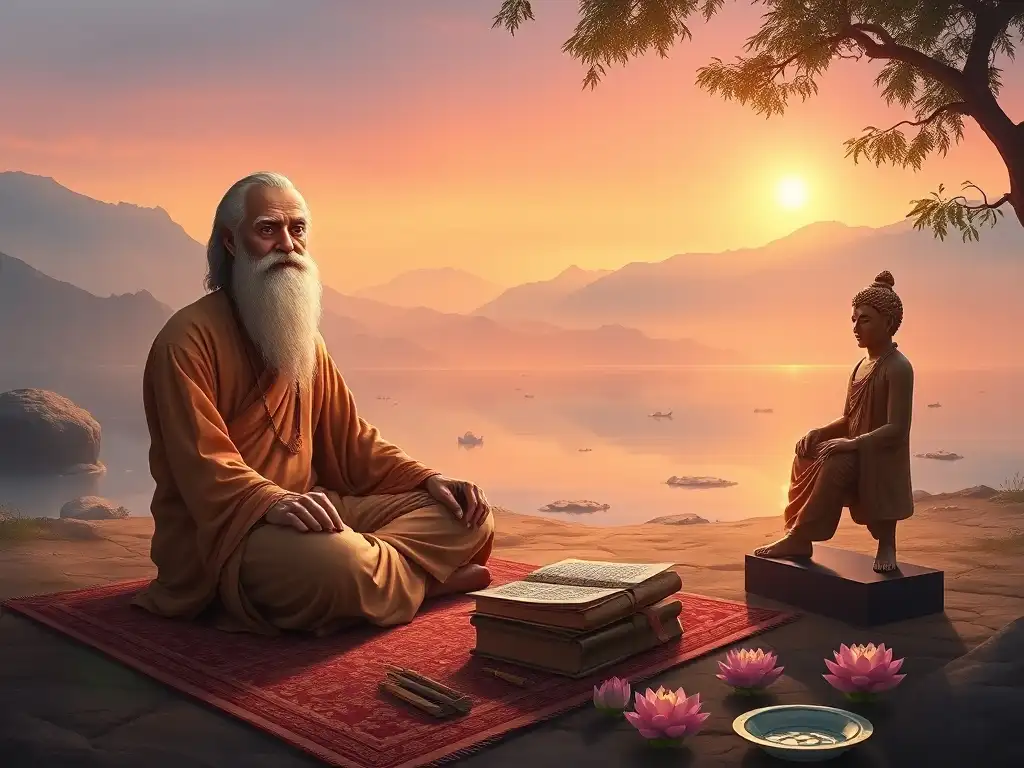
Relevance of Sankhya Philosophy in Contemporary Philosophy
Sankhya philosophy, one of the oldest philosophical systems in ancient India, continues to resonate within contemporary philosophical discourse. Its dualistic nature, which posits a distinct separation between Purusha (consciousness) and Prakriti (matter), offers a framework for understanding the nature of reality and human existence that is highly pertinent today.
- Mind-Body Dualism: The dualistic approach of Sankhya aligns closely with modern discussions on mind-body dualism in Western philosophy. Philosophers such as René Descartes have similarly posited a separation between mind and body, sparking debates that remain relevant in the fields of psychology and cognitive sciences.
- Ontology and Epistemology: Sankhya’s implications for ontology (the study of being) and epistemology (the study of knowledge) are significant. The recognition that knowledge can arise from both empirical observation and introspective insight parallels contemporary discussions on the nature of knowledge, blending empirical science with subjective experience.
- Influence on Other Philosophical Systems: The ideas presented in Sankhya have influenced various other philosophical schools, including Yoga and Vedanta. This interconnectivity showcases its foundational role in shaping Indian philosophy and highlights its enduring relevance as a point of reference for modern interpretations of consciousness and existence.
Critiques and Challenges to Sankhya Philosophy
While Sankhya philosophy has made significant contributions to philosophical thought, it is not without its critiques and challenges. These critiques can be categorized into several key areas:
- Empirical Validity: Some modern philosophers question the empirical validity of Sankhya’s metaphysical claims, arguing that the concepts of Purusha and Prakriti lack scientific grounding. Critics contend that without empirical evidence, the dualistic framework may fall short in addressing questions of reality and existence.
- Complexity of Dualism: The rigid separation between consciousness and matter has also been challenged. Critics argue that this bifurcation oversimplifies the complexities of human experience, suggesting that consciousness and matter are more intertwined than Sankhya posits. This has led to alternative theories that advocate for a more integrated view of reality.
- Relevance to Modern Science: The rise of scientific paradigms such as quantum physics and neurobiology presents challenges to traditional Sankhya concepts. Some proponents of modern science argue that these theories provide a more comprehensive understanding of the universe and consciousness, potentially rendering Sankhya's dualism less relevant in contemporary discussions.
Integration of Sankhya Philosophy in Modern Spiritual Practices
In recent years, there has been a resurgence of interest in Sankhya philosophy within modern spiritual practices. This integration can be observed through various avenues:
- Yoga Practices: Sankhya's influence is prominently reflected in yoga, particularly in the philosophical underpinnings of various yoga schools. The understanding of the dual relationship between Prakriti and Purusha informs practices aimed at achieving self-realization and liberation (moksha).
- Meditation Techniques: Many modern meditation practices draw on Sankhya principles, emphasizing the importance of discerning between the self (Purusha) and the body/mind (Prakriti). This approach fosters a deeper understanding of one’s true nature, aligning with the goals of mindfulness and self-awareness prevalent in contemporary spirituality.
- Holistic Health: The holistic approach in wellness practices increasingly incorporates Sankhya philosophy, emphasizing the balance between body, mind, and spirit. This integration reflects a growing interest in ancient wisdom as a means to address modern health challenges, promoting overall well-being through a deeper connection to one’s inner self.
The modern interpretations of Sankhya philosophy reveal its continuing significance and adaptability. While it faces critiques and challenges, its integration into contemporary practices demonstrates its enduring influence on the pursuit of knowledge, self-realization, and holistic well-being in today's society.
Conclusion: The Legacy of Sankhya Philosophy in Ancient India
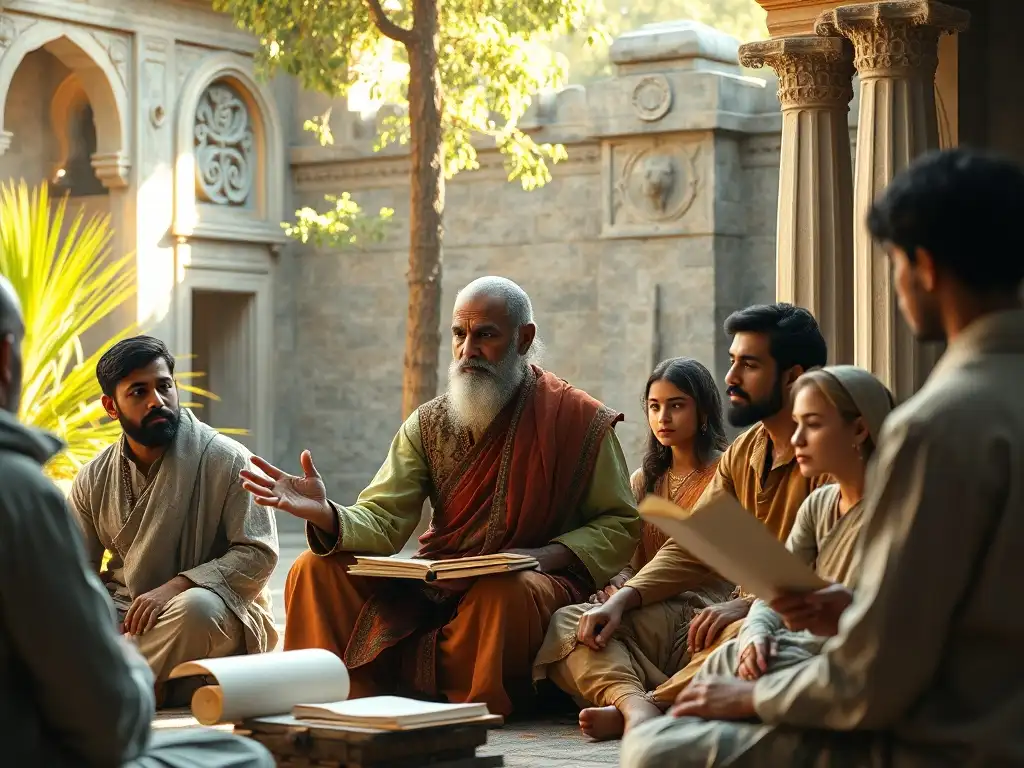
Summary of Key Concepts and Contributions
Sankhya philosophy, one of the six orthodox schools of Indian philosophy, has played a pivotal role in shaping the intellectual landscape of ancient India. Originating around the 2nd century BCE, its foundational texts, particularly the Sankhya Karika by Ishvara Krishna, delineate a dualistic framework that categorizes reality into two fundamental principles: Purusha (consciousness) and Prakriti (matter). This dualism emphasizes the distinction between the self and the material world, presenting a comprehensive understanding of existence and the human condition.
Key concepts of Sankhya include:
- Tattvas (Principles): Sankhya identifies 25 principles that govern the universe, culminating in the realization of the self. These principles are categorized into three groups:
- Prakriti (the material cause of the universe)
- Vikritis (the modifications of Prakriti)
- Purusha (the conscious observer)
- Evolution of the Universe: Sankhya posits that all entities emerge from Prakriti through a process of evolution, driven by the interplay of the three gunas (qualities): Sattva (purity), Rajas (activity), and Tamas (inertia). This evolutionary framework influenced later philosophical and scientific thought in India.
- Liberation (Moksha): The ultimate goal of Sankhya philosophy is achieving liberation through self-realization and understanding the distinction between Purusha and Prakriti. This liberation, termed Moksha, is attained by transcending the material realm and recognizing one's true nature.
The contributions of Sankhya philosophy extend beyond metaphysical inquiries; it has significantly influenced various other schools of thought, including Yoga, which incorporates Sankhya's dualistic principles into its practices for achieving spiritual growth.
The Enduring Significance of Sankhya Philosophy in Modern Times
The relevance of Sankhya philosophy persists in contemporary discussions on metaphysics, psychology, and spirituality. Its dualistic approach provides a profound framework for understanding the complexities of human existence and consciousness. Modern thinkers and practitioners have drawn from Sankhya's insights to explore the relationship between mind and matter, contributing to fields such as cognitive science and psychology.
Moreover, the philosophical tenets of Sankhya resonate within various spiritual traditions, including Hinduism and Buddhism, where the quest for self-knowledge and liberation remains central. The emphasis on self-awareness and the differentiation between the observer and the observed continues to inspire contemporary practices of mindfulness and meditation.
In educational contexts, the study of Sankhya philosophy fosters critical thinking and analytical skills by encouraging students to engage deeply with fundamental questions of existence. Its teachings encourage a balanced perspective on life, advocating for harmony between the material and the spiritual, which is increasingly relevant in today's fast-paced, materialistic society.
Sankhya philosophy not only enriched the intellectual heritage of ancient India but also continues to offer valuable insights into the nature of reality, consciousness, and the path to liberation, making it a timeless philosophical tradition that endures in relevance and application.
Frequently Asked Questions
What is Sankhya philosophy?
Sankhya philosophy is one of the six orthodox schools of Indian philosophy, focusing on dualism and the distinction between purusha (consciousness) and prakriti (matter).
How does Sankhya philosophy influence other philosophies in ancient India?
Sankhya philosophy has significantly influenced various Indian philosophies, including Yoga and Vedanta, especially in concepts related to the nature of reality and the mind-body relationship.
What are the main texts associated with Sankhya philosophy?
The foundational text of Sankhya philosophy is the Sankhya Karika, written by Ishvara Krishna, which outlines its principles and metaphysical concepts.
How does Sankhya philosophy address the concept of liberation?
In Sankhya philosophy, liberation (or moksha) is achieved through the discrimination of the eternal purusha from the transient prakriti, leading to self-realization and freedom from the cycle of birth and rebirth.
What role did Sankhya philosophy play in ancient Indian education?
Sankhya philosophy was a crucial part of the educational curriculum in ancient India, fostering critical thinking and debate, and influencing the development of scientific and philosophical thought.
Final Reflection: Embracing the Wisdom of Sankhya Philosophy in Modern Life
Sankhya philosophy in ancient India offers profound insights into the nature of reality and the dualism that defines our existence. In a world increasingly characterized by complexity and division, the teachings of Sankhya remind us of the importance of understanding the interplay between consciousness and matter. This ancient wisdom is not merely an academic pursuit; it is a vital framework that can guide us through contemporary challenges and help us cultivate a deeper awareness of our own lives.
Sankhya philosophy has significantly influenced not only spiritual thought but also the broader cultural and social landscape. Its emphasis on discernment and the distinction between the self and the material world encourages individuals to seek clarity amidst chaos. As we navigate our daily lives, the principles of Sankhya can inspire us to cultivate a more mindful existence. The greatest discovery of my generation is that a human being can alter his life by altering his attitude.
— William James. This quote resonates deeply with the Sankhya perspective, reminding us that our understanding and approach to life can transform our experiences.
As we reflect on the teachings of Sankhya, I invite you to consider how these ancient insights can be integrated into your own life. Take a moment to explore the dualities that shape your reality and seek balance between your inner self and the external world. By embracing the wisdom of Sankhya philosophy, you can embark on a journey of self-discovery and personal growth, fostering a more harmonious existence. Let this ancient guide illuminate your path as you strive for clarity, purpose, and connection in an ever-evolving world.
Embrace the Wisdom of Sankhya: Take Action Today!
Thank you for diving into the fascinating world of Sankhya philosophy with us! We hope this exploration has illuminated the profound dualism of ancient Indian thought and inspired you to delve deeper. Now, it’s your turn to bring this wisdom into your life and share it with others.
Here are some steps you can take right now:
- Dive Deeper: Read a classic text on Sankhya philosophy to understand its principles more thoroughly. Starting with the Samkhya Karika can be a rewarding experience!
- Engage with Others: Join a local or online discussion group focused on Eastern philosophies. Sharing insights can enhance your understanding and open up new perspectives.
- Share Your Journey: Share your favorite insights from this article on social media or discuss them with friends. Let’s spread the wisdom of Sankhya together!
How has the philosophy of dualism influenced your understanding of the self and the universe? We look forward to hearing your thoughts!