
The Sankhya Philosophy of Life: Understanding Existence and Consciousness


Welcome to Ancient India History, where we invite you to delve into the rich tapestry of ancient Indian civilizations. In this exploration, we focus on the Sankhya philosophy and consciousness, a profound framework that has shaped our understanding of existence. As you journey through our article, "The Sankhya Philosophy of Life: Understanding Existence and Consciousness," prepare to uncover the intricate connections between philosophy, art, and architecture that have influenced not only India but the world.
Join us as we unravel the mysteries of this ancient wisdom and spark your curiosity about the depths of consciousness. Your adventure into the past begins now!
The Sankhya philosophy stands as one of the most significant and ancient schools of Indian thought, offering profound insights into existence and consciousness. Rooted in the philosophical traditions of Ancient India, Sankhya provides a systematic framework for understanding the nature of reality, the self, and the universe. This dualistic philosophy delineates between two fundamental principles: Purusha (consciousness) and Prakriti (matter), exploring how these interact to shape human experience.
As we delve into the intricacies of Sankhya philosophy, we will uncover its core tenets, the interplay between existence and consciousness, and its enduring influence on various aspects of Indian culture and spirituality. By examining concepts such as the nature of knowledge, the process of liberation, and the role of the mind, we aim to provide a comprehensive understanding of how Sankhya philosophy articulates a path towards self-realization and enlightenment. This exploration not only enriches our knowledge of ancient Indian philosophies but also sheds light on their relevance in contemporary discussions on consciousness.
Overview of Sankhya Philosophy
The Sankhya philosophy is often classified as a darsana, or worldview, that emphasizes a rational approach to understanding the cosmos and human existence. It is attributed to the sage Kapila, who laid down its foundational principles in the Sankhya Sutras. This section will explore key elements of Sankhya philosophy, including:
- Purusha: The eternal, unchanging consciousness.
- Prakriti: The dynamic, ever-changing material world.
- The Gunas: The three fundamental qualities of nature (Sattva, Rajas, and Tamas) that influence human behavior and consciousness.
Through these concepts, Sankhya provides a unique lens through which to examine our existence and the various states of consciousness we experience.
The Nature of Consciousness in Sankhya
Consciousness in Sankhya is viewed as distinct from the physical world. It is the Purusha that perceives and experiences reality, while Prakriti serves as the medium through which experiences unfold. In this section, we will discuss:
- The characteristics of Purusha as the witness and the ultimate reality.
- The relationship between Purusha and Prakriti, and how they coalesce to form the myriad experiences of life.
- The implications of this dualism on our understanding of consciousness and existence.
By dissecting these relationships, we can gain deeper insights into how Sankhya philosophy articulates the essence of consciousness and its role in human life.
Sankhya's Influence on Other Philosophical Schools
Sankhya philosophy has not only shaped its own school of thought but has also significantly influenced other philosophical traditions in India, particularly Yoga, Vedanta, and Nyaya. This section will examine:
- The integration of Sankhya principles in Yoga and its practices aimed at achieving self-realization.
- How Vedanta builds upon Sankhya's dualistic approach and the quest for ultimate truth.
- The dialogues between Sankhya and Nyaya, especially regarding epistemology and the nature of knowledge.
Understanding these connections will reveal the broader impact of Sankhya on the philosophical landscape of ancient India and its continued relevance today.
Conclusion
The exploration of Sankhya philosophy offers a profound understanding of existence and consciousness. By dissecting its core principles and examining its influence on other philosophical schools, we can appreciate its timeless relevance and depth. This journey through Sankhya not only enriches our understanding of ancient Indian thought but also invites reflection on our own consciousness and existence in the modern world.
- Overview of Sankhya Philosophy
- The Nature of Consciousness in Sankhya
- Sankhya's Influence on Other Philosophical Schools
- Conclusion
Introduction to Sankhya Philosophy
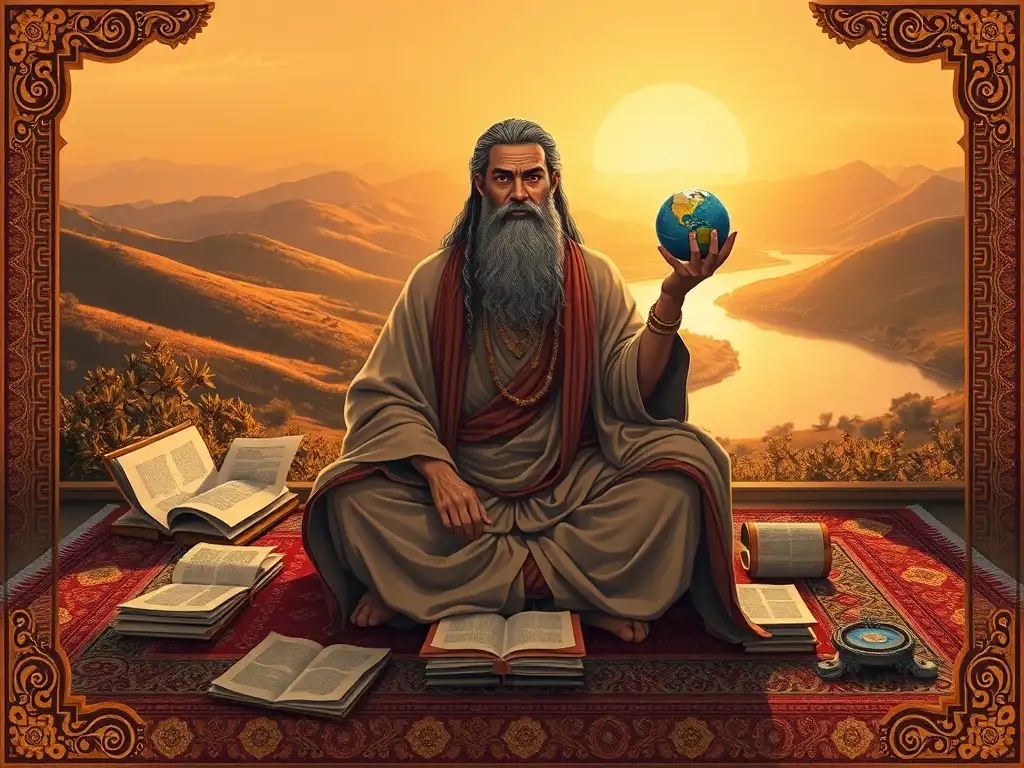
Sankhya philosophy stands as one of the foundational schools of thought in Indian philosophy, offering profound insights into existence and consciousness. Rooted in the classical texts of ancient India, it provides a unique dualistic framework that distinguishes between Purusha (consciousness) and Prakriti (matter). This philosophy not only addresses the nature of reality but also lays the groundwork for understanding the self and the universe's intricate workings.
Definition of Sankhya Philosophy
The term "Sankhya" derives from the Sanskrit word for "number" or "count," reflecting its systematic approach to categorizing and understanding the elements of reality. At its core, Sankhya philosophy posits that all phenomena can be explained through the interplay of two fundamental principles:
- Purusha: The eternal, unchanging consciousness that is the essence of individual selfhood and awareness.
- Prakriti: The dynamic, material world composed of the three gunas (qualities) – Sattva (purity), Rajas (passion), and Tamas (inertia) – which together shape the physical and mental experiences of beings.
Sankhya philosophy systematically enumerates the components of existence, categorizing them into 25 principles or elements. This enumeration includes:
- The five great elements (Pancha Mahabhuta)
- The five senses (Pancha Jnanendriya)
- The five organs of action (Pancha Karmendriya)
- The mind (Manas)
- The intellect (Buddhi)
- The ego (Ahamkara)
Through this structured lens, Sankhya philosophy offers a roadmap for individuals seeking to comprehend consciousness and its relationship to the material world, making it a crucial reference in the broader landscape of Indian philosophical thought.
Historical Context of Sankhya Philosophy in Ancient India
The historical roots of Sankhya philosophy can be traced back to ancient Indian texts, particularly the Sankhya Karika by Ishvara Krishna and the Yoga Sutras of Patanjali. While the exact dates of these texts are debated, it is generally accepted that they emerged during the early centuries of the Common Era, around the time when philosophical inquiry was flourishing in India.
Sankhya philosophy was contemporaneous with other significant schools, such as Nyaya and Vaisheshika, which also aimed to understand the nature of reality and consciousness. Its development was influenced by the spiritual and intellectual climate of ancient India, characterized by rigorous debate and exploration of metaphysical concepts.
The philosophical discourse surrounding Sankhya was pivotal in shaping subsequent Indian thought, especially in the formulation of Yoga philosophy. The emphasis on the distinction between Purusha and Prakriti in Sankhya laid the groundwork for the practices of meditation and self-realization found in later yogic traditions.
Key Historical Milestones:
- Sankhya Karika (c. 400 CE): The seminal text that articulates the core principles of Sankhya philosophy.
- Influence on Yoga: The integration of Sankhya concepts into the spiritual practices outlined in the Yoga Sutras, emphasizing the path to self-realization.
- Dialogue with Buddhism: During its evolution, Sankhya philosophy engaged in dialogues with emerging Buddhist thought, contributing to a rich tapestry of philosophical exchange in ancient India.
Through these historical developments, Sankhya philosophy has maintained a lasting influence on the understanding of consciousness and existence, marking it as a pivotal school in the landscape of Indian philosophy.
Core Principles of Sankhya Philosophy

Sankhya philosophy, one of the oldest systems of Indian philosophy, is primarily concerned with the nature of reality and the relationship between consciousness and the material world. Developed by the sage Kapila, it provides a framework for understanding existence through its core principles, which revolve around dualism, the elements of reality, and the dynamics of consciousness. The philosophical inquiry in Sankhya is systematic and analytical, distinguishing it as a key school of thought within the broader context of Indian philosophy.
At the heart of Sankhya lies the concept of dualism—the distinction between the eternal consciousness (Purusha) and the transient material world (Prakriti). This dualism is foundational, as it posits that the universe is composed of two fundamental realities that interact yet remain distinct. This interaction gives rise to the experience of life and consciousness, making Sankhya a profound exploration of existence.
The Dualism of Purusha and Prakriti
In Sankhya philosophy, Purusha represents pure consciousness, the eternal, unchanging observer that exists beyond physical existence. It is the essence of individual selfhood, which remains unaffected by the material world. On the other hand, Prakriti refers to nature or the material world, which is ever-changing and composed of three primary qualities known as gunas.
- Purusha (Consciousness):
- Eternal and unchanging.
- The witness of all experiences.
- Represents the true self or Atman.
- Prakriti (Nature):
- Mutable and dynamic.
- Composed of the gunas: sattva, rajas, and tamas.
- The source of all physical and mental phenomena.
This dualistic framework establishes that while Purusha is the source of consciousness and awareness, Prakriti is the material cause of the universe, encompassing all forms of matter and energy. The interplay between these two elements leads to the manifestation of life and consciousness. This understanding of dualism is crucial, as it emphasizes the importance of self-awareness and the realization of one's true nature as distinct from the material body.
The Concept of Gunas in Sankhya Philosophy
The gunas are fundamental qualities or attributes that characterize Prakriti and play a significant role in shaping human experience and behavior. The three gunas are:
- Sattva:
- Represents purity, harmony, and knowledge.
- Associated with qualities like clarity, wisdom, and tranquility.
- Promotes spiritual growth and enlightenment.
- Rajas:
- Represents activity, passion, and dynamism.
- Associated with qualities like ambition, desire, and restlessness.
- Drives individuals towards action but can also lead to suffering.
- Tamas:
- Represents inertia, darkness, and ignorance.
- Associated with qualities like lethargy, confusion, and chaos.
- Can hinder progress and awareness.
The interplay of these gunas determines the behavior, thoughts, and emotions of individuals. For instance, a predominance of sattva leads to peaceful and enlightened states, while rajas can result in stress and conflict, and tamas may lead to stagnation and ignorance. Understanding the gunas is essential for anyone studying Sankhya philosophy, as it provides insights into how consciousness evolves and interacts with the material world.
Understanding the Evolution of Consciousness in Sankhya
Sankhya philosophy posits that the evolution of consciousness is a progressive journey influenced by the interplay of Purusha and Prakriti through the gunas. This evolution can be understood through several stages:
- Initial State:
- At the outset, Purusha and Prakriti exist in a state of equilibrium.
- Pure consciousness is untainted by material influence.
- Emergence of Gunas:
- The imbalance among the gunas leads to the manifestation of the universe.
- This results in the emergence of various forms of life and consciousness.
- Individual Consciousness:
- Each individual possesses a unique blend of the three gunas, shaping their perceptions and experiences.
- Spiritual evolution occurs as individuals seek to transcend the influence of Prakriti and realize their true nature as Purusha.
- Self-Realization:
- The ultimate goal of this philosophical system is the realization of the self (Atman) as eternal consciousness.
- This entails liberation (moksha) from the cycles of birth and death, achieved through knowledge and understanding of the dualistic nature of existence.
The exploration of Sankhya philosophy and consciousness unveils profound insights into existence, dualism, and the evolution of awareness. By grasping these principles, individuals can navigate their spiritual journeys with greater clarity and purpose, ultimately leading to self-realization and liberation.
The Role of Consciousness in Sankhya Philosophy
What is Consciousness According to Sankhya?
In Sankhya philosophy, consciousness is often referred to as Purusha, which represents the true self or the observer. This concept is pivotal because it delineates the distinction between the material world (Prakriti) and the spiritual essence (Purusha). Consciousness, in this framework, is considered eternal, unchanging, and separate from the physical elements of existence.
Sankhya identifies two fundamental realities:
- Purusha (Consciousness):
- Eternal: Unlike the transient nature of the physical world, Purusha is unchanging and everlasting.
- Witness: It observes the activities of the mind and body without being affected by them.
- Non-identified: It remains distinct from the ego and the material experiences, highlighting the importance of self-awareness.
- Prakriti (Nature):
- Dynamic: Represents the material world, characterized by change and impermanence.
- Three Gunas: Composed of Sattva (purity), Rajas (activity), and Tamas (inertia), these qualities influence human behavior and experience.
By understanding consciousness in this dualistic context, practitioners of Sankhya philosophy can explore the nature of their existence and the essence of their identity beyond physical manifestations.
The Relationship Between Consciousness and Existence
The Sankhya philosophy posits a profound relationship between consciousness and existence. According to this school of thought, consciousness is not merely a by-product of existence but is integral to the very nature of reality itself. The interaction between Purusha and Prakriti gives rise to the observable universe.
Key points to consider about this relationship include:
- Causality: The Sankhya system suggests that consciousness is the cause of all experiences. It perceives and interprets the manifestations of Prakriti, leading to the understanding of existence.
- Dependent Reality: Existence is contingent upon consciousness. Without conscious awareness, the material world lacks meaning and significance. This underpins the philosophical notion that reality is perceived through the lens of consciousness.
- Liberation (Moksha): The ultimate goal in Sankhya philosophy is to attain liberation by recognizing the distinction between Purusha and Prakriti. This realization leads to the understanding that true existence transcends the physical realm, thus offering a pathway to spiritual freedom.
The interplay between consciousness and existence is essential for grasping the Sankhya view of life, as it emphasizes the journey of self-inquiry and the quest for deeper understanding.
How Sankhya Philosophy Explains Self-Realization
Self-realization in Sankhya philosophy is the process of recognizing one's true nature as Purusha, distinct from the material aspects of existence. This journey towards self-awareness involves several stages:
- Introspection:
- Engaging in self-reflection allows individuals to discern between the mind's fluctuations and the steady nature of consciousness.
- Practices such as meditation and mindfulness are encouraged to cultivate awareness.
- Discrimination (Viveka):
- Sankhya teaches the importance of Viveka, or discernment, which involves distinguishing between the eternal Purusha and the impermanent Prakriti.
- This discrimination leads to the understanding that one’s identity is not tied to transient experiences or emotions.
- Detachment (Vairagya):
- As awareness of the distinction between self and the material world grows, practitioners cultivate detachment from worldly desires and attachments.
- This detachment fosters a sense of inner peace, allowing individuals to experience life without being overwhelmed by external chaos.
- Attainment of Knowledge (Jnana):
- The culmination of this journey is the attainment of true knowledge, where one realizes their oneness with all beings and the universe.
- This knowledge is transformative, leading to liberation from the cycle of birth and death (samsara).
Sankhya philosophy provides a structured approach to self-realization through the understanding of consciousness. By navigating through introspection, discrimination, detachment, and the attainment of knowledge, individuals can achieve profound insights into their existence and ultimately attain liberation.
The Practical Applications of Sankhya Philosophy
Sankhya Philosophy in Yoga and Meditation Practices
Sankhya philosophy plays a crucial role in the realms of yoga and meditation, providing a foundational framework for understanding the nature of existence and consciousness. This ancient system of thought delineates between the material and the spiritual, emphasizing the distinction between Prakriti (nature) and Purusha (consciousness).
- Role in Yoga: Within the context of yoga, Sankhya philosophy informs various practices aimed at achieving self-realization and liberation (Moksha). The idea of separating the self (Purusha) from the material world (Prakriti) is central to yogic practices, enabling practitioners to transcend the limitations of the physical body and mind.
- Meditation Techniques: Techniques such as Dhyana (meditation) are heavily influenced by Sankhya thought. Meditators are encouraged to observe their thoughts and emotions without attachment, recognizing them as products of Prakriti rather than the true self. This practice aligns with the Sankhya perspective that ultimate understanding arises from discerning the true nature of consciousness.
- Benefits: The application of Sankhya philosophy in yoga and meditation leads to profound benefits including increased mental clarity, emotional balance, and a deeper awareness of the self. Practitioners often report experiences of heightened consciousness, inner peace, and a sense of unity with the universe.
Influence of Sankhya on Indian Psychology
The principles of Sankhya philosophy have significantly influenced the development of Indian psychology, particularly in its understanding of the mind and consciousness. This impact can be observed through several key aspects:
- Dualistic Framework: Sankhya's dualistic approach categorizes reality into two fundamental entities: Purusha (consciousness) and Prakriti (matter). This framework has shaped psychological theories regarding the nature of consciousness and the mind's relationship with the body.
- Psychological Processes: The Sankhya enumeration of the Tattvas (elements of reality) extends into psychological processes, delineating the aspects of the mind and their functions. It provides insights into how thoughts, emotions, and sensory experiences interact, leading to a comprehensive understanding of human behavior.
- Therapeutic Approaches: Modern Indian psychology integrates Sankhya principles in therapeutic practices. Techniques derived from this philosophy help individuals address psychological challenges by promoting self-awareness and mindfulness. The recognition of the mind's transient nature encourages therapeutic methods that focus on detachment and self-exploration.
Modern Interpretations of Sankhya Philosophy
In contemporary times, Sankhya philosophy has seen a resurgence, influencing various fields beyond traditional philosophy, including psychology, cognitive science, and holistic health practices. Here are some notable interpretations:
- Cognitive Science: Some scholars argue that Sankhya's insights into the nature of consciousness and perception align with current cognitive theories. The distinction between the observer (Purusha) and the observed (Prakriti) parallels modern discussions on consciousness and self-awareness.
- Holistic Health: The principles of Sankhya are being integrated into holistic health approaches, emphasizing the importance of mental clarity and emotional well-being. Practices such as Ayurveda utilize Sankhya philosophy to promote balance between mind and body, reinforcing the idea that mental health is intrinsically linked to physical health.
- Interdisciplinary Dialogues: Modern interpretations encourage dialogues between Sankhya and Western philosophical traditions. By exploring common ground, philosophers and practitioners can develop a richer understanding of consciousness that transcends cultural boundaries.
The practical applications of Sankhya philosophy are vast and varied, spanning traditional practices in yoga and meditation, influencing Indian psychology, and adapting to modern interpretations across disciplines. This enduring legacy continues to inspire those seeking deeper insights into existence and consciousness.
Comparison of Sankhya Philosophy with Other Philosophical Schools
Sankhya vs. Nyaya: A Comparative Analysis
The Sankhya philosophy and Nyaya school of thought represent two distinct yet significant paradigms within ancient Indian philosophy. While both engage with the nature of knowledge and existence, their approaches and methodologies differ markedly.
- Epistemology:
- Sankhya emphasizes a dualistic framework of existence, positing two fundamental realities:Prakriti (matter) and Purusha (consciousness). Knowledge is attained through direct experience (pratyaksha), inference (anumana), and testimony (shabda).
- Nyaya, on the other hand, focuses on logic and epistemological rigor. It employs a systematic approach to define valid means of knowledge (pramanas), including perception, inference, comparison, and verbal testimony.
- Ontology:
- In Sankhya, the emphasis lies on the interplay between Purusha and Prakriti, where the evolution of the material world is explained through the interaction of these two entities. The ultimate goal is liberation (moksha) through understanding this relationship.
- Nyaya posits a more pluralistic ontology, accommodating a broader spectrum of entities and focusing on the relationships between them. It addresses the nature of existence and the criteria for distinguishing valid knowledge from invalid.
- Methodology:
- Sankhya utilizes a metaphysical framework to explain the cosmos, relying on categories of understanding known as tattvas.
- Conversely, Nyaya relies on rigorous logic and debate, employing a dialectical method to arrive at conclusions, thus emphasizing critical analysis in philosophical discourse.
While both Sankhya and Nyaya contribute to the landscape of Indian philosophy, their foundational premises and methodologies highlight a rich diversity of thought regarding existence and consciousness.
Sankhya vs. Vaisheshika: Key Differences and Similarities
The Sankhya and Vaisheshika schools, though both significant in the philosophical discourse of ancient India, exhibit notable differences in their concepts of reality and epistemological approaches.
- Metaphysical Foundations:
- Sankhya is fundamentally dualistic, delineating between the conscious Purusha and the material Prakriti. It posits that liberation is achieved by the realization of this dualism.
- Vaisheshika, attributed to the philosopher Kanada, adopts a more atomistic view. It asserts that all objects of experience can be reduced to an infinite number of atoms (paramanus), each possessing unique qualities. This school does not necessarily emphasize a dualistic separation between consciousness and matter.
- Concept of God:
- In Sankhya, the existence of a personal god is not essential; the focus is on the understanding of the self and the material world.
- Vaisheshika, while also non-theistic in its classical form, allows for a more nuanced discussion of divinity, often integrating the concept of a creator god in later interpretations.
- Epistemology:
- Both schools agree on the validity of various sources of knowledge, but Sankhya tends to prioritize introspective knowledge derived from understanding the self and its relationship to Prakriti.
- Vaisheshika, conversely, leans towards empirical knowledge derived from the study of the physical universe, emphasizing observation and classification of the material world.
In essence, while Sankhya and Vaisheshika intersect in their examination of existence, their foundational principles and methodologies diverge significantly, enriching the philosophical tapestry of ancient India.
How Sankhya Philosophy Influences Other Indian Philosophical Traditions
The Sankhya philosophy has played a pivotal role in shaping various other Indian philosophical traditions, providing a foundational framework that has influenced schools such as Yoga, Advaita Vedanta, and even aspects of Buddhism.
- Influence on Yoga:
- The Yoga Sutras of Patanjali articulate a system of practice that draws heavily from Sankhya's dualistic perspective. Yoga emphasizes the separation of consciousness (Purusha) from the material body (Prakriti), facilitating liberation through disciplined practice and meditation. The concept of the three gunas (sattva, rajas, tamas) in Sankhya is also integral to understanding the nature of the mind in Yoga.
- Impact on Advaita Vedanta:
- While Advaita Vedanta, propagated by Adi Shankaracharya, advocates for a non-dualistic understanding of reality, it engages with Sankhya concepts to elucidate the nature of illusion (Maya) and the ultimate reality (Brahman). The Sankhya framework provides a contrast that highlights the necessity of transcending dualistic notions to achieve the realization of oneness.
- Relation to Buddhism:
- Certain elements of Sankhya philosophy, particularly its analysis of suffering and the nature of self, resonate with Buddhist thought. While Buddhism traditionally rejects the notion of a permanent self (atman), its exploration of consciousness and the nature of reality reflects a deep engagement with Sankhya ideas, particularly in the context of interdependence and the nature of existence.
The Sankhya philosophy serves as a vital thread in the intricate tapestry of Indian philosophy, influencing and interacting with various traditions, thereby enriching the discourse on existence and consciousness across centuries.
Contemporary Relevance of Sankhya Philosophy
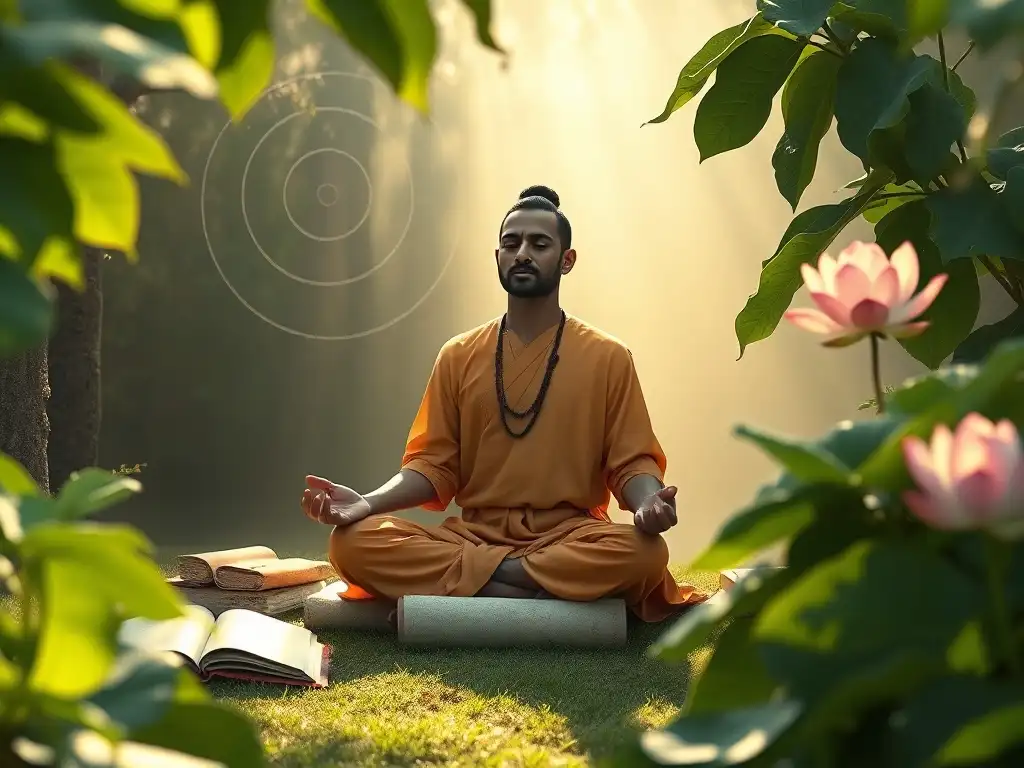
Impact of Sankhya Philosophy on Modern Thought
Sankhya philosophy, one of the six orthodox schools of Indian philosophy, has significantly influenced contemporary thought in various fields, particularly in psychology, metaphysics, and cognitive sciences. Its dualistic framework, which differentiates between Purusha (consciousness) and Prakriti (matter), provides a foundational perspective that resonates with modern discussions surrounding the nature of reality and consciousness.
- Psychology: Modern psychology often grapples with the concepts of mind and body. The Sankhya view posits that consciousness exists independently of material phenomena, a notion echoed in various psychological theories today. For instance, the distinction made by Sankhya between the observer (Purusha) and the observed (Prakriti) aligns closely with contemporary cognitive theories that explore the subjective experience of consciousness.
- Metaphysics: The Sankhya system's analytical approach to understanding existence has parallels in modern metaphysical debates. By categorizing reality into distinct elements, it encourages a systematic inquiry into the nature of existence, leading to rich dialogues in both Eastern and Western metaphysical traditions.
- Cognitive Science: Recent advancements in cognitive science have begun to explore the relationship between consciousness and the physical brain. The Sankhya perspective offers a unique lens through which to understand this relationship, suggesting that while mental states are influenced by physical processes, they are not wholly reducible to them.
The Importance of Understanding Consciousness Today
In an age dominated by rapid technological advancement and overwhelming information, understanding consciousness has become paramount. The Sankhya philosophy of consciousness provides a critical framework for navigating contemporary challenges related to mental health, self-awareness, and ethical living.
- Mental Health: With increasing awareness of mental health issues, the Sankhya perspective on the separation of consciousness from the mind and body can offer therapeutic insights. By recognizing the distinction between the self and mental disturbances, individuals can cultivate mindfulness and emotional resilience.
- Self-Awareness: The practice of introspection, emphasized in Sankhya, encourages individuals to explore their inner worlds. This self-awareness is crucial for personal growth and understanding one's motivations, desires, and ultimately, the essence of existence.
- Ethical Living: The Sankhya philosophy encourages ethical living through self-realization. By understanding the transient nature of Prakriti, individuals are motivated to seek higher purposes beyond material pursuits, fostering a society that values compassion, integrity, and holistic well-being.
How Sankhya Philosophy Can Guide Personal Development
Sankhya philosophy offers practical tools for personal development, emphasizing self-discovery and consciousness expansion. By integrating its principles into daily life, individuals can foster deeper awareness and fulfillment.
- Meditation and Mindfulness: The practices derived from Sankhya encourage individuals to engage in meditation as a means to connect with Purusha. Regular meditation practices can enhance clarity of thought, emotional stability, and a profound sense of inner peace.
- Critical Thinking: The analytical nature of Sankhya promotes critical thinking skills. By examining beliefs and experiences through the lens of Sankhya, individuals can disentangle themselves from societal conditioning and cultivate a more authentic life.
- Goal Setting and Intentional Living: Understanding the duality of existence allows for more intentional living. Individuals can set goals that align with their true selves (Purusha) rather than mere material aspirations (Prakriti), leading to a more meaningful and purpose-driven life.
The contemporary relevance of Sankhya philosophy in understanding consciousness is profound. As we navigate the complexities of modern life, the insights offered by this ancient school of thought can provide clarity, direction, and a deeper connection to our true selves.
Conclusion
Summary of Key Insights on Sankhya Philosophy and Consciousness
The Sankhya philosophy stands as one of the foundational schools of thought in ancient Indian philosophy, particularly renowned for its comprehensive approach to understanding existence and consciousness. Central to this philosophy is the dualistic framework that distinguishes between Purusha (consciousness) and Prakriti (matter). This separation elucidates the complexities of human experience and existence.
Key insights into Sankhya philosophy and consciousness include:
- Dualism: The Sankhya system posits a clear distinction between the observer (Purusha) and the observed (Prakriti). This fundamental dualism allows for a deeper understanding of self-awareness and the nature of reality.
- Twenty-Five Principles: Sankhya articulates twenty-five principles that encompass the entire cosmos, ranging from the most subtle (intellect) to the most gross (elements). This classification provides a systematic approach to understanding the layers of existence.
- Evolution of Consciousness: The Sankhya philosophy describes the process through which consciousness evolves from the unmanifest (Prakriti) to the manifest. This evolution is vital for comprehending how individual consciousness interacts with the material world.
- Liberation (Moksha): A core objective of Sankhya philosophy is achieving liberation from the cycle of birth and death (samsara). By realizing the distinction between Purusha and Prakriti, individuals can attain a state of ultimate freedom and enlightenment.
These insights not only highlight the philosophical depth of Sankhya but also its relevance in understanding consciousness as a multifaceted entity that transcends mere physical existence.
Final Thoughts on the Relevance of Sankhya in Modern Life
The principles of Sankhya philosophy continue to resonate in contemporary discourse on consciousness and existence. As we navigate the complexities of modern life, the insights derived from Sankhya can offer valuable perspectives on personal development, mindfulness, and self-awareness.
- Mindfulness and Self-Realization: The practice of mindfulness echoes the Sankhya philosophy's emphasis on self-observation. By cultivating awareness of our thoughts and emotions, we can better understand the distinction between our true self (Purusha) and our transient experiences (Prakriti).
- Psychological Insights: Modern psychology increasingly acknowledges the significance of consciousness in shaping human behavior. The Sankhya perspective can enrich psychological theories by providing a philosophical foundation for understanding the interplay between mind and matter.
- Holistic Health: The Sankhya approach to the mind-body relationship aligns with contemporary holistic health practices, which emphasize the integration of mental, emotional, and physical well-being. Recognizing the dual nature of existence can lead to a more balanced lifestyle.
The Sankhya philosophy and consciousness offers profound insights that remain relevant in the quest for understanding existence. By embracing these ancient teachings, individuals can navigate their modern realities with greater clarity and purpose, fostering a deeper connection to both themselves and the world around them.
Frequently Asked Questions
What is Sankhya philosophy?
Sankhya philosophy is one of the six classical systems of Indian philosophy, focusing on the distinction between consciousness (Purusha) and matter (Prakriti). It explores the nature of existence and the path to liberation through knowledge.
How does Sankhya philosophy relate to consciousness?
In Sankhya, consciousness is seen as the eternal observer, separate from the material world. Understanding this distinction is crucial for achieving self-realization and liberation from the cycle of birth and death.
What are the key concepts of Sankhya philosophy?
Key concepts include the dualism of Purusha and Prakriti, the twenty-five principles that explain the creation of the universe, and the process of evolution from unmanifested to manifested states of being.
How has Sankhya philosophy influenced other Indian philosophies?
Sankhya has significantly influenced various Indian philosophies, particularly Yoga and Vedanta, by providing a framework for understanding the nature of existence and the relationship between consciousness and the material world.
Why is Sankhya philosophy considered relevant today?
Today, Sankhya philosophy is relevant as it offers insights into the nature of consciousness, the mind-body relationship, and serves as a foundation for various spiritual practices aimed at achieving inner peace and understanding the self.
Final Reflection: Embracing the Depths of Sankhya Philosophy and Consciousness
The exploration of Sankhya philosophy and consciousness is not merely an academic endeavor; it is a profound journey into understanding our very existence. In today's fast-paced world, where distractions abound and the essence of self often gets lost, revisiting the principles of Sankhya offers a pathway to clarity and insight. This ancient philosophy encourages us to delve deeper into the nature of reality and our place within it, reminding us that self-awareness is the key to unlocking true consciousness.
Sankhya philosophy has left an indelible mark on our cultural and social landscape, shaping how we perceive the mind-body connection and the essence of being. It invites us to reflect on our thoughts and actions, fostering a greater understanding of our consciousness. As the philosopher Swami Vivekananda once said, The greatest sin is to think yourself weak.
This sentiment resonates deeply in the context of Sankhya, urging us to recognize our inherent strength and the power of our consciousness in shaping our experiences.
As we conclude this exploration of Sankhya philosophy, I invite you to reflect on your own journey of consciousness. Consider how the principles discussed can be applied to your daily life, encouraging you to cultivate self-awareness and embrace the complexities of existence. Let the teachings of Sankhya inspire you to seek a deeper understanding of yourself and the world around you, fostering a more conscious and fulfilling life.
Unveil the Deeper Truths of Existence!
Thank you for diving into the fascinating world of Sankhya Philosophy with us! We hope you’ve uncovered valuable insights into existence and consciousness that enrich your understanding of life’s profound questions. Now, let’s take actionable steps to deepen this exploration further.
- Engage with the concepts: Take a moment to meditate on a key idea from Sankhya Philosophy that resonates with you. Reflect on how it relates to your own life experiences.
- Share your insights: Discuss what you've learned with friends or in a community group. Consider writing a short post on social media to inspire others.
- Explore further resources: Look for books or documentaries related to Sankhya and its influence on contemporary thought. You might also join a local philosophy club to engage in deeper discussions.
Which aspect of Sankhya Philosophy resonates with you the most, and how will you apply it to your life today?