
How Ancient Indian Performers Used Satire to Convey Social Commentary

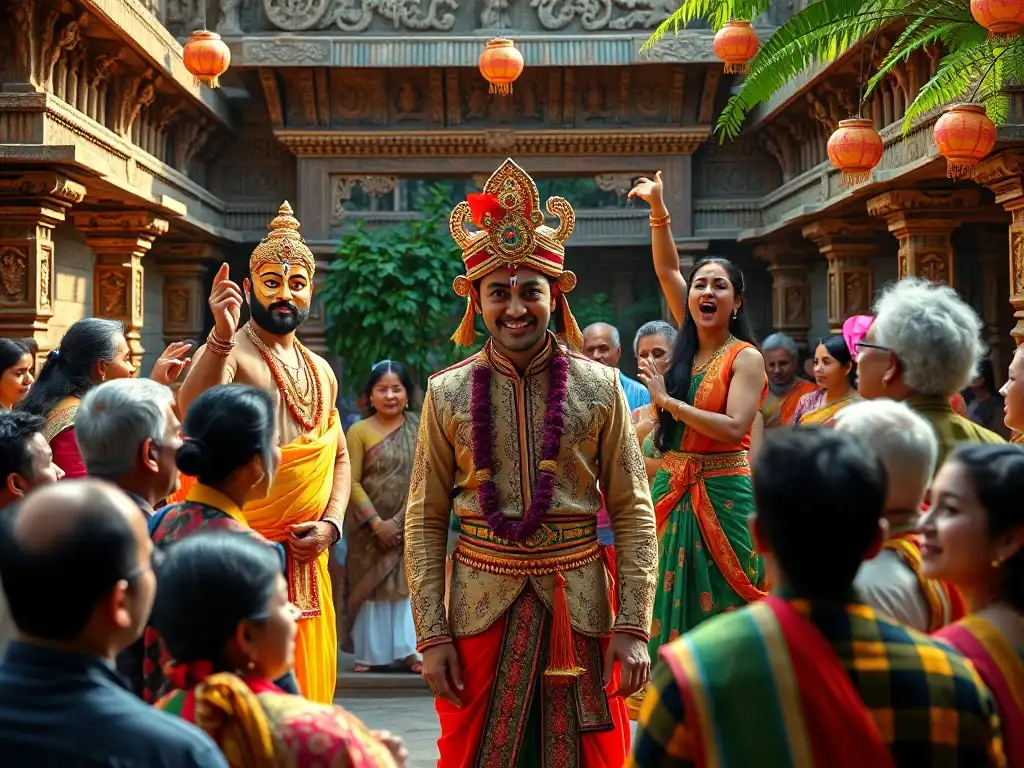
Welcome to Ancient India History, where we embark on a captivating journey through the vibrant tapestry of ancient Indian civilizations. In this exploration, we shine a spotlight on how ancient Indian performers used satire to convey social commentary, revealing the clever wit and cultural insights embedded in their art. Prepare to delve into the rich traditions of performance that not only entertained but also challenged societal norms.
What hidden truths did these artists unveil through their craft? Join us as we uncover the layers of satire that shaped social discourse in a time long past, sparking your curiosity to learn more about this fascinating intersection of art and history.
- Introduction to Ancient Indian Satire and Performance
- Historical Context of Ancient Indian Satire
- Types of Performance Arts Featuring Satire
- Prominent Ancient Indian Satirical Figures
- Themes and Subjects of Ancient Indian Satire
- Techniques and Styles of Satirical Performance
- Case Studies of Notable Satirical Performances
- Conclusion: The Legacy of Ancient Indian Satire and Performance
-
Frequently Asked Questions
- What role did satire play in ancient Indian performances?
- How did ancient Indian performers convey their messages through satire?
- Can you give examples of ancient Indian texts that include satire?
- What impact did satire have on society in ancient India?
- How does the tradition of satire in ancient Indian performance influence modern Indian art?
- Final Reflection: The Enduring Legacy of Ancient Indian Satire in Performance
- Unleash the Power of Satire: Take Action Today!
Introduction to Ancient Indian Satire and Performance
The vibrant tapestry of ancient Indian culture is intricately woven with the threads of satire and performance, both of which played pivotal roles in the social and political discourse of their time. From the insightful parables of the Indus Valley civilization to the theatrical spectacles of the Gupta Empire, satire served as a powerful medium for critique and reflection.
Ancient Indian performers, through their art, conveyed complex social commentaries that resonated deeply with audiences, often challenging established norms and authority. This article delves into the nuanced world of ancient Indian satire and performance, exploring how these art forms not only entertained but also enlightened society, facilitating dialogue around pressing issues of their era.
Overview of Satire in Ancient Indian Culture
Satire in ancient India was not merely a tool for humor; it was a sophisticated form of social criticism that emerged across various literary and performance traditions. Notable works like the Panchatantra and the Hitopadesha utilized animal fables and witty narratives to convey moral lessons, often highlighting human folly and vice. These narratives were rich in allegory, allowing audiences to reflect on their own behaviors and societal norms.
Moreover, the classical Sanskrit drama, particularly the works of playwrights like Kalidasa and Bhasa, incorporated satirical elements that critiqued political leaders and societal structures. The performances were characterized by clever wordplay and ironic situations, engaging the audience in a dialogue about justice, ethics, and governance. This blend of entertainment and critique was essential in fostering a culture of awareness and intellectual discourse.
Importance of Performance Arts in Ancient Indian Society
Performance arts in ancient India, encompassing theater, dance, and music, held significant importance in both cultural and religious contexts. These art forms were not just a means of entertainment; they were integral to community identity and social cohesion. Festivals and rituals often featured performances that celebrated mythology and history, imparting cultural values and collective memory.
Theaters such as Natya Shastra, attributed to the sage Bharata Muni, outlined the technical aspects of performance, emphasizing the importance of expression and emotional resonance. The interplay of satire within these performances allowed artists to address contemporary issues, prompting audiences to reconsider their beliefs and attitudes. This dynamic relationship between performers and spectators fostered an environment where critical thought was encouraged, contributing to the evolution of societal norms.
The legacy of ancient Indian satire and performance is a testament to the enduring power of art as a vehicle for social commentary. As we explore these themes further, we will uncover the intricate ways in which humor and performance shaped the fabric of ancient Indian civilization, leaving an indelible mark on its history and culture.
Historical Context of Ancient Indian Satire
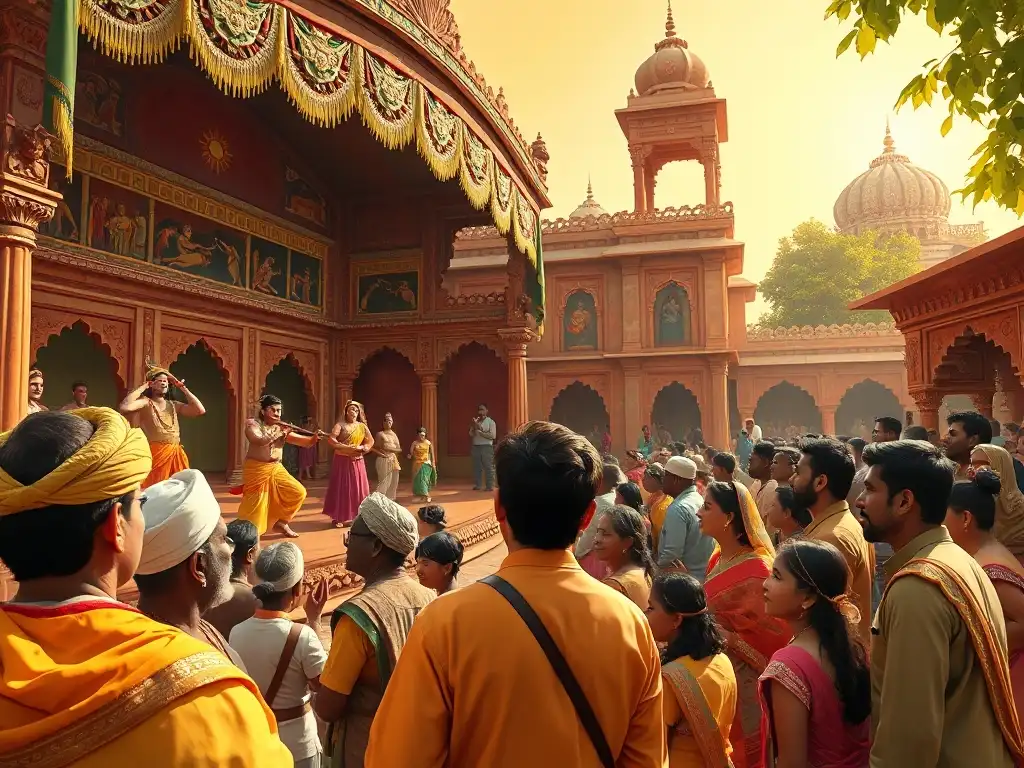
The Evolution of Satirical Expression in Ancient India
The roots of satire in ancient India can be traced back to the early civilizations, where humor and wit were employed not only as entertainment but also as a means of social critique. This tradition evolved significantly through various dynasties and cultural transformations, reflecting the changing dynamics of society.
- Indus Valley Civilization: While direct evidence of satire is scarce from this period, artifacts suggest a rich oral tradition that likely included playful storytelling and mockery in communal gatherings.
- Vedic Period: The Rigveda and other texts contain hymns that critique societal norms and practices. This period marks the beginnings of a structured expression of satire, where poets would use humor to question the cosmic order and human behavior.
- Classical Age: By the time of the Maurya and Gupta Empires, satire had become more pronounced. The Mahabharata and Ramayana feature moments of irony and jest, particularly in character interactions that reveal moral lessons through humor.
- Theatrical Forms: The emergence of classical theater, notably Natya Shastra by Bharata Muni, provided a formal framework for satire. Performers began utilizing satire within plays to address political and social issues, leading to a rich tradition of comedic performances.
Influential Texts and Sources Highlighting Satirical Performance
Several ancient texts and scriptures serve as critical sources for understanding the role of satire in performance arts of ancient India. These works not only showcase the humor employed by ancient performers but also the underlying social commentary they provided through their art.
- Natya Shastra: This seminal text on performance arts outlines various forms of theatre, including the use of satire for social critique. Bharata Muni emphasizes the importance of vrittis (moods) in performance, where satire plays a pivotal role in evoking laughter while provoking thought.
- Panchatantra: A collection of fables, this text uses animal characters to satirize human behavior and societal norms. The stories often convey moral lessons through witty and humorous narratives, making it a crucial reference for ancient satirical expression.
- Kālidāsa's Works: Plays like Shakuntala not only reflect love and beauty but also subtly critique social norms through the use of irony and humor. His works exhibit how satire could be woven into grand narratives, making complex social commentaries accessible to audiences.
- Bhavabhuti's Malatimadhava: This drama uses satire to address themes of love and societal expectations, illustrating how performers used humor to navigate and critique the intricacies of relationships within the societal framework.
- Vikrama and Betaal Tales: These folk tales often incorporate elements of satire, where the cleverness of the protagonists highlights the folly of societal norms and beliefs. The humorous dialogues offer a glimpse into the everyday life of ancient Indian society while critiquing its values.
Through these texts, we can see that satire in ancient Indian performance was not merely for amusement; it served as a powerful medium for social commentary, allowing performers to engage with and reflect upon the complexities of their society.
Types of Performance Arts Featuring Satire
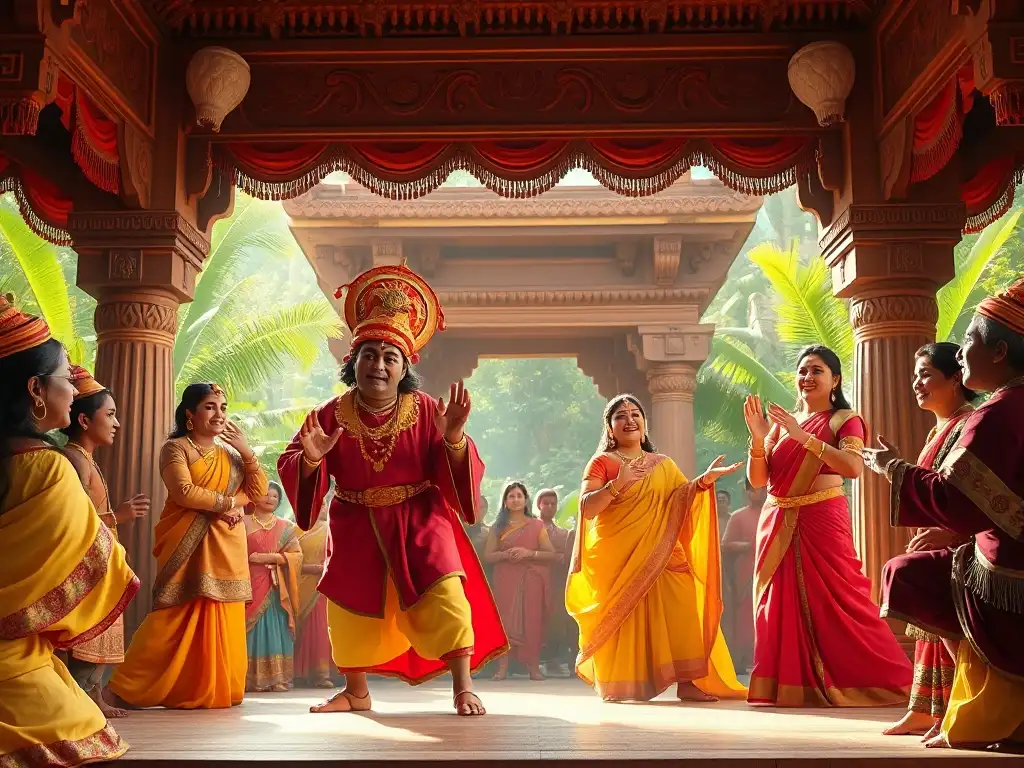
Ancient Indian satire and performance were intricately woven into the fabric of various art forms. These performances served not only as entertainment but also as a means of social commentary, addressing issues pertinent to their time. Here, we delve into the primary types of performance arts that prominently featured satire in ancient India.
Theatrical performances in ancient India, particularly through genres like Natya Shastra, were pivotal in conveying social messages. This ancient treatise on performing arts, attributed to Bharata Muni, outlines various aspects of drama, including character types and performance styles.
- Types of Satirical Plays:
- Prakarana: These are original plays showcasing contemporary themes, often laced with humor and satire that critiqued societal norms and practices.
- Mukhya Nataka: This genre focused on the main narrative, often highlighting the follies of rulers and the upper class through exaggerated characters and situations.
Satirical drama often included:
- Stock Characters: Like the Vidhushaka (the jester), who used wit and humor to comment on the absurdities of life and politics.
- Social Issues: Topics such as caste discrimination, gender roles, and moral hypocrisy were frequently addressed, making the audience reflect on their societal values.
The use of metaphor and irony in dialogues added layers to the comedy, allowing the audience to engage critically while being entertained.
Folk Performances: Satire in Regional Art Forms
Folk performances across different regions of India showcased satire through local narratives and traditions. These performances were deeply rooted in cultural contexts, making them relatable and impactful.
- Examples of Regional Satirical Art Forms:
- Tamasha (Maharashtra): This theatrical form included songs, dances, and dialogues that often mocked societal norms and political figures.
- Bhaona (Assam): A traditional theater form that incorporated humor and satire, often using religious stories to critique social practices and injustices.
Folk performances served as a platform for:
- Community Engagement: They brought together audiences from various backgrounds, fostering discussions on pressing issues.
- Cultural Preservation: While entertaining, these performances also preserved local histories and traditions, embedding satire within the context of cultural identity.
The satirical elements in these performances were vital for challenging authority and stimulating dialogue about change, often using humor as a vehicle for critique.
Dance and Music: Incorporating Satirical Elements
Dance and music were integral to ancient Indian performance arts, often infused with satirical content that critiqued societal norms and behaviors.
- Forms of Dance that Featured Satire:
- Kathak: This dance form employed storytelling through expressive movements, often using satire to depict social issues or mock the behavior of elites.
- Bharatanatyam: While primarily devotional, this dance also included elements that satirized the social order and the behaviors of various societal groups.
- Musical Satire:
- Wit in Lyrics: Musicians often composed songs with satirical lyrics that lampooned political leaders or societal customs.
- Narrative Songs: These performances would tell stories rich with irony, allowing audiences to reflect on their own lives through the lens of humor.
The combination of dance and music not only enhanced the appeal of the performances but also ensured that the satirical messages resonated with a diverse audience, engaging them both emotionally and intellectually.
Ancient Indian satire and performance were vital in shaping social commentary through various art forms. Each type of performance art contributed uniquely, fostering a culture of critique while entertaining audiences across generations.
Prominent Ancient Indian Satirical Figures
Key Playwrights and Their Contributions to Satirical Theater
In the realm of ancient Indian theater, satire played a pivotal role in not only entertaining audiences but also in provoking thought and critiquing societal norms. Among the most notable playwrights who utilized satire as a tool for social commentary were Bhasa, Kalidasa, and Vishakhadatta.
- Bhasa: Often credited as one of the earliest playwrights in Sanskrit literature, Bhasa's works included sharp social observations wrapped in humor. His play Pratima-nataka showcases a blend of satire and drama, highlighting the follies of the royal court and the absurdities of societal hierarchies. His witty dialogues and character portrayals reflect a deep understanding of human nature, making his satirical commentary both entertaining and enlightening.
- Kalidasa: A contemporary of Bhasa, Kalidasa is perhaps best known for his romantic and dramatic plays, but he also infused elements of satire into his works. In plays like Malavikagnimitram, he critiques the court's politics and the nature of love through humorous interactions and misunderstandings, subtly commenting on the power dynamics of his time.
- Vishakhadatta: Known for Mudrarakshasa, a historical drama that intricately weaves political intrigue with satire, Vishakhadatta's work reflects the complexities of governance and loyalty. His sharp wit and keen observations of political maneuverings provide a rich tapestry of social commentary that resonates with audiences even today.
These playwrights not only enriched the literary landscape of ancient India but also laid the groundwork for the use of satire in performance arts, influencing generations of artists and thinkers.
The art of satire in ancient Indian performance was not limited to playwrights; notable performers also played a crucial role in conveying social critiques through their art. Renowned figures like Dhananjaya, Harsha, and Bhavabhuti exemplify this tradition.
- Dhananjaya: A celebrated actor and playwright, he was known for his ability to embody various characters, often using humor and satire to reflect societal issues. His performances in plays like Raghuvamsha showcased the absurdities of life and the human condition, often leading audiences to reflect on their own circumstances.
- Harsha: In addition to his political achievements, Harsha was a patron of the arts and an accomplished performer. His works frequently included satirical elements that critiqued the moral and ethical dilemmas faced by society. Through his engaging performances, he shed light on the hypocrisy and contradictions prevalent in the socio-political landscape of his time.
- Bhavabhuti: As a master of dramatic expression, Bhavabhuti's performances in plays such as Malatimadhava used satire to explore themes of love, betrayal, and societal expectations. His nuanced portrayals often highlighted the tensions between personal desires and societal obligations, inviting audiences to reflect on the complexities of human relationships.
These performers not only entertained but also acted as social commentators, using satire to engage audiences in critical discussions about their society. Their legacies continue to influence contemporary forms of performance arts, highlighting the enduring power of satire in conveying social messages.
Themes and Subjects of Ancient Indian Satire
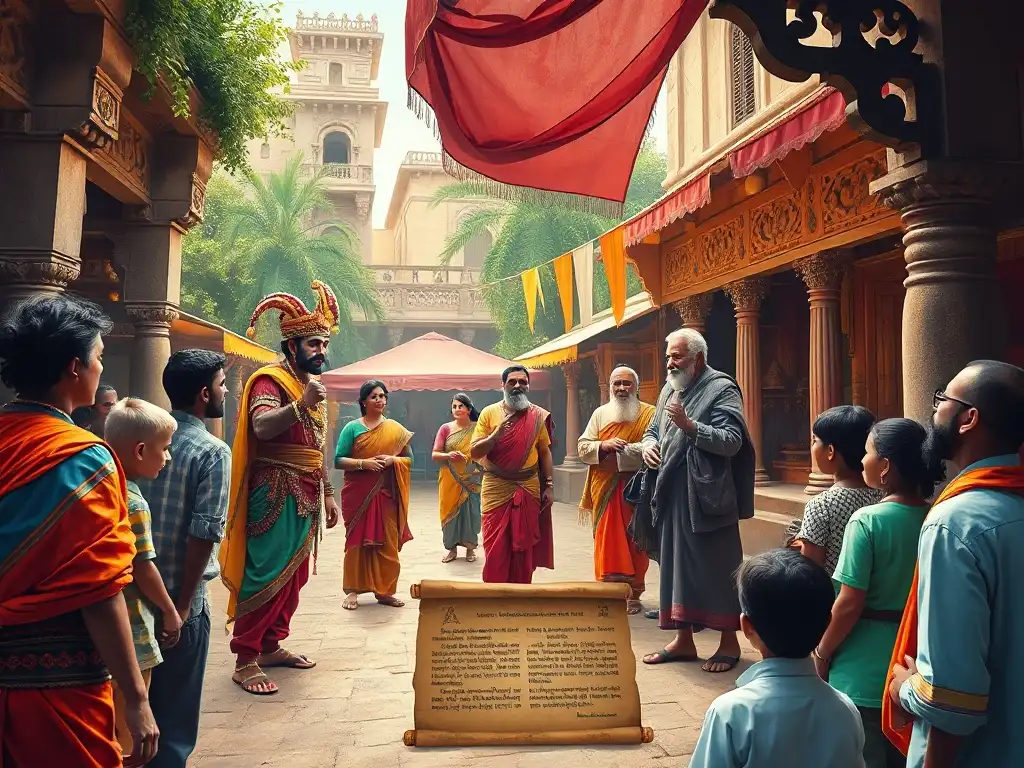
Ancient Indian satire and performance served as a powerful medium for social commentary, reflecting the complexities of society, culture, and politics. Through various forms of performance, such as folk theater, dance, and storytelling, performers utilized satire to address pressing issues, critique social norms, and challenge authority. The themes and subjects explored in these performances often revolved around the following key areas:
Satirical performances in ancient India frequently focused on the social hierarchies that defined the lives of individuals from different classes. By employing humor and irony, performers highlighted the absurdities and injustices associated with rigid caste systems and class distinctions.
- Role of the Jester and Clown: Characters such as jesters or clowns served as vehicles for social critique. These figures often belonged to lower castes, allowing them a unique position to mock the elite without facing severe repercussions. Their performances could be seen as a way to express frustrations from the lower strata of society.
- Folk Theater Traditions: Various folk theater forms, like Nautanki and Tamasha, showcased stories that depicted the struggles of the common man against the upper classes. These narratives often used exaggerated characters and situations to expose the follies of the wealthy and powerful.
- Example: In the performance of Nautanki, a popular folk theater form, the themes often revolved around the conflict between the rich landlord and the poor peasant, accentuating the disparities and injustices inherent in the social structure.
Gender Roles and Satire: Challenging Norms through Performance
Another significant aspect of ancient Indian satire was its focus on gender roles and the critique of societal expectations placed upon women. Performers used satire to challenge prevailing norms and provoke discussions about gender equality and women's rights.
- Subversion of Stereotypes: Female characters in satirical performances often subverted traditional gender roles by portraying strong, independent figures who questioned male authority. This allowed for a re-examination of women's place in society.
- Use of Wit and Irony: Female performers employed wit and irony to highlight the limitations imposed on women. Through clever dialogue and comedic scenarios, they exposed the absurdity of gender-based restrictions.
- Example: The Kathakali dance-drama often featured female characters who, through their portrayal on stage, critiqued the patriarchal norms, showcasing the strength and resilience of women.
Political Commentary: Satire as a Form of Resistance
Political satire was another prominent theme in ancient Indian performances, where artists used their craft to comment on and resist oppressive governance. This form of satire allowed performers to address contemporary political issues in a veiled manner, often avoiding censorship.
- Critique of Rulers and Policies: Satirical performances often included characters that represented corrupt rulers or unjust policies. By exaggerating their flaws, performers could safely critique the political landscape without direct confrontation.
- Allegorical Storytelling: Many performances utilized allegory to convey political messages, allowing audiences to grasp deeper meanings while engaging with entertaining narratives. This method provided a layer of protection for the performers.
- Example: The Koodiyattam, an ancient Sanskrit theater form, often included stories that reflected the political climate of the time, using humor and satire as a means of resistance against tyranny.
Ancient Indian satire and performance played a crucial role in addressing various social issues, challenging norms, and providing a platform for resistance against political oppression. The themes of social hierarchies, gender roles, and political commentary continue to resonate, reflecting the enduring power of satire in the performing arts.
Techniques and Styles of Satirical Performance
Use of Humor and Irony in Ancient Indian Satirical Arts
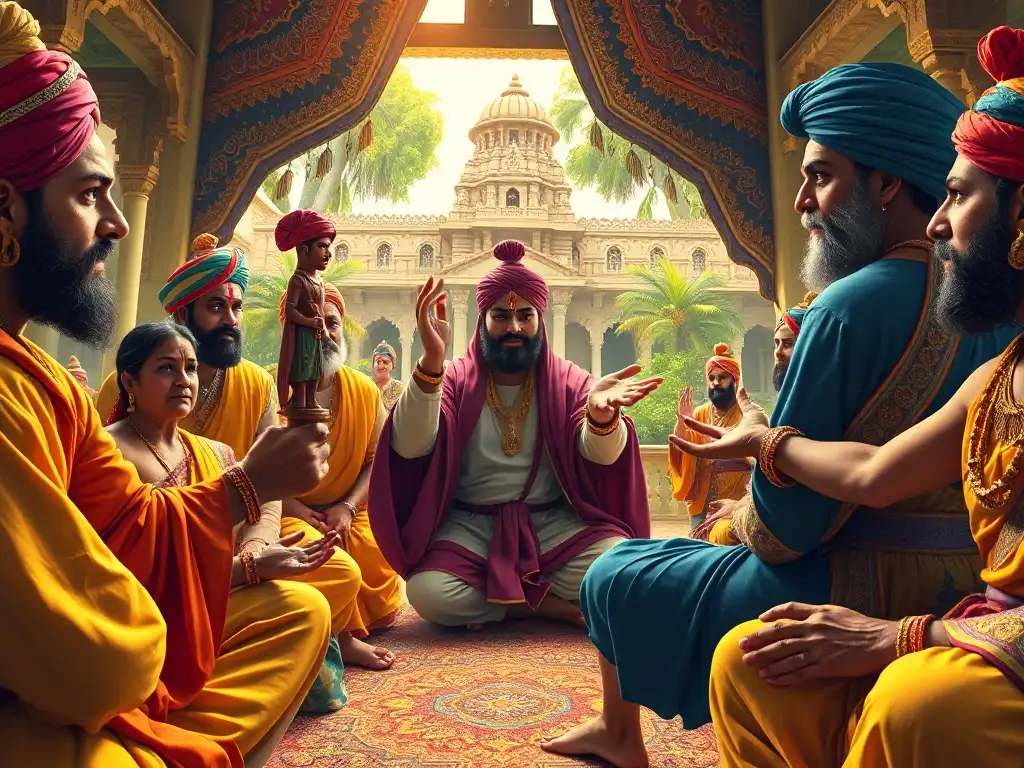
Humor and irony were pivotal in the performance arts of ancient India, serving as essential tools for social commentary. Ancient Indian satirical performances often employed a range of comedic techniques to critique societal norms, political structures, and cultural practices.
- Forms of Humor: Various forms of humor were utilized, including:
- Wordplay: Clever puns and linguistic dexterity not only entertained but also revealed deeper truths about societal issues.
- Exaggeration: By amplifying characteristics of individuals or societal norms, performers highlighted absurdities, prompting audiences to reflect critically on their realities.
- Irony: The juxtaposition of expected outcomes against reality served to expose contradictions within society. For instance, a character expected to be wise might display foolishness, thus critiquing the very nature of wisdom.
- Notable Works: One of the most significant texts showcasing humor and irony is "Kālidāsa's "Mālavikāgnimitram". In this play, the use of mistaken identities and comedic situations illustrates the folly of rigid social structures and the absurdity of certain customs.
- Cultural Context: The satirical elements in ancient Indian performances often drew from the audience's shared cultural experiences. This connection enhanced the humor and irony, making the social commentary more poignant and relatable.
Symbolism and Metaphor in Performative Satire
Symbolism and metaphor emerged as powerful devices in ancient Indian satire, enabling performers to convey complex social critiques through layered meanings. These elements transformed simple narratives into profound reflections on society.
- Symbolic Characters: Characters often represented broader societal archetypes. For instance, a greedy merchant might symbolize the pitfalls of materialism, while a wise fool could embody the wisdom hidden within naivety. This use of symbolism allowed audiences to engage with the themes on multiple levels.
- Metaphorical Situations: Performers crafted scenarios that served as metaphors for real-life issues. An example can be found in the "Natyashastra," where the use of theatrical devices like "Rasa" represents emotional states that resonate with societal themes, such as love, conflict, and despair.
- Visual Symbolism: Costumes, props, and stage settings played significant roles in conveying satire. Bright colors might indicate folly, while dark tones could signal seriousness or oppression. Such visual cues helped underline the satirical message, making it accessible even to those less familiar with the spoken language.
Audience Engagement: The Role of the Spectator in Satirical Works
The dynamic between performers and the audience was crucial in ancient Indian satire, as engagement transformed mere entertainment into a participatory critique of society.
- Interactive Elements: Many performances incorporated audience interaction, inviting spectators to respond or even participate in the narrative. This engagement fostered a sense of community and shared reflection on societal issues. For example, "Harikatha" performances often invited audience reactions, creating a dialogue between the storyteller and the spectators.
- Cultural Reflection: The audience's reaction to satirical performances was indicative of their societal consciousness. Laughter, applause, or even discomfort revealed the collective sentiments towards the subjects being critiqued. This feedback loop allowed performers to adapt their content to resonate more deeply with contemporary issues.
- Educational Role: Satirical performances served not only as entertainment but as a means of education. Audiences were encouraged to examine their values and beliefs critically. The laughter elicited by humor often masked a deeper reflection on the absurdities of life, prompting spectators to reconsider their perspectives on social norms and injustices.
By employing humor, metaphor, and engaging audiences, ancient Indian performers adeptly used satire as a vehicle for social commentary, leaving a lasting impact on the cultural fabric of their society.
Case Studies of Notable Satirical Performances
Ancient Indian satire and performance played a pivotal role in shaping social dialogue, often reflecting the prevailing attitudes and norms of society. By analyzing specific notable performances, we can gain insight into how satire was utilized as a tool for social commentary.
Analysis of "Mrichhakatika" and Its Impact
"Mrichhakatika," also known as "The Clay Cart," is a remarkable play attributed to the ancient playwright Sudraka, dating back to around the 2nd century BCE to 2nd century CE. The play intricately weaves social issues and class struggles into its narrative, making it a quintessential example of ancient Indian satire.
- Plot Overview: The story revolves around the love affair between Charudatta, a nobleman fallen on hard times, and Vasantsena, a courtesan of great beauty and intellect. Their relationship is tested by social barriers and moral dilemmas, providing fertile ground for satirical commentary on class distinctions.
- Satirical Elements:
- Social Hierarchies: The play critiques the rigid caste system and the moral hypocrisy of the upper class. Characters in positions of power are often depicted as corrupt and morally weak, contrasting sharply with the honor and integrity of Charudatta.
- Humor and Irony: Sudraka employs humor—through witty dialogues and ironic situations—to highlight the absurdities of societal norms. For example, the interactions between the characters often reveal the foolishness of societal expectations regarding love and class.
- Impact: "Mrichhakatika" not only entertained audiences but also provoked thought on the social injustices of the time. Its satire inspired future generations of playwrights and performers, establishing a tradition of using theater as a means of social critique.
The Reception and Legacy of "Shakuntala"
"Shakuntala," written by the renowned playwright Kalidasa in the 4th to 5th century CE, is another significant work that incorporates elements of satire within its romantic narrative. While primarily a romantic drama, "Shakuntala" also provides poignant social commentary, particularly regarding the roles of women and the nature of love.
- Plot Overview: The story follows Shakuntala, a beautiful maiden, and her love for King Dushyanta. Their love, however, is complicated by a curse that causes the king to forget her, leading to a series of events that challenge societal norms.
- Satirical Commentary:
- Gender Roles: Kalidasa subtly critiques the expectations placed on women in ancient society. Shakuntala's strength and agency in navigating her circumstances are highlighted, contrasting with the passive roles often assigned to women in literature.
- Divine Interventions: The play's use of supernatural elements serves to satirize the reliance on fate and divine will in personal affairs, provoking audiences to reflect on the nature of love and human agency.
- Reception and Legacy: Upon its debut, "Shakuntala" was met with acclaim and has since become one of the cornerstones of Indian literature. Its blend of romance and satire has influenced countless adaptations in various forms, from theater to ballet, and continues to resonate with audiences today. The play cemented Kalidasa's reputation as a master of poetic drama, and its enduring legacy underscores the significance of satire in ancient Indian performance arts.
Both "Mrichhakatika" and "Shakuntala" exemplify how ancient Indian performers used satire to convey social commentary, reflecting the complexities of human relationships and societal structures. Through their clever narratives and rich character development, these works illustrate the profound impact of satire in ancient Indian theater.
Conclusion: The Legacy of Ancient Indian Satire and Performance
The intricate tapestry of ancient Indian satire and performance not only provides insight into the socio-political landscape of its time but also sets a precedent for modern artistic expressions. Through various forms such as Natya Shastra, folk performances, and classical dramas, ancient performers utilized satire as a powerful tool for social commentary. This legacy continues to resonate in contemporary Indian theater, where the echoes of past performances inspire new generations of artists to explore societal issues through humor and critique.
The blend of humor and critique found in ancient satirical performances laid the groundwork for a rich tradition of storytelling that captures the complexities of human experience. Modern performers, while often detached from the historical contexts of these traditions, draw from the same well of inspiration, reminding audiences of the enduring power of laughter as a means of reflection and change.
Lasting Influence of Satirical Arts on Modern Indian Theater
The impact of ancient Indian satire on contemporary theater is profound and multifaceted. Modern Indian theater has absorbed the essence of these ancient forms, incorporating satire as a method for challenging societal norms and prompting critical discussions.
- Integration of Themes:
- Many modern plays tackle themes of corruption, social injustice, and gender roles, much like their ancient counterparts.
- For instance, playwrights such as Vijay Tendulkar and Habib Tanvir have utilized satire to address pressing social issues, echoing the comedic critiques of ancient dramas.
- Performance Styles:
- The performance techniques derived from ancient traditions, such as Koodiyattam and Kathakali, are still influential in modern theatrical expressions.
- These styles often incorporate elements of satire, allowing performers to engage audiences with both humor and depth.
- Cultural Relevance:
- Satirical performances in modern times often reflect the socio-political climate of India, allowing artists to comment on current affairs while keeping the audience entertained.
- This relevance reinforces the notion that satire is not merely a relic of the past but a living art form that adapts to contemporary issues.
Reflections on the Relevance of Ancient Satire Today
The essence of ancient Indian satire remains strikingly relevant in today's society. As the world grapples with various challenges—from political turmoil to social injustices—the need for a critical lens through which to view these issues becomes increasingly important.
- Social Commentary:
- Just as ancient performers used satire to critique rulers and societal norms, contemporary artists leverage humor to address issues such as inequality, environmental concerns, and political corruption.
- Public Engagement:
- Modern satirical performances often engage with audiences in ways that provoke thought and discussion, much like ancient forms did in their own time. The immediacy of satire invites audiences to reflect on their beliefs and the world around them.
- Cultural Exchange:
- The globalized nature of today's society allows for a cross-pollination of ideas where ancient Indian satire can influence and be influenced by other cultures. This exchange enriches the tapestry of global performance arts, ensuring that the legacy of ancient satire continues to evolve.
The rich tradition of ancient Indian satire and performance not only contributes to our understanding of historical contexts but also serves as a vital force in contemporary artistic expression. By bridging the past and present, these performances remind us that humor can be a powerful vehicle for social change, making the lessons of ancient India as relevant today as they were centuries ago.
Frequently Asked Questions
What role did satire play in ancient Indian performances?
Satire in ancient Indian performances served as a powerful tool for social commentary, allowing performers to critique societal norms, politics, and cultural practices through humor and irony.
How did ancient Indian performers convey their messages through satire?
Performers utilized various forms of satire, such as dance, drama, and poetry, to engage audiences while addressing serious topics in a more approachable and entertaining manner.
Can you give examples of ancient Indian texts that include satire?
Notable texts like the Natyashastra and works by playwrights such as Bhasa and Kalidasa incorporate satirical elements, showcasing the blend of entertainment and social critique prevalent in their time.
What impact did satire have on society in ancient India?
Satire had a significant impact on shaping public opinion, encouraging critical thinking, and fostering dialogue about important issues in ancient Indian society, often leading to social change.
How does the tradition of satire in ancient Indian performance influence modern Indian art?
The rich tradition of satire in ancient performances continues to influence contemporary Indian art forms, inspiring modern theater, cinema, and literature to use humor as a means of social critique.
Final Reflection: The Enduring Legacy of Ancient Indian Satire in Performance
The art of satire in ancient Indian performance remains profoundly relevant today, as it serves as a powerful tool for social commentary and critique. In a world where the lines between truth and fiction often blur, the ability to convey complex societal issues through humor and performance is more important than ever. Ancient Indian performers harnessed satire not just to entertain, but to provoke thought and inspire change—a striking reminder of the role art plays in shaping our understanding of the world.
Cultural narratives shaped by satire continue to resonate in contemporary society, influencing how we perceive and respond to social injustices. The legacy of these ancient performers is evident in modern forms of expression, from theater to digital media, where satire remains a vital means of challenging the status quo. As playwright and satirist Tom Stoppard once said, “The only reason for being a professional writer is that you can’t help it.” This sentiment echoes the passion and necessity that drove ancient Indian performers to use their craft as a mirror reflecting society's flaws and absurdities.
As we reflect on the lessons from ancient Indian satire, let us consider how we can incorporate these insights into our own lives. I invite you to embrace the spirit of satire as a means of engaging with the world around you. Whether through writing, art, or conversation, challenge yourself to use humor and creativity to address the issues that matter most. In doing so, you not only honor the legacy of those ancient performers but also contribute to a vibrant dialogue that can inspire change and foster understanding in our communities.
Unleash the Power of Satire: Take Action Today!
Thank you for exploring the fascinating world of how ancient Indian performers used satire to deliver powerful social commentary! We hope you’ve gained insight into the compelling ways humor shaped societal perspectives and discussions. Now, it's your turn to engage and contribute to this enriching dialogue!
Here are a few steps you can take right now:
- Share Your Insights: Express your thoughts on how satire can influence modern social issues on your social media platforms. Tag us to spark a broader conversation!
- Explore Further: Dive deeper into the art of satire! Discover more articles on our website or explore books and documentaries that highlight these ancient traditions.
- Join the Community: Participate in our discussion forum to connect with fellow history enthusiasts and share your interpretations of satire in contemporary contexts.
What new perspectives on satire do you believe can challenge or inspire today’s social discourse? We can't wait to hear your thoughts!