

Judicial Practices and Courts


Judicial Practices and Courts
39 articles in this topic
Start here
- Judicial Practices and CourtsAncient Indian Law Codes: A Comparative Study with Other Ancient Civilizations
- Judicial Practices and CourtsThe Impact of Trade on Legal Systems in Ancient Indian Civilizations
- Judicial Practices and CourtsLegal Disputes in the Indus Valley Civilization: Evidence from Archaeology
Read more about this topic
Explore Judicial Practices and Courts in ancient India to discover how justice, law, and social order shaped early civilizations. Learn about traditional legal principles, royal courts, dispute resolution, judges, punishments, and influential Dharmaśāstra texts that guided governance from the Vedic age through the Maurya and Gupta periods. ⚖️ Gain valuable insight into the evolution of ancient Indian legal systems, courtroom customs, and judicial authority.
More in Judicial Practices and Courts

Judicial Practices and Courts
Decoding the Legal Codes of Ancient India: What They Reveal About Society

Judicial Practices and Courts
Women in Ancient Indian Law: Their Rights and Roles in Judicial Practices

Judicial Practices and Courts
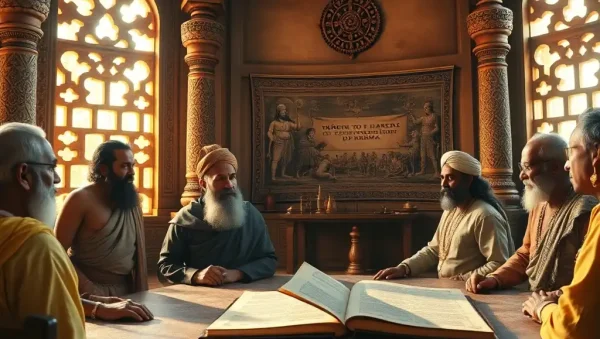
The Intersection of Morality and Law in Ancient Indian Judicial Practices
Judicial Practices and Courts
The Influence of Vedic Texts on Judicial Practices in Ancient India

Judicial Practices and Courts
Mediation and Conflict Resolution: Traditional Practices of Justice in Ancient India

Judicial Practices and Courts
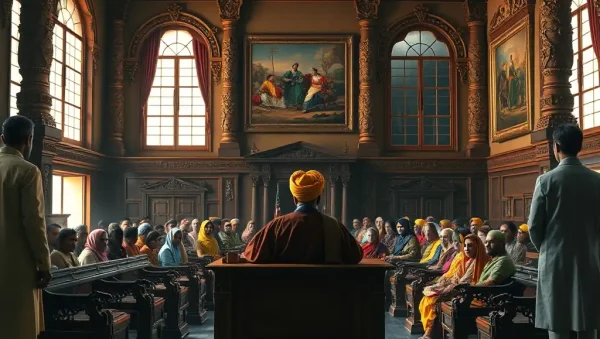
The Role of Kings and Rulers in Ancient Indian Judicial Systems
Judicial Practices and Courts
The Impact of Colonialism on Ancient Indian Judicial Traditions and Practices
Judicial Practices and Courts
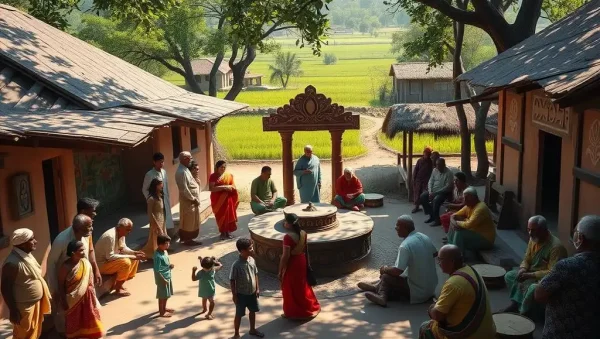
The Panchayat System: Grassroots Justice in Ancient Indian Communities
⚖️ Judicial Practices and Courts in Ancient India
Explore the development of judicial practices and courts in ancient India through the legal traditions, royal institutions, community customs, and ethical principles that shaped justice from the Indus Valley Civilization to the Gupta Empire. This subcategory examines how ancient Indian societies understood law, punishment, evidence, contracts, property, family disputes, crime, and the responsibilities of rulers and judges. Discover the relationship between Dharma, Rajadharma, customary law, and early Indian legal texts, including the Dharmashastras, Arthashastra, and other historical sources.
🏛️ Royal Courts and Ancient Indian Judicial Institutions
Learn how kings, royal advisers, judges, ministers, and local officials participated in the administration of justice. Ancient Indian courts were often connected to the authority of the monarch, whose duty was to protect social order, uphold Dharma, settle disputes, and punish wrongdoing. Readers can explore the structure and function of royal courts, superior tribunals, village assemblies, guild councils, and other forums that addressed legal matters.
This section provides insight into ancient Indian court systems, judicial hierarchy, legal administration, and the responsibilities of rulers. It also considers how political power, social organization, regional customs, and religious ideals influenced court decisions and the practical delivery of justice across different kingdoms and historical periods.
📜 Dharma, Rajadharma, and Sources of Law
Understand the central role of Dharma in ancient Indian law and judicial thought. Dharma represented moral duty, social responsibility, proper conduct, and the principles believed to maintain cosmic and social order. In legal contexts, it influenced decisions involving inheritance, marriage, contracts, crime, punishment, property, and obligations between individuals and communities.
Readers will also discover how legal ideas were preserved in sources such as the Manusmriti, Yajnavalkya Smriti, Narada Smriti, Arthashastra, epic literature, inscriptions, and customary practices. These sources offer valuable evidence about ancient Indian legal codes, although they must be interpreted carefully because textual ideals did not always reflect everyday practice.
⚖️ Judges, Evidence, and Legal Procedure
Explore the methods used to investigate disputes and establish truth in ancient Indian courts. Judicial procedures could involve witness testimony, written agreements, oaths, documents, possession, reputation, confession, and other forms of evidence. Judges were expected to examine the facts of a case while considering legal principles, social duties, local customs, and the credibility of those involved.
This section explains important aspects of ancient Indian legal procedure, including petitions, hearings, testimony, cross-examination, judicial reasoning, and the role of impartial decision-making. It also examines the historical use of ordeals and religious oaths, placing these practices within the broader context of ancient justice systems rather than viewing them through modern legal standards alone.
🏘️ Village Assemblies, Guilds, and Community Justice
Not every dispute in ancient India was decided by a royal court. Village councils, family groups, caste-based organizations, merchant guilds, professional associations, and local assemblies often played an important role in resolving conflicts. These community institutions helped settle disagreements involving land, trade, debt, marriage, inheritance, professional conduct, and social obligations.
Discover how local dispute resolution in ancient India operated alongside royal authority. Community justice could be faster and more closely connected to local customs, while guilds and assemblies often possessed specialized knowledge of commercial and occupational matters. This topic reveals the decentralized nature of ancient Indian law and the importance of collective responsibility in maintaining social harmony.
💰 Civil Law, Contracts, Property, and Economic Disputes
Study the rules and judicial practices governing everyday economic life in ancient Indian society. Courts and legal authorities dealt with loans, debts, deposits, sales, partnerships, wages, business agreements, land ownership, boundary disputes, inheritance, and damage to property. Merchants, farmers, artisans, householders, and guild members could all become involved in civil litigation.
Readers can expect detailed coverage of ancient Indian civil law, commercial regulations, contractual obligations, debt recovery, property rights, and legal remedies. These subjects demonstrate that ancient Indian legal traditions addressed complex economic relationships and developed procedures for protecting ownership, honoring agreements, and compensating those who suffered financial loss.
🚨 Crime, Punishment, and Criminal Justice
Examine how ancient Indian courts defined wrongdoing and responded to crimes such as theft, fraud, assault, robbery, false testimony, corruption, and offenses against the state. Punishments could include fines, restitution, corporal penalties, imprisonment, banishment, public disgrace, or, in serious cases, capital punishment. The severity of a penalty could depend on the offense, the circumstances, social status, intent, and the authority of the victim or offender.
This section explores criminal law in ancient India and the theory of punishment known as Danda. According to many legal and political texts, punishment was intended to deter crime, protect society, restore order, and reinforce royal authority. The discussion also highlights differences between prescriptive texts and the historical realities of law enforcement.
👥 Social Order, Rights, and Access to Justice
Ancient Indian judicial practices were shaped by social hierarchy, family structures, occupation, gender, caste, religion, and political status. Legal texts sometimes prescribed different penalties or responsibilities for different social groups, revealing the unequal nature of many ancient legal systems. At the same time, courts, assemblies, and customary institutions provided mechanisms through which individuals and communities could raise grievances.
Readers will gain a balanced understanding of justice and social order in ancient India, including the position of women, merchants, laborers, foreigners, religious communities, and marginalized groups. This historical approach distinguishes between legal ideals, social norms, and lived experiences while encouraging critical analysis of the strengths and limitations of ancient Indian jurisprudence.
🔍 Frequently Asked Questions About Judicial Practices and Courts
What were the main courts in ancient India?
Ancient India had several types of judicial forums, including royal courts, administrative tribunals, village assemblies, family councils, guild courts, and community-based councils. The royal court generally handled serious disputes and appeals, while local institutions often resolved everyday conflicts involving property, trade, family matters, and customary law.
What was the role of the king in ancient Indian justice?
The king was traditionally regarded as the highest judicial authority and was responsible for protecting the people, enforcing law, and preserving Dharma. Through appointed judges, ministers, and officials, the ruler supervised courts, investigated serious offenses, issued punishments, and ensured that disputes were settled according to legal principles and accepted customs.
What sources describe ancient Indian legal practices?
Important sources include the Arthashastra, the Dharmashastras, the Manusmriti, the Yajnavalkya Smriti, the Narada Smriti, epic literature, Buddhist and Jain texts, inscriptions, archaeological evidence, and regional traditions. These sources should be compared because many legal texts describe ideal rules rather than documenting every aspect of daily judicial practice.
How was evidence presented in ancient Indian courts?
Evidence could include witnesses, documents, contracts, possession, oaths, testimony, reputation, confessions, and circumstantial facts. Judges were expected to consider the reliability of witnesses and the consistency of evidence. In some contexts, religious oaths and ordeals were also used, reflecting the spiritual and moral framework of ancient Indian judicial procedure.
How were crimes punished in ancient India?
Punishments included fines, compensation, restitution, corporal penalties, imprisonment, banishment, public censure, and execution for certain serious offenses. The punishment often depended on the nature of the crime, the offender’s intent, the social circumstances, and the legal tradition being applied. The concept of Danda connected punishment with the protection of society and the preservation of order.