

Property and Inheritance Laws
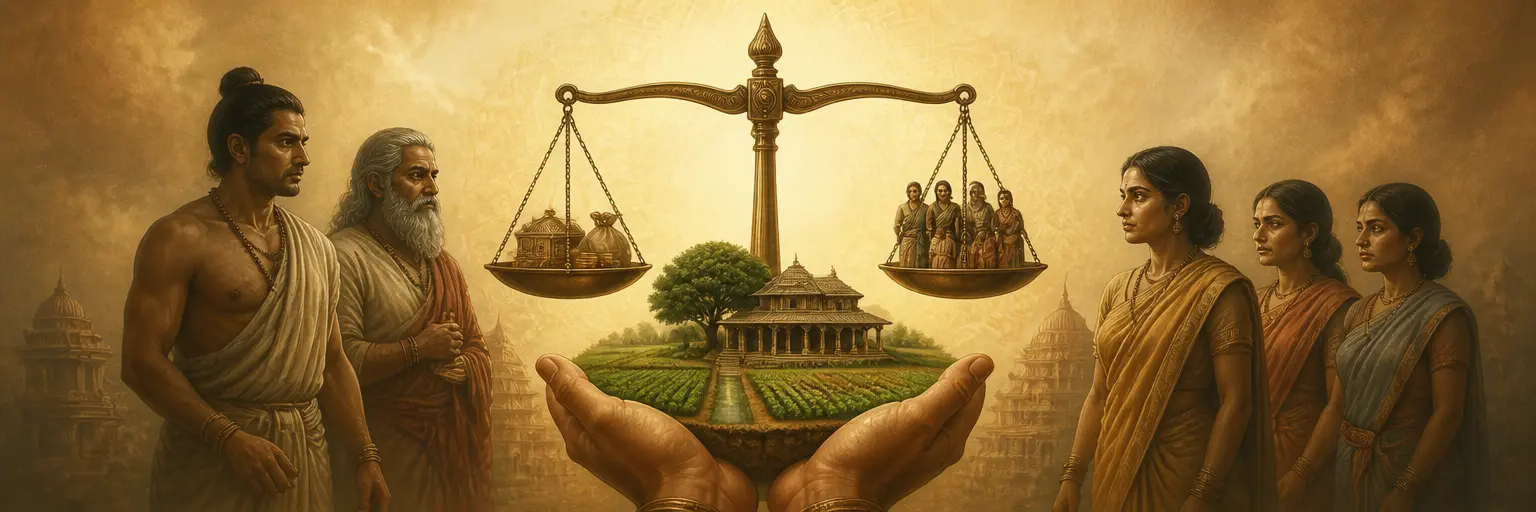

Property and Inheritance Laws
41 articles in this topic
Read more about this topic
Explore Property and Inheritance Laws in ancient India to discover how land ownership, family wealth, succession, and social obligations were governed across different periods. Learn how legal traditions and sacred texts shaped ancestral property rights, inheritance practices, women’s ownership, and community responsibilities—offering valuable insight into the legal systems, social structure, and cultural heritage of ancient Indian civilizations.
More in Property and Inheritance Laws

Property and Inheritance Laws
A Deep Dive into the Property Rights of Different Castes in Ancient India

Property and Inheritance Laws
Land Reforms in Ancient India: An Exploration of Historical Practices

Property and Inheritance Laws
How Ancient Indian Literature Reflects Property and Inheritance Laws
Property and Inheritance Laws
Property Disputes in Ancient India: Case Studies and Resolutions

Property and Inheritance Laws
Analyzing the Legal Framework of the Mauryan Empire: Property and Inheritance

Property and Inheritance Laws
The Intersection of Ethics and Law in Ancient Indian Property Rights

Property and Inheritance Laws
The Transition of Property Laws Through Different Dynasties in Ancient India

Property and Inheritance Laws
The Role of Land Grants in Ancient Indian Society
⚖️ Property and Inheritance Laws in Ancient India
Explore the development of property and inheritance laws in ancient India, a vital part of the legal systems and law codes that shaped family life, social order, ownership, and succession. This subcategory examines how ancient Indian civilizations—from the Indus Valley Civilization through the Vedic period, Mauryan Empire, and Gupta Empire—understood land, wealth, family property, inheritance rights, and legal responsibility. Discover how sources such as the Dharmashastras, Arthashastra, epigraphic records, and historical traditions reveal the principles governing property ownership and the transfer of assets in early Indian society.
📜 Ancient Indian Property Law and Ownership
Learn how ancient Indian legal traditions defined property ownership, possession, land rights, household wealth, movable goods, livestock, and agricultural resources. Articles in this section explain the distinction between personal property, family property, royal property, temple property, and community resources, while placing these ideas within the broader history of ancient Indian law codes.
Readers can expect clear discussions of land grants, boundaries, ownership disputes, purchase agreements, gifts, debts, and property documentation. By examining legal texts and historical evidence, this subcategory shows how courts, rulers, village assemblies, and local authorities helped regulate property rights and maintain social stability.
👨👩👧👦 Family Inheritance and Succession Rules
Discover how inheritance laws in ancient India governed the transfer of property after a person’s death. Topics include succession by sons, family inheritance, ancestral property, division of estates, rights of dependents, and the role of lineage in determining legal claims. These rules provide insight into the structure of ancient Indian households and kinship systems.
The content also explores how inheritance practices differed according to social status, regional custom, religious interpretation, and family circumstances. Readers will learn how ancient legal traditions addressed multiple heirs, adopted children, childless households, widows, and disputes involving ancestral wealth.
👩⚖️ Women’s Property Rights and Stridhana
Examine the concept of stridhana, or women’s property, and its importance in ancient Indian inheritance law. This may include gifts received before or after marriage, jewelry, personal wealth, and property given by relatives. Historical articles explain how legal texts described women’s rights to control, use, or inherit different forms of property.
This section presents the subject with historical context, recognizing that women’s property rights varied across time, region, family structure, and legal interpretation. Readers can explore the position of wives, mothers, daughters, widows, and female heirs within the broader framework of ancient Indian family law.
🏛️ Land Grants, Revenue, and Royal Property
Ancient Indian kingdoms relied on systems of land administration, taxation, and royal authority. Learn how rulers managed agricultural land, assessed revenue, confirmed boundaries, and issued grants to officials, religious institutions, Brahmins, and communities. Copper-plate inscriptions and other records provide valuable evidence of land ownership and property transfer.
These discussions connect property law with political history, economic organization, and the administration of ancient empires. Readers can understand how land grants influenced village life, agricultural production, religious centers, and the relationship between royal power and local communities.
⚔️ Property Disputes, Evidence, and Legal Remedies
Explore how ancient Indian legal systems addressed disputes over land, inheritance, debts, contracts, boundaries, possession, and unauthorized transfers. Legal texts often described forms of evidence, including witnesses, documents, possession, oaths, and customary practice. These principles demonstrate the importance of courts and judicial officials in resolving property conflicts.
Readers will also discover the penalties and remedies associated with property violations, fraud, theft, encroachment, and false claims. The content explains how kings, judges, village councils, and community authorities contributed to the enforcement of property and inheritance laws.
📚 Dharmashastras, Arthashastra, and Legal Sources
Study the major sources used to understand ancient Indian property law, including the Manusmriti, Yajnavalkya Smriti, Narada Smriti, and Kautilya’s Arthashastra. These works discuss ownership, succession, contracts, debts, judicial procedure, taxation, and the duties of rulers and subjects.
Because legal texts often present ideals rather than a complete record of everyday practice, this subcategory compares literary sources with inscriptions, archaeological discoveries, and historical research. This approach helps readers distinguish between legal theory, regional custom, and the lived experience of ancient Indian communities.
❓ Frequently Asked Questions About Property and Inheritance Laws
What were property and inheritance laws in ancient India?
Property and inheritance laws in ancient India were rules governing ownership, possession, land, family wealth, succession, debts, gifts, and the transfer of assets. They were influenced by religious legal texts, royal regulations, local customs, and judicial practices.
Who could inherit property in ancient Indian families?
Inheritance commonly followed family lineage, with sons frequently receiving ancestral property. However, rules could vary according to the legal text, region, family circumstances, the presence of daughters or widows, adoption, and customary practice.
What was stridhana in ancient Indian law?
Stridhana referred to property belonging to a woman, often including gifts, jewelry, personal wealth, and assets received from relatives. Ancient legal texts differed in how they described a woman’s control over stridhana and the rights of heirs after her death.
Which texts describe ancient Indian inheritance laws?
Important sources include the Manusmriti, Yajnavalkya Smriti, Narada Smriti, and the Arthashastra. Inscriptions, land grants, archaeological evidence, and regional traditions also help historians understand how these rules operated in practice.
How were property disputes resolved in ancient India?
Property disputes could be considered by royal courts, judges, village assemblies, or community authorities. Evidence might include documents, witnesses, possession, boundary markers, customary practice, and oaths, with penalties or restitution imposed when claims were proven false or unlawful.