
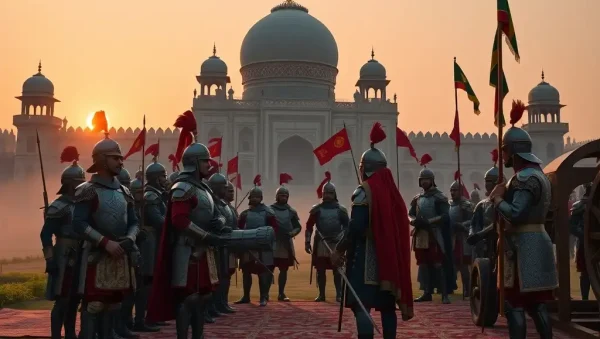
Weapons and Military Technology
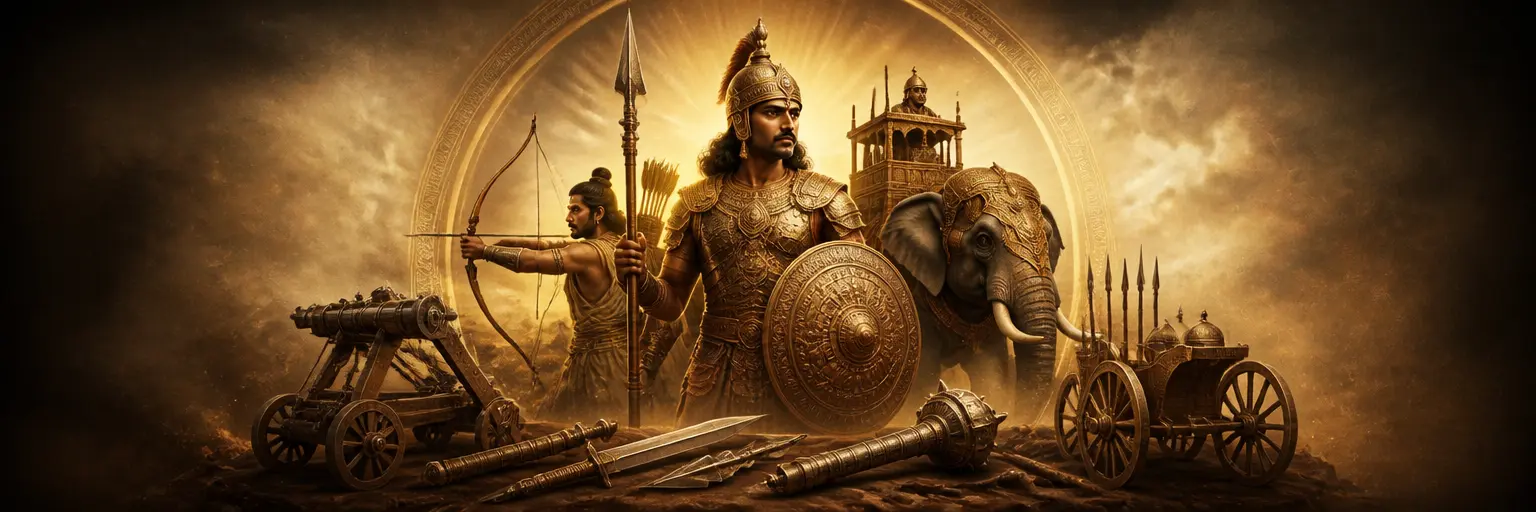

Weapons and Military Technology
55 articles in this topic
Start here
- Weapons and Military TechnologyFortifications and Siege Warfare: Architectural Marvels of Ancient India
- Weapons and Military TechnologyThe Indus Valley: Pioneers of Ancient Military Weapons and Technology
- Weapons and Military TechnologyThe Transition from Feudal to Centralized Military Structures in Ancient India
Read more about this topic
Explore the evolution of weapons and military technology in ancient India, from Indus Valley tools and battlefield innovations to the legendary arms, armor, chariots, elephants, and warfare strategies of the Maurya and Gupta eras. Discover how metallurgy, engineering, military organization, and indigenous knowledge shaped ancient Indian warfare and influenced the subcontinent’s history.
More in Weapons and Military Technology
Weapons and Military Technology
The Ancient Indian Military Calendar: Timing Battles and Campaigns
Weapons and Military Technology
The Legacy of Ancient Indian Warfare: How It Shaped Modern Military Thought
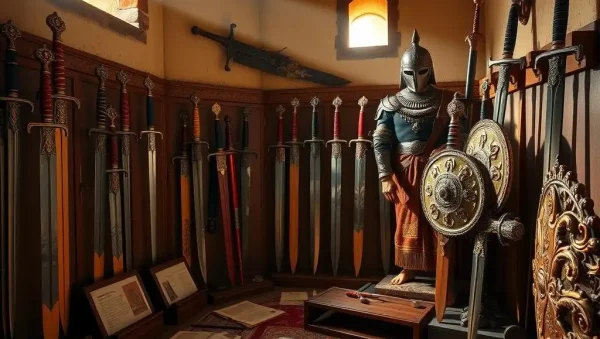
Weapons and Military Technology
From Swords to Shields: A Comprehensive Guide to Ancient Indian Arms
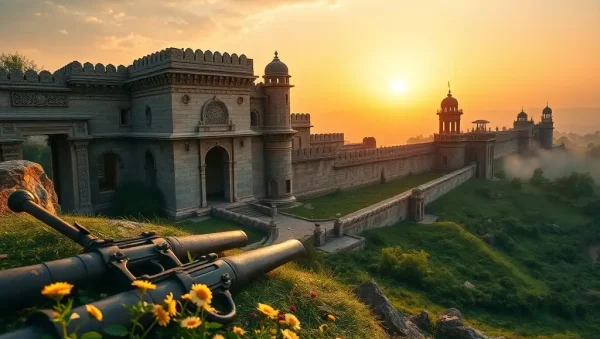
Weapons and Military Technology
The Legacy of Ancient Indian Military Architecture: Forts and Battlefields
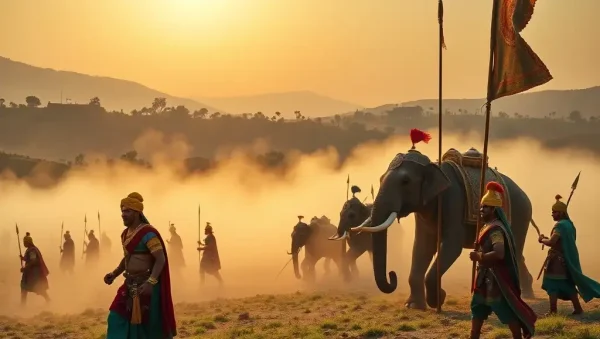
Weapons and Military Technology
Historical Battles of Ancient India: Lessons Learned from the Field
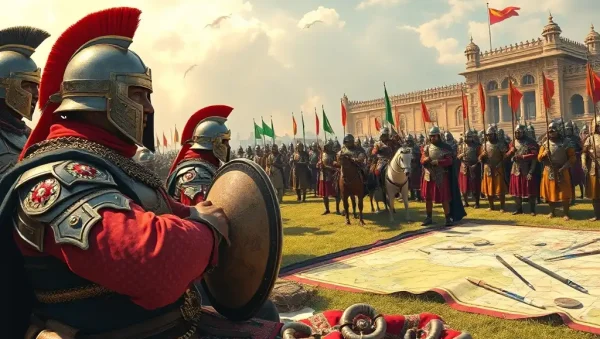
Weapons and Military Technology
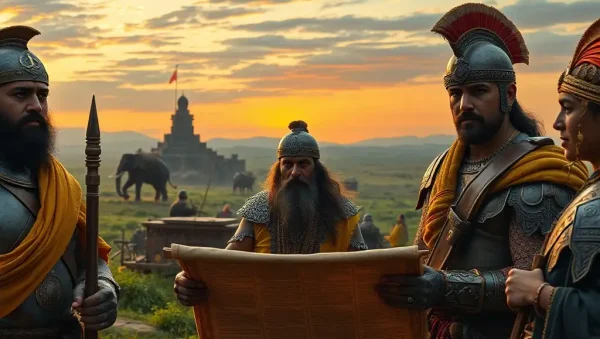
Ancient Warfare: The Intersection of Culture, Technology, and Strategy
Weapons and Military Technology
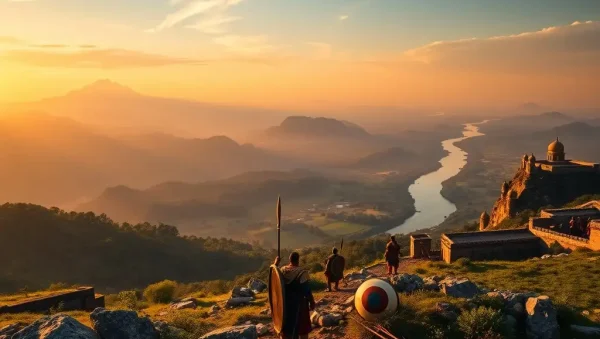
The Art of War: Ancient Indian Texts on Military Strategy and Philosophy
Weapons and Military Technology
The Influence of Geography on Ancient Indian Warfare Tactics
⚔️ Weapons and Military Technology in Ancient India
Explore the development of weapons, armor, fortifications, and military technology in ancient India through the civilizations and kingdoms that shaped the subcontinent. This subcategory examines how armies from the Indus Valley Civilization, Vedic communities, Mauryan Empire, Satavahana period, Kushan age, and Gupta Empire organized warfare, protected cities, and adapted technology to changing political and geographic conditions. Discover the historical importance of bows, swords, spears, chariots, elephants, siege methods, defensive architecture, and naval traditions within the wider study of ancient Indian military history.
🏹 Ancient Indian Weapons and Battlefield Equipment
Learn about the principal weapons used by ancient Indian warriors, including the dhanush or bow, arrows, swords, spears, axes, maces, daggers, and defensive shields. Archaeological discoveries, Sanskrit literature, epic traditions, inscriptions, sculptures, and foreign accounts provide valuable evidence for understanding how these weapons were designed, produced, and used in combat. Readers can explore the materials, craftsmanship, tactical purposes, and cultural symbolism associated with ancient Indian arms.
This section also considers the difference between historical evidence and literary tradition. Texts such as the Arthashastra, the Mahabharata, and the Ramayana preserve important ideas about warfare, but they must be studied alongside archaeological and comparative research. Discover how weapon technology influenced infantry tactics, cavalry operations, royal authority, personal status, and the representation of heroic warriors in ancient Indian culture.
🐘 War Elephants, Chariots, and Ancient Indian Armies
War elephants were among the most distinctive features of ancient Indian warfare. Explore how kingdoms trained, equipped, and deployed elephants to break enemy formations, intimidate opposing forces, carry commanders, and support battlefield operations. This section explains the organization of elephant corps, the role of mahouts, protective equipment, and the strategic advantages and limitations of using elephants in different terrains.
Discover the continuing importance of war chariots, cavalry, and infantry in ancient Indian military systems. From early Vedic warfare to the imperial armies of the Mauryas and Guptas, military forces relied on combinations of mobility, missile weapons, close combat, and disciplined formations. Readers will gain insight into how geography, political organization, animal resources, and military training shaped the structure of ancient Indian armies.
🏰 Fortifications, Siege Warfare, and Military Architecture
Ancient Indian kingdoms constructed fortified cities, citadels, walls, gates, towers, moats, and strategically positioned strongholds to defend territory and control trade routes. Explore the military architecture of sites associated with the Indus Valley Civilization, early historic cities, Mauryan centers, Deccan kingdoms, and Gupta-era settlements. These remains reveal the relationship between urban planning, political power, economic resources, and national defense in ancient India.
Learn how siege warfare and defensive strategy influenced military planning. Ancient Indian sources describe methods involving reconnaissance, supply management, espionage, engineering, blockade, negotiation, and direct assault. This subcategory examines how rulers protected forts, managed long campaigns, and used terrain, water systems, and fortified gateways to resist invading armies and maintain control over important regions.
📜 The Arthashastra and Ancient Indian Military Strategy
Study the military principles preserved in the Arthashastra, traditionally associated with Kautilya or Chanakya. This influential treatise discusses statecraft, intelligence networks, diplomacy, army organization, fortifications, logistics, espionage, weapons, and the conduct of war. It offers an essential source for understanding how ancient Indian political thinkers connected military power with administration, economic strength, and royal authority.
Readers can also compare textual descriptions with evidence from inscriptions, coins, sculptures, archaeological sites, and accounts by travelers such as Megasthenes. By combining multiple sources, this section presents a balanced view of ancient Indian military strategy, including alliances, rival kingdoms, battlefield planning, psychological warfare, and the importance of information in imperial expansion.
🛡️ Armor, Shields, and Protection in Ancient Warfare
Discover how ancient Indian soldiers and commanders protected themselves with shields, helmets, body armor, protective garments, and specialized equipment. Materials may have included leather, metal, wood, textiles, and layered composites, depending on regional resources and military status. Sculptural representations and literary references help researchers reconstruct how defensive equipment was worn and adapted for infantry, cavalry, chariot crews, and elephant forces.
This section explores how armor technology affected mobility, endurance, and combat tactics. Heavier protection could improve survival in close combat, while lighter equipment offered greater speed in hot climates and difficult terrain. The study of shields and armor also reveals differences between elite warriors and ordinary troops, as well as the relationship between military equipment, social hierarchy, craftsmanship, and royal patronage.
🌊 Naval Power, Trade Routes, and Maritime Warfare
Ancient India was connected to major maritime networks across the Indian Ocean, the Arabian Sea, the Bay of Bengal, and Southeast Asia. Explore the ships, ports, navigation traditions, and maritime technologies that supported trade, diplomacy, migration, and cultural exchange. Although evidence for formal naval warfare varies by period, control of harbors and sea routes was an important aspect of economic and strategic power.
Learn how coastal kingdoms and trading centers used maritime knowledge to protect commerce and connect distant regions. The study of ancient Indian naval history includes shipbuilding, coastal defense, river transport, harbor administration, and the movement of military supplies. These topics demonstrate that military technology was not limited to land battles but also involved waterways, trade security, and regional influence.
🔨 Metallurgy, Weapon Production, and Military Innovation
Ancient Indian metalworkers developed sophisticated techniques for producing iron, steel, copper, bronze, and other materials used in weapons and tools. Explore the history of ironworking, forging, casting, heat treatment, and specialized craftsmanship. The famous tradition of high-quality Indian steel, including wootz steel, illustrates the technological knowledge that later attracted attention across Asia and the Middle East.
This section explains how military innovation depended on resources, skilled labor, workshops, and state administration. Weapon production supported armies but also influenced trade, taxation, mining, and urban development. Readers can examine how technological knowledge spread between regions and how innovations in metallurgy contributed to the durability, sharpness, and effectiveness of ancient Indian weapons.
🧭 Military Technology Across Ancient Indian Empires
Compare military systems across major periods, from the Indus Valley Civilization and Vedic age to the Mauryan, Satavahana, Kushan, and Gupta eras. Each period experienced different political conditions, technological resources, military threats, and patterns of cultural contact. This comparative approach helps explain how ancient Indian warfare changed over time rather than presenting it as a single, unchanging tradition.
Explore the influence of regional geography and international exchange on ancient Indian weapons and military technology. Contact with Central Asia, Persia, the Hellenistic world, and Southeast Asia introduced new military practices while Indian kingdoms adapted and transformed them according to local needs. The result was a diverse military heritage shaped by innovation, adaptation, and long-distance cultural interaction.
❓ Frequently Asked Questions About Ancient Indian Weapons and Military Technology
What weapons were commonly used in ancient India?
Common weapons included bows and arrows, swords, spears, axes, maces, daggers, and shields. The specific weapons used depended on the period, region, military unit, available materials, and social status of the warrior. Literary sources, sculptures, inscriptions, and archaeological discoveries provide evidence for the development and use of these ancient Indian arms.
Did ancient Indian armies use war elephants?
Yes. War elephants played a major role in several ancient Indian military traditions, especially among powerful kingdoms and empires. They were used to disrupt enemy formations, carry soldiers and commanders, create psychological pressure, and support attacks. However, elephants also required extensive food, training, and logistical support and could become difficult to control under certain battlefield conditions.
What does the Arthashastra reveal about ancient Indian warfare?
The Arthashastra discusses army organization, forts, intelligence, espionage, diplomacy, logistics, weapons, taxation, and strategies for dealing with rival states. It is one of the most important texts for studying ancient Indian political and military thought, although historians compare it with archaeological and other written evidence before drawing conclusions about actual historical practice.
Were ancient Indians skilled in metallurgy and steel production?
Ancient Indian craftsmen developed advanced knowledge of ironworking and steel production. Indian steel traditions, including wootz steel, became renowned for their quality and were exchanged through long-distance trade. Metallurgical evidence helps historians understand the production of swords, tools, armor, agricultural equipment, and other technologies that supported ancient economies and armies.
How is ancient Indian military technology studied today?
Researchers combine archaeology, battlefield studies, ancient texts, inscriptions, coins, sculptures, metallurgical analysis, fortification surveys, and comparisons with foreign accounts. This interdisciplinary method helps distinguish symbolic descriptions from practical technology and provides a clearer understanding of how ancient Indian armies fought, traveled, manufactured equipment, and defended their kingdoms.