
Notable Battles and Campaigns

Notable Battles and Campaigns
49 articles in this topic
Read more about this topic
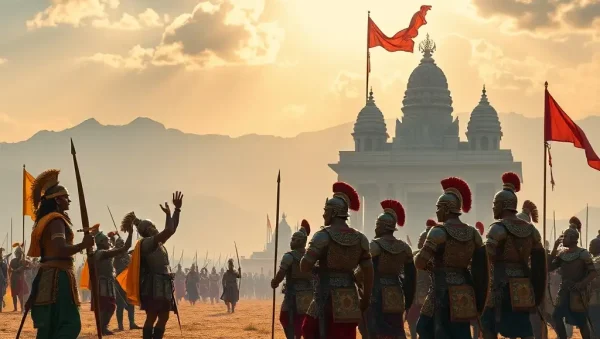
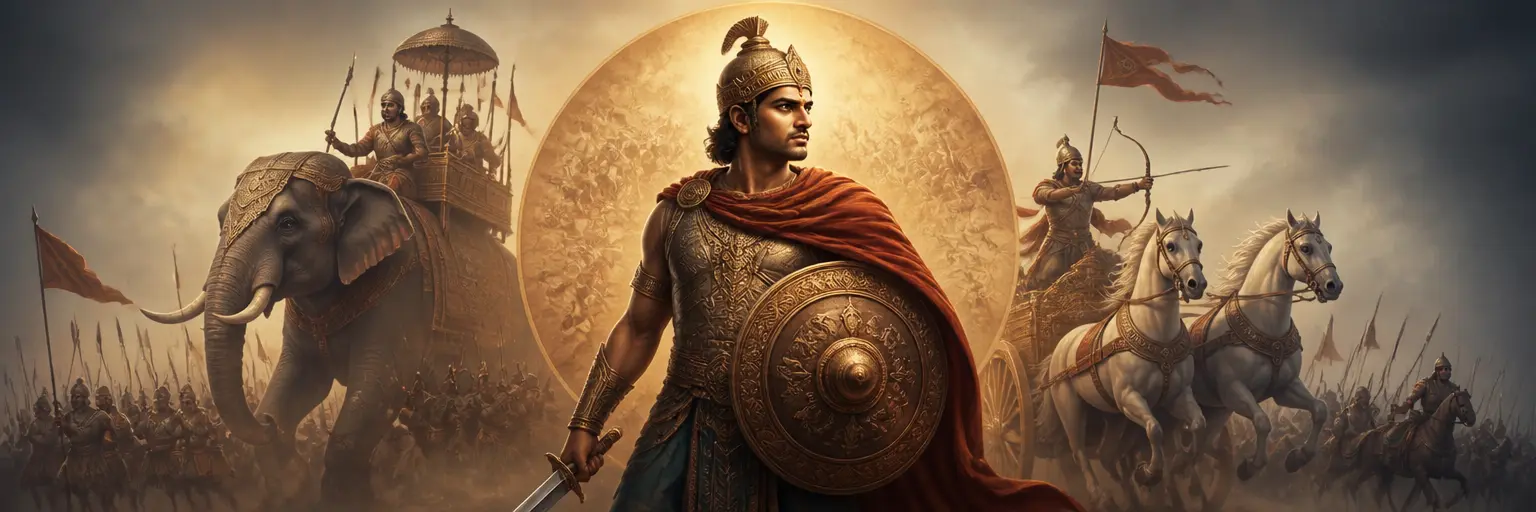
Explore the notable battles and campaigns of ancient India, where strategy, courage, and political ambition shaped the course of history. Discover pivotal conflicts from the Indus Valley era through the Mauryan, Satavahana, Kushan, and Gupta periods, including legendary rulers, battlefield tactics, imperial expansions, and transformative victories. 🛡️ Gain fascinating insights into ancient Indian military history and the campaigns that influenced kingdoms, cultures, and civilizations across the subcontinent.
More in Notable Battles and Campaigns
Notable Battles and Campaigns
The Dynamics of Power: Battles between the Mughals and Rajputs
Notable Battles and Campaigns
The Great Indian Revolt of 1857: Roots in Ancient Military Traditions
Notable Battles and Campaigns
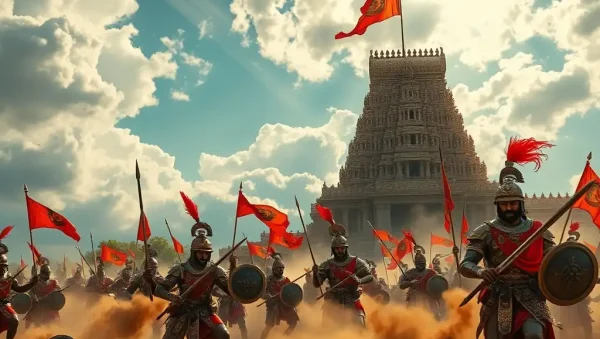
The Significance of the Battle of Gangaikonda Cholapuram
Notable Battles and Campaigns
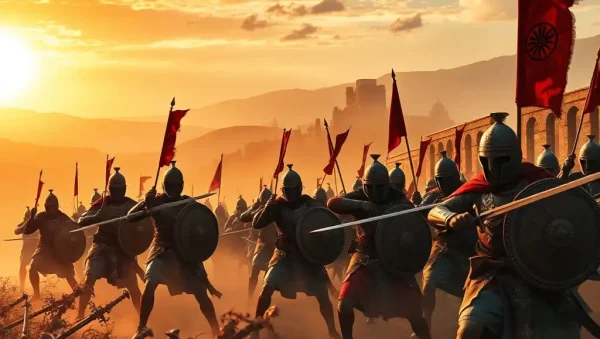
The Battle of Bhatinda: A Prelude to Future Conflicts
Notable Battles and Campaigns
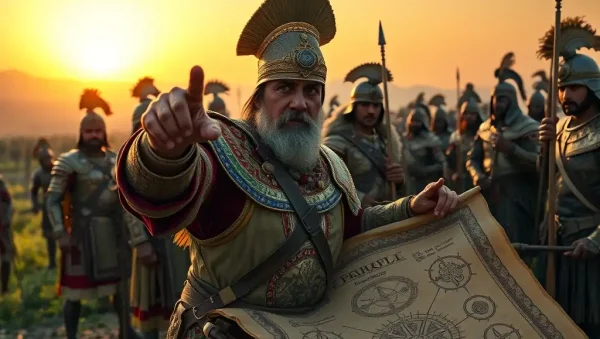
The Influence of Ancient Indian Military Texts on Warfare
Notable Battles and Campaigns
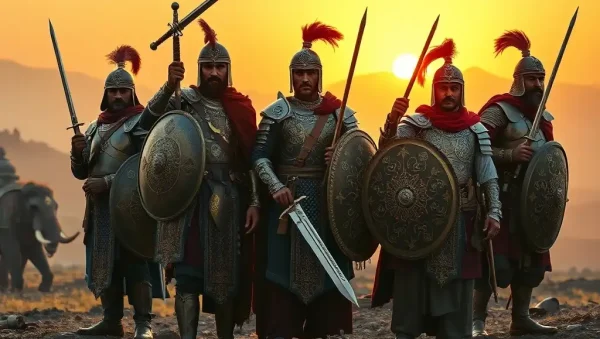
The Role of Mercenaries in Ancient Indian Campaigns
Notable Battles and Campaigns
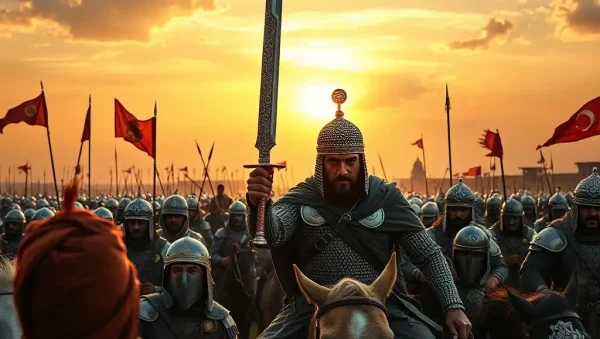
The Battle of Tarain: The Rise of Muslim Rule in India
Notable Battles and Campaigns
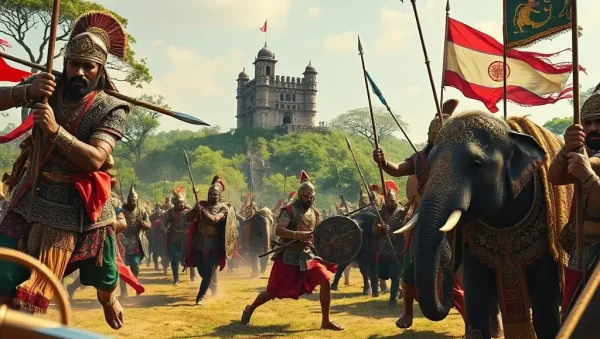
Ancient Warfare: Strategies and Tactics of the Gupta Empire
⚔️ Notable Battles and Campaigns in Ancient Indian Military History
Explore the notable battles and campaigns of ancient India through detailed accounts of warfare, strategy, political ambition, and cultural change. This subcategory examines major conflicts from the Indus Valley Civilization, Vedic period, Mahajanapadas, Mauryan Empire, Indo-Greek encounters, Satavahana era, Kushan period, and Gupta Empire. Discover how armies, rulers, fortifications, weapons, elephants, cavalry, and battlefield tactics shaped the development of Indian civilization.
🏹 Major Battles of the Mahajanapadas
Learn about the conflicts that shaped the rise of powerful states such as Magadha, Kosala, Vatsa, Avanti, and the Vajji Confederacy. Articles in this section explore the political rivalries, territorial expansion, alliances, and military systems that transformed northern India during the sixth and fifth centuries BCE.
Readers can expect accessible explanations of ancient Indian warfare, including the importance of fortified cities, war elephants, infantry formations, and royal leadership. These campaigns help explain how Magadha gained dominance and eventually laid the foundations for the Mauryan Empire.
🛡️ The Battle of the Hydaspes
Examine the famous Battle of the Hydaspes, fought in 326 BCE between Alexander of Macedon and King Porus. This campaign offers valuable insight into the encounter between the Macedonian army and the forces of the Indian subcontinent, including the strategic use of elephants and the challenges of crossing the Jhelum River.
Discover the military tactics, battlefield geography, troop organization, and historical consequences of the conflict. The battle marked a major moment in the interaction between ancient Greek and Indian worlds, while also revealing the resilience and sophistication of regional Indian kingdoms.
👑 Chandragupta Maurya and the Rise of the Mauryan Empire
Explore the campaigns of Chandragupta Maurya as he challenged the Nanda dynasty and established one of ancient India’s most powerful empires. This section considers the role of political strategy, military organization, diplomacy, and the guidance traditionally associated with Chanakya and the Arthashastra.
Readers will learn how the Mauryan state expanded across northern India and confronted the Seleucid Empire. The resulting settlement between Chandragupta Maurya and Seleucus I demonstrates the connection between warfare, diplomacy, territorial control, and imperial administration.
🦁 The Kalinga War and Ashoka’s Transformation
Discover the Kalinga War, one of the most significant military campaigns in Indian history. Fought during the reign of Emperor Ashoka, the conflict resulted in the conquest of Kalinga but also caused immense loss of life and suffering, as described in Ashoka’s inscriptions.
This section explores the campaign’s political background, humanitarian consequences, and lasting impact on Ashoka’s rule. It explains how the war influenced his adoption of Dhamma, nonviolence, ethical governance, and Buddhist principles, making Kalinga a crucial subject in the study of ancient Indian history.
🏰 Gupta-Era Campaigns and Imperial Expansion
Study the military achievements of Gupta rulers such as Samudragupta and Chandragupta II. The Allahabad Pillar inscription provides important evidence about Samudragupta’s northern conquests, southern expedition, tributary states, and diplomatic relationships with neighboring rulers.
Learn how Gupta power was extended through a combination of direct annexation, alliances, tribute, and regional administration. These campaigns reveal the flexible nature of imperial expansion in ancient India and help explain why the Gupta period is often associated with political strength and cultural achievement.
🐎 Armies, Weapons, and Battlefield Strategy
Understand how ancient Indian armies were organized and equipped. Our articles examine the traditional fourfold army, or chaturanga bala, consisting of infantry, cavalry, chariots, and war elephants, along with the use of bows, swords, spears, shields, armor, and siege equipment.
Readers can also explore military logistics, battlefield formations, intelligence networks, fortifications, river crossings, and the role of commanders. By studying these elements together, it becomes easier to understand how ancient Indian rulers planned campaigns and maintained control over large territories.
📜 Ancient Sources and Historical Evidence
Explore the sources historians use to reconstruct notable battles and campaigns in ancient India. These include Ashokan edicts, inscriptions, coins, archaeological remains, Buddhist and Jain literature, Sanskrit epics, Greek accounts, and political texts such as the Arthashastra.
This section also explains why ancient military history must be studied critically. Literary traditions may combine history with legend, while archaeological evidence can provide a different perspective. Comparing multiple sources offers a more balanced understanding of ancient Indian battles and imperial campaigns.
❓ Frequently Asked Questions About Ancient Indian Battles
What was the most important battle in ancient Indian history?
The answer depends on historical context. The Battle of the Hydaspes, the Kalinga War, and the conflicts that established the Mauryan Empire are among the most important because they influenced political power, international relations, and the development of Indian statecraft.
Why was the Kalinga War significant?
The Kalinga War was significant because it transformed Emperor Ashoka’s policies. After witnessing the suffering caused by the conflict, Ashoka emphasized Dhamma, moral conduct, compassion, and nonviolent governance, helping spread Buddhist ideas across India and beyond.
How were ancient Indian armies organized?
Many ancient Indian armies were based on the chaturanga bala, or fourfold military system: infantry, cavalry, chariots, and elephants. The size and composition of an army varied by kingdom, period, terrain, resources, and military objectives.
What sources describe ancient Indian battles?
Important sources include royal inscriptions, archaeological discoveries, coins, Buddhist and Jain texts, Sanskrit literature, Greek and Roman accounts, and the Arthashastra. Historians compare these sources to identify reliable information about rulers, campaigns, weapons, and political events.
Did war elephants play an important role in ancient Indian warfare?
Yes. War elephants were used to break enemy formations, intimidate opposing troops, protect commanders, and attack fortifications. However, their effectiveness depended on training, battlefield conditions, and the ability of opposing armies to counter them.