
Nyaya School of Thought

Nyaya School of Thought
35 articles in this topic
Read more about this topic
Explore the Nyaya School of Thought, an influential tradition of Indian philosophy renowned for its systematic approach to logic, reasoning, debate, and the pursuit of valid knowledge. Discover how Nyaya philosophers examined perception, inference, testimony, and analogy to understand reality and overcome ignorance, making this ancient intellectual system a cornerstone of Indian philosophy and ancient India’s enduring scholarly heritage.
More in Nyaya School of Thought

Nyaya School of Thought
Debating Reality: The Nyaya School’s Approach to Epistemology

Nyaya School of Thought
The Evolution of Nyaya Thought Through the Ages
Nyaya School of Thought
The Future of Nyaya: Reviving Ancient Wisdom for Modern Challenges
Nyaya School of Thought
Exploring the Contributions of Nyaya Thinkers to Logic and Reasoning
Nyaya School of Thought
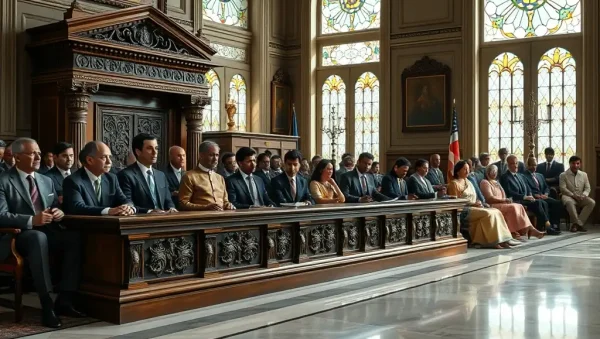
The Influence of Nyaya Philosophy on Indian Judicial Systems
Nyaya School of Thought
The Role of Logic in Nyaya Philosophy: A Study of Argumentation
Nyaya School of Thought
The Four Principles of Nyaya: Understanding Pramanas and Their Importance
Nyaya School of Thought
The Interconnectedness of Nyaya and Other Philosophical Schools
Nyaya School of Thought: Ancient Indian Logic, Reasoning, and Philosophy 🪷
Explore the Nyaya School of Thought, one of the most influential systems of classical Indian philosophy. This subcategory on Ancient India History examines Nyaya philosophy, its origins, major thinkers, methods of reasoning, theories of knowledge, and lasting influence on Indian intellectual traditions. Discover how ancient Indian philosophers developed rigorous approaches to logic, debate, epistemology, metaphysics, and the pursuit of truth.
📜 Origins and Historical Development of Nyaya
Readers can learn about the historical foundations of the Nyaya school, traditionally associated with the philosopher Gautama, also known as Akshapada Gautama, the author of the Nyaya Sutra. The teachings of Nyaya developed during a period of vigorous philosophical debate in ancient India, engaging with Buddhist, Jain, Mimamsa, Samkhya, Vaisheshika, and Vedanta thinkers.
This section explores the growth of Nyaya philosophy through different periods of Indian history, including the contributions of early commentators and later scholars such as Vatsyayana, Uddyotakara, Vacaspati Mishra, Udayana, and Gangesha. Readers will gain insight into how Nyaya evolved from a system of debate and logic into a comprehensive philosophical tradition.
🧠 Nyaya Logic and the Science of Reasoning
Nyaya is widely recognized for its sophisticated approach to logic, inference, argumentation, and rational inquiry. Articles in this subcategory explain how Nyaya philosophers analyzed valid and invalid arguments, identified fallacies, and established systematic methods for reaching reliable conclusions.
Readers can expect clear explanations of important Nyaya concepts, including pramana, anumana, vyapti, hetu, paksha, and sadhya. These ideas reveal how ancient Indian thinkers examined evidence, relationships between causes and effects, and the structure of convincing philosophical arguments.
🔍 The Four Sources of Valid Knowledge
A central topic in Nyaya philosophy is its theory of knowledge, known as epistemology. Nyaya traditionally recognizes four reliable means of knowledge: perception, inference, comparison, and verbal testimony. This subcategory explains how each source helps individuals distinguish genuine knowledge from doubt, error, and illusion.
Readers will discover how Nyaya philosophers defined direct perception, logical inference, analogy, and trustworthy testimony. These discussions demonstrate the school’s commitment to careful observation, critical thinking, evidence-based reasoning, and intellectual clarity, making Nyaya relevant to the study of ancient Indian logic and the history of philosophy.
⚖️ Debate, Discussion, and Philosophical Method
Nyaya developed detailed principles for conducting philosophical debate and evaluating competing viewpoints. Explore concepts such as vada, jalpa, vitanda, hetvabhasa, chala, and nigrahasthana, which describe constructive debate, disputation, destructive criticism, fallacious reasoning, and points of defeat in argument.
This section shows how Nyaya treated debate as more than a contest of opinions. Its methods encouraged participants to define terms, provide evidence, recognize logical mistakes, and pursue truth through disciplined dialogue. These ancient practices offer valuable insights into the development of Indian intellectual culture.
🌌 Nyaya Metaphysics and the Nature of Reality
Beyond logic, Nyaya presents a detailed account of reality, including the self, body, senses, mind, objects, qualities, action, universals, particularity, and absence. Readers can explore how Nyaya philosophers investigated existence, consciousness, causation, time, space, and the relationship between knowledge and reality.
Nyaya metaphysics is closely connected with the Vaisheshika system, and both traditions contributed to the development of classical Indian philosophical analysis. Articles explain these categories in accessible language while showing their importance in understanding ancient Indian ontology and theories of the world.
🕉️ The Self, God, and Liberation in Nyaya Philosophy
Nyaya philosophy addresses profound questions about the self, consciousness, suffering, God, karma, rebirth, and liberation. According to later Nyaya thinkers, correct knowledge helps remove ignorance and enables the individual to overcome suffering and attain liberation, or moksha.
Readers can examine Nyaya arguments for the existence of an intelligent creator and the school’s understanding of the individual self as distinct from the body and mind. This material places Nyaya within the wider history of Indian religious philosophy and highlights its dialogue with Buddhist and materialist traditions.
📚 Major Nyaya Texts and Philosophers
Discover the important works that shaped the Nyaya tradition, beginning with the Nyaya Sutra and continuing through influential commentaries and later developments. This section introduces the writings of Gautama, Vatsyayana, Uddyotakara, Udayana, and Gangesha, whose ideas transformed Indian logic and epistemology.
Readers will also learn about Navya-Nyaya, or New Nyaya, which developed sophisticated technical language for analyzing knowledge, meaning, relations, and inference. The work of Gangesha and later scholars demonstrates the enduring vitality of Nyaya philosophy in medieval and early modern India.
🌏 Nyaya’s Influence on Indian Philosophy and Modern Thought
Nyaya influenced numerous branches of Indian philosophy, including Vedanta, Mimamsa, Buddhist logic, Jain philosophy, Ayurveda, grammar, law, and Sanskrit scholarship. Its emphasis on reason, evidence, debate, and precise definitions helped shape the broader intellectual traditions of South Asia.
This section also considers the continuing relevance of Nyaya in modern studies of logic, critical thinking, comparative philosophy, and the history of science. By exploring Nyaya, readers can better understand how ancient Indian scholars approached rational inquiry long before modern academic disciplines were established.
❓ Frequently Asked Questions About the Nyaya School of Thought
What is the Nyaya School of Thought?
The Nyaya School of Thought is a classical system of Indian philosophy focused on logic, valid knowledge, reasoning, debate, and liberation. It examines how people acquire reliable knowledge and use rational inquiry to overcome ignorance and suffering.
Who founded the Nyaya school?
Nyaya is traditionally attributed to Gautama, also called Akshapada Gautama. He is regarded as the author of the Nyaya Sutra, the foundational text of the Nyaya philosophical tradition.
What are the four pramanas in Nyaya philosophy?
The four accepted sources of valid knowledge in Nyaya are perception, inference, comparison, and verbal testimony. Nyaya philosophers studied how each method produces reliable knowledge and how errors can be identified.
Why is Nyaya important in the history of Indian philosophy?
Nyaya is important because it developed a highly systematic tradition of Indian logic, epistemology, debate, and philosophical analysis. Its methods influenced many other schools and remain valuable for understanding the intellectual achievements of ancient and medieval India.
What is the connection between Nyaya and Vaisheshika?
Nyaya primarily focuses on reasoning and valid knowledge, while Vaisheshika offers a detailed classification of reality and natural categories. Over time, the two traditions became closely connected, creating a powerful framework for logic, metaphysics, and Indian philosophical inquiry.