
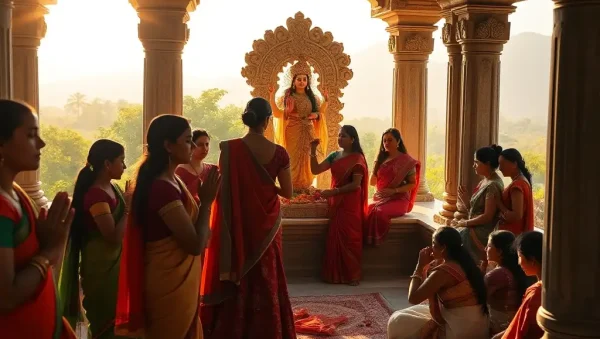
Women in Religion and Philosophy
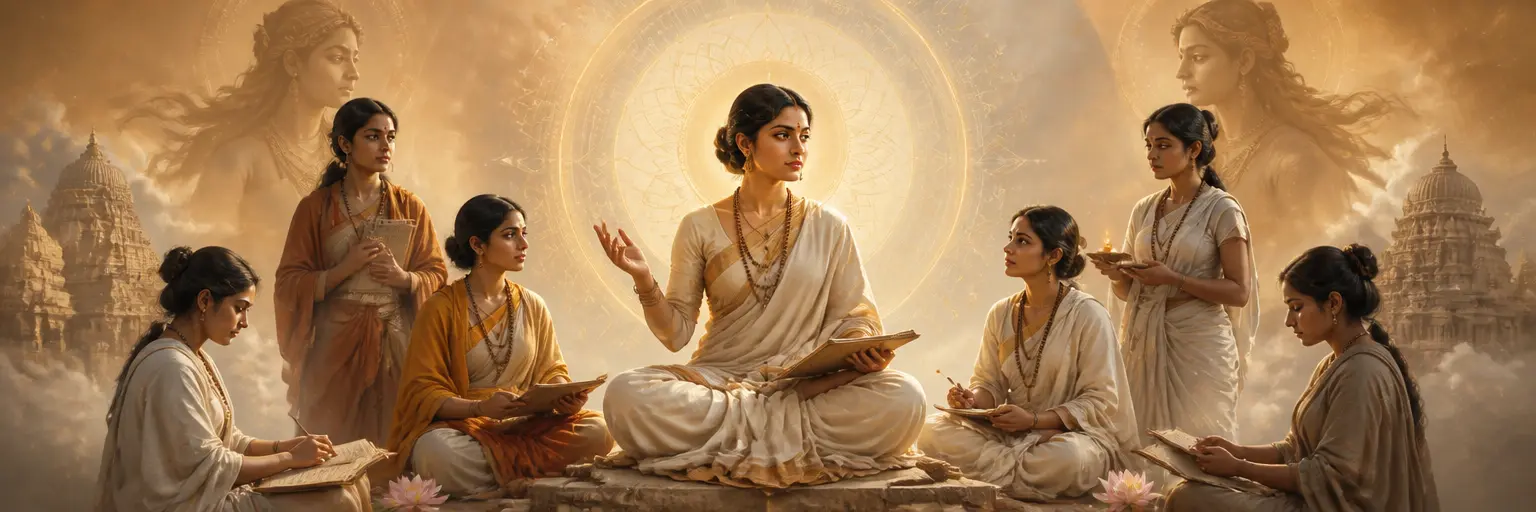

Women in Religion and Philosophy
42 articles in this topic
Start here
Read more about this topic
Explore the influential women in religion and philosophy of ancient India, whose spiritual insight, intellectual courage, and teachings shaped the subcontinent’s cultural heritage. From Vedic thinkers and Upanishadic scholars to Buddhist and Jain women leaders, discover their contributions to ancient Indian philosophy, religious traditions, education, and social thought. Delve into inspiring stories that reveal the vital role women played in shaping India’s timeless pursuit of knowledge, ethics, and enlightenment.
More in Women in Religion and Philosophy

Women in Religion and Philosophy
The Role of Women in the Development of Yoga and Spiritual Practices
Women in Religion and Philosophy
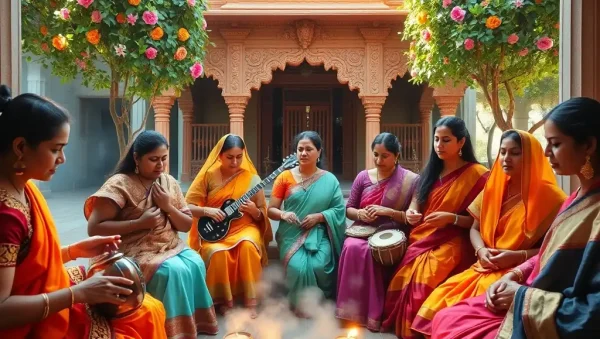
Women and the Arts: Spiritual Expression in Ancient Indian Culture
Women in Religion and Philosophy
Ancient Texts and Modern Interpretations: Women’s Roles in Religion
Women in Religion and Philosophy
The Power of Women in Ancient Indian Rituals and Practices
Women in Religion and Philosophy
The Power of Women’s Voices in Ancient Indian Literature
Women in Religion and Philosophy
The Spiritual Legacy of Women: Understanding Their Influence in Vedic Texts
Women in Religion and Philosophy
The Intersection of Gender and Spirituality in Ancient Indian Philosophy
Women in Religion and Philosophy
Women in Bhakti Movement: Voices of Devotion and Equality
Women in Religion and Philosophy in Ancient India
Explore the influential roles, ideas, and spiritual contributions of women in ancient Indian religion and philosophy. This subcategory examines women’s participation in Vedic traditions, Hindu philosophy, Buddhism, Jainism, religious literature, and intellectual life across the history of ancient India. Discover the stories of female sages, philosophers, queens, ascetics, poets, and teachers who helped shape India’s cultural and spiritual heritage from the Vedic period through the Gupta Empire.
🕉️ Women in Vedic Religion and Society
Learn about women’s place in early Vedic society, including their involvement in household rituals, sacred ceremonies, education, and religious traditions. Articles explore figures such as Gargi Vachaknavi and Maitreyi, whose names are associated with intellectual debate and philosophical inquiry in the Upanishadic period.
This section also examines the changing status of women in ancient Indian religious texts, including references to marriage, motherhood, ritual authority, and learning. Readers can expect balanced discussions supported by Vedic literature, Brahmanas, Upanishads, epics, and other historical sources.
📜 Female Philosophers and Intellectual Traditions
Discover the women thinkers who contributed to ancient Indian philosophy through questions about the self, reality, consciousness, morality, and liberation. Their conversations and teachings reveal that philosophical inquiry was not limited exclusively to men in every period or intellectual setting.
Explore how female philosophers participated in debate, spiritual education, metaphysical discussion, and ethical reflection. This section places women’s ideas within major schools of Indian thought, including early Vedanta, Samkhya, Buddhist philosophy, Jain philosophy, and the broader Upanishadic tradition.
☸️ Women in Buddhism and Buddhist Monastic Life
Examine the emergence of women’s religious communities in ancient Buddhism, especially the establishment of the Bhikkhuni Sangha. Topics may include the lives of early Buddhist nuns, their teachings, spiritual practices, and contributions to Buddhist literature.
Readers can also learn about prominent figures such as Mahapajapati Gotami, Khema, Uppalavanna, and Ambapali. Their stories provide insight into women’s access to renunciation, meditation, religious leadership, and spiritual liberation in ancient India.
🪷 Women in Jainism and Ascetic Traditions
Explore the role of women in ancient Jain religious life, including nuns, laywomen, teachers, donors, and supporters of monastic communities. Jain traditions offer important perspectives on nonviolence, self-discipline, renunciation, karma, and liberation.
This section considers how women participated in Jain communities and how religious texts portrayed female ascetics and devoted householders. It also discusses the differences between Digambara and Svetambara views regarding women’s spiritual potential and the path to moksha.
📖 Women in Epics, Puranas, and Sacred Literature
Study the religious and philosophical significance of women portrayed in the Ramayana, Mahabharata, Puranas, and classical Sanskrit literature. Figures such as Sita, Draupadi, Kunti, Savitri, Gargi, and Maitreyi represent diverse ideas about duty, wisdom, devotion, resilience, justice, and spiritual strength.
Rather than viewing these characters only as literary figures, readers can explore how their stories influenced ancient Indian concepts of womanhood, dharma, family responsibility, political authority, and moral decision-making. The articles also distinguish between historical evidence, religious tradition, and later interpretation.
👑 Queens, Patrons, and Religious Benefactors
Women from royal and wealthy families often supported religious institutions, temples, monasteries, educational centers, and charitable projects. Learn how queens, merchants’ wives, and elite donors contributed to the growth of Buddhist, Jain, and Hindu religious communities.
Inscriptions, sculptures, coins, and archaeological discoveries help reveal women’s roles as patrons and public benefactors. This section highlights how donations and religious endowments allowed women to exercise social influence and preserve their names in the historical record.
🧘 Women Ascetics, Devotees, and Spiritual Teachers
Discover the lives of women who pursued religious knowledge, meditation, austerity, pilgrimage, and renunciation. Ancient Indian traditions included women who challenged conventional expectations and sought spiritual authority through disciplined practice and philosophical learning.
These accounts offer a deeper understanding of female spirituality in ancient India, including the relationship between domestic life and renunciation. Readers can compare women’s experiences across Hindu, Buddhist, and Jain traditions while considering the opportunities and limitations created by social customs.
🏺 Historical Sources and Archaeological Evidence
Learn how historians reconstruct women’s religious and philosophical contributions using literary texts, inscriptions, sculptures, coins, manuscripts, and archaeological remains. Evidence from sites connected with the Indus Valley Civilization, Mauryan Empire, Kushan period, Satavahana age, and Gupta Empire helps illuminate changing patterns of belief and social participation.
This section explains the importance of interpreting ancient sources carefully. Religious texts may preserve ideals rather than everyday realities, while inscriptions and material evidence can provide valuable information about women as donors, leaders, practitioners, and members of intellectual communities.
❓ Frequently Asked Questions About Women in Religion and Philosophy
Who were some important women philosophers in ancient India?
Gargi Vachaknavi and Maitreyi are among the best-known women associated with ancient Indian philosophical thought. Their dialogues in the Upanishadic tradition explore profound questions about knowledge, the self, reality, and ultimate truth.
Did women participate in religious education in ancient India?
Evidence from Vedic and Upanishadic literature suggests that some women received religious and philosophical education, particularly within certain social and intellectual communities. Access to learning varied according to period, region, family background, and social status.
What roles did women have in ancient Buddhism?
Women could become Buddhist nuns, lay disciples, donors, teachers, and respected spiritual practitioners. The establishment of the Bhikkhuni Sangha created a formal path for women seeking monastic life and religious liberation.
How did women contribute to Jainism?
Women contributed to Jainism as nuns, lay followers, patrons, teachers, and supporters of monastic institutions. Jain literature also preserves discussions about women’s ascetic practices, religious discipline, and ability to achieve spiritual progress.
What sources reveal women’s religious contributions in ancient India?
Important sources include the Vedas, Upanishads, Buddhist and Jain texts, epics, inscriptions, sculptures, coins, and archaeological remains. Using several types of evidence allows historians to build a more complete picture of women’s roles in ancient Indian religion and philosophy.