
Women's Roles in Society
Women's Roles in Society
37 articles in this topic
Read more about this topic
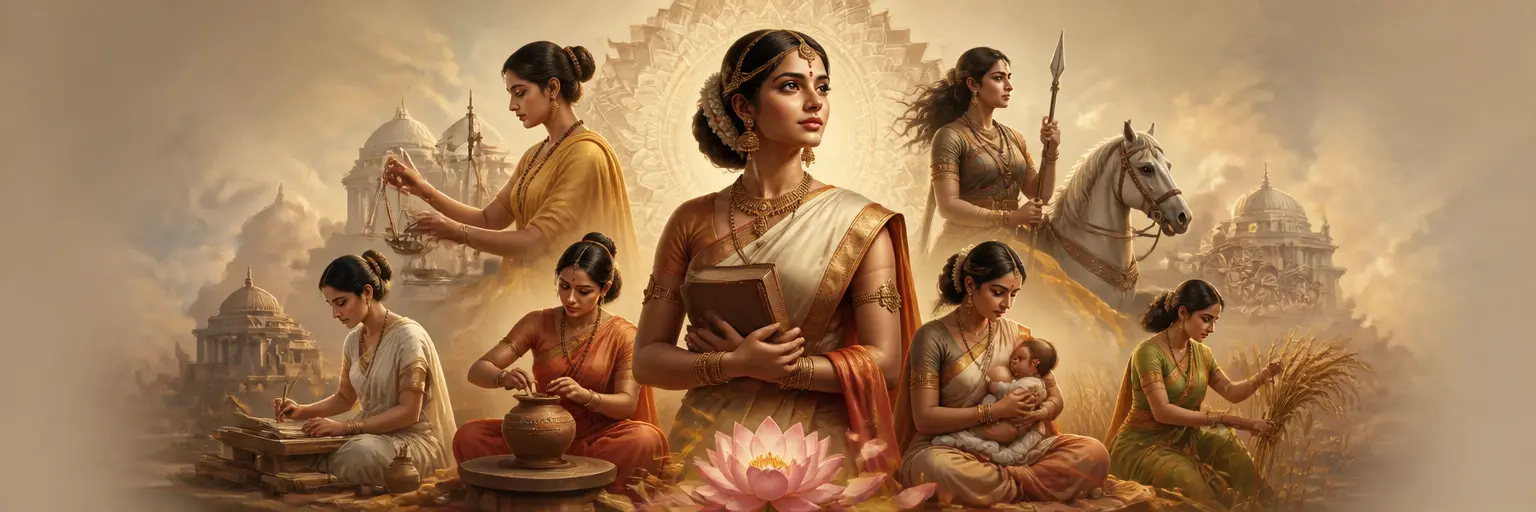
Explore the evolving roles of women in ancient Indian society, from family life and education to religion, governance, art, and economic activity. Discover how women shaped communities and contributed to the cultural development of civilizations from the Indus Valley through the Gupta Empire, while examining changing traditions, social expectations, and opportunities across different periods.
More in Women's Roles in Society
Women's Roles in Society
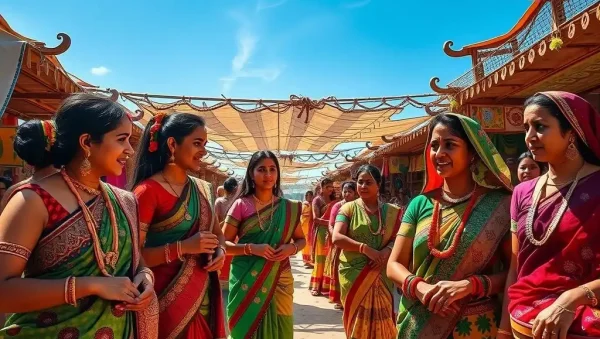
The Role of Women in Ancient Indian Trade and Commerce
Women's Roles in Society
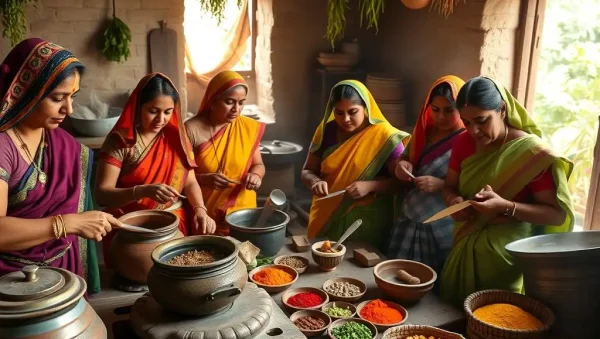
How Women Influenced Ancient Indian Cuisine and Culinary Traditions
Women's Roles in Society
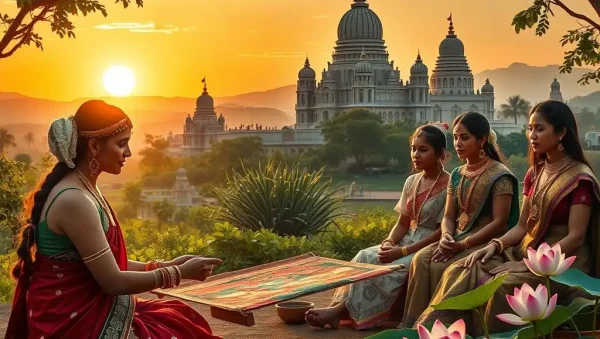
The Representation of Women in Ancient Indian Mythology and Folklore
Women's Roles in Society
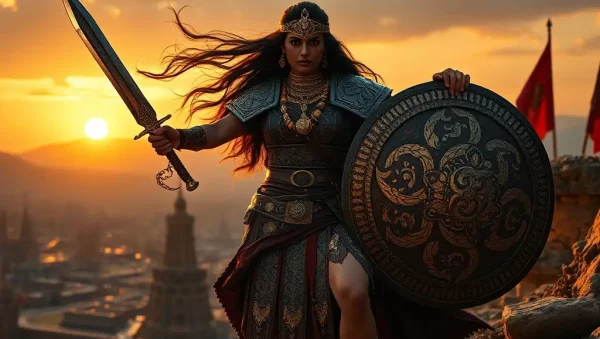
The Role of Women in Ancient Indian Warfare: Beyond the Battlefield
Women's Roles in Society
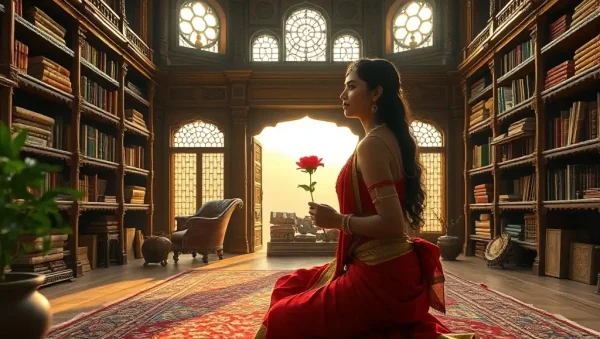
From Sita to Savitri: Iconic Female Figures in Ancient Indian Literature
Women's Roles in Society
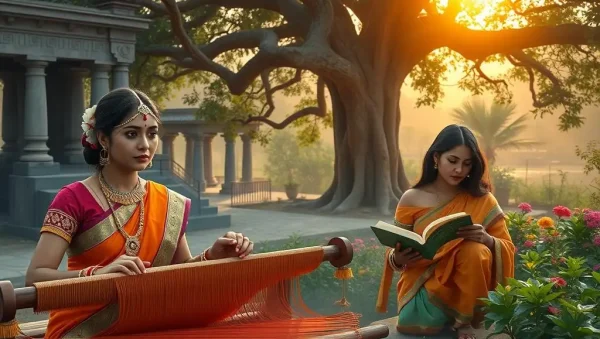
From Home to Empire: The Diverse Roles of Women in Ancient Indian Civilizations
Women's Roles in Society
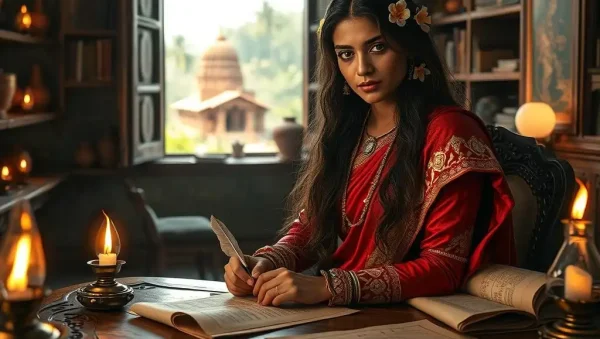
Women’s Contributions to Ancient Indian Science and Mathematics
Women's Roles in Society
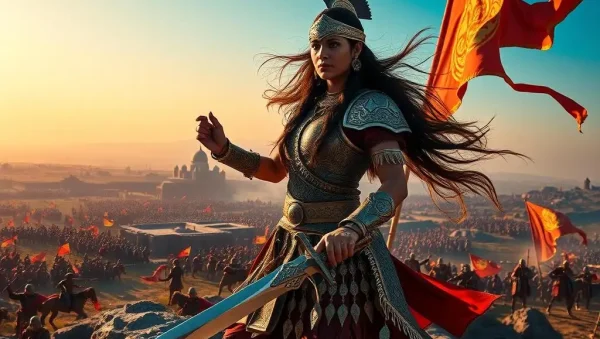
Warrior Queens: Fearless Women in Ancient Indian Battles
👩 Women’s Roles in Society in Ancient India
Explore the changing roles of women in ancient Indian society through a rich collection of historical articles covering family life, education, religion, politics, economics, law, and cultural traditions. Within the broader category of Women’s Roles and Contributions, this subcategory examines how women lived, worked, worshipped, governed households, participated in public life, and influenced the development of ancient Indian civilization from the Indus Valley Civilization through the Vedic, Mauryan, and Gupta periods. Discover how social customs, religious beliefs, class, region, and historical change shaped the experiences of women in ancient India.
📜 Women in the Indus Valley Civilization
Learn what archaeology reveals about women’s lives in the Indus Valley Civilization, one of the earliest urban cultures of South Asia. Articles may explore figurines, household objects, jewelry, burial practices, seals, settlements, and other material evidence connected with gender, family, fertility, craft production, and religious life. Since the Indus script remains undeciphered, careful interpretation is essential when discussing women’s status and responsibilities.
Readers can expect balanced explanations of what archaeological discoveries can—and cannot—tell us about women in Harappan society. Explore possible roles in domestic work, textile production, trade, ritual practices, agriculture, and community life while learning why historians avoid unsupported assumptions about gender equality or social hierarchy in ancient cities such as Harappa, Mohenjo-daro, and Dholavira.
🌾 Women during the Vedic Period
Discover the changing position of women during the early and later Vedic periods. This section examines references to women in the Vedas, Brahmanas, Upanishads, epics, and related traditions, including discussions of marriage, motherhood, education, household responsibilities, religious ceremonies, and participation in intellectual debates. Figures such as Gargi and Maitreyi provide important examples of women associated with learning and philosophical thought.
The content also explains how women’s experiences differed according to time, social group, wealth, and location. Rather than presenting ancient Indian history as uniformly progressive or restrictive, these articles explore the complexity of Vedic women’s roles, including their contributions to family, ritual, knowledge, agriculture, and cultural continuity.
🏛️ Women, Family, and Household Life
Understand the importance of family and household organization in ancient Indian society. Explore marriage customs, kinship, motherhood, child-rearing, inheritance, domestic management, and the responsibilities of women within extended families. Household life was also connected with economic production, religious obligations, food preparation, textile work, and the preservation of family traditions.
Readers will gain insight into how women contributed to the social and economic stability of ancient communities. Articles consider both the authority women could exercise within the household and the restrictions imposed by patriarchal customs, social expectations, and legal traditions. This approach offers a more nuanced understanding of women’s everyday lives beyond famous historical figures.
📚 Women’s Education and Intellectual Contributions
Explore the history of women’s education in ancient India, including access to religious learning, philosophy, literature, medicine, music, and the arts. Historical and literary sources mention women scholars, teachers, poets, and thinkers, while traditional narratives preserve the memory of women who participated in debates and composed or inspired important works.
This section also examines the limits of available evidence. Educational opportunities were not equally available to all women, and access could depend on caste, class, family background, region, and period. By comparing textual references with broader social history, readers can better understand both the intellectual contributions of women and the barriers that shaped their education.
🛕 Women in Religion and Spiritual Life
Learn about the participation of women in ancient Indian religious traditions, including Vedic rituals, Hindu traditions, Buddhism, and Jainism. Women appear as worshippers, donors, ascetics, nuns, philosophers, household ritual practitioners, and important figures in sacred narratives. Their religious roles often connected domestic responsibilities with wider spiritual and cultural practices.
Articles examine how religious institutions could create new opportunities while also reflecting existing social inequalities. Discover the stories of Buddhist and Jain women, female teachers, royal patrons, and devotees, as well as the ways in which women influenced religious communities, temple culture, artistic traditions, and ethical thought in ancient India.
👑 Queens, Rulers, and Women in Politics
Explore the political roles of queens, princesses, royal mothers, regents, and women patrons in ancient Indian kingdoms and empires. Women could influence succession, diplomacy, court culture, religious donations, land grants, and administrative decisions. Their authority was sometimes exercised directly and sometimes through family, dynastic, or ceremonial networks.
Readers can discover examples of women connected with the Mauryan, Satavahana, Gupta, and other regional traditions. The section emphasizes that political power was not limited to women who held formal titles: royal women also shaped alliances, patronage, cultural production, and the legitimacy of ruling dynasties.
⚖️ Women, Law, and Social Status
Examine ancient Indian legal and social texts that discuss women’s rights, duties, marriage, property, inheritance, guardianship, and family relationships. Works such as the Dharmashastra literature provide valuable evidence, but they often describe ideals and prescriptions rather than the daily experiences of every woman. Understanding this distinction is essential for interpreting ancient social history accurately.
This section compares prescriptive texts with inscriptions, literature, archaeology, and historical context. Learn how women’s status could vary according to caste, wealth, marital position, widowhood, occupation, and region, revealing the complex legal and social position of women in ancient India rather than a single universal experience.
💼 Women’s Work, Trade, and Economic Contributions
Discover the many forms of women’s work in ancient Indian economy, including agriculture, animal care, spinning, weaving, food production, craftwork, household industries, market activity, and service occupations. Women’s labor supported families and communities, even when historical records did not always identify individual workers by name.
Inscriptions, artistic representations, literary references, and archaeological evidence help reveal women’s participation in production and exchange. Readers will learn how women could contribute to trade networks, craft industries, charitable donations, and local economies, while also considering the effects of social class and status on economic independence.
🎨 Women in Literature, Art, and Culture
Explore the representation and creation of women in ancient Indian literature, sculpture, painting, music, dance, and storytelling. Women appear as poets, performers, heroines, patrons, divine figures, teachers, and symbols of fertility, prosperity, wisdom, and power. Cultural sources offer valuable insight into social ideals and the ways femininity was imagined across different periods.
These articles distinguish between artistic representation and historical reality. By comparing mythology, court poetry, inscriptions, and visual art, readers can understand how women contributed to ancient Indian culture while also analyzing the expectations, symbolism, beauty standards, and gender ideals presented in surviving sources.
🌏 Diversity in Women’s Historical Experiences
Women in ancient India did not share one identical experience. Their lives were shaped by region, caste, class, religion, occupation, marital status, political position, and historical period. This section highlights the differences between urban and rural communities, royal courts and ordinary households, religious institutions and family environments, and northern and southern cultural traditions.
A diverse approach helps readers avoid broad generalizations about ancient Indian women. Expect historically grounded discussions of both opportunities and limitations, including women’s agency, resilience, labor, creativity, and participation in social change. The result is a more complete picture of women’s history in ancient Indian civilization.
❓ Frequently Asked Questions About Women’s Roles in Ancient India
What were the main roles of women in ancient Indian society?
Women commonly contributed to family life, agriculture, household management, religious practices, textile production, craftwork, education, and cultural traditions. Some women also served as rulers, patrons, philosophers, poets, artists, merchants, or religious figures. Their opportunities varied considerably according to period, region, social status, wealth, and religion.
Did women receive education in ancient India?
Some women had access to education, particularly in elite or scholarly families. Sources mention women such as Gargi and Maitreyi in philosophical discussions, while Buddhist and Jain traditions preserve accounts of learned women and nuns. However, education was not equally available to all women, and access changed over time.
Could women own property in ancient India?
Ancient legal and literary sources describe forms of women’s property, including stridhana, gifts, jewelry, and certain inheritance claims. Actual rights depended on the period, community, family structure, and local customs. Historical evidence therefore suggests that women could possess property in some circumstances, although legal and economic independence was often limited.
Did women participate in politics and government?
Women participated in political life as queens, princesses, regents, royal mothers, diplomatic figures, patrons, and members of influential dynasties. Some exercised authority directly, while others shaped succession, alliances, court decisions, religious patronage, and cultural policy through their position within ruling families.
What sources help historians study women in ancient India?
Historians use a combination of archaeological discoveries, inscriptions, coins, religious texts, legal literature, epics, Buddhist and Jain writings, Sanskrit and regional literature, sculptures, paintings, and foreign accounts. Each source has limitations, so comparing different types of evidence provides a more reliable and balanced understanding of women’s roles and contributions in ancient India.