
How Ancient Indian Innovations Shaped Neighboring Civilizations' Technologies

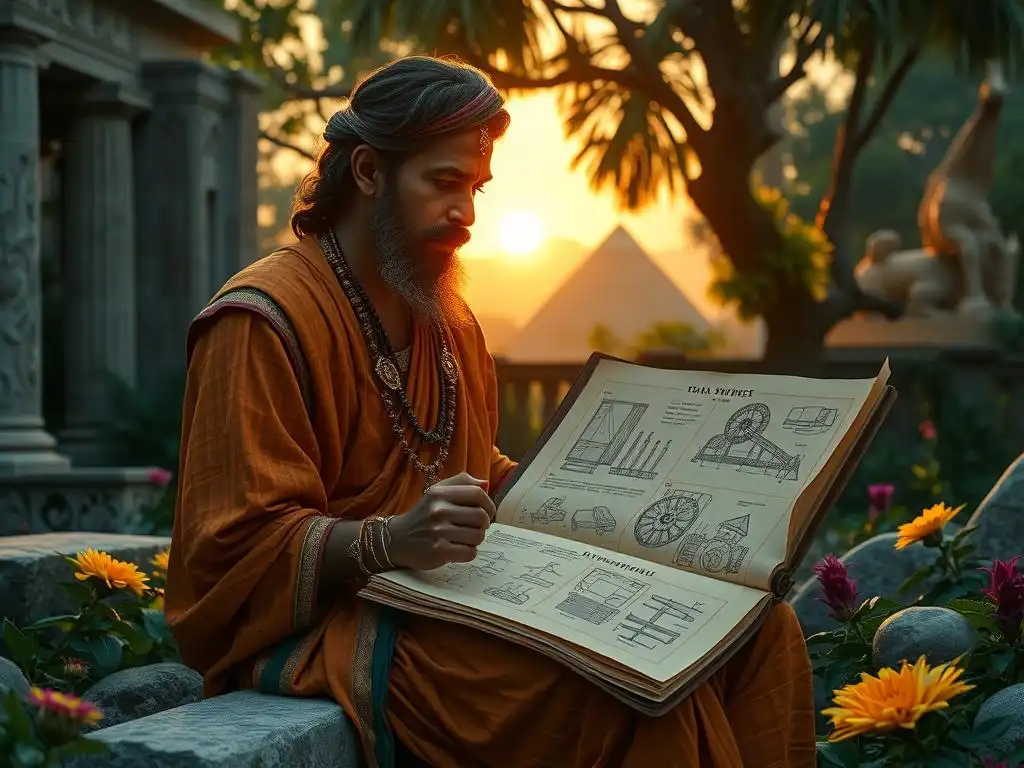
Welcome to Ancient India History, where we embark on a fascinating journey through the rich tapestry of ancient Indian civilizations. From the majestic Indus Valley to the illustrious Gupta Empire, this site invites you to uncover the profound cultural exchanges and influences that have shaped not only India but also neighboring civilizations. In our featured article, explore how ancient Indian innovations influence the technologies and advancements of other cultures, revealing the interconnectedness of our shared human heritage. Prepare to dive deep into a world of discovery that promises to enlighten and inspire your understanding of history.
- Introduction to Ancient Indian Innovations and Their Influence
- Key Innovations in Ancient India
- Influence of Ancient Indian Innovations on Neighboring Civilizations
- Cultural Exchanges and Their Role in Technology Transfer
- Conclusion: The Lasting Legacy of Ancient Indian Innovations
-
Frequently Asked Questions
- What are some key ancient Indian innovations that influenced neighboring civilizations?
- How did the Indus Valley Civilization contribute to technological advancements?
- What role did the Gupta Empire play in the spread of technological knowledge?
- How did ancient Indian mathematics impact other cultures?
- In what ways did Ayurvedic medicine influence global health practices?
- Final Reflection: The Enduring Legacy of Ancient Indian Innovations
- Unveil the Legacy of Ancient Innovations!
Introduction to Ancient Indian Innovations and Their Influence

Ancient India was a tapestry of rich cultures, philosophies, and innovations that not only defined its own civilization but also significantly influenced neighboring societies. The contributions of ancient Indian civilizations, particularly from the Indus Valley to the Gupta Empire, laid the groundwork for advancements in various fields such as mathematics, medicine, metallurgy, and agriculture.
These innovations not only transformed Indian society but also extended their impact beyond its borders, shaping the technologies and cultural practices of neighboring civilizations. This article explores the profound influence of ancient Indian innovations and how they contributed to the technological evolution of surrounding regions, highlighting the interconnectedness of ancient cultures and the enduring legacy of Indian ingenuity.
Overview of Ancient Indian Civilizations
Ancient India was home to several remarkable civilizations, each contributing uniquely to the region's historical narrative. The Indus Valley Civilization, often regarded as one of the world's earliest urban cultures, showcased advanced urban planning, sophisticated drainage systems, and standardized weights and measures. Following this, the Vedic period brought about significant developments in philosophy, social structure, and early scientific thought.
The Mauryan Empire furthered innovations in governance and trade, while the Gupta Empire is often referred to as a golden age of science, mathematics, and the arts. Notable figures such as Aryabhata and Sushruta emerged during this period, making groundbreaking contributions to mathematics and medicine. Collectively, these civilizations fostered an environment rich in inquiry and creativity, paving the way for innovations that would resonate far beyond the Indian subcontinent.
Significance of Innovations in Shaping Technologies
The significance of ancient Indian innovations lies in their profound ability to influence technologies in neighboring civilizations. For instance, the numeral system developed in India, which included the concept of zero, revolutionized mathematics globally. This system was eventually transmitted through trade routes to the Middle East and later to Europe, underpinning modern arithmetic.
Furthermore, ancient Indian advancements in metallurgy, particularly the production of high-quality steel (known as Wootz steel), were sought after by neighboring cultures for weaponry and tools. The techniques for crafting this steel spread to various parts of the world, influencing the development of metalworking practices.
In medicine, texts like the Sushruta Samhita laid the foundations for surgical practices and treatments that were adopted by other cultures, demonstrating the comprehensive nature of ancient Indian contributions. These innovations not only advanced Indian civilization but also served as a catalyst for technological evolution in neighboring societies, emphasizing the critical role that ancient Indian innovations played in shaping the broader history of technology.
Key Innovations in Ancient India
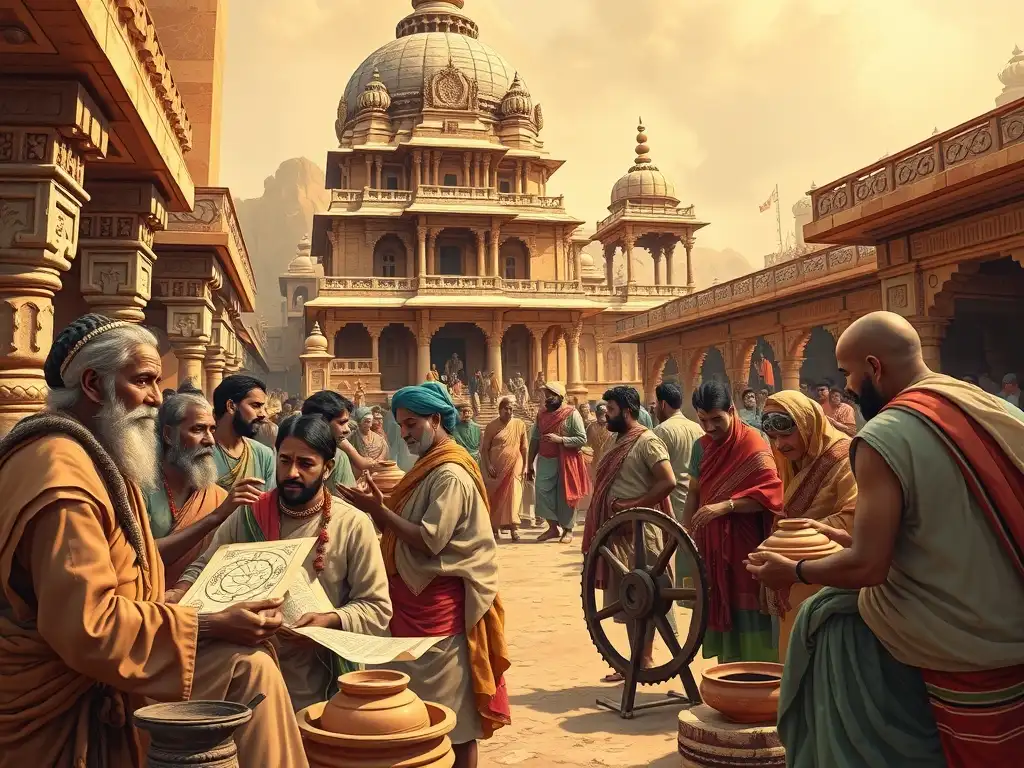
Ancient India was a cradle of innovation, producing groundbreaking advancements that significantly influenced neighboring civilizations. These innovations spanned various fields, including mathematics, science, and medicine, showcasing India's rich intellectual heritage. The legacy of these ancient Indian innovations continues to resonate, shaping technologies and thought processes across the globe.
Mathematical Innovations
Mathematics in ancient India reached remarkable heights, with numerous contributions that laid the groundwork for future developments in the field. The sophistication of Indian mathematics not only informed local practices but also had a profound impact on neighboring civilizations and beyond.
The Concept of Zero and Its Global Impact
One of the most significant contributions from ancient India is the invention of the concept of zero (0). The mathematician Brahmagupta (c. 598–668 CE) was one of the first to formalize its use in arithmetic operations. This innovation transformed mathematics by enabling:
- Place Value System: The integration of zero allowed for a sophisticated decimal system, facilitating calculations and record-keeping.
- Complex Calculations: With zero, mathematicians could perform more complex calculations, leading to advancements in astronomy, commerce, and engineering.
This concept eventually traveled to the Islamic world and then to Europe, where it revolutionized mathematics and scientific thought. The adoption of zero laid the foundation for calculus and advanced mathematics, demonstrating the far-reaching effects of ancient Indian innovations.
Advances in Geometry and Algebra
Ancient Indian scholars made exceptional strides in geometry and algebra. Notable developments included:
- Sulbasutras: Ancient texts that provided rules for constructing altars and geometric shapes, outlining principles that are now foundational in geometry.
- Algebraic Techniques: Indian mathematicians developed techniques for solving quadratic equations and systems of equations, making significant contributions to algebra.
The work of mathematicians like Aryabhata (c. 476–550 CE) and Bhaskara II (1114–1185 CE) expanded the understanding of mathematical concepts. Their discoveries influenced not only neighboring civilizations but also European mathematicians during the Renaissance.
Scientific Innovations
The scientific achievements of ancient India extended far beyond mathematics, making substantial contributions to the fields of astronomy and medicine. These innovations played a crucial role in shaping the scientific landscape of neighboring cultures.
Contributions to Astronomy and Navigation
Ancient Indian astronomers excelled in observations and calculations that were critical for navigation and understanding celestial phenomena. Key contributions included:
- Aryabhata's Model of the Universe: Aryabhata proposed that the Earth rotates on its axis, a revolutionary idea at the time. His calculations of the solar year were remarkably accurate.
- Star Catalogs: Ancient Indian texts contained detailed astronomical catalogs, guiding navigation and influencing Islamic and European astronomy.
These advancements facilitated trade and cultural exchange, as accurate navigation was essential for maritime activities across the Indian Ocean and beyond.
Medical Practices and Ayurveda
The ancient practice of Ayurveda emerged as a sophisticated system of medicine in India, profoundly influencing health practices in neighboring civilizations. Key aspects of Ayurveda include:
- Herbal Remedies: Extensive use of plants and herbs for medicinal purposes laid the groundwork for herbal medicine globally.
- Holistic Approach: Ayurveda emphasizes a balance between body, mind, and spirit, a concept that has gained traction in various health systems worldwide.
The dissemination of Ayurvedic knowledge through trade routes contributed to the integration of these medical practices in regions such as Tibet, China, and later in the Middle East.
The ancient Indian innovations influence can be seen in mathematics, science, and medicine, with ideas and practices that transcended borders and enriched neighboring civilizations. The legacy of these innovations continues to inspire and inform contemporary thought and practice worldwide.
Engineering and Architectural Innovations
Ancient India is renowned for its remarkable engineering and architectural innovations that not only showcased the ingenuity of its people but also significantly influenced neighboring civilizations. These innovations reflect a deep understanding of materials, geometry, and environmental adaptation, which laid the foundation for many modern engineering practices. The ancient Indian architects and engineers employed advanced techniques in urban planning, temple construction, and water management, leading to the development of complex structures that were both functional and aesthetically pleasing.
Among the most notable achievements were the sophisticated urban planning systems seen in the Indus Valley Civilization, as well as the intricate temple designs that served both religious and cultural purposes. These innovations facilitated advancements in various fields, including urban infrastructure, religious architecture, and hydraulic engineering, impacting societies well beyond the Indian subcontinent.
Urban Planning in the Indus Valley
The Indus Valley Civilization, which thrived around 2500 BCE, is celebrated for its exemplary urban planning and sophisticated city layouts. Cities like Mohenjo-Daro and Harappa were meticulously organized, featuring a grid pattern of streets, advanced drainage systems, and public baths. The urban planners demonstrated a profound understanding of hydrology and sanitation, which is evident in the following key features:
- Grid Layout: Streets were laid out in a precise grid pattern, allowing for efficient movement and organization. The uniformity in street width and alignment indicates advanced planning and foresight.
- Drainage Systems: The cities possessed one of the world's earliest known drainage systems. Wastewater was channeled through covered drains, which were connected to individual homes, reflecting a commitment to hygiene and public health.
- Water Supply: Advanced techniques were employed to manage water supply and storage, including the construction of large reservoirs and wells. This ensured a consistent water supply for both domestic and agricultural needs.
These urban planning practices not only influenced subsequent Indian city layouts but also inspired urban development in neighboring regions, showcasing the far-reaching impact of ancient Indian innovations.
Construction Techniques in Ancient Temples
The construction of temples in ancient India represents a pinnacle of architectural innovation, reflecting both religious devotion and artistic expression. Temples were built using advanced techniques that emphasized durability and aesthetic beauty, influencing architectural styles across Asia. Key aspects of temple construction included:
- Material Use: Temples were often constructed using locally sourced materials such as sandstone, granite, and marble. The choice of materials was critical in ensuring the longevity of these structures.
- Carvings and Sculptures: Intricate carvings and sculptures adorned temple walls, depicting deities, mythological scenes, and daily life. These artistic elements not only enhanced the visual appeal but also served to convey religious narratives and cultural values.
- Structural Design: The development of the shikhara (tower) above the sanctum sanctorum exemplified advanced structural engineering. The design allowed for both height and stability, creating visually striking silhouettes against the skyline.
- Sacred Geometry: Many temples were constructed following principles of sacred geometry, which were believed to enhance spiritual energy. This understanding of geometry influenced architectural practices in neighboring cultures, as these principles were adapted and integrated into their own designs.
Overall, the construction techniques employed in ancient Indian temples not only served religious functions but also set a template for architectural practices in subsequent civilizations, demonstrating the profound influence of ancient Indian innovations on regional architecture and culture.
Influence of Ancient Indian Innovations on Neighboring Civilizations

The Spread of Mathematical Knowledge
Ancient Indian innovations in mathematics have had a profound influence on neighboring civilizations, particularly through the introduction of concepts such as zero, the decimal system, and advanced arithmetic operations. The origins of these mathematical principles can be traced back to the early Indian mathematicians, who laid the groundwork for a system that would later be adopted and adapted by cultures across the globe.
Influence on Persian and Arab Mathematicians
Indian mathematical texts, particularly the Sulbasutras and Aryabhatiya, were translated into Arabic during the early medieval period, significantly influencing Persian and Arab mathematicians. The introduction of zero as a placeholder and the concept of infinity revolutionized calculations, allowing for more complex mathematical operations. Notably, scholars like Al-Khwarizmi, often hailed as the "father of algebra," incorporated these Indian innovations into their work, leading to the establishment of algebra as a distinct discipline.
- Key Contributions:
- Zero: Allowed for the representation of nothingness, enabling the development of more advanced calculations.
- Decimal System: Facilitated easier computation and record-keeping, which became crucial for trade and astronomy.
- Algebra: Provided a systematic approach to solving equations, drawing heavily from Indian methodologies.
Adoption of Indian Numerals in Europe
The spread of Indian numerals to Europe occurred primarily through Arabic translations of Indian texts. By the 10th century, these numerals were adopted by European scholars, marking a significant shift from the cumbersome Roman numeral system. This transition was instrumental in the development of mathematics and commerce in Europe.
- Timeline of Adoption:
- 10th Century: Indian numerals introduced to Europe via Arabic scholars.
- 15th Century: Widespread acceptance in European mathematics and commerce, as seen in the works of Fibonacci in Liber Abaci.
The adoption of Indian numerals not only simplified calculations but also enhanced the efficiency of trade and scientific research in Europe, further showcasing the extensive influence of ancient Indian innovations.
Impact on Scientific Practices
The innovations from ancient India extended beyond mathematics, significantly impacting scientific practices in various fields, including medicine and astronomy. The transmission of knowledge through trade routes and scholarly exchanges facilitated the integration of Indian scientific principles into neighboring cultures.
The Transmission of Ayurvedic Medicine
Ayurveda, the ancient system of medicine originating in India, has influenced numerous neighboring civilizations, particularly in the realms of herbal medicine and holistic health practices. The principles of Ayurveda emphasize balance in bodily systems, which resonated with other medical traditions.
- Key Influences:
- Herbal Remedies: The use of specific plants for healing was adopted by Persian and Arab physicians, leading to the creation of comprehensive pharmacopoeias.
- Holistic Approaches: Ayurvedic concepts of balance influenced the development of medical practices in regions such as Tibet and China.
The dissemination of Ayurvedic texts and the establishment of medical schools facilitated the exchange of knowledge, leading to advancements in medical practices across cultures.
Influence on Greek and Roman Science
Ancient Indian innovations also made their way into Greek and Roman science, particularly through the translation of texts and the movement of scholars along trade routes. Concepts in astronomy, mathematics, and physics were enriched by the contributions of Indian thinkers.
- Significant Contributions:
- Astronomy: Indian astronomical texts, such as those by Aryabhata, introduced concepts of planetary motion and eclipses that were later adopted by Greek astronomers.
- Physics: The principles of motion and mechanics presented in ancient Indian texts informed early Greek theories, paving the way for future developments in the field.
The influence of ancient Indian innovations on Greek and Roman scientific practices exemplifies the interconnectedness of ancient civilizations and the lasting legacy of Indian intellectual contributions on global knowledge systems.
Architectural Exchange and Urban Planning
Ancient Indian innovations in architecture and urban planning significantly influenced neighboring civilizations, particularly in Southeast Asia and the Islamic world. The sophisticated designs and urban layouts developed in ancient India laid the groundwork for architectural styles that were adopted and adapted by various cultures through trade, conquest, and cultural exchange. This exchange of architectural knowledge not only transformed the physical landscapes of these regions but also fostered a sense of cultural identity and continuity.
One of the most notable aspects of Indian architecture is the emphasis on symmetry and urban planning, which can be seen in the grid-like layout of cities such as Mohenjo-Daro and Harappa during the Indus Valley Civilization. These planning principles, which included advanced drainage systems, public baths, and fortified structures, were later echoed in the urban designs of neighboring regions. As Indian merchants and travelers engaged with cultures from Southeast Asia to the Middle East, they brought these innovative ideas with them, leading to an exchange that would shape the built environment of many civilizations.
Adoption of Indian Architectural Styles in Southeast Asia
The architectural influence of ancient India is particularly evident in Southeast Asia, where Indian styles were absorbed into local traditions, resulting in a unique blend of aesthetics. Temples such as Angkor Wat in Cambodia and the Borobudur in Indonesia demonstrate the direct impact of Indian architectural principles, including the use of intricate carvings, towering structures, and elaborate layouts that reflect Hindu and Buddhist cosmology.
These structures often incorporated features like the stupa, which is rooted in Indian Buddhist architecture, and the mandapa, or pillared hall, which served as a gathering space for worshippers. The adoption of these styles was facilitated by the spread of Indian religions, particularly Hinduism and Buddhism, which also carried with them cultural and artistic practices that permeated local societies.
Furthermore, the Srivijaya Empire, which thrived in maritime Southeast Asia, exemplified the integration of Indian architectural styles into local designs. The construction of grand temples and palaces in this region was heavily influenced by Indian models, showcasing the collaborative nature of architectural evolution across cultures.
Influence on Islamic Architecture
The influence of ancient Indian innovations extended into the realm of Islamic architecture, particularly during the medieval period. As Islamic empires expanded into the Indian subcontinent, they encountered the rich architectural heritage of ancient India. This interaction led to the synthesis of styles, resulting in a distinctive architectural language that combined Indian elements with Islamic design principles.
One of the most prominent examples of this influence is the use of intricate jali work (lattice screens), which found its way into Mughal architecture. The geometric precision and ornamental details of these screens echo the craftsmanship of ancient Indian artisans while serving functional purposes in terms of ventilation and privacy. Additionally, the grand scale of structures like the Taj Mahal showcases the fusion of Persian architectural features with Indian motifs, including the use of gardens and water elements, reminiscent of ancient Indian designs.
Moreover, the introduction of domes and minarets in Indian architecture was also influenced by the Islamic architectural tradition, creating a unique blend that characterized many structures built during the Mughal era. This cross-cultural interaction not only enhanced the aesthetic appeal of buildings but also reflected the complex historical narrative of the region, where ancient Indian innovations played a pivotal role in shaping architectural practices across the Islamic world.
Cultural Exchanges and Their Role in Technology Transfer

Cultural exchanges have been pivotal in shaping the technological landscape of ancient civilizations. The transfer of knowledge, ideas, and innovations often occurred through various means, including trade, diplomacy, and direct interactions between different societies. In the case of ancient India, innovations in various fields—ranging from mathematics and astronomy to metallurgy and textiles—had a profound impact on neighboring civilizations. The intricate web of interactions facilitated by these exchanges laid the groundwork for technological advancements that resonated far beyond the Indian subcontinent.
Trade Routes and Their Importance
Trade routes were the arteries through which ideas and technologies flowed. The establishment and maintenance of these routes allowed for not only the movement of goods but also the exchange of cultural and scientific knowledge. Ancient Indian innovations influence the technologies of neighboring civilizations was significantly accentuated through these trade networks.
The Silk Road and Maritime Trade
The Silk Road, a network of trade routes connecting the East and West, played a crucial role in facilitating cultural exchanges. Spanning thousands of miles, this route enabled merchants to transport luxurious goods such as silk, spices, and precious stones. However, it was not just material goods that were exchanged; ideas and technologies traveled alongside commodities.
For instance, Indian concepts of mathematics, including the numeral system and the concept of zero, were disseminated along the Silk Road, influencing the development of mathematics in regions like Persia and the Arab world. Similarly, advancements in astronomy, such as the calculation of eclipses and planetary positions, found their way into the scientific discourse of neighboring civilizations.
Maritime trade routes also contributed significantly to cultural exchanges. The ports along the coasts of India facilitated interactions with traders from Southeast Asia, the Arabian Peninsula, and even Africa. The spread of Indian textiles, particularly cotton and silk, was accompanied by the sharing of weaving techniques and dyeing methods. These exchanges not only enriched the economies of these regions but also fostered a cross-pollination of ideas that would lead to technological advancements.
Cultural Interactions through Trade
Trade was more than just an economic activity; it was a catalyst for cultural interactions. Merchants, travelers, and artisans exchanged knowledge, practices, and innovations that transformed societies. The influence of ancient Indian innovations extended to agriculture, medicine, and architecture through these interactions.
For example, the introduction of irrigation techniques, such as the use of wells and canals, revolutionized agricultural practices in regions like the Middle East, enabling them to cultivate crops more efficiently. Additionally, Ayurvedic medicine, with its emphasis on herbal remedies and holistic healing, found resonance in neighboring cultures, prompting the adoption of similar practices.
Moreover, architectural styles and construction techniques, particularly in stone masonry and temple design, were influenced by Indian innovations. The spread of these architectural practices can be seen in the temples of Southeast Asia, where Indian motifs and styles were integrated into local designs, resulting in unique regional architectures.
Diplomatic Relations and Knowledge Exchange
Diplomatic relations between ancient Indian states and neighboring civilizations facilitated the exchange of knowledge and innovations. Envoys and scholars traveled across borders, carrying with them not only messages of political allegiance but also the seeds of technological advancement.
Envoys and Scholars as Messengers of Innovation
Envoys often played a crucial role in the dissemination of knowledge. They were not just diplomats; they were also bearers of culture and innovation. Scholars accompanying these envoys brought expertise in various fields, enriching the intellectual landscape of their host civilizations.
For example, during the Mauryan Empire, envoys were sent to regions as far as Greece and Persia. These interactions led to the exchange of philosophical ideas, scientific knowledge, and technological advancements. The introduction of Indian mathematical concepts, such as the decimal system, significantly influenced Greek and Roman mathematics.
Moreover, scholars from India were instrumental in translating and interpreting texts from other cultures, further facilitating the exchange of ideas. This collaborative spirit fostered an environment where innovations were not only shared but also adapted and improved upon by neighboring civilizations.
Collaborative Projects with Neighboring Civilizations
Collaborative projects between ancient Indian states and neighboring civilizations often led to significant technological advancements. Joint ventures in agriculture, architecture, and metallurgy exemplify how cultural exchanges can drive innovation.
For instance, the construction of irrigation systems and water management projects often involved cooperation between Indian and neighboring states. This not only improved agricultural productivity but also led to the exchange of techniques and innovations in civil engineering.
In metallurgy, the techniques for producing high-quality steel, notably the famous Wootz steel, were shared with various regions through trade and diplomatic channels. This steel-making knowledge influenced the production of weapons and tools in other civilizations, enhancing their military and agricultural capabilities.
The rich tapestry of cultural exchanges between ancient India and its neighbors significantly shaped technological advancements. The interplay of trade, diplomacy, and collaborative projects facilitated the transfer of innovations, which left a lasting mark on the technologies of neighboring civilizations. The legacy of these exchanges continues to resonate in the technological practices and cultural developments of the modern world.
Conclusion: The Lasting Legacy of Ancient Indian Innovations

The legacy of ancient Indian innovations is profound, leaving indelible marks on the technological advancements of neighboring civilizations. These contributions span various fields, including mathematics, metallurgy, medicine, and urban planning. By examining these influences, we can appreciate how ancient Indian innovations shaped the trajectory of technological development across regions.
Summary of Key Influences on Neighboring Technologies
-
Mathematics and Astronomy
Ancient India is credited with significant advancements in mathematics, notably the concept of zero and the decimal system. These innovations had a ripple effect, influencing neighboring cultures such as the Arabs and Persians, who later transmitted these ideas to Europe during the Middle Ages.
- Key Contributions:
- Zero: Revolutionized calculations and record-keeping.
- Trigonometry: Indian mathematicians developed sine and cosine functions, influencing Islamic astronomy.
- Key Contributions:
-
Metallurgy
The skillful production of high-quality steel, particularly through the development of Wootz steel, was a significant ancient Indian innovation. This advanced metallurgy influenced weapon-making and tools in civilizations such as Persia and later in Europe.
- Notable Examples:
- The famous Iron Pillar of Delhi, known for its rust-resistant properties, showcases ancient Indian expertise in metallurgy.
- Notable Examples:
-
Medicine
The ancient Indian texts on medicine, particularly the Ayurveda, laid the groundwork for holistic health practices that spread to neighboring regions. The principles of Ayurveda influenced medical practices in Tibet and even parts of China.
- Influences:
- Herbal remedies and surgical techniques from ancient India were adopted and adapted in various cultures, enhancing their medical knowledge.
- Influences:
-
Urban Planning and Architecture
The urban designs of the Indus Valley Civilization, characterized by advanced drainage systems and grid layouts, provided a model for subsequent urban development in neighboring regions, including Persia and the Mediterranean.
- Impact:
- The planning principles influenced city layouts, leading to more organized and sustainable urban environments.
- Impact:
Reflection on the Importance of Cultural Exchange in Advancing Civilization
Cultural exchange is a vital catalyst for innovation and progress, as evidenced by the ancient Indian innovations that permeated neighboring civilizations. The interactions facilitated by trade, conquests, and migration allowed for the sharing of ideas, technologies, and practices that enriched societies.
- Key Points:
- Mutual Enrichment: As ancient Indian innovations influenced neighboring technologies, these cultures also contributed their advancements back to India, leading to a dynamic cycle of knowledge exchange.
- Global Impact: The spread of ancient Indian innovations underscores the interconnectedness of civilizations. The technological advancements that arose from these exchanges played a crucial role in shaping the modern world.
The enduring legacy of ancient Indian innovations serves as a testament to the power of cultural exchange in fostering advancement. By studying these influences, we gain insight into the collaborative nature of human progress and the interconnected history that binds us.
Frequently Asked Questions
What are some key ancient Indian innovations that influenced neighboring civilizations?
Ancient Indian innovations such as mathematics, astronomy, and medicinal practices significantly shaped technologies in areas like the Middle East and Southeast Asia.
How did the Indus Valley Civilization contribute to technological advancements?
The Indus Valley Civilization is known for its sophisticated urban planning, including advanced drainage systems and grid layouts, which influenced later city designs in the region.
What role did the Gupta Empire play in the spread of technological knowledge?
The Gupta Empire was a golden age for science and technology in ancient India, promoting innovations in metallurgy, mathematics, and medicine, which spread across Asia.
How did ancient Indian mathematics impact other cultures?
Ancient Indian mathematics, particularly the concept of zero and the decimal system, laid the foundation for modern arithmetic and significantly influenced Arabic and European mathematics.
In what ways did Ayurvedic medicine influence global health practices?
Ayurvedic medicine, originating in ancient India, introduced holistic health practices and herbal treatments that have influenced traditional medicine systems worldwide, promoting a balance between body and mind.
Final Reflection: The Enduring Legacy of Ancient Indian Innovations
The influence of ancient Indian innovations on neighboring civilizations is not merely a historical footnote; it is a testament to the power of knowledge and creativity transcending borders. Today, as we navigate a world increasingly interconnected by technology and culture, the lessons from ancient India remind us of the profound impact that one civilization can have on another. The innovations in mathematics, metallurgy, and medicine that originated in India have not only shaped the technological landscape of the past but continue to resonate in our modern advancements.
The legacy of these innovations is evident in the cultural and social fabric of many societies that have drawn inspiration from ancient Indian wisdom. From the algorithms of mathematics that underpin our digital age to the holistic approaches of Ayurveda influencing global health practices, the ripple effects of these ancient contributions are vast and significant. Innovation is the ability to see change as an opportunity – not a threat.
This quote encapsulates the spirit of ancient Indian thinkers who embraced change and shared their knowledge, fostering a legacy that encourages continuous growth and adaptation.
As we reflect on the remarkable journey of ancient Indian innovations, let us consider how we can apply these lessons in our own lives. Embrace curiosity, seek knowledge, and be open to collaboration across cultures. By doing so, we not only honor the contributions of those who came before us but also pave the way for future innovations that can transform our world. Take a moment to reflect on how you can incorporate the spirit of ancient Indian ingenuity into your own pursuits, and remember that the seeds of innovation can flourish in any era, given the right nurturing.
Unveil the Legacy of Ancient Innovations!
Thank you for exploring the fascinating connections between ancient Indian innovations and their impact on neighboring civilizations. You've uncovered the rich tapestry of technological advancements that shaped not just one culture but many! Now, let’s take the next step in this enlightening journey.
- Dive deeper into the innovations that inspired you the most and share your findings with friends or family who might be intrigued!
- Join our community by signing up for our newsletter to receive more insights and stories about the wisdom and innovations of ancient India.
- Explore local history museums to discover artifacts and exhibitions that highlight these remarkable technologies.
Which innovation do you believe had the most profound impact on the civilizations surrounding ancient India, and why? We’d love to hear your thoughts!