
The Exchange of Scientific Knowledge Between Ancient India and the Arab World


Welcome to Ancient India History, where we embark on a fascinating journey through the rich tapestry of ancient civilizations that shaped the Indian subcontinent. In this exploration, we delve into the intriguing topic of Ancient India Arab scientific exchange, uncovering how the confluence of ideas and knowledge between these great cultures fostered remarkable advancements in science and philosophy. Join us as we unravel the layers of this profound cultural exchange and discover the enduring impact it has had on the world. Are you ready to dive deeper into the vibrant history that connects these two legacies?

Introduction to Ancient India and Arab Scientific Exchange
The exchange of scientific knowledge between ancient India and the Arab world represents a fascinating chapter in the history of global intellectual development. This interaction was not merely a one-way transmission; rather, it was a dynamic interchange that significantly shaped the scientific landscape of both regions.
The rich tapestry of ancient Indian civilization, known for its advancements in mathematics, astronomy, medicine, and philosophy, intertwined with the burgeoning intellectual pursuits of the Arab world during the Islamic Golden Age. This article aims to explore the intricate pathways through which knowledge flowed between these two influential cultures, highlighting their collaborative contributions to science and technology.
Overview of Ancient Indian Civilization
Ancient India, with its roots tracing back to the Indus Valley Civilization (circa 3300-1300 BCE), was a cradle of innovation and scholarship. Notable achievements included the development of the decimal system, extensive knowledge of astronomy, and sophisticated medical practices such as Ayurveda.
The Vedic texts and later works like the Aryabhatiya by Aryabhata (476-550 CE) laid down foundational concepts in mathematics and astronomy that would later influence scholars across the globe. The Gupta Empire (circa 320-550 CE) marked a golden age of scientific inquiry, producing luminaries like Brahmagupta and Varahamihira, whose works established crucial connections between mathematical theory and practical applications.
The Role of the Arab World in the Scientific Renaissance
The rise of the Arab world as a center of learning during the Islamic Golden Age (8th to 14th centuries) was pivotal in preserving and expanding upon ancient knowledge. Scholars such as Al-Khwarizmi, who is often referred to as the father of algebra, drew heavily from Indian mathematical concepts. The translation movement in cities like Baghdad facilitated the introduction of Indian texts and ideas into the Arab scholarly tradition.
This cross-pollination of knowledge led to significant advancements in various fields, including mathematics, astronomy, and medicine. The synthesis of Indian and Arab intellectual traditions laid the groundwork for the scientific renaissance that would later sweep through Europe.
Historical Context of Scientific Knowledge Exchange
Timeline of Ancient India and Arab Interactions
The interactions between ancient India and the Arab world can be traced through a series of significant events and exchanges over centuries:
- 8th Century CE: The establishment of trade routes between India and the Arab world facilitated cultural and intellectual exchanges.
- 9th Century CE: The translation of Indian scientific works into Arabic began, notably through scholars in Baghdad.
- 10th Century CE: The introduction of the Indian numeral system to the Arab world, which ultimately spread to Europe.
- 12th Century CE: The flourishing of Islamic scholarship in Spain, where Indian and Arab knowledge merged and influenced European thought.
Key Events Facilitating Scientific Exchange
Several key events and developments were instrumental in fostering the exchange of scientific knowledge between ancient India and the Arab world:
- Trade Relations: The thriving maritime and overland trade routes allowed for the movement of not only goods but also ideas and knowledge.
- Scholarly Collaborations: Joint ventures between Indian and Arab scholars led to the compilation and enhancement of scientific texts, ensuring a rich dialogue.
- Translation Efforts: The translation of key Indian texts into Arabic provided a bridge for the dissemination of knowledge, enabling Arab scholars to build upon the foundational concepts of their Indian counterparts.
Through these interactions, ancient India and the Arab world not only exchanged knowledge but also contributed to a shared legacy of scientific inquiry that continues to resonate in modern scientific discourse.
Major Areas of Scientific Exchange
The exchange of scientific knowledge between Ancient India and the Arab world was multifaceted, impacting several key areas. This vibrant interaction fostered advancements in mathematics, astronomy, medicine, and philosophy, creating a legacy that influenced future generations. The interconnectedness of these civilizations facilitated not only the transfer of knowledge but also the blending of ideas, which enriched both cultures.
Mathematics and Astronomy
One of the most significant contributions of Ancient India to the Arab world is in the fields of mathematics and astronomy. Indian mathematicians were pioneers in the development of the decimal system and the concept of zero, which were later transmitted to the Arab scholars. The famous Indian mathematician Brahmagupta (598–668 CE) wrote extensively on arithmetic and algebra, laying the groundwork for future developments in these fields.
Arab scholars, such as Al-Khwarizmi, adopted and expanded upon these ideas, leading to the establishment of algebra as a distinct mathematical discipline. Furthermore, the astronomical treatises from India, particularly the Surya Siddhanta, provided foundational knowledge that was instrumental for Arab astronomers, who made significant advancements in the field of celestial navigation and the calculation of planetary movements.
Medicine and Health Sciences
The exchange of medical knowledge was another vital aspect of the Ancient India-Arab scientific exchange. Indian texts, such as the Sushruta Samhita, outlined advanced surgical techniques and a comprehensive understanding of human anatomy. These texts were translated into Arabic, allowing Arab physicians to incorporate Indian medical practices into their own systems.
Prominent figures like Al-Razi and Ibn Sina (Avicenna) drew heavily from Indian medical literature, adapting various herbal remedies and surgical methods. This collaboration not only enhanced medical practices in the Arab world but also laid the groundwork for future advancements in global medicine.
Philosophy and Logic
The philosophical exchanges between Ancient India and the Arab world were profound, with Indian texts significantly influencing Islamic philosophy. The Nyaya and Samkhya schools of thought contributed valuable insights into logic and epistemology. Works by Indian philosophers such as Gautama and Kapila were translated into Arabic, enriching the intellectual landscape of the Arab world.
Arab scholars, including Al-Farabi and Ibn Rushd (Averroes), engaged with these ideas, integrating them into Islamic philosophy and furthering the discourse on metaphysics and ethics. This fusion of Indian and Arab philosophical thought established a rich tradition of debate and inquiry that reverberated through the ages.
Key Figures in Ancient India-Arab Scientific Exchange
The contributions of key figures in the exchange of scientific knowledge between Ancient India and the Arab world were instrumental in fostering advancements across various fields. These scholars are remembered not only for their pioneering work but also for their ability to bridge cultural divides through knowledge.
Prominent Indian Scholars and Their Contributions
- Aryabhata (476–550 CE): A mathematician and astronomer known for his work in the Aryabhatiya, where he introduced the concept of zero and detailed methods for calculating the area of a triangle.
- Brahmagupta (598–668 CE): His seminal work on arithmetic and algebra influenced Arab mathematicians, including the formulation of rules for solving quadratic equations.
- Sushruta (c. 600 BCE): Renowned for his contributions to surgery, Sushruta's texts laid the foundation for medical practices that were adopted and adapted by Arab physicians.
These scholars' works were translated into Arabic, becoming reference points for subsequent generations of scholars in both cultures.
Influential Arab Scholars Adopting Indian Knowledge
- Al-Khwarizmi (c. 780–850 CE): Often referred to as the "father of algebra," he utilized Indian mathematical concepts in his works, laying the groundwork for algebraic methods.
- Al-Razi (865–925 CE): A prominent physician who integrated Indian medicinal practices into his teachings, significantly advancing medical knowledge in the Arab world.
- Ibn Sina (Avicenna) (980–1037 CE): His medical encyclopedia, The Canon of Medicine, included extensive references to Indian medical texts, influencing both Eastern and Western medicine.
These Arab scholars exemplified the collaborative spirit of the Ancient India-Arab scientific exchange, furthering knowledge and innovation across cultures.
Mechanisms of Knowledge Transfer
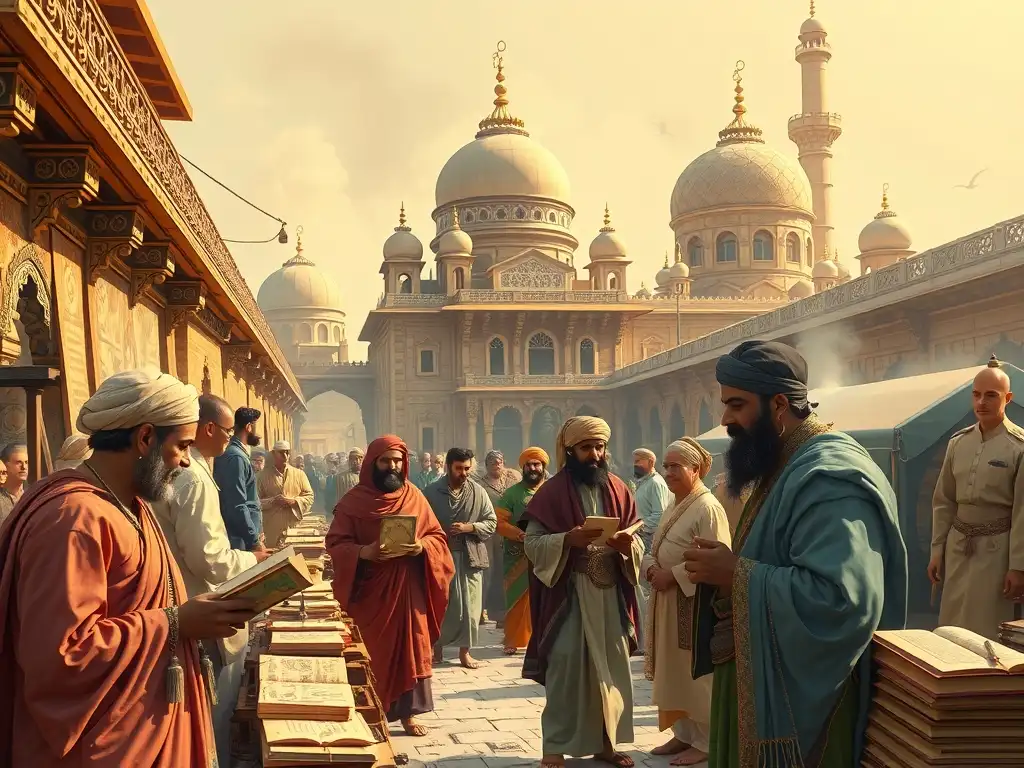
The exchange of scientific knowledge between ancient India and the Arab world was facilitated by several mechanisms that transcended geographic and cultural barriers. These mechanisms included trade routes, translation movements, and intellectual collaborations, which all played crucial roles in ensuring the flow of ideas and information.
Trade Routes and Their Role in Cultural Exchange
Trade routes were vital conduits for the exchange of goods and ideas. The Silk Road and maritime routes connected the Indian subcontinent with the Arabian Peninsula, allowing merchants to not only trade spices, textiles, and precious metals but also to share knowledge. Indian traders, sailing to ports like Basra and Aden, introduced Arab merchants to advanced concepts in mathematics, astronomy, and medicine. This interaction fostered a mutual appreciation for the scientific achievements of each culture.
Moreover, the bustling markets and trade fairs became melting pots where scholars from both regions gathered to discuss and disseminate knowledge. The Indian Ocean trade network, in particular, was instrumental in this exchange, as it facilitated the movement of not just goods but also texts and scholars, creating a vibrant intellectual atmosphere that encouraged cultural and scientific advancements.
Translation Movements and Intellectual Collaborations
The translation movements that occurred during the 8th to 12th centuries significantly contributed to the ancient India Arab scientific exchange. Scholars in the Arab world recognized the value of Indian texts on mathematics, astronomy, and medicine and sought to translate these works into Arabic. Notable figures, such as Al-Khwarizmi, who is often credited with the introduction of Hindu-Arabic numerals and algebra to the Islamic world, played a key role in this process.
Intellectual collaborations also flourished during this period. Institutions such as the House of Wisdom in Baghdad became centers for translating and studying Indian scientific works. This collaboration not only preserved the knowledge of ancient India but also integrated it with existing Arab and Greek scholarship. The synthesis of these diverse intellectual traditions led to significant advancements in various fields of study.
Impact of the Exchange on Scientific Development
The exchange of knowledge between ancient India and the Arab world had profound impacts on scientific development in both regions. This interaction not only enriched the intellectual landscape but also resulted in innovative advancements across various disciplines.
Advancements in Astronomy and Navigation
The influence of Indian astronomical knowledge was particularly notable in the field of navigation. Indian texts, such as the Surya Siddhanta, provided crucial information on celestial movements, which Arab scholars adapted to improve navigation techniques. This knowledge was essential for maritime trade, allowing Arab sailors to navigate vast distances with greater accuracy.
Furthermore, Indian concepts of the spherical Earth and calculations of time helped shape the Arab understanding of astronomy. The incorporation of Indian star charts and mathematical models into Arab astronomy led to the development of more precise astronomical instruments, including the astrolabe, which became essential for both navigation and scientific observation.
Influence on Mathematics and Algebra
One of the most significant legacies of the ancient India Arab scientific exchange is the development of mathematics, particularly algebra. The introduction of the decimal system and the concept of zero from Indian mathematicians revolutionized mathematical practices in the Arab world. Scholars like Al-Khwarizmi, who wrote influential texts on arithmetic and algebra, drew extensively from Indian sources, thereby laying the groundwork for modern mathematics.
This mathematical exchange did not only influence the Arab world; it eventually made its way to Europe during the Renaissance, marking a pivotal moment in the history of mathematics and science. The spread of these mathematical concepts facilitated advancements in various fields, including engineering, architecture, and economics.
Contributions to Medicine and Public Health
The medical knowledge exchanged between ancient India and the Arab world significantly impacted public health practices. Indian texts on Ayurveda and surgical techniques were translated into Arabic, influencing medical practices in the Islamic Golden Age. Prominent physicians, such as Al-Razi and Ibn Sina (Avicenna), integrated Indian medicinal knowledge into their works, contributing to a more holistic approach to medicine that emphasized both physical and mental health.
Moreover, the exchange led to advancements in pharmacology, with Indian herbs and treatments being documented and utilized within Arab medical practices. This integration not only enriched Arab medicine but set the stage for future developments in medical science, influencing practices that would be adopted in Europe and beyond.
The rich exchange of scientific knowledge between ancient India and the Arab world thus laid a foundation for many future advancements, illustrating the profound impact of cultural interactions on intellectual progress.
Conclusion: Lasting Legacy of Ancient India-Arab Scientific Exchange
The exchange of scientific knowledge between Ancient India and the Arab world has left a profound and lasting legacy that continues to influence various fields even today. This interaction fostered the development of mathematical concepts, astronomical observations, and medical advancements, which were pivotal in shaping the scientific methods and practices of both cultures. The cross-pollination of ideas not only enriched the intellectual landscapes of these civilizations but also laid a foundation for future collaborations between East and West.
Throughout history, this synergy has demonstrated the power of cultural and scientific exchanges in overcoming geographical and linguistic barriers. The translation movements in the Arab world during the medieval period played a crucial role in preserving and transmitting Indian scientific texts, thereby ensuring their survival and relevance. As a result, many concepts originating from Indian scholars were integrated into the works of Arab scientists and eventually reached Europe, sparking the Renaissance.
This legacy serves as a reminder of the importance of collaboration and openness to knowledge from diverse cultures, which can lead to groundbreaking discoveries and advancements.
Summary of Key Contributions and Their Significance
The scientific exchange between Ancient India and the Arab world is characterized by several key contributions that have shaped various domains of knowledge:
- Mathematics: Indian numerals, particularly the concept of zero, were transmitted to the Arabs, who then introduced them to Europe. This innovation revolutionized mathematical calculations and is fundamental to modern mathematics.
- Astronomy: Indian astronomical texts, such as the "Surya Siddhanta," provided crucial insights into planetary motions and eclipses. Arab astronomers built upon these concepts, enhancing observational techniques and contributing to the field of astronomy.
- Medicine: The Ayurvedic texts of Ancient India influenced Arab medical practices, leading to the development of new treatments and the establishment of hospitals in the Arab world that emphasized scientific approaches to health.
These contributions underscore the significance of the Ancient India-Arab scientific exchange as a catalyst for knowledge dissemination and innovation across cultures.
Reflections on the Importance of Cultural Exchange in Scientific Progress
Cultural exchange has always been a driving force behind scientific progress. The interaction between Ancient India and the Arab world exemplifies how sharing knowledge and ideas can lead to significant advancements. This exchange was not merely a transfer of information; it involved collaboration, adaptation, and the fusion of different methodologies.
Such interactions encourage critical thinking and innovation, as scholars from different backgrounds challenge one another's ideas and theories. The synthesis of diverse perspectives can lead to holistic approaches to problem-solving, thereby fostering creativity and scientific breakthroughs.
In today's globalized world, the lessons from this historical exchange remind us of the value of embracing diversity in scientific inquiry and collaboration. By acknowledging and celebrating contributions from various cultures, we can continue to advance knowledge and improve our understanding of the universe.
References and Further Reading on Ancient India Arab Scientific Exchange
Recommended Books and Articles
-
"The History of Mathematics: A Brief Course" by Roger L. Cooke
A comprehensive overview of the evolution of mathematical concepts, including the contributions from Ancient India and the Arab world.
-
"The Science of Ancient India" by P. K. Gode
This book explores various scientific advancements in Ancient India, including those that influenced Arab scholars.
-
"Islamic Science: The First Phase" by A. I. Sabra
An insightful analysis of the relationship between Islamic scholars and their predecessors, including Indian scientists.
-
"The Arabic Influence on Indian Mathematics" - Article by M. A. A. Al-Khalili
This article discusses the impact of Arab mathematicians on Indian scientific thought and vice versa.
Notable Online Resources
- Internet Archive: A repository of historical texts and documents related to Ancient India and its scientific contributions.
- JSTOR: An extensive database that includes scholarly articles on the exchange of scientific knowledge between Ancient India and the Arab world.
- The British Library: Offers digitized manuscripts and texts that illustrate the scientific interactions between these civilizations.
- Khan Academy: Provides accessible educational resources covering the mathematics and astronomy of Ancient India and their influence on the Arab world.
These resources are invaluable for anyone seeking to delve deeper into the fascinating history of the scientific exchange between Ancient India and the Arab world.
- Introduction to Ancient India and Arab Scientific Exchange
- Historical Context of Scientific Knowledge Exchange
- Major Areas of Scientific Exchange
- Key Figures in Ancient India-Arab Scientific Exchange
- Mechanisms of Knowledge Transfer
- Impact of the Exchange on Scientific Development
- Conclusion: Lasting Legacy of Ancient India-Arab Scientific Exchange
- References and Further Reading on Ancient India Arab Scientific Exchange
- What was the significance of the scientific exchange between Ancient India and the Arab world?
- How did the Arab scholars contribute to the preservation of Indian knowledge?
- Which areas of science saw the most influence from the exchange between Ancient India and the Arab world?
- What role did trade play in the scientific exchange between these civilizations?
- Can you name some notable figures involved in this scientific exchange?
Frequently Asked Questions
What was the significance of the scientific exchange between Ancient India and the Arab world?
The scientific exchange facilitated the transfer of knowledge, especially in fields like mathematics, astronomy, and medicine, enriching both cultures and leading to advancements in science and technology.
How did the Arab scholars contribute to the preservation of Indian knowledge?
Arab scholars translated numerous Indian texts into Arabic, ensuring that vital scientific concepts and discoveries were preserved and disseminated across the Islamic world and beyond.
Which areas of science saw the most influence from the exchange between Ancient India and the Arab world?
The exchange notably impacted mathematics, with the introduction of the decimal system, and astronomy, where Indian techniques were integrated into Arab practices, enhancing their observational methods.
What role did trade play in the scientific exchange between these civilizations?
Trade routes acted as conduits for cultural and scientific exchange, where merchants and scholars shared ideas, texts, and innovations, thus fostering a rich intellectual environment.
Can you name some notable figures involved in this scientific exchange?
Notable figures include Brahmagupta, whose works influenced Arab mathematics, and Al-Khwarizmi, who integrated Indian numerical systems into his studies, further promoting the Arab scientific legacy.
Final Reflection: The Enduring Legacy of Ancient India-Arab Scientific Exchange
The exchange of scientific knowledge between Ancient India and the Arab world is not merely a historical footnote; it is a testament to the power of collaboration and intellectual curiosity. In today’s globalized society, where knowledge transcends borders more than ever, we can draw inspiration from the rich tapestry of ideas that flourished between these two great civilizations. This exchange laid the groundwork for advancements in mathematics, astronomy, and medicine that continue to influence contemporary science and technology.
The impact of this ancient collaboration resonates profoundly in our cultural and social landscapes. From the algorithms we use in computing to the medical practices that save lives, the contributions of Ancient Indian scholars and their Arab counterparts are woven into the fabric of our daily existence. As historian and philosopher of science, Dr. Ahmed Djebbar, aptly stated, The history of science is a history of exchanges, where knowledge knows no boundaries.
This observation underscores the importance of recognizing and celebrating the interconnectedness of our intellectual heritage, which has shaped the world we live in today.
As we reflect on the lessons from the Ancient India-Arab scientific exchange, let us embrace the spirit of inquiry and collaboration in our own lives. I invite you to explore the diverse sources of knowledge around you, engage with different cultures, and contribute to the ongoing dialogue of ideas. By doing so, we honor the legacy of those ancient scholars and ensure that the flame of curiosity and innovation continues to burn brightly for future generations.
Unveil the Wisdom of Ancient Exchanges!
Thank you for exploring the fascinating connections between ancient Indian and Arab scientific knowledge! Your journey through this rich history has undoubtedly provided you with valuable insights into how cultures have influenced and enriched each other. Now, it's time to take action and deepen your understanding of this incredible legacy.
- Dive deeper: Continue your exploration by studying the specific contributions made by scholars from both cultures. Look for texts and translations that highlight their collaborative efforts and achievements.
- Share your findings: Engage with friends or followers by discussing the intriguing exchanges in scientific knowledge you’ve uncovered. Consider sharing your insights on social media or in your local book club!
- Join a community: Connect with fellow enthusiasts of ancient history by participating in forums or online discussions. Share your thoughts and learn from others who are equally fascinated by these ancient wonders.
What aspect of this ancient exchange inspires you the most, and how will it influence your perspective on today’s world?