
How the Gupta Empire Influenced Neighboring Kingdoms in Southeast Asia


Welcome to Ancient India History, where we embark on a mesmerizing journey through the tapestry of time, unraveling the rich and diverse history of ancient Indian civilizations. Today, we delve into the profound influence of the Gupta Empire on Southeast Asia, a topic that unveils the vibrant cultural exchanges that shaped neighboring kingdoms. What remarkable legacies did this golden age leave behind?
Join us as we explore the intricate connections that forged a bridge between these ancient realms and discover how the echoes of the Gupta Empire resonate in the cultures of Southeast Asia today. Your adventure awaits—let's dive deeper!
- Introduction to the Gupta Empire Influence on Southeast Asia
- Historical Context of the Gupta Empire
- Mechanisms of Gupta Empire Influence on Southeast Asia
- Spheres of Influence: Key Neighboring Kingdoms
- Lasting Impact of Gupta Empire Influence
- Conclusion: The Gupta Empire's Enduring Influence on Southeast Asia
- Frequently Asked Questions
- Final Reflection: The Enduring Legacy of the Gupta Empire's Influence on Southeast Asia
- Uncover the Lasting Legacy of the Gupta Empire!
Introduction to the Gupta Empire Influence on Southeast Asia
The Gupta Empire, often referred to as the "Golden Age of India," flourished from approximately 320 to 550 CE, marking a significant period of cultural, political, and economic prosperity. Renowned for its advancements in science, literature, and the arts, the Gupta Empire significantly shaped the historical landscape of ancient India.
However, its impact extended far beyond its borders, influencing neighboring kingdoms in Southeast Asia through extensive trade, cultural exchanges, and the spread of ideas. This article delves into the multifaceted ways in which the Gupta Empire influenced Southeast Asia, examining the cultural interactions that facilitated this exchange and the legacy that endures in the region today.
Overview of the Gupta Empire
The Gupta Empire emerged as a dominant power in northern India, unifying various kingdoms under its rule and fostering a conducive environment for artistic and intellectual growth. Key features of the Gupta period include:
- Political Structure: The Gupta rulers established a centralized administration, promoting stability and security across their territories.
- Cultural Flourishing: This era witnessed remarkable achievements in art, literature, and science, with notable figures such as Kalidasa and Aryabhata emerging during this time.
- Trade Networks: The Gupta Empire was integral to the Indian Ocean trade routes, facilitating exchanges with Southeast Asia and beyond.
The empire's influence was not merely limited to its military prowess but also encompassed the dissemination of culture and ideas that would leave an indelible mark on neighboring regions.
Importance of Cultural Exchanges with Neighboring Kingdoms
Cultural exchanges between the Gupta Empire and Southeast Asian kingdoms were pivotal in shaping the socio-political and cultural fabric of the region. Some key aspects of these exchanges include:
- Spread of Religion: The Gupta period saw the proliferation of Hinduism and Buddhism across Southeast Asia, with temple architecture and religious practices reflecting Indian influences.
- Art and Literature: The artistic styles and literary forms from the Gupta Empire inspired local artists and writers in kingdoms such as Srivijaya and Funan, leading to a rich tapestry of cultural synthesis.
- Technological Advances: Innovations in mathematics, astronomy, and metallurgy from the Gupta Empire were adopted by neighboring civilizations, enhancing their technological capabilities.
These interactions not only fostered a sense of shared identity but also facilitated the growth of trade and diplomacy, creating a legacy of interconnectedness that resonates in Southeast Asia to this day. Through this article, we will explore these influences in detail, shedding light on the profound legacy of the Gupta Empire beyond the Indian subcontinent.
Historical Context of the Gupta Empire
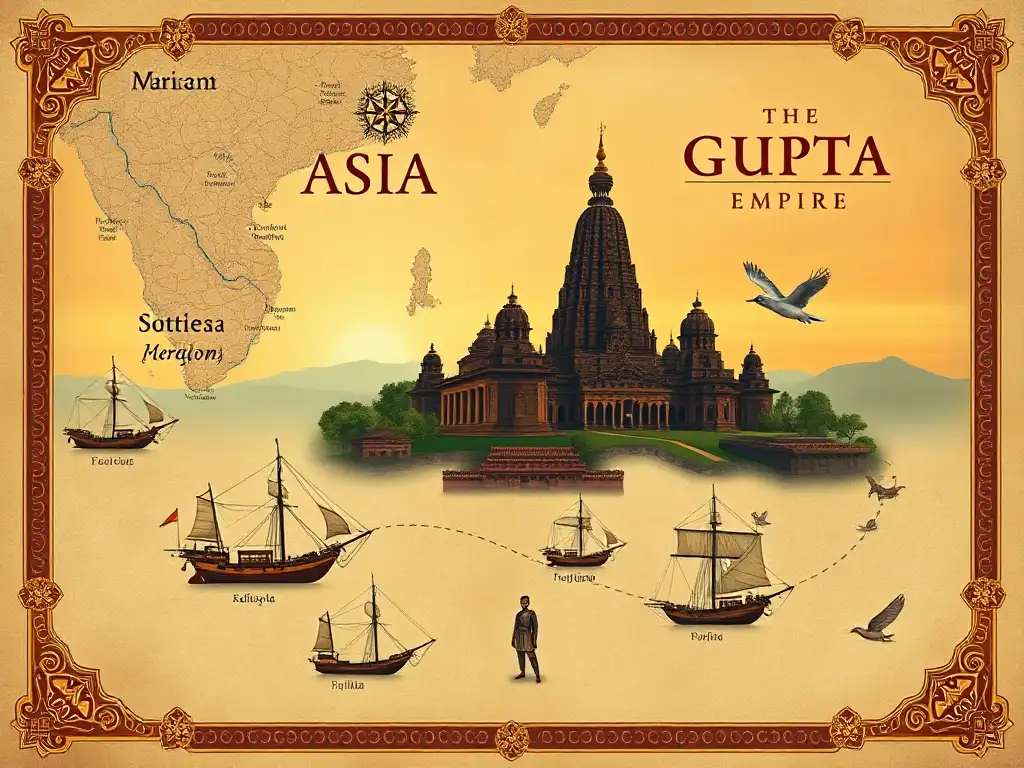
The Gupta Empire, often referred to as the "Golden Age" of India, flourished between approximately 320 and 550 CE. This period was marked by significant advancements in various fields, including arts, science, mathematics, and philosophy. Understanding the historical context of the Gupta Empire is crucial to comprehending its extensive influence on neighboring regions, particularly Southeast Asia.
The Gupta Empire emerged after the decline of the Mauryan Empire, establishing a centralized government that promoted stability and prosperity. Under the leadership of notable emperors such as Chandragupta I, Samudragupta, and Chandragupta II, the empire expanded its territory, reaching its zenith in the 4th century CE. The Gupta rulers implemented effective administrative policies, encouraged trade, and fostered cultural exchanges, creating a vibrant environment that laid the foundation for their influence beyond the subcontinent.
Timeline of the Gupta Empire (c. 320-550 CE)
The timeline of the Gupta Empire provides insight into its development and key events that shaped its influence:
| Year | Event | Significance |
|---|---|---|
| c. 320 CE | Establishment of the Gupta Empire | Chandragupta I ascends to power, marking the beginning of the Golden Age. |
| c. 335-375 CE | Reign of Samudragupta | Expansion of the empire through military conquests and consolidation of power. |
| c. 380-415 CE | Reign of Chandragupta II | Cultural and economic prosperity, patronage of arts and sciences, and further territorial expansion. |
| c. 450 CE | Decline of the Gupta Empire | Invasions by the Huns and internal strife lead to the weakening of the empire. |
| 550 CE | Fall of the Gupta Empire | Marking the end of the Gupta period and the beginning of regional fragmentation. |
This timeline illustrates the key milestones of the Gupta Empire, highlighting its remarkable achievements and the factors contributing to its eventual decline.
Major Achievements and Contributions of the Gupta Empire
The Gupta Empire was characterized by numerous achievements that significantly impacted both Indian civilization and neighboring regions, particularly Southeast Asia. Some of the major contributions include:
- Mathematics and Astronomy:
- The concept of zero as a numeral, attributed to Indian mathematicians, revolutionized mathematics globally.
- Aryabhata, a prominent mathematician and astronomer of the Gupta period, made significant contributions to the understanding of planetary motion and eclipses.
- Literature and Arts:
- The Gupta period saw the flourishing of Sanskrit literature. Notable works include Kalidasa's plays and poetry, which have had a lasting influence on Indian and Southeast Asian literature.
- The art of sculpture reached new heights, with intricate carvings and statues, particularly in sites like Sarnath and Ajanta.
- Medicine and Health:
- Advances in medical science, including surgical techniques and herbal medicine, were documented in texts like the "Sushruta Samhita," influencing medical practices in Southeast Asia.
- Religion and Philosophy:
- The Gupta Empire was a period of significant philosophical discourse, with the promotion of Hinduism and Buddhism. The spread of these religions into Southeast Asia can be traced back to the cultural exchanges during this era.
- Temples and stupas built during this time not only served religious purposes but also became centers of learning and cultural exchange.
- Trade and Economic Prosperity:
- The Gupta Empire established extensive trade networks that connected India with Southeast Asia, facilitating the exchange of goods, ideas, and cultural practices.
- Maritime trade routes allowed for the dissemination of Indian cultural influences, including art, language, and religious beliefs, across Southeast Asia.
The Gupta Empire's achievements laid the groundwork for its influence on neighboring kingdoms in Southeast Asia. The rich cultural and intellectual legacy of this period continues to resonate in the region, highlighting the enduring impact of the Gupta Empire on the course of history.
Mechanisms of Gupta Empire Influence on Southeast Asia
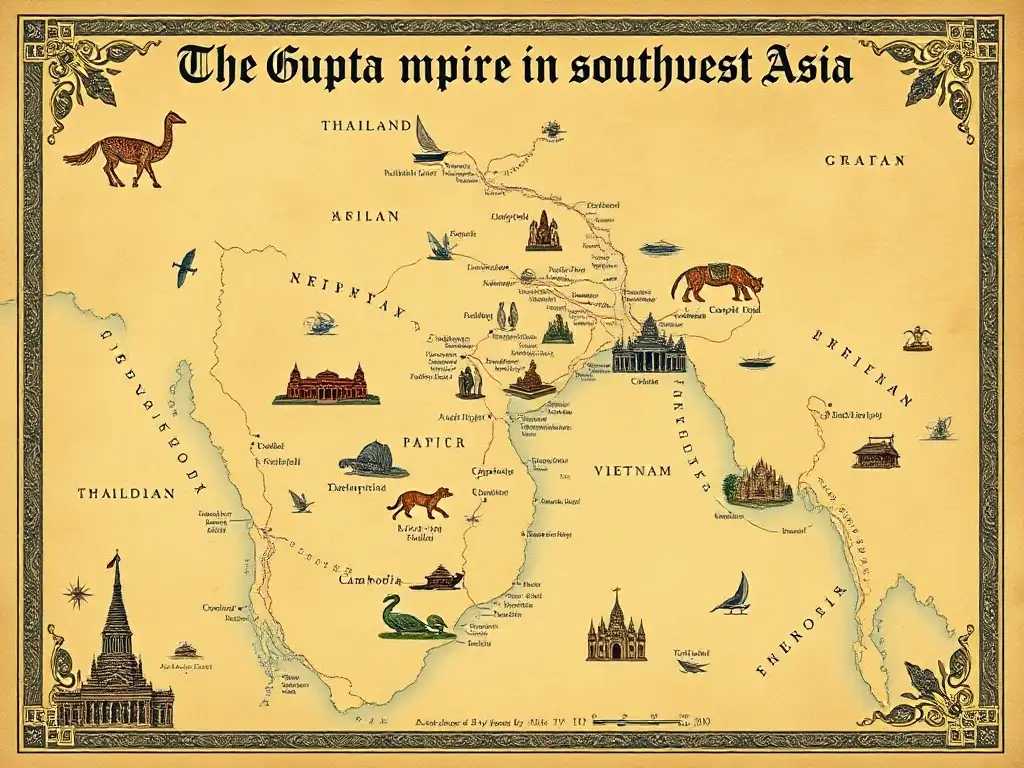
The Gupta Empire, known for its remarkable advancements in arts, science, and philosophy during the Golden Age of India, exerted significant influence on neighboring regions, particularly Southeast Asia. This influence can be understood through various mechanisms, including trade relations, diplomatic engagements, and cultural exchanges. Each of these factors contributed to the establishment of deep-rooted connections between the Gupta Empire and the kingdoms of Southeast Asia.
Trade Relations and Economic Interactions
Trade played a pivotal role in facilitating interactions between the Gupta Empire and Southeast Asia. The expansive trade networks established during this period allowed for the exchange of goods, ideas, and cultural practices.
- Maritime Trade Routes: The Gupta Empire utilized maritime routes connecting the Indian subcontinent with Southeast Asia, facilitating trade in spices, textiles, and precious stones. Key ports such as Bharukachchha (present-day Bharuch) and Sopara served as bustling centers for this maritime trade.
- Goods Exchanged: Southeast Asian kingdoms, such as Funan and Srivijaya, engaged in importing Indian goods including silk, metalwork, and ivory. In return, they exported local products like tin, gold, and exotic woods to the Gupta Empire.
- Economic Impact: This trade led to economic prosperity in both regions. The influx of wealth from trade allowed the Gupta rulers to patronize the arts and sciences, further enhancing their cultural influence.
Diplomatic Engagements and Alliances
The Gupta Empire also established diplomatic relations with several Southeast Asian kingdoms, which were crucial for mutual protection and cooperation.
- Envoys and Treaties: The Gupta rulers sent envoys to Southeast Asian kingdoms, fostering diplomatic ties that often included treaties for trade and military alliances. This established a framework for peaceful interactions, which was beneficial for trade and cultural exchange.
- Political Influence: The Gupta Empire's political stability allowed it to exert influence over neighboring regions. Southeast Asian leaders often sought the Gupta's legitimacy and support, which led to the adoption of certain administrative practices and governance models from the Gupta system.
- Cultural Diplomacy: Diplomatic missions frequently included cultural exchanges that enriched both sides. For example, the adoption of Sanskrit in local administrative systems and the influence of Gupta art styles can be traced back to these diplomatic interactions.
Cultural and Religious Exchanges
Cultural and religious exchanges constituted a significant aspect of the Gupta Empire’s influence on Southeast Asia, shaping local customs and traditions.
- Spread of Hinduism and Buddhism: The Gupta Empire played a crucial role in the propagation of Hinduism and Buddhism in Southeast Asia. The establishment of trade routes facilitated the movement of monks and scholars who disseminated religious texts and practices.
- Architectural Influence: Southeast Asian temples, such as those found in Angkor Wat and Borobudur, exhibit architectural features reminiscent of Gupta styles. This includes the use of intricate carvings and the construction of stupas, which were heavily influenced by Indian designs.
- Festivals and Rituals: Many cultural practices and festivals celebrated in Southeast Asia today can be traced back to Indian origins, including the celebration of Diwali and various forms of dance and music that reflect Indian traditions.
The Gupta Empire's influence on Southeast Asia was multifaceted, encompassing economic, diplomatic, and cultural dimensions. Through these mechanisms, the Gupta Empire not only impacted the regional dynamics of Southeast Asia but also contributed to the rich tapestry of its historical development.
Spheres of Influence: Key Neighboring Kingdoms
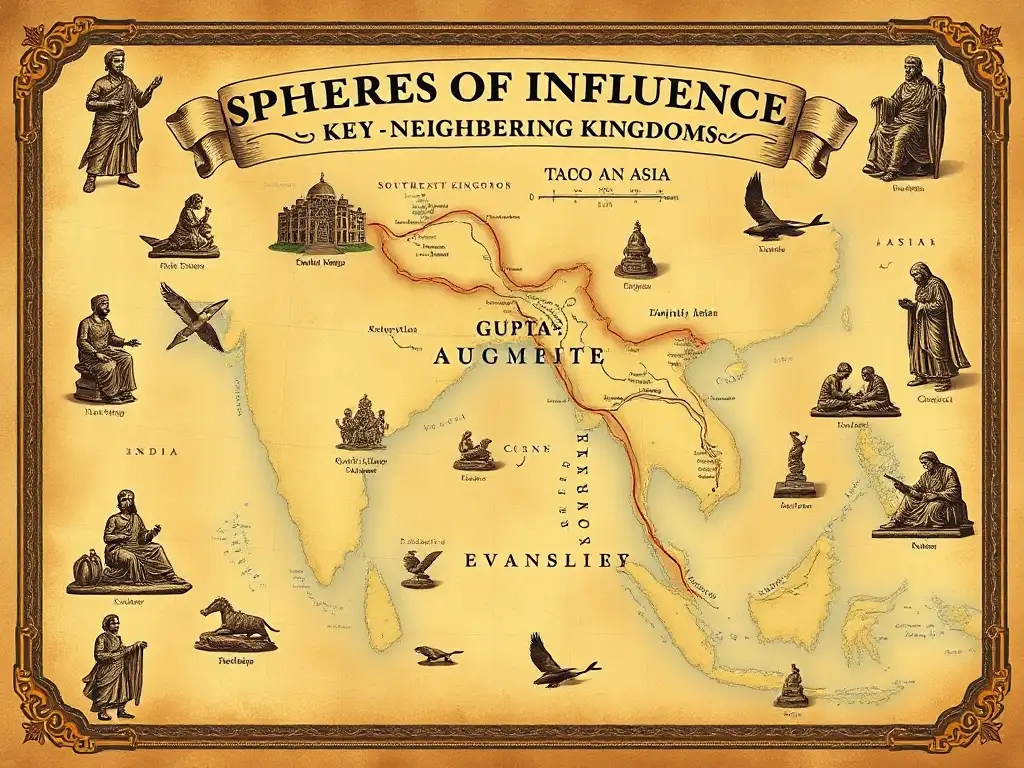
Influence on the Kingdom of Funan
The Kingdom of Funan, which flourished between the 1st and 6th centuries CE in present-day southern Vietnam and Cambodia, was one of the first states to exhibit the profound influence of the Gupta Empire. Funan served as a vital trading hub that connected India with China, and its interactions with the Gupta Empire significantly shaped its cultural and political landscape.
Cultural and Economic Ties
The Gupta Empire's influence on Funan can be seen through the establishment of extensive trade networks. Funan became a conduit for Indian goods, including textiles, spices, and precious stones, which were highly sought after in Southeast Asia. In exchange, Funan exported local products like silk and ceramics to India, creating a vibrant economic exchange.
- Key Trade Goods:
- Indian textiles (cotton and silk)
- Spices (pepper, cardamom)
- Precious stones (rubies, sapphires)
Additionally, the cultural exchange was significant. Funanese society adopted various aspects of Indian culture, including art, architecture, and religious practices. Temples in Funan began to reflect Indian styles, incorporating intricate carvings and sculptures reminiscent of Gupta art forms. This synthesis laid the groundwork for future cultural developments in the region.
Influence on Srivijaya
The Srivijaya Empire, which emerged in the 7th century CE, was another prominent kingdom in Southeast Asia that felt the Gupta Empire's influence. Srivijaya thrived on the maritime trade route between India and China, benefiting from the cultural and economic exchanges spurred by Gupta practices.
Political Alliances and Trade Routes
Political alliances between Srivijaya and the Gupta Empire facilitated the establishment of crucial sea trade routes. These routes enabled not only the exchange of goods but also the transfer of political ideologies and administrative practices. Srivijaya's rulers often sought legitimacy through connections with Indian dynasties, leading to the adoption of royal titles and rituals rooted in Gupta traditions.
- Strategic Alliances:
- Marriages between royal families
- Diplomatic missions to Gupta courts
The economic implications were profound. Srivijaya became a dominant maritime power, controlling key trade routes and enhancing its wealth through taxes and tariffs on traders. This economic prosperity allowed for further cultural exchanges and the robust growth of local art and architecture, heavily influenced by Indian styles.
Spread of Indian Culture and Language
The cultural influence of the Gupta Empire on Srivijaya was not limited to trade and politics; it also extended to language and religion. Sanskrit became the lingua franca of administration and trade, leading to its widespread adoption in inscriptions and literature throughout Srivijaya.
- Cultural Contributions:
- Adoption of Sanskrit as the language of administration
- Influence of Hinduism and Buddhism in local practices
- Integration of Indian epics like the Mahabharata and Ramayana into cultural narratives
The religious landscape of Srivijaya was profoundly shaped by the Gupta Empire's promotion of Hinduism and Buddhism, leading to the construction of temples and stupas that mirrored those found in India. This melding of cultures solidified the Gupta Empire's lasting influence on Southeast Asia, contributing to the region's rich tapestry of history and culture.
Influence on the Khmer Empire
The Khmer Empire, which flourished from the 9th to the 15th centuries, was significantly influenced by the Gupta Empire, particularly in the realms of religion, art, and governance. This influence can be traced back to the extensive trade networks and cultural exchanges that existed between India and Southeast Asia during the height of the Gupta period. As Indian culture permeated the region, the Khmer Empire adopted various elements that shaped its identity and development.
The Khmer society embraced Hinduism and later Buddhism, which were integral to the spiritual and cultural landscape of the Gupta Empire. This adoption led to profound transformations in the Khmer Empire’s religious practices, ceremonial life, and temple architecture. The infusion of Indian ideologies not only altered the spiritual fabric of Khmer civilization but also facilitated the establishment of a unified cultural identity.
Architectural Influences and Hindu Temples

One of the most visible manifestations of the Gupta Empire's influence on the Khmer Empire is found in its architecture, particularly in the construction of Hindu temples. The architectural style of the Khmer temples, exemplified by the famous Angkor Wat, showcases distinct elements derived from Gupta influences, including intricately carved stone reliefs, towering pyramidal structures, and a clear alignment with cosmic symbolism.
- Temple Layout: The layout of Khmer temples often mirrors the architectural principles seen in Gupta-era temples, which emphasize axial symmetry and hierarchical structures. Temples were designed to represent Mount Meru, the sacred center of the universe in Hindu cosmology, reflecting the Gupta architectural ethos.
- Sculptural Art: The influence of Gupta art is evident in the exquisite bas-reliefs and statues adorning Khmer temples. These artworks often depict Hindu deities and mythological narratives, illustrating the seamless integration of Indian themes into Khmer artistic traditions.
- Construction Techniques: The techniques used in the construction of these temples, including the use of sandstone and laterite, were also inspired by Indian practices. The scale and ambition of the Khmer temples can be seen as a direct reflection of the monumental temple-building culture that thrived during the Gupta period.
Integration of Indian Political Concepts
The Gupta Empire's political ideologies significantly impacted the governance structures of the Khmer Empire. Indian texts, particularly the Arthashastra and Manusmriti, provided a framework for governance, law, and administration, which the Khmer rulers adopted and adapted to their context.
- Centralized Authority: The concept of a centralized authority, as practiced by the Guptas, became a hallmark of Khmer governance. Rulers like Jayavarman II established a divine kingship model, where the king was viewed as a god-king, a notion that resonated with Gupta practices of legitimizing authority through divine sanction.
- Bureaucratic Organization: The administrative systems of the Gupta Empire, which included a well-structured bureaucracy, influenced the Khmer Empire's approach to governance. This led to the establishment of a more organized state apparatus that could manage the extensive resources and population of the Khmer Empire effectively.
- Cultural Diplomacy: The Khmer kings often engaged in cultural diplomacy, sending emissaries to India and inviting Indian scholars and priests to their courts. This practice not only reinforced the influence of Indian political concepts but also facilitated the exchange of ideas that enriched Khmer governance and cultural life.
The Gupta Empire's influence on the Khmer Empire was multifaceted, encompassing architecture, religion, and political organization. These elements contributed to the rich tapestry of Khmer civilization and its lasting legacy in Southeast Asia.
Lasting Impact of Gupta Empire Influence

Cultural Legacy in Southeast Asia
The Gupta Empire, often regarded as the Golden Age of India, had a profound and lasting influence on the cultures of Southeast Asia. This impact can be observed in various facets of life, including literature, art, religion, and philosophy, as the empire's reach extended beyond its borders through trade, conquest, and cultural exchanges.
Literature and Arts
The literary contributions of the Gupta Empire, particularly in Sanskrit, played a pivotal role in shaping the literary landscape of Southeast Asia. Notably, the works of Kalidasa and Bhasa inspired local playwrights and poets across the region.
- Sanskrit Literature: The adoption of Sanskrit as a literary language facilitated the transmission of epic narratives, such as the Mahabharata and the Ramayana, which became integral to the cultural fabric of countries like Thailand, Cambodia, and Indonesia.
- Artistic Influence: Gupta art, characterized by its intricate sculptures and serene aesthetics, influenced the artistic styles in Southeast Asia. The creation of stone carvings and temple architecture often mirrored Gupta designs, evident in the temples of Angkor Wat in Cambodia and Borobudur in Indonesia.
Table: Notable Gupta Literary Works and Their Southeast Asian Counterparts
| Gupta Work | Southeast Asian Influence |
|---|---|
| Mahabharata | Adaptations in local storytelling |
| Kumarasambhava | Influence on local poetry and drama |
| Shakuntala | Inspired theatrical performances |
Religion and Philosophy
The Gupta Empire was a significant period for the development of Hinduism and Buddhism, both of which spread to Southeast Asia, leading to a rich tapestry of religious beliefs and practices.
- Hinduism: The Gupta period saw the codification of Hindu texts, including the Puranas, which were disseminated throughout Southeast Asia. Temples dedicated to Hindu deities, particularly Vishnu and Shiva, were constructed, reflecting Gupta architectural styles.
- Buddhism: The era also witnessed the flourishing of Buddhism, with Indian monks traveling to Southeast Asia to spread Buddhist teachings. The establishment of stupas and monasteries, influenced by Gupta architectural principles, became prominent in regions like Myanmar and Thailand.
Contemporary Reflections of Gupta Influence
The legacy of the Gupta Empire's influence on Southeast Asia is not merely historical; it is reflected in contemporary cultural practices and ongoing research that highlight this rich connection.
Modern Cultural Practices
In various Southeast Asian countries, elements of Gupta cultural influence persist in modern practices. Festivals, dance forms, and rituals showcase a blend of ancient Indian traditions with local customs.
- Festivals: Celebrations such as Diwali and Holi are observed in parts of Indonesia and Malaysia, often adapted to align with local traditions while retaining their Indian roots.
- Dance and Music: Classical dance forms of Southeast Asia, particularly in Thailand and Cambodia, exhibit stylistic similarities to Indian classical dance, often narrating stories from Indian epics.
Historical Recognition and Research
The scholarly interest in the Gupta Empire's influence on Southeast Asia has grown over the years, leading to a resurgence of research aimed at understanding these connections.
- Archaeological Discoveries: Excavations in regions like Java and Bali have unearthed artifacts that link back to the Gupta period, prompting historians to explore the depth of cultural exchanges.
- Academic Studies: Numerous studies and publications have emerged, focusing on the interactions between the Gupta Empire and Southeast Asian kingdoms, emphasizing the significance of these exchanges in shaping regional identities.
The Gupta Empire's influence on Southeast Asia is a testament to the interconnectedness of ancient civilizations. Its cultural legacy, particularly in literature, arts, religion, and philosophy, continues to resonate in contemporary practices, while ongoing research further enriches our understanding of this profound impact.
Conclusion: The Gupta Empire's Enduring Influence on Southeast Asia
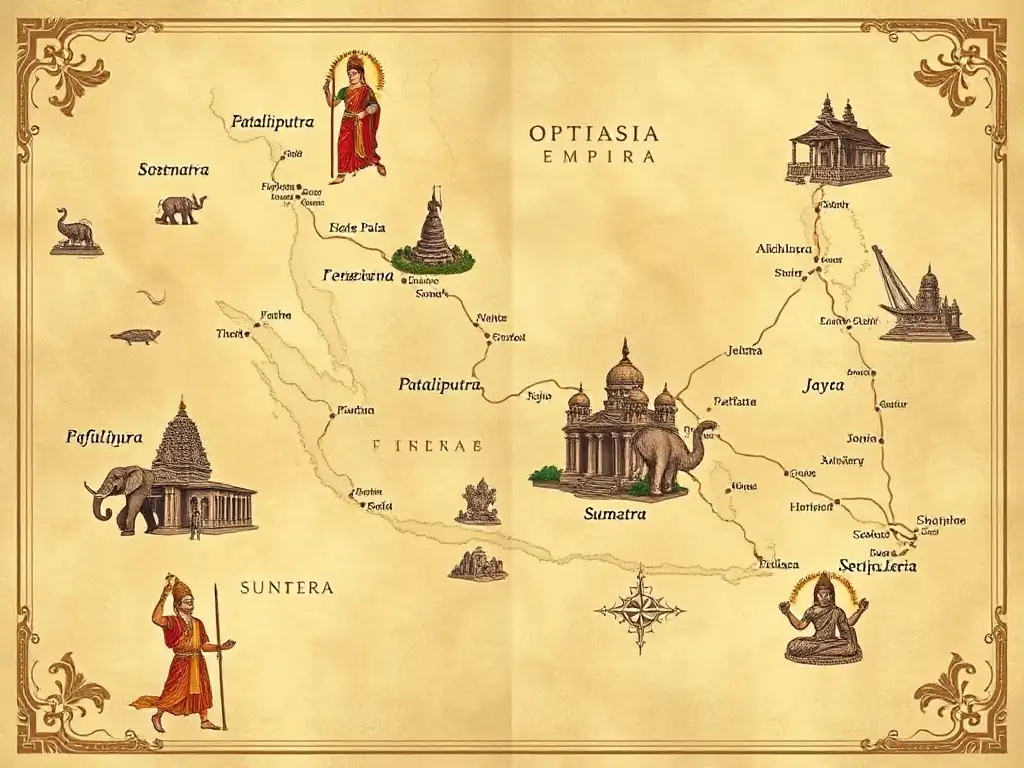
The Gupta Empire, often referred to as the Golden Age of India, left an indelible mark on the cultural, political, and economic landscapes of Southeast Asia. The interactions between the Gupta Empire and its neighboring kingdoms facilitated a rich exchange of ideas, art, religion, and governance, which contributed to the shaping of Southeast Asian civilizations. This conclusion encapsulates the significant ways the Gupta Empire influenced the region and reflects on the historical ties that continue to resonate today.
Summary of Key Contributions
The Gupta Empire's influence on Southeast Asia can be observed through several key contributions:
- Cultural Exchange:
- Art and Architecture: The Gupta period is renowned for its advancements in art, particularly in sculpture and temple architecture. This artistic style was transmitted to Southeast Asia, where it influenced local designs, seen in the intricate carvings of temples such as Angkor Wat in Cambodia.
- Literature and Language: Sanskrit became a prominent language of administration and culture in many Southeast Asian kingdoms, leading to the proliferation of Indian epics like the Ramayana and Mahabharata in local traditions.
- Religious Spread:
- Hinduism and Buddhism: The Gupta Empire played a crucial role in the dissemination of Hinduism and Buddhism. As trade routes flourished, religious practices and philosophies spread, establishing significant communities in places like Indonesia and Thailand.
- Cultural Syncretism: The blending of local beliefs with Hindu and Buddhist principles led to unique religious practices that are still evident in Southeast Asian cultures today.
- Economic Ties:
- Trade Networks: The Gupta period witnessed the expansion of trade routes that connected India with Southeast Asia. This economic interaction facilitated the exchange of goods such as spices, textiles, and precious metals, fostering prosperity in both regions.
- Political Alliances: Marriages and alliances between Gupta rulers and Southeast Asian kings often resulted in the establishment of diplomatic relations, further enhancing trade and cultural ties.
Reflection on Cultural Exchanges and Historical Ties
The cultural exchanges initiated during the Gupta Empire not only fostered a rich tapestry of shared heritage but also laid the groundwork for enduring historical ties between India and Southeast Asia. These interactions exemplify how civilizations can influence one another through trade, religion, and art, resulting in a dynamic exchange that enriches both parties.
- Legacy of Exchange: The lasting impact of Gupta influence can still be seen in modern Southeast Asian cultures, where traditional practices, languages, and artistic expressions carry echoes of ancient Indian heritage. The historical connections established during this period continue to inform contemporary cultural identities in the region.
- Modern Implications: Understanding these historical ties is crucial for appreciating the complexities of cultural identity in Southeast Asia today. The Gupta Empire's influence serves as a reminder of the interconnectedness of civilizations and the importance of cultural exchanges in shaping human history.
The Gupta Empire's influence on Southeast Asia is a testament to the power of cultural exchanges and the lasting legacy of interactions between diverse civilizations. The rich history of these ties not only highlights the achievements of the Gupta period but also encourages ongoing exploration and appreciation of the intricate web of connections that define our shared human heritage.
Frequently Asked Questions
What was the Gupta Empire?
The Gupta Empire was a significant Indian dynasty that flourished from around 320 to 550 CE, known for its cultural, scientific, and political advancements.
How did the Gupta Empire influence Southeast Asia?
The Gupta Empire influence on Southeast Asia was profound, as it facilitated the spread of Hinduism and Buddhism, along with artistic and architectural styles across the region.
What were some cultural contributions of the Gupta Empire?
The Gupta Empire is renowned for its contributions in literature, mathematics, and astronomy, which paved the way for advancements in science and philosophy in neighboring regions.
How did trade play a role in this influence?
Trade routes established during the Gupta Empire allowed for the exchange of goods and ideas, significantly impacting the cultural and economic landscape of Southeast Asia.
What legacy did the Gupta Empire leave in Southeast Asia?
The legacy includes the establishment of city-states influenced by Indian culture, which persisted in aspects such as religion, governance, and art long after the empire's decline.
Final Reflection: The Enduring Legacy of the Gupta Empire's Influence on Southeast Asia
The Gupta Empire's influence on Southeast Asia is not just a historical footnote; it is a testament to the power of cultural exchange and the interconnectedness of civilizations. As we explore the profound impacts of the Gupta Empire on neighboring kingdoms, we recognize that these historical interactions continue to shape the cultural and social landscapes of Southeast Asia today. The legacy of the Gupta Empire serves as a reminder of how ideas, art, and governance can transcend borders and foster unity among diverse peoples.
The cultural diffusion initiated by the Gupta Empire has left an indelible mark on the region, influencing everything from architecture to religion. This ongoing influence is a reflection of the Gupta Empire's ability to adapt and integrate various elements from surrounding cultures. As we witness the vibrant tapestry of Southeast Asian cultures today, we can appreciate the historical roots that have contributed to their richness. History is not just about the past; it is a bridge to understanding our present and shaping our future.
This quote encapsulates how the Gupta Empire's legacy continues to resonate, reminding us of the importance of learning from our shared history.
As we reflect on the Gupta Empire's impact, I invite you to consider how the lessons of cultural exchange and collaboration can be applied in our own lives. In a world that often feels divided, let us embrace the spirit of connection that the Gupta Empire exemplified. Think about how you can foster understanding and appreciation for diverse cultures in your community. By doing so, we not only honor the past but also pave the way for a more harmonious future, where the influences of one culture can enrich another.
Uncover the Lasting Legacy of the Gupta Empire!
Thank you for diving into the fascinating world of the Gupta Empire! You've unearthed the profound influence this incredible civilization had on neighboring kingdoms in Southeast Asia. Now, let’s take the next step in exploring this legacy further.
Here are a few actions you can take to deepen your understanding and share this knowledge with others:
- Engage with the past: Read more about specific Gupta innovations that shaped Southeast Asia by exploring our related articles or suggested readings.
- Join the discussion: Share your thoughts on how ancient civilizations influence modern societies. Connect with fellow history enthusiasts in our forums!
- Spread the word: Share this article on social media to inspire your friends and family to learn about the rich heritage of the Gupta Empire.
What aspect of the Gupta Empire's influence on Southeast Asia intrigues you the most, and why do you think its legacy remains significant today?