
Hinduism in Southeast Asia: Tracing the Footsteps of Indian Religious Influence


Welcome to Ancient India History, where we embark on a fascinating journey through the rich tapestry of India’s past! 🌏 Here, we delve into the incredible contributions and vibrant cultures of ancient Indian civilizations, from the enigmatic Indus Valley to the illustrious Gupta Empire. In our featured article, “Hinduism in Southeast Asia: Tracing the Footsteps of Indian Religious Influence,” we uncover the profound Hindu influence in Southeast Asia—a captivating narrative that reveals how Indian philosophies, art, and spirituality traversed borders and reshaped distant lands.
Are you ready to explore the echoes of ancient traditions that still resonate today? Dive in and discover the stories that shaped cultures and connections across the seas!
- Introduction to Hindu Influence in Southeast Asia
- Historical Background of Hinduism in Southeast Asia
- Major Regions of Hindu Influence in Southeast Asia
- Key Elements of Hindu Influence in Southeast Asia
- Contemporary Impact of Hindu Influence in Southeast Asia
- Conclusion: The Lasting Legacy of Hindu Influence in Southeast Asia
- Frequently Asked Questions
- Final Reflection: The Enduring Legacy of Hindu Influence in Southeast Asia
- Embrace the Rich Tapestry of Hindu Heritage!
Introduction to Hindu Influence in Southeast Asia
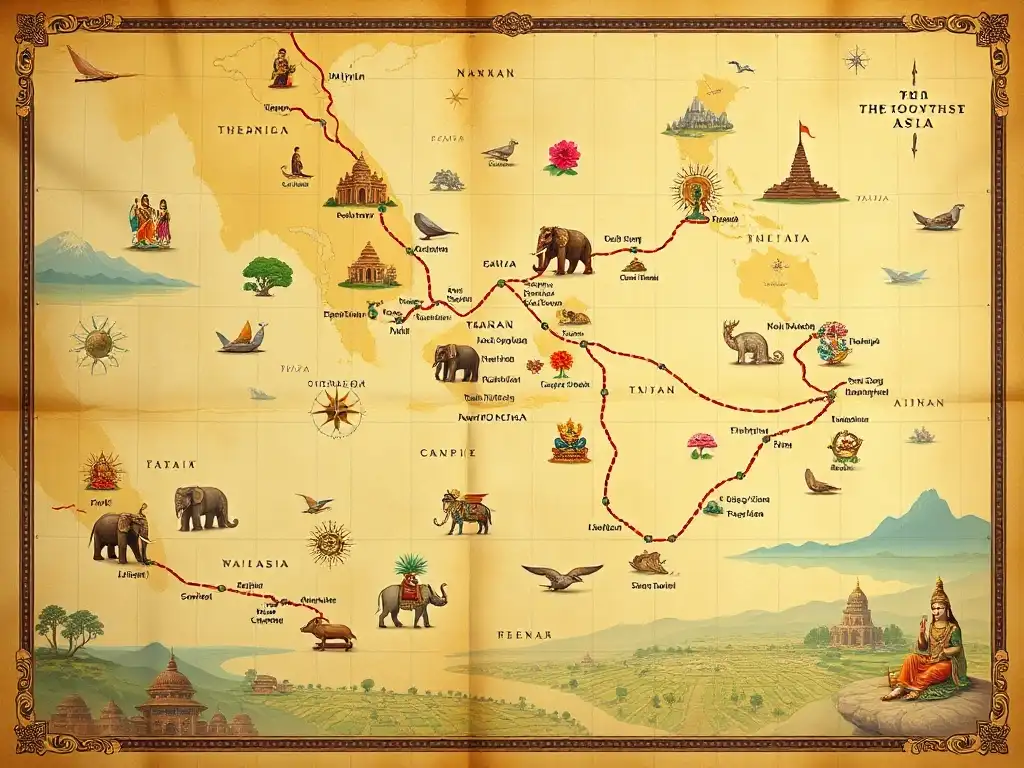
The influence of Hinduism in Southeast Asia represents a significant chapter in the historical narrative of cultural exchanges between India and its neighboring regions. Spanning over centuries, this profound relationship has shaped the religious, artistic, and socio-political landscapes of various Southeast Asian nations.
From the early maritime trade routes to intricate temple architecture, the spread of Hindu beliefs has woven a rich tapestry of cultural intermingling that continues to resonate today. This article will delve into the manifold ways Hinduism has left an indelible mark on Southeast Asia, tracing the footsteps of Indian religious influence and highlighting its enduring legacy.
Overview of Indian Religious Influence in Southeast Asia
The introduction of Hinduism to Southeast Asia can be traced back to as early as the 1st century CE, primarily through trade and cultural exchanges facilitated by Indian merchants and travelers. Several key factors contributed to this propagation:
- Trade Routes: The maritime trade routes connecting India with Southeast Asia served as conduits for not just goods but also ideas and beliefs. The Indian Ocean trade network enabled the movement of people, fostering the exchange of cultural and religious practices.
- Political Alliances: Many Southeast Asian kingdoms, such as the Srivijaya and Majapahit empires, adopted Hinduism as a means to legitimize their rule. Hindu kings often aligned themselves with Indian Brahmins, who played crucial roles in the administration and cultural development of these states.
- Cultural Syncretism: The interaction between indigenous beliefs and Hindu practices led to a unique blend of traditions. This syncretism is evident in the adaptation of Hindu deities and rituals into local customs, creating a rich and diverse religious landscape.
Hindu influence is visible in various aspects of Southeast Asian culture, including language, literature, art, and architecture. Iconic structures such as the temples of Angkor Wat and the Prambanan complex stand as testaments to this enduring connection.
Significance of Hinduism in the Cultural Landscape
Hinduism's impact on Southeast Asia extends beyond mere religious practices; it has played a pivotal role in shaping the region's cultural identity. Some of the significant contributions include:
- Art and Architecture: The architectural marvels inspired by Hinduism, characterized by intricate carvings and elaborate sculptures, reflect the artistic prowess of ancient civilizations. The temples not only served as places of worship but also as cultural hubs that celebrated artistic expression.
- Literature and Epics: The dissemination of Hindu epics like the Ramayana and Mahabharata in Southeast Asia has influenced local storytelling traditions. These texts have been adapted into various forms, including dance, theater, and literature, enriching the cultural fabric of the region.
- Social Structure: The introduction of Hindu societal concepts, such as the caste system, has had a lasting impact on social organization in some Southeast Asian communities. While the adaptations of these concepts varied, their influence on societal norms and structures is still observed today.
The Hindu influence in Southeast Asia is a complex and multifaceted phenomenon that has left an enduring legacy on the region's culture and identity. Through trade, political alliances, and cultural syncretism, Hinduism has not only shaped religious practices but has also enriched the artistic and social landscapes of Southeast Asia. Understanding this historical interplay is crucial for appreciating the depth and diversity of Southeast Asian heritage.
Historical Background of Hinduism in Southeast Asia
Early Contact Between India and Southeast Asia
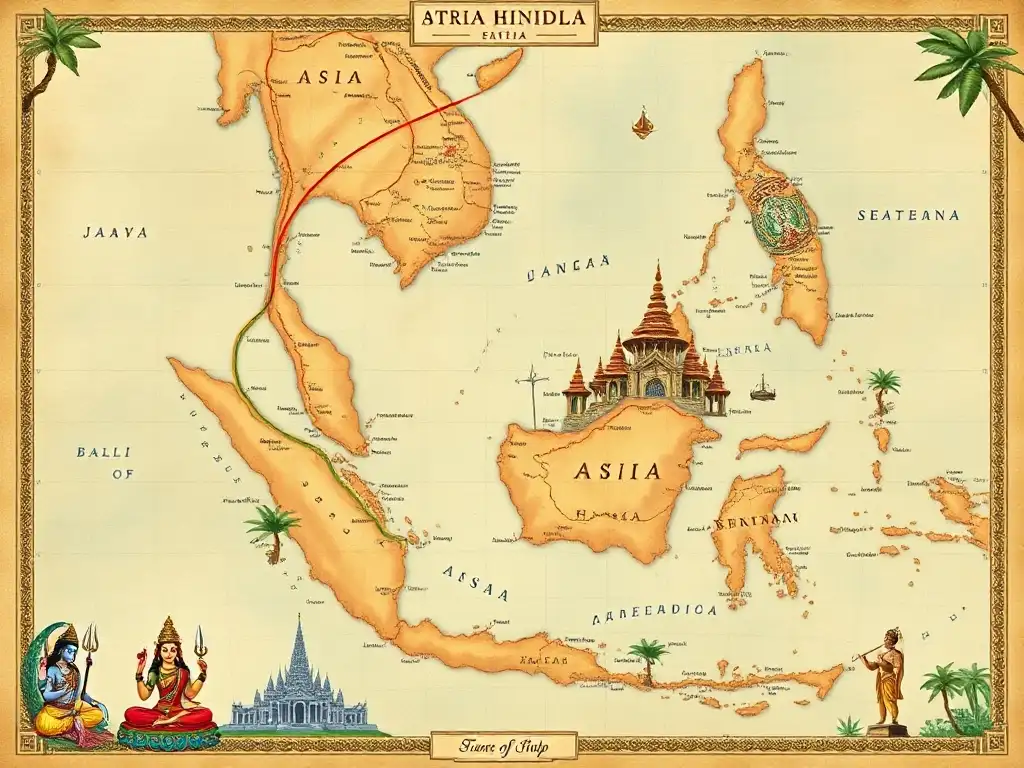
The early contact between India and Southeast Asia dates back to at least the 1st century CE, primarily driven by trade and cultural exchanges. Indian merchants and sailors navigated the waters of the Indian Ocean, establishing trade routes that connected the Indian subcontinent with various Southeast Asian kingdoms. This interaction facilitated not only the exchange of goods but also ideas, beliefs, and practices, including Hinduism.
Cultural syncretism emerged as Indian traders settled in coastal areas, bringing with them Hindu religious texts, rituals, and art forms. The establishment of port cities, such as Funan (present-day Cambodia) and Srivijaya (present-day Indonesia), became critical hubs for the dissemination of Hindu culture and religion. As a result, indigenous populations began to adopt Hindu practices, leading to the establishment of early Hindu kingdoms in the region.
Key indicators of this early influence include inscriptions in Sanskrit found in Southeast Asia, which reflect the adoption and adaptation of Hindu concepts. The reverence for Indian deities, such as Shiva and Vishnu, began to manifest in local traditions, resulting in a unique blend of Hinduism with indigenous beliefs.
The Spread of Hinduism Through Trade Routes
The maritime trade routes played an essential role in the spread of Hinduism across Southeast Asia. As Indian merchants traveled to trade spices, textiles, and other goods, they inadvertently became cultural ambassadors, introducing Hindu ideas and practices throughout the region.
Major Trade Routes
- Maritime Silk Route: This route facilitated the movement of goods between India, China, and Southeast Asia. It allowed for the exchange of not just commodities but also religious beliefs, particularly Hinduism and Buddhism.
- Coromandel Coast to Malay Archipelago: Indian traders from the Coromandel Coast sailed towards the Malay Archipelago, establishing trade links with the Srivijayan Empire and the Kingdom of Majapahit. These interactions significantly contributed to the introduction of Hinduism in local cultures.
As Hindu traders settled in these regions, they established temples and cultural institutions that served as centers of learning and worship. The architectural styles of Hindu temples, influenced by South Indian designs, can still be seen in historical sites in Indonesia and Cambodia, such as the temples of Prambanan and Angkor Wat.
Key Historical Events Influencing Hinduism's Expansion
Several key historical events significantly shaped the trajectory of Hinduism's expansion in Southeast Asia:
- The Rise of Hindu Kingdoms:
- The establishment of powerful Hindu kingdoms like the Khmer Empire in Cambodia (9th to 15th centuries) and the Majapahit Empire in Indonesia (13th to 16th centuries) played a pivotal role in promoting Hindu culture and religion. The Khmer Empire, for instance, actively embraced Hinduism, as evidenced by the construction of monumental temples that celebrated Hindu deities.
- Royal Patronage:
- Many Southeast Asian kings adopted Hinduism as a state religion, often legitimizing their rule through divine association with Hindu gods. This royal patronage extended to the construction of temples and the sponsorship of religious ceremonies, further embedding Hindu practices within societal norms.
- Cultural Exchanges through Marriages:
- Marriages between Indian royalty and local Southeast Asian rulers often facilitated cultural exchanges, including the introduction of Hindu religious practices. These alliances helped secure political power and fostered greater acceptance of Hinduism among the local populace.
- The Influence of Indian Epics:
- Texts such as the Ramayana and Mahabharata were introduced into Southeast Asia, influencing local narratives, art, and culture. These epics were adapted into local languages and forms, showcasing the flexibility and appeal of Hinduism across diverse cultures.
The intricate tapestry of trade, royal endorsement, and cultural adaptation has left a lasting impact on the religious landscape of Southeast Asia, with Hindu influence still observable in contemporary practices and beliefs.
Major Regions of Hindu Influence in Southeast Asia
Hindu Influence in Indonesia
The Role of Hindu Kingdoms in Indonesian History
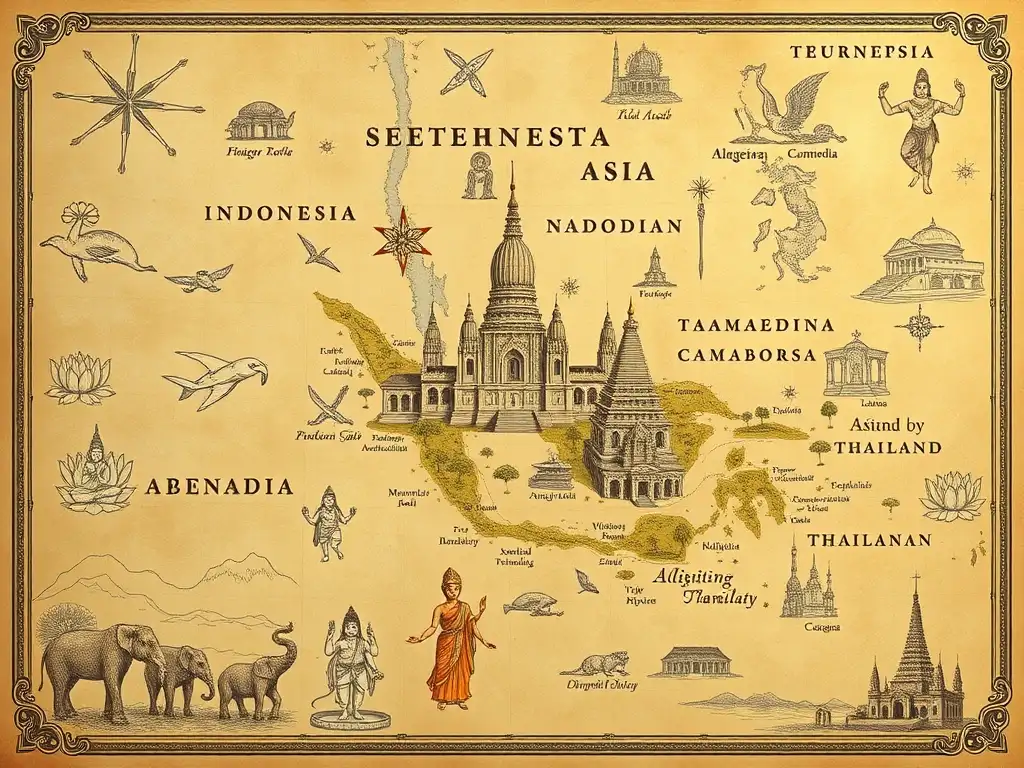
Hindu influence in Indonesia can be traced back to the early centuries CE, primarily through trade and cultural exchanges between Indian and Indonesian civilizations. The establishment of Hindu kingdoms, such as the Kutai Martadipura in East Kalimantan around the 4th century CE and the Tarumanagara in West Java, marked significant periods of Indian influence. These kingdoms adopted various aspects of Hindu culture, including religious practices, governance, and art.
One of the most notable Hindu kingdoms was the Majapahit Empire, which flourished from the late 13th to the early 16th century. This empire is often credited with unifying much of the Indonesian archipelago under a centralized Hindu rule. The Majapahit period saw the proliferation of Hindu philosophy, rituals, and literature, significantly shaping the cultural landscape of Indonesia.
The establishment of Hinduism in Indonesia was also facilitated by the arrival of Indian traders and scholars who brought texts such as the Mahabharata and Ramayana, which would later influence local storytelling and performance traditions.
Cultural Practices and Traditions in Indonesia
The legacy of Hindu influence in Indonesia is evident in various cultural practices and traditions that continue to thrive today. One striking example is the Balinese Hindu practices, which blend indigenous beliefs with Hindu rituals. Festivals such as Galungan and Kuningan showcase the vibrant Hindu influence, where offerings and ceremonies reflect deep-rooted spiritual beliefs.
Moreover, traditional art forms like Wayang Kulit (shadow puppetry) and Batik textiles draw heavily from Hindu mythology. The characters depicted in these performances often include deities and heroes from Hindu epics, illustrating the ongoing relevance of Hindu narratives in Indonesian culture.
In addition to religious practices, Hindu influence can be observed in the architecture of ancient temples such as the Prambanan Temple complex, which is dedicated to Hindu deities like Shiva, Vishnu, and Brahma. These structures not only symbolize the architectural ingenuity of the time but also serve as a reminder of the enduring impact of Hinduism on Indonesian identity.
Hindu Influence in Cambodia
Angkor Wat: A Testament to Hindu Architecture
Angkor Wat, the largest religious monument in the world, stands as a monumental testament to the profound influence of Hinduism in Cambodia. Originally constructed in the early 12th century as a temple dedicated to the Hindu god Vishnu, Angkor Wat reflects the architectural brilliance and spiritual aspirations of the Khmer Empire.
The temple complex is renowned for its intricate bas-reliefs and sculptures depicting scenes from Hindu mythology, particularly from the Ramayana and Mahabharata. The orientation of Angkor Wat towards the west, unique among temple complexes, is believed by scholars to symbolize the Hindu concept of the cosmic order and the journey towards enlightenment.
Angkor Wat's design, characterized by its grand scale and elaborate ornamentation, illustrates the fusion of Hindu architectural principles with local styles, which would later influence Buddhist temple architecture in the region.
The Khmer Empire’s Adoption of Hindu Beliefs
The Khmer Empire (9th to 15th century) is another pivotal area where Hindu influence took root. The empire's rulers adopted Hinduism as a state religion, intertwining it with governance and royal legitimacy. The kings were often viewed as divine figures, embodying the qualities of the Hindu god-king concept known as devaraja.
The adoption of Hindu beliefs had significant implications for Cambodian society, influencing social structures, art, and literature. Hindu cosmology guided the construction of temples and city layouts, with sacred mountains symbolically depicting Mount Meru, the center of the universe in Hindu mythology.
Cultural exchanges with India led to the development of a rich literary tradition in Khmer, with historical texts and religious scriptures reflecting Hindu themes. This integration of Hindu philosophy and practices into daily life has left a lasting legacy, with many contemporary Cambodians still celebrating Hindu festivals and honoring Hindu deities.
This comprehensive overview of the major regions of Hindu influence in Southeast Asia demonstrates the depth of cultural exchanges that have shaped the historical and spiritual landscapes of countries like Indonesia and Cambodia. The enduring impact of Hinduism in these regions showcases a vibrant tapestry of shared heritage that continues to evolve.
Hindu Influence in Thailand
Historical Context of Hinduism in Thailand
Hinduism has played a significant role in shaping the cultural and historical landscape of Thailand. The roots of Hindu influence in Thailand can be traced back to the early centuries CE, particularly during the period of the Khmer Empire, which extended into present-day Thailand. This era saw the establishment of trade routes and cultural exchanges between India and Southeast Asia, leading to the introduction of Indian religious beliefs, rituals, and iconography.
The influence of Hinduism was particularly pronounced in the Dvaravati period (6th to 11th centuries CE), where various Hindu kingdoms emerged, such as the kingdom of Srivijaya. This early form of Hinduism coexisted with local beliefs and practices, creating a unique blend of spirituality that permeated Thai society. By the time of the Sukhothai and Ayutthaya kingdoms (13th to 18th centuries), Hinduism had become deeply entrenched in the royal court, where Hindu rituals were performed to legitimatize the power of kings and their divine right to rule.
Archaeological findings, such as inscriptions and temple ruins, particularly in areas like Nakhon Si Thammarat and Lopburi, provide evidence of the flourishing Hindu culture in ancient Thailand. The presence of Hindu iconography, such as sculptures of deities like Shiva and Vishnu, highlights the profound influence that Indian religion and mythology had on the region.
Integration of Hindu Deities in Thai Culture
The integration of Hindu deities into Thai culture is evident in various aspects of daily life, art, and architecture. One of the most prominent deities is Brahma, who is worshipped at the Erawan Shrine in Bangkok, a site that attracts both locals and tourists seeking blessings. Brahma's significance in Thailand stems from his association with creation and prosperity, echoing the reverence he holds in Hindu tradition.
Another notable example is the adoption of Shiva, often depicted as Phra Phrom in Thailand. The worship of Shiva can be seen in numerous temples, reflecting his importance as the god of destruction and regeneration. Thai representations of Shiva often incorporate local artistic styles, illustrating the synthesis of cultural influences.
Additionally, Ganesha, the elephant-headed god, has become a widely venerated figure in Thailand, symbolizing wisdom and the removal of obstacles. Statues of Ganesha can be found in various settings, from temples to businesses, indicating the deep-rooted belief in his protective powers.
The influence of Hinduism is also marked in traditional Thai dance and theater, where stories from the Hindu epics, such as the Ramayana, are dramatized and celebrated. This artistic expression not only preserves the narratives of Hindu mythology but also showcases the enduring legacy of Hindu influence in shaping Thai cultural identity.
The Hindu influence in Thailand is not merely historical; it is a living tradition that continues to manifest in various ways, enriching the spiritual and cultural tapestry of the nation.
Key Elements of Hindu Influence in Southeast Asia
Language and Literature: Sanskrit's Role
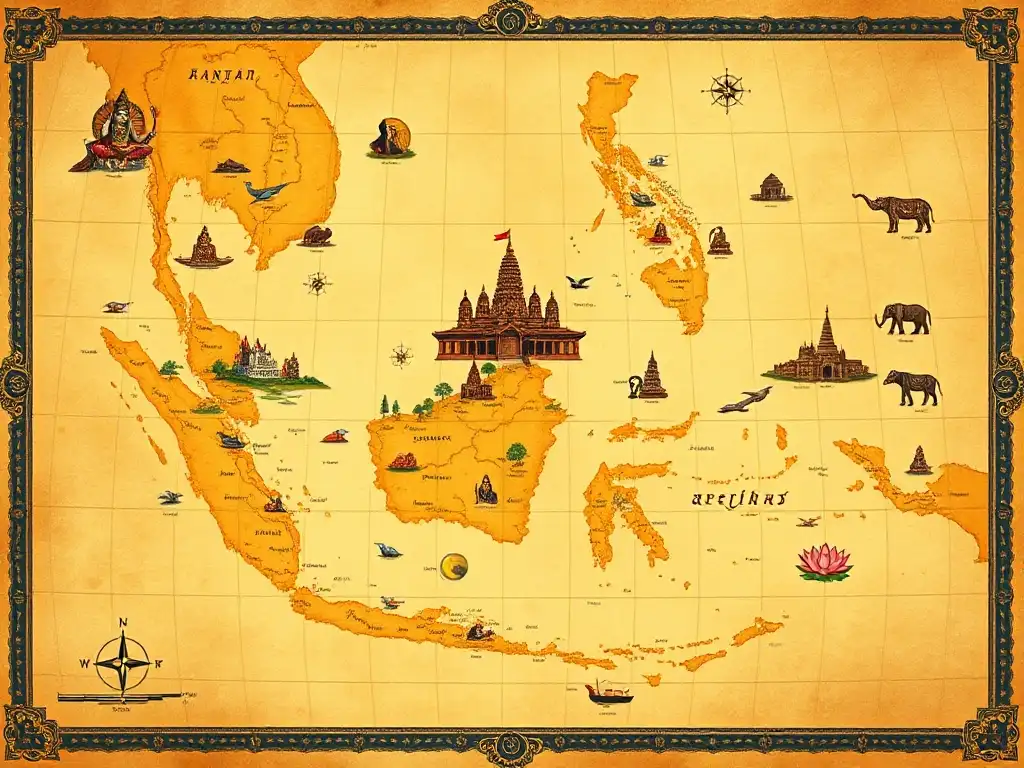
The influence of Hinduism in Southeast Asia is profoundly evident through the adoption and adaptation of the Sanskrit language, which served as a vehicle for cultural and religious expression. Sanskrit, the ancient liturgical language of Hinduism, was not only the medium of sacred texts but also permeated the realms of administration, literature, and the arts across various Southeast Asian kingdoms.
- Literary Contributions: Numerous texts written in Sanskrit laid the foundation for a rich literary tradition. For instance, the Ramayana and Mahabharata were not only translated but also reinterpreted in local languages, showcasing the integration of Hindu narratives into Southeast Asian culture. These texts often included local settings and characters, making them accessible and relevant to regional audiences.
- Linguistic Influence: The introduction of Sanskrit significantly impacted local languages. Many Southeast Asian languages, such as Indonesian and Malay, absorbed vocabulary and grammatical structures from Sanskrit. This linguistic exchange is evident in the presence of words related to governance, religion, and culture, which continue to be used today.
- Educational Systems: The establishment of educational institutions, often influenced by Hindu thought and Sanskrit scholarship, further solidified the role of this language in Southeast Asia. Hindu scholars and monks traveled across the region, disseminating knowledge and fostering a learned elite that embraced Sanskrit as a symbol of prestige and cultural identity.
Art and Architecture: Hindu Temples and Sculptures
Hindu influence in Southeast Asia is vividly displayed through the region's art and architecture, particularly in the construction of temples and sculptures that reflect Hindu cosmology and mythology.
- Temple Architecture: The architectural style of Hindu temples in Southeast Asia showcases unique adaptations of Indian designs. For instance, the temples of Angkor Wat in Cambodia and Prambanan in Indonesia exhibit intricate carvings and towering structures that echo the grandeur of Indian architecture, while incorporating local materials and techniques.
- Sculptural Art: Sculptures found in these temples often depict deities such as Shiva, Vishnu, and Durga, illustrating the syncretism between Hindu iconography and local beliefs. The detailed reliefs and statues not only serve a religious purpose but also convey stories from Hindu epics, thus preserving and promoting these narratives across generations.
- Cultural Festivals: Many of the temple complexes became focal points for cultural festivals and rituals, further embedding Hindu practices within the social fabric of Southeast Asian societies. These celebrations often blend local customs with Hindu religious observance, demonstrating the dynamic interplay between the two.
Festivals and Rituals: Celebrating Hindu Traditions
The celebration of Hindu festivals and rituals in Southeast Asia is a testament to the enduring legacy of Hinduism in the region. These events often reflect a blend of indigenous practices and Hindu traditions, creating unique cultural expressions.
- Major Festivals: Festivals such as Diwali (the Festival of Lights) and Shivaratri are celebrated with great fervor in various Southeast Asian countries. For example, in Bali, the celebration of Nyepi, while primarily a Balinese New Year festival, incorporates elements of Hindu spirituality, highlighting the region's rich tapestry of beliefs.
- Ritual Practices: Rituals associated with daily life, such as rites of passage and agricultural ceremonies, often draw from Hindu practices. This includes offerings to deities, purification rituals, and community gatherings that reinforce social bonds and cultural identity.
- Cultural Exchange: The blending of Hindu festivals with local traditions exemplifies the adaptability of Hindu practices. For instance, local variations of Hindu rituals often incorporate indigenous beliefs, resulting in a vibrant and diverse celebration of cultural heritage that continues to evolve.
The key elements of Hindu influence in Southeast Asia are evident through the profound impact of Sanskrit, the architectural marvels of Hindu temples, and the vibrant celebration of festivals and rituals that reflect a harmonious blend of traditions. This intricate mosaic of cultural exchange highlights the historical significance of Hinduism in shaping the identity of Southeast Asian societies.
Contemporary Impact of Hindu Influence in Southeast Asia

Hinduism’s Role in Modern Southeast Asian Societies
Hinduism continues to play a significant role in the cultural and spiritual landscape of Southeast Asia, influencing various aspects of social life, art, and governance. In nations such as Indonesia, Malaysia, and Thailand, remnants of Hindu culture are not just historical artifacts but active components of contemporary society.
One key area where Hinduism has a pronounced influence is in the realm of traditional festivals. For instance, Balinese Hinduism in Indonesia is celebrated through vibrant festivals such as Nyepi (Day of Silence) and Galungan, which exemplify the enduring legacy of Hindu beliefs and customs. These celebrations not only strengthen community bonds but also attract tourism, showcasing the region's rich cultural heritage.
Moreover, Hindu principles can be seen in the political landscape of several Southeast Asian countries. In Thailand, the monarchy is deeply intertwined with Hindu mythology, where kings are often seen as deities or divine figures. This relationship underscores the respect and reverence that Hinduism commands in the region, influencing governance and public life.
In education, Hindu texts and philosophies are integrated into the curriculum in some areas, promoting a deeper understanding of the religion's historical context and its impact on Southeast Asian culture. Schools in Bali, for example, often include lessons on Hindu epics like the Ramayana and Mahabharata, ensuring that younger generations appreciate their cultural roots.
The Preservation of Hindu Heritage in Southeast Asia
The preservation of Hindu heritage in Southeast Asia is a testament to the region's historical connections to Indian civilization. Several initiatives and practices are underway to safeguard this rich cultural legacy.
Archaeological Efforts
Numerous archaeological sites across Southeast Asia, such as Borobudur and Prambanan in Indonesia, are vital in preserving Hindu architectural styles and religious practices. These sites are not only tourist attractions but also serve as centers for scholarly research and cultural conservation. Efforts to restore and maintain these ancient structures are crucial for understanding the region's Hindu past.
Cultural Festivals and Rituals
Cultural festivals play a significant role in keeping Hindu traditions alive. Events like the Hindu New Year (Caka) in Indonesia and Thaipusam in Malaysia not only celebrate religious beliefs but also reaffirm the community's identity. These festivals are often marked by elaborate rituals, traditional dances, and communal feasting, reflecting the vibrant cultural tapestry that Hinduism has woven into the fabric of Southeast Asian societies.
Educational Institutions
Institutions dedicated to the study of Hindu philosophy and culture are emerging in Southeast Asia. Universities and cultural centers are increasingly offering courses on Hindu scriptures, philosophy, and arts, fostering a deeper appreciation for this ancient religion among students and the general public.
Government Support
In some Southeast Asian countries, governments recognize the importance of Hindu heritage as part of national identity. For example, in Bali, local authorities actively promote Balinese Hindu practices and rituals as part of cultural tourism, thereby ensuring that these traditions are celebrated and preserved for future generations.
The contemporary impact of Hindu influence in Southeast Asia is multifaceted, manifesting in various aspects of modern life while simultaneously preserving a rich heritage that dates back centuries. The interplay of tradition and modernity continues to shape the cultural landscape, making Hinduism an integral part of Southeast Asian identity.
Conclusion: The Lasting Legacy of Hindu Influence in Southeast Asia
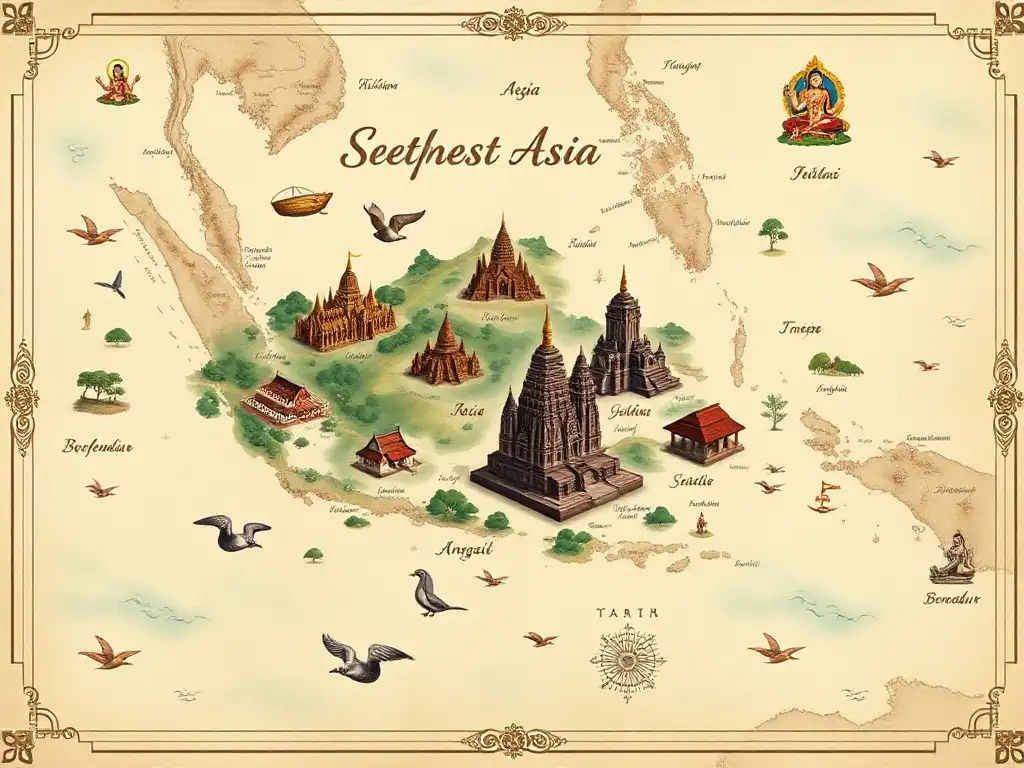
The influence of Hinduism in Southeast Asia has left an indelible mark on the region's culture, architecture, art, and social structures. This complex interplay between Indian religious traditions and local beliefs has resulted in a rich tapestry of cultural exchange that continues to resonate today. By tracing the historical footprints of Hindu influence, we can appreciate how this ancient religion has shaped the identities of various Southeast Asian nations.
Summary of Key Points on Hindu Influence
- Historical Foundations: Hinduism was introduced to Southeast Asia primarily through trade routes established by Indian merchants and the spread of Indianized kingdoms. The earliest evidence of Hindu influence can be traced back to the 2nd century CE, particularly in regions like Funan, Srivijaya, and the Khmer Empire.
- Cultural Synthesis: The integration of Hindu ideas and practices into local cultures was not a one-way street. Southeast Asian societies adapted Hindu beliefs to fit their own contexts, resulting in unique expressions of Hinduism that are distinct from those in India. For instance, the adaptation of Hindu deities and epics like the Ramayana and Mahabharata into local folklore has created a rich narrative landscape.
- Architectural Marvels: The architectural legacy of Hinduism in Southeast Asia is evident in the numerous temples built during the height of its influence. Notable examples include the magnificent Angkor Wat in Cambodia and the Prambanan temple complex in Indonesia, which showcase intricate carvings and grand designs inspired by Hindu cosmology.
- Art and Literature: Hindu themes and motifs have significantly influenced Southeast Asian art, literature, and performing arts. The depiction of Hindu gods and goddesses in sculptures, paintings, and dance forms reflects the deep-rooted connection to Hindu traditions, showcasing a blend of indigenous and Indian artistic styles.
- Political Structures: Many Southeast Asian kingdoms adopted Hinduism as a means to legitimize political power. Rulers often aligned themselves with Hindu gods, portraying themselves as divine figures and thus reinforcing their authority. This practice contributed to the centralization of power and the establishment of complex political systems.
Future Prospects of Hinduism in Southeast Asian Culture
As Southeast Asia continues to evolve in the modern era, the future of Hinduism within its cultural fabric remains promising. The revival of interest in traditional practices and beliefs has led to a renewed appreciation for Hindu heritage. Festivals, rituals, and traditional arts are being celebrated with vigor, fostering a sense of identity and continuity.
Potential Influences to Watch:
- Globalization and Cultural Exchange: The increasing interconnectedness of the world may lead to a resurgence of interest in Hindu philosophy and practices. As Southeast Asian nations engage in cultural exchanges with India and the global diaspora, Hinduism may find new expressions and interpretations.
- Interfaith Dialogue: The promotion of interfaith dialogue can provide a platform for the sharing of Hindu values and beliefs, encouraging mutual understanding and respect among diverse religious communities in Southeast Asia.
- Tourism and Heritage Conservation: Efforts to preserve and promote ancient Hindu sites as cultural heritage can attract tourism, bringing economic benefits while also highlighting the historical significance of Hinduism in the region.
The lasting legacy of Hindu influence in Southeast Asia is a testament to the resilience and adaptability of cultural practices. As the region navigates through contemporary challenges, the foundations laid by this ancient religion will continue to play a pivotal role in shaping its cultural identity and social dynamics.
Frequently Asked Questions
What is the significance of Hindu influence in Southeast Asia?
The Hindu influence in Southeast Asia is significant as it introduced religious practices, art, and architecture, shaping local cultures and societies through the spread of Hindu beliefs and traditions.
How did Hinduism spread to Southeast Asia?
Hinduism spread to Southeast Asia primarily through trade routes, cultural exchanges, and the efforts of Indian merchants and travelers, who established temples and settlements in the region.
What are some examples of Hindu architecture in Southeast Asia?
Examples of Hindu architecture in Southeast Asia include the magnificent Angkor Wat in Cambodia and the Prambanan Temple in Indonesia, both showcasing intricate designs and mythological themes from Hindu epics.
How did the Gupta Empire contribute to Hinduism's spread?
The Gupta Empire played a crucial role in spreading Hinduism by promoting literature, philosophy, and the arts, which greatly influenced Southeast Asian cultures through missionaries and scholars.
What modern-day countries show evidence of Hindu influence?
Modern-day countries such as Indonesia, Thailand, Malaysia, and the Philippines exhibit evidence of Hindu influence through festivals, cultural practices, and historical sites that reflect their ancient Indian connections.
Final Reflection: The Enduring Legacy of Hindu Influence in Southeast Asia
The intricate tapestry of Hindu influence in Southeast Asia is not just a relic of the past; it is a vibrant thread that continues to shape the cultural and spiritual landscape of the region today. As we explore the historical footprints of Indian religious traditions, we uncover a profound connection that transcends time and geography, reminding us that the echoes of ancient beliefs still resonate within contemporary societies. The enduring presence of Hinduism in Southeast Asia serves as a testament to the power of cultural exchange and the shared human experience.
Cultural and social dynamics in Southeast Asia have been significantly molded by the rich heritage of Hinduism, fostering a unique blend of traditions that enrich the lives of millions. The syncretism observed in various practices, festivals, and art forms illustrates how Hindu influence has woven itself into the very fabric of local identities. As the renowned scholar R. C. Majumdar once stated, The history of India is not merely the history of India; it is the history of the world.
This perspective invites us to recognize that the influence of Hinduism extends beyond borders, shaping not only the spiritual lives of individuals but also the cultural narratives of entire nations.
As we reflect on the lessons drawn from the historical journey of Hinduism in Southeast Asia, let us embrace the call to honor and celebrate this rich heritage in our own lives. I invite you to explore the ways in which these ancient teachings can inspire your personal growth and understanding of cultural diversity.
Consider how the principles of tolerance, respect, and interconnectedness found within Hindu philosophy can guide us in our interactions with others, fostering a more harmonious world. In doing so, we not only pay homage to the past but also pave the way for a future where the shared legacies of our diverse cultures can thrive together.
Embrace the Rich Tapestry of Hindu Heritage!
Thank you for exploring the profound influence of Hinduism in Southeast Asia with us! We hope you found valuable insights into how these ancient beliefs shaped cultures and traditions far beyond India’s borders. Now, let's turn this knowledge into action!
- Dive deeper into your exploration: Visit local temples or cultural exhibits that celebrate the history and contributions of Hinduism in your area.
- Share your newfound passion: Engage with friends or family by discussing your insights or organizing a small gathering to celebrate and learn about Southeast Asian Hindu festivals together.
- Join like-minded communities: Seek out online forums or local groups that celebrate and discuss the rich heritage of Hinduism in the region.
How can you incorporate the lessons of Hindu philosophy into your daily life or community efforts? We’d love to hear your thoughts!