
Ancient India’s Influence on Buddhist Art Across Asia: A Journey through Time

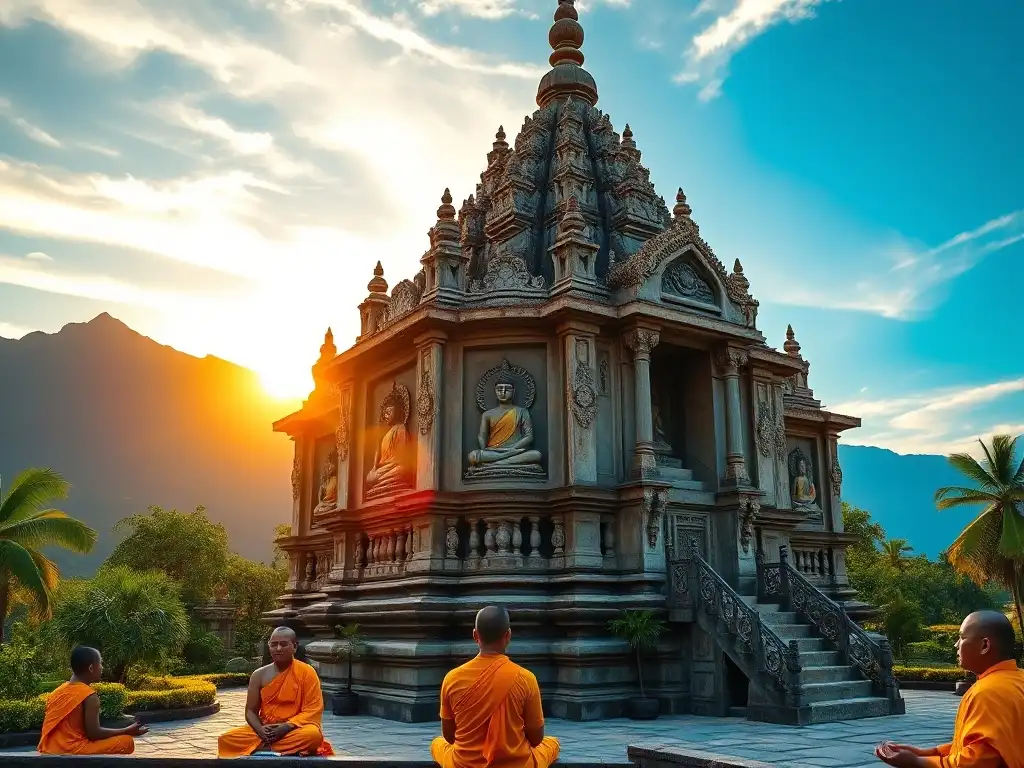
Welcome to Ancient India History, where we embark on a captivating journey through the rich tapestry of ancient Indian civilizations. Here, we uncover the profound cultural exchanges that shaped not only India but also the broader Asian landscape.
Our featured article, “Ancient India’s Influence on Buddhist Art Across Asia: A Journey through Time,” delves into the remarkable ways in which Buddhist art influenced by India has left an indelible mark on diverse cultures. Join us as we explore the intricate connections and vibrant legacies that continue to resonate today, inviting you to discover how ancient creativity and spirituality intertwine across centuries.
- Introduction to Buddhist Art Influence from India
- Origins of Buddhist Art in Ancient India
- Key Elements of Buddhist Art from India
- The Spread of Buddhist Art Across Asia
- Case Studies of Buddhist Art Influence in Asia
- Artistic Techniques and Styles Derived from India
- The Role of Monastic Institutions in Promoting Buddhist Art
- Challenges and Transformations in Buddhist Art
- Conclusion: Lasting Legacy of Ancient India’s Influence on Buddhist Art
-
Frequently Asked Questions
- What is the significance of Buddhist art in ancient India?
- How did ancient India influence Buddhist art across Asia?
- What are some key characteristics of Buddhist art from ancient India?
- Which ancient Indian empires were pivotal in promoting Buddhist art?
- How did the Buddhist art influence from India manifest in different cultures?
- Final Reflection: The Enduring Legacy of Buddhist Art from India
- Unveil the Legacy: Explore Buddhist Art Inspired by Ancient India!
Introduction to Buddhist Art Influence from India
The influence of ancient India on Buddhist art across Asia represents a remarkable journey through time, showcasing the profound interconnections between culture, religion, and artistic expression. From the earliest manifestations of Buddhist iconography in the Indus Valley to the flourishing artistic traditions during the Gupta Empire, Indian civilization played a pivotal role in shaping the visual language of Buddhism.
This article explores the rich tapestry of Buddhist art, tracing its origins in India and examining how it traversed borders to inspire diverse cultures across Asia. The enduring legacy of these artistic exchanges not only reflects the aesthetic values of ancient societies but also underscores the transformative power of Buddhism as it spread from its birthplace in India to distant lands.
Overview of Ancient India’s Cultural Contributions
Ancient India was a crucible of innovation and creativity, contributing significantly to various art forms, philosophies, and religious traditions that have left an indelible mark on world history. Key highlights of India's cultural contributions include:
- Indus Valley Civilization: Renowned for its advanced urban planning and intricate craftsmanship, this civilization laid the groundwork for artistic expression in the region.
- Buddhism's Emergence: Founded in the 5th century BCE, Buddhism introduced new themes and iconography that would evolve into a distinct artistic style.
- Gupta Period: Often referred to as the Golden Age of India, this era saw the proliferation of Buddhist art, characterized by exquisite sculptures and murals that depicted life and teachings of the Buddha.
The interplay of these elements fostered a rich cultural milieu, facilitating the development of a unique artistic vocabulary that would resonate through centuries and across continents.
Significance of Buddhist Art in Asian History
Buddhist art holds a vital place in the historical narrative of Asia, serving not only as a means of religious expression but also as a vehicle for cultural exchange. The key significance of Buddhist art includes:
- Visual Narratives: Artworks serve as storytelling mediums, conveying the life events of the Buddha and core Buddhist teachings, thereby making complex ideas accessible to a wider audience.
- Cultural Synthesis: As Buddhism spread to regions such as Central Asia, China, and Southeast Asia, it interacted with local artistic traditions, leading to a remarkable synthesis of styles and motifs.
- Pilgrimage and Trade Routes: Artistic exchanges were often facilitated by trade routes, such as the Silk Road, which allowed for the diffusion of ideas and techniques that enriched the artistic landscape of numerous cultures.
The impact of Buddhist art is evident in the diverse styles that emerged across Asia, each uniquely reflecting the synthesis of indigenous influences and Indian artistic principles. From the serene faces of Gandhara sculptures to the vibrant murals of Southeast Asia, the legacy of Buddhist art continues to inspire and inform modern artistic practices.
Origins of Buddhist Art in Ancient India
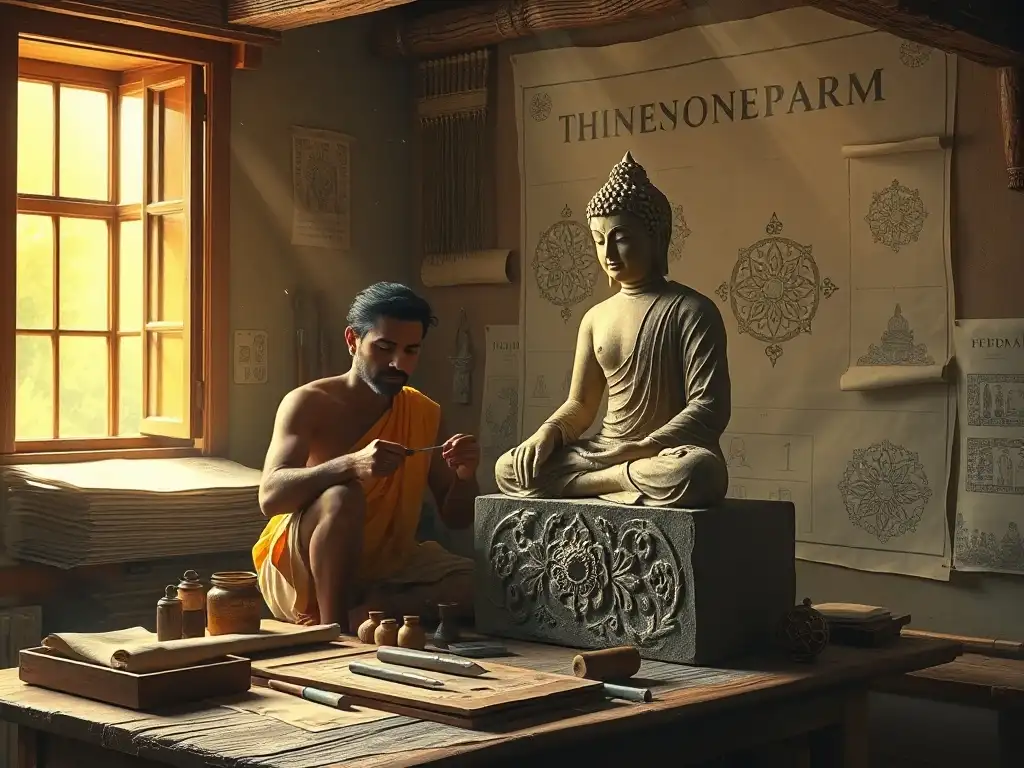
The Birth of Buddhism and Its Artistic Expression
Buddhism emerged in the 5th century BCE in the Indian subcontinent, founded by Siddhartha Gautama, known as the Buddha. This transformative movement not only reshaped spiritual beliefs but also laid the groundwork for a unique artistic tradition that would echo across Asia.
The initial artistic expressions related to Buddhism were deeply intertwined with its philosophical tenets. As Buddhism spread, it sought to convey its teachings through visual means, leading to the creation of significant religious artifacts. Early representations were often symbolic, utilizing motifs rather than direct depictions of the Buddha, reflecting the aniconic phase of Buddhist art. For instance, the use of the lotus flower symbolized purity and spiritual awakening, while the wheel represented the Dharma, or the Buddha's teachings.
One of the pivotal moments in the artistic representation of Buddhism was the Mauryan Empire (322-185 BCE). Emperor Ashoka, a significant patron of Buddhism, commissioned numerous stupas and rock edicts that served both as religious monuments and propaganda tools promoting Buddhist values. These structures not only housed relics but also provided a visual narrative that educated the populace about Buddhist teachings.
Early Buddhist Art Forms: Stupas and Reliefs
The earliest form of Buddhist art can be traced back to stupas, which are mound-like structures containing relics of the Buddha or other important figures in Buddhism. The Great Stupa at Sanchi, constructed in the 3rd century BCE, is a prime example of this architectural form. These stupas were adorned with intricate reliefs that depicted various Jataka tales (stories of the Buddha's previous lives) and scenes from the Buddha’s life, serving as a visual storytelling medium.
-
Stupas: These monumental structures were not just burial sites; they served as focal points for pilgrimage and worship. Their hemispherical shape symbolizes the universe and the cycle of life, while the harmika at the top represents the abode of the gods.
-
Reliefs: The reliefs on stupas often depicted significant events such as the Buddha's enlightenment, his first sermon, and the miracles he performed. They are characterized by a high degree of detail and narrative clarity, allowing viewers to engage with the stories being told.
Key Features Description Symbolic Motifs Use of lotus, wheel, and other symbols Narrative Reliefs Scenes illustrating Jataka tales and life events Architectural Innovations Development of stupas and intricate carvings
The transition from aniconic to iconic representation marked a significant evolution in Buddhist art. By the 1st century CE, the creation of the first human representations of the Buddha began, particularly in the Gandhara and Mathura regions. This shift not only influenced artistic styles but also laid the foundation for the diverse expressions of Buddhist art that would spread throughout Asia, fostering a rich tapestry of cultural exchange.
The origins of Buddhist art in ancient India are rooted in the birth of Buddhism and its artistic expressions, which evolved through stupas and reliefs. This artistic journey reflects the profound influence of Buddhist ideology on the visual culture of ancient India, shaping the development of Buddhist art across Asia.
Key Elements of Buddhist Art from India
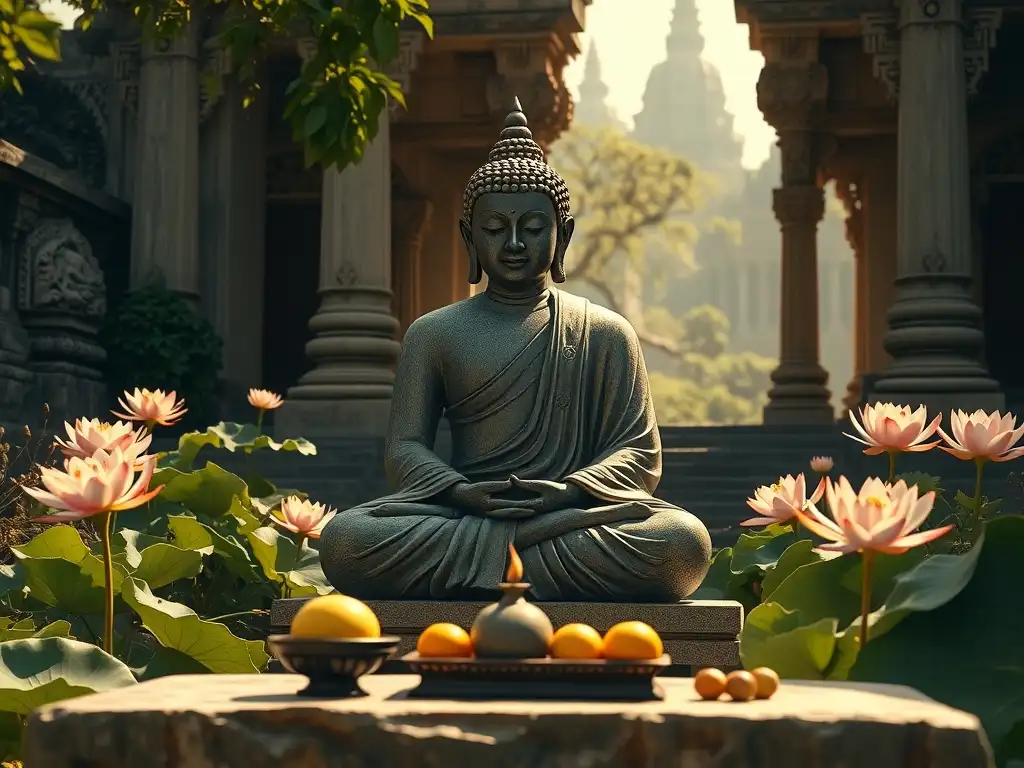
The development of Buddhist art in India is a remarkable journey that reflects the rich tapestry of cultural and religious influences that shaped its creation. The key elements of this art form are deeply rooted in the historical context of ancient Indian civilizations and their interactions with neighboring cultures. This section will explore the critical aspects that define Buddhist art originating from India, highlighting iconography, symbolism, and the broader cultural implications.
Iconography in Indian Buddhist Art
Iconography is central to understanding Buddhist art, as it serves as a visual language that conveys complex religious narratives and principles. In Indian Buddhist art, various iconographic elements represent key figures, events, and concepts integral to Buddhism.
- Buddha Representations:
- The most iconic figure in Buddhist art is the Buddha himself. Early depictions were aniconic, using symbols like the lotus flower or the dharma wheel to represent him. However, as the art evolved, realistic representations of the Buddha emerged, characterized by specific gestures (mudras) and physical attributes:
- Dharmachakra Mudra: Symbolizes the turning of the wheel of dharma.
- Bhumisparsha Mudra: Represents the moment of the Buddha's enlightenment.
- The most iconic figure in Buddhist art is the Buddha himself. Early depictions were aniconic, using symbols like the lotus flower or the dharma wheel to represent him. However, as the art evolved, realistic representations of the Buddha emerged, characterized by specific gestures (mudras) and physical attributes:
- Bodhisattvas:
- Bodhisattvas, enlightened beings who delay their own nirvana to help others, are also prominently featured. Their representations often display elaborate adornments and compassionate expressions, emphasizing their role as saviors in the Buddhist path.
- Narrative Panels:
- Many Buddhist sculptures and frescoes depict scenes from the life of the Buddha and important Jataka tales (stories of the Buddha's previous lives). These narrative panels serve both educational and devotional purposes, helping followers understand the principles of Buddhism.
Symbolism and Its Meaning in Buddhist Art
The symbolism in Buddhist art is profound and multi-layered, often reflecting the spiritual teachings of Buddhism and the philosophical underpinnings of Indian culture. Each artistic element carries significant meaning, inviting viewers to engage with the deeper truths of the religion.
- The Lotus Flower:
- A prevalent symbol in Buddhist art, the lotus represents purity and enlightenment. Growing from muddy waters, it signifies the potential for spiritual awakening amidst the struggles of life.
- The Dharma Wheel (Dharmachakra):
- This symbol represents the teachings of the Buddha and the cycle of birth, death, and rebirth (samsara). The eight spokes of the wheel often signify the Noble Eightfold Path, guiding practitioners toward enlightenment.
- The Stupa:
- Architecturally significant, stupas are dome-shaped structures containing relics. They symbolize the enlightened mind and serve as focal points for meditation and worship.
- The Bodhi Tree:
- Representing the tree under which the Buddha attained enlightenment, the Bodhi tree serves as a symbol of wisdom and the quest for knowledge.
The use of these symbols in Buddhist art not only enhances its aesthetic appeal but also serves as a means of teaching and preserving the core tenets of Buddhism. The influence of these elements can be observed in various artistic expressions across Asia, showcasing the profound impact of Indian Buddhist art on the region's cultural landscape.
The key elements of Buddhist art from India, particularly its iconography and symbolism, reflect a rich interplay of spiritual meaning and cultural identity. This artistic heritage continues to resonate across various cultures, illustrating the enduring influence of Buddhism on artistic traditions throughout Asia.
The Spread of Buddhist Art Across Asia
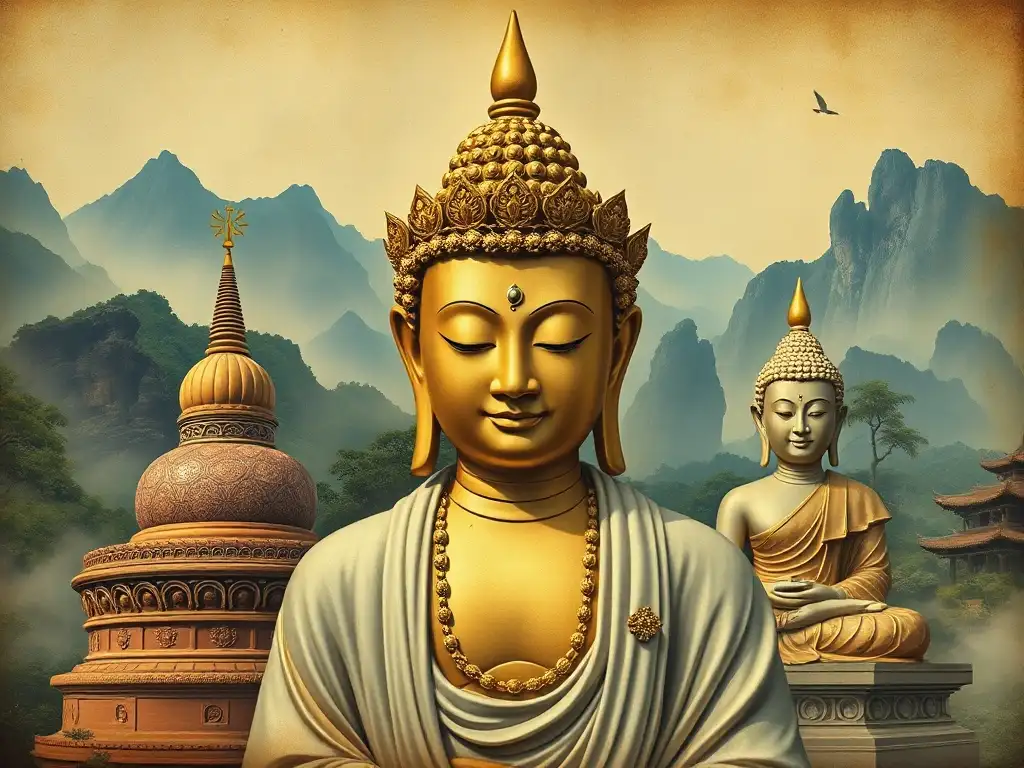
The influence of Buddhist art from India is a profound testament to the power of cultural exchange, showcasing how an idea can transcend borders and evolve into unique expressions across different regions. As Buddhism spread beyond the Indian subcontinent, it brought with it not only spiritual teachings but also a rich visual language that would be adapted and transformed in various contexts. The journey of Buddhist art is intricately tied to the movement of monks, traders, and pilgrims, which created a tapestry of artistic syncretism that reflects the diverse cultures it encountered.
Routes of Cultural Exchange: Trade and Pilgrimage
The dissemination of Buddhist art across Asia was primarily facilitated through two significant routes: trade routes and pilgrimage paths.
- Silk Road:
- The Silk Road served as a vital artery for trade between India and various regions in Central Asia, the Middle East, and beyond. Merchants and travelers not only exchanged goods but also ideas and artistic styles. The introduction of Buddhist motifs, such as the lotus flower and the stupa, can be traced back to this network, influencing the art of regions like China and Persia.
- Maritime Routes:
- Maritime trade routes also played a crucial role, particularly in spreading Buddhism to Southeast Asia. Indian merchants sailing to ports in present-day Indonesia, Thailand, and Vietnam brought with them not only goods but also artistic traditions. The emergence of sites like Borobudur in Indonesia exemplifies this exchange, with its intricate bas-reliefs depicting Buddhist narratives influenced by Indian iconography.
- Pilgrimage Trails:
- Pilgrimage routes to sacred Buddhist sites in India, such as Bodh Gaya and Sarnath, attracted monks and devotees from various regions. These pilgrims often returned home with artistic knowledge and religious artifacts, helping to establish local interpretations of Buddhist art.
The synergy between trade and pilgrimage not only facilitated the spread of Buddhist art but also allowed for the integration of local styles and materials, resulting in a unique blend of influences.
Major Regions Affected by Indian Buddhist Art Influence
The impact of Buddhist art from India can be observed in several key regions, each adapting the core elements of Indian Buddhist iconography to fit their cultural contexts.
- Central Asia:
- In regions like Gandhara, which is present-day Pakistan and Afghanistan, Indian artistic styles fused with Hellenistic influences due to earlier interactions with Alexander the Great's empire. The resulting Greco-Buddhist art is characterized by realistic human figures and detailed drapery, significantly shaping the portrayal of Buddha in art.
- China:
- The introduction of Buddhism to China during the Han dynasty marked a significant transformation in religious art. Chinese artists adapted Indian motifs, leading to the development of unique styles such as the cave art of Dunhuang. The use of color, scale, and narrative techniques in Chinese Buddhist art reflects both Indian influence and local traditions.
- Southeast Asia:
- In countries like Thailand and Cambodia, Indian Buddhist art had a lasting impact, evident in monumental structures such as Angkor Wat. Here, the incorporation of Hindu elements alongside Buddhist iconography illustrates the syncretic nature of cultural exchange in the region. The intricate carvings and statuary are a direct lineage from Indian artistic principles.
- Tibet:
- Tibetan Buddhism reflects deep Indian influences, particularly in the representation of deities and the use of mandalas. The introduction of Indian iconography, combined with local beliefs, has resulted in a unique form of Buddhist art that emphasizes spiritual symbolism and ritualistic elements.
The journey of Buddhist art from India is a fascinating exploration of how cultural exchanges shape artistic expressions. Each region that embraced Buddhism contributed to the evolution of its art, creating a rich tapestry that resonates with the shared heritage of Asian civilizations. Through this lens, we can appreciate the profound impact of Buddhist art influence from India, which continues to inspire and inform artistic endeavors across the globe.
Case Studies of Buddhist Art Influence in Asia
Gandhara Art: A Fusion of Cultures
Gandhara art, which flourished between the 1st century BCE and the 5th century CE in what is now Pakistan and Afghanistan, represents a significant amalgamation of various cultural influences, particularly those from ancient India and Greco-Roman civilizations. This artistic style is renowned for its unique interpretation of Buddhist themes, particularly the depiction of the Buddha and various Bodhisattvas.
One of the defining characteristics of Gandhara art is the incorporation of realistic human forms and intricate details, showcasing a blend of Indian spiritual motifs and Hellenistic techniques. Figures are often portrayed with flowing drapery and elaborate hairstyles, reminiscent of Greek sculptures. This artistic fusion is illustrated in the famous Gandhara Buddha statues, which exhibit both Indian iconography and Greek stylistic elements.
| Feature | Indian Influence | Greco-Roman Influence |
|---|---|---|
| Iconography | Symbolism of enlightenment | Realistic human forms |
| Drapery | Simple folds, spiritual focus | Detailed, flowing drapery |
| Facial Expressions | Serene and tranquil | Varied, expressive |
| Contextual Themes | Spiritual narratives | Mythological and historical |
The archaeological sites of Taxila and Sirkap are critical to understanding Gandhara art's evolution. These locations reveal stupas adorned with sculptural reliefs that narrate Jataka tales and the life of the Buddha, showcasing the syncretic nature of Buddhist art during this period.
The Influence of Indian Art on Chinese Buddhism
As Buddhism spread from India to China, it brought with it a wealth of artistic traditions that profoundly influenced Chinese artistic practices. The introduction of Buddhist art in China can be traced back to the Han Dynasty (206 BCE – 220 CE), where early influences from Indian art began to manifest in the form of sculptures and murals.
Chinese Buddhist art is characterized by its adaptation of Indian styles, particularly in the representation of the Buddha. Early statues, like those found in the Yungang Grottoes and the Longmen Grottoes, reflect Indian iconography while slowly evolving to incorporate distinctly Chinese elements, such as the use of Daoist symbolism and local artistic conventions.
Key Influences:
- Sculptural Techniques: The carving techniques used in Indian art, such as high relief and the modeling of forms, were adopted and adapted by Chinese artisans.
- Iconography: The depiction of the Buddha with specific hand gestures (mudras) and attributes (like the lotus) took root in Chinese representations, aligning with Indian traditions but evolving into distinctly Chinese forms over time.
- Narrative Art: The storytelling aspect of Buddhist art, as seen in the Jataka tales, found a prominent place in Chinese murals and sculpture, effectively merging narrative with spiritual instruction.
Over centuries, Chinese Buddhist art developed its unique characteristics, ultimately giving rise to styles such as Chan (Zen) Buddhism that further diverged from its Indian roots while still acknowledging its foundational influences.
Southeast Asian Temples: Reflections of Indian Aesthetics
The influence of Indian art on Southeast Asia is particularly evident in the region's temple architecture and sculpture, which often embody elements derived from ancient Indian aesthetics. The spread of Hinduism and Buddhism through trade routes and cultural exchanges led to the establishment of remarkable temple complexes, such as Angkor Wat in Cambodia and Borobudur in Indonesia.
These temples are adorned with intricate carvings, depicting scenes from Hindu and Buddhist mythology, showcasing the deep-rooted connections between Indian artistic traditions and Southeast Asian cultural expressions.
Key Features of Southeast Asian Temples:
- Architecture: The temple structures often reflect a combination of Indian Vastu Shastra principles and local building techniques, resulting in unique layouts that cater to both Hindu and Buddhist practices.
- Sculptural Reliefs: The narrative reliefs found at these sites often mirror Indian sculptures, with detailed depictions of deities, celestial beings, and scenes from sacred texts.
- Symbolic Elements: Common symbolic motifs, such as the lotus flower and Naga serpents, are prevalent in both Indian and Southeast Asian art, signifying purity and protection.
The architectural grandeur of temples like Angkor Wat not only showcases the influence of Indian aesthetics but also reflects the artistic and cultural syncretism that occurred as Buddhism and Hinduism intermingled with local traditions. This fusion is a testament to the enduring legacy of Buddhist art influence from India across Asia, leaving an indelible mark on the region's cultural heritage.
Artistic Techniques and Styles Derived from India
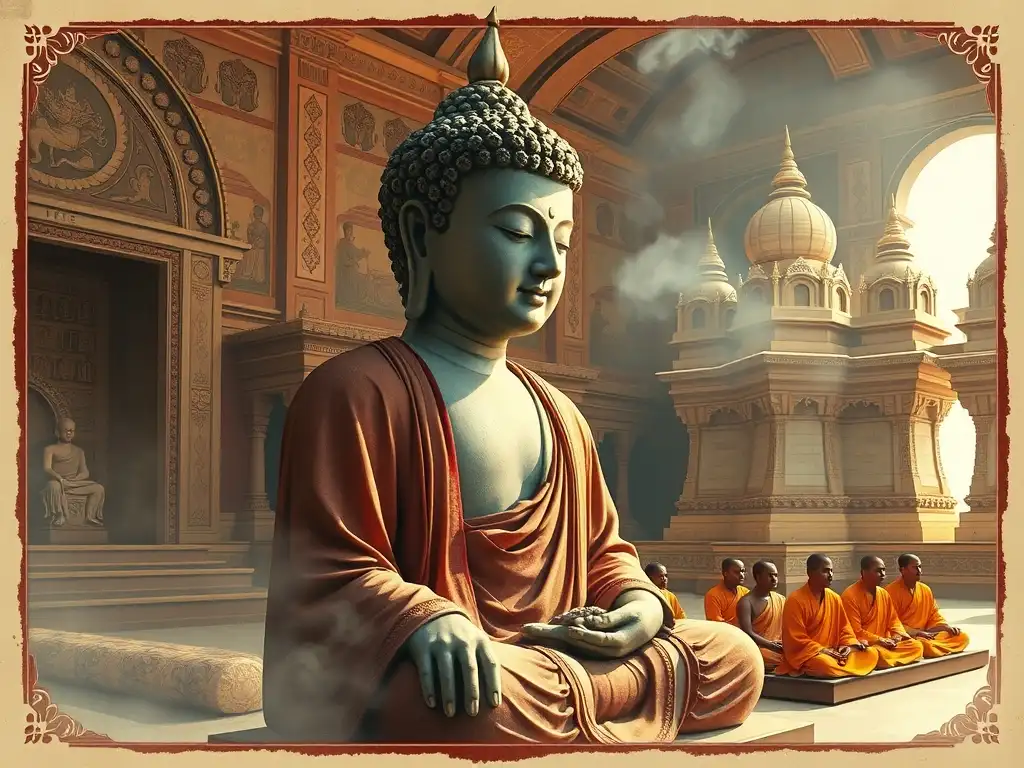
Artistic techniques and styles derived from India have played a significant role in shaping Buddhist art across Asia. The foundational elements of these arts can be traced back to ancient Indian civilizations, where various forms of expression flourished and later influenced different regions through cultural exchanges. This section delves into two primary areas: sculpture and architecture, as well as painting and manuscripts, showcasing how these artistic expressions evolved and adapted over time.
Sculpture and Architecture: Innovations and Adaptations
Sculpture and architecture are among the most prominent forms of Buddhist art influenced by Indian traditions. The intricate craftsmanship found in Indian sculptures served as a prototype for later adaptations in countries like Nepal, Tibet, and Southeast Asia.
- Materials and Techniques: Early Indian sculptors utilized materials such as stone, metal, and wood. The technique of carving statues from rock faces, seen in the Ajanta and Ellora caves, demonstrated an advanced understanding of perspective and proportion. This method later influenced the rock-cut architecture in places like China and Thailand.
- Iconography: The representation of the Buddha in various postures (mudras) and forms was innovatively developed in India. The seated Buddha in meditation, for instance, became a central motif that transcended geographical boundaries. The use of specific symbols, such as the lotus flower (representing purity) and the wheel of Dharma, further enriched the iconographic vocabulary of Buddhist art.
- Architectural Styles: The stupa, originally developed in India as a burial mound, evolved into a significant architectural form in Buddhist culture. The Great Stupa at Sanchi is a prime example of early Buddhist architecture that influenced similar structures in Sri Lanka and Southeast Asia. These stupas often featured intricately carved gateways (toranas) adorned with reliefs depicting Jataka tales, which were later adopted and adapted in various Asian cultures.
The influence of Indian sculpture and architecture is evident in the meticulous designs and religious symbolism present in Buddhist sites across Asia, showcasing a blend of local traditions with Indian artistic principles.
Painting and Manuscripts: Transmissions of Indian Traditions
The transmission of Indian painting techniques and manuscript traditions significantly contributed to the spread of Buddhist art across Asia. This artistic exchange fostered a rich tapestry of styles and themes that resonated with different cultures.
- Miniature Paintings: Indian miniature paintings, characterized by vibrant colors and intricate details, served as an important medium for illustrating Buddhist texts and narratives. These paintings often depicted scenes from the life of the Buddha and various Jataka tales, providing visual storytelling that was both educational and devotional. The techniques developed in India influenced the creation of similar artworks in Tibet and Mongolia, where local artists adapted these styles to incorporate regional elements.
- Manuscript Illustration: The tradition of illustrating manuscripts began in ancient India, where texts such as the Pali Canon were meticulously copied and adorned with colorful illustrations. These manuscripts not only served as religious scriptures but also as artistic expressions that influenced manuscript traditions in countries like Japan, Korea, and China. The detailed illustrations often portrayed significant events in the Buddha's life, contributing to the understanding and appreciation of Buddhist teachings.
- Regional Adaptations: As Buddhist art spread across Asia, it absorbed local artistic traditions, leading to unique adaptations. For instance, while Indian painting emphasized bold colors and intricate patterns, Tibetan painting incorporated more geometric designs and a focus on thangka (scroll paintings). This syncretism illustrates how Indian artistic elements were reinterpreted in different cultural contexts.
The influence of Indian painting and manuscript traditions on Buddhist art across Asia highlights a dynamic process of cultural exchange that enriched the artistic heritage of the region. By examining these techniques, we can appreciate the depth and complexity of Buddhist art as it evolved and adapted through time and space.
The Role of Monastic Institutions in Promoting Buddhist Art
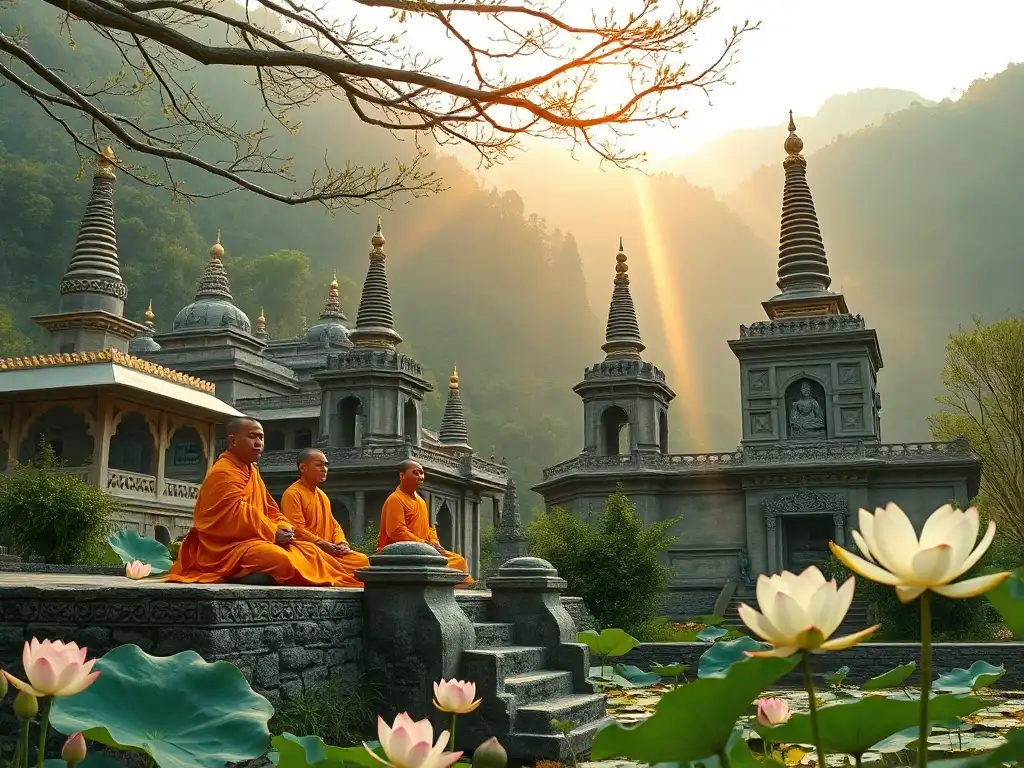
The monastic institutions of ancient India played a pivotal role in the proliferation and evolution of Buddhist art across Asia. These institutions were not just places of worship and meditation; they served as vibrant centers of cultural and artistic exchange. As Buddhism spread from its Indian roots into Central Asia, China, and beyond, the monasteries acted as the conduits through which artistic ideas and styles were shared and transformed.
Monasteries as Centers of Artistic Activity
Monasteries were often strategically located along trade routes, making them ideal hubs for cultural exchange. They attracted artisans, craftsmen, and scholars from various regions, fostering an environment where artistic experimentation thrived. Some notable aspects of their role include:
- Patronage of Artisans: Monastic institutions provided financial support to artists and craftsmen, commissioning works that adorned their temples and stupas. This patronage not only facilitated the creation of monumental sculptures and paintings but also encouraged the development of distinct artistic styles.
- Workshops and Training: Many monasteries established workshops where artisans could hone their skills. These workshops became incubators for new techniques and artistic innovations. For instance, the Ajanta Caves in Maharashtra, India, showcase exquisite frescoes that reflect both local and foreign influences, made possible by the collaborative efforts of monastic patrons and skilled artisans.
- Cultural Exchange: As monks traveled to spread Buddhist teachings, they carried with them artistic ideas. Monasteries became melting pots of cultural influences, where Indian styles merged with those from regions such as Gandhara, which is known for its Greco-Buddhist art. This syncretism is evident in the intricate sculptures found in the region, which blend Indian iconography with Hellenistic elements.
Preservation and Evolution of Artistic Techniques
The preservation and evolution of artistic techniques within monastic institutions ensured that the rich heritage of Buddhist art continued to thrive over the centuries. Key factors in this process include:
- Scriptural Inspiration: Many artistic works were inspired by Buddhist texts, which detailed the life of the Buddha and various Jataka tales. Monasteries served as repositories for these texts, allowing monks to draw upon them for artistic inspiration. This led to a coherent narrative style in Buddhist art that conveyed spiritual teachings through visual means.
- Adaptation of Local Styles: As Buddhism spread, monastic institutions adapted local artistic styles to suit regional tastes and cultural contexts. For instance, the introduction of Buddhist art in China saw the incorporation of traditional Chinese aesthetics, resulting in a unique blend of styles. This adaptability helped maintain the relevance of Buddhist art across diverse cultures.
- Transmission of Knowledge: Monasteries were key in the transmission of artistic knowledge. Monks and artisans shared techniques, materials, and iconography across borders, leading to the evolution of Buddhist art in different regions. For example, the introduction of stucco and fresco painting techniques in Southeast Asia can be traced back to Indian monastic influences.
The monastic institutions of ancient India were instrumental in promoting and evolving Buddhist art. By serving as centers of artistic activity and preserving artistic techniques, they ensured that the influence of Buddhist art from India resonated throughout Asia, leaving a lasting legacy that continues to inspire today.
Challenges and Transformations in Buddhist Art
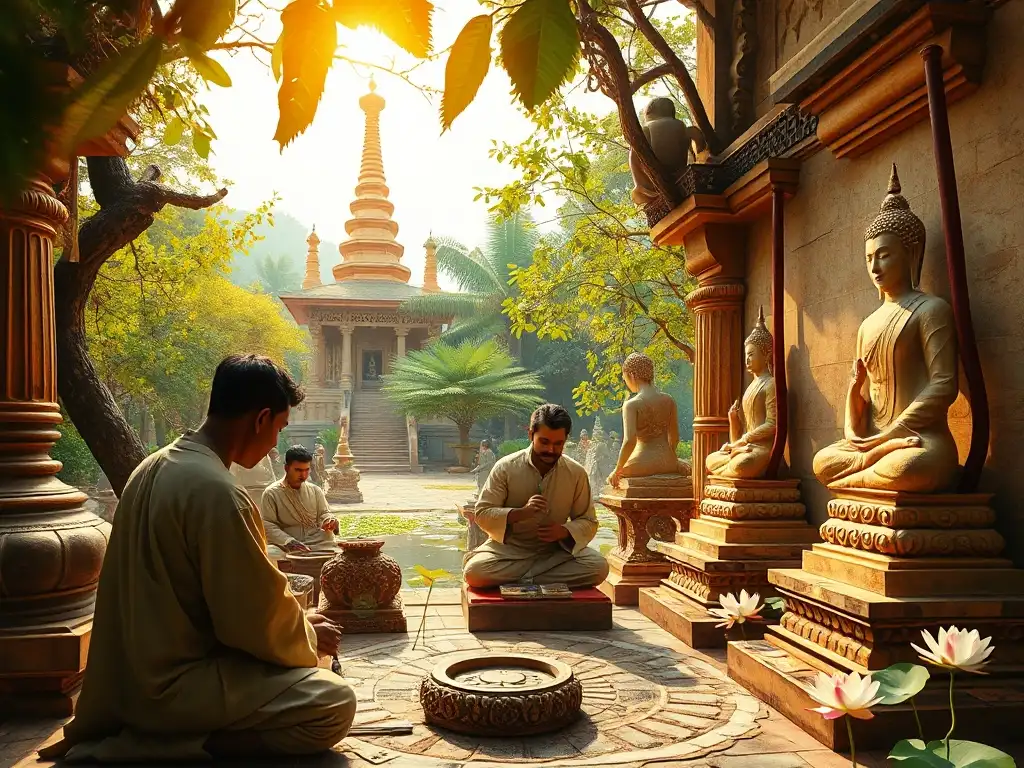
Throughout history, Buddhist art has undergone significant challenges and transformations as it spread from its Indian origins to various regions across Asia. This process was not merely a replication of Indian styles; it involved a complex interplay of local influences, societal changes, and artistic innovations. The adaptability of Buddhist art reflects the resilience of the Buddhist tradition and its ability to resonate with diverse audiences.
One of the primary challenges faced by Buddhist artists was the integration of local cultural elements into the existing Indian artistic framework. As Buddhism traveled along trade routes, such as the Silk Road, it encountered a myriad of local beliefs and artistic expressions. This led to a natural evolution of styles, techniques, and iconography, which would adapt to fit the aesthetic sensibilities of various regions.
Moreover, the rise of different dynasties and the political climate of each region greatly influenced the development of Buddhist art. For example, the patronage of rulers in regions like Gandhara and Mathura led to distinct artistic schools that emphasized varying techniques and themes. In Gandhara, the influence of Hellenistic art introduced realistic human forms and draped clothing, diverging from the more austere representations found in earlier Indian art.
Regional Variations and Adaptations of Indian Art
The spread of Buddhism across Asia saw the emergence of distinct regional variations that merged Indian artistic traditions with local styles. Each region interpreted Buddhist themes through its cultural lens, resulting in a rich tapestry of artistic expressions.
- Gandhara Art:
- Located in present-day Pakistan and Afghanistan, Gandhara art is notable for its Greco-Buddhist influences, characterized by realistic human figures and intricate drapery. The use of stucco and stone carvings showcased the integration of Hellenistic styles with traditional Indian motifs.
- Mathura Art:
- In contrast, Mathura art retained a more indigenous style, focusing on symbolism and the divine nature of the figures. The sculptures often depicted the youthful form of the Buddha, emphasizing spiritual rather than physical attributes.
- Southeast Asian Art:
- As Buddhism spread to Southeast Asia, local artisans incorporated indigenous elements. For instance, the Buddhist temples of Angkor in Cambodia exhibit architectural styles that reflect local traditions and beliefs, merging Hindu and Buddhist iconography.
- Tibetan Art:
- Tibetan Buddhist art is characterized by its vibrant colors and intricate thangkas (painted scrolls). The influence from Indian art is evident, yet Tibetan artists adapted the forms to reflect local spiritual practices and Tibetan iconography.
The divergence in style and technique illustrates how Buddhist art became a living tradition, evolving in response to the cultural contexts of each region while retaining its core spiritual themes.
The Impact of Local Cultures on Buddhist Art Forms
The interaction between Buddhist art and local cultures has been a significant factor in shaping its diverse manifestations across Asia. Each encounter with local traditions enriched Buddhist art, allowing for a dynamic exchange that resulted in unique artistic forms.
- Cultural Integration:
- Local beliefs and practices were often integrated into Buddhist narratives. For instance, in Japan, the concept of Kami (spirits) was harmonized with Buddhist teachings, giving rise to unique representations in art that reflected this syncretism.
- Material and Techniques:
- Regional availability of materials influenced artistic choices. For example, the use of local woods and stones in Southeast Asia led to the creation of distinctive sculptures and temple architectures, which differed significantly from the stone-carved traditions of India.
- Symbolism and Iconography:
- Local motifs, such as flora and fauna, were incorporated into Buddhist iconography. In China, for instance, the lotus flower, a symbol of purity in Buddhism, was often depicted alongside local symbols, thus creating a unique blend that resonated with Chinese audiences.
- Artistic Movements:
- The emergence of local artistic movements, such as Zen painting in Japan, drew from Buddhist principles while also embracing local aesthetics. This allowed for a more personal interpretation of Buddhist themes, further diversifying its artistic expression.
The impact of local cultures on Buddhist art forms has been profound, resulting in a rich variety of artistic expressions that continue to evolve. The Buddhist art influence from India is evident, yet the transformation it underwent in various regions illustrates the adaptability and resilience of Buddhist traditions across time and space.
Conclusion: Lasting Legacy of Ancient India’s Influence on Buddhist Art
The legacy of ancient India’s influence on Buddhist art is profound and enduring, transcending geographical boundaries and leaving an indelible mark on the artistic expressions of various Asian cultures. From the intricate sculptures of the Gandhara school to the serene images of the Buddha in the Gupta period, the artistic styles and iconography originating from India have shaped the visual language of Buddhism across the continent. This influence is not merely a historical footnote; rather, it is a testament to the dynamic interactions between cultures and the ability of art to serve as a bridge among diverse civilizations.
The dissemination of Buddhist art from India occurred primarily along trade routes, where merchants and monks traveled extensively, sharing not only goods but also ideas and artistic techniques. As Buddhism spread to regions such as Central Asia, Southeast Asia, and East Asia, local artists adapted Indian styles, resulting in a rich tapestry of artistic syncretism. The incorporation of indigenous elements into Buddhist iconography illustrates the fluidity of cultural exchange and highlights how ancient Indian art served as a foundation upon which new artistic traditions were built.
Reflection on the Artistic Syncretism Across Asia
Artistic syncretism in Buddhist art reflects the confluence of multiple cultural influences that shaped its evolution over centuries. For instance, in Gandhara, the fusion of Hellenistic and Indian styles produced unique representations of the Buddha that depicted him in human form, a departure from earlier aniconic representations. This blend of styles not only illustrates the artistic innovations of the time but also highlights the cultural dialogues that occurred as a result of trade and migration.
In Southeast Asia, particularly in countries like Thailand and Cambodia, Indian artistic influences are evident in the intricate carvings of temples such as Angkor Wat. Here, local artisans infused traditional Indian motifs with indigenous themes, resulting in a distinctive style that retains the essence of Buddhist iconography while also reflecting local beliefs and practices. This adaptation underscores the significance of context in the evolution of artistic forms and the role of cultural identity in shaping artistic expression.
The evolution of Buddhist art across Asia exemplifies how art transcends its immediate cultural environment, absorbing and reflecting the complexities of human experience across different societies. The shared symbols and narratives in Buddhist art serve as a unifying force, connecting diverse cultures through a common spiritual heritage.
Implications for Understanding Cultural Exchanges in History
The influence of ancient India on Buddhist art carries important implications for our understanding of cultural exchanges throughout history. It challenges the notion of art as a static entity, instead presenting it as a dynamic practice that is continually shaped by interactions among different cultures. The transmission of artistic styles and iconography across borders is indicative of broader cultural dialogues, revealing how societies have historically engaged with each other through the medium of art.
Moreover, exploring the Buddhist art influence from India prompts a reevaluation of historical narratives that often isolate cultures from one another. It emphasizes the interconnectedness of civilizations and the importance of viewing history through a lens that appreciates the complexities of cultural exchange. This perspective not only enriches our understanding of the history of art but also highlights the essential role of Buddhism as a catalyst for artistic innovation and shared cultural heritage across Asia.
The lasting legacy of ancient India’s influence on Buddhist art serves as a reminder of the power of artistic expression to forge connections, foster understanding, and celebrate the richness of human creativity across time and space. As we continue to explore the intricate threads of cultural influences, the story of Buddhist art stands as a testament to the enduring impact of ancient civilizations on the world’s artistic landscape.
Frequently Asked Questions
What is the significance of Buddhist art in ancient India?
Buddhist art represents the spiritual and cultural evolution of Buddhism, showcasing its teachings through sculptures, paintings, and architecture that emerged during ancient Indian civilizations.
How did ancient India influence Buddhist art across Asia?
Ancient India served as a cultural hub, spreading Buddhist themes and styles through trade and missionary activities, leading to the development of unique art forms in countries like China, Japan, and Southeast Asia.
What are some key characteristics of Buddhist art from ancient India?
Buddhist art from ancient India is characterized by symbolism, detailed iconography, and the depiction of the Buddha and other significant figures, often emphasizing spiritual concepts through intricate designs.
Which ancient Indian empires were pivotal in promoting Buddhist art?
The Maurya and Gupta Empires were particularly influential, with rulers like Ashoka promoting Buddhism and its artistic expressions, leading to a flourishing of Buddhist art during their reigns.
How did the Buddhist art influence from India manifest in different cultures?
As Buddhism spread, Indian artistic elements blended with local traditions, resulting in distinctive styles, such as the Buddhist cave paintings in Ajanta and the stupas in Sri Lanka, illustrating the diversity of influence.
Final Reflection: The Enduring Legacy of Buddhist Art from India
The influence of ancient India on Buddhist art across Asia is not just a historical fact; it is a vibrant thread woven into the cultural fabric of our present. Today, as we navigate a world that often feels fragmented, the unifying power of art serves as a reminder of our shared heritage and the profound impact of ancient civilizations. The intricate sculptures, serene paintings, and architectural marvels that emerged from India continue to resonate, inviting us to explore the depths of spiritual expression and cultural exchange.
The journey through the evolution of Buddhist art highlights the interconnectedness of societies and the transformative power of artistic expression. From the majestic stupas of Sanchi to the delicate carvings of Borobudur, these masterpieces reflect not only religious devotion but also the cultural dialogues that shaped their creation. As we witness the ongoing influence of these artistic traditions, we are reminded of the words of the renowned art historian Ananda K. Coomaraswamy: The artist is not a special kind of man, but every man is a special kind of artist.
This perspective encourages us to recognize the artist within ourselves and appreciate the beauty that arises from diverse cultural interactions.
As we reflect on the lessons of ancient India’s influence on Buddhist art, let us embrace the opportunity to engage with and celebrate the rich tapestry of our global heritage. I invite you to explore your own creative expressions, whether through art, writing, or any form of personal expression, and to seek inspiration from the past as you shape your future. In doing so, we honor the legacy of those who came before us and contribute to the ongoing story of human creativity and connection.
Unveil the Legacy: Explore Buddhist Art Inspired by Ancient India!
Thank you for immersing yourself in the captivating journey of Ancient India's influence on Buddhist art across Asia. You've unlocked insights into a rich cultural tapestry, and now it’s time to take that excitement further! Here are some specific actions you can take to deepen your connection with this profound topic:
- Dive Deeper: Visit a local museum or cultural center that features Buddhist art. Engage with the pieces and reflect on their historical context.
- Share Your Insights: Discuss this article with friends or on social media and start a conversation about how Ancient India shaped the art we see today.
- Join the Community: Get involved in online forums or social media groups focused on Buddhist art and culture to connect with fellow enthusiasts and expand your knowledge!
As you embark on this exploration of art and culture, consider this: How has the art you’ve encountered shaped your understanding of Buddhism and its journey across continents? We’d love to hear your thoughts!