
The Influence of Ancient Indian Rituals on Southeast Asian Spiritual Practices

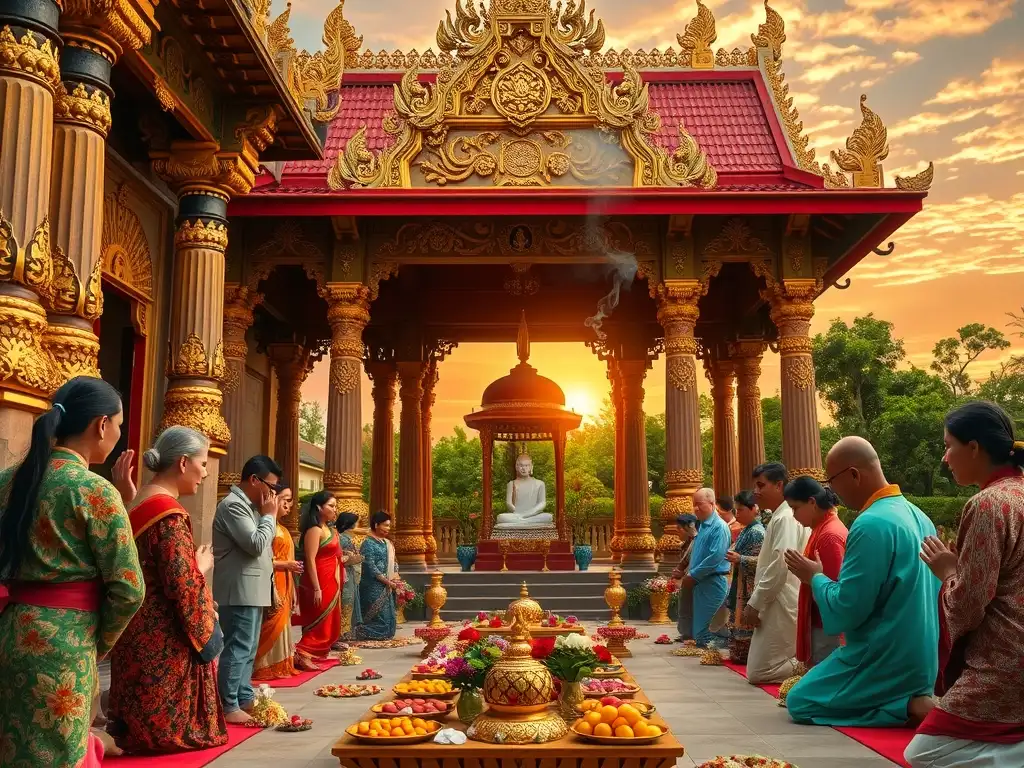
Welcome to Ancient India History, where we embark on a fascinating journey through the rich tapestry of India's past. Here, we uncover the profound influence of ancient Indian rituals on Southeast Asian spiritual practices, revealing connections that have shaped cultures across the region. As you delve into our main article, prepare to be intrigued by how these age-old traditions continue to resonate today. Join us as we explore the intricate web of cultural exchanges that have left an indelible mark on both ancient and modern societies!
Introduction to Ancient Indian Rituals
The intricate tapestry of ancient Indian rituals weaves a profound narrative of spirituality, culture, and tradition that has not only shaped the Indian subcontinent but also significantly impacted neighboring regions, particularly Southeast Asia. This article delves into the influence of ancient Indian rituals on Southeast Asian spiritual practices, exploring how these rituals transcended geographical boundaries to enrich and transform local customs and beliefs. Understanding this influence is crucial for appreciating the cultural exchanges that occurred over centuries, which led to a rich intermingling of ideas, practices, and philosophies between India and Southeast Asian civilizations.
Definition and Significance of Ancient Indian Rituals
Ancient Indian rituals, often rooted in Hinduism, Buddhism, and Jainism, encompass a wide array of practices that include ceremonies, offerings, and rites of passage. These rituals serve multiple purposes, such as:
- Spiritual connection: They aim to establish a connection between the individual and the divine.
- Cultural identity: Rituals reflect societal values and norms, helping to preserve cultural heritage.
- Community bonding: They foster a sense of belonging and community among participants.
The significance of these rituals is underscored by their persistence and evolution over millennia, influencing not only spiritual practices but also social and political structures in regions far beyond India.
Overview of Ritual Practices in Ancient India
Ancient Indian rituals can be broadly categorized into several types:
- Vedic Rituals: These are the oldest and most complex rituals, often involving elaborate ceremonies and hymns, performed by priests.
- Sacrificial Rituals: Central to many ancient practices, these rituals were intended to appease deities and ensure prosperity.
- Festivals and Celebrations: Festivals such as Diwali and Holi, with their associated rituals, played a significant role in the communal and social life of ancient Indians.
- Pilgrimages: Sacred journeys to holy sites were considered essential for spiritual purification and merit.
These practices were not only confined to the religious sphere but also permeated various aspects of daily life, influencing art, literature, and philosophy.
Historical Context of Cultural Exchanges
The exchange of cultural and spiritual ideas between ancient India and Southeast Asia is a fascinating chapter in history, marked by trade routes, migration, and the spread of religions.
The Timeline of Ancient Indian Influence in Southeast Asia
The influence of ancient Indian rituals in Southeast Asia can be traced back to several key periods:
- 1st Century CE: The introduction of Indian trade networks facilitated the early exchange of ideas and practices.
- 4th to 6th Century CE: The spread of Buddhism, with its roots in India, led to the establishment of monasteries and the adoption of ritual practices in Southeast Asia.
- 9th Century CE: The rise of Hindu kingdoms in the region, such as the Srivijaya and Majapahit empires, saw the incorporation of Indian rituals into local traditions.
This timeline highlights the gradual and profound impact of Indian rituals on Southeast Asian spiritual practices.
Key Historical Events Facilitating Cultural Exchange
Several notable events played a pivotal role in facilitating the cultural exchange between ancient India and Southeast Asia:
- Maritime Trade Routes: The establishment of trade routes across the Indian Ocean allowed for the exchange of goods, ideas, and religious practices.
- The Spread of Buddhism: Indian monks and traders traveled to Southeast Asia, spreading Buddhist teachings and associated rituals.
- Royal Patronage: Southeast Asian kings often adopted Hinduism and Buddhism, promoting the associated rituals and practices in their courts.
These events underscore the dynamic interactions that shaped the spiritual landscape of Southeast Asia, illustrating the enduring legacy of ancient Indian rituals.
Major Ancient Indian Rituals
Ancient Indian rituals played a significant role in shaping spiritual practices, both within India and across Southeast Asia. These rituals encompassed various ceremonies, rites of passage, and daily practices that were deeply intertwined with the religious and philosophical beliefs of the time. Key rituals included Vedic sacrifices, rituals associated with the Upanishads, and those linked to Hinduism and Buddhism. Each of these rituals not only served spiritual purposes but also fostered communal ties and cultural identity, thus facilitating their spread beyond the Indian subcontinent.
Vedic Rituals and Their Spiritual Importance
Vedic rituals, rooted in the texts known as the Vedas, were characterized by complex ceremonies that often involved fire sacrifices (yajnas), chanting of mantras, and offerings to deities. These rituals were believed to maintain cosmic order (rita) and were vital for the prosperity of the community. The performance of yajnas was thought to appease the gods and ensure favorable conditions for agriculture, health, and overall well-being.
The significance of Vedic rituals extended beyond mere practice; they were often seen as a means to attain moksha, or liberation from the cycle of rebirth. As Indian merchants and travelers moved into Southeast Asia, they brought these rituals with them, influencing local practices and beliefs. The integration of Vedic elements into Southeast Asian spiritual traditions can be seen in various cultural expressions, including temple architecture, art, and local rituals that echo Vedic themes.
Rituals of the Upanishads and Their Philosophical Impact
The Upanishads introduced a more introspective approach to spirituality, focusing on meditation, self-realization, and the quest for ultimate truth (Brahman). Unlike the elaborate rites of the Vedic period, the Upanishadic rituals emphasized internal reflection and understanding the nature of the self (Atman). This shift from external rituals to internal contemplation had a profound impact on spiritual practices in Southeast Asia.
The philosophical teachings found in the Upanishads resonated with local belief systems, leading to a syncretism of ideas. Concepts such as karma, dharma, and the pursuit of enlightenment permeated various Southeast Asian cultures, influencing their spiritual frameworks. For instance, the adoption of meditation practices and the search for personal enlightenment in Southeast Asian Buddhism can be traced back to these ancient Indian philosophical traditions.
Influence of Hindu and Buddhist Practices
The spread of Hinduism and Buddhism from India to Southeast Asia brought with it a wealth of rituals and spiritual practices that deeply influenced local cultures. Hindu rituals, such as puja (worship) and festivals, established a vibrant religious life in regions like Bali and Java. Temples built in the Indian architectural tradition became centers of spiritual and cultural activities, serving as focal points for community gatherings and religious observances.
Buddhism, emerging from the teachings of Siddhartha Gautama, incorporated many elements from Hindu rituals while also introducing new practices. The emphasis on meditation, ethical conduct, and the monastic lifestyle became integral to Southeast Asian Buddhism. Festivals such as Vesak, celebrating the birth and enlightenment of the Buddha, echo the ritualistic nature of ancient Indian celebrations and remain prominent in Southeast Asian cultures today.
Mechanisms of Influence on Southeast Asia
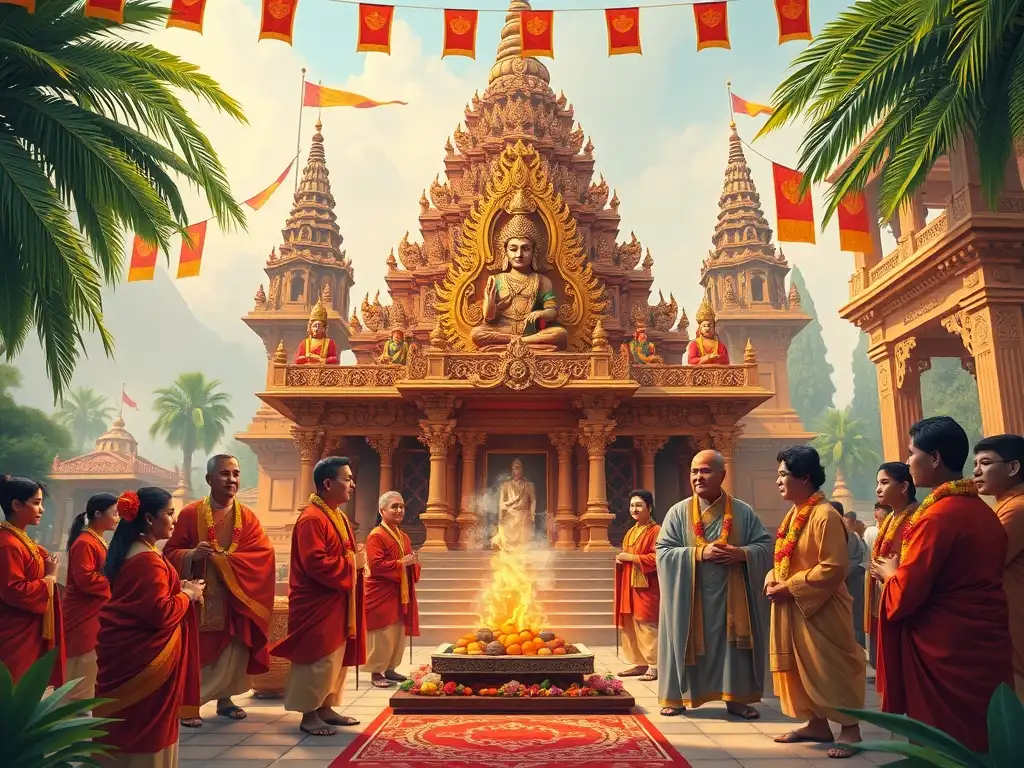
The transmission of ancient Indian rituals to Southeast Asia was facilitated through various mechanisms, primarily trade routes and the movement of monks and scholars. These channels enabled the exchange of not only goods but also ideas, beliefs, and practices that shaped the spiritual landscape of the region.
Trade Routes and the Dissemination of Ritual Practices
The maritime trade routes connecting India with Southeast Asia served as conduits for cultural exchange. Indian traders and sailors, traveling along these routes, shared their customs, including rituals, religious texts, and spiritual practices. The ports of cities like Srivijaya and Funan became melting pots of cultural interaction, where Indian rituals began to merge with local traditions.
As merchants engaged in trade, they would often perform rituals to seek blessings for safe passage and prosperous ventures. These practices were observed and adopted by local populations, leading to a gradual integration of Indian ritualistic elements into Southeast Asian spiritual life. This exchange not only enriched local traditions but also fostered a shared cultural heritage that continues to influence the region.
The Role of Monks and Scholars in Cultural Transmission
Monks and scholars played a pivotal role in the dissemination of ancient Indian rituals throughout Southeast Asia. Buddhist monks, in particular, traveled extensively to spread the teachings of the Buddha and establish monasteries. These monks often incorporated local customs into their practices, creating a unique blend of Indian and indigenous rituals.
In addition to Buddhism, Hindu scholars also ventured into Southeast Asia, bringing with them texts, rituals, and philosophical ideas. Their teachings and practices were adapted by local communities, leading to the establishment of rich spiritual traditions that reflected both Indian and Southeast Asian influences. This dynamic exchange of knowledge and ritual practices fostered a diverse spiritual landscape that remains a hallmark of Southeast Asian cultures today.
Specific Southeast Asian Spiritual Practices Influenced by Ancient Indian Rituals
The influence of ancient Indian rituals on Southeast Asian spiritual practices is profound and multifaceted. Several regions in Southeast Asia, including Indonesia, Thailand, and Cambodia, have absorbed elements of Indian spirituality, which have evolved into unique local traditions. One prominent example is the celebration of Diwali, the festival of lights, which has been adapted in various forms across Southeast Asia, showcasing a blend of local customs with Hindu celebratory practices.
In addition, many Southeast Asian cultures have embraced puja rituals, which involve offerings made to deities. These rituals often incorporate flowers, incense, and food, mirroring similar practices found in India. Temples across the region, such as the Prambanan in Indonesia, reflect Hindu architectural styles and rituals, demonstrating the direct influence of ancient Indian worship practices.
Moreover, the use of samsara (cycle of birth and rebirth) and karma (the law of moral causation) concepts in Southeast Asian spiritual beliefs can be traced back to Indian philosophies. These ideas have been integrated into the local belief systems, influencing how communities perceive life, death, and morality.
Hindu Influences in Southeast Asian Cultures
The presence of Hinduism in Southeast Asia can be traced back to the early centuries CE, largely due to trade and cultural exchanges facilitated by Indian merchants and travelers. Hindu deities, such as Shiva and Vishnu, have found their way into the local pantheons, often being worshipped alongside indigenous gods. This syncretism has given rise to numerous temples dedicated to Hindu deities, with intricate carvings and sculptures echoing the artistic styles of ancient India.
The Ramayana and Mahabharata, epic narratives from India, have significantly impacted local literature and performing arts. Many traditional dances and theatrical forms in Southeast Asia, like Wayang Kulit in Indonesia, are adaptations of these epics, showcasing the seamless integration of Indian narratives into local storytelling traditions. Additionally, Hindu festivals such as Navaratri and Holi have been celebrated in various forms, incorporating local customs and rituals that enrich the cultural tapestry of the region.
Buddhist Influences from Ancient Indian Practices
Buddhism, which originated in India, has also left a lasting mark on Southeast Asian spiritual practices. The arrival of Buddhism in the region can be attributed to Indian missionaries and traders, with its teachings quickly gaining traction among local populations. Rituals such as Buddhist chanting and meditation practices reflect the direct influence of ancient Indian spiritual traditions.
The Bodhi tree, under which Siddhartha Gautama attained enlightenment, is revered across Southeast Asia, and many stupas and pagodas are built to commemorate this pivotal moment. Rituals associated with the Vesak festival, celebrating the birth, enlightenment, and death of the Buddha, have become an integral part of the spiritual calendar in countries like Thailand, Myanmar, and Cambodia, showcasing the shared heritage of Buddhist practices.
Comparative Analysis of Ritual Practices
A comparative analysis of ancient Indian and Southeast Asian rituals reveals both shared elements and unique adaptations. Understanding these similarities and differences can provide insight into how cultural exchanges shape spiritual practices over time.
Similarities Between Ancient Indian and Southeast Asian Rituals
Many rituals practiced in Southeast Asia echo those found in ancient India, with both regions emphasizing the importance of offerings to deities, the use of sacred chants, and the significance of festivals in community life. For instance, the ritual of offering food and flowers to deities is prevalent in both regions, symbolizing devotion and gratitude.
Additionally, the use of ritualistic dance and drama during religious ceremonies is a common feature, illustrating a shared cultural heritage. These performances often narrate mythological stories, reinforcing community bonds and spiritual beliefs. The concept of purification rituals, such as bathing in holy rivers or water bodies, is another parallel, highlighting the importance of cleanliness and sanctity in both traditions.
Differences in Adaptation and Interpretation
While many rituals are similar, the adaptation and interpretation of these practices in Southeast Asia often reflect local beliefs and customs. For example, the Hindu festival of Maha Shivaratri is celebrated in India with night-long vigils and fasting, whereas in Indonesia, it may be observed with communal prayers and offerings specific to local traditions.
Furthermore, the integration of indigenous beliefs into Hindu and Buddhist practices has led to the emergence of unique rituals that are not found in India. The use of local flora and fauna in rituals, as well as the incorporation of local deities alongside Hindu and Buddhist figures, exemplifies how Southeast Asian cultures have reinterpreted ancient Indian rituals, making them their own in the context of local spirituality.
The influence of ancient Indian rituals on Southeast Asian spiritual practices is a testament to the dynamic nature of cultural exchange. Through adaptation and reinterpretation, these rituals continue to evolve, enriching the spiritual landscapes of Southeast Asia while honoring their ancient roots.
Case Studies of Influence
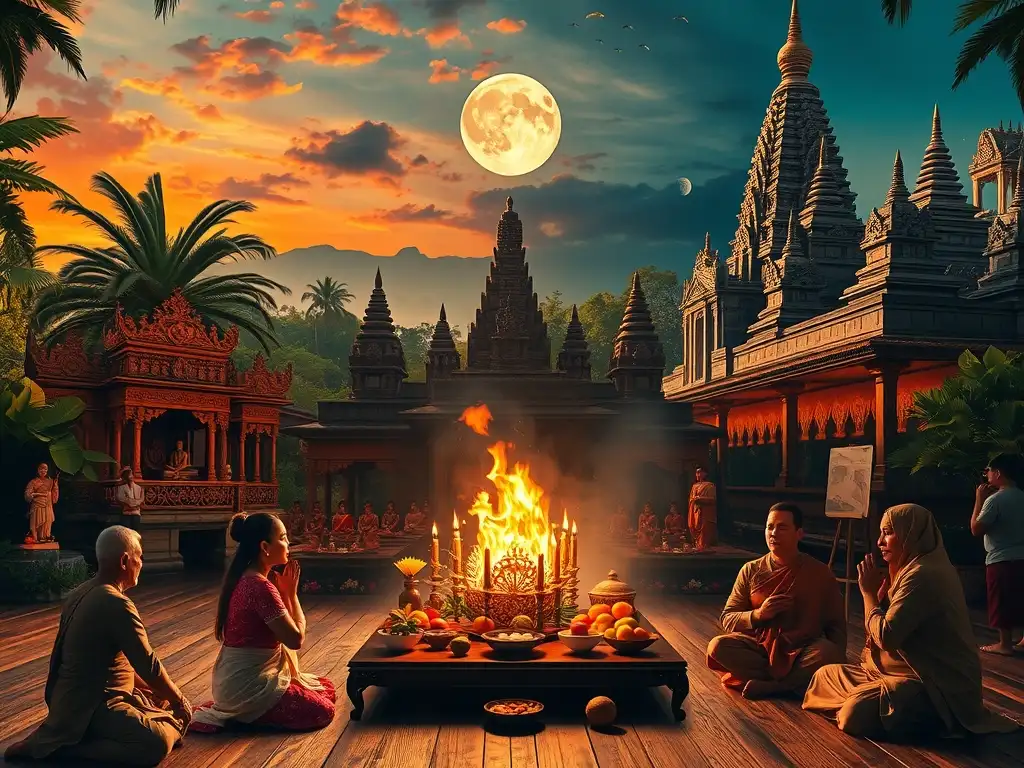
The impact of ancient Indian rituals on Southeast Asian spiritual practices can be observed through various historical case studies. These examples highlight how the integration of Indian cultural elements shaped local traditions, beliefs, and societal structures across different Southeast Asian civilizations.
The Influence of Indian Rituals on Khmer Civilization
The Khmer civilization, which flourished from the 9th to the 15th centuries in present-day Cambodia, showcases a profound influence of Indian rituals. The introduction of Hinduism and Buddhism, primarily through trade and cultural exchanges, led to the adoption of various Indian practices.
Key aspects of this influence include:
- Temple Architecture: The construction of monumental temples like Angkor Wat reflects Hindu cosmology and rituals. Dedicated to Vishnu, Angkor Wat incorporates elements of Indian mythology, demonstrating the blending of local and Indian architectural styles.
- Royal Ceremonies: The Khmer kings adopted Indian rituals to legitimize their rule. For instance, the "Ashwamedha" horse sacrifice was adapted to assert royal authority, showcasing the synthesis of Indian and local traditions.
- Religious Texts: Sanskrit texts became integral to the Khmer elite, influencing their spiritual practices and societal norms. The adoption of texts like the "Mahabharata" and "Ramayana" not only enriched local literature but also shaped moral and ethical frameworks.
This fusion of Indian rituals with local customs created a unique spiritual landscape in the Khmer civilization, facilitating the growth of both Hinduism and Buddhism in the region.
The Role of Indian Spiritual Practices in the Spread of Srivijaya
The Srivijaya Empire, which thrived from the 7th to the 13th centuries in Sumatra and beyond, exemplifies the dissemination of Indian spiritual practices in Southeast Asia. The empire was a significant maritime power that facilitated trade and cultural exchange between India and its neighboring regions.
Critical factors in this influence include:
- Buddhism as a State Religion: Srivijaya embraced Buddhism, heavily influenced by Indian monastic traditions. The establishment of monastic universities attracted scholars and pilgrims from across Asia, thereby enhancing the spread of Buddhist teachings.
- Pilgrimage Routes: The empire served as a crucial stop for Buddhist pilgrims traveling to India, promoting the exchange of spiritual ideas and practices. This led to the establishment of various rituals and festivals that mirrored Indian practices.
- Cultural Syncretism: Srivijaya’s engagement with Indian traders resulted in a fusion of beliefs. Local practices were often blended with Indian rituals, creating unique spiritual observances that resonated with the populace.
Through these mechanisms, the Indian influence on Srivijaya not only enriched local spiritual practices but also facilitated the broader dissemination of Buddhism throughout Southeast Asia.
Conclusion
Summary of Ancient Indian Rituals' Influence on Southeast Asian Practices
The examination of ancient Indian rituals reveals a significant and lasting influence on Southeast Asian spiritual practices. From the architectural grandeur of Khmer temples to the establishment of Buddhist centers in Srivijaya, the integration of Indian cultural elements has shaped various facets of spiritual life in the region.
This influence is characterized by:
- The adaptation of Hindu and Buddhist rituals into local customs.
- The creation of new spiritual practices that resonate with indigenous beliefs.
- The establishment of trade routes that facilitated cultural and religious exchanges.
These elements together illustrate a rich tapestry of interconnectedness that underscores the importance of ancient Indian contributions to Southeast Asian spirituality.
Reflection on the Importance of Cultural Exchange in Shaping Spiritual Traditions
The cultural exchanges between ancient India and Southeast Asia highlight the dynamic nature of spiritual traditions. These interactions not only facilitated the spread of Indian rituals but also allowed for local adaptations, resulting in unique spiritual identities that emerged across Southeast Asia.
Reflecting on this exchange, several points stand out:
- Mutual Enrichment: The blending of Indian and local traditions resulted in a rich spiritual heritage that continues to influence contemporary practices.
- Adaptability of Spiritual Practices: The ability of rituals to adapt to different cultural contexts illustrates the resilience of spiritual traditions, allowing them to evolve while retaining core elements.
- Legacy of Cultural Ties: The historical connections forged through these exchanges have left an enduring legacy in the region, fostering a sense of shared heritage among Southeast Asian nations.
The influence of ancient Indian rituals on Southeast Asian spiritual practices is not merely a historical phenomenon but a testament to the power of cultural exchange in shaping the spiritual landscape of civilizations.
Further Research and Reading
To gain a deeper understanding of the influence of ancient Indian rituals on Southeast Asian spiritual practices, a range of resources, including books and scholarly articles, can offer valuable insights. These works explore the historical, cultural, and religious connections between ancient India and Southeast Asia, highlighting the ways in which rituals and traditions transcended geographical boundaries.
Suggested Books and Articles on Ancient Indian Influence in Southeast Asia
-
"The Indianization of Indonesia" by J. G. de Casparis
This book provides an exhaustive analysis of how Indian culture and religion permeated Indonesian society. It covers the spread of Hinduism and Buddhism and their ritualistic practices.
-
"Hindu-Buddhist Art of Indonesia" by Peter J. K. M. W. Tan
This text examines the artistic expressions of Hindu and Buddhist influences in Indonesia, showcasing how rituals were depicted and how they evolved in the region.
-
"The Ancient Indian Influence on Southeast Asia" by K. A. Nilakanta Sastri
Sastri's work is foundational in understanding the cultural exchanges that occurred between India and various Southeast Asian nations, focusing on the transmission of rituals and religious practices.
-
"Rituals of the Hindu Temple" by Mark Tully
This book discusses the customs and rituals of Hindu temples, emphasizing their spread and adaptation in Southeast Asia, thereby illustrating the continuing legacy of ancient Indian rituals.
-
Scholarly Articles
-
"The Role of Ritual in Southeast Asian Buddhism"
A comprehensive study on how Indian rituals were adapted and transformed within Southeast Asian Buddhist practices.
-
"Cultural Interactions between India and Southeast Asia"
An academic article that discusses the multifaceted interactions and the resultant influence of Indian rituals on local practices.
-
Recommendations for Exploring Southeast Asian Spiritual Practices
-
Visit Historical Sites
Exploring ancient temples such as Angkor Wat in Cambodia or Borobudur in Indonesia can provide firsthand experience of the architectural and ritualistic influences of ancient Indian practices.
-
Participate in Local Festivals
Engage in local spiritual festivals, such as the Balinese Day of Silence (Nyepi) or the Vesak Day celebrations in Thailand, where many rituals rooted in ancient Indian traditions are still performed.
-
Attend Cultural Workshops
Look for workshops or seminars that focus on the teachings of Hinduism and Buddhism in Southeast Asia, which often delve into the ritualistic aspects of these religions and their historical significance.
-
Study Local Texts and Manuscripts
Seek out local literature, such as the Ramayana and Mahabharata adaptations in Southeast Asian languages, to understand how ancient Indian narratives have influenced regional spiritual practices.
-
Engage with Scholars and Practitioners
Connect with local historians, cultural practitioners, and scholars who specialize in the study of rituals to gain deeper insights into the ongoing influence of ancient Indian practices in Southeast Asia.
By immersing yourself in these resources and experiences, you can develop a nuanced understanding of how ancient Indian rituals have shaped and continue to influence spiritual practices across Southeast Asia.
- Introduction to Ancient Indian Rituals
- Historical Context of Cultural Exchanges
- Major Ancient Indian Rituals
- Mechanisms of Influence on Southeast Asia
- Specific Southeast Asian Spiritual Practices Influenced by Ancient Indian Rituals
- Comparative Analysis of Ritual Practices
- Case Studies of Influence
- Conclusion
- Further Research and Reading
- What are some key ancient Indian rituals that influenced Southeast Asia?
- How did the spread of Indian culture occur in Southeast Asia?
- What role did Buddhism play in the influence of ancient Indian rituals?
- Are there specific Southeast Asian countries heavily influenced by ancient Indian rituals?
- How do modern Southeast Asian practices reflect ancient Indian influences?
Frequently Asked Questions
What are some key ancient Indian rituals that influenced Southeast Asia?
Many rituals from ancient India, such as Hindu ceremonies, Buddhist practices, and Vedic traditions, significantly shaped the spiritual landscape of Southeast Asian cultures.
How did the spread of Indian culture occur in Southeast Asia?
The trade routes established between India and Southeast Asia facilitated the exchange of ideas, art, and rituals, leading to the integration of Indian cultural elements into local traditions.
What role did Buddhism play in the influence of ancient Indian rituals?
Buddhism, which originated in India, had a profound impact on Southeast Asian spiritual practices, with its rituals and teachings becoming integral to the region's religious framework.
Are there specific Southeast Asian countries heavily influenced by ancient Indian rituals?
Yes, countries like Indonesia, Thailand, and Cambodia show notable influences of ancient Indian rituals in their religious ceremonies, architecture, and cultural practices.
How do modern Southeast Asian practices reflect ancient Indian influences?
Many modern Southeast Asian practices maintain elements of ancient Indian rituals, such as festivals, temple ceremonies, and spiritual observances, showcasing the enduring legacy of these traditions.
Final Reflection: The Enduring Legacy of Ancient Indian Rituals in Southeast Asia
The intricate tapestry of ancient Indian rituals has woven itself into the spiritual fabric of Southeast Asia, demonstrating that cultural exchange transcends time and geography. Today, as we navigate a world increasingly defined by globalization, the echoes of these ancient practices remind us of our shared human experience and the profound connections that bind us across cultures. The influence of ancient Indian rituals on Southeast Asian spiritual practices is not merely a historical footnote; it is a living testament to the power of tradition in shaping beliefs and identities.
The impact of these rituals is evident in the vibrant spiritual landscapes of Southeast Asia, where ancient rites continue to thrive alongside modern practices. The fusion of Indian and local traditions has created a rich cultural milieu that celebrates diversity while honoring shared roots. As noted by cultural historian Dr. Ananda Kumar, The rituals of the past are not just remnants; they are the foundation upon which contemporary spirituality is built.
This ongoing dialogue between the old and the new invites us to reflect on our own spiritual journeys and the influences that shape them.
As we contemplate the lessons from this exploration of ancient Indian rituals, I invite you to consider how these timeless practices resonate in your own life. Reflect on the rituals that hold meaning for you, whether inherited from your ancestors or newly adopted. Embrace the opportunity to connect with the past while forging your own spiritual path. In doing so, you not only honor the legacy of ancient traditions but also contribute to the ongoing evolution of spiritual practices in our interconnected world.
Embrace the Wisdom of Ancient Rituals!
Thank you for diving into the fascinating world of ancient Indian rituals and their profound impact on Southeast Asian spiritual practices! Your interest helps keep this important dialogue alive and enriches our collective understanding. Now it’s time to take the insights you've gained and transform them into action.
Here’s how you can continue this enlightening journey:
- Explore deeper: Discover more about specific rituals that shaped Southeast Asian traditions. Consider reading relevant literature or scholarly articles to broaden your knowledge.
- Join the conversation: Share your thoughts on how you see these ancient practices reflected in modern spirituality. Utilize social media or local discussion groups to connect with others who share your interests.
- Practice mindfulness: Incorporate an ancient ritual into your daily routine as a form of spiritual enrichment, whether it's through meditation, expressing gratitude, or participating in a communal gathering.
What ancient practice resonates most with you, and how do you envision it enriching your modern spiritual journey? We invite you to share your thoughts below!