
Maritime Trade and Cultural Exchange: The Ancient Indian Influence on Southeast Asian Ports

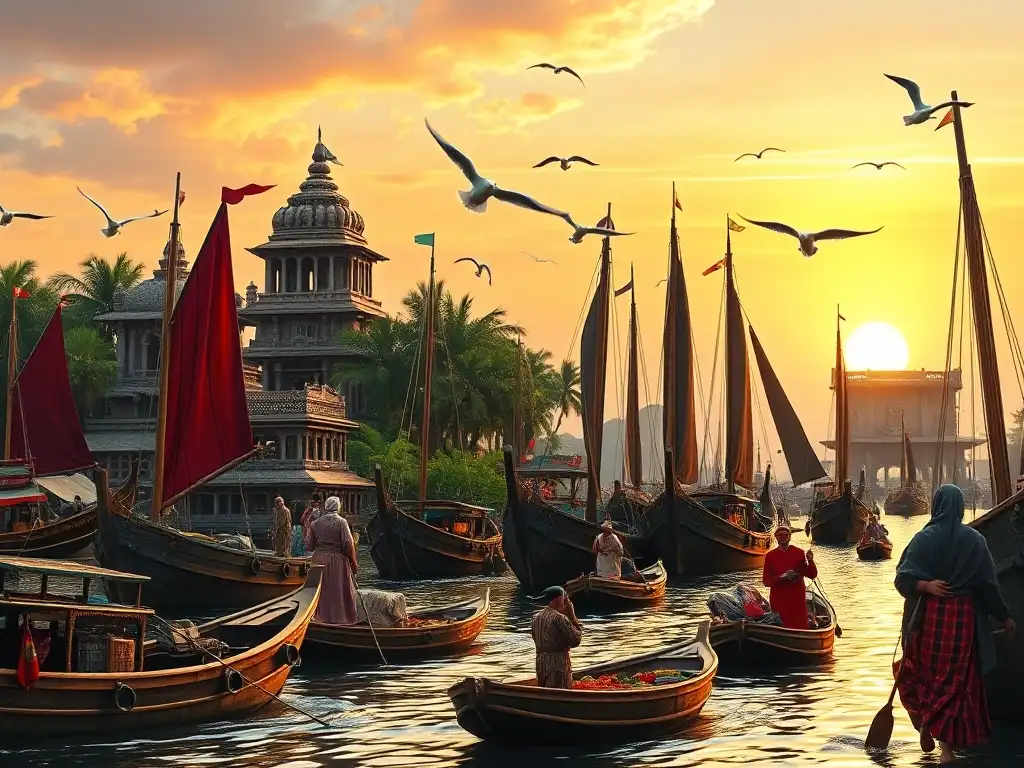
Welcome to Ancient India History, where we embark on a captivating journey through the rich tapestries of ancient Indian civilization. Here, we delve into the profound influence of ancient Indian maritime trade, a vital thread in the intricate fabric of cultural exchanges that shaped Southeast Asian ports. Discover how these exchanges not only transformed trade routes but also laid the groundwork for enduring connections between diverse cultures. Are you ready to uncover the secrets of a bygone era that still resonate today? Dive into our main article and explore the waves of history that have shaped our world!
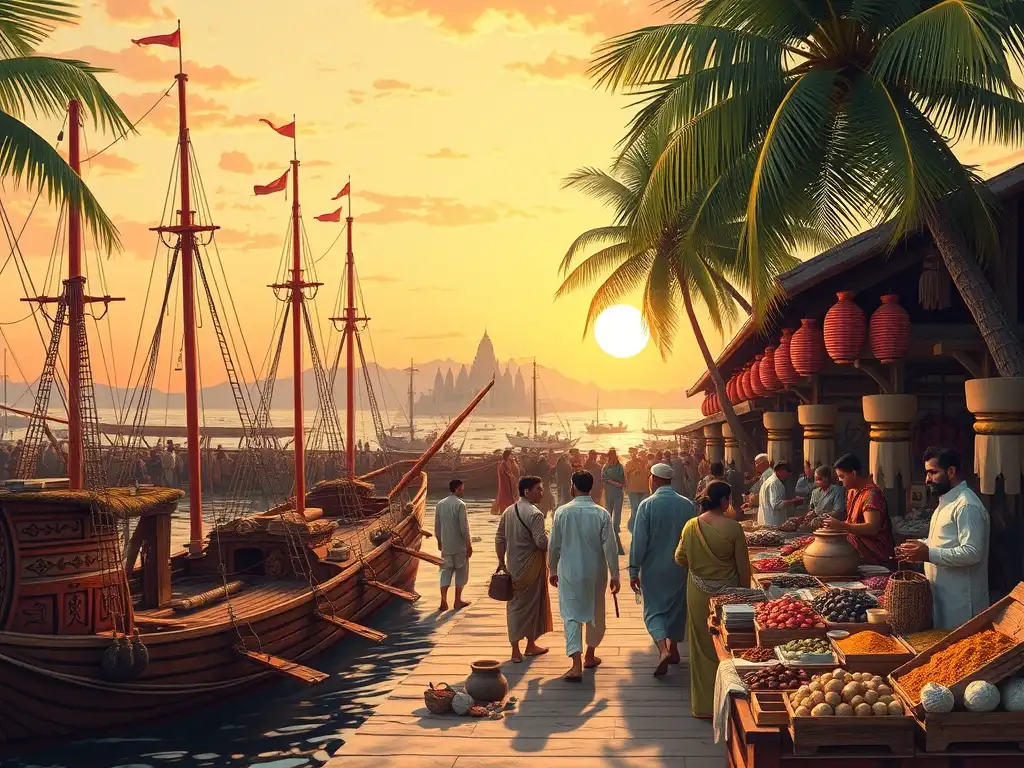
Introduction to Ancient Indian Maritime Trade Influence
The ancient Indian maritime trade influence played a pivotal role in shaping the economic and cultural landscapes of Southeast Asia. From the bustling ports of the Indus Valley Civilization to the thriving trade networks established during the Gupta Empire, maritime trade was not merely a means of exchanging goods; it was a conduit for cultural exchange, ideas, and innovations between civilizations. This article delves into how ancient India’s maritime activities significantly impacted the ports of Southeast Asia, fostering a rich tapestry of cultural interactions that still resonate today.
Overview of Maritime Trade in Ancient India
Ancient India was characterized by a sophisticated maritime trade network that extended far beyond its shores. The extensive coastline along the Arabian Sea and the Bay of Bengal facilitated trade with various regions, including the Middle East, Africa, and Southeast Asia.
- Key Goods Traded:
- Spices (e.g., black pepper, cardamom)
- Textiles (e.g., silk, cotton)
- Precious stones (e.g., diamonds, rubies)
- Metalwork (e.g., gold, bronze)
The thriving trade relations not only enriched Indian societies economically but also allowed for the exchange of cultural elements, such as religion, art, and technology.
Importance of Trade Routes in Southeast Asia
The trade routes established between ancient India and Southeast Asia were crucial for the flow of goods and ideas. These routes facilitated the movement of merchants and travelers, creating a vibrant exchange of cultural practices and beliefs across regions.
- Significant Trade Routes:
- The Maritime Silk Road
- The Spice Route
- The Indian Ocean Trade Network
These routes connected prominent ports, such as those in present-day Indonesia, Malaysia, and Thailand, which became bustling centers of commerce and cultural convergence.
Objectives of the Article
This article aims to:
- Examine the historical significance of ancient Indian maritime trade influence on Southeast Asia.
- Highlight the key trade routes and their impact on cultural exchange.
- Explore the role of ports in facilitating trade and the transmission of ideas.
The Historical Context of Maritime Trade
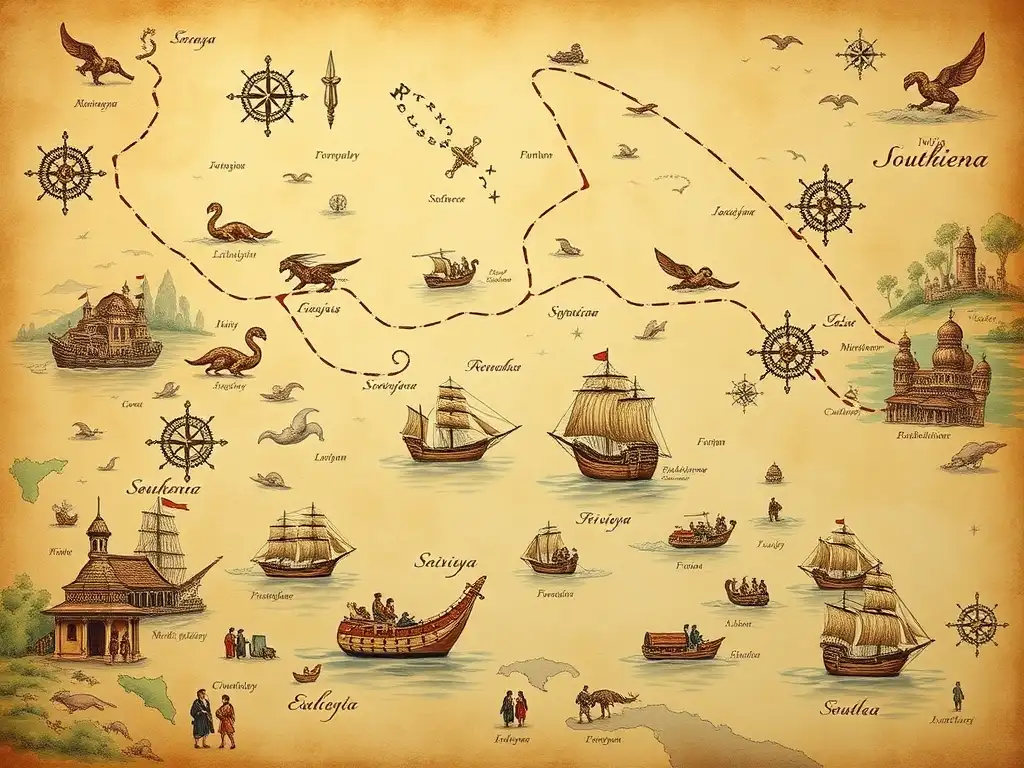
Understanding the ancient Indian maritime trade influence requires a look at its historical context. The early maritime activities set the foundation for robust trade networks that emerged over centuries.
Early Indian Maritime Activities
The origins of India’s maritime activities can be traced back to the Indus Valley Civilization (circa 2500-1900 BCE), where archaeological evidence suggests advanced shipbuilding techniques and trade with distant lands.
- Significant Developments:
- Construction of seafaring vessels
- Establishment of trade relations with Mesopotamia and Egypt
These early endeavors laid the groundwork for subsequent maritime exploration and trade.
Key Trade Routes Connecting India and Southeast Asia
As time progressed, Indian traders established vital connections with Southeast Asian ports. The trade routes they navigated were not only important for commerce but also facilitated the exchange of cultural practices, leading to a rich amalgamation of traditions.
- Examples of Key Routes:
- Routes from Indian ports to the Strait of Malacca
- Connections to the ports of Sumatra and Java
These routes were instrumental in promoting intercultural dialogue and fostering economic prosperity in the region.
Role of Ports in Trade and Cultural Exchange
The ports along the Indian Ocean and Southeast Asia were bustling hubs of activity, serving as the focal points for trade interactions. They played a crucial role in the maritime trade influence of ancient India.
- Functions of Major Ports:
- Transshipment: Goods were transferred between ships for onward journeys.
- Cultural Melting Pot: Ports served as meeting points for diverse cultures, leading to rich cultural exchanges.
- Religious Exchange: The spread of religions like Buddhism and Hinduism influenced local customs and practices.
These dynamics underscore the significance of maritime trade in shaping the historical and cultural narratives of Southeast Asia influenced by ancient India.
The Influence of Ancient Indian Maritime Trade on Southeast Asian Ports
Ancient Indian maritime trade played a crucial role in shaping the historical and cultural landscape of Southeast Asia. From as early as the 3rd century BCE, Indian traders navigated the vast waters of the Indian Ocean, establishing trade routes that linked the Indian subcontinent with Southeast Asian ports such as Funan, Srivijaya, and the Khmer Empire. These interactions facilitated not only the exchange of goods but also the dissemination of cultural, religious, and philosophical ideas.
The influence of Indian maritime trade is evidenced in the adoption of Indian scripts, languages, and religious practices by various Southeast Asian societies. As Indian merchants settled in coastal areas, they brought with them not just commodities but also their customs and traditions, creating a dynamic cultural fusion that enriched both regions. The extensive network of maritime routes fostered a vibrant exchange of ideas and innovations, paving the way for mutual growth and development.
Establishment of Indian Settlements in Southeast Asia
Indian traders and seafarers established numerous settlements along the coasts of Southeast Asia, significantly impacting local societies. These settlements acted as hubs for trade and cultural exchange, where Indian merchants interacted with local populations. Notable examples include the port city of Kalinga in present-day Indonesia and the trading centers in the Malay Peninsula.
The establishment of these settlements led to the gradual assimilation of Indian culture into local traditions. Over time, indigenous rulers began to adopt Indian administrative practices, legal frameworks, and even aspects of governance, which were often influenced by Indian experiences. This blending of cultures resulted in the emergence of hybrid societies that celebrated a rich tapestry of traditions, languages, and belief systems.
Cultural Exchange through Trade: Art, Religion, and Language
Trade between India and Southeast Asia facilitated a profound cultural exchange that left an indelible mark on art, religion, and language. Indian merchants introduced local populations to Hinduism and Buddhism, which became major religions in the region. This introduction often came through the establishment of temples and monasteries, which served as centers for both worship and education.
Artistic expressions also thrived as a result of this cultural interchange. Indian motifs, styles, and iconography found their way into Southeast Asian sculpture, painting, and architecture. For instance, the intricate carvings of Hindu deities on temple walls in Cambodia and Java illustrate the deep influence of Indian artistic traditions. Additionally, languages such as Sanskrit and Pali were adopted, enriching the linguistic landscape of Southeast Asia and contributing to the development of local languages.
Economic Impact of Indian Trade on Southeast Asian Societies
The economic impact of ancient Indian maritime trade on Southeast Asian societies was profound. The influx of Indian goods, including spices, textiles, and precious stones, significantly boosted local economies. Southeast Asian ports became vibrant trading hubs, facilitating commerce not only with India but also with regions as far as China and the Middle East.
This economic interaction encouraged the growth of urban centers and the establishment of trade networks that enhanced regional connectivity. The demand for Indian products led to the flourishing of local industries, as Southeast Asian societies began to produce their versions of Indian goods. This economic synergy fostered a climate of prosperity and cultural exchange, enabling Southeast Asian states to exert influence in regional and international trade.
Key Features of Ancient Indian Goods and Cultural Contributions
Ancient Indian maritime trade was characterized by a diverse array of goods and cultural contributions that had lasting impacts on Southeast Asia. The exchange of these commodities not only altered local economies but also enriched cultural practices and social structures.
Spices and Textiles: The Backbone of Trade
Spices like black pepper, cardamom, and cloves were among the most sought-after commodities traded by Indian merchants, establishing them as vital players in the spice trade that connected Asia with Europe. The high demand for these spices ensured considerable wealth for traders and their home regions.
Textiles, particularly silk and cotton fabrics, were also fundamental to trade. The exquisite craftsmanship of Indian textiles attracted Southeast Asian buyers, leading to the establishment of local textile industries that mirrored Indian techniques. The colors, patterns, and weaving methods introduced by Indian artisans left an enduring legacy in Southeast Asian dress and textile production.
The Influence of Indian Religion and Philosophy
The introduction of Indian religions, primarily Hinduism and Buddhism, significantly transformed the spiritual landscape of Southeast Asia. Indian philosophical concepts, such as karma and dharma, influenced local belief systems and practices. Monarchs often adopted these religions to legitimize their rule and promote social cohesion among diverse populations.
The establishment of religious texts, such as the Mahabharata and Ramayana, became integral to Southeast Asian culture, inspiring local adaptations and performances. Festivals and rituals associated with these religions were also embraced, creating a unique blend of Indian and indigenous practices that continue to be celebrated today.
Architectural Contributions: Temples and Urban Planning
Ancient Indian architectural styles profoundly influenced the construction of temples and urban planning throughout Southeast Asia. The construction of elaborate stone temples, such as Angkor Wat in Cambodia and Borobudur in Indonesia, showcases the Indian architectural techniques and religious symbolism that were integrated into local designs.
Indian principles of urban planning, including the layout of cities and the incorporation of water management systems, were adopted by Southeast Asian societies. This blending of Indian architectural prowess with local materials and styles resulted in some of the most iconic structures in the region, which not only served religious purposes but also symbolized the power and prestige of local rulers.
Case Studies of Southeast Asian Ports Influenced by Indian Trade
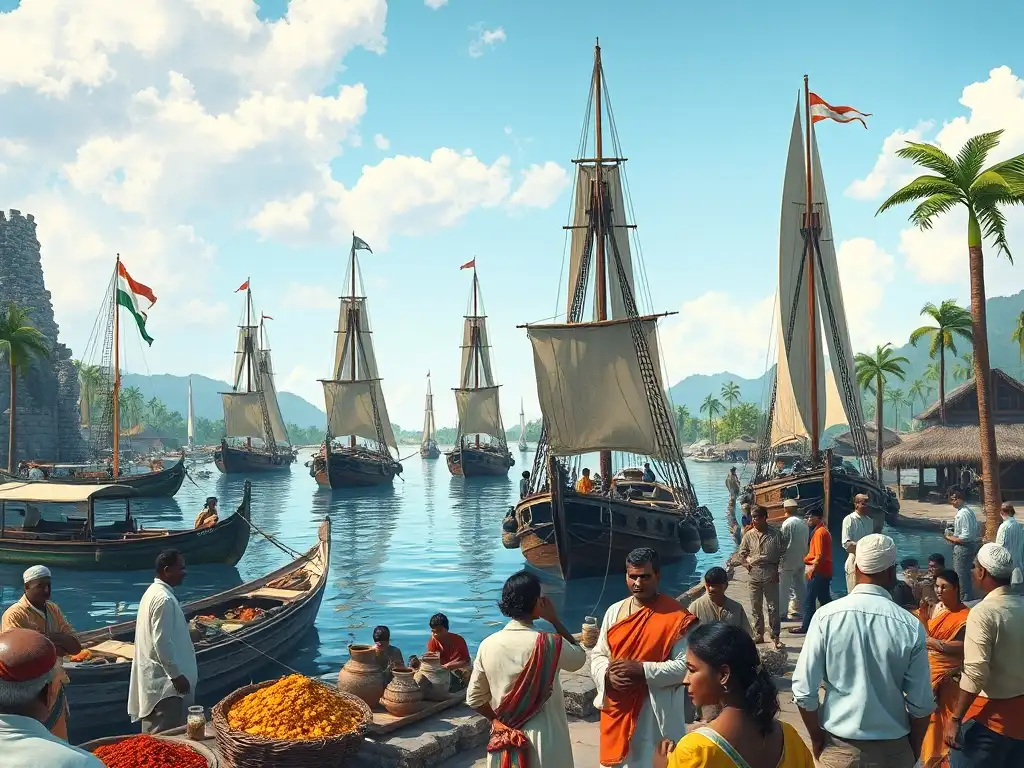
Ancient Indian maritime trade significantly impacted various Southeast Asian ports, which served as critical nodes in the broader network of commerce and cultural exchange. Examining specific case studies of these ports reveals how Indian trade routes facilitated the spread of goods, ideas, and cultural practices across the region.
The Port of Funan: A Hub of Cultural Exchange
Funan, located in present-day southern Vietnam and Cambodia, was one of the earliest Indianized kingdoms in Southeast Asia. It emerged as a vital trading hub around the 1st century CE, primarily due to its strategic location along the maritime trade routes connecting India and China. The port of Funan played a crucial role in the exchange of goods such as spices, textiles, and precious metals.
The influence of Indian culture in Funan is evident in its architecture, language, and religious practices. The Khmer script, which evolved from Brahmi, showcases the linguistic impact of Indian traders. Moreover, the adoption of Hindu and Buddhist beliefs in Funan's society reflected the deep cultural interactions fostered by maritime trade. Temples, such as the famous Wat Phu, are enduring symbols of this cultural exchange.
Srivijaya: A Powerful Maritime Kingdom
Emerging in the 7th century CE, Srivijaya became a dominant maritime power centered around the Strait of Malacca, encompassing parts of modern-day Indonesia and Malaysia. This kingdom thrived on its control of trade routes and became a melting pot of cultures, heavily influenced by Indian traders.
Srivijaya's ports facilitated the exchange of not just goods, but also ideas, leading to the establishment of sophisticated Buddhist and Hindu cultures in the region. The kingdom became a significant center for the study of Buddhism, attracting scholars and monks from India, which further reinforced the cultural ties between India and Southeast Asia.
The political structure of Srivijaya also reflected Indian influences, with kings adopting titles from Indian traditions and implementing administrative practices inspired by Indian governance models. This blend of cultural elements created a unique identity for Srivijaya, showcasing the profound impact of ancient Indian maritime trade.
The Role of Khmer Ports in Indian Trade Dynamics
The Khmer Empire, flourishing between the 9th and 15th centuries CE, was instrumental in advancing maritime trade in Southeast Asia. Ports such as Angkor Borei and Oc Eo became crucial points for Indian merchants, facilitating the import of goods and cultural exchanges.
The Khmer ports were not only trade centers but also cultural hubs where Indian art, literature, and religious practices merged with local traditions. The construction of monumental structures like Angkor Wat reflects the architectural influence of Indian civilization, showcasing intricate carvings and designs inspired by Hindu mythology.
Furthermore, the Khmer adopted the Sanskrit language for official inscriptions, highlighting the deep-rooted connections formed through maritime trade. The dynamic interactions between Indian traders and Khmer merchants resulted in a rich tapestry of cultural and economic exchanges that shaped the region's history.
The Legacy of Ancient Indian Maritime Trade Influence
The influence of ancient Indian maritime trade extends beyond immediate economic interactions, leaving a lasting legacy in Southeast Asia. This legacy encompasses cultural, linguistic, and religious dimensions that continue to resonate in the region today.
Long-term Cultural Impacts on Southeast Asia
The cultural exchanges facilitated by Indian maritime trade laid the foundation for the development of various Southeast Asian civilizations. The adoption of Hinduism and Buddhism led to the establishment of religious institutions and practices that have endured through centuries.
The fusion of Indian and local cultures enriched art, literature, and music in Southeast Asia. Traditional dance forms, such as the Balinese and Javanese dances, exhibit Indian influence in their themes and storytelling techniques. Additionally, the culinary traditions in Southeast Asia bear the marks of Indian spices and cooking techniques, illustrating the deep-rooted connections formed through trade.
Preservation of Indian Influence in Modern Southeast Asian Cultures
Even in contemporary times, the remnants of ancient Indian influence are evident in Southeast Asian cultures. Festivals such as Diwali and the celebration of Hindu and Buddhist traditions are still observed in countries like Indonesia, Malaysia, and Thailand.
The use of Sanskrit and Pali terms in local languages demonstrates the linguistic impact of ancient Indian traders. This preservation of cultural heritage fosters a sense of identity and continuity among the people of Southeast Asia, linking them to their historical roots.
Conclusion: Understanding the Depth of Cultural Exchange
The ancient Indian maritime trade influence on Southeast Asia is a testament to the power of cultural exchange facilitated by trade routes. Through dynamic interactions among diverse cultures, ancient Indian traders not only exchanged goods but also ideas, beliefs, and practices that shaped the identity of Southeast Asian civilizations. Understanding this depth of cultural exchange allows us to appreciate the intricate tapestry of history that connects these regions, illustrating the enduring legacy of ancient Indian maritime trade.
References and Further Reading on Ancient Indian Maritime Trade Influence
Understanding the ancient Indian maritime trade influence on Southeast Asia requires diving into a range of scholarly works and resources. This section outlines significant books, articles, online resources, and documentaries that provide comprehensive insights into this historical phenomenon.
Suggested Books and Articles
-
"The Ancient Maritime Trade Routes of India" by R. S. Sharma
This book offers an in-depth analysis of the various maritime trade routes established by ancient Indian civilizations and their implications for trade with Southeast Asia. Sharma meticulously details the geographical, economic, and political factors that facilitated maritime exchanges.
-
"India and Southeast Asia: Future Directions in the Study of Cultural Exchange" by Michael A. Parnell
Parnell's work explores the cultural interactions between India and Southeast Asia, highlighting the role of trade in shaping societal values and artistic expressions across the regions.
-
"Cross-Cultural Exchanges in Ancient Southeast Asia" by John Miksic
This article provides a critical examination of how ancient Indian traders influenced local cultures in Southeast Asia, focusing on the spread of religions, languages, and customs through trade networks.
-
"Trade and Cultural Exchange in the Ancient World" by K. M. Rao
Rao’s research delves into the broader context of trade in the ancient world, with specific references to Indian maritime routes and their links to Southeast Asia, shedding light on the dynamics of cultural exchange.
-
"Ports and Port Cities of the Ancient Indian Ocean" by M. A. M. Wrigley
This scholarly article discusses the significance of port cities in facilitating trade and cultural exchanges, especially in relation to ancient Indian influence on Southeast Asian maritime commerce.
Online Resources and Documentaries
-
Digital South Asia Library
An online repository that offers a wealth of resources, including maps, primary documents, and scholarly articles focused on ancient Indian maritime activities and their impact on Southeast Asia.
-
The Asia Society: Ancient Trade Routes
This educational platform features articles and multimedia content on ancient trade routes, emphasizing the contributions of Indian merchants to Southeast Asia's economic and cultural landscape.
-
YouTube Documentary: "Maritime India: The Routes of the Indian Ocean"
This documentary presents a visual exploration of India's maritime history, detailing the trade networks that linked Indian ports with Southeast Asia and beyond.
-
"The Sea of Trade: Cultural Exchanges in Southeast Asia" (Podcast Series)
This series discusses various aspects of trade and cultural exchange in ancient times, featuring episodes specifically centered on Indian maritime influence.
-
"The World of the Indian Ocean" (Online Exhibition)
Hosted by various museums, this exhibition showcases artifacts, texts, and multimedia related to the maritime trade networks of ancient India, providing insights into the cultural exchanges that occurred through these routes.
These resources collectively highlight the profound impact of ancient Indian maritime trade on Southeast Asia, enhancing our understanding of historical cultural exchanges that shaped both regions.
- Introduction to Ancient Indian Maritime Trade Influence
- Overview of Maritime Trade in Ancient India
- Importance of Trade Routes in Southeast Asia
- Objectives of the Article
- The Historical Context of Maritime Trade
- The Influence of Ancient Indian Maritime Trade on Southeast Asian Ports
- Key Features of Ancient Indian Goods and Cultural Contributions
- Case Studies of Southeast Asian Ports Influenced by Indian Trade
- The Legacy of Ancient Indian Maritime Trade Influence
- References and Further Reading on Ancient Indian Maritime Trade Influence
- What was the significance of ancient Indian maritime trade?
- How did ancient Indian civilizations influence Southeast Asian ports?
- What were the main goods traded by ancient Indian merchants?
- How did cultural exchange occur through maritime trade?
- What role did the Gupta Empire play in maritime trade?
Frequently Asked Questions
What was the significance of ancient Indian maritime trade?
Ancient Indian maritime trade was crucial for the exchange of goods, ideas, and culture. It connected India to various regions, enhancing economic prosperity and cultural interactions.
How did ancient Indian civilizations influence Southeast Asian ports?
Ancient Indian civilizations influenced Southeast Asian ports through trade routes, which facilitated the spread of religion, language, and artistic traditions, significantly shaping local cultures.
What were the main goods traded by ancient Indian merchants?
Ancient Indian merchants traded a variety of goods, including spices, textiles, and precious stones. These commodities were highly sought after and played a vital role in the global trade network.
How did cultural exchange occur through maritime trade?
Cultural exchange occurred as traders and travelers shared ideas, customs, and religious beliefs during their journeys. This led to the cross-pollination of cultures between India and Southeast Asia.
What role did the Gupta Empire play in maritime trade?
The Gupta Empire played a significant role in enhancing maritime trade routes and establishing diplomatic relations with neighboring regions, further promoting India's influence on Southeast Asian ports.
Final Reflection: The Enduring Legacy of Ancient Indian Maritime Trade Influence
The intricate tapestry of maritime trade and cultural exchange woven by ancient Indian influence continues to resonate in today's globalized world. As we explore the historical significance of these connections, it becomes clear that the currents of trade not only facilitated the exchange of goods but also ideas, beliefs, and cultural practices that shaped the identities of Southeast Asian societies. The echoes of this ancient maritime trade influence remind us that our modern world is built upon the foundations laid by those who dared to traverse the seas.
Cultural landscapes across Southeast Asia are still vibrant with the legacies of ancient Indian traders, whose impact can be seen in language, religion, and art. The rich blend of traditions that emerged from these interactions speaks to the power of commerce as a catalyst for cultural exchange. As the historian Romila Thapar aptly stated, Trade is not merely an economic activity; it is a bridge that connects civilizations.
This enduring connection underscores the importance of understanding our shared history and the ways in which it continues to shape our present.
As we reflect on the lessons of ancient Indian maritime trade, let us consider how we can foster our own connections in a world that often feels divided. I invite you to explore the ways in which you can engage with diverse cultures in your own life, whether through travel, learning, or simply opening your mind to new perspectives. By embracing the spirit of exchange that characterized ancient trade routes, we can contribute to a more interconnected and harmonious world, honoring the legacy of those who came before us.
Embark on Your Journey of Discovery!
Thank you for diving into the fascinating world of maritime trade and cultural exchange! Your interest not only enriches your understanding of ancient influences but also highlights the remarkable connections that shaped vibrant regions across Southeast Asia. Now, let's take this knowledge further and make it come alive!
Here’s how you can continue your journey:
- Explore ancient trade routes and their impact on modern cultures by visiting exhibitions or reading in-depth articles about historical trade practices.
- Share your newfound insights with friends or join online forums to discuss how these historical connections continue to influence today’s society.
- Engage with local museums or historical groups to uncover hidden gems of local history related to maritime trade.
What unexpected connections will you discover between ancient maritime practices and today’s global trade?