
The Silk Road and Ancient India: A Journey of Cultural Exchange

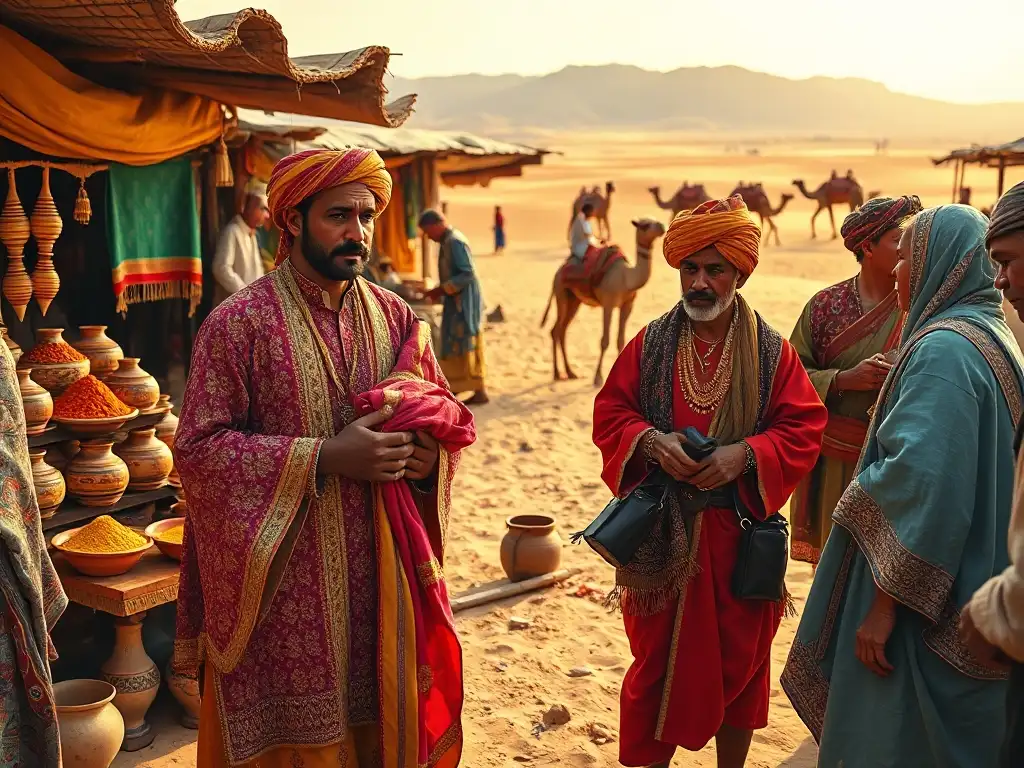
Welcome to Ancient India History, where we embark on an extraordinary journey through the rich tapestry of India's past. In our featured article, "The Silk Road and Ancient India: A Journey of Cultural Exchange," we delve into the fascinating interplay of cultures that shaped ancient civilizations. Discover how the Silk Road served as a vibrant conduit for trade and interaction, influencing everything from art to philosophy. Curious about how these exchanges transformed societies? Join us as we unlock the secrets of ancient India's contributions to the world, igniting your passion for history and culture.
Introduction to the Silk Road and Its Significance
The Silk Road, a vast network of trade routes that connected the East and West, played a crucial role in fostering cultural exchange between various civilizations, including ancient India. This intricate web of pathways not only facilitated the movement of goods like silk, spices, and precious stones but also allowed for the dissemination of ideas, art, religion, and technology. Ancient India, with its rich tapestry of cultures and traditions, was both a significant player and a beneficiary in this grand narrative of connectivity.
The interactions along the Silk Road contributed immensely to the evolution of Indian society, influencing its art, philosophy, and even its social structures. This article will delve into the multifaceted aspects of Silk Road cultural exchange in India, exploring how these interactions shaped the ancient Indian civilization and its legacy.
What is the Silk Road?
The Silk Road refers to a series of trade routes established during the Han Dynasty of China around 130 BCE, extending over 4,000 miles across Asia and into Europe. It was not a single road but rather a collection of interconnected paths that traversed deserts, mountains, and plains, facilitating trade and cultural interactions among diverse societies.
Key Features of the Silk Road:
- Diverse Geography: Spanning across various terrains including the Taklamakan Desert and the Himalayas.
- Cultural Melting Pot: A convergence point for different cultures, religions, and languages.
- Economic Exchange: A major artery for trade, particularly for commodities like silk, spices, and precious metals.
Importance of the Silk Road in Ancient Trade
The economic impact of the Silk Road was profound, influencing not just the regions it connected but also the broader dynamics of trade in ancient times.
Economic Contributions:
- Trade Goods: Items traded included silk from China, spices from India, and glassware from Rome.
- Market Expansion: Merchants from various civilizations interacted, leading to expanded markets and increased demand for exotic goods.
- Technology Transfer: Innovations in navigation, cartography, and even agricultural practices were shared along these routes.
This exchange of goods and ideas was foundational in establishing economic prosperity and fostering relationships among distant civilizations.
Overview of Cultural Exchange Along the Silk Road
Cultural exchange along the Silk Road was as significant as the trade in goods.
Aspects of Cultural Exchange:
- Religion and Philosophy: The spread of Buddhism from India to Central Asia and China, alongside the introduction of Zoroastrianism and later Islam.
- Art and Literature: Artistic styles and literature traveled along these routes, influencing local traditions and practices in regions as far as the Mediterranean.
- Technological Knowledge: Innovations such as papermaking and the compass moved westward, while Indian numerals and medical practices traveled east.
This rich tapestry of cultural interactions not only enhanced the civilizations along the Silk Road but also left a lasting legacy that shaped global history.
The Historical Context of Ancient India
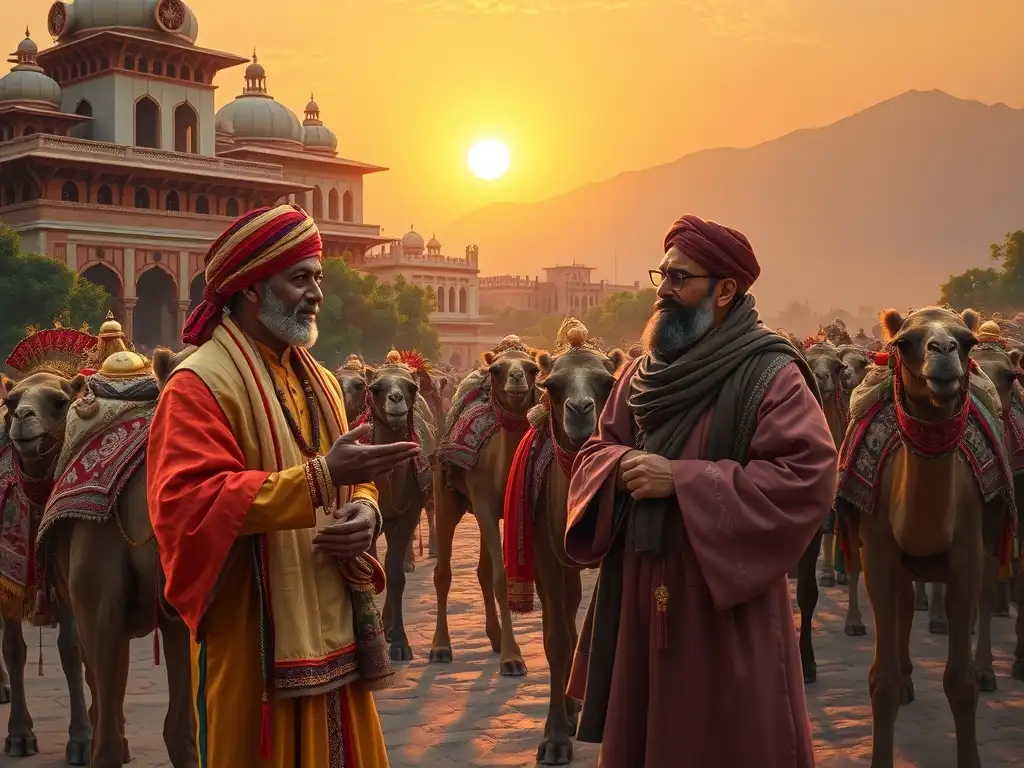
To understand the significance of the Silk Road in the context of ancient India, it is essential to explore the historical backdrop against which these interactions took place.
Overview of Ancient Indian Civilizations
Ancient India was home to several advanced civilizations, including the Indus Valley Civilization, which laid the groundwork for urban planning and trade, and later kingdoms like the Maurya and Gupta Empires that were pivotal in cultural and economic development.
Key Periods in Indian History Relevant to the Silk Road
- Indus Valley Civilization (c. 3300–1300 BCE): Early trade networks established with Mesopotamia.
- Maurya Empire (c. 322–185 BCE): Expansion of trade routes and cultural influence under Chandragupta Maurya and Ashoka.
- Gupta Empire (c. 240–550 CE): A golden age of art, science, and philosophy, coinciding with increased interactions along the Silk Road.
These periods marked significant advancements that were both influenced by and contributed to the dynamics of the Silk Road.
The Role of Major Indian Kingdoms in Trade
Indian kingdoms such as the Kushans and later the Gupta Empire played vital roles in facilitating trade along the Silk Road.
- Kushan Empire: Acted as a bridge between Indian and Central Asian traders, promoting the spread of Buddhism.
- Gupta Empire: Established trade relations with Southeast Asia and beyond, leading to a flourishing of culture and economy.
Through these engagements, ancient India not only enriched its own cultural landscape but also significantly impacted neighboring civilizations, showcasing the profound effects of Silk Road cultural exchange.
The Silk Road and Its Routes to India
The Silk Road was not a single road but rather a network of trade routes that connected the East and West, facilitating not only commerce but also the exchange of cultures, ideas, and technologies. This extensive network emerged during the Han Dynasty in China around the 2nd century BCE and played a crucial role in the interactions between various civilizations, including those in ancient India. The routes traversed diverse terrains, from the deserts of Central Asia to the mountains of the Himalayas, and included both overland and maritime paths.
India's strategic location along these routes made it an essential hub for trade and cultural interaction. As merchants traveled, they carried with them not only goods but also stories, art, and religious beliefs, enriching the cultural tapestry of the regions they traversed. The flow of ideas and innovations through these routes significantly influenced ancient Indian society, shaping its cultural and economic landscape.
Major Trade Routes Connecting India to the Silk Road
The major trade routes connecting India to the Silk Road can be categorized into two primary corridors: the overland routes through Central Asia and the maritime routes across the Indian Ocean.
- Overland Routes:
- The Northern Route began in China, passed through the Taklamakan Desert, and reached regions like Bactria (modern Afghanistan) before entering northwestern India.
- The Southern Route traversed the Karakoram Pass, connecting China with the Indian subcontinent through regions such as Gilgit and Ladakh.
- Maritime Routes:
- These routes connected Indian ports like Cambay and Bharukachchha with ports in China and the Arabian Peninsula. The Indian Ocean trade facilitated the movement of goods and cultural exchanges, linking India with East Africa, the Middle East, and beyond.
These routes were vital for the exchange of goods and ideas, fostering economic prosperity and cultural links between diverse civilizations.
Key Cities Along the Silk Road and Their Importance
Several key cities along the Silk Road served as vibrant centers of trade and cultural exchange, playing pivotal roles in connecting India with other civilizations:
- Taxila: Located near modern-day Islamabad, Taxila was a major educational and trade center. It attracted scholars and traders from various regions, fostering intellectual and cultural exchanges.
- Kanishka's Capital (Purushapura): This city, now known as Peshawar, was significant during the Kushan Empire, serving as a melting pot of cultures and a hub for trade.
- Samarkand and Bukhara: While these cities are located in present-day Uzbekistan, they were crucial points for goods traveling to and from India, especially spices and textiles.
- Canton (Guangzhou): On the maritime route, Canton was a bustling port city that facilitated trade between India and China, enhancing cultural interactions.
These cities not only facilitated commerce but also acted as cultural crossroads where diverse traditions, religions, and artistic expressions converged.
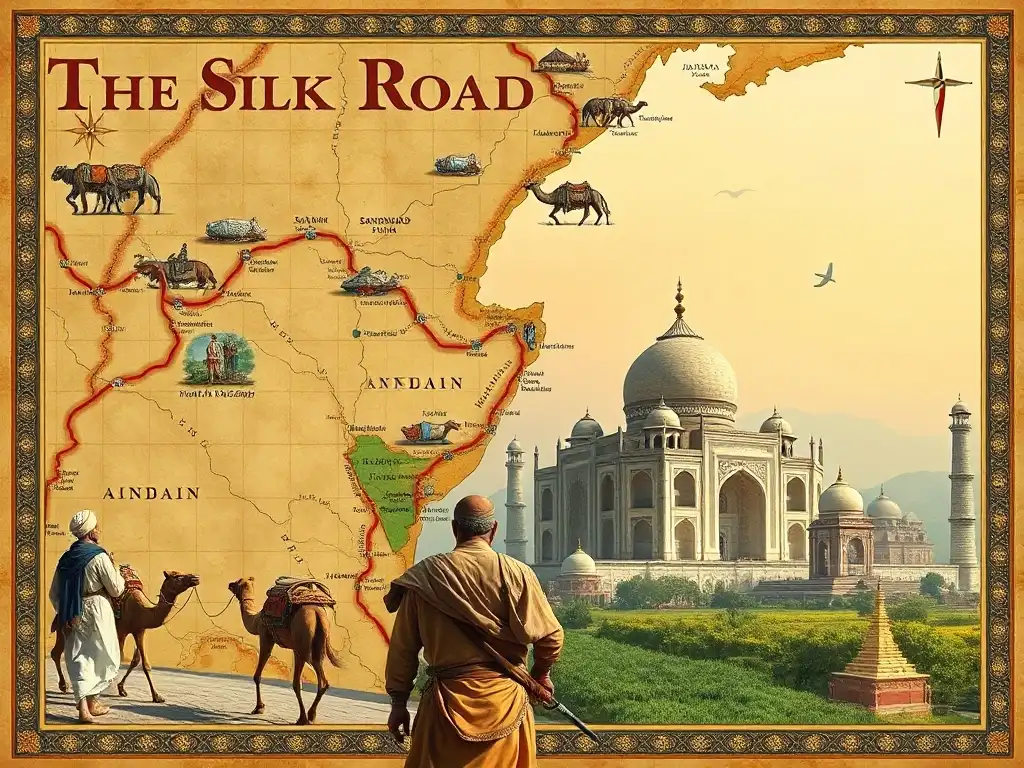
The Journey of Goods and Ideas: A Route Map
The journey of goods and ideas along the Silk Road can be visualized through a detailed route map, highlighting the flow from East to West and vice versa. Major commodities traded included:
- Silk: A luxury item from China that was highly sought after in India.
- Spices: Indian spices like black pepper and cardamom traveled to the West, while spices from Southeast Asia made their way to India.
- Textiles: Indian textiles, particularly cotton and silk, were exchanged for goods from the West, such as wool and metals.
The exchange of ideas was equally significant. Philosophies, religious beliefs, and innovations traveled alongside these goods, enriching cultures on both ends. For instance, the adoption of Hinduism and Buddhism in various parts of Central Asia led to the establishment of monasteries and cultural exchanges that shaped local societies.
Cultural Exchange Along the Silk Road
Cultural exchange along the Silk Road was multifaceted, impacting various aspects of life in ancient India. This exchange was characterized by the sharing of goods, religious beliefs, artistic expressions, and scientific knowledge.
Introduction to Cultural Exchange Between India and Other Civilizations
The cultural exchange between India and other civilizations along the Silk Road was profound, leading to a rich intermingling of traditions. As merchants and travelers moved along these routes, they shared not only their goods but also their customs, languages, and philosophies. This interplay fostered a deeper understanding between diverse cultures and established a foundation for future interactions.
Exchange of Goods: Spices, Textiles, and Precious Stones
The exchange of goods was one of the most notable aspects of Silk Road interactions. Indian merchants exported a variety of products, including:
- Spices: Renowned for their flavor and medicinal properties, Indian spices such as ginger, turmeric, and black pepper were highly prized.
- Textiles: Indian cotton and silk fabrics were sought after for their quality and intricate designs. They were often traded for goods from other regions, including metalwork and ceramics.
- Precious Stones: India was famous for its gemstones, including diamonds, rubies, and sapphires, which were traded extensively along the Silk Road.
This trade not only boosted India's economy but also facilitated the introduction of new products and innovations into Indian society.
Influence of Religion: The Spread of Buddhism and Hinduism
The Silk Road was instrumental in the spread of religions such as Buddhism and Hinduism. Buddhist missionaries traveled along these trade routes, sharing their teachings and establishing monasteries in regions like Central Asia and China.
- Buddhism: The religion gained a substantial following in places like Bactria and later spread into China, influencing art, philosophy, and culture.
- Hinduism: Hindu ideas also traveled along the Silk Road, particularly through trade interactions, leading to the establishment of Hindu communities in Central Asia.
This religious exchange resulted in a rich tapestry of beliefs that shaped the spiritual landscape of multiple civilizations.
Artistic and Scientific Exchanges: A Blend of Cultures
The Silk Road also facilitated significant artistic and scientific exchanges.
- Artistic Influences: Indian art, particularly influenced by Buddhist motifs, found its way into Central Asian and Chinese art forms. The exchange of techniques and styles led to unique art forms that blended elements from both cultures.
- Scientific Knowledge: Scholars shared knowledge in fields such as mathematics, astronomy, and medicine. For instance, Indian numerals and the concept of zero traveled along these routes, profoundly influencing mathematical practices in the Islamic world and beyond.
This blend of cultures fostered innovation and creativity, enriching the civilizations connected by the Silk Road.
The Impact of Silk Road Cultural Exchange on Ancient India
The Silk Road was not merely a trade route; it was a vibrant network that fostered cultural exchange and interaction among diverse civilizations. Ancient India, strategically positioned along this route, was significantly impacted by the exchanges that took place. This cultural diffusion influenced various aspects of Indian society, from economics to social structures, and intellectual pursuits. The interactions along the Silk Road helped shape the identity of ancient India, contributing to its rich historical tapestry.
Economic Transformations: Trade and Wealth
The Silk Road facilitated extensive trade between India and various regions, including Central Asia, China, and the Mediterranean. This trade was characterized by the exchange of a multitude of goods, such as silk, spices, textiles, and precious stones. Indian merchants played a crucial role in this network, transporting valuable commodities and establishing trading posts along key locations.
As a result, ancient India experienced economic transformations that led to increased wealth and prosperity. Major trade cities like Taxila and Pataliputra became vibrant hubs of commerce, attracting traders from far and wide. The influx of wealth contributed to urbanization, with cities expanding and developing new infrastructure. Additionally, the growing trade networks prompted the introduction of coinage, which standardized transactions and simplified trade processes. The economic benefits of Silk Road interactions ultimately played a significant role in the development of ancient Indian civilization.
Social Changes: Cultural Blending and Diversity
The Silk Road was a melting pot of cultures, and ancient India was no exception. As traders and travelers from various regions converged, a rich tapestry of cultural blending emerged. This interaction led to the exchange of languages, customs, and beliefs, fostering a sense of diversity within Indian society.
One notable social change was the introduction of new art forms, culinary practices, and clothing styles. For instance, Indian textiles began to incorporate motifs and techniques from Central Asian sources, resulting in a unique fusion of styles. Additionally, the spread of various religious beliefs, including Buddhism and Zoroastrianism, contributed to a more pluralistic society. This blending of cultures enriched the Indian way of life and facilitated greater tolerance and understanding among different communities.
Intellectual Contributions: Mathematics, Astronomy, and Philosophy
The Silk Road also served as a conduit for intellectual exchange, significantly influencing the fields of mathematics, astronomy, and philosophy in ancient India. Scholars from various cultures shared their knowledge, leading to advancements that shaped Indian intellectual thought.
For example, the introduction of the numeral system from the Persian and Arab worlds transformed mathematical practices in India. This exchange paved the way for the development of concepts such as zero and the decimal system, which have had a lasting impact on mathematics globally. Similarly, astronomical knowledge from Hellenistic and Persian sources enriched Indian astronomy, leading to improved astronomical observations and calculations.
Philosophical ideas exchanged along the Silk Road also contributed to the evolution of Indian thought. Concepts from Buddhism and Zoroastrianism influenced Indian philosophical discourse, resulting in new interpretations and schools of thought. The intellectual contributions resulting from Silk Road interactions laid the groundwork for future advancements in various fields, solidifying India's role as a center of knowledge.
Case Studies of Cultural Exchange on the Silk Road
The Introduction of Buddhism to Central Asia and Beyond
Buddhism's spread along the Silk Road is a significant example of cultural exchange that transformed societies. Originating in India, the teachings of Siddhartha Gautama (the Buddha) traveled along trade routes, reaching Central Asia and eventually China. This dissemination was facilitated by monks and traders who shared Buddhist texts and philosophies.
As Buddhism spread, it adapted to local cultures, resulting in diverse practices and interpretations. For example, the development of Mahayana Buddhism in Central Asia incorporated local beliefs and customs, creating a distinct form of Buddhism that resonated with various populations. This cross-cultural exchange not only enriched the spiritual landscape of these regions but also established Buddhism as a major religion across Asia.
The Influence of Persian Culture on Indian Art and Architecture
The cultural interactions between Persia and India along the Silk Road had a profound impact on Indian art and architecture. The arrival of Persian motifs and architectural techniques led to unique styles that blended traditional Indian aesthetics with foreign influences.
One notable example is the use of intricate tile work and calligraphy, which became prominent in Indo-Islamic architecture following the establishment of Muslim rule in India. Structures like the Taj Mahal exemplify this fusion of Persian and Indian styles, showcasing the intricate artistry and grandeur that resulted from cultural exchange. Additionally, Persian literature and poetry influenced Indian literary traditions, leading to the emergence of new genres and forms.
The Role of Indian Merchants in Facilitating Exchange
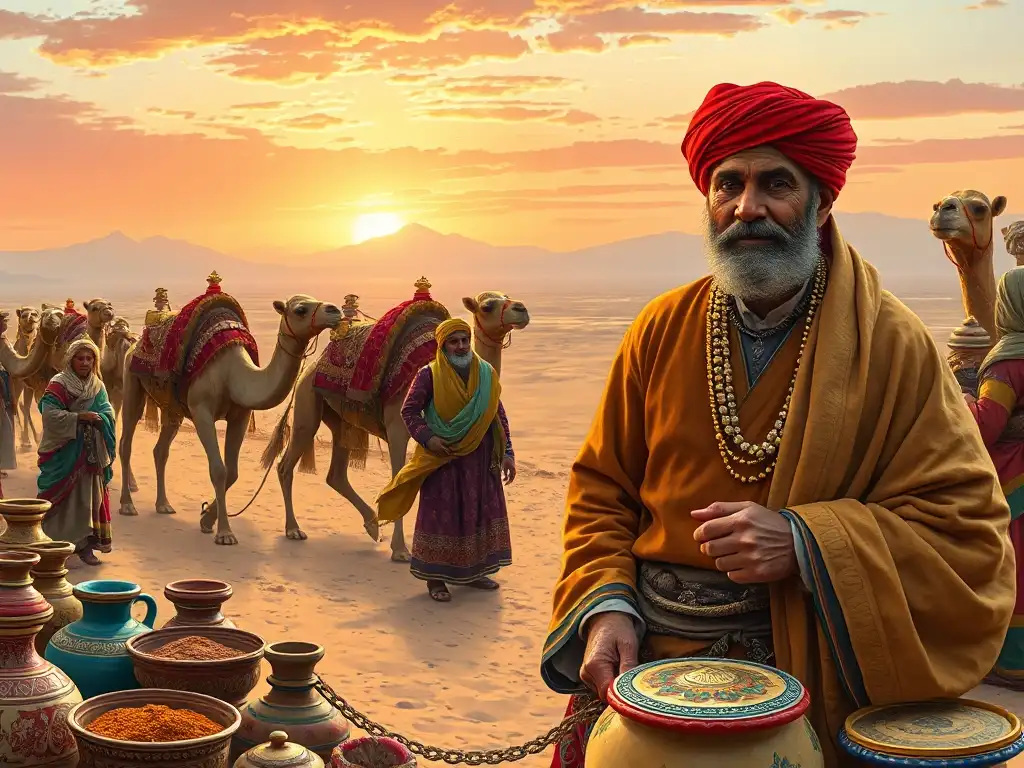
Indian merchants were pivotal in facilitating cultural exchange along the Silk Road. Their extensive networks and trade relations enabled the flow of goods and ideas between India and other civilizations. These merchants acted as cultural ambassadors, not only trading commodities but also sharing knowledge, customs, and beliefs.
The presence of Indian merchants in key trading cities allowed for the establishment of vibrant multicultural communities, where diverse cultures coexisted and interacted. This dynamic environment fostered the exchange of artistic and intellectual ideas, enriching the local cultures and enhancing India's cultural influence across the Silk Road. The legacy of these interactions highlights the significant role of commerce in shaping cultural landscapes and promoting understanding among different societies.
Challenges and Decline of the Silk Road
The Silk Road, a vast network of trade routes connecting the East and West, faced numerous challenges that contributed to its decline over the centuries. Environmental factors, political instability, and shifts in trade dynamics played significant roles in diminishing the once-thriving exchange of goods, ideas, and cultures. As the empires that supported the Silk Road fluctuated in power, so too did the reliability and safety of these trade routes.
The rise of maritime trade routes during the late medieval period also overshadowed the Silk Road, as sea voyages became faster and more efficient than overland travel. Additionally, the emergence of new trade centers and economic policies, particularly in the regions surrounding the Mediterranean and Indian Ocean, redirected the flow of goods away from traditional Silk Road pathways.
Factors Leading to the Decline of Silk Road Trade
Several key factors contributed to the decline of Silk Road trade:
- Political Instability: The frequent changes in leadership and the rise and fall of empires disrupted trade routes. For instance, the Mongol Empire’s fragmentation in the 14th century led to increased conflict and diminished security for merchants.
- Environmental Challenges: Natural disasters, such as droughts and floods, impacted agricultural production, which in turn affected the economies of regions reliant on trade. The harsh terrains and climatic changes also made travel more perilous.
- Rise of Maritime Trade: The development of sea routes allowed for faster and more cost-effective transportation of goods. The establishment of the Spice Route, for example, saw a significant shift in trade from land to sea.
- Cultural and Technological Shifts: The advent of new technologies and the spread of different cultural practices influenced demand for goods, leading to a decreased reliance on Silk Road products.
Impact of Decline on Cultural Exchange in Ancient India
The decline of the Silk Road had profound implications for cultural exchange in ancient India. As trade routes became less reliable, the flow of ideas, art, and technology diminished. The interaction between Indian civilizations and those of Central Asia, the Middle East, and beyond was significantly curtailed.
Despite these challenges, some cultural exchanges persisted through smaller trade networks and localized interactions. Indian culture, particularly in the realms of religion and philosophy, continued to spread, albeit at a slower pace. The decline led to a more introspective phase for Indian civilization, allowing for the development of unique regional cultures that differed from the influences once prevalent through the Silk Road.
Legacy of the Silk Road in Post-Ancient India
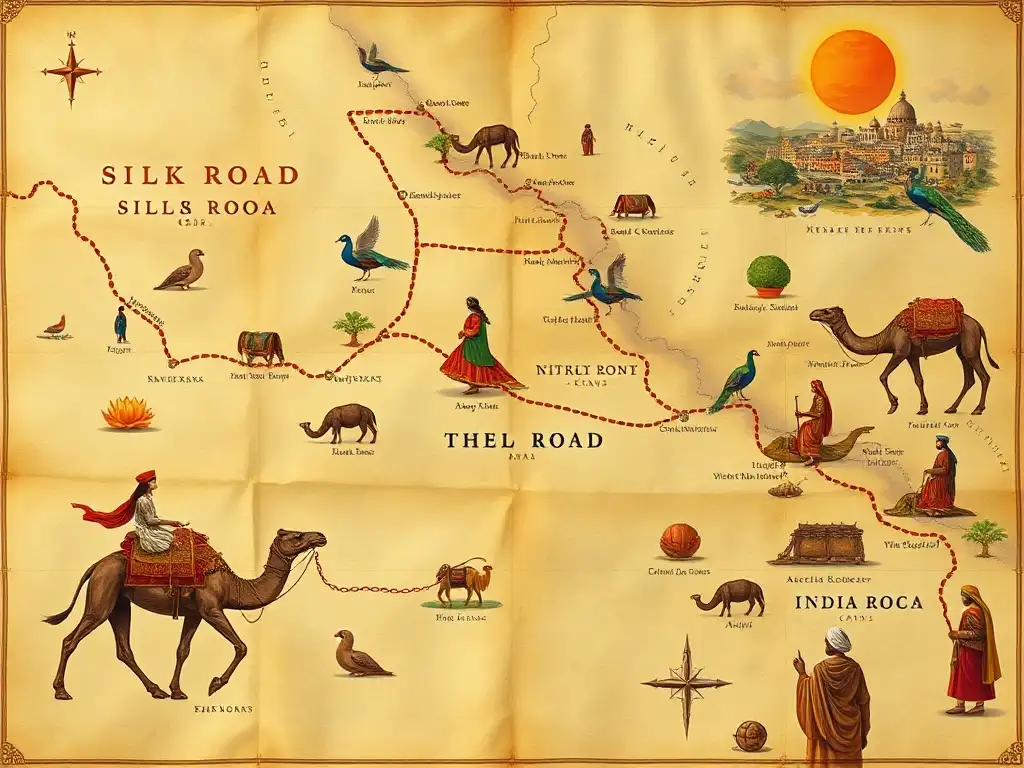
Even after its decline, the legacy of the Silk Road remained influential in shaping post-ancient India. The interactions fostered through centuries of trade left an indelible mark on Indian art, architecture, and literature. The introduction of new ideas and technologies during the height of the Silk Road paved the way for the flourishing of local traditions.
- Cultural Syncretism: The blend of diverse cultures resulted in unique artistic styles, evident in sculptures and paintings that reflect a fusion of Indian and Hellenistic influences.
- Religious Exchanges: Buddhism, which spread along the Silk Road, continued to thrive and evolve in India, influencing various sects and practices.
- Trade Networks: While the main Silk Road declined, smaller trade networks continued to facilitate exchanges, ensuring that India remained a pivotal player in regional commerce.
Conclusion: The Lasting Legacy of the Silk Road Cultural Exchange in India
The Silk Road's cultural exchange left a lasting impact on the civilization of ancient India, shaping its historical trajectory and enriching its cultural fabric.
Summary of Key Contributions and Influences
The Silk Road facilitated significant contributions to Indian society, including:
- Cultural Exchange: The blending of ideas and practices from various cultures led to a rich tapestry of art, religion, and philosophy.
- Economic Growth: Trade along the Silk Road supported local economies, enhancing prosperity in many regions of India.
- Technological Advancements: The introduction of new technologies, such as papermaking and metallurgy, influenced Indian craftsmanship and industry.
Reflection on the Importance of Cultural Exchange in Shaping Civilizations
Cultural exchange is vital in shaping civilizations, fostering innovation, and promoting mutual understanding. The Silk Road exemplifies how interconnectedness can lead to the sharing of knowledge and ideas, ultimately enriching societies and paving the way for future progress. India's experience along the Silk Road illustrates the transformative power of cultural interactions, emphasizing that such exchanges are crucial for societal development.
Future Implications of Silk Road Studies on Understanding Ancient India
Studying the Silk Road's impact on ancient India provides valuable insights into the dynamics of cultural exchange and trade. Future research can further illuminate how these interactions influenced social structures, political relationships, and economic systems. By examining the remnants of Silk Road exchanges, scholars can gain a deeper understanding of India's historical context and its role in global history, fostering a greater appreciation of the interconnectedness of ancient civilizations.
References and Further Reading
Exploring the intricate connections between the Silk Road and ancient India reveals a tapestry of cultural exchanges that shaped the course of history. To delve deeper into this fascinating topic, the following resources provide valuable insights and perspectives.
Suggested Books and Articles on Silk Road and Ancient India
-
"The Silk Roads: A New History of the World" by Peter Frankopan
This comprehensive book offers a fresh perspective on the historical significance of the Silk Road, emphasizing its role in connecting different civilizations, including ancient India. Frankopan's narrative highlights the cultural, economic, and political exchanges that took place along these routes.
-
"India and the Silk Road: The Interplay of Culture and Trade" by R. K. Sharma
This scholarly work examines the various ways in which trade along the Silk Road influenced Indian culture, art, and society. Sharma provides a detailed analysis of the artifacts and texts resulting from these interactions.
-
"Silk Road: A New History" by Xinru Liu
Liu's book focuses on the broader implications of the Silk Road for the development of civilizations. It includes discussions on how India participated in this vast network of trade and cultural exchanges, offering a contextual understanding of its significance.
-
"Ancient India: A Cultural History" by R. S. Sharma
This book provides an overview of the cultural developments in ancient India, including the influences from the Silk Road. Sharma discusses the impact of trade on Indian society and culture, making it a vital read for understanding the broader historical context.
-
Articles in the "Journal of Silk Road Studies"
This academic journal features various articles that discuss the Silk Road's impact on different regions, including India. The articles cover topics such as trade routes, cultural exchanges, and significant historical events linked to the Silk Road.
Online Resources for Exploring the Topic Further
-
The Silk Road Project
This website hosts a wealth of information regarding the history and significance of the Silk Road. It includes articles, maps, and educational resources that focus on the cultural exchanges between India and other civilizations along the route.
-
The British Museum's Online Collection
The British Museum offers an extensive online collection that highlights artifacts related to the Silk Road. Visitors can explore items from ancient India that illustrate the cultural exchanges that occurred through trade.
-
The Metropolitan Museum of Art's Timeline of Art History
This resource provides an interactive timeline that includes significant events and artistic developments related to the Silk Road. It features various artworks that reflect the cultural influences between India and other regions.
-
National Geographic's Silk Road Articles
National Geographic features a collection of articles and visual resources about the Silk Road. These resources delve into the history, trade, and cultural exchanges associated with this ancient network, including its impact on India.
-
Online Courses and Lectures
Platforms like Coursera and edX offer courses on ancient trade routes and cultural exchanges, including the Silk Road. These courses often include modules specifically addressing India's role in these interactions.
- Introduction to the Silk Road and Its Significance
- What is the Silk Road?
- Importance of the Silk Road in Ancient Trade
- Overview of Cultural Exchange Along the Silk Road
- The Historical Context of Ancient India
- The Silk Road and Its Routes to India
- Cultural Exchange Along the Silk Road
- The Impact of Silk Road Cultural Exchange on Ancient India
- Case Studies of Cultural Exchange on the Silk Road
- Challenges and Decline of the Silk Road
- Factors Leading to the Decline of Silk Road Trade
- Impact of Decline on Cultural Exchange in Ancient India
- Legacy of the Silk Road in Post-Ancient India
- Conclusion: The Lasting Legacy of the Silk Road Cultural Exchange in India
- References and Further Reading
- What was the significance of the Silk Road for ancient India?
- How did cultural exchange happen along the Silk Road?
- Which civilizations interacted with ancient India via the Silk Road?
- What were some key contributions of ancient Indian civilizations to the Silk Road?
- How did the Gupta Empire benefit from the Silk Road?
Frequently Asked Questions
What was the significance of the Silk Road for ancient India?
The Silk Road served as a crucial trade route, facilitating the cultural exchange between India and other civilizations, which enriched Indian culture and economy.
How did cultural exchange happen along the Silk Road?
Cultural exchange along the Silk Road involved the movement of goods, ideas, and religions, allowing diverse cultures to influence one another, particularly in art, philosophy, and religion.
Which civilizations interacted with ancient India via the Silk Road?
Ancient India interacted with numerous civilizations, including the Persians, Greeks, and Buddhists from Central Asia, leading to a blend of cultures and shared knowledge.
What were some key contributions of ancient Indian civilizations to the Silk Road?
Ancient Indian civilizations contributed spices, textiles, and mathematical concepts, which were highly valued by traders and helped to establish India as a significant player in global trade.
How did the Gupta Empire benefit from the Silk Road?
The Gupta Empire experienced economic prosperity and cultural growth due to the Silk Road, enhancing trade, promoting arts, and spreading scientific knowledge across regions.
Final Reflection: The Enduring Legacy of Silk Road Cultural Exchange in India
The Silk Road was not merely a trade route; it was a vibrant tapestry of cultural exchange that shaped civilizations. Today, as we navigate a world increasingly defined by globalization, the lessons from the Silk Road remind us of the profound impact that cross-cultural interactions can have on society. The exchange of ideas, art, and traditions along this ancient route continues to resonate, illustrating that our interconnectedness is not a modern phenomenon but a timeless aspect of human history.
Cultural exchange has the power to enrich societies, fostering understanding and collaboration across borders. The legacy of the Silk Road in ancient India serves as a testament to this truth, demonstrating how the mingling of diverse cultures can lead to innovation and growth. As the historian John Green aptly noted, “History is not just about the past; it’s about how the past shapes our present and future.” This ongoing influence is evident in the way we celebrate diversity today, drawing inspiration from the rich tapestry of our shared heritage.
As we reflect on the lessons of the Silk Road, let us embrace the spirit of cultural exchange in our own lives. Consider how you can engage with different cultures, learn from others, and contribute to a world that values diversity. By doing so, we honor the legacy of the Silk Road and its enduring impact on humanity, fostering a future where collaboration and understanding thrive.
Uncover the Secrets of the Past!
Thank you for investing your time in exploring the fascinating cultural exchange along the Silk Road and its influence on Ancient India. You’ve gained insights into how these historical interactions shaped civilizations and crafted the rich tapestry of our shared history. Now, it's your turn to dive deeper and bring this history to life!
Here’s how you can continue your journey:
- Explore more! Discover related articles on ancient trade routes, cultural exchanges, and their lasting impacts on modern societies by visiting our website, ancientindiahistory.com .
- Share your thoughts! Engage with this intriguing topic—post about it on social media or start a conversation with friends and family.
- Experience it firsthand! Visit a local museum that showcases exhibits on the Silk Road or ancient cultures and share your experience with our community.
What do you think was the most surprising aspect of the Silk Road's influence on Ancient India? We would love to hear your thoughts in the comments!