
Inscriptions and Trade: Insights into Ancient Indian Economic Practices


Welcome to Ancient India History, where we embark on a fascinating journey through time to uncover the rich tapestry of ancient Indian civilizations. In our featured article, “Inscriptions and Trade: Insights into Ancient Indian Economic Practices,” we delve into the intricate economic practices that shaped the lives of millions. From the bustling trade routes of the Indus Valley to the sophisticated systems of the Gupta Empire, these inscriptions provide a window into the vibrant commerce and cultural exchanges that flourished in ancient India.
Prepare to be captivated as you explore the profound influences that these practices have had on modern society and discover the stories waiting to unfold. Your adventure into the depths of history begins here!

Introduction to Ancient Indian Economic Practices
Ancient Indian economic practices were complex and multifaceted, reflecting the diverse cultures and civilizations that flourished on the subcontinent. From the bustling marketplaces of the Indus Valley to the sophisticated trade networks during the Gupta Empire, these practices were crucial in shaping the social, political, and cultural landscape of ancient India.
The study of these economic practices, particularly through the lens of inscriptions, provides invaluable insights into how ancient Indians engaged in trade, managed resources, and interacted with neighboring regions. Understanding these economic systems not only highlights the ingenuity of ancient Indian societies but also sheds light on their contributions to global trade and commerce.
Overview of Economic Systems in Ancient India
The economy of ancient India was primarily agrarian, relying heavily on agriculture, but it was also supported by a thriving trade network. Key elements of the economic systems included:
- Agriculture: The backbone of the economy, with staple crops such as rice, wheat, and barley.
- Trade and Commerce: Extensive trade routes facilitated exchange not just within India, but also with distant lands such as Persia, Rome, and Southeast Asia.
- Craftsmanship and Industry: Skilled artisans produced textiles, metalwork, pottery, and other goods, contributing to both local markets and long-distance trade.
These economic systems were not static; they evolved over time, influenced by various factors including geography, politics, and cultural exchanges.
Importance of Inscriptions in Understanding Trade
Inscriptions serve as vital records that illuminate various aspects of ancient Indian economic practices. They provide concrete evidence of:
- Trade Agreements: Many inscriptions detail contracts and agreements between merchants, indicating the legal frameworks that governed trade.
- Taxation Systems: Inscriptions often mention taxes imposed on goods, which reveal the economic policies of different rulers and the significance of trade in their economies.
- Trade Routes: They highlight the key trade routes and hubs, showcasing how goods moved across the region and beyond.
By analyzing these inscriptions, historians can reconstruct the economic landscape of ancient India and understand the intricacies of its trade practices.
The Role of Inscriptions in Ancient Economic Activities
Inscriptions were not merely decorative; they were essential tools for administration and commerce. They documented transactions, legitimized trade practices, and recorded important economic events.
Types of Inscriptions Related to Trade
The types of inscriptions that pertain to ancient Indian economic practices include:
- Commercial Inscriptions: These record trade transactions, prices, and the nature of goods exchanged.
- Royal Edicts: Decrees from kings that often included regulations on trade practices and economic policies.
- Religious Inscriptions: Some inscriptions related to trade were found in temples and religious sites, indicating the role of religion in economic activities.
Each type provides specific insights into the economic practices of the time, revealing the interconnectedness of commerce and society.
Key Locations of Ancient Inscriptions in India
Several locations across India are renowned for their inscriptions that provide insights into ancient economic practices:
- Indus Valley Sites: Such as Harappa and Mohenjo-Daro, where inscriptions hint at early trade and administrative practices.
- Ashoka's Edicts: Found throughout the Indian subcontinent, these inscriptions convey messages about trade regulations and economic responsibilities.
- South Indian Temples: Regions like Tamil Nadu are dotted with inscriptions that reveal information about trade guilds and craftsmanship.
These locations serve as critical focal points for understanding the economic history of ancient India, showcasing the rich tapestry of its trade practices and economic systems.
Trade Routes and Economic Networks in Ancient India
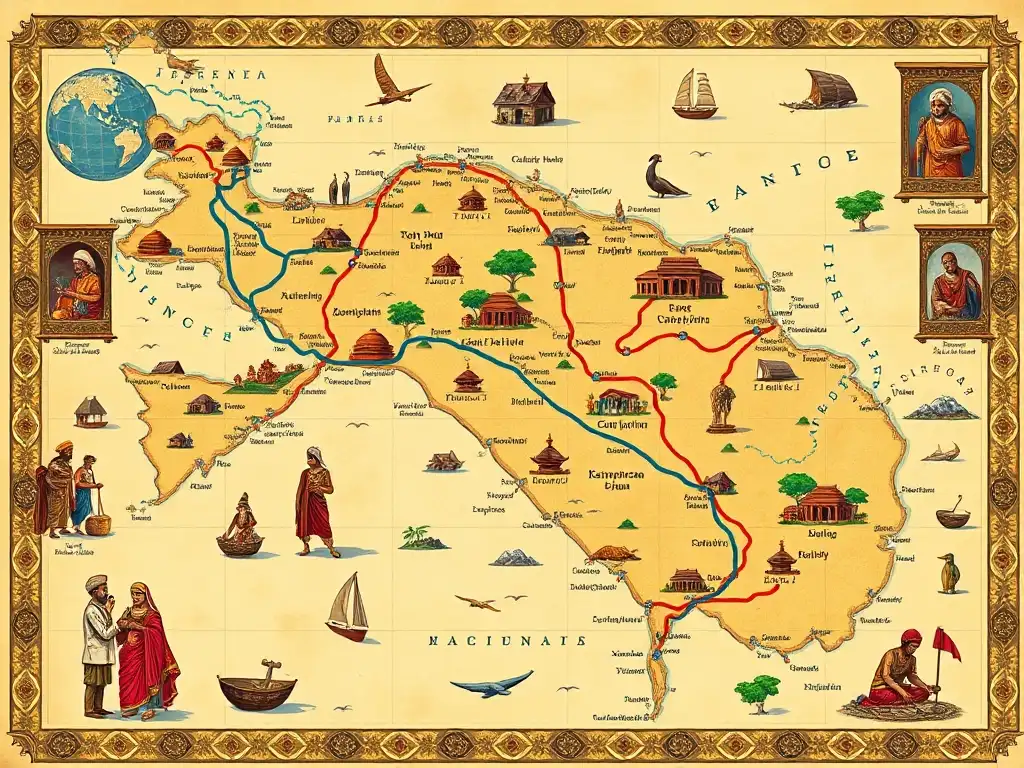
Ancient India was characterized by a complex web of trade routes and economic networks that facilitated the exchange of goods, ideas, and cultures. These routes not only connected various regions within India but also linked the subcontinent to distant lands, including Southeast Asia, the Middle East, and even parts of Europe. The flourishing trade during ancient times was significant in shaping the economic landscape of India and contributed to the rise of various urban centers and kingdoms.
The trade routes can be broadly categorized into overland and maritime routes. Overland trade routes, such as the Silk Road, served as vital arteries for the movement of goods across Asia. These routes traversed through the rugged terrains of the Himalayas and the deserts of western India, enabling traders to transport valuable commodities. Meanwhile, maritime trade routes, particularly along the Indian Ocean, connected Indian ports like Lothal and Sopara to markets in Africa and the Arabian Peninsula, facilitating a vibrant exchange of goods and cultural practices.
The establishment of trade networks was also instrumental in the spread of religions, art, and technology. As merchants traveled, they not only exchanged commodities but also shared their beliefs and customs, leading to a rich cultural amalgamation that influenced the development of Indian society and its neighboring regions.
Major Trade Routes of Ancient India
The major trade routes of ancient India were crucial for the economic prosperity of the region. Some of the most notable include:
- The Grand Trunk Road: This ancient route connected the eastern and western parts of India, facilitating trade between major cities such as Pataliputra, Taxila, and further into Central Asia.
- The Silk Road: This extensive network of trade routes linked India to China and the Mediterranean, allowing for the exchange of silk, spices, and other luxury items.
- The Spice Route: Focusing on maritime trade, this route connected Indian ports with markets in the Roman Empire, the Arabian Peninsula, and Southeast Asia, centering around the lucrative spice trade.
- The Trade Routes to the Deccan Plateau: These routes facilitated the exchange of goods from the fertile regions of the Deccan, linking to both coastal and inland markets.
These trade routes played a pivotal role in the economic development of ancient India, allowing for not only the exchange of goods but also the dissemination of knowledge, culture, and technology.
Influence of Geography on Economic Practices
Geography played a significant role in shaping the economic practices of ancient India. The diverse topography, ranging from the fertile plains of the Indus and Ganges rivers to the arid conditions of the Thar Desert, influenced agricultural practices and trade.
- River Systems: The Indus and Ganges river systems provided fertile land for agriculture, leading to the cultivation of grains, fruits, and spices. This agricultural abundance formed the backbone of trade as surplus goods were transported to urban centers for exchange.
- Mountains and Deserts: The Himalayas and the Thar Desert created natural barriers that shaped trade routes. While these geographical features posed challenges, they also led to the development of specific trade practices, such as the use of caravans for overland transport.
- Coastal Regions: The extensive coastline of India facilitated maritime trade, allowing access to international markets. Major ports along the western and eastern coasts became bustling hubs for the export of goods like textiles, spices, and precious stones.
Overall, the geographical diversity of ancient India not only influenced the types of goods traded but also shaped the economic interactions between various regions and cultures.
Analysis of Trade Goods and Economic Exchanges
The analysis of trade goods in ancient India reveals a rich tapestry of economic exchanges that characterized the period. Goods traded during this time were not merely commodities; they also represented the cultural and technological advancements of the civilizations involved.
Commonly Traded Commodities in Ancient India
Ancient India was known for a wide array of traded commodities, some of which included:
- Spices: India was famed for its spices, such as black pepper, cardamom, and turmeric, which were highly sought after in international markets.
- Textiles: Cotton and silk textiles were among the most valuable exports, with Indian weavers renowned for their craftsmanship and intricate designs.
- Metals and Gems: Precious metals like gold and silver, along with gemstones such as diamonds and rubies, were traded extensively, showcasing India's rich mineral resources.
- Agricultural Products: Grains like rice and wheat, along with fruits and vegetables, were commonly traded, providing sustenance and economic stability.
These commodities were integral to both domestic consumption and international trade, highlighting the economic prowess of ancient Indian civilizations.
Cultural and Economic Impact of Trade Goods
The trade goods exchanged in ancient India had profound cultural and economic impacts. The influx of diverse commodities facilitated not only economic prosperity but also cultural exchange and enrichment.
- Cultural Exchange: The movement of goods led to the exchange of ideas, customs, and technologies. For instance, the introduction of new agricultural techniques and the adoption of foreign artistic styles enriched Indian culture.
- Economic Growth: The trade of valuable commodities stimulated economic growth, leading to the rise of wealthy merchant classes and the establishment of urban centers. Cities like Pataliputra and Ujjain became significant economic hubs due to their strategic positions along trade routes.
- Social Structures: The wealth generated from trade contributed to the evolution of social structures, where merchants emerged as influential figures in society, challenging traditional hierarchies.
The trade goods of ancient India were central to its economic practices, fostering cultural exchange and contributing to the development of a complex and dynamic society.
Case Studies of Ancient Indian Economic Practices
Ancient Indian economic practices were profoundly influenced by various civilizations, each leaving behind a legacy of inscriptions that provide insights into trade, commerce, and economic structures. Through examining specific case studies from different eras, we can understand how these practices evolved and contributed to the overall economic landscape of ancient India.
Inscriptions from the Indus Valley Civilization
The Indus Valley Civilization (IVC), one of the world's earliest urban cultures, is renowned for its advanced economic practices. Inscriptions from this period, primarily found on seals and pottery, suggest a highly organized system of trade. The seals often feature symbols that may represent commodities or trade agreements, indicating a complex system of commercial interaction.
Archaeological findings reveal the presence of standardized weights and measures, which facilitated trade both within the IVC and with neighboring regions. For instance, the discovery of materials such as lapis lazuli from Badakshan and carnelian from Gujarat in IVC sites illustrates long-distance trade connections. The economic activities were likely supported by a sophisticated bureaucratic system, as indicated by the uniformity of the seals and weights used in trade transactions.
Trade Practices during the Maurya Empire
The Maurya Empire (c. 322–185 BCE) marked a significant period in ancient Indian economic history, characterized by extensive trade networks and flourishing commerce. Inscriptions from this era, particularly those linked to Emperor Ashoka, provide valuable insights into state-sponsored trade practices.
Ashoka's edicts, inscribed on rocks and pillars, not only promote moral governance but also encourage the development of trade routes. The establishment of trade guilds, referred to as "śrenis," enabled merchants to organize and protect their interests. These guilds were responsible for regulating prices, ensuring quality, and even resolving disputes among traders, indicating a sophisticated understanding of market dynamics.
Moreover, maritime trade flourished during the Mauryan period, with ports such as Lothal serving as critical hubs for commerce. The inscriptions highlight the exchange of goods like silk, spices, and textiles, revealing the empire's integration into broader trade networks across Asia.
Economic Insights from Gupta Era Inscriptions
The Gupta Empire (c. 240–550 CE) is often referred to as the Golden Age of India, and its inscriptions reflect a vibrant economic landscape. These inscriptions provide evidence of various economic activities, including agriculture, trade, and taxation.
The Gupta inscriptions often detail land grants to temples and scholars, indicating the importance of agriculture as a backbone of the economy. Additionally, references to trade routes and merchant guilds suggest that commerce flourished during this period. The flourishing silk trade, as well as the exchange of precious metals, indicates an economy that was both diverse and dynamic.
Furthermore, Gupta inscriptions reveal the state's role in regulating trade, with mentions of officials responsible for overseeing market activities and maintaining fair practices. This regulatory framework not only facilitated trade but also contributed to economic stability and growth during the Gupta period.
The Influence of Foreign Trade on Ancient Indian Economy

Foreign trade played a crucial role in shaping the economic practices of ancient India, leading to cultural exchanges and economic prosperity. The inscriptions from various periods highlight how trade relations with neighboring civilizations influenced India's economic landscape.
Trade Relations with Neighboring Civilizations
Ancient India's trade relations with neighboring civilizations, such as Persia, Greece, and the kingdoms of Southeast Asia, significantly impacted its economic practices. Inscriptions from the Maurya and Gupta periods document the exchange of goods, ideas, and technologies.
For instance, the introduction of coinage from the Persians facilitated trade across different regions. Indian traders were known to exchange textiles, spices, and precious stones for metals and luxury items from foreign lands. The presence of foreign merchants in Indian ports not only enhanced trade but also led to the assimilation of diverse cultural practices.
Moreover, inscriptions reveal mutual respect and diplomatic ties through trade agreements, which solidified economic relations. These interactions fostered an environment conducive to economic growth, illustrating the broader impact of foreign trade on ancient Indian economic practices.
Impact of Maritime Trade on Economic Development
Maritime trade was particularly pivotal in the economic development of ancient India, as evidenced by numerous inscriptions that highlight the significance of coastal trading ports. Regions like Kerala and Gujarat emerged as thriving centers of trade, facilitating the exchange of goods with distant lands, including Africa and the Roman Empire.
The inscriptions indicate that Indian merchants were skilled navigators, utilizing monsoon winds to enhance their maritime trade routes. Goods such as spices, textiles, and gemstones were in high demand, attracting foreign traders and contributing to the prosperity of Indian ports.
The economic benefits of maritime trade extended beyond mere exchange; they fostered urbanization as trading hubs developed into bustling cities. The wealth generated from trade also led to advancements in infrastructure, such as the construction of docks and warehouses, further enhancing the efficiency of trade practices.
Overall, the systematic exploration of inscriptions related to trade reveals the intricate tapestry of ancient Indian economic practices, underscoring their significance in shaping the broader narrative of India's historical development.
Conclusion: Legacy of Ancient Indian Economic Practices
The economic practices of ancient India, as evidenced through inscriptions and various archaeological findings, reveal a sophisticated and dynamic system of trade and commerce that laid the groundwork for future economic developments in the region. These practices not only highlight the intricacies of trade networks, domestic and international, but also underscore the role of governance, culture, and technology in shaping economic relations. The legacy of these ancient economic practices continues to influence contemporary economic systems and cultural exchanges in modern India and beyond.
Summary of Key Insights
- Diverse Economic Activities: Ancient Indian inscriptions provide evidence of a wide range of economic activities including agriculture, trade, craftsmanship, and taxation. These activities were essential for sustaining the various kingdoms and empires throughout history.
- Trade Networks: The inscriptions indicate the existence of extensive trade networks that connected India with other civilizations, such as those in the Mediterranean and Southeast Asia. This exchange facilitated not just the movement of goods, but also ideas and cultural practices.
- Standardization and Regulation: The presence of inscriptions detailing trade regulations, weights and measures, and market practices suggests a structured approach to commerce. This standardization helped in maintaining fairness and order in economic transactions.
- Cultural Implications: Economic practices were often interwoven with cultural and religious beliefs, as reflected in the inscriptions. For instance, certain trade practices were conducted as part of religious rituals, highlighting the importance of spirituality in commerce.
Relevance of Ancient Economic Practices Today
The study of ancient Indian economic practices is not merely of historical interest; it has significant relevance in today’s context. The principles of trade that were established in ancient times continue to resonate in modern economic systems. For example:
- Trade Models: The ancient trade routes and networks serve as early models of globalization, showcasing how interconnected markets can foster economic growth and cultural exchange.
- Sustainable Practices: Ancient practices often included sustainable agricultural techniques and resource management strategies that can inform current discussions on sustainability and environmental preservation.
- Cultural Identity: Understanding the economic history of India helps in reinforcing cultural identity and continuity, as many traditional practices and trade customs have persisted into modern times.
References and Further Reading
For those interested in exploring the economic practices of ancient India and their implications further, the following texts and resources are recommended:
Recommended Texts on Ancient Indian Economic Practices
- "Ancient Indian Economy" by R.S. Sharma: This book provides a comprehensive overview of the economic systems in ancient India and their evolution through different historical periods.
- "Trade and Traders in Ancient India" by R.C. Majumdar: A detailed examination of the trade practices, routes, and the role of traders in shaping ancient Indian economies.
- "The Economic History of India: From the Earliest Times to the Present Day" by Romesh Chunder Dutt: This work offers insights into the long-term economic trends in India, including those rooted in ancient practices.
Additional Resources for Studying Ancient Inscriptions
- "Inscriptions of India" (Journal): A scholarly journal devoted to the study of inscriptions, providing articles and research findings on ancient epigraphy and economic practices.
- Online Databases of Inscriptions: Various digital archives compile ancient Indian inscriptions, allowing researchers to analyze primary sources related to economic activities.
- Epigraphia Indica: A publication that encompasses a range of inscriptions from different periods, offering valuable insights into the socio-economic conditions of ancient India.
By delving into these resources, readers can gain a deeper understanding of the intricate economic tapestry of ancient India and its lasting impact on contemporary practices.
- Introduction to Ancient Indian Economic Practices
- Overview of Economic Systems in Ancient India
- The Role of Inscriptions in Ancient Economic Activities
- Trade Routes and Economic Networks in Ancient India
- Analysis of Trade Goods and Economic Exchanges
- Case Studies of Ancient Indian Economic Practices
- The Influence of Foreign Trade on Ancient Indian Economy
- Conclusion: Legacy of Ancient Indian Economic Practices
- References and Further Reading
- What were the main economic practices in ancient India?
- How did trade influence ancient Indian society?
- What role did inscriptions play in understanding ancient Indian economics?
- How did ancient Indian civilizations contribute to the global economy?
- What were some key economic contributions of the Gupta Empire?
Frequently Asked Questions
What were the main economic practices in ancient India?
Ancient India featured a variety of economic practices, including trade, agriculture, and craftsmanship, which played a crucial role in the prosperity of the civilization.
How did trade influence ancient Indian society?
Trade facilitated the exchange of goods and ideas, leading to increased cultural interactions and the establishment of trade routes that connected India with other regions.
What role did inscriptions play in understanding ancient Indian economics?
Inscriptions serve as valuable historical records that provide insights into economic transactions, taxation systems, and the administration of trade in ancient India.
How did ancient Indian civilizations contribute to the global economy?
Ancient Indian civilizations were instrumental in the global economy through the export of goods like spices, textiles, and precious stones, which were highly sought after in foreign markets.
What were some key economic contributions of the Gupta Empire?
The Gupta Empire is known for advancements in coinage, trade, and the promotion of artisanship, which significantly enhanced the economic landscape of ancient India.
Final Reflection: Unearthing the Legacy of Ancient Indian Economic Practices
The exploration of ancient Indian economic practices reveals a rich tapestry of trade, culture, and innovation that continues to resonate in today's global economy. As we delve into the inscriptions and artifacts from this era, we uncover not just historical data but also profound insights into the interconnectedness of societies. The lessons learned from these ancient practices remind us that economic systems are not merely transactional; they are deeply intertwined with cultural identity and social structures.
The impact of these ancient practices is evident in our contemporary world, where the principles of trade and commerce continue to evolve while retaining their foundational roots. Reflecting on the intricate networks established by our ancestors, we can see how their methods of exchange and collaboration laid the groundwork for modern economic systems. As Mahatma Gandhi once said, “The world has enough for everyone's need, but not enough for everyone's greed.” This quote encapsulates the essence of sustainable economic practices that were prevalent in ancient India, emphasizing the importance of balance and ethical considerations in trade.
As we contemplate the lessons from ancient Indian economic practices, I invite you to reflect on how these insights can be applied in your own life. Consider how the principles of cooperation, sustainability, and ethical trade can inform your personal and professional decisions. Let the wisdom of the past inspire you to foster connections that transcend mere transactions, cultivating a sense of community and responsibility in your economic interactions. Together, we can honor the legacy of our ancestors by creating a more equitable and interconnected future.
Unlock the Secrets of Ancient Trade Practices!
Thank you for exploring the fascinating world of ancient Indian economic practices with us! You've uncovered valuable insights into how inscriptions reveal the intricate trade mechanisms of the time. Now, it’s time to take your curiosity further and delve deeper into this rich history.
Here are some actionable steps you can take:
- Explore More: Dive into our extensive collection of articles on ancient trade routes to uncover the connections between different regions.
- Join the Discussion: Share your thoughts on our vibrant community forum—what fascinates you the most about ancient Indian trade?
- Spread the Knowledge: Share this article with friends or on social media to inspire others to learn more about our shared heritage!
As you reflect on these economic practices, consider: How do you think these ancient trade systems influence modern economic interactions today? We invite you to join the conversation below!