
Scripts of the Subcontinent: A Comparative Study of Ancient Indian Inscriptions

Welcome to Ancient India History, your gateway to the captivating world of India's rich and diverse past. Here, we delve into the intricate tapestry of ancient Indian civilizations, from the awe-inspiring Indus Valley to the illustrious Gupta Empire. In our featured article, "Scripts of the Subcontinent: A Comparative Study of Ancient Indian Inscriptions," we unravel the fascinating history behind ancient Indian inscriptions, shedding light on their significance and the profound contributions they made to our understanding of culture and communication.
Prepare to embark on a journey that will not only pique your curiosity but also deepen your appreciation for the enduring legacy of this remarkable era. Explore further to uncover the stories etched in stone!
- Introduction to Ancient Indian Inscriptions History
- Historical Context of Ancient Indian Inscriptions
- Types of Ancient Indian Inscriptions
- Major Scripts of the Subcontinent
- Comparative Analysis of Ancient Indian Inscriptions
- Case Studies of Notable Ancient Indian Inscriptions
- Challenges in the Study of Ancient Indian Inscriptions
- Conclusion: The Importance of Studying Ancient Indian Inscriptions
- Frequently Asked Questions
- Final Reflection: The Timeless Legacy of Ancient Indian Inscriptions
- Unveil the Rich Tapestry of Ancient Indian Scripts!
Introduction to Ancient Indian Inscriptions History
Ancient Indian inscriptions serve as a crucial lens through which we can explore the rich tapestry of India's historical narrative. These inscriptions, etched on a variety of materials, from stone to metal, encapsulate the thoughts, beliefs, and practices of societies long gone. They offer invaluable insights not only into the languages that flourished across the subcontinent but also into the cultural, political, and social dynamics of ancient Indian civilizations.
From the sophisticated urban settlements of the Indus Valley to the philosophical discourses of the Gupta Empire, ancient Indian inscriptions are a testament to the ingenuity and complexity of human expression throughout history. This article delves into the fascinating world of these inscriptions, examining their forms, functions, and the remarkable stories they tell about ancient India.
Overview of Ancient Indian Inscriptions
Ancient Indian inscriptions can be broadly classified based on their material, language, and purpose. The most notable examples include:
- Stone Inscriptions: Found on temples, pillars, and other structures, these inscriptions often commemorate significant events or rulers. For instance, the Ashoka Edicts, inscribed by Emperor Ashoka in the 3rd century BCE, are among the earliest and most significant inscriptions, promoting dharma (righteousness) and ethical governance.
- Metal Inscriptions: These were primarily used for royal proclamations and commemorative purposes. The Brahmi script, one of the earliest scripts used in India, is often seen in metal inscriptions, providing insights into the language and administrative practices of the time.
- Pottery and Seal Inscriptions: Inscriptions on pottery and seals from the Indus Valley Civilization (c. 3300–1300 BCE) highlight the early use of writing in trade and administration, though the exact meanings of many symbols remain undeciphered.
Significance of Inscriptions in Understanding Ancient Civilizations
Inscriptions are invaluable for reconstructing the socio-political and cultural landscapes of ancient India. Their significance can be understood through several key aspects:
- Historical Documentation: Inscriptions serve as primary historical sources, chronicling events, policies, and achievements of rulers. They provide a timeline of political changes and cultural developments, helping historians piece together the past.
- Linguistic Insights: The study of inscriptions allows linguists to trace the evolution of languages and scripts, including Brahmi, Kharosthi, and Devanagari. This linguistic journey not only reveals the characteristics of ancient languages but also their influences on modern Indian languages.
- Cultural Expressions: Inscriptions often reflect the religious and philosophical beliefs of a society. For instance, inscriptions related to Buddhism and Hinduism reveal the prominence of these religions and their impact on daily life and governance.
- Administrative Practices: Many inscriptions detail administrative functions, such as taxation, land grants, and trade regulations, providing insights into the economic frameworks of ancient states.
The study of ancient Indian inscriptions is not merely an academic exercise; it is a vibrant exploration of the lives and minds of those who inhabited the subcontinent millennia ago. Through these inscriptions, we can better understand the complexities of ancient Indian societies and their lasting legacies.
Historical Context of Ancient Indian Inscriptions

The history of ancient Indian inscriptions is deeply intertwined with the evolution of writing systems, cultural exchanges, and administrative practices in the subcontinent. Ancient Indian inscriptions serve as crucial primary sources for understanding the socio-political landscape, religious beliefs, and languages of various civilizations that flourished from the Indus Valley through the Gupta Empire.
Inscriptions were utilized for a variety of purposes, including royal proclamations, religious dedications, and records of land grants. They reflect the administrative sophistication and the importance of record-keeping in ancient Indian societies. The earliest examples, such as the seals of the Indus Valley Civilization, indicate a form of script used for trade and administrative purposes, although the exact nature of this writing system remains undeciphered.
As civilizations evolved, so did the complexity of their inscriptions. The adoption of various writing systems, influenced by regional languages and scripts, marks significant milestones in ancient Indian history. This dynamic interplay among different cultures and languages illustrates the diverse tapestry of ancient Indian civilization.
Evolution of Writing Systems in Ancient India
The evolution of writing systems in ancient India can be traced through several distinct phases, each contributing to the rich tapestry of ancient Indian inscriptions. The earliest known script, the Indus script, dates back to around 2600-1900 BCE and remains largely undeciphered, posing intriguing questions about the linguistic capabilities of the Indus Valley Civilization.
Following this, the Brahmi and Kharosthi scripts emerged around the 3rd century BCE during the Maurya Empire. Brahmi is notable for being the precursor to many modern Indian scripts, including Devanagari, Tamil, and Bengali. Kharosthi, primarily used in the northwest regions of India, presents a unique right-to-left writing style and was widely used for administrative purposes.
Throughout the centuries, other scripts emerged, such as:
- Siddham: Used primarily for Buddhist texts and inscriptions.
- Grantha: Developed to write Sanskrit, particularly in the southern regions.
- Nagari: A script that eventually evolved into the modern Devanagari script.
Each of these writing systems not only reflects linguistic evolution but also the socio-political contexts in which they were developed. For instance, the widespread use of the Brahmi script by Ashoka in his edicts signifies the centralization of power and the promotion of Buddhism as a state religion.
Major Periods of Ancient Indian Inscriptions
Ancient Indian inscriptions can be categorized into several major periods, each marked by distinctive features, languages, and scripts:
- Indus Valley Civilization (c. 3300-1300 BCE):
- Features: Use of seals with undeciphered script.
- Inscriptions: Primarily utilized for trade and administrative purposes.
- Maurya Period (c. 322-185 BCE):
- Features: Adoption of Brahmi and Kharosthi scripts.
- Inscriptions: Edicts of Ashoka promoting Dharma and Buddhist principles.
- Post-Maurya to Gupta Period (c. 185 BCE - 550 CE):
- Features: Development of regional scripts; inscriptions in Sanskrit.
- Inscriptions: Diverse inscriptions, including land grants and religious dedications.
- Gupta Empire (c. 320-550 CE):
- Features: Flourishing of art and literature; consolidation of Sanskrit as a literary language.
- Inscriptions: Major inscriptions include the Allahabad Pillar Inscription of Samudragupta, which highlights military conquests and administration.
- Medieval Period (c. 550-1526 CE):
- Features: Increased use of regional languages and scripts.
- Inscriptions: Inscriptions reflecting the socio-political dynamics of emerging kingdoms and regional empires.
The study of ancient Indian inscriptions offers invaluable insights into the historical contexts, cultural exchanges, and linguistic developments that shaped the Indian subcontinent. Parsing through these inscriptions allows historians and archaeologists to reconstruct the narratives of ancient civilizations, providing a deeper understanding of their contributions to the broader tapestry of human history.
Types of Ancient Indian Inscriptions

Ancient Indian inscriptions provide a vital insight into the history, culture, and administrative practices of past civilizations. These inscriptions were created on various materials, each serving a unique purpose and reflecting different aspects of society. Below, we explore the primary types of ancient Indian inscriptions, detailing their characteristics and significance.
Stone Inscriptions: Features and Examples
Stone inscriptions are among the oldest and most enduring forms of ancient Indian inscriptions. Typically carved into durable materials such as granite, basalt, or sandstone, these inscriptions often served public or ceremonial purposes.
Features:
- Durability: The use of stone ensures that inscriptions could withstand the test of time, often remaining legible for centuries.
- Artistic Elements: Many stone inscriptions are accompanied by intricate carvings and reliefs, which enhance their aesthetic appeal and convey deeper cultural meanings.
- Public Accessibility: Positioned in public spaces like temples, stupas, and palaces, these inscriptions were accessible to a broad audience.
Examples:
- Ashoka's Edicts: The rock edicts of Emperor Ashoka (3rd century BCE) are some of the most significant stone inscriptions. These edicts convey messages of morality, governance, and Buddhist values across the Indian subcontinent.
- Junagadh Rock Edicts: Located in Gujarat, these inscriptions detail the achievements of Ashoka and provide insights into his administration and reforms.
- Sanchi Stupa Inscriptions: The inscriptions found at Sanchi offer valuable information about the Mauryan period and the development of Buddhist architecture.
Copperplate Inscriptions: Significance and Use
Copperplate inscriptions emerged later in ancient India, particularly during the Gupta period (4th to 6th century CE). These inscriptions were typically written on thin sheets of copper, which were then inscribed with tools.
Significance:
- Administrative Records: Copperplate inscriptions often contained important royal decrees, land grants, and donations to temples, serving as official documents for governance.
- Cultural Insights: They provide insights into the socio-economic conditions of the time, including details about land ownership and trade practices.
- Preservation of Language: Many inscriptions are written in Sanskrit, showcasing the linguistic developments during ancient times.
Examples:
- Brahmanical Copper Plates: These plates often detail land grants made to Brahmins, illustrating the intertwining of religion and governance.
- The Kalinga Copperplate: This inscription offers insights into the political landscape of Kalinga during the Gupta period, highlighting the relationship between rulers and subjects.
- The Sarnath Copperplate: It records donations made to Buddhist monasteries, reflecting the patronage of Buddhism by ancient Indian kings.
Other Materials Used in Ancient Indian Inscriptions
Beyond stone and copper, ancient Indian inscriptions were also created on a variety of other materials, each serving different purposes and contexts.
Overview of Other Materials:
- Terracotta: Used for inscriptions in the form of seals, particularly during the Indus Valley Civilization. These seals often contained script and images that might represent trade or religious practices.
- Metal: Inscriptions on metals such as silver and gold were used for ceremonial purposes and often carried significant religious or cultural messages.
- Wood and Bark: Some inscriptions were made on wooden planks or bark, primarily for personal records or religious texts, although these are less commonly preserved due to perishable nature.
Notable Examples:
- Indus Valley Seals: The seals discovered at sites like Harappa and Mohenjo-Daro are among the earliest forms of inscriptions, marked with a script that remains undeciphered.
- Bronze Inscriptions: Used in various regions, these inscriptions often commemorate victories or significant events, showcasing the craftsmanship of ancient metallurgists.
- Wooden Tablets: Some Buddhist texts were inscribed on wooden tablets, which were used in monastic settings for educational purposes.
The study of ancient Indian inscriptions, including their diverse forms and materials, enriches our understanding of the historical and cultural landscape of the subcontinent. Each type of inscription provides unique insights, contributing to the broader narrative of ancient Indian inscriptions history.
Major Scripts of the Subcontinent
The study of ancient Indian inscriptions history reveals a fascinating tapestry of scripts that have played a crucial role in documenting the culture, religion, and administration of ancient Indian civilizations. Among the most significant scripts are Brahmi, Kharosthi, and Tamil Brahmi, each contributing uniquely to the historical narrative of the subcontinent.
Brahmi Script: Origins and Development
Brahmi script is widely regarded as one of the earliest writing systems in ancient India, tracing its origins back to the 3rd century BCE. It is believed to have developed during the reign of Emperor Ashoka, whose inscriptions exemplify the script's use in conveying messages of governance and moral guidance.
- Characteristics:
- Alphabetic System: Brahmi is an abugida, where each consonant carries an inherent vowel. This feature allows for a more efficient representation of the phonetics of ancient Indian languages.
- Versatility: Brahmi script has influenced various scripts across the Indian subcontinent and beyond, including Devanagari, Gujarati, and even scripts used in Southeast Asia.
- Development:
- The evolution of Brahmi can be traced through various inscriptions found across India, with significant examples including the Rock Edicts of Ashoka and the inscriptions from the Gupta period.
- Scholars have identified regional variations in Brahmi, indicating its adaptation to different linguistic contexts.
The significance of Brahmi cannot be overstated, as it laid the foundation for many modern writing systems in India. Its inscriptions are invaluable for understanding early Indian philosophy, culture, and governance.
Kharosthi Script: Characteristics and Historical Importance
Kharosthi script, predominantly used in the northwestern regions of ancient India, emerged around the same time as Brahmi but developed independently. Its inscriptions provide critical insights into the cultural exchanges between India and Central Asia.
- Characteristics:
- Right-to-Left Writing: Unlike Brahmi, Kharosthi is written from right to left. This unique orientation distinguishes it from other scripts and adds to the complexity of its study.
- Influence from Aramaic: Kharosthi shows significant influence from the Aramaic script, indicating the interactions between Indian and Persian cultures during the Achaemenid Empire.
- Historical Importance:
- Kharosthi inscriptions are found primarily in the Gandhara region, with notable examples in the form of coins, seals, and stone inscriptions.
- The script is crucial for understanding the spread of Buddhism, as many Kharosthi inscriptions are associated with Buddhist texts and relics, particularly in the context of the Silk Road trade.
Kharosthi's role in ancient Indian inscriptions history underscores the dynamic cultural exchanges that shaped the subcontinent's historical landscape.
Tamil Brahmi: Influence and Legacy
Tamil Brahmi is a variant of the Brahmi script, used primarily in the Tamil-speaking regions of southern India. Its inscriptions serve as a testament to the rich literary and cultural heritage of ancient Tamil civilization.
- Characteristics:
- Scriptural Adaptation: Tamil Brahmi incorporates unique features that reflect the phonetics of the Tamil language, showcasing its adaptation from the original Brahmi script.
- Inscriptional Evidence: The earliest Tamil inscriptions, dating back to the 3rd century BCE, include personal names, titles, and religious dedications, which provide crucial insights into ancient Tamil society.
- Influence and Legacy:
- The evolution of Tamil Brahmi paved the way for the development of the modern Tamil script. Its inscriptions laid the foundation for a rich literary tradition that continues to thrive today.
- The discovery of Tamil Brahmi inscriptions in various archaeological sites, such as the caves of Tamil Nadu, highlights the administrative and cultural aspects of the ancient Tamil kingdoms.
The legacy of Tamil Brahmi extends beyond linguistic significance; it represents a cultural continuity that links ancient civilizations to contemporary Tamil identity. Its study contributes significantly to our understanding of ancient Indian inscriptions history.
Comparative Analysis of Ancient Indian Inscriptions
The study of ancient Indian inscriptions offers a window into the diverse cultures, languages, and artistic expressions that flourished across the subcontinent. Analyzing these inscriptions not only reveals linguistic and artistic nuances but also highlights regional variations and the socio-political context in which they were created. In this section, we will delve into the significant aspects of ancient Indian inscriptions history, focusing on regional variations, linguistic differences, and artistic styles.
Regional Variations in Inscriptions Across India
Ancient Indian inscriptions are not uniform; they vary significantly across different regions, reflecting local cultures, languages, and political dynamics.
- Indus Valley Civilization: One of the earliest forms of inscriptions, the Indus Valley script, remains undeciphered. The seals discovered in cities like Mohenjo-Daro and Harappa often feature animals and symbols, indicating a complex system of trade and communication.
- North India: The inscriptions from this region, particularly during the Maurya and Gupta periods, are predominantly in Brahmi script. For instance, the Edicts of Ashoka, inscribed on pillars and rocks, were aimed at conveying moral and administrative messages. These inscriptions not only reflect the political landscape but also the philosophical ethos of the time.
- South India: Inscriptions from South India, such as those from the Chola and Pandya dynasties, are rich in Tamil script and often feature religious themes. The inscriptions in temples were not only records of donations but also narratives of deities and their significance in local culture.
- Eastern and Western India: Regions like Bengal and Gujarat exhibit inscriptions in various scripts, including Siddham and Khambat. These inscriptions often highlight trade routes and interactions with foreign cultures, showcasing the cosmopolitan nature of ancient Indian society.
Linguistic Differences in Ancient Indian Inscriptions
The linguistic diversity of ancient India is mirrored in its inscriptions, which provide invaluable insights into the evolution of languages and dialects.
- Sanskrit: Predominantly used in inscriptions during the Vedic and classical periods, Sanskrit inscriptions, such as those found in the Gupta Empire, are characterized by their formal and literary style. They often include religious texts, royal decrees, and historical records.
- Prakrit: This vernacular language was commonly used in inscriptions during the Mauryan period. The use of Prakrit, particularly in the Edicts of Ashoka, indicates an intention to communicate effectively with the common populace, as it was more accessible than Sanskrit.
- Regional Languages: The emergence of regional languages, such as Tamil, Kannada, and Telugu, in inscriptions from the southern part of India signifies the rise of regional identities. These inscriptions often included local dialects and were crucial in the administration of local kingdoms.
- Brahmi and Kharosthi Scripts: The use of Brahmi in the north and Kharosthi in the northwest highlights the linguistic diversity and the inter-regional communication that existed during ancient times.
Artistic Styles and Iconography in Inscriptions
The artistic styles and iconography present in ancient Indian inscriptions serve as a testament to the cultural richness and aesthetic sensibilities of the time.
- Symbolism and Motifs: Many inscriptions feature symbolic representations such as lotuses, animals, and celestial bodies, which hold significant cultural and religious meanings. For example, the lion capital from Ashoka's edicts symbolizes strength and courage.
- Religious Iconography: Inscriptions in temples often showcase intricate carvings of deities, reflecting the religious practices of the time. The artistic portrayal of gods and goddesses not only served a religious function but also played a role in the socio-political landscape by reinforcing royal authority.
- Architectural Integration: Inscriptions were often integrated into architectural elements, such as pillars and walls, demonstrating the importance of inscriptions in public spaces. This blend of art and text highlights the significance of inscriptions as a means of communication and expression in ancient Indian society.
- Evolution of Styles: Over time, the artistic styles evolved, influenced by various dynasties and cultural exchanges. The transition from simple motifs to more elaborate designs can be traced through inscriptions, showcasing the dynamic nature of ancient Indian art.
Through a comparative analysis of ancient Indian inscriptions, we gain a deeper understanding of the socio-cultural landscape of the subcontinent. By examining regional variations, linguistic differences, and artistic styles, we can appreciate the complexity and richness of ancient Indian inscriptions history.
Case Studies of Notable Ancient Indian Inscriptions
The Edicts of Ashoka: Historical Impact
The Edicts of Ashoka are a series of inscriptions created by Emperor Ashoka during the 3rd century BCE, primarily carved on rocks and pillars throughout the Indian subcontinent. These edicts are not only significant for their historical context but also for their profound impact on the spread of Buddhism and the principles of governance in ancient India.
Ashoka's edicts are written in various scripts, including Brahmi and Kharosthi, and they reflect his commitment to the principles of Dharma (righteousness). The inscriptions cover a range of topics such as moral conduct, non-violence, and the importance of compassion towards all living beings. They serve as a public declaration of Ashoka's policies and principles, aiming to guide the behavior of his subjects.
Key Aspects of the Edicts
- Moral Teachings: The edicts emphasize ethical behavior, encouraging respect for parents, elders, and living beings. They promote the idea of ahimsa (non-violence), which became foundational in Buddhist teachings.
- Buddhism's Spread: The edicts played a crucial role in the propagation of Buddhism, as Ashoka sent missionaries to various regions, including Sri Lanka and Central Asia, to spread Buddhist teachings.
- Administration: The inscriptions provide insights into the administrative practices of Ashoka’s empire, illustrating how he sought to govern with a sense of responsibility towards his subjects.
The Edicts of Ashoka have been instrumental in understanding the political, social, and religious fabric of ancient India, making them a cornerstone of ancient Indian inscriptions history.
The Junagadh Rock Inscription: Cultural Significance
The Junagadh Rock Inscription, dating back to the 2nd century CE, is a significant archaeological find that sheds light on the cultural and political landscape of ancient India. This inscription, attributed to the Western Indian ruler Rudradaman I of the Western Kshatrapas, is carved on a large rock near Junagadh in Gujarat.
Key Features of the Junagadh Rock Inscription
- Bilingual Nature: The inscription is notable for being bilingual, featuring both Sanskrit and Greek languages. This reflects the multicultural influences and interactions present in ancient India, particularly during the period of the Indo-Greek kingdoms.
- Historical Context: The inscription commemorates the restoration of a water reservoir, showcasing the advanced engineering skills and the importance of water management in ancient Indian society.
- Cultural Insights: It provides valuable insights into the socio-political context of the time, illustrating the significance of public works and the ruler’s role in promoting welfare among the populace.
The Junagadh Rock Inscription stands as a testament to the rich cultural heritage and the intricate socio-political dynamics of ancient Indian civilizations, further enriching the study of ancient Indian inscriptions history.
The Allahabad Pillar Inscription: A Glimpse into Gupta Era
The Allahabad Pillar Inscription, also known as the Allahabad Prasasti, is one of the most important inscriptions from the Gupta period, dating back to the 4th century CE. This inscription is engraved on a pillar located in Allahabad and is attributed to the illustrious Gupta emperor Samudragupta.
Significance of the Allahabad Pillar Inscription
- Historical Record: The inscription serves as a royal proclamation detailing Samudragupta's military conquests and achievements, effectively functioning as a historical record of his reign. It lists the various kingdoms he subdued and highlights his prowess as a warrior.
- Cultural Flourishing: It reflects the cultural and artistic achievements of the Gupta era, often referred to as the "Golden Age" of India, where literature, arts, and science thrived.
- Political Legacy: The inscription emphasizes the idea of Rajadharma, the moral duty of a king, and illustrates how the Gupta rulers sought to legitimize their authority through divine right and moral governance.
The Allahabad Pillar Inscription not only provides insights into the political landscape of the Gupta Empire but also enriches the broader narrative of ancient Indian inscriptions history, showcasing the interplay between power, culture, and governance in ancient India.
Challenges in the Study of Ancient Indian Inscriptions
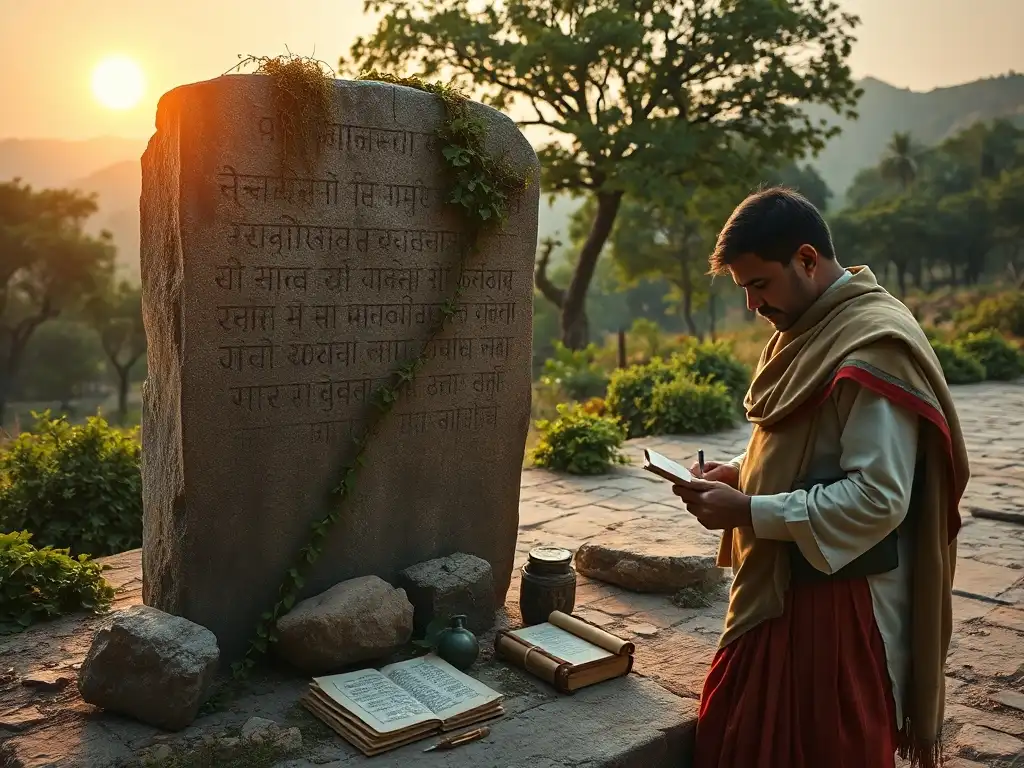
The study of ancient Indian inscriptions presents numerous challenges that historians and epigraphists must navigate to uncover the rich narratives of the subcontinent's past. These challenges stem from various factors, including preservation issues, the complex nature of ancient scripts, and the contextual interpretations of the inscriptions themselves. Understanding these obstacles is vital for advancing our knowledge of ancient Indian inscriptions history.
Preservation Issues of Ancient Inscriptions
Preservation is one of the foremost challenges faced by researchers studying ancient Indian inscriptions. Many inscriptions are inscribed on materials such as stone, metal, or pottery, which can deteriorate over time due to environmental factors.
- Weathering and Erosion: Outdoor inscriptions, particularly those on stone, are prone to weathering and erosion caused by natural elements such as rain, wind, and temperature fluctuations. This deterioration can lead to the loss of vital information.
- Human Activities: Activities such as urban development, agricultural expansion, and vandalism can further jeopardize the integrity of ancient inscriptions. Many sites have been repurposed or destroyed, leading to a loss of invaluable historical data.
- Limited Access: Some inscriptions are located in remote or politically sensitive areas, limiting access for researchers. This isolation can hinder the collection of data, analysis, and preservation efforts.
- Technological Limitations: Although advanced technologies such as 3D scanning and digital imaging have improved preservation methods, many inscriptions have not yet been documented using these techniques. The lack of technological application can lead to missed opportunities for better preservation and understanding.
To address these preservation issues, initiatives such as the documentation of inscriptions through photography and digital archives are being implemented. Collaborative efforts among governments, local communities, and researchers are essential to protect and preserve these cultural artifacts for future generations.
Deciphering Ancient Scripts: Techniques and Challenges
Deciphering the scripts used in ancient Indian inscriptions poses significant challenges due to their complexity and the variability of languages employed throughout different periods.
- Diverse Scripts and Languages: Ancient Indian inscriptions encompass a variety of scripts, including Brahmi, Kharosthi, and later, regional scripts like Devanagari and Tamil. Each script has its own unique characteristics, making it crucial for researchers to be well-versed in multiple writing systems.
- Fragmentary Evidence: Many inscriptions are incomplete or fragmented, presenting a major hurdle in understanding their full context and meaning. The loss of even a few characters can lead to misinterpretations of the text.
- Contextual Interpretation: The meanings of words and phrases can change significantly based on their context. Inscriptions often reflect local dialects, cultural nuances, and historical events that may not be immediately apparent to modern scholars. Understanding the socio-political and cultural backdrop of the time is essential for accurate interpretation.
- Technological Approaches: Techniques such as epigraphic analysis and computational linguistics are increasingly utilized to decipher ancient scripts. However, the complexity of these methods can require specialized knowledge and resources that may not always be accessible.
The deciphering of ancient Indian inscriptions necessitates a multi-faceted approach that combines linguistic expertise with advanced technological tools. Continued research and collaboration among scholars are key to overcoming these challenges and unlocking the rich narratives embedded in ancient Indian inscriptions history.
Conclusion: The Importance of Studying Ancient Indian Inscriptions
The study of ancient Indian inscriptions is a critical component in unraveling the intricate tapestry of India's past. As primary sources of information, these inscriptions provide invaluable insights into various aspects of ancient Indian civilizations, including their governance, social structures, languages, and cultural practices. By examining the content and context of these inscriptions, researchers can piece together a more comprehensive understanding of ancient Indian history.
Furthermore, ancient Indian inscriptions serve as a bridge between the past and present, allowing modern scholars to trace the evolution of languages, scripts, and cultural practices over millennia. The meticulous study of these inscriptions not only enriches our knowledge of historical events but also highlights the enduring legacy of ancient Indian civilizations in shaping contemporary Indian society.
Contributions to Understanding Ancient Indian History
Ancient Indian inscriptions have made significant contributions to our understanding of various historical dimensions. Here are some key areas where these inscriptions play a vital role:
- Political History: Many inscriptions record royal edicts, treaties, and proclamations, shedding light on the political landscape of ancient India. For instance, the Ashoka Edicts provide insights into the Mauryan Empire's governance and the principles of Dharma that guided it.
- Cultural Practices: Inscriptions often reveal information about religious practices, societal norms, and artistic expressions. The Brahmi and Kharosthi inscriptions illustrate the spread of Buddhism and the patronage of various dynasties.
- Linguistic Development: The evolution of language can be tracked through inscriptions, which show the transition from early scripts to more sophisticated forms. For example, the transition from Brahmi to Devanagari reflects significant linguistic shifts that occurred over centuries.
- Commerce and Trade: Trade-related inscriptions, such as those found in Tamil Nadu, provide evidence of ancient trade routes and economic exchanges with other civilizations, including the Greeks and Romans.
Future Directions in Inscriptions and Epigraphy Research
The field of inscriptions and epigraphy is constantly evolving, with new methodologies and technologies paving the way for innovative research. Here are some future directions for the study of ancient Indian inscriptions:
- Digital Epigraphy: The advent of digital technology allows researchers to create detailed databases and digital archives of inscriptions. This not only facilitates easier access to primary sources but also enables advanced analytical techniques, such as image processing and 3D modeling.
- Interdisciplinary Approaches: Collaborations between historians, linguists, archaeologists, and computer scientists can lead to more comprehensive studies. By integrating various disciplines, scholars can explore multifaceted questions related to ancient Indian inscriptions.
- Field Surveys and Discoveries: Ongoing archaeological fieldwork continues to uncover new inscriptions that can reshape our understanding of ancient Indian history. Field surveys in lesser-explored regions may yield significant findings that challenge existing narratives.
- Preservation and Conservation: As ancient inscriptions face threats from environmental factors and human activity, research into preservation techniques is crucial. Developing methods to protect and conserve these inscriptions ensures that future generations can continue to study and learn from them.
The ongoing exploration of ancient Indian inscriptions not only enriches our historical knowledge but also opens new avenues for understanding the complexities of ancient Indian civilizations. The continued study of these inscriptions is essential for preserving the legacy of India's rich history.
Frequently Asked Questions
What are ancient Indian inscriptions?
Ancient Indian inscriptions are written records found on various materials like stone, metal, and pottery, providing insights into the history and culture of ancient Indian civilizations.
Why are inscriptions important in studying ancient Indian history?
Inscriptions serve as primary sources that offer valuable information about politics, religion, and society, helping historians piece together the narrative of ancient Indian civilizations.
What languages were used in ancient Indian inscriptions?
Inscriptions were often written in Sanskrit, Prakrit, and Pali, reflecting the linguistic diversity of ancient India and the influence of various regional dialects.
How do inscriptions from different regions compare?
A comparative study reveals regional variations in scripts and languages, showcasing the cultural diversity of ancient Indian civilizations and their unique contributions to the subcontinent's heritage.
What is the significance of the Gupta Empire in inscriptions?
The Gupta Empire is known for its flourishing art and literature, with inscriptions from this period reflecting advancements in administration, religion, and science, marking an important chapter in ancient Indian inscriptions history.
Final Reflection: The Timeless Legacy of Ancient Indian Inscriptions
The exploration of ancient Indian inscriptions reveals not only the rich tapestry of history but also the profound connections that bind us to our past. In an era where digital communication dominates, the significance of these inscriptions serves as a reminder of the enduring power of written language and its ability to convey cultural identity, beliefs, and societal values. The stories etched in stone and metal resonate with us today, urging us to appreciate the depth of our heritage and the lessons it imparts.
The impact of ancient Indian inscriptions extends far beyond their historical context; they continue to shape our cultural and social landscape. As we delve into the intricacies of these inscriptions, we uncover narratives that reflect the evolution of thought, art, and governance in the subcontinent. The words of the past echo in our present, influencing contemporary discourse and inspiring a renewed interest in our roots. History is not a burden on the memory but an illumination of the soul.
This quote encapsulates the essence of our engagement with history, reminding us that the study of ancient inscriptions is not merely academic but a journey towards self-discovery and cultural pride.
As we reflect on the lessons drawn from ancient Indian inscriptions, I invite you to consider how these insights can inform your own life. Embrace the richness of your heritage and let it guide your understanding of the world around you. Whether through personal exploration or community engagement, take the time to connect with the narratives that have shaped your identity. The past is not a distant memory; it is a living part of who we are, and by honoring it, we pave the way for a more enlightened future.
Unveil the Rich Tapestry of Ancient Indian Scripts!
Thank you for exploring the fascinating world of ancient Indian inscriptions with us! We hope you’ve gained valuable insights into the scripts that shaped the subcontinent's history. Now is the time to take action and deepen your understanding even further!
- Dive deeper into the world of scripts by visiting local museums or online archives to see inscriptions firsthand.
- Share your knowledge with friends and family—start a discussion about what you learned and its significance in today’s context.
- Join a community of history enthusiasts by participating in forums or social media groups dedicated to ancient Indian history.
Which script or inscription intrigued you the most? Consider how its historical significance continues to influence culture today. Let’s discuss!