
The Historical Significance of the IndoGreek Coinage System

Welcome to Ancient India History, where we delve into the captivating tapestry of India's past, exploring the rich and diverse cultures that shaped one of the world's oldest civilizations. Today, we invite you to uncover the historical significance of the IndoGreek coinage system, a remarkable intersection of cultures that reveals the intricate interactions between ancient India and its neighbors.
What secrets do these coins hold about trade, economy, and cultural exchange during a pivotal era? Join us as we embark on this enlightening journey through time, and discover how the legacy of IndoGreek coinage continues to influence our understanding of ancient interactions and their enduring impact on modern society.
Introduction to IndoGreek Coinage
The IndoGreek coinage system represents a fascinating intersection of ancient Indian and Greek civilizations, revealing the intricate tapestry of cultural exchange and economic interaction that characterized this era. As the IndoGreeks established their presence in the Indian subcontinent, they brought with them not only their political ideologies but also their sophisticated monetary systems. This article delves into the significance of IndoGreek coinage, exploring how it influenced trade, culture, and the historical narrative of both civilizations. Understanding the IndoGreek coinage system provides vital insights into the complexities of Indian-Greek relations and the broader implications for ancient economic practices.
Overview of IndoGreek Coinage System
The IndoGreek coinage system emerged during the reign of the IndoGreek kings, primarily from the 3rd century BCE to the 1st century CE. These coins were predominantly made of silver and featured intricate designs that combined Greek artistic styles with Indian motifs. The coins often depicted the kings, deities, and symbols that were significant in both cultures, making them a unique representation of this historical fusion.
- Key Features of IndoGreek Coins:
- Materials: Mainly silver, with some copper and bronze coins.
- Designs: Greek inscriptions alongside Indian symbols.
- Weight Standards: Coins were minted to specific weight standards, facilitating trade across regions.
The IndoGreek coinage not only served as a medium of exchange but also acted as a vehicle for cultural expression, showcasing the artistic and ideological values of the time.
Importance of Coinage in Ancient Civilizations
Coinage played a crucial role in the economic systems of ancient civilizations, acting as a standardized medium for trade and commerce. The introduction of coins revolutionized the way transactions occurred, offering several advantages:
- Facilitated Trade: Coins allowed for easier trade, as they provided a commonly accepted medium of exchange.
- Economic Growth: The circulation of coins stimulated economic growth by enabling merchants to conduct business more efficiently.
- Cultural Exchange: Coins often carried images and inscriptions that reflected the culture and values of the issuing authority, promoting cultural exchange.
The significance of coinage in ancient societies extends beyond mere economic implications; it also reflects the political and cultural dynamics at play during those times.
Historical Context of IndoGreek Coinage
To fully appreciate the significance of the IndoGreek coinage system, it is essential to understand the historical backdrop against which it developed. The emergence of the IndoGreek Kingdom was a pivotal moment in the history of Indian-Greek relations, leading to profound changes in trade, culture, and governance.
Emergence of the IndoGreek Kingdom
The IndoGreek Kingdom was established following the conquests of Alexander the Great and the subsequent fragmentation of his empire. As Greek rulers settled in regions of northwestern India, they established a series of city-states that integrated Greek and Indian governance structures. This cultural amalgamation led to significant developments in art, architecture, and commerce.
- Key IndoGreek Kings:
- Menander I: Renowned for his military prowess and patronage of Buddhism.
- Demetrius I: Noted for his extensive territorial conquests in India.
These rulers played a vital role in promoting trade and cultural exchanges, which laid the groundwork for the coinage system that would emerge.
Influence of Hellenistic Culture on Indian Society
The IndoGreek period marked a significant influence of Hellenistic culture on Indian society, impacting various aspects from art to philosophy. The integration of Greek aesthetics into Indian art forms can be seen in the sculptures and coins of the time.
- Cultural Synthesis:
- Art: Greco-Buddhist art emerged, blending Greek artistic techniques with Buddhist themes.
- Philosophy: Exchanges in philosophical ideas contributed to the cross-cultural discourse that enriched both societies.
The IndoGreek coinage system, therefore, did not merely serve economic purposes; it also acted as a catalyst for cultural synthesis and historical significance, reflecting the dynamic interactions between these ancient civilizations.
The Features of IndoGreek Coinage
IndoGreek coinage represents a fascinating fusion of Hellenistic and Indian cultures, characterized by distinct features that reflect both artistic and economic influences of the time. These coins were primarily produced during the IndoGreek period, which spanned from the 2nd century BCE to the 1st century CE, following the conquests of Alexander the Great and the establishment of Greek rule in parts of northwest India. The IndoGreek coinage system is notable for its diverse range of designs, materials, and minting techniques, each of which played a pivotal role in its significance to trade and cultural exchange.
One of the most striking aspects of IndoGreek coinage is the intricate designs and iconography that adorn the coins. They often feature Greek deities, local symbols, and inscriptions in both Greek and Brahmi scripts, showcasing the syncretic nature of this cultural interaction. The use of various metals, including silver and bronze, further illustrates the monetary practices and economic conditions of the time. Additionally, the minting techniques employed, which included both die-striking and casting, reflect a sophisticated understanding of metallurgy and craftsmanship.
Design and Iconography of IndoGreek Coins
The design and iconography of IndoGreek coins reveal the blend of Greek and indigenous artistic traditions. Many coins prominently feature images of Greek deities such as Zeus and Athena, alongside local Indian deities, thus symbolizing the cultural amalgamation of the period. This hybridization not only exemplifies the artistic influences at play but also served as a means of legitimizing Greek rule over Indian territories.
The inscriptions on these coins are equally significant. They are often bilingual, featuring Greek on one side and Brahmi on the other. This duality reflects the interaction between the Greek rulers and the local populace, facilitating communication and trade. The presence of various symbols, such as the elephant and the bull, further emphasizes the local cultural elements integrated into the coinage. These designs helped to establish a sense of identity and continuity amidst the changing political landscape.
Materials and Minting Techniques Used in IndoGreek Coinage
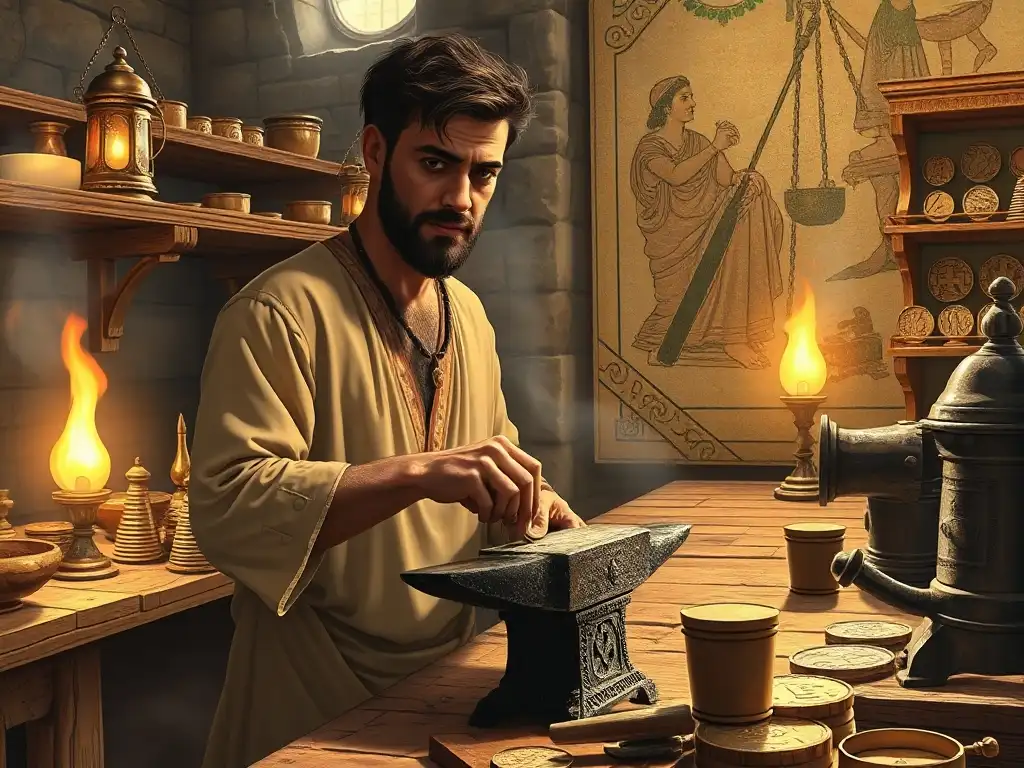
IndoGreek coins were typically made from high-quality silver and bronze, with silver coins being more prevalent due to their value and the economic practices of the time. The silver drachm, for instance, became a standard unit of currency, widely used in trade across the Indian subcontinent. The choice of materials not only indicates the economic conditions but also reflects the craftsmanship involved in their production.
The minting techniques employed during this era were advanced for their time. Coins were primarily produced using the die-striking method, where a blank metal disc was placed between two engraved dies and struck with a hammer, creating a detailed impression. This technique allowed for mass production of coins, facilitating their circulation and use in trade. Additionally, some coins were cast using molds, which allowed for variations in design and size, further contributing to the diversity of the IndoGreek coinage system.
The Role of IndoGreek Coinage in Trade
IndoGreek coinage played a crucial role in facilitating trade within and beyond the Indian subcontinent. The introduction of standardized coinage allowed for easier transactions and the establishment of a more cohesive trading environment. As these coins circulated, they became a medium of exchange that transcended local barter systems, promoting economic interactions across various regions.
IndoGreek Coinage and Economic Interactions
The economic interactions fostered by IndoGreek coinage were significant in enhancing trade relationships between different cultures. The widespread use of IndoGreek coins in commercial activities not only simplified trade but also encouraged cross-cultural exchanges. Merchant communities, including both Greek and Indian traders, began to utilize these coins, leading to a more extensive network of trade routes connecting the Mediterranean with the Indian Ocean.
Moreover, the IndoGreek coinage system facilitated the movement of goods such as textiles, spices, and precious metals. This increased trade activity contributed to the prosperity of urban centers, where merchants and craftsmen thrived, and laid the groundwork for economic systems that would influence later periods in Indian history.
The Impact of Coinage on Trade Routes and Commerce
The impact of IndoGreek coinage on trade routes and commerce cannot be understated. The introduction of coinage allowed for the establishment of fixed-value transactions, which simplified trade and reduced the risks associated with barter systems. As a result, trade routes flourished, connecting regions such as the Indo-Gangetic plains with the Mediterranean and beyond.
Key trade routes, including the Silk Road and maritime pathways, witnessed increased traffic due to the standardized currency provided by IndoGreek coins. This not only enhanced local economies but also promoted cultural exchanges, as ideas, art, and technologies were shared along these routes. The legacy of the IndoGreek coinage system thus extends far beyond its economic functions, influencing the cultural and historical landscapes of ancient India and its interactions with the wider world.
IndoGreek Coinage Significance in Cultural Exchange
The IndoGreek coinage system represents a fascinating chapter in the history of cultural exchange between India and Greece. As the Indo-Greek kingdoms emerged following the conquests of Alexander the Great, they facilitated a blend of cultures, seen prominently in their coinage. These coins were not merely a medium of exchange but also a canvas that depicted the synthesis of artistic styles, religious beliefs, and philosophical ideas from both civilizations. The significance of IndoGreek coinage lies in its role as a vital conduit for cultural dialogue and economic interaction, which enriched the social fabric of ancient India.
Cultural Exchange through Coinage Designs
IndoGreek coins are renowned for their intricate designs that illustrate the melding of Hellenistic and Indian artistic elements. On one side, coins typically featured Greek deities or kings, showcasing realistic portraits that were a hallmark of Greek artistry. Conversely, the reverse side often depicted symbols and motifs prevalent in Indian culture, such as the trident (trishula) or animals revered in Hinduism and Buddhism.
This dual representation on coins is a testament to the cultural exchange that occurred during this period. Merchants and travelers engaged in trade brought not only goods but ideas and cultural practices. Coins served as a means for disseminating these ideas, as they circulated widely across the regions, fostering a deeper understanding and appreciation of each other’s cultures. The use of bilingual inscriptions in Greek and local languages further illustrates the importance of these coins in bridging communication between the two civilizations.
The Reflection of IndoGreek Religious and Philosophical Ideas
The IndoGreek coinage system is also significant for its embodiment of religious and philosophical ideas that transcended geographical boundaries. Coins often depicted religious symbols, such as the image of Buddha, which signifies the acceptance and integration of Buddhism in the Hellenistic world. This reflects a broader philosophical dialogue that occurred as Greek thought encountered Indian spirituality.
The representation of deities from both cultures on the coins highlights a syncretic approach to religion, where the divine was not confined to one tradition but was celebrated in multiple forms. This blending of beliefs fostered a rich tapestry of thought, influencing the development of philosophy in both regions. The IndoGreek coins thus serve as historical artifacts that provide insights into the spiritual and ideological exchanges that shaped the societal values of the time.
The Legacy of IndoGreek Coinage
The legacy of IndoGreek coinage extends far beyond its immediate historical context; it laid the groundwork for subsequent developments in Indian numismatics and cultural interactions. The practices and designs introduced by the IndoGreeks influenced later coinage and trade practices in the Indian subcontinent, marking a pivotal moment in the evolution of Indian economic systems.
Influence on Subsequent Indian Coinage Systems
The IndoGreek coinage system established a precedent for later Indian dynasties, particularly during the Kushan and Gupta periods. The introduction of new metal compositions, such as gold and silver, and the widespread use of standard weights and measures can be traced back to the practices of the IndoGreeks. The artistic techniques and motifs seen in IndoGreek coins continued to inspire Indian coinage, leading to the creation of uniquely Indian styles that incorporated local iconography and themes.
Moreover, the practice of issuing coins to commemorate rulers and significant events became more prevalent, as did the use of inscriptions that conveyed political messages. This innovation in coinage not only facilitated trade but also reinforced the authority and legitimacy of subsequent rulers, showing how IndoGreek practices had a lasting impact on the political landscape of ancient India.
IndoGreek Coinage in Historical Narratives and Scholarship
In modern scholarship, IndoGreek coinage has become a pivotal point of study for historians and numismatists alike. The coins are valued not just as currency but as historical documents that narrate the complexities of Indo-Greek relations. They provide critical insights into the socio-economic conditions, cultural interactions, and political dynamics of the time.
Scholars analyze the imagery and inscriptions on these coins to reconstruct historical narratives, offering a glimpse into the lives and beliefs of the people who lived during this era. The IndoGreek coinage system thus occupies a significant place in academic discourse, serving as a key resource for understanding the broader implications of cultural exchange and interaction in ancient civilizations. The significance of IndoGreek coinage continues to resonate in contemporary studies, illustrating the enduring legacy of these ancient connections.
Conclusion: The Enduring Significance of IndoGreek Coinage
The IndoGreek coinage system represents a pivotal intersection of Indian and Greek cultures, showcasing not only the economic interactions of the time but also the profound cultural exchanges that influenced both civilizations. The coins produced during this era served multiple purposes, from facilitating trade across vast regions to acting as a medium of artistic expression and political propaganda. Their inscriptions and iconography reveal insights into the socio-political landscape of ancient India and the Hellenistic world, depicting deities, rulers, and cultural motifs that signify a blend of traditions.
In essence, the significance of IndoGreek coinage extends beyond mere monetary function; it encapsulates a historical narrative of cross-cultural influence, economic integration, and artistic innovation. This legacy continues to be a vital area of study, offering scholars a lens through which to analyze the complexities of ancient interactions and the evolution of coinage as a cultural artifact.
Summary of Key Points on IndoGreek Coinage Significance
- Cultural Exchange: The IndoGreek coinage system illustrates the blending of Indian and Greek cultures, showcasing how trade and conquest facilitated the exchange of ideas, art, and religious beliefs.
- Economic Impact: Coins served as a standardized currency that promoted trade across the subcontinent and beyond, effectively integrating disparate economies into a more cohesive marketplace.
- Artistic Heritage: The artistic styles evident in IndoGreek coins reflect a synthesis of Greek and Indian artistic traditions, influencing subsequent coinage in the region.
- Political Statements: The imagery and inscriptions on coins often conveyed political messages, celebrating rulers and their achievements, thus playing a crucial role in statecraft and public perception.
Final Thoughts on the Impact of IndoGreek Coinage in Historical Studies
The IndoGreek coinage system serves as a rich source for historians and archaeologists alike, providing tangible evidence of the interconnectedness of ancient civilizations. Its study not only enhances our understanding of the economic systems in place but also sheds light on the cultural dialogues that shaped the societies involved. As researchers continue to uncover and analyze these artifacts, the IndoGreek coinage system remains a vital component in the broader narrative of ancient Indian history, inviting further exploration and appreciation of its enduring legacy.
References and Further Reading on IndoGreek Coinage Significance
Recommended Books and Articles
- "Indian Coins and Their Values" by J. C. D. N. Pandey: This book delves into the historical context of Indian coinage, including the IndoGreek period, offering insights into their significance and valuation.
- "The Indo-Greek Kingdom" by John M. Rosenfield: This exploration of the Indo-Greek Kingdom provides a comprehensive understanding of the cultural and political dynamics during the period of coinage.
- "Coinage and State Formation in Early India" by R. K. Sharma: This work discusses the role of coinage in state formation and its significance in the Indian subcontinent.
Online Resources for Further Exploration of Ancient Indian Coinage
- Digital South Asia Library: A comprehensive online resource offering access to a variety of texts and images related to ancient Indian history and coinage.
- The British Museum Collection: Their online database includes a vast array of ancient coins, including those from the IndoGreek period, providing detailed descriptions and historical context.
- CoinArchives: A searchable database for ancient coins, where users can find specific IndoGreek coins along with auction results and detailed descriptions, facilitating deeper research into their significance.
These resources present both foundational knowledge and advanced insights into the IndoGreek coinage system, making them invaluable for anyone interested in exploring this fascinating aspect of ancient history.
- Introduction to IndoGreek Coinage
- Historical Context of IndoGreek Coinage
- The Features of IndoGreek Coinage
- Design and Iconography of IndoGreek Coins
- Materials and Minting Techniques Used in IndoGreek Coinage
- The Role of IndoGreek Coinage in Trade
- IndoGreek Coinage Significance in Cultural Exchange
- The Legacy of IndoGreek Coinage
- Conclusion: The Enduring Significance of IndoGreek Coinage
- References and Further Reading on IndoGreek Coinage Significance
Frequently Asked Questions
What was the IndoGreek coinage system?
The IndoGreek coinage system refers to the currency system established by the Indo-Greek rulers in ancient India, which blended Greek and Indian influences in its design and usage.
Why is IndoGreek coinage considered significant?
The IndoGreek coinage is significant because it represents a fusion of cultures and served as a medium for trade, facilitating economic interactions between India and Greece.
How did the IndoGreek coinage influence later Indian currency?
The IndoGreek coinage introduced various artistic elements and iconography that influenced subsequent Indian coinage, promoting a legacy of cultural exchange in the region.
What are some key features of IndoGreek coins?
IndoGreek coins often featured Greek inscriptions, portraits of rulers, and Hellenistic designs, showcasing the blend of Greek and Indian artistic traditions.
How did the IndoGreek coinage affect trade in ancient India?
The IndoGreek coinage facilitated trade across regions by providing a stable and widely accepted medium of exchange, enhancing economic connectivity between different cultures and territories.
Final Reflection: The Enduring Legacy of IndoGreek Coinage Significance
The IndoGreek coinage system stands as a testament to the rich tapestry of cultural exchange and economic innovation that shaped ancient civilizations. In today's globalized world, where currencies and trade networks continue to evolve, understanding the historical significance of such systems helps us appreciate the foundations of our modern economies. The intricate designs and diverse influences of IndoGreek coins remind us that commerce has always been a bridge between cultures, fostering connections that transcend borders and time.
The impact of IndoGreek coinage extends far beyond its immediate economic implications; it has profoundly influenced our cultural and social landscapes. As we examine the artistry and symbolism embedded in these coins, we recognize their role as vehicles of identity and power. The coins not only facilitated trade but also served as a means of propaganda, reflecting the values and aspirations of the societies that minted them. Coins are a reflection of the society that produces them, embodying its values, beliefs, and historical narratives.
This observation underscores the importance of studying such artifacts, as they provide insight into the complexities of human interaction and the shared heritage that binds us.
As we reflect on the lessons of IndoGreek coinage, let us consider how we can apply these insights to our own lives. In a world that often feels divided, we are called to embrace the spirit of exchange and collaboration that these ancient coins represent. I invite you to explore the connections in your own community, to engage with diverse perspectives, and to recognize the value of shared experiences. By doing so, we honor the legacy of the IndoGreek coinage system and contribute to a more interconnected and understanding world.
Unveil the Treasures of Indo-Greek Coinage!
Thank you for diving into the fascinating world of the Indo-Greek coinage system with us! You’ve gained valuable insights into how this ancient marvel shaped economic and cultural exchange. Now, it’s time to take action and further explore this rich history!
Here’s how you can deepen your understanding and appreciation of Indo-Greek coins:
- Join a local coin club or online forum to connect with other enthusiasts and collectors—you never know what unique insights you might uncover!
- Visit a museum or exhibition dedicated to ancient coinage to see these historical treasures firsthand and learn from experts in the field.
- Share this article with friends or on social media; together, you can spark engaging discussions about the impact of Indo-Greek coinage on our modern world!
What new insight about Indo-Greek coinage surprised you the most, and how do you believe it influences our understanding of ancient trade?