
The Influence of Indian Mathematics on Greek Geometry


Welcome to Ancient India History, where we embark on a journey through the remarkable tapestry of ancient Indian civilizations. Today, we delve into a fascinating intersection of intellect and culture in our article on "The Influence of Indian Mathematics on Greek Geometry." Discover how the profound contributions of Indian scholars shaped the very foundations of mathematical thought and sparked a transformative dialogue with Greek thinkers.
What secrets of geometry lie within the ancient texts? Join us as we uncover the intricate connections that reveal the brilliance of these two great civilizations and their lasting impact on the world. Dive in and explore the wonders that await!

Mathematics is often regarded as a universal language, transcending cultural and geographical boundaries. The intricate relationship between Indian mathematics and Greek geometry serves as a fascinating example of how knowledge can evolve and adapt through cross-cultural exchanges. This article delves into the significant contributions of Indian mathematicians and their profound impact on Greek geometry, illustrating how these two ancient civilizations influenced one another and advanced the field of mathematics. By exploring the intricacies of their mathematical principles, we can appreciate the rich tapestry of ideas that shaped the mathematical landscape of the ancient world.
Introduction to Indian Mathematics and Greek Geometry
Overview of Indian Mathematics
Indian mathematics is characterized by its early and profound contributions to various mathematical concepts, including arithmetic, algebra, and geometry. Key developments emerged during the Vedic period, with texts such as the Sulba Sutras, which provided rules for geometric constructions necessary for altar building. Indian mathematicians like Aryabhata and Brahmagupta further advanced mathematical concepts, introducing innovations such as the concept of zero and the decimal system. The methods employed in Indian mathematics were not only practical but also deeply philosophical, reflecting a unique interplay between spirituality and mathematical thought.
Overview of Greek Geometry
Greek geometry, on the other hand, is often encapsulated by the works of renowned mathematicians such as Euclid, Pythagoras, and Archimedes. The Greeks formalized geometry as a deductive science, establishing axioms and theorems that laid the foundation for modern mathematics. Euclid's seminal work, Elements, systematically compiled the geometric knowledge of his time and introduced a rigorous methodology that emphasized logical reasoning. The Greeks excelled in the abstraction of geometric concepts, which influenced various fields, including astronomy and physics.
The Importance of Cross-Cultural Exchange
The interaction between Indian mathematics and Greek geometry exemplifies the significance of cross-cultural exchange in the development of knowledge. Through trade routes and scholarly exchanges, ideas traversed borders, enriching both civilizations. This blending of mathematical traditions not only advanced theoretical understanding but also facilitated practical applications in commerce, architecture, and astronomy. Understanding the nuances of this exchange offers valuable insights into how mathematics evolved in response to cultural interactions.
Historical Context of Indian Mathematics
Key Contributions of Indian Mathematicians
Indian mathematicians made several groundbreaking contributions that significantly influenced Greek geometry. For instance, Aryabhata's work on trigonometry and the approximation of π (pi) provided essential tools that were later integrated into Greek mathematical practices. Similarly, Brahmagupta's rules for solving quadratic equations and his contributions to arithmetic operations laid foundational concepts that would resonate with Greek scholars.
The Role of the Gupta Empire in Advancing Mathematics
The Gupta Empire (circa 320-550 CE) is often referred to as the Golden Age of India, marked by remarkable advancements in science, art, and mathematics. During this period, intellectual pursuits flourished, leading to significant mathematical developments. Scholars like Aryabhata and later mathematicians such as Bhaskara II expanded upon earlier works, refining techniques in algebra and geometry. The Gupta period not only nurtured mathematical innovation but also facilitated the exchange of knowledge with other cultures, including the Greeks.
Notable Texts in Indian Mathematics
Several notable texts from ancient India played a pivotal role in shaping mathematical thought, both in India and beyond. The Aryabhatiya by Aryabhata is a cornerstone of Indian mathematics, presenting a comprehensive system of mathematics that includes arithmetic, algebra, and astronomy. The Brahmasphutasiddhanta by Brahmagupta further explores concepts of number theory and geometry, providing insights that would later influence Greek mathematicians. These texts serve as a testament to the rich mathematical heritage of India and its lasting impact on the broader mathematical community.
Historical Context of Greek Geometry
The historical context of Greek geometry is rich and multifaceted, primarily situated between the 6th and 3rd centuries BCE. This era marked a significant departure from earlier mathematical practices, moving towards more formalized approaches that emphasized logical reasoning and proof. Greek geometry was heavily influenced by pre-existing mathematical traditions, including those from the Babylonians and Egyptians, who had already laid the groundwork for practical geometry through their applications in land measurement and architecture.
Greek mathematicians such as Thales and Pythagoras began to explore geometric concepts not merely as practical tools but as abstract entities, establishing the foundations for rigorous mathematical frameworks. The introduction of axiomatic systems, particularly through the works of Euclid in his seminal text, "Elements," further solidified these geometric principles. This text, which systematically compiled and built upon earlier discoveries, not only influenced mathematics in the Greek world but also served as a cornerstone in the development of geometry for centuries to come.
Key Figures in Greek Geometry
Several key figures played a pivotal role in shaping Greek geometry, contributing to its development and the establishment of its principles.
- Thales of Miletus: Often regarded as the first mathematician, Thales is credited with several geometric discoveries, such as the concept that a circle is bisected by its diameter.
- Pythagoras: Known for the Pythagorean theorem, Pythagoras and his followers deeply explored the relationships between numbers and geometry, emphasizing the importance of numerical relationships in geometric forms.
- Euclid: Often referred to as the "Father of Geometry," Euclid's work in "Elements" laid out the axiomatic method that became the standard for mathematical proofs. His systematic approach to geometry established a comprehensive framework that influenced future generations.
- Archimedes: A mathematician and inventor, Archimedes made significant contributions to geometry, particularly in calculating areas and volumes of figures, advancing the understanding of the circle and the concept of infinity.
- Apollonius of Perga: Known for his work on conic sections, Apollonius expanded the geometric discourse and provided insights that would later influence both mathematics and astronomy.
The Development of Geometric Theories in Ancient Greece

The development of geometric theories in ancient Greece was characterized by a systematic approach to understanding space and forms. Early developments were practical, focusing on land measurement and construction, but as Greek thought evolved, so did the abstraction of these concepts.
The Greeks transitioned from empirical observations to a deductive reasoning model, where axioms and theorems provided a logical structure for geometric exploration. This shift allowed mathematicians to prove relationships and properties of shapes, such as the relationships found in triangles and circles, leading to the establishment of theorems that are still recognized today.
The work of Euclid encapsulated this shift, as he organized existing knowledge into a coherent framework, providing definitions, postulates, and a series of propositions that followed logically. This method not only advanced the field of geometry but also laid the groundwork for future mathematical disciplines, influencing thinkers well beyond ancient Greece.
Influence of Earlier Civilizations on Greek Geometry
Greek geometry did not emerge in isolation; it was profoundly influenced by earlier civilizations. The Babylonians, for example, utilized a base-60 number system that facilitated complex calculations and geometric constructions. They were adept at solving problems related to area and volume, which provided a practical foundation for geometric principles.
The Egyptians also contributed significantly to geometric knowledge, particularly through their use of geometry in the construction of pyramids and other architectural marvels. Their understanding of ratios and proportions informed Greek mathematicians as they began to explore similar concepts in their own work.
These influences fostered an environment where Greek mathematicians could build upon established knowledge, leading to innovations that merged earlier practices with new ideas, ultimately propelling the discipline of geometry into new realms of understanding.
Interaction Between Indian Mathematics and Greek Geometry
The interaction between Indian mathematics and Greek geometry marks a significant chapter in the history of mathematical thought, highlighting the flow of ideas and knowledge across cultures. From around the 3rd century BCE, as trade routes expanded, so too did the exchange of intellectual concepts. Indian mathematicians developed advanced mathematical systems, including concepts of zero, the decimal system, and innovative approaches to algebra and geometry, which significantly influenced Greek thought.
The transmission of knowledge was not merely one-sided; Greek texts also made their way to India, where they were assimilated and further developed. This cross-pollination of ideas fostered a rich dialogue between the two cultures, leading to advancements in both areas of study.
Routes of Cultural Exchange Between India and Greece
The routes of cultural exchange between India and Greece were multifaceted, involving trade, conquest, and the movement of scholars. Major trade routes, such as the Silk Road and maritime pathways, facilitated not only the exchange of goods but also ideas. The encounters between Hellenistic civilization and Indian cultures, particularly during the era of Alexander the Great, opened up avenues for intellectual discourse.
In addition to trade, the establishment of the Greco-Bactrian Kingdom and subsequent Indo-Greek kingdoms further solidified these exchanges. Scholars and mathematicians traveled between these regions, bringing with them their own mathematical traditions and practices, which led to greater collaboration and synthesis of ideas.
The Role of Trade in Spreading Mathematical Ideas
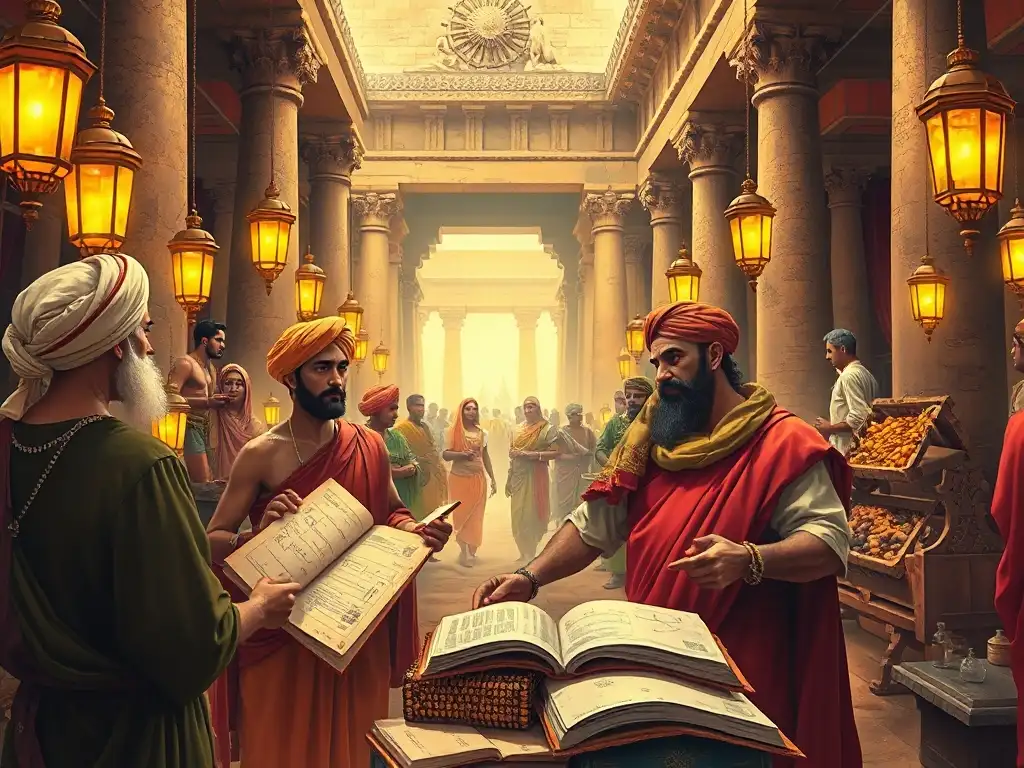
Trade played a crucial role in the dissemination of mathematical ideas between India and Greece. As merchants traveled along established trade routes, they carried not only goods but also knowledge. The interaction between traders often led to discussions about various mathematical practices, including calculations for trade, navigation, and land measurement.
Indian traders, known for their sophisticated understanding of mathematics, introduced concepts such as the decimal system to their Greek counterparts. This exchange fostered an environment where innovative ideas could flourish, ultimately influencing the development of both cultures' mathematical frameworks.
Key Instances of Indian Influence on Greek Geometric Thought
Several key instances illustrate the influence of Indian mathematics on Greek geometric thought. One notable example is the introduction of the concept of zero and the decimal system, which revolutionized mathematical calculation and representation. This concept, originating from Indian mathematicians, allowed for more complex calculations and the development of algebraic ideas.
Furthermore, the Indian approach to geometry, particularly in the context of surveying and architecture, found its way into Greek practices. The use of geometric principles in ancient Indian texts, such as the Sulbasutras, highlighted methods for constructing altars and other structures, demonstrating a practical application of geometric knowledge. These practices likely influenced Greek architects and mathematicians, showcasing a blend of cultural knowledge that enriched both traditions.
The interaction between Indian mathematics and Greek geometry represents a pivotal moment in the development of mathematical thought, characterized by a rich exchange of ideas that transcended cultural boundaries.
Comparative Analysis of Indian Mathematics and Greek Geometry
The relationship between Indian mathematics and Greek geometry is a profound example of cross-cultural exchange that significantly shaped the evolution of mathematical thought. Both traditions display remarkable sophistication but approach mathematical problems from different perspectives. Indian mathematics, which flourished particularly during the Gupta period, emphasized computational techniques and practical applications. In contrast, Greek geometry, epitomized by figures like Euclid and Archimedes, focused on deductive reasoning and abstract theorization.
A comparative analysis reveals that while both traditions contributed substantially to mathematics, they did so through distinct methodologies. Indian mathematicians, such as Aryabhata and Brahmagupta, laid the groundwork for concepts like zero and the decimal system, which provided a robust framework for calculations. Greek mathematicians, on the other hand, were more concerned with the properties of geometric figures, establishing axioms and theorems that formed the basis of modern geometry.
Similarities Between Indian Mathematical Concepts and Greek Geometric Principles
Despite their differing approaches, several similarities exist between Indian mathematical concepts and Greek geometric principles. Both traditions utilized a systematic approach to problem-solving, although the nature of the problems varied. For instance:
- Geometric Measurements: Both cultures developed methods for measuring land and calculating areas. The Indian mathematician Baudhayana provided rules for calculating the area of triangles and circles, akin to the work of Greek mathematicians like Archimedes.
- Pythagorean Theorem: Indian texts, such as the Sulba Sutras, contain early versions of the Pythagorean theorem, demonstrating a shared understanding of the relationship between the sides of a right triangle.
- Infinity and Limits: Both traditions explored concepts of infinity. Indian mathematicians, particularly in the context of calculus, used infinitesimals well before their formalization in Europe.
These similarities highlight a common thread of mathematical inquiry, reflecting a shared human endeavor to understand and quantify the world.
Differences in Approach: Indian vs. Greek Methods
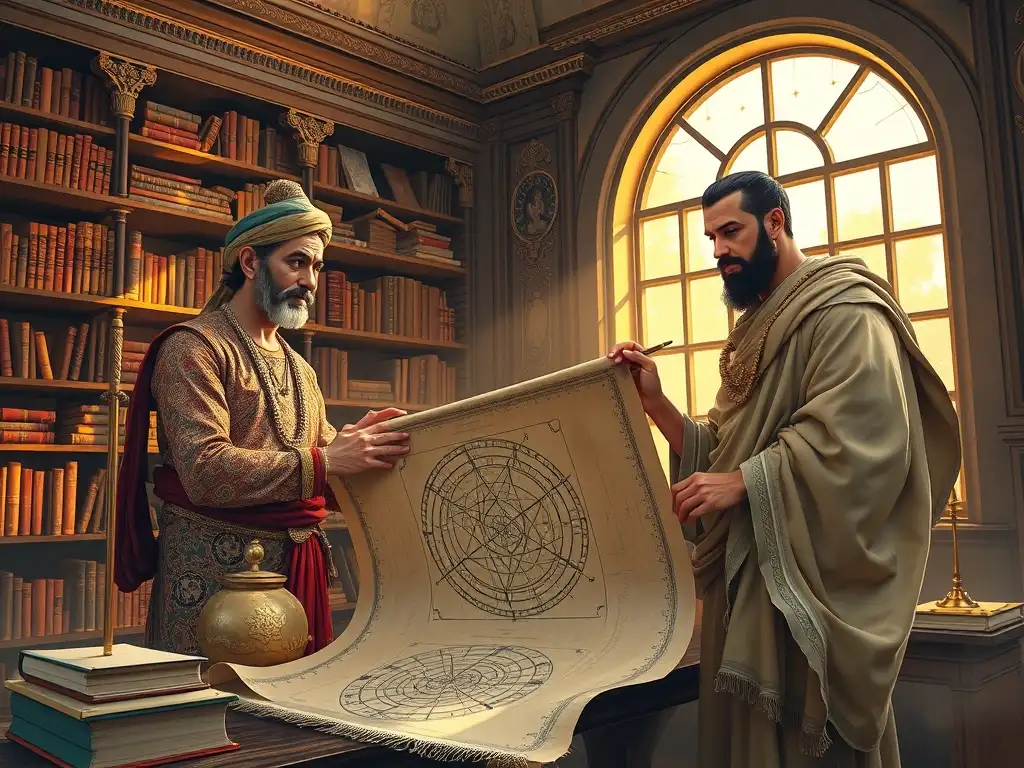
The methodologies employed by Indian and Greek mathematicians reveal fundamental differences in their mathematical philosophies.
- Practical vs. Theoretical: Indian mathematics often prioritized practical applications, such as astronomy and commerce. Techniques were developed to facilitate calculations in real-world contexts. In contrast, Greek geometry emphasized theoretical constructs, often abstracting practical problems into pure geometrical forms.
- Proofs and Axioms: Greek mathematicians, especially Euclid, established a rigorous system of proofs based on axioms and postulates. This deductive method is evident in works like "Elements." Indian mathematicians, however, utilized a less formalized approach, relying more on empirical evidence and practical results rather than strict logical deductions.
- Notation and Language: The notation used in Indian mathematics was often more fluid and adaptable, while Greek mathematics employed a more standardized symbolic system that facilitated the formalization of mathematical thought.
These differences illustrate how cultural contexts influenced mathematical development, leading to unique but complementary contributions to the field.
Case Studies: Specific Theorems and Their Cross-Cultural Adaptations
Several specific theorems illustrate the cross-pollination between Indian mathematics and Greek geometry:
- The Pythagorean Theorem: As mentioned earlier, the existence of the Pythagorean theorem in both Indian and Greek traditions is a prime example. The Sulba Sutras provide rules for constructing right angles, indicating that Indian mathematicians were aware of this fundamental relationship long before it was formally acknowledged in Greek texts.
- Quadratic Equations: Brahmagupta's work on quadratic equations not only laid the groundwork for algebra but also influenced later Greek mathematicians who explored similar problems. His solutions, which included methods for finding positive and negative roots, were pivotal in bridging Indian and Greek mathematical thought.
- Trigonometric Functions: Indian mathematicians were among the first to systematically develop trigonometric concepts, which later influenced Greek astronomers and mathematicians in their celestial calculations, particularly in the work of Hipparchus.
These case studies exemplify how mathematical ideas transcended cultural boundaries, enriching both traditions.
Legacy of Indian Mathematics on Greek Geometry
The legacy of Indian mathematics on Greek geometry is profound, with far-reaching implications for the evolution of mathematical thought.
Lasting Impact on Subsequent Mathematical Developments
The contributions of Indian mathematicians laid the groundwork for many subsequent developments in mathematics. The introduction of the decimal system and the concept of zero revolutionized numerical computation, which was later adopted by Islamic mathematicians and subsequently spread to Europe. This shift in mathematical notation and calculation methods significantly advanced the field, allowing for more complex mathematical operations and the development of algebra.
Influence on Later European Mathematical Thought
The influence of Indian mathematics extended into Europe, particularly through translations of Arabic texts that contained Indian mathematical principles. Notably, the works of Al-Khwarizmi, who integrated Indian numerals and methods, were foundational to the development of algebra in Europe. This influence can be traced through the Renaissance, as European mathematicians began to adopt and adapt these concepts, leading to a transformation of the mathematical landscape.
Modern Recognition of Indian Contributions to Mathematics
In modern times, there has been a growing recognition of the significant contributions made by Indian mathematicians to the field. Scholars are increasingly acknowledging the advanced mathematical concepts developed in ancient India, underscoring their relevance in the broader context of global mathematical history. Initiatives in academia and public discourse have begun to highlight these contributions, fostering appreciation for the rich mathematical heritage of India and its lasting impact on mathematics as we understand it today.
The dialogue between Indian mathematics and Greek geometry exemplifies the interconnectedness of human knowledge and the enduring legacy of these ancient civilizations in shaping contemporary mathematics.
Conclusion
In examining the intricate connections between Indian mathematics and Greek geometry, it becomes evident that these two ancient civilizations significantly influenced each other. The exchanges of ideas, principles, and techniques contributed to the rich tapestry of mathematical knowledge that shaped not only their respective cultures but also laid the groundwork for future advancements in mathematics globally. The journey of mathematical thought from the Indian subcontinent to Greece illustrates a fascinating narrative of collaboration, adaptation, and innovation across borders.
Summary of Key Insights on Indian Mathematics and Greek Geometry
The analysis of Indian mathematics reveals several key insights that highlight its influence on Greek geometry:
- Concept of Zero: The introduction of the numeral zero by Indian mathematicians was a revolutionary development, allowing for more complex calculations and paving the way for advancements in both arithmetic and geometry.
- Advanced Techniques: Indian mathematicians developed sophisticated techniques for solving equations and understanding geometric concepts, which were later echoed in Greek works, enhancing their geometric proofs and methodologies.
- Transmission of Knowledge: The Silk Road and other trade routes facilitated the transfer of mathematical texts and ideas between Indian and Greek scholars, fostering an environment where both cultures could learn from and build upon each other's mathematical insights.
- Influential Texts: Works such as Brahmagupta’s "Brahmasphutasiddhanta" and Aryabhata's "Aryabhatiya" not only showcased advanced mathematical concepts but also influenced Greek mathematicians like Diophantus, who adapted some of these ideas into their own works.
The Importance of Recognizing Cross-Cultural Influences in Mathematics
Understanding the cross-cultural influences between Indian mathematics and Greek geometry is crucial for several reasons:
- Holistic Perspective: It allows for a more comprehensive view of the history of mathematics, demonstrating that mathematical development is not isolated but rather a collaborative effort across cultures.
- Cultural Appreciation: Recognizing these interactions fosters appreciation for the contributions of diverse civilizations, acknowledging that mathematical knowledge is a universal legacy shaped by many hands.
- Inspiration for Modern Mathematics: By studying historical connections, contemporary mathematicians and educators can draw inspiration from past collaborations, encouraging a more inclusive approach to learning and teaching mathematics today.
- Research and Scholarship: Highlighting these influences opens up new avenues for research, prompting scholars to explore the nuances of mathematical ideas exchanged between cultures and their implications on modern mathematical thought.
Future Research Directions on Indian-Greek Mathematical Interactions
Future research on the interactions between Indian and Greek mathematics can take several promising directions:
- Comparative Studies: Conducting comparative analyses of specific mathematical texts from both cultures could illuminate how concepts evolved through cross-pollination.
- Linguistic Analysis: Exploring the linguistic aspects of mathematical terminology used in ancient texts may reveal deeper insights into how ideas were communicated and transformed across cultures.
- Archaeological Investigations: Uncovering artifacts, manuscripts, and inscriptions that may shed light on the interactions between Indian and Greek mathematicians can provide tangible evidence of their mathematical exchanges.
- Modern Applications: Investigating how the principles derived from these ancient interactions can be applied to contemporary mathematical problems or educational frameworks can enhance the relevance of historical studies in today’s context.
By pursuing these research avenues, scholars can continue to unravel the rich tapestry of mathematical history, further enhancing our understanding of the profound influences that Indian mathematics had on Greek geometry and vice versa.
- Introduction to Indian Mathematics and Greek Geometry
- Historical Context of Indian Mathematics
- Historical Context of Greek Geometry
- Key Figures in Greek Geometry
- The Development of Geometric Theories in Ancient Greece
- Influence of Earlier Civilizations on Greek Geometry
- Interaction Between Indian Mathematics and Greek Geometry
- Routes of Cultural Exchange Between India and Greece
- The Role of Trade in Spreading Mathematical Ideas
- Key Instances of Indian Influence on Greek Geometric Thought
- Comparative Analysis of Indian Mathematics and Greek Geometry
- Similarities Between Indian Mathematical Concepts and Greek Geometric Principles
- Differences in Approach: Indian vs. Greek Methods
- Case Studies: Specific Theorems and Their Cross-Cultural Adaptations
- Legacy of Indian Mathematics on Greek Geometry
- Conclusion
- What is the significance of Indian mathematics in the context of Greek geometry?
- How did Indian mathematicians contribute to the understanding of geometry?
- Were there any direct exchanges between Indian and Greek scholars regarding mathematics?
- What role did the decimal system play in the development of geometry?
- Can we see the influence of Indian mathematics in modern geometry?
Frequently Asked Questions
What is the significance of Indian mathematics in the context of Greek geometry?
Indian mathematics introduced innovative concepts such as the decimal system and the concept of zero, influencing Greek geometry by enhancing calculations and geometric proofs.
How did Indian mathematicians contribute to the understanding of geometry?
Indian mathematicians like Brahmagupta and Aryabhata made significant advancements in geometry that included rules for calculating areas and volumes, which later influenced Greek thinkers.
Were there any direct exchanges between Indian and Greek scholars regarding mathematics?
Yes, there were direct exchanges through trade and cultural interactions that facilitated the sharing of mathematical ideas, particularly during the Hellenistic period.
What role did the decimal system play in the development of geometry?
The decimal system allowed for more efficient calculations and representations of numbers, which greatly improved the accuracy and complexity of geometric constructions.
Can we see the influence of Indian mathematics in modern geometry?
Absolutely! Many principles derived from Indian mathematics, such as trigonometric functions and the use of algebra, continue to be foundational in modern geometry and mathematics today.
Final Reflection: Bridging Cultures Through Mathematics
The exploration of Indian mathematics and Greek geometry reveals a profound interconnectedness that transcends time and geography. As we delve into the historical exchanges between these two rich traditions, we uncover not only the mathematical innovations that shaped our understanding of geometry but also the cultural dialogues that continue to resonate today. The legacy of these ancient mathematicians serves as a reminder that knowledge knows no boundaries, and the synthesis of ideas can lead to groundbreaking advancements.
The influence of Indian mathematics on Greek geometry has left an indelible mark on our cultural and intellectual landscape. This exchange of ideas has fostered a spirit of collaboration and curiosity that remains vital in our globalized world. As we reflect on the contributions of figures like Aryabhata and Euclid, we recognize that their work laid the foundation for modern mathematics and science. Mathematics is the language in which God has written the universe.
– Galileo Galilei. This quote encapsulates the essence of how mathematics, as a universal language, continues to unite diverse cultures and inspire future generations.
As we contemplate the lessons from this rich historical tapestry, I invite you to reflect on your own relationship with mathematics and its role in your life. Consider how the principles of collaboration and cultural exchange can inform your approach to learning and problem-solving. Embrace the idea that every mathematical concept you encounter is part of a larger narrative, one that connects you to a global community of thinkers. Let this understanding inspire you to seek knowledge beyond borders and to appreciate the beauty of diverse intellectual traditions.
Unveil the Wonders of Ancient Math!
Thank you for diving into the fascinating world of Indian mathematics and its significant impact on Greek geometry! We hope you found value in understanding how these ancient minds shaped the course of mathematical thought. Are you ready to take the next step in your journey of discovery? Here’s how you can engage further!
- Explore deeper: Visit our resource library for more articles on the influences of ancient civilizations on modern mathematics.
- Share Your Insights: Discuss this topic with friends or on social media—tag us and let’s ignite a conversation about the legacy of Indian mathematics!
- Join the Community: Sign up for our newsletter to receive updates on the latest articles, events, and discussions related to ancient Indian history and its intellectual contributions.
Which aspect of ancient mathematics inspires you the most, and in what ways do you believe it shapes our understanding of the subject today?