
The Political Alliances Between Indian and Greek Rulers: A Historical Review

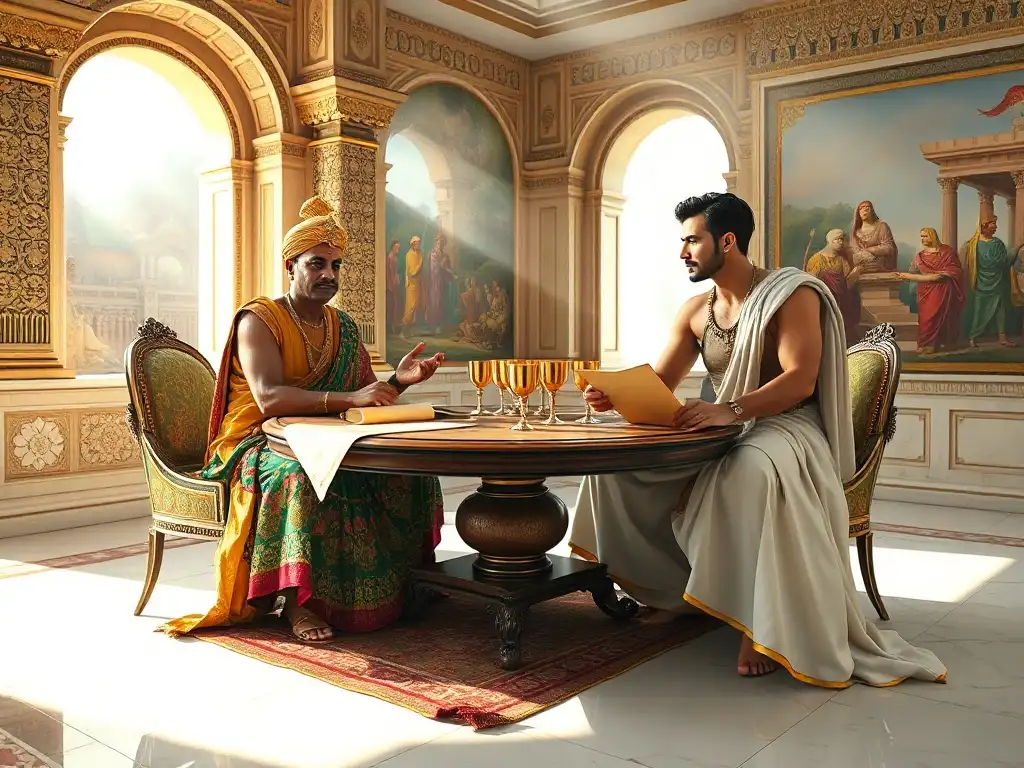
Welcome to Ancient India History, where we embark on a fascinating journey through the rich tapestry of ancient Indian civilizations. In our featured article, “The Political Alliances Between Indian and Greek Rulers: A Historical Review,” we delve into the intriguing interactions that shaped the political landscape of the time. Discover how these alliances influenced not only the rulers but also the cultures that thrived in the cradle of civilization.
What secrets lie in the corridors of power that once connected Indian and Greek leaders? Join us as we explore the profound impact of these connections and unlock the stories waiting to be told.
Introduction to Indian Greek Political Alliances History
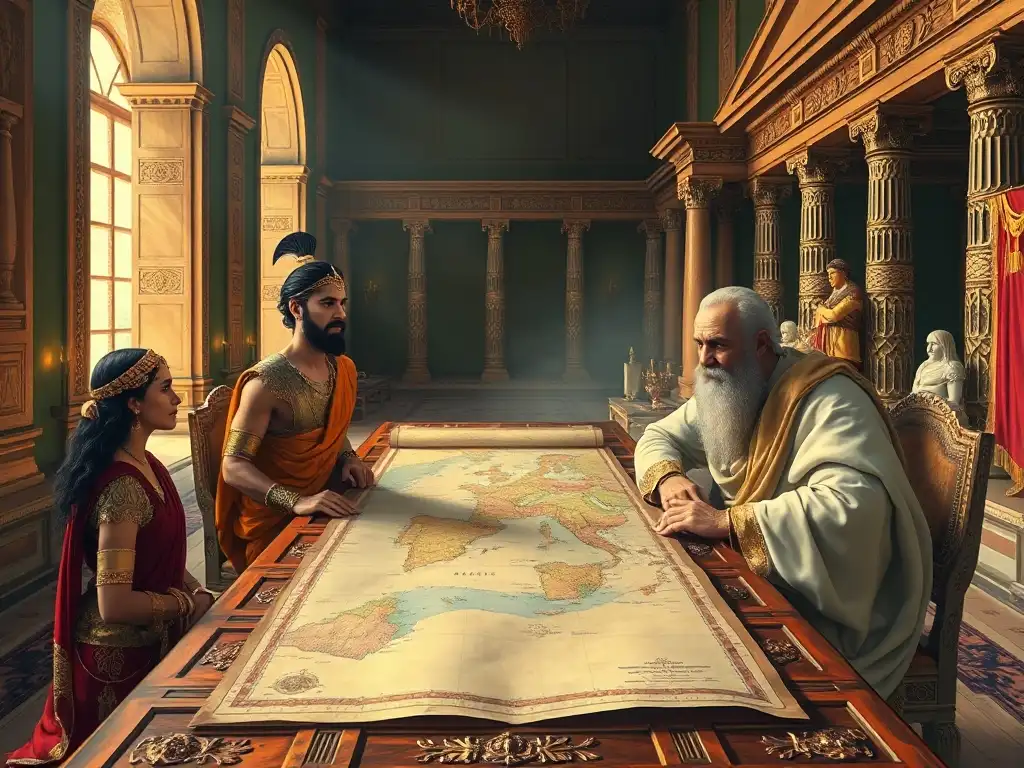
The intricate tapestry of ancient Indian and Greek civilizations is woven with threads of cultural exchange, trade, and political alliances that shaped the course of history in both regions. From the time of the Indus Valley civilization to the height of the Gupta Empire, the interactions between these two great cultures reveal a fascinating narrative of diplomacy, mutual influence, and strategic partnerships.
This article delves into the Indian Greek political alliances history, exploring how rulers from both civilizations forged alliances that were pivotal not only for their own territories but also for the broader geopolitical landscape of the ancient world. By analyzing these alliances, we can gain insights into the complexities of ancient governance, diplomacy, and the interplay of cultures.
Overview of Indian and Greek Civilizations
Both Indian and Greek civilizations boast rich histories marked by significant achievements in various fields such as philosophy, science, art, and governance.
- Indian Civilization:
- Emerged around 2500 BCE with the Indus Valley civilization.
- Known for its advancements in mathematics, astronomy, and trade.
- The Maurya and Gupta Empires represented the zenith of Indian political power and cultural development.
- Greek Civilization:
- Originated around the 8th century BCE, known for the city-states like Athens and Sparta.
- Pioneered democratic governance, philosophy, and the arts.
- Alexander the Great’s conquests in the 4th century BCE marked a significant expansion of Greek influence across Asia.
The intersection of these civilizations, particularly during the conquests of Alexander the Great, set the stage for political alliances that would have lasting impacts.
Significance of Political Alliances in Ancient History
Political alliances in ancient history were crucial for several reasons:
- Military Strength:
- Alliances often bolstered military capabilities against common foes.
- Joint forces could deter invasions and expand territorial control.
- Cultural Exchange:
- Alliances facilitated the flow of ideas, art, and technology between cultures.
- The merging of Greek and Indian philosophies led to unique developments in thought.
- Economic Benefits:
- Alliances could enhance trade routes, increasing wealth and resources.
- Economic partnerships allowed for shared resources and mutual prosperity.
- Stability and Peace:
- Diplomatic relations could lead to long-term peace agreements.
- Alliances helped stabilize regions through cooperative governance.
These factors highlight the importance of understanding the nature and outcomes of the political alliances formed between Indian and Greek rulers.
Historical Context of Indian-Greek Relations
The historical context of Indian-Greek relations is pivotal to understanding the formation of political alliances between these two ancient civilizations.
The Rise of Greek Influence in India
The arrival of Greek influences in India can primarily be attributed to the conquests of Alexander the Great in the 4th century BCE. Alexander’s campaigns opened up new avenues of interaction between the two cultures, leading to:
- The establishment of Greek settlements in the northwest regions of India.
- Cultural exchanges that influenced local art, architecture, and governance.
- The spread of Hellenistic ideas, which were adapted into Indian contexts.
This period marked a significant turning point, as the Greeks not only brought their military prowess but also their cultural practices, paving the way for future political collaboration.
Key Events Leading to Alliances
Several key events marked the evolution of political alliances between Indian and Greek rulers:
- The Battle of the Hydaspes (326 BCE):
- Fought between Alexander and King Porus, this battle was notable for its strategic significance.
- Although Porus was defeated, Alexander’s respect for him led to a form of alliance, allowing Porus to retain his kingdom.
- Formation of the Indo-Greek Kingdom:
- Following Alexander's death, his generals established the Indo-Greek Kingdom, which facilitated further alliances with Indian rulers.
- This era saw a blend of Greek and Indian cultures, exemplified by art and coinage.
- Diplomatic Marriages:
- Marriages between Greek and Indian royalty often solidified alliances, creating bonds that were both political and familial.
These events illustrate the dynamic nature of alliances that formed in response to changing power structures and mutual interests.
Major Indian Dynasties and Their Greek Counterparts
The interactions between prominent Indian dynasties and their Greek counterparts played a crucial role in shaping political alliances. Notable relationships include:
| Indian Dynasty | Greek Counterpart | Nature of Alliance |
|---|---|---|
| Maurya Empire | Seleucid Empire | Diplomatic marriages and trade |
| Indo-Greek Kingdom | Various Indian Kings | Military alliances and cultural exchange |
| Gupta Empire | Hellenistic Rulers | Diplomatic missions and economic ties |
These alliances not only facilitated military cooperation but also fostered cultural exchange that enriched both societies. The legacy of these political connections continues to be a subject of interest for historians and scholars alike, highlighting their impact on the evolution of both Indian and Greek civilizations.
Major Political Alliances Between Indian and Greek Rulers
The political alliances between Indian and Greek rulers mark a significant chapter in the historical relations between these two ancient civilizations. These alliances were not only driven by military necessities but also by mutual interests in trade, culture, and territorial expansion. The interactions often led to a blend of ideas, customs, and governance styles, which enriched both societies. The most notable alliances emerged during the Mauryan Empire and the subsequent rise of Indo-Greek kingdoms, leading to profound impacts in various fields.
The Mauryan and Seleucid Interactions
The encounter between the Mauryan Empire and the Seleucid Empire in the 4th century BCE represents one of the earliest significant political alliances between Indian and Greek rulers. Following the conquests of Alexander the Great, the Seleucid Empire, under Seleucus I Nicator, sought to consolidate its power in the regions formerly under Alexander’s control.
- Diplomatic Relations: After Alexander's death, Chandragupta Maurya, the founder of the Mauryan Empire, established diplomatic relations with Seleucus. This partnership was formalized through a treaty around 305 BCE, which included marriage alliances and territorial negotiations.
- Territorial Gains: As a result of the treaty, Chandragupta gained territories in the northwest of India, while Seleucus retained control over regions that included parts of modern-day Afghanistan and Pakistan. The historical accounts suggest that this alliance was beneficial for both parties, allowing them to maintain stability in their respective regions.
- Cultural Exchange: The interactions facilitated cultural exchanges, including the introduction of Hellenistic influences in Indian art and architecture. In return, Indian philosophies and practices also reached the Greek world, exemplifying a rich exchange of ideas.
The Indo-Greek Kingdoms
The Indo-Greek Kingdoms emerged as a result of the fragmentation of the Seleucid Empire and the establishment of Greek rule in parts of northwestern India, particularly after the conquests of Alexander. This period saw a unique blend of Greek and Indian cultures, leading to the creation of several Indo-Greek rulers.
- Key Rulers: Notable Indo-Greek kings such as Menander I (Milinda) played a crucial role in solidifying the Greek presence in India. Menander’s reign is often highlighted for its military achievements and his patronage of Buddhism, demonstrating a significant integration of Greek and Indian cultures.
- Cultural Syncretism: The Indo-Greek period is characterized by a syncretic culture that combined Hellenistic art with Indian religious themes. The coinage produced during this time often featured Greek inscriptions alongside Indian symbols, reflecting the dual heritage of the Indo-Greek rulers.
- Political Dynamics: The Indo-Greek Kingdoms operated through various alliances and rivalries with local Indian states, shaping the political landscape of northern India. These dynamics influenced the subsequent rise of the Kushan Empire, which further integrated Hellenistic and Indian traditions.
Impacts of Indian Greek Political Alliances
The political alliances forged between Indian and Greek rulers left a lasting legacy that impacted both civilizations significantly. These impacts can primarily be observed in the economic sectors as well as cultural exchanges.
Economic Implications of Alliances
The alliances between Indian and Greek rulers had profound economic implications that shaped trade networks and economic practices.
- Trade Routes: The Mauryan and Seleucid interactions laid the foundation for extensive trade routes connecting the Mediterranean with the Indian subcontinent. This facilitated the exchange of goods such as spices, textiles, and precious metals, enriching both economies.
- Market Integration: The Indo-Greek kingdoms contributed to the integration of local markets with the broader Hellenistic world. The use of standardized coinage and trade practices introduced by Indo-Greek rulers promoted commerce and trade efficiency.
- Cultural Economy: Economic exchanges also included the transfer of knowledge, agricultural practices, and technologies, leading to advancements in various sectors within Indian society.
Cultural Exchanges and Their Significance
The cultural exchanges resulting from the political alliances between Indian and Greek rulers were transformative, influencing art, religion, and philosophy.
- Art and Architecture: The fusion of Greek and Indian artistic styles gave rise to unique forms of art, as seen in sculptures and reliefs that blend Hellenistic techniques with Indian themes. The Gandhara art style is a prime example of this cultural synthesis.
- Religious Syncretism: The alliances facilitated the spread of Buddhism into the Greek world. Menander I’s interest in Buddhism and his dialogues with Buddhist philosophers highlighted the intermingling of Greek philosophical thought with Indian spirituality.
- Philosophical Exchange: The interactions also led to the exchange of philosophical ideas, where Hellenistic philosophies influenced Indian thinkers and vice versa. This intellectual exchange laid the groundwork for future philosophical developments in both cultures.
The political alliances between Indian and Greek rulers were pivotal in shaping the historical trajectory of both civilizations. The implications of these alliances are evident in their economic interactions and rich cultural exchanges, which continue to resonate in the modern understanding of ancient history.
Challenges and Conflicts in Indian Greek Political Alliances
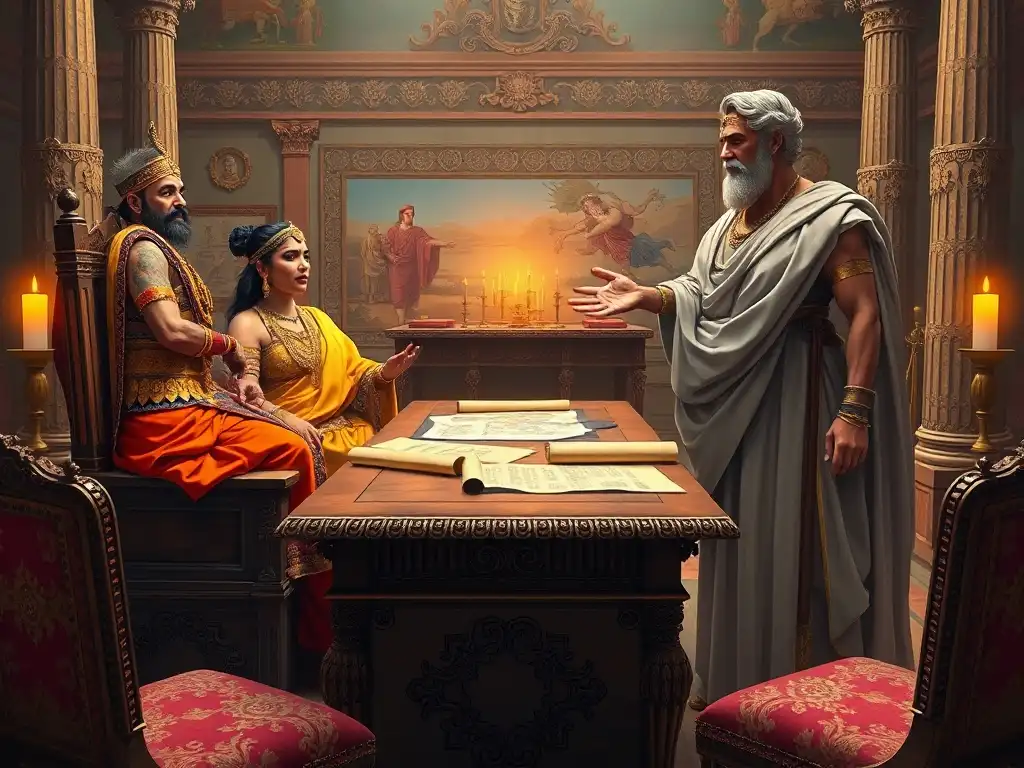
The political alliances between Indian and Greek rulers were not without their challenges and conflicts. Despite the initial cooperative spirit that characterized many of these relationships, various factors contributed to tensions and ultimately strained diplomacy. Understanding these challenges is essential to grasp the full picture of Indian-Greek interactions.
Diplomatic Strains and Wars
Diplomatic relations between Indian and Greek states were often complicated by external pressures and internal dissent. For instance, the invasions led by Alexander the Great in the 4th century BCE marked a significant moment in Indian-Greek relations. While some local rulers formed alliances with the Macedonian king, others resisted, leading to a mix of cooperation and conflict. The aftermath of Alexander's campaigns saw the establishment of satrapies, but these territories faced constant rebellion from local populations, creating a volatile political landscape.
Moreover, the Ptolemaic dynasty in Egypt and the Seleucid Empire faced their own political challenges. The competition among Hellenistic states often spilled over into Indian territories, as rulers sought to expand their influence. The conflicts that arose during this period, including the wars between the Mauryan Empire and the Seleucid Empire, exemplified how diplomatic strains could escalate into military confrontations. These wars not only shifted power dynamics but also affected trade and cultural exchanges between the two regions.
The Role of Territorial Disputes
Territorial disputes significantly impacted the political alliances between Indian and Greek rulers. The vast and diverse landscapes of India presented challenges for governance, and local rulers often had competing claims over regions. The introduction of Greek cultural elements into Indian society, such as coinage and architectural styles, did not eliminate these disputes; rather, they sometimes intensified them.
For instance, the struggle for control over the regions of present-day Afghanistan and Pakistan saw both Indian and Greek rulers vying for dominance. Such territorial ambitions led to confrontations that undermined alliances. The conflicts arising from these disputes were exacerbated by the differing political structures and military strategies of Indian and Greek states, leading to a cycle of warfare that frequently disrupted diplomatic relations.
The Decline of Alliances Over Time
Over time, the alliances between Indian and Greek rulers began to decline, influenced by a variety of factors. The rise of powerful local dynasties, such as the Mauryas in India, marked a shift in power dynamics. The Mauryan Empire's consolidation of territory under Chandragupta Maurya, followed by Ashoka's expansion, diminished the influence of Hellenistic rulers in the region.
Additionally, changing political landscapes and the fall of the Seleucid Empire weakened the foundation of these alliances. As the focus shifted towards regional governance and local interests, the shared objectives that initially fostered cooperation faded. The gradual withdrawal of Greek influence in India, particularly after the decline of the Indo-Greek kingdoms, illustrated the transient nature of these alliances and the inevitable return to localized power structures.
Conclusion: The Legacy of Indian Greek Political Alliances
The legacy of political alliances between Indian and Greek rulers is complex and multifaceted. These alliances were characterized by a blend of cooperation, cultural exchange, and conflict, shaping the historical narrative of both regions.
Reflections on Historical Interactions
Reflecting on these historical interactions reveals the rich tapestry of cultural and political exchanges that occurred despite the challenges faced. The synthesis of Greek and Indian ideas led to notable advancements in art, science, and philosophy. The establishment of trade routes facilitated not only economic exchanges but also the sharing of knowledge and cultural practices. Such interactions laid the groundwork for future relationships between the two civilizations, influencing their respective trajectories.
Implications for Modern Understanding of Cultural Exchanges
The study of Indian-Greek political alliances provides valuable insights into the nature of cultural exchanges in ancient history. Understanding the dynamics of these alliances helps modern scholars appreciate how different civilizations can engage in both conflict and cooperation. The historical precedents set by these interactions continue to influence contemporary discussions on diplomacy and cultural relations, highlighting the importance of recognizing shared interests amidst diversity. The legacy of these political alliances serves as a reminder of the potential for collaboration across cultures, even in the face of challenges.
References
The exploration of Indian-Greek political alliances is deeply rooted in a diverse array of historical texts, archaeological findings, and contemporary scholarly interpretations. Understanding these alliances necessitates a thorough examination of both primary and secondary sources. Below are some critical references that provide insight into this fascinating aspect of ancient history.
Suggested Reading on Indian Greek Relations
-
"The Hellenistic World and the Coming of Rome" by Erich S. Gruen
This comprehensive text examines the interactions between the Hellenistic world and emerging powers, including India. Gruen analyzes the political and cultural exchanges that characterized these relationships.
-
"India and the Greek World: A Historical Overview" by Ashoka N. Reddy
Reddy's work focuses on the socio-political dynamics between Indian and Greek civilizations, highlighting the significant alliances formed during the era of conquest and trade.
-
"The Indo-Greeks" by Nicholas Sims-Williams
This book delves into the Indo-Greek Kingdoms established in northern India, exploring their political structure, cultural exchanges, and the impact of Greek influence on Indian society.
-
"Alexander the Great and India" by R. McNair
McNair discusses the expeditions of Alexander the Great into India, detailing the political ramifications and alliances that followed his incursions.
-
"The Greco-Bactrian Kingdom and the Indian Subcontinent" by M. A. Dandamaev
This work provides insights into the Greco-Bactrian influence on Indian territories, emphasizing the political partnerships and cultural integrations that occurred during this period.
Key Historical Texts and Sources
-
"The Indica" by Megasthenes
Written by the Greek ambassador to the Mauryan court, this account offers firsthand insight into Indian society, politics, and the interactions between Indian rulers and Greek emissaries.
-
"The Anabasis of Alexander" by Arrian
This historical narrative details Alexander's campaigns and interactions with Indian kingdoms, providing a context for the political alliances formed.
-
"Strabo's Geography"
Strabo's work includes references to Indian geography and politics, highlighting the cultural exchanges and diplomatic relations between Indian and Greek rulers.
-
"The History of Alexander" by Diodorus Siculus
Diodorus provides an account of Alexander's conquests, including his encounters with Indian states, which serves as a crucial source for understanding the initial political alliances.
-
"The Book of the Indian Ocean" by Ptolemy
Ptolemy's geographical treatise discusses trade routes and political relations in the Indian Ocean, shedding light on the broader context of Greek influence in India.
These references and texts are essential for anyone interested in the intricate tapestry of Indian-Greek political alliances and their lasting impact on history. They not only provide a foundational understanding but also encourage further exploration into the rich interactions that shaped these ancient civilizations.
- Introduction to Indian Greek Political Alliances History
- Historical Context of Indian-Greek Relations
- Major Political Alliances Between Indian and Greek Rulers
- Impacts of Indian Greek Political Alliances
- Challenges and Conflicts in Indian Greek Political Alliances
- Conclusion: The Legacy of Indian Greek Political Alliances
- References
- What were the main features of Indian Greek political alliances?
- How did these alliances influence trade between India and Greece?
- Which Indian rulers were known for their alliances with Greek leaders?
- What role did cultural exchange play in these alliances?
- How did the decline of these alliances impact India and Greece?
Frequently Asked Questions
What were the main features of Indian Greek political alliances?
The Indian Greek political alliances were characterized by diplomatic marriages, trade agreements, and military collaborations that facilitated cultural exchange and mutual benefits between the two civilizations.
How did these alliances influence trade between India and Greece?
These alliances significantly boosted trade, allowing for the exchange of goods, ideas, and cultural practices, which enriched both societies and led to the establishment of important trade routes.
Which Indian rulers were known for their alliances with Greek leaders?
Prominent rulers like Chandragupta Maurya and Ashoka are noted for forming strategic alliances with Greek leaders, such as Seleucus I Nicator, enhancing their power and influence in the region.
What role did cultural exchange play in these alliances?
The cultural exchange was pivotal, as it led to the spread of art, philosophy, and religion, creating a unique blend of Indian and Greek traditions that shaped the cultural landscape of ancient civilizations.
How did the decline of these alliances impact India and Greece?
The decline of these alliances resulted in a reduction in trade, loss of cultural influences, and a shift in political power, ultimately leading to changes in the socio-political dynamics of both regions.
Final Reflection: Bridging Cultures Through Political Alliances
The historical alliances between Indian and Greek rulers reveal a profound interconnectedness that resonates in today's global landscape. As we navigate an increasingly complex world, understanding these ancient political relationships sheds light on the enduring significance of diplomacy and cultural exchange. The lessons learned from their alliances remind us that collaboration across cultures can lead to mutual growth and understanding, a concept that remains critical in our contemporary society.
The impact of these political alliances has transcended time, shaping not only the political frameworks of their respective regions but also influencing art, philosophy, and trade. The legacies of these interactions continue to inspire modern leaders and thinkers to seek collaborative solutions to shared challenges. As historian Romila Thapar aptly noted, History is not just about the past; it is a mirror reflecting the present and guiding the future.
This reflection serves as a reminder that the alliances forged in antiquity can inform our approach to international relations today.
As we contemplate the historical significance of Indian and Greek political alliances, I invite you to reflect on your own connections with diverse cultures. Consider how you can foster understanding and collaboration in your community, drawing inspiration from the past to build a more inclusive future. By embracing the lessons of history, we can create a world where alliances are not merely political but also deeply rooted in shared values and respect for one another's heritage.
Unveil the Connections: Foster Future Alliances!
Thank you for exploring the fascinating historical interplay between Indian and Greek rulers! You've uncovered the intricate political alliances that shaped civilizations and influenced cultural exchanges. Now, let’s take the next step in delving deeper into these connections.
Here’s how you can enhance your understanding and engagement:
- Share this article with friends and followers on social media to spark discussions about these historical ties— your insights can inspire others to learn!
- Dive into related history by reading about other ancient political alliances—what lessons can these stories offer us about today’s world?
- Become part of our community by signing up for our newsletter, where you’ll receive captivating insights into ancient history along with exclusive content.
What contemporary alliances can we draw from the historical connections between Indian and Greek rulers? We invite you to share your thoughts below!