
Chandragupta Maurya: The Emperor Who Embraced Change and Adaptation

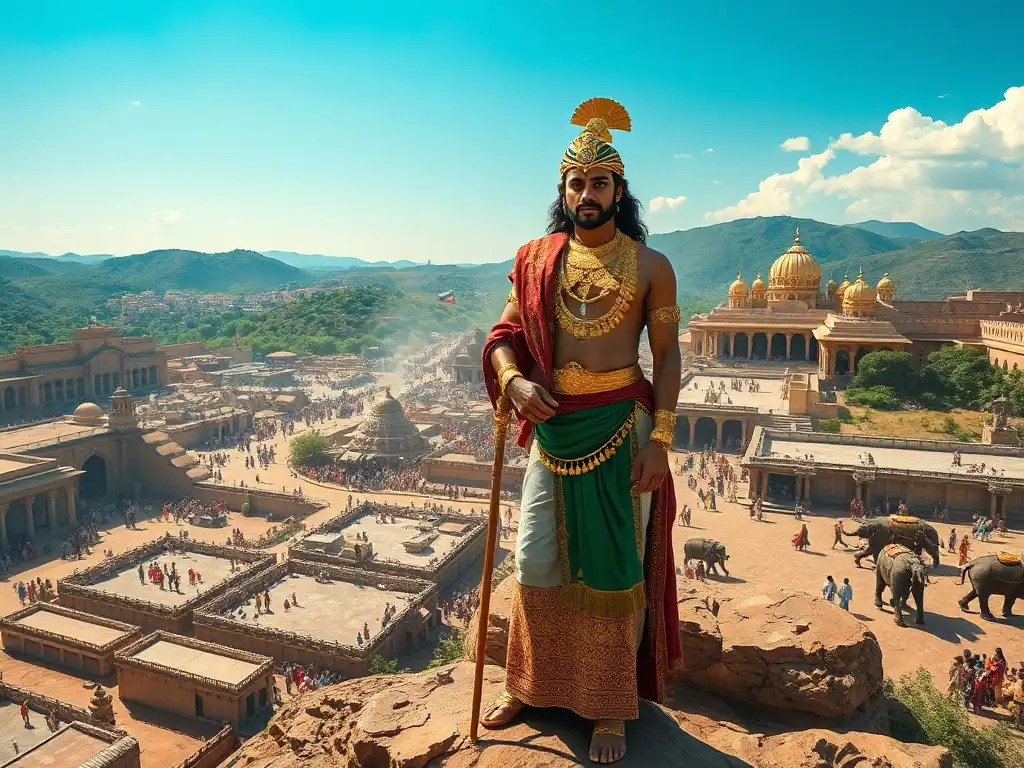
Welcome to Ancient India History, where we delve into the rich tapestry of civilizations that shaped the Indian subcontinent. In our featured article, we explore the historical significance of Chandragupta Maurya, a transformative figure whose reign marked the dawn of a new era in ancient India. Discover how his remarkable journey of adaptation and change not only established the Maurya Empire but also laid the groundwork for future generations. Buckle up as we embark on a fascinating exploration of his legacy, revealing insights that promise to intrigue and enlighten!
- Introduction to Chandragupta Maurya's Historical Significance
- The Life and Background of Chandragupta Maurya
- Chandragupta Maurya's Reign: The Formation of the Maurya Empire
- Embracing Change and Adaptation: Chandragupta's Legacy
- The Role of Chanakya in Chandragupta's Success
- Chandragupta Maurya's Historical Significance in Context
- Conclusion: The Enduring Legacy of Chandragupta Maurya
- Further Reading and Resources on Chandragupta Maurya
-
Frequently Asked Questions
- What was the historical significance of Chandragupta Maurya?
- How did Chandragupta Maurya embrace change?
- What contributions did Chandragupta Maurya make to Indian civilization?
- How did Chandragupta's rule influence future Indian empires?
- What role did Chandragupta Maurya play in the spread of Buddhism?
- Final Reflection: Embracing Change as a Path to Greatness
- Embrace Change Like Chandragupta Maurya!
Introduction to Chandragupta Maurya's Historical Significance
Chandragupta Maurya stands as a pivotal figure in the annals of ancient Indian history, recognized not only for his military acumen but also for his profound impact on the political landscape of the subcontinent. His reign marked the dawn of the Maurya Empire, a significant period that transformed India through effective governance, military innovations, and cultural developments.
Understanding the historical significance of Chandragupta Maurya requires a closer look at the socio-political environment of ancient India and the key figures that shaped its trajectory. By exploring his life and contributions, we can appreciate how his adaptability and vision laid the groundwork for one of the greatest empires in Indian history.
Overview of Ancient India and Its Key Figures
Ancient India was a tapestry of diverse cultures, languages, and traditions, with each era contributing to the rich historical narrative. The period preceding Chandragupta Maurya was characterized by fragmented kingdoms and regional powers vying for dominance. Notable figures such as Alexander the Great and local kings like Dhana Nanda played crucial roles in shaping the dynamics of this era.
- Key Aspects of Ancient India:
- Geographic Diversity: India’s vast landscape included fertile plains, rugged mountains, and dense forests, influencing trade and cultural exchanges.
- Cultural Flourishing: The era saw advancements in art, mathematics, and philosophy, with the rise of influential texts like the Vedas and Upanishads.
- Political Fragmentation: Various kingdoms such as Magadha and Kosala were engaged in constant power struggles, leading to instability.
In this context, the emergence of Chandragupta Maurya was not merely coincidental; it was a response to the prevailing chaos, and his ability to unify disparate regions under a central authority marked a turning point in Indian history.
Importance of Chandragupta Maurya in Indian History
Chandragupta Maurya's significance in Indian history is multifaceted, encompassing his military strategies, administrative reforms, and cultural contributions.
- Founding the Maurya Empire:
- Unification of India: Chandragupta successfully united various kingdoms, effectively ending the era of fragmentation and establishing a centralized monarchy.
- Military Innovations: His strategies in warfare, including the use of spies and alliances, were instrumental in defeating larger adversaries.
- Administrative Excellence:
- Centralized Governance: He implemented a robust administrative framework, which included a well-structured bureaucracy and an efficient taxation system.
- Legal Reforms: Chandragupta's reign saw the codification of laws, which helped in maintaining order and justice across the empire.
- Cultural Exchange and Trade:
- Promoting Trade Routes: The Maurya Empire facilitated trade across India and beyond, connecting it with other civilizations and promoting cultural exchanges.
- Patronage of Arts and Sciences: His support for scholars and artisans led to significant advancements in various fields, enriching the cultural fabric of the empire.
The historical significance of Chandragupta Maurya extends beyond his conquests; it lies in his ability to adapt to changing circumstances and his vision for a united India, laying the foundation for future empires and influencing generations to come.
The Life and Background of Chandragupta Maurya
Early Life and Influences
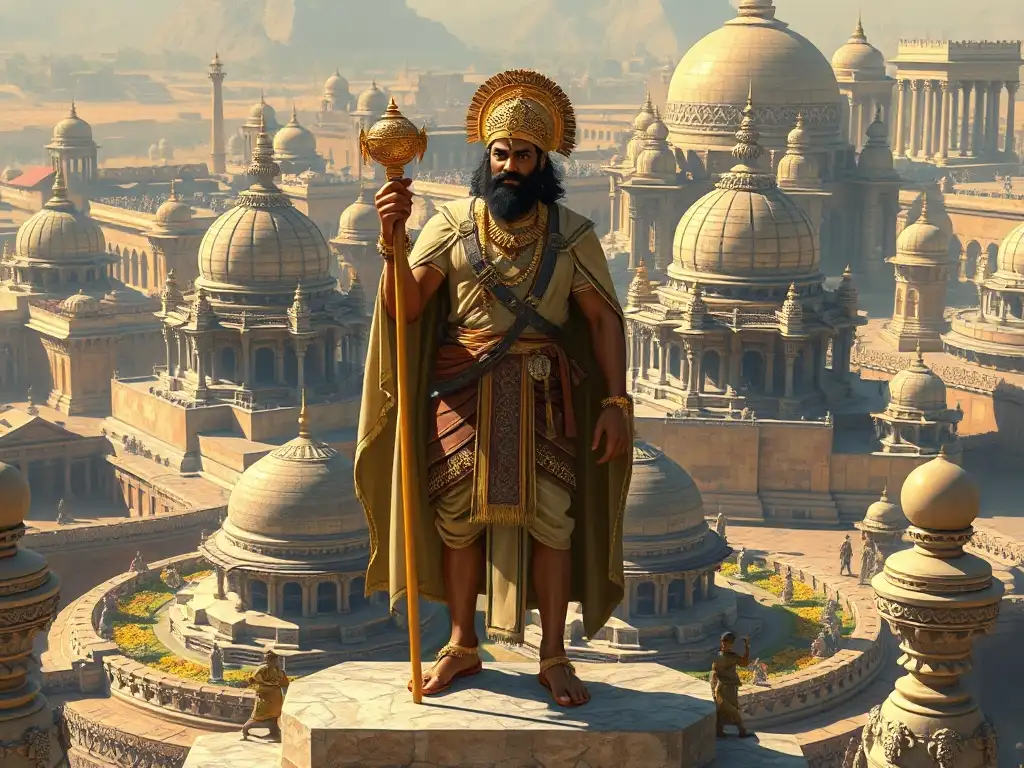
Chandragupta Maurya was born around 340 BCE in the region that is now part of modern-day Bihar, India. His early life remains somewhat shrouded in mystery, with varying accounts of his lineage and upbringing. Some historical texts suggest he hailed from a humble background, possibly a Maurya or Kshatriya family, while others hint at a more noble lineage. This ambiguity adds an intriguing layer to his character, as it reflects the varied social dynamics of ancient Indian society.
Chandragupta's formative years were heavily influenced by the political turmoil of the time. The decline of the Nanda dynasty, which ruled much of northern India, set the stage for his future aspirations. He was inspired by the teachings of a wandering ascetic named Chanakya (also known as Kautilya), who recognized Chandragupta's potential and became a pivotal mentor in his life. Chanakya's strategic mind and political acumen would later play a crucial role in shaping Chandragupta's rise to power.
Furthermore, the socio-political climate during his youth, marked by the invasions of Alexander the Great, instilled in him a desire to unify the fragmented Indian states. This aspiration to establish a strong, centralized governance system was a direct result of the chaotic environment he experienced, ultimately influencing his ambitions to become a formidable ruler.
Rise to Power: Key Events Leading to His Reign
Chandragupta Maurya's ascent to power is marked by a series of strategic moves and significant events that underscore his ambition and tactical prowess. His journey began around 321 BCE, when he, with the guidance of Chanakya, launched a campaign against the Nanda dynasty, which was then the dominant force in northern India.
- The Alliance with Chanakya:
- Chanakya, motivated by a personal vendetta against the Nandas, initiated a plan to dethrone them. His alliance with Chandragupta was pivotal, as he provided not only military strategy but also financial resources and political counsel that enabled Chandragupta to gather a loyal following.
- Military Campaigns:
- Chandragupta’s military campaigns were characterized by guerrilla tactics and the element of surprise, allowing him to win crucial battles against the Nandas. His first major victory occurred in Pataliputra, the capital of the Nanda Empire. This battle not only showcased his military skill but also solidified his reputation as a formidable leader.
- Consolidation of Power:
- Following his victory over the Nandas, Chandragupta focused on consolidating his power throughout northern India. He established a centralized administration, laying the groundwork for the Mauryan Empire. This included appointing governors and creating a bureaucratic system that allowed for effective governance across his realm.
- Face-off with Alexander's Successors:
- After Alexander the Great’s invasion, Chandragupta faced the challenge of dealing with the Macedonian satraps left behind in India. He strategically engaged in a series of battles against these satraps, successfully expanding his territory and further cementing his position as a leader.
Through these key events, Chandragupta Maurya not only established himself as a powerful ruler but also set the foundation for one of the largest empires in ancient India. His ability to adapt to changing circumstances and embrace new strategies was instrumental in his rise to prominence, highlighting his historical significance as a transformative figure in Indian history.
Chandragupta Maurya's Reign: The Formation of the Maurya Empire
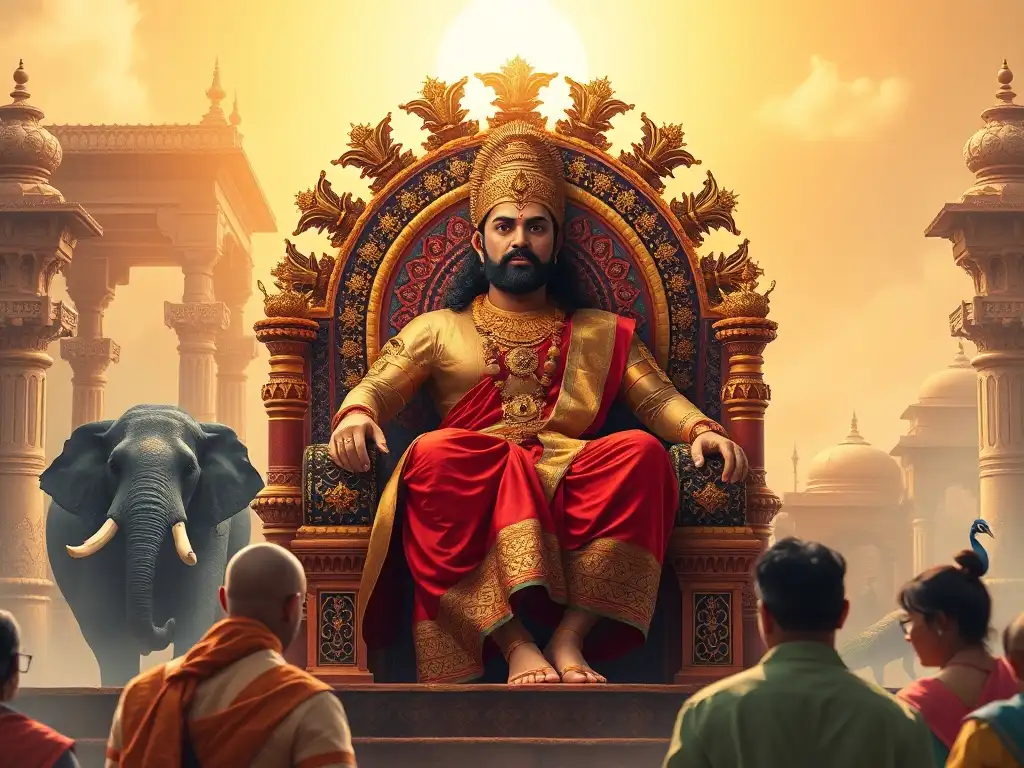
Chandragupta Maurya's reign marked a transformative period in ancient Indian history, culminating in the establishment of the Maurya Empire, which became one of the largest empires in the Indian subcontinent. His rise to power is a testament to his strategic acumen and adaptability in a time of political fragmentation. The Maurya Empire not only unified large regions of India but also laid the groundwork for future governance and cultural developments.
Establishing the Maurya Empire: Strategies and Tactics
Chandragupta's journey to power began with a keen understanding of the political landscape of India, which was characterized by numerous small kingdoms and regional powers. His initial strategy involved forming alliances and leveraging the discontent among local rulers. Key tactics included:
- Utilizing Local Discontent: Chandragupta capitalized on the dissatisfaction of local populations toward their rulers. By positioning himself as a liberator, he garnered support from various groups.
- Military Innovation: His military tactics were heavily influenced by the teachings of Chanakya, his mentor and strategist. The use of elephants in warfare, along with well-coordinated infantry and cavalry units, proved to be pivotal.
- Intelligence and Espionage: Chandragupta implemented a robust network of spies to gather intelligence on enemy movements and internal dissent. This approach allowed him to preemptively strike against adversaries.
- Consolidation of Power: After defeating the Nanda dynasty, Chandragupta quickly moved to consolidate his power by integrating various territories and establishing a centralized administration.
Chandragupta's strategies reflect a blend of military prowess and political savvy, allowing him to lay the foundations of one of the ancient world's most significant empires.
Key Battles and Conquests: Expanding the Empire's Territory
The expansion of the Maurya Empire was characterized by several key battles that demonstrated Chandragupta's military genius and strategic planning. Notable conquests include:
- Defeat of the Nanda Dynasty: The initial challenge for Chandragupta was to overthrow the powerful Nanda dynasty, which he accomplished around 321 BCE. This victory was crucial in establishing his rule in Magadha, a central region in northern India.
- Campaigns Against Regional Kings: Following his conquest of Magadha, Chandragupta launched campaigns against various regional kings. His military expeditions into present-day Punjab and parts of modern-day Bihar and Bengal expanded his influence significantly.
- Confrontation with Alexander the Great's Successors: After Alexander the Great's invasion of India, Chandragupta faced off against the Greek satraps left behind. His successful campaigns against these forces, particularly in the northwestern frontier, solidified his reputation as a formidable leader.
- Strategic Use of Geography: Chandragupta adeptly utilized the geography of the Indian subcontinent to his advantage, employing guerrilla tactics in the forests and mountains to outmaneuver larger armies.
These military engagements not only expanded the territory of the Maurya Empire but also established Chandragupta as a significant power broker in ancient India.
Governance and Administration: Innovations in Leadership
Chandragupta Maurya's reign was not solely defined by military conquests; it also marked significant advancements in governance and administration. His leadership innovations included:
- Centralized Administration: Chandragupta implemented a centralized system of governance that allowed for efficient management of the vast empire. This included the establishment of a bureaucracy that handled various administrative functions.
- Legal and Taxation Reforms: He introduced a structured legal system and taxation policies that ensured the empire's financial stability. Taxation was based on agricultural yield, promoting fairness and encouraging productivity.
- Infrastructure Development: Recognizing the importance of infrastructure, Chandragupta invested in building roads, irrigation systems, and trade routes that facilitated commerce and communication throughout the empire.
- Promotion of Trade and Economy: Chandragupta's reign saw the encouragement of trade both within the empire and with neighboring regions. This not only bolstered the economy but also fostered cultural exchange and interaction.
- Advisory Council: He established a council of ministers, which included scholars and experienced administrators, to aid in governance. This approach ensured that decisions were well-informed and reflective of diverse perspectives.
Through these innovations, Chandragupta Maurya not only maintained control over his empire but also fostered an environment conducive to growth and development, setting a precedent for future rulers in India.
Embracing Change and Adaptation: Chandragupta's Legacy
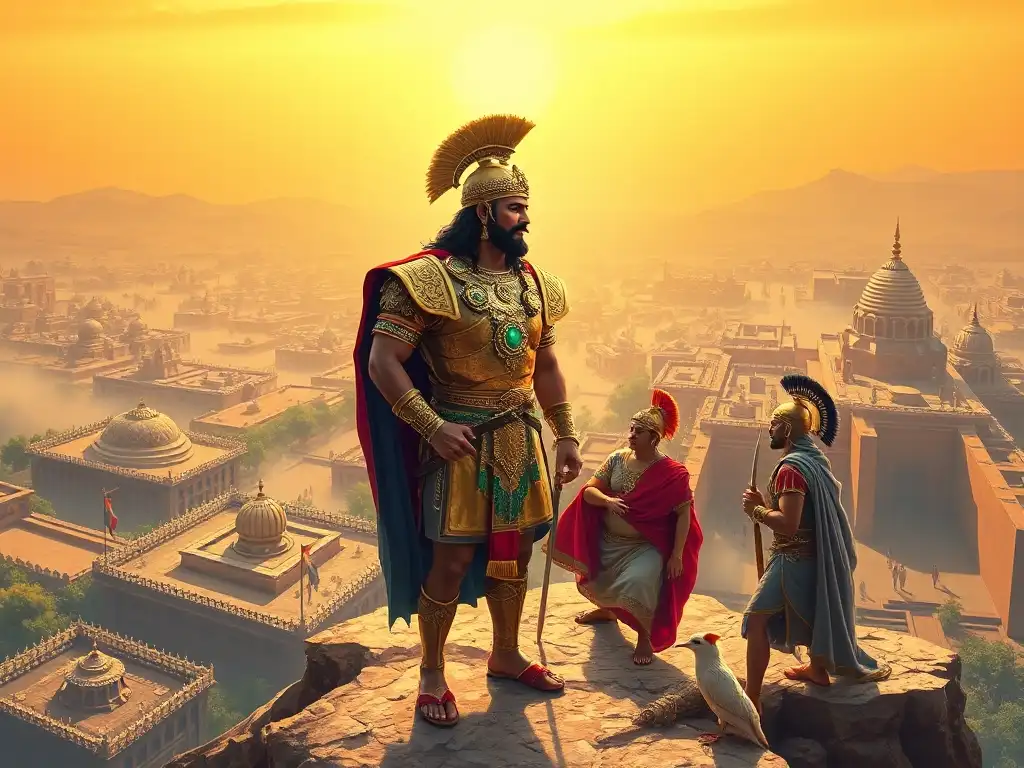
Chandragupta Maurya, the founder of the Maurya Empire, is celebrated not only for his conquests but also for his exceptional ability to embrace change and adapt to the evolving landscape of ancient India. His reign marked a pivotal shift, as he unified a fragmented subcontinent under a centralized administration, laying the groundwork for future Indian empires. This adaptability is reflected in various aspects of his rule, from cultural integration and economic reforms to military innovations.
Chandragupta's legacy is characterized by his strategic vision and willingness to embrace new ideas. He understood that to maintain control over diverse populations, it was essential to foster a sense of unity while respecting regional identities. This approach not only strengthened his rule but also contributed to the rich tapestry of ancient Indian civilization, making him a figure of significant historical importance.
Cultural Integration: Unifying Diverse Regions
Chandragupta Maurya's reign was marked by the consolidation of numerous smaller kingdoms into a vast empire. This unification was not merely a military achievement; it involved a profound cultural integration that sought to harmonize the beliefs, traditions, and practices of various regions.
- Promotion of Buddhism and Jainism: Chandragupta's support for Buddhism and Jainism played a crucial role in promoting cultural cohesiveness. By endorsing these religions, he facilitated the spread of their teachings across different regions, which helped to foster a common philosophical ground among diverse populations.
- Administrative Inclusiveness: The Mauryan administration was notable for its inclusiveness. Chandragupta appointed local leaders and representatives from various communities to positions of power, ensuring that different cultures and traditions were respected and represented within the new governance structure.
- Cultural Exchange: The establishment of trade routes and increased interactions among diverse communities led to significant cultural exchange. Art, literature, and ideas flowed freely across the empire, enriching the cultural landscape. Notably, the art forms that emerged during this period reflected a blend of local styles with influences from Hellenistic culture, particularly after Alexander the Great's incursions.
This cultural integration under Chandragupta laid the foundation for a more cohesive society, which would endure even beyond the Mauryan Empire.
Economic Reforms: Trade and Agriculture Under Mauryan Rule
Chandragupta Maurya recognized the importance of a robust economy as a pillar for sustaining his empire. His economic reforms were instrumental in stimulating trade and enhancing agricultural productivity, which contributed significantly to the empire's prosperity.
- Agricultural Policies: To promote agriculture, Chandragupta implemented policies that encouraged irrigation and the use of advanced farming techniques. The establishment of state granaries ensured food security and stabilized prices, which benefited both farmers and consumers.
- Trade Expansion: Chandragupta's reign saw the expansion of trade routes, both overland and maritime. By securing and enhancing trade connections, especially with regions like the Mediterranean and Southeast Asia, he facilitated the exchange of goods, ideas, and culture.
- Standardization of Currency: The introduction of a standardized currency under his rule simplified trade transactions and fostered economic stability. This innovation not only enhanced trade efficiency but also promoted a sense of unity within the empire by creating a shared economic identity.
These economic reforms were pivotal in transforming the Maurya Empire into a thriving economic powerhouse, which would benefit future generations.
Military Innovations: Adapting to New Challenges
Chandragupta Maurya's military prowess was a crucial factor in his ability to establish and maintain a vast empire. His approach to military innovations reflected his adaptability and strategic mindset in addressing the challenges of his time.
- Formation of a Powerful Army: Chandragupta built a formidable army that was not only large but also well-organized and trained. He incorporated various military techniques and strategies from different cultures, including those he encountered during his campaigns against the Greeks.
- Use of War Elephants: The integration of war elephants into his military strategy was a significant innovation. These majestic animals were used to break enemy lines and instill fear among opponents, giving Chandragupta a tactical advantage in battles.
- Intelligence and Spying Networks: Understanding the importance of information in warfare, Chandragupta established extensive intelligence networks. This allowed him to anticipate enemy movements and strategies, enhancing his military effectiveness.
Through these military innovations, Chandragupta not only secured his empire but also set a precedent for future rulers in terms of military organization and strategy, underscoring his historical significance as a leader who embraced change and adaptation.
The Role of Chanakya in Chandragupta's Success
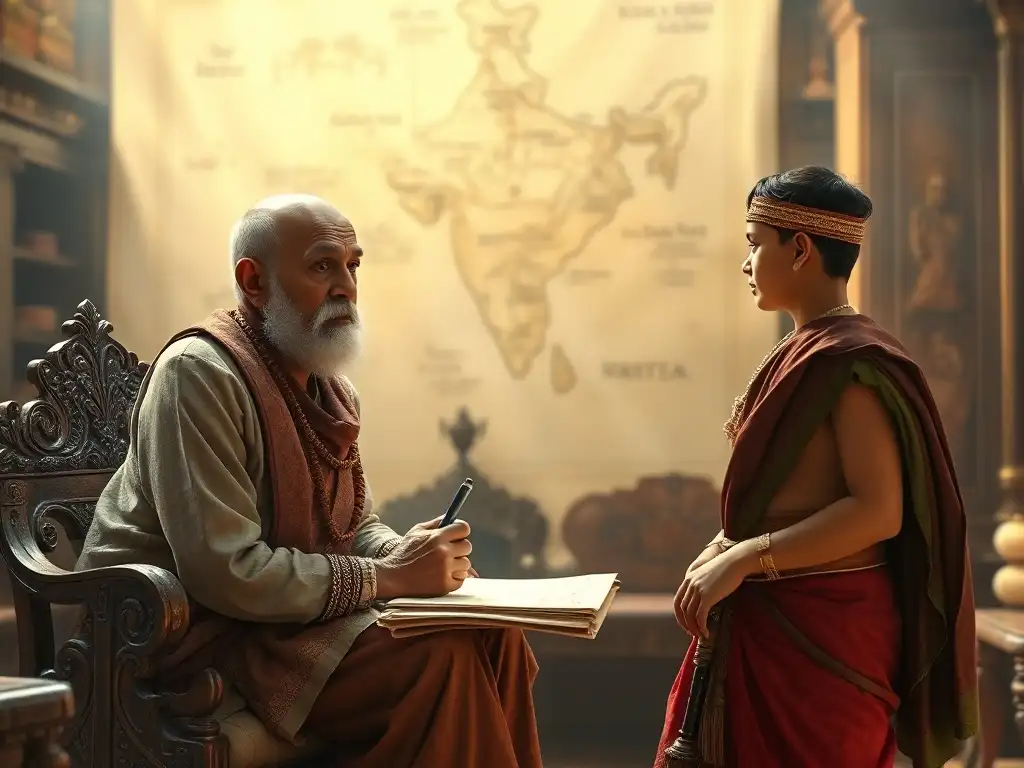
Chanakya's Philosophy: The Visionary Behind the Throne
Chanakya, also known as Kautilya or Vishnugupta, was not just a mentor to Chandragupta Maurya; he was the architect of his empire. His philosophy and strategic thinking laid the foundation for Chandragupta’s rise to power. Chanakya believed in the idea of Dharma (righteousness) as an essential aspect of governance, but he also emphasized the importance of Artha (wealth) and Kama (desire) in achieving a stable kingdom.
He perceived the political landscape as a battleground where only the most cunning and adaptable could survive. His seminal work, the Arthashastra, is a treatise that encompasses statecraft, economic policy, and military strategy, showcasing his belief that the state should be run with a pragmatic approach that prioritizes realpolitik over idealism. This philosophy greatly influenced Chandragupta’s policies as he sought to unify the fragmented territories of India under his rule.
Moreover, Chanakya's teachings on leadership emphasized the need for a ruler to be both feared and respected. He taught Chandragupta to surround himself with capable advisors and to maintain a network of informants to ensure he was always aware of the public sentiment and potential threats to his rule. This pragmatic approach to governance helped Chandragupta navigate the complexities of ruling a vast empire, ensuring his decisions were informed and strategic.
Strategies Employed by Chanakya to Secure Power
Chanakya’s strategies were multifaceted and deeply rooted in his understanding of human psychology and political dynamics. Here are some key strategies he employed to secure power for Chandragupta Maurya:
- Guerrilla Warfare: Chanakya recognized that a direct confrontation with the powerful Nanda Empire would be catastrophic. Instead, he advised Chandragupta to adopt guerrilla tactics, utilizing the element of surprise and the terrain to his advantage. This approach not only weakened the Nandas but also galvanized local support for Chandragupta.
- Alliance Building: Chanakya understood the importance of alliances in consolidating power. He encouraged Chandragupta to form strategic alliances with local rulers and influential families. This not only provided military support but also legitimatized Chandragupta's claim to power in the eyes of the people.
- Intelligence Gathering: Central to Chanakya’s strategy was the establishment of an extensive intelligence network. He believed that knowledge is the greatest weapon. By collecting information on rival factions and potential threats, Chandragupta could preemptively strike or co-opt opponents before they posed a real danger.
- Political Manipulation: Chanakya was a master of political maneuvering. He often employed deception and manipulation to destabilize the Nanda Empire. For example, he famously instigated dissent within the Nanda court, using discontented nobles to his advantage, which ultimately led to the fall of the Nanda dynasty.
- Promotion of Social Order: Understanding the societal dynamics of the time, Chanakya advised that the new regime respect the existing social structures while gradually introducing reforms. This helped in gaining the acceptance of the populace, making the transition smoother and less contentious.
Through these strategies, Chanakya not only facilitated Chandragupta’s ascent to power but also instilled in him the qualities of a successful ruler. The combination of Chanakya's philosophical insights and practical tactics played a crucial role in establishing the Maurya Empire, marking a significant chapter in Indian history with lasting implications for governance and statecraft.
Chandragupta Maurya's Historical Significance in Context
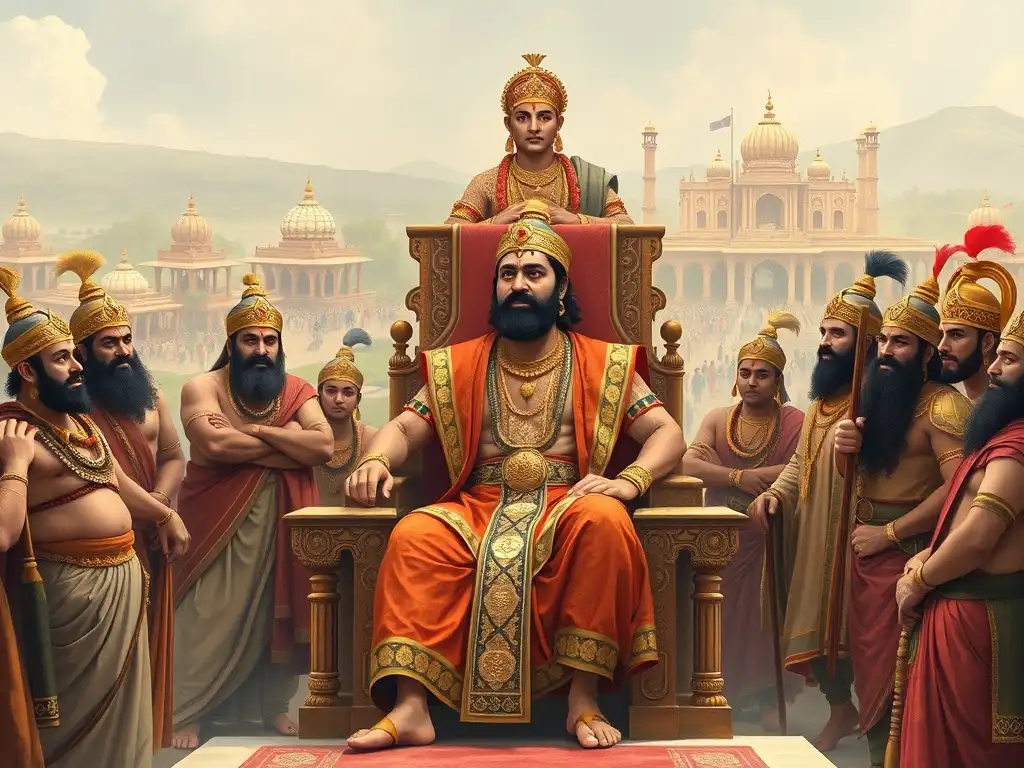
Chandragupta Maurya stands as a pivotal figure in the historical landscape of ancient India, whose actions and policies laid the groundwork for one of the most powerful empires in Indian history. His rise to power marked the beginning of the Mauryan Empire, a dynasty that would come to dominate the Indian subcontinent. Understanding his historical significance requires examining not just his reign but also the broader context of his era.
Comparison with Other Great Emperors of Ancient India
When assessing Chandragupta Maurya's historical significance, it is essential to compare him with other notable emperors of ancient India, such as Ashoka, Samudragupta, and Harsha.
- Chandragupta Maurya vs. Ashoka
- Foundational Leadership: Chandragupta is often seen as the founder of the Mauryan Empire, while his grandson Ashoka expanded and transformed it into a prominent power. Ashoka is renowned for his promotion of Buddhism and moral governance, which contrasted with Chandragupta's pragmatic and sometimes militaristic approach.
- Administrative Innovations: Chandragupta established a centralized administrative system, which Ashoka later refined with emphasis on welfare and ethical governance. This foundational structure was crucial for managing a vast empire.
- Chandragupta Maurya vs. Samudragupta
- Military Conquests: While Samudragupta is celebrated for his military prowess and conquests, Chandragupta's rise involved strategic alliances and the overthrow of the Nanda Dynasty. This aspect highlights Chandragupta's adaptability in both warfare and diplomacy.
- Cultural Contributions: Chandragupta's era set the stage for the subsequent cultural developments seen under Samudragupta, including advancements in literature and the arts, indicating a continuum of growth that began with Chandragupta’s reign.
- Chandragupta Maurya vs. Harsha
- Political Unity: Chandragupta's unification of various smaller kingdoms into a cohesive empire was a significant achievement that would influence future rulers, including Harsha, who attempted to revive similar unity in the 7th century.
- Legacy of Governance: The administrative practices initiated by Chandragupta were pivotal in shaping the governance models that Harsha and others would adapt, showcasing his lasting impact on Indian political structures.
While each emperor made significant contributions, Chandragupta Maurya's role as a unifier and innovator in governance established a foundation upon which future empires were built, marking him as a crucial figure in ancient Indian history.
Influence on Successors: The Impact on Indian History
Chandragupta Maurya's influence extended beyond his reign, shaping the trajectory of Indian history through his successors and their policies.
- Ashoka's Adoption of Buddhism
- After Chandragupta's death, his grandson Ashoka embraced Buddhism, which transformed the cultural landscape of India. The moral and ethical principles espoused by Buddhism were influenced by the administrative and diplomatic strategies that Chandragupta had established, emphasizing governance based on welfare.
- Administrative Practices
- The bureaucratic systems put in place by Chandragupta were further developed by his successors. The Mauryan administration became a model for subsequent dynasties, emphasizing organized governance, tax collection, and public welfare, which were essential for maintaining a large empire.
- Cultural Flourishing
- The cultural and artistic achievements that flourished during the Mauryan period, particularly under Ashoka, can be traced back to the stability and unity achieved by Chandragupta. His legacy fostered an environment where art, literature, and philosophy could thrive.
- Military Strategies
- Chandragupta’s military strategies and tactics informed the approaches taken by later emperors, enabling them to expand and defend their territories effectively. His experiences in warfare and statecraft provided a blueprint that would be utilized by his successors.
Chandragupta Maurya's historical significance is not only rooted in his own achievements but also in how he set the stage for future developments in Indian history. His influence on governance, culture, and military strategy resonated through the ages, making him a key figure whose impact is still felt in the narratives of India's past.
Conclusion: The Enduring Legacy of Chandragupta Maurya
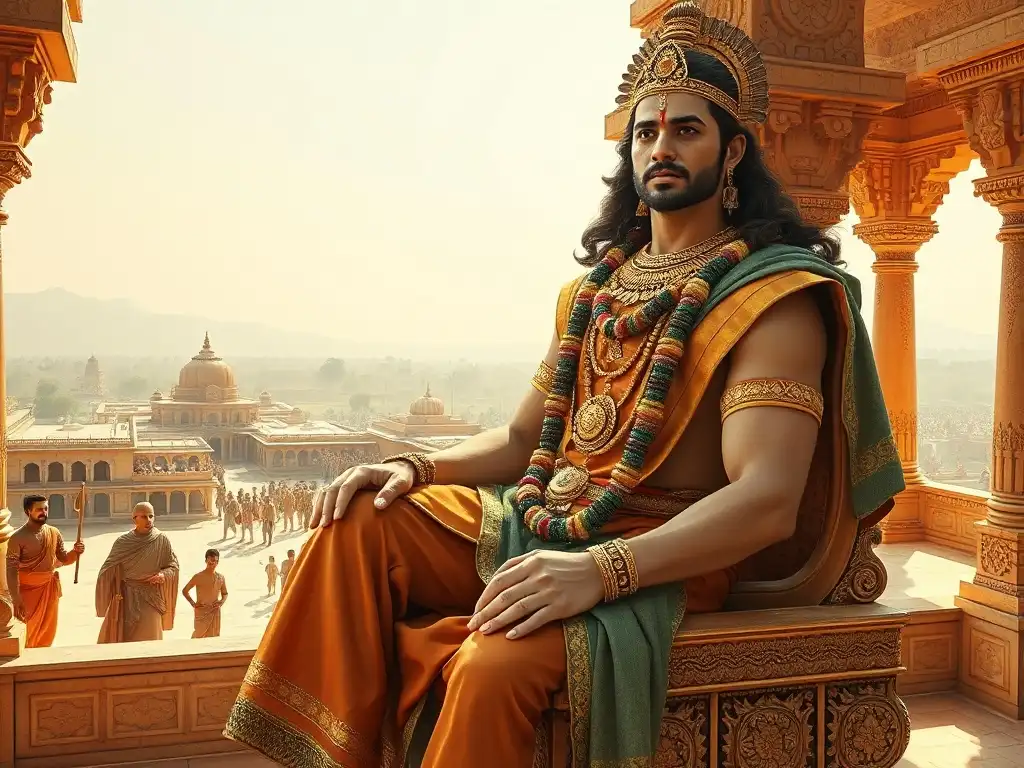
Summary of Key Contributions and Achievements
Chandragupta Maurya’s reign marked a pivotal turning point in Indian history. His ability to unify the fragmented states of northern India laid the foundation for the Maurya Empire, which became one of the largest empires in the Indian subcontinent. Here are some of his key contributions and achievements:
- Unification of India: Chandragupta successfully consolidated various warring regional kingdoms, creating a centralized administration that promoted stability and economic growth. This unification is often viewed as a crucial precursor to the later flourishing of Indian culture and politics.
- Establishment of the Maurya Empire: In 322 BCE, he established the Maurya Empire, which lasted until 185 BCE. His empire expanded through military conquests, diplomacy, and strategic alliances, encompassing vast territories from the Indus Valley in the west to Bengal in the east.
- Adoption of Administrative Innovations: Chandragupta implemented a sophisticated bureaucratic system that included various departments overseeing agriculture, trade, and taxation. His governance model influenced future Indian administrations and is documented in Kautilya's Arthashastra, a treatise on statecraft and economics.
- Cultural Patronage: Under his rule, art, and architecture flourished. The construction of monumental structures, including stupas and pillars, reflected the cultural richness of the Maurya period. The famous Ashoka Pillars, which were later commissioned by his grandson, Ashoka the Great, are a testament to this artistic legacy.
- Promotion of Trade: Chandragupta recognized the importance of trade for economic prosperity. He established trade routes that facilitated commerce with neighboring regions, thus enhancing the economic landscape of ancient India.
Reflection on His Influence on Future Generations
Chandragupta Maurya's historical significance extends far beyond his lifetime, influencing successive generations in numerous ways:
- Political Framework: His methods of governance and administration set a precedent for future Indian rulers. The centralized state model he introduced would be emulated by later dynasties, reinforcing the importance of strong leadership in maintaining order and governance.
- Cultural Synthesis: The Maurya Empire under Chandragupta facilitated a rich exchange of ideas, art, and culture. This synthesis laid the groundwork for the cultural developments during the subsequent Gupta Empire, often referred to as the Golden Age of India.
- Strategic Diplomacy: Chandragupta’s diplomatic strategies, including alliances and treaties, continue to be studied as essential components of statecraft. His approach to diplomacy has influenced modern political theories regarding governance and international relations.
- Philosophical Contributions: The legacy of Chandragupta also includes his association with notable figures such as Chanakya, whose philosophies on governance and ethics resonate in contemporary political thought. The Arthashastra remains a critical text for those studying political science and economic strategies.
- Inspiration for Future Leaders: His rise from humble beginnings to the throne serves as an inspiration for future leaders, demonstrating the potential for change through determination and vision. The narrative of Chandragupta Maurya is often invoked in discussions about leadership and resilience.
Chandragupta Maurya's historical significance is profound and multifaceted, shaping the trajectory of Indian history and leaving an indelible mark on the cultural, political, and economic landscape of the region for centuries to come. His legacy continues to be celebrated, reminding us of the importance of adaptability and change in the face of challenges.
Further Reading and Resources on Chandragupta Maurya
Recommended Books and Articles
To gain a comprehensive understanding of Chandragupta Maurya and his historical significance, consider delving into the following recommended books and articles:
- "The Mauryan Empire" by Romila Thapar
- This book offers an in-depth analysis of the Mauryan Empire's formation, including Chandragupta's role, his policies, and the socio-political environment of ancient India. Thapar's scholarly approach provides valuable insights into the emperor's significance in Indian history.
- "Chandragupta Maurya: A Historical Novel" by Surendra Verma
- Blending historical facts with narrative storytelling, this novel brings to life the journey of Chandragupta Maurya, emphasizing his strategies and challenges. It offers readers a vivid depiction of the era and the emperor's adaptability.
- "The Arthashastra" by Kautilya (Chanakya)
- Although not solely about Chandragupta, the Arthashastra is a crucial text authored by his advisor, Chanakya. It outlines political strategies and governance principles that Chandragupta implemented, showcasing his administrative acumen.
- "The History of India" by John McLeod
- This comprehensive historical overview includes discussions on the Mauryan Empire and Chandragupta's contributions. McLeod's work situates Chandragupta within the broader spectrum of Indian history.
- "Chandragupta Maurya: The Founder of the Maurya Dynasty" by R. C. Majumdar
- Majumdar examines the life and achievements of Chandragupta Maurya, detailing his rise to power and the establishment of one of India's first empires. This work is essential for understanding his historical significance.
Online Resources for Deeper Exploration of Mauryan History
In addition to books, several online resources can enhance your understanding of Chandragupta Maurya and the Mauryan Empire:
-
Digital South Asia Library
This resource offers a wealth of digitized historical documents and scholarly articles related to ancient India, including information about the Mauryan Empire and Chandragupta's reign.
-
Ancient History Encyclopedia
This online platform provides accessible articles on various historical figures, including Chandragupta Maurya. It synthesizes academic research into easily digestible content, making it suitable for both students and enthusiasts.
-
The British Museum Online Collection
Explore artifacts from the Mauryan period, including coins and sculptures, which provide tangible insights into the life and times of Chandragupta. The museum's digital collection offers detailed descriptions and historical context.
-
YouTube Educational Channels
Channels like “CrashCourse” and “Kings and Generals” often feature episodes on ancient Indian history, including the Mauryan Empire. These videos can serve as engaging visual aids to complement your reading.
-
Online Courses on Ancient Indian History
Platforms like Coursera and edX offer courses that cover various aspects of ancient Indian history, including the Mauryan Empire. These courses provide a structured learning experience, often led by university professors.
By exploring these resources, you can deepen your knowledge of Chandragupta Maurya and appreciate the profound impact he had on the historical landscape of India.
Frequently Asked Questions
What was the historical significance of Chandragupta Maurya?
Chandragupta Maurya is known for founding the Maurya Empire, which marked the beginning of a unified Indian state and introduced centralized governance.
How did Chandragupta Maurya embrace change?
Chandragupta adapted to new political landscapes by implementing innovative administrative practices and forming alliances, which helped to consolidate his power.
What contributions did Chandragupta Maurya make to Indian civilization?
He is credited with establishing a strong military and a structured economy, as well as promoting trade and cultural exchange throughout his empire.
How did Chandragupta's rule influence future Indian empires?
His governance model and administrative techniques set a precedent for later empires, influencing leaders like Ashoka the Great in areas of policy and governance.
What role did Chandragupta Maurya play in the spread of Buddhism?
While he was not a Buddhist himself, his grandson Ashoka's support for Buddhism was influenced by Chandragupta's tolerance for diverse beliefs, promoting a culture of religious harmony.
Final Reflection: Embracing Change as a Path to Greatness
Chandragupta Maurya's journey exemplifies the profound impact of adaptability in leadership and governance. In a world that is constantly evolving, the ability to embrace change has never been more relevant. Chandragupta's strategic acumen and willingness to learn from diverse influences not only shaped his empire but also laid the groundwork for future generations. His story serves as a powerful reminder that greatness often arises from the courage to adapt.
Cultural and social landscapes are continually molded by figures like Chandragupta, whose legacy emphasizes the importance of resilience and innovation. His reign marked a pivotal moment in Indian history, showcasing how embracing new ideas can lead to unprecedented growth and unity. The greatest glory in living lies not in never falling, but in rising every time we fall.
This quote resonates deeply with the essence of Chandragupta's life, illustrating that the ability to rise and adapt is a hallmark of true leadership.
As we reflect on the lessons from Chandragupta Maurya's life, let us consider how we can apply the principles of change and adaptation in our own lives. In a rapidly changing world, each of us has the opportunity to be a catalyst for transformation, whether in our personal endeavors or within our communities. Embrace the challenges that come your way, and remember that like Chandragupta, your journey can inspire others to adapt and thrive.
Embrace Change Like Chandragupta Maurya!
Thank you for exploring the inspiring story of Chandragupta Maurya! We hope you gained valuable insights into the power of **adaptation** and **resilience** in the face of challenges. Now, it's time to harness that inspiration and take action in your own life.
Here are a few steps you can take to embody the spirit of change:
- Reflect on your own journey: Identify areas in your life where you can embrace change and adapt like Chandragupta. Start by setting one specific goal for growth this week.
- Start a conversation: Share your thoughts about change with friends or family. Ask them how they navigate change in their lives and learn from their experiences.
- Explore historical lessons: Dive deeper into the lives of influential figures throughout history. Which stories resonate with you? Consider reading a biography or watching a documentary to inspire your own personal growth.
What change will you embrace today to step into your full potential? We would love to hear your thoughts in the comments below!