
The Significance of Chandragupta Maurya in the Context of Global History

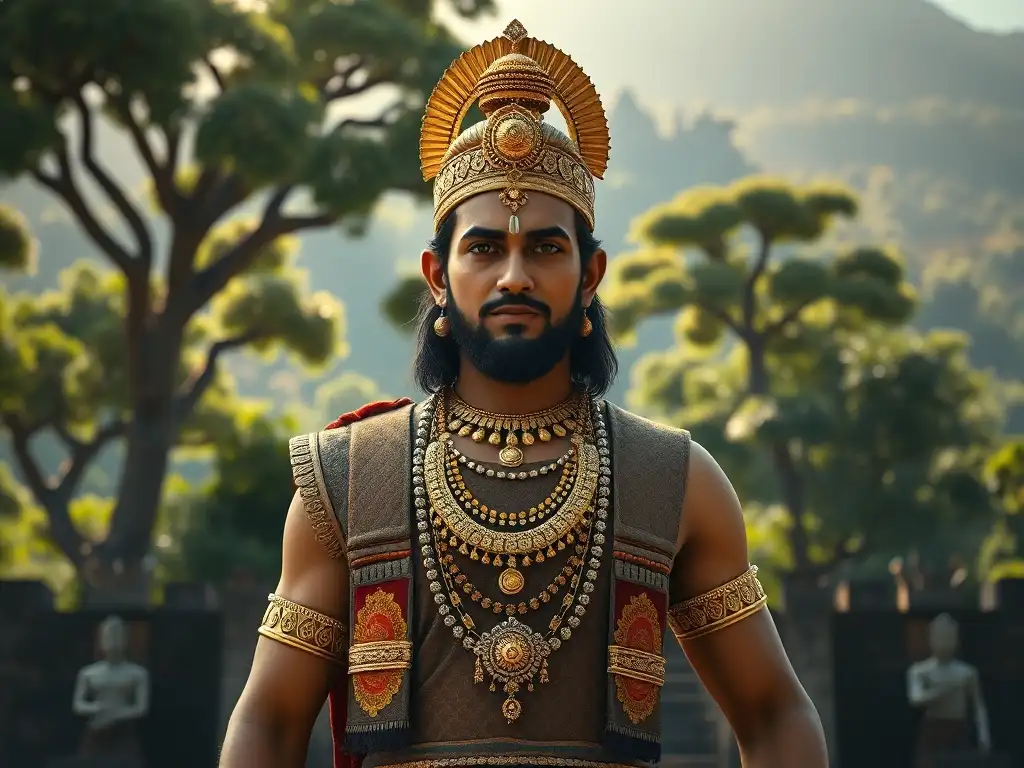
Welcome to Ancient India History, where we embark on a journey through the vibrant tapestry of India's past! Our exploration delves deep into the rich and diverse civilizations that flourished from the Indus Valley to the Gupta Empire. In this article, we shine a spotlight on Chandragupta Maurya, a pivotal figure whose influence transcended borders and shaped the course of global history.
What were the strategies that allowed him to forge such a powerful empire? Join us as we unravel the remarkable legacy of Chandragupta and discover how his achievements resonate in today's world. Your adventure into the depths of ancient history begins now!
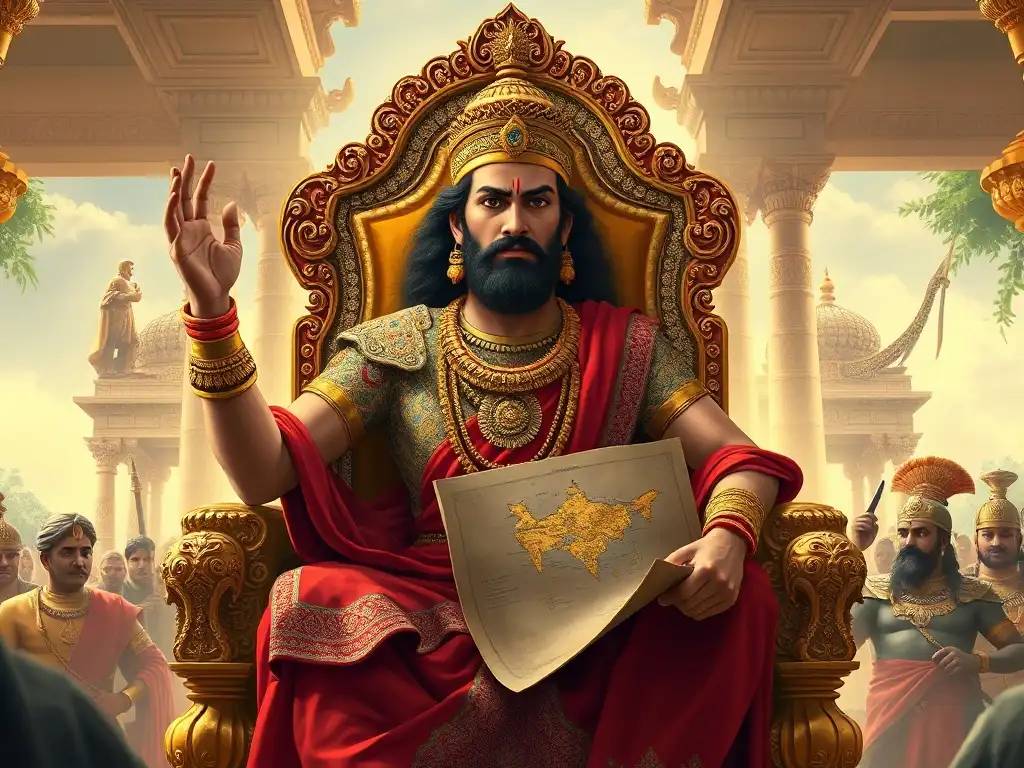
Chandragupta Maurya stands as a pivotal figure in the annals of ancient Indian history, often regarded as the founder of the Maurya Empire, which marked a significant turning point in the region's socio-political landscape. His reign not only transformed India but also had a profound impact that resonates through global history.
Understanding the life and achievements of Chandragupta Maurya offers insights into the complexities of leadership, governance, and culture during a time when India was emerging as a powerful civilization. This exploration delves into the essence of his contributions, illustrating how Chandragupta's legacy transcended borders and continues to influence contemporary society.
Introduction to Chandragupta Maurya
Chandragupta Maurya (c. 340–297 BCE) was a remarkable leader whose vision and ambition facilitated the unification of the Indian subcontinent under a centralized government. His rise to power came during a tumultuous period marked by the decline of regional kingdoms and the incursions of foreign powers, notably Alexander the Great. Chandragupta's ability to navigate these challenges not only established a formidable empire but also set the foundation for subsequent Indian dynasties.
Overview of Chandragupta Maurya's Life and Times
Chandragupta's early life is shrouded in mystery, but he is believed to have been born into a humble family in present-day Bihar. His initial encounters with notable figures such as Chanakya, a learned Brahmin and strategist, significantly shaped his political acumen. Under Chanakya's mentorship, Chandragupta cultivated the skills necessary to challenge the existing powers. He swiftly capitalized on the political vacuum left by the retreat of Alexander's forces, strategically gathering allies and resources to establish the Maurya Empire.
Importance of Studying Chandragupta Maurya in Global History
The significance of studying Chandragupta Maurya extends beyond Indian history; it provides a framework for understanding the emergence of imperial governance. His methods of administration, military strategy, and diplomatic relations offer valuable lessons in statecraft. Furthermore, the Maurya Empire's interactions with neighboring regions underscore the interconnectedness of ancient cultures, illustrating how local developments influenced broader historical narratives. By examining Chandragupta's life and his global impact, we gain a deeper appreciation of the dynamics that shaped civilizations.
The Rise of Chandragupta Maurya
Chandragupta's ascent to power is a testament to his strategic brilliance and tenacity. His journey from obscurity to the throne of a vast empire involved overcoming numerous adversities and leveraging opportunities that arose.
Early Life and Influences on His Leadership
Chandragupta's formative years were marked by significant influences that molded his character and leadership style. The teachings of Chanakya instilled in him a sense of purpose and a keen understanding of political maneuvering. This mentorship was crucial as it prepared him for the complexities of governance and warfare. Moreover, the socio-political climate of the time, characterized by fragmentation and the threat of foreign invasions, catalyzed his ambitions and strategies.
Establishment of the Maurya Empire
The establishment of the Maurya Empire was a monumental achievement that required not only military prowess but also adept diplomacy. Chandragupta successfully overthrew the Nanda dynasty, which had ruled over Magadha, and proclaimed himself king. His reign marked the beginning of an era characterized by extensive territorial expansion, economic prosperity, and cultural development. The Maurya Empire became a model of governance, establishing systems that balanced power and administration.
Key Strategies in Ascending Power
Chandragupta Maurya employed a combination of military strategy, political alliances, and innovative governance to ascend to power. His strategic use of espionage and intelligence networks enabled him to outmaneuver his adversaries effectively. Additionally, his ability to forge alliances with local rulers and incorporate diverse cultures into his administration helped solidify his authority. These strategies not only secured his empire but also laid the groundwork for a legacy that would influence generations to come.
Chandragupta Maurya's Global Impact
Chandragupta Maurya, the founder of the Maurya Empire in ancient India, holds significant importance in global history due to his innovative governance, economic strategies, and cultural exchanges. His reign not only laid the groundwork for one of the largest empires in Indian history but also influenced various regions beyond India. By examining his contributions, we can better understand the interconnectedness of ancient civilizations and the role of leadership in shaping historical narratives.
Political Innovations and Governance
Chandragupta Maurya introduced several political innovations that transformed governance in ancient India and set a precedent for future rulers. His establishment of a centralized administration marked a departure from the fragmented political landscape that preceded him. By implementing a bureaucratic system, he ensured efficiency and stability across his vast empire.
His advisor, Kautilya (Chanakya), played a crucial role in shaping his governance strategies, emphasizing principles of statecraft in the renowned treatise Arthashastra. This text not only guided Maurya in establishing an effective government but also influenced political theories globally. The Mauryan model of governance emphasized the importance of law, order, and the welfare of the state, concepts that resonate with modern political thought.
Economic Contributions and Trade Networks
Under Chandragupta's rule, the Maurya Empire experienced significant economic growth, driven by the development of trade networks that connected various regions of India with Central Asia and beyond. The empire facilitated trade in valuable commodities such as spices, textiles, and precious stones.
Chandragupta's strategic location enabled the establishment of trade routes, particularly along the Silk Road, which fostered economic interactions with distant civilizations, including the Persian Empire and Hellenistic states. This expansion of trade not only enriched the Mauryan economy but also allowed for the exchange of ideas and cultural practices, contributing to a more interconnected ancient world.
Cultural Exchange and Influence on Neighboring Regions
Cultural exchanges flourished during the Maurya Empire, with Chandragupta Maurya promoting a synthesis of various cultural influences. His reign saw the spread of Indian art, science, and philosophy to neighboring regions, including Persia and the Hellenistic kingdoms.
The Mauryan embrace of diverse cultures facilitated the blending of ideas, particularly in areas such as religion and philosophy. The spread of Buddhism, which gained prominence during his grandson Ashoka's reign, exemplifies this cultural exchange. As Buddhism traveled along trade routes, it influenced societies and spiritual practices across Asia, highlighting the global impact of Chandragupta's initial policies.
The Maurya Empire's Role in Ancient Global Dynamics
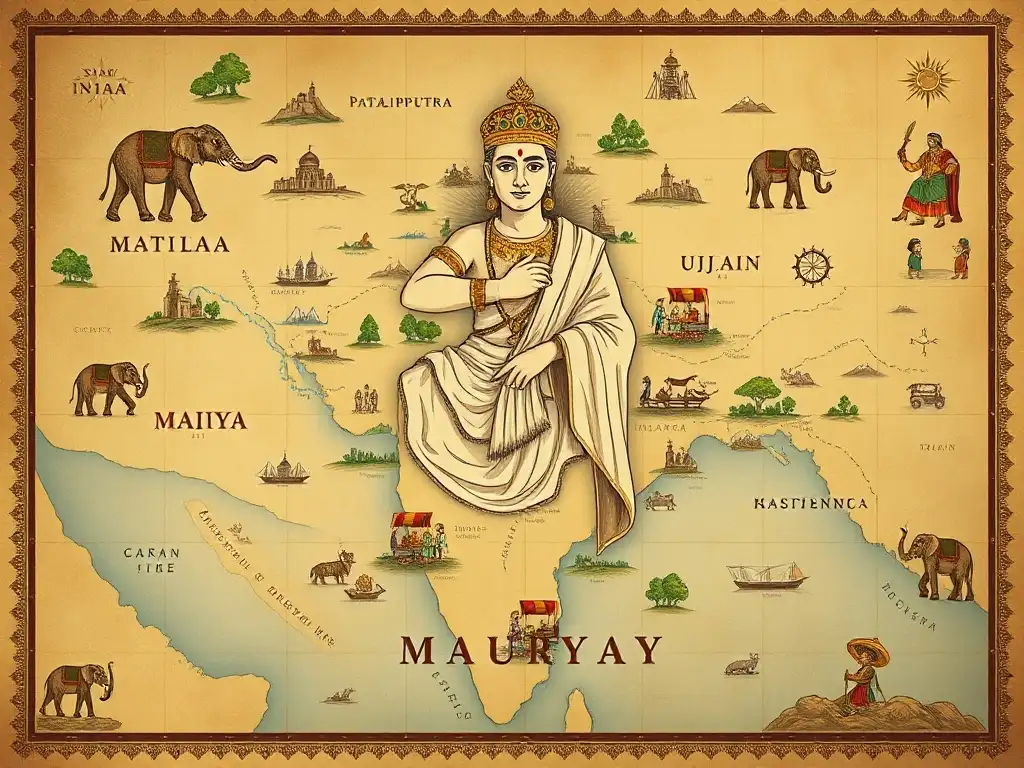
The Maurya Empire was not only a dominant force in South Asia but also played a pivotal role in shaping ancient global dynamics. Its interactions with other great civilizations illustrated the empire's significance in the broader historical context.
Comparison with Contemporary Empires
Chandragupta Maurya's empire can be compared to other contemporary empires, such as the Achaemenid Empire in Persia and the Macedonian Empire under Alexander the Great. While these empires were marked by their military conquests and vast territorial expanses, the Maurya Empire distinguished itself through its administrative innovations and economic policies.
The Mauryan Empire also showcased a unique approach to governance that combined military strength with diplomatic strategies, allowing it to maintain stability and foster trade relations, unlike some of its contemporaries that relied heavily on military dominance.
Diplomatic Relations with Other Civilizations
Chandragupta Maurya established diplomatic relations with several civilizations, enhancing the Maurya Empire's position on the global stage. Historical accounts suggest that he engaged in negotiations and alliances with leaders from neighboring kingdoms, including the Greek states after the conquests of Alexander the Great.
These diplomatic efforts not only secured peace but also facilitated trade and cultural exchanges, further solidifying Maurya's influence. The establishment of such relations laid the groundwork for future interactions between Indian and Mediterranean civilizations.
Military Conquests and Their International Implications
Chandragupta's military conquests were instrumental in expanding the Maurya Empire and significantly influenced the geopolitical landscape of the time. His ability to unify various kingdoms under one rule created a formidable power in South Asia that could engage with other global empires.
The repercussions of his military strategies extended beyond the immediate region, as they set the stage for subsequent interactions with Hellenistic societies. The Maurya Empire's military prowess and territorial expansion prompted responses from neighboring empires, contributing to a dynamic interplay of power that shaped the ancient world.
Legacy of Chandragupta Maurya
Chandragupta Maurya, the founder of the Maurya Empire, is a pivotal figure in ancient Indian history, whose legacy stretches far beyond the subcontinent. His reign marked the beginning of a centralized and vast empire that established a new political landscape in India. His strategic prowess and vision laid the groundwork for a unified India, which would influence governance and administration in the region for centuries.
One of his most significant contributions was the establishment of a bureaucratic system that allowed for efficient governance over a vast territory. This system served as a model for later Indian empires, demonstrating the effectiveness of centralized authority. Furthermore, Chandragupta's embrace of diverse cultures within his empire facilitated trade and cultural exchange, promoting economic prosperity and social cohesion.
Moreover, the Maurya Empire under Chandragupta also emphasized military strength. He effectively utilized a well-organized army, which not only defended the realm but also expanded its borders. His legacy includes the military strategies and organizational skills that were emulated by subsequent rulers, showcasing his impact on military history.
Influence on Subsequent Indian Rulers
The influence of Chandragupta Maurya on subsequent Indian rulers is profound and wide-ranging. Following his reign, the Maurya Empire continued to flourish under his grandson, Ashoka, who built upon the foundations laid by Chandragupta. Ashoka's embrace of Buddhism and his promotion of non-violence and moral governance can be traced back to the stability and unity established during Chandragupta's rule.
Later dynasties, such as the Gupta Empire, drew inspiration from Chandragupta's administrative practices and military strategies. The emphasis on a centralized authority and the integration of various cultures became hallmarks of Indian governance, reflecting his enduring influence.
Rulers across different regions of India also looked to Chandragupta as a model for unification and governance. His ability to consolidate power and maintain order amidst diverse populations set a precedent that shaped the political landscape of India for many centuries.
Impact on Global Historical Narratives
Chandragupta Maurya's impact extends beyond Indian history and resonates in global historical narratives. His establishment of the Maurya Empire is often cited as one of the earliest examples of a large, cohesive political entity in world history. The strategies he employed in unifying various kingdoms and cultures present a compelling case study in statecraft and governance.
Furthermore, the Maurya Empire's interactions with other civilizations, particularly during the Hellenistic period, highlight the cross-cultural exchanges that occurred as a result of his conquests. The encounters with figures like Alexander the Great contributed to a broader understanding of the ancient world, showcasing the interconnectedness of different civilizations.
Chandragupta's leadership demonstrates the complexities of governance in a multicultural context, providing valuable insights that historians and political scientists continue to explore. His legacy, therefore, plays a crucial role in understanding the dynamics of power and empire in global history.
Modern Interpretations of Chandragupta Maurya's Leadership
Modern interpretations of Chandragupta Maurya's leadership are varied and often reflect contemporary values and perspectives. Historians and scholars analyze his reign through different lenses, including political, military, and social frameworks. Some view him as a pragmatic ruler who prioritized stability and order, while others emphasize the ethical dimensions of his rule, especially his later conversion to Jainism.
In contemporary discussions, Chandragupta's approach to governance is often contrasted with modern democratic ideals. His centralized authority raises questions about the balance between power and representation, prompting debates about the nature of effective leadership in both ancient and modern contexts.
Additionally, the portrayal of Chandragupta in literature and popular media has evolved, often romanticizing his achievements and presenting him as a hero of Indian nationalism. Such representations shape public perceptions and contribute to the ongoing discourse about his significance in both Indian and global history.
Conclusion
Chandragupta Maurya stands as a monumental figure in the annals of history, whose legacy continues to inspire and provoke discussion. His contributions to statecraft, military organization, and cultural integration laid the foundation for one of the most significant empires in ancient history.
Summary of Chandragupta Maurya's Global Impact
Chandragupta Maurya's global impact is characterized by his role as a unifier and innovator. His establishment of a vast empire and a centralized administrative system not only transformed India but also contributed to the broader narratives of empire and governance in the ancient world. His strategies and policies have left an indelible mark on subsequent rulers and civilizations.
Reflection on His Historical Significance in World History
Reflecting on his historical significance, it is clear that Chandragupta Maurya's influence transcends geographical boundaries and cultural contexts. His legacy offers valuable lessons on leadership, governance, and the complexities of managing diverse populations. As historians continue to explore his contributions, Chandragupta remains a vital figure in understanding the evolution of empires and the interconnectedness of human civilizations throughout history.
- Introduction to Chandragupta Maurya
- The Rise of Chandragupta Maurya
- Chandragupta Maurya's Global Impact
- The Maurya Empire's Role in Ancient Global Dynamics
- Legacy of Chandragupta Maurya
- Conclusion
Frequently Asked Questions
What was the role of Chandragupta Maurya in ancient Indian history?
Chandragupta Maurya was the founder of the Maurya Empire in ancient India, unifying the Indian subcontinent and establishing a strong central government.
How did Chandragupta Maurya influence global history?
His establishment of a centralized state and administrative innovations served as a model for later empires, influencing governance practices beyond India.
What were the key achievements of Chandragupta Maurya?
Chandragupta's key achievements include the unification of various kingdoms, the establishment of the Mauryan administration, and military conquests that expanded his empire.
How did Chandragupta Maurya impact trade and economy?
Under his reign, trade routes were established and economic policies were implemented that promoted commerce, significantly enhancing the economy of the region.
What legacy did Chandragupta Maurya leave for future generations?
Chandragupta Maurya's legacy includes the promotion of political stability and cultural development, which laid the groundwork for future dynasties and the spread of Indian culture globally.
Final Reflection: The Enduring Legacy of Chandragupta Maurya's Global Impact
Chandragupta Maurya's influence on global history is not merely a relic of the past; it serves as a powerful reminder of how visionary leadership can shape civilizations. In an era where the interconnectedness of cultures and ideas is more pronounced than ever, understanding the significance of figures like Chandragupta Maurya becomes essential.
His establishment of the Maurya Empire laid the groundwork for political and social structures that resonate even in contemporary governance and diplomacy. The lessons from his life and reign remind us that the actions of a single leader can ripple through time, affecting generations far beyond their own.
The impact of Chandragupta Maurya extends beyond the borders of India, influencing political thought and governance across the globe. His strategies and philosophies have inspired countless leaders and thinkers throughout history, illustrating the universal relevance of his contributions. As historian Romila Thapar aptly noted, Chandragupta's legacy is not just in the empire he built, but in the ideals of unity and administration that he championed.
This enduring influence underscores the importance of recognizing historical figures who have shaped our world, encouraging us to draw parallels between their challenges and our own.
As we reflect on the significance of Chandragupta Maurya, let us consider how his story can inspire our actions today. I invite you to explore the values of leadership, unity, and resilience that he embodied, and to apply these lessons in your own life. Whether in your community, workplace, or personal endeavors, strive to make a positive impact that echoes through time, just as Chandragupta did. The past is not merely a collection of dates and events; it is a source of wisdom that can guide us toward a brighter future.
Unveil the Legacy of Chandragupta Maurya!
Thank you for diving into the remarkable journey of Chandragupta Maurya and discovering the pivotal role he played in shaping not just Ancient India, but the global historical landscape. Now that you've gained insights into his leadership and impact, it's time to take action!
Here's how you can further explore this fascinating topic:
- Engage with his legacy: Delve deeper into the history of the Mauryan Empire and uncover the extraordinary achievements that followed his reign. Consider picking up a biography or a historical novel that vividly portrays this significant era!
- Join the conversation: Share your thoughts about Chandragupta Maurya on social media using the hashtag #ChandraguptaLegacy. Invite your friends to discuss how his leadership principles remain relevant in today's world.
- Explore local history: Visit a nearby museum or historical site that showcases artifacts or exhibitions related to Ancient India. Bring a friend along to ignite a dialogue about its importance and legacy!
What aspect of Chandragupta Maurya's leadership resonates with you the most, and how might it inspire your own journey? Your insights could spark a broader discussion!