
How Chandragupta Maurya's Reign Influenced Neighboring Civilizations

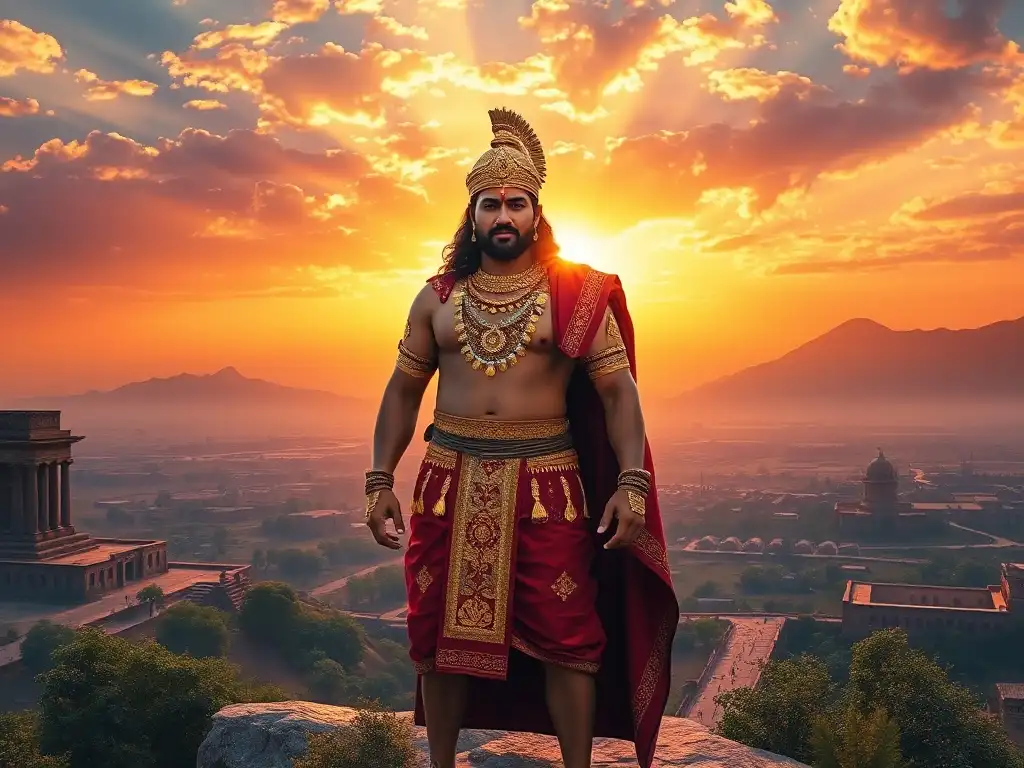
Welcome to Ancient India History, where we embark on a fascinating journey through the rich tapestry of India’s past! Prepare to delve into the remarkable era of Chandragupta Maurya, a pivotal figure whose reign not only shaped the Mauryan Empire but also left an indelible mark on neighboring civilizations. In our featured article, "How Chandragupta Maurya's Reign Influenced Neighboring Civilizations," you'll uncover the profound impacts of his leadership and governance. Join us as we explore the intricate connections and legacies that continue to resonate through time, igniting your curiosity about the grandeur of ancient Indian civilizations!
- Introduction to Chandragupta Maurya's Influence on Civilizations
- The Expansion of the Mauryan Empire
- Political Influence of Chandragupta Maurya
- Economic Impact of Chandragupta Maurya's Reign
- Cultural Exchange Under Chandragupta Maurya
- Military Strategies and Their Impact on Neighboring Regions
- Chandragupta Maurya's Relations with Hellenistic Cultures
- The Enduring Legacy of Chandragupta Maurya's Influence
- Conclusion
-
Frequently Asked Questions
- What was the significance of Chandragupta Maurya's reign?
- How did Chandragupta Maurya influence trade in ancient India?
- What role did Chandragupta Maurya play in the spread of Buddhism?
- How did his administration impact neighboring regions?
- What were the lasting legacies of Chandragupta Maurya's rule?
- Final Reflection: The Enduring Legacy of Chandragupta Maurya's Influence on Civilizations
- Unveil the Legacy of Chandragupta Maurya!
Introduction to Chandragupta Maurya's Influence on Civilizations
Chandragupta Maurya, a pivotal figure in ancient Indian history, established the Maurya Empire in the 4th century BCE, marking a significant turning point in the subcontinent's governance and cultural landscape. His reign not only unified a fragmented India but also laid the groundwork for subsequent empires, influencing neighboring civilizations in profound and lasting ways.
Understanding Chandragupta Maurya's influence on civilizations extends beyond mere historical interest; it sheds light on the interconnectedness of ancient societies and the exchange of ideas, culture, and governance that shaped the Indian subcontinent and its surroundings. This article delves into the various dimensions of his reign, exploring how his policies, military strategies, and diplomatic relationships played a crucial role in shaping the civilizations that bordered his empire.
Overview of Chandragupta Maurya's Reign
Chandragupta Maurya ascended to power after overthrowing the Nanda dynasty, establishing a centralized government that spanned much of modern-day India and beyond. His reign, which lasted from approximately 321 BCE to 297 BCE, was characterized by several key achievements:
- Formation of the Maurya Empire: Chandragupta unified various smaller kingdoms, creating one of the largest empires in ancient India. This consolidation of power allowed for increased stability and security across the region.
- Administrative Innovations: He implemented a bureaucratic system that included officials overseeing various aspects of governance, such as taxation and law enforcement. This structure facilitated effective administration and contributed to the prosperity of the empire.
- Military Expansion: Chandragupta’s military prowess enabled him to expand his territory significantly, including conquests in present-day Afghanistan and parts of Persia. His tactics and strategies set a precedent for future Indian rulers.
- Alliance with Chanakya: His relationship with the philosopher Chanakya (Kautilya) was instrumental in shaping his policies and strategies, particularly in political science and military tactics, as outlined in Chanakya's seminal work, the Arthashastra.
Importance of Understanding His Impact on Neighboring Civilizations
Chandragupta Maurya's reign was not only transformative for India but also had significant implications for neighboring civilizations. By examining his influence, we can uncover the following aspects:
- Cultural Exchange: The Maurya Empire served as a hub for cultural and intellectual exchange. The interactions with Hellenistic cultures, particularly through Alexander the Great's campaigns, facilitated the flow of ideas, art, and technology.
- Economic Influence: The establishment of trade routes during his reign enhanced economic ties with regions like Central Asia and the Mediterranean. This economic integration fostered mutual dependencies among civilizations.
- Diplomatic Relations: Chandragupta's alliances and treaties with neighboring states exemplified early forms of diplomacy, showcasing how power dynamics shifted in response to his reign. His interactions with the Seleucid Empire, for instance, led to the exchange of ambassadors and trade agreements.
- Legacy of Governance: The administrative practices established during Chandragupta's rule influenced subsequent empires, including the Maurya’s successors and later dynasties, shaping governance models across the region.
Understanding Chandragupta Maurya's influence on civilizations provides crucial insights into how leadership strategies and cultural exchanges can have rippling effects throughout history, enriching the tapestry of ancient Indian and neighboring societies.
The Expansion of the Mauryan Empire
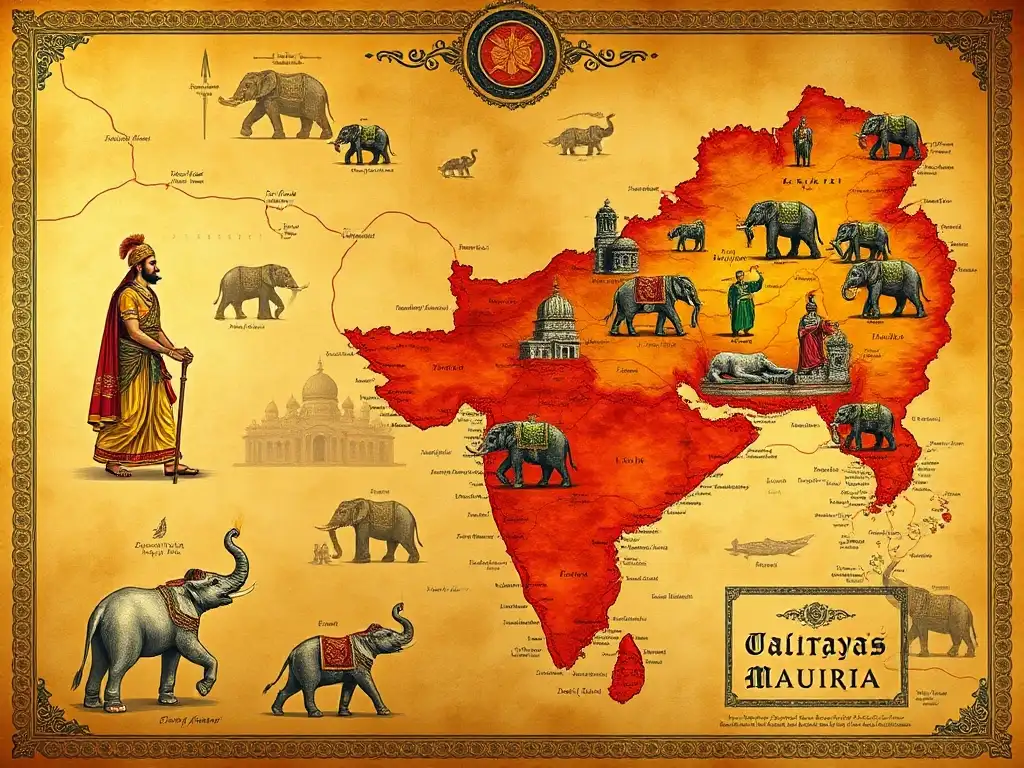
Key Events Leading to the Empire’s Formation
The reign of Chandragupta Maurya marked a significant turning point in ancient Indian history, culminating in the establishment of the Mauryan Empire around 321 BCE. This transformation was not spontaneous; it was the result of a series of pivotal events that orchestrated the rise of a unified Indian state.
- Political Instability: Before Chandragupta’s ascendance, the Indian subcontinent was fragmented into numerous kingdoms and republics. The decline of the Nanda Dynasty, coupled with the political vacuum created by Alexander the Great's invasion, set the stage for Chandragupta's rise.
- Military Alliances: Chandragupta formed critical alliances with local rulers and influential figures. His partnership with the philosopher Chanakya (Kautilya) proved instrumental, providing both strategic guidance and military support. Chanakya's treatise, the Arthashastra, laid the groundwork for statecraft and economic policies that would benefit the empire.
- Confrontation with Alexander: The Mauryan Empire's formation was further catalyzed by the power vacuum left after Alexander's retreat. Chandragupta capitalized on this situation, engaging in battles against the remnants of Alexander's forces and other local kings, ultimately consolidating power over a vast territory.
- Administrative Innovations: The establishment of an effective administrative system was crucial. Chandragupta implemented a bureaucratic framework that allowed for efficient governance, taxation, and law enforcement. This system not only facilitated the expansion but also ensured the stability of the newly formed empire.
Chandragupta's conquests and administrative reforms not only established the Mauryan Empire but also influenced neighboring civilizations by introducing new governance models and trade practices.
Geographic Reach and Neighboring Civilizations Affected
The Mauryan Empire under Chandragupta Maurya extended across a substantial part of the Indian subcontinent, creating a profound impact on neighboring civilizations. The empire's geographic reach can be outlined as follows:
- Northwest Frontiers: The empire extended into the regions formerly controlled by Alexander the Great, including parts of present-day Pakistan and Afghanistan. This interaction introduced Hellenistic influences into Indian culture, art, and architecture.
- Central India: Chandragupta's conquests unified various smaller kingdoms in Central India, promoting a sense of identity among the local populations. This unification led to the standardization of trade practices and cultural exchanges.
- Eastern Regions: The Mauryan Empire also expanded into Bengal and Odisha. The interactions with local tribes facilitated the spread of Buddhism, as well as agricultural techniques, which in turn enriched the cultural landscape of these regions.
- Southern India: Although direct control was limited, the Mauryan influence permeated down to the Deccan Plateau, primarily through trade routes. The introduction of Mauryan administrative practices influenced local governance in the Deccan.
The influence of Chandragupta Maurya's reign on neighboring civilizations is evident in the following aspects:
- Cultural Exchange: The Mauryan Empire facilitated the exchange of ideas, art, and technology. The spread of Buddhism during this period later influenced various cultures across Asia, including those of Central Asia and Southeast Asia.
- Economic Integration: The establishment of trade routes linking the empire with regions beyond its borders improved economic ties, allowing for the flow of goods, ideas, and technologies. This integration helped neighboring civilizations thrive economically.
- Political Models: The administrative strategies and statecraft innovations introduced by Chandragupta were studied and adapted by surrounding states. This knowledge transfer led to the evolution of governance in various regions, enhancing political stability.
The expansion of the Mauryan Empire under Chandragupta Maurya not only solidified his reign but also left an indelible mark on neighboring civilizations, shaping the socio-political landscape of ancient India and beyond.
Political Influence of Chandragupta Maurya
Establishing Governance Structures
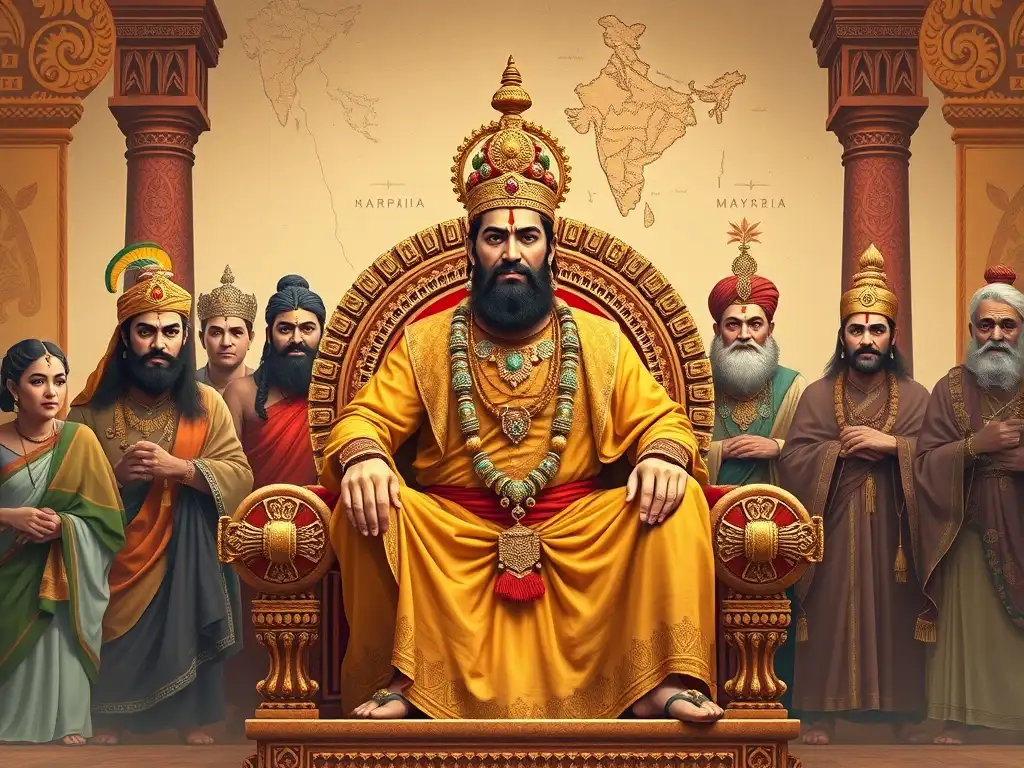
Chandragupta Maurya, the founder of the Maurya Empire, was instrumental in establishing a robust governance framework that laid the foundations for future Indian empires. His administration was marked by a mix of innovative strategies and adaptations of existing political practices, which significantly influenced neighboring civilizations.
- Centralized Authority: Chandragupta centralized power, creating a strong monarchy that allowed for efficient governance. He introduced a bureaucratic system that ensured effective administration across vast territories. This centralized approach set a precedent for future rulers in the region, emphasizing the importance of a strong, unified government.
- Legal Reforms: Under Chandragupta, legal systems were formalized, leading to the codification of laws. This not only enhanced social order within his empire but also influenced neighboring regions that sought to emulate his legal frameworks. The emphasis on justice and order through fair legal practices contributed to stability and governance, which were attractive aspects for neighboring states.
- Taxation and Economic Policies: The Maurya Empire implemented a comprehensive taxation system that funded public projects, military campaigns, and trade. The revenue collected was used to bolster infrastructure, including roads and cities, which facilitated trade and communication with neighboring regions. This economic prosperity became a model for other kingdoms, demonstrating the importance of sound fiscal policies.
- Administrative Divisions: Chandragupta divided his empire into provinces, each governed by appointed officials. This administrative division allowed for localized governance, enabling swift responses to regional issues. Neighboring civilizations observed and adopted similar provincial structures, realizing the benefits of localized governance in managing vast territories effectively.
Diplomatic Relations with Neighboring States
Chandragupta Maurya's reign was not only marked by internal governance but also by strategic diplomatic relations with neighboring states, which had a profound impact on the political landscape of the Indian subcontinent.
- Alliances and Treaties: Chandragupta skillfully navigated the political landscape by forming alliances with other kingdoms. His notable alliance with the Nanda Dynasty through marriage diplomacy created a powerful coalition. Such strategies inspired neighboring states to adopt similar diplomatic practices, recognizing the importance of alliances in maintaining stability and expanding influence.
- Military Conquests and Influence: Chandragupta's military campaigns against the Nanda Dynasty and later against Alexander the Great's successors demonstrated his prowess and determination. The resulting power vacuum and changes in leadership in these regions compelled neighboring states to reassess their military strategies and alliances, often leading them to seek alliances with Chandragupta to ensure mutual security.
- Cultural Exchange: Through diplomacy, Chandragupta facilitated cultural exchanges with neighboring civilizations, notably with the Hellenistic world following Alexander's invasion. The interaction with Greek ambassadors and traders brought new ideas, technologies, and cultural practices into India. This cultural diffusion influenced neighboring states, enriching their societies with Indian philosophies, art, and governance concepts.
- Strategic Marriages: Marriages into royal families of neighboring kingdoms served as a diplomatic tool that strengthened ties and fostered peace. These matrimonial alliances became a standard practice among various rulers in the region, illustrating how Chandragupta's approach to diplomacy influenced the political strategies of subsequent monarchs.
Chandragupta Maurya's political influence extended far beyond his reign, impacting governance structures and diplomatic practices across neighboring civilizations. His legacy of centralized authority, legal reforms, and strategic alliances set foundational standards that shaped the political dynamics of ancient India and its surroundings.
Economic Impact of Chandragupta Maurya's Reign
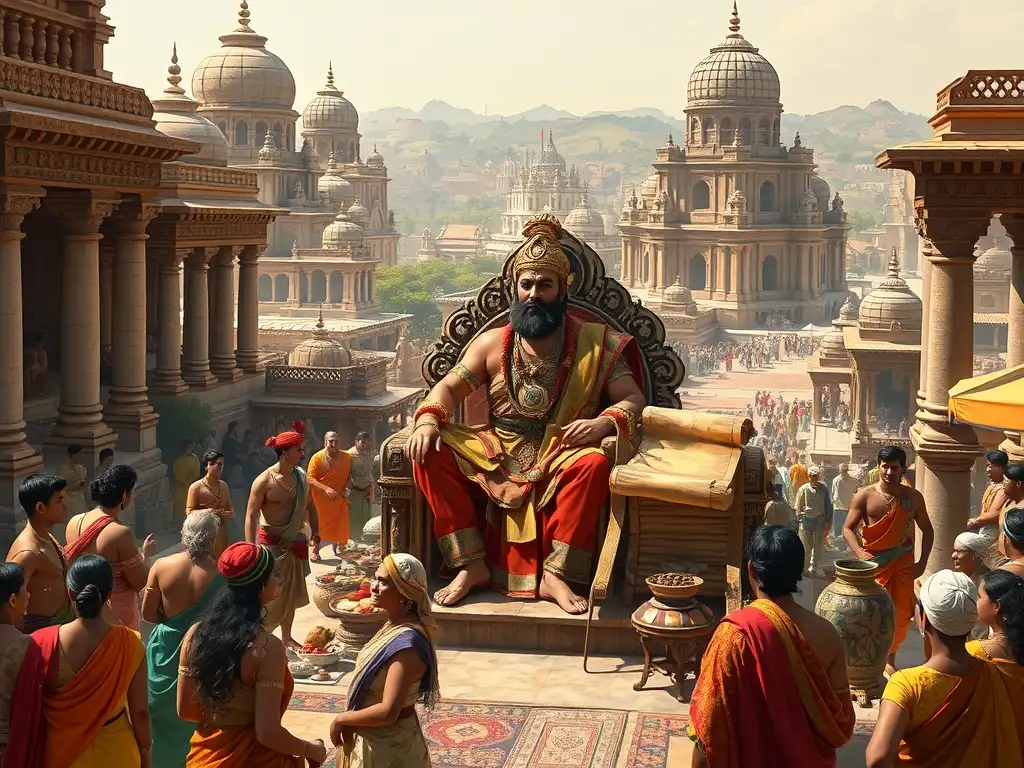
Trade Routes Established During His Rule
Chandragupta Maurya's reign marked a transformative period in the economic landscape of ancient India, particularly through the establishment and enhancement of extensive trade routes. The Mauryan Empire, under his leadership, became a nexus for trade that connected different regions, facilitating the exchange of goods, culture, and ideas.
- Silk Road Connectivity:
- The Mauryan Empire played a crucial role in the Silk Road trade network, which linked India to Central Asia, the Middle East, and beyond. This route was vital for the exchange of luxury goods, such as silk, spices, and precious stones, enriching the economies of both India and its trading partners.
- Land and Sea Trade Routes:
- Chandragupta's strategic positioning allowed for the development of both land and maritime routes. The land routes facilitated trade with regions like Persia and the Hellenistic world, while maritime routes connected Indian ports to Southeast Asia and the Arabian Peninsula.
- Increased Trade Activity:
- The establishment of reliable trade routes resulted in increased economic activity. Cities such as Pataliputra became bustling trade hubs, attracting merchants from distant lands. This influx of trade not only boosted local economies but also encouraged cultural exchanges.
- Standardization of Weights and Measures:
- To further enhance trade, Chandragupta implemented a system of standard weights and measures, which eased transactions and facilitated trade across diverse regions. This standardization was crucial for merchants and contributed to the growth of commerce.
Economic Policies and Their Effects on Neighboring Civilizations
Chandragupta Maurya's economic policies had far-reaching effects, influencing not only his empire but also neighboring civilizations. His approach to governance and economic management laid a foundation that would impact subsequent regions significantly.
- Agricultural Reforms:
- Chandragupta introduced agricultural reforms that improved productivity, such as irrigation projects and the promotion of cash crops. These reforms increased food production, which allowed neighboring regions to prosper as they relied on surplus grains for trade.
- Taxation System:
- The Mauryan taxation system was sophisticated, with taxes levied on agriculture, trade, and crafts. This system not only financed the empire's administration and military but also set a precedent for neighboring states to adopt similar tax structures, stimulating their economies.
- Promotion of Artisans and Crafts:
- By supporting artisans and craftsmen, Chandragupta fostered a culture of skilled labor that resulted in high-quality goods. Neighboring civilizations began to adopt these practices, leading to an overall elevation in craftsmanship and trade products.
- Diplomatic Trade Agreements:
- Chandragupta's diplomatic engagement with neighboring kingdoms led to strategic trade agreements. These agreements often included favorable trade terms, further embedding the Mauryan influence in the economic systems of surrounding regions.
The economic impact of Chandragupta Maurya's reign was profound, establishing trade routes and policies that not only bolstered the Mauryan Empire but also significantly influenced neighboring civilizations, fostering a rich tapestry of economic interdependence in ancient history.
Cultural Exchange Under Chandragupta Maurya
Introduction of New Ideas and Practices
Chandragupta Maurya's reign marked a transformative period in ancient India, characterized by significant cultural exchanges that shaped the region's socio-political landscape. One of the key factors contributing to this exchange was the establishment of the Mauryan Empire, which unified various territories under a centralized authority. This unification facilitated the movement of people, goods, and ideas across vast distances.
The Mauryan administration actively encouraged trade and interaction with neighboring civilizations, including the Persian Empire to the west and the Hellenistic kingdoms to the northwest. As a result, new agricultural techniques, administrative practices, and philosophical ideas began to permeate Indian society. For instance, the introduction of advanced irrigation methods from Persia improved agricultural productivity, which in turn supported population growth and urbanization.
Moreover, Chandragupta's policies fostered an environment where diverse religious and philosophical thoughts could flourish. Influences from Zoroastrianism and Greek philosophy were integrated into the existing Indian spiritual landscape, prompting a dialogue that enriched the intellectual fabric of the time. This cultural syncretism laid the groundwork for the development of new schools of thought, including Jainism and Buddhism, which would later thrive and spread throughout Asia.
Influence on Art, Architecture, and Religion
The Mauryan Empire under Chandragupta also witnessed remarkable developments in art and architecture, significantly influenced by external styles and traditions. The political stability and economic prosperity of the empire created a fertile ground for artistic expression.
One of the most notable influences was the introduction of Greek artistic techniques, particularly in sculpture and coinage. The craftsmanship of coins from this era often featured intricate designs and motifs inspired by Hellenistic art, showcasing a blend of Indian and Greek styles. These coins served not only as a medium of exchange but also as a means of cultural expression, reflecting the ideals and aspirations of the Mauryan society.
Architecturally, the Mauryan period saw the construction of grand structures that combined local styles with influences from foreign traditions. The use of stone in construction became more prevalent, as seen in the magnificent pillars erected throughout the empire. The Ashoka Pillars, for instance, exemplify this fusion, with their elaborate carvings and inscriptions that convey moral and ethical messages derived from Buddhist teachings. These pillars not only marked the landscape but also symbolized the spread of Buddhism as a state-supported religion, further influencing cultural practices in surrounding regions.
In terms of religion, Chandragupta's initial adherence to Jainism transitioned towards Buddhism, particularly after the influence of his grandson, Ashoka. This shift led to Buddhism's expansion beyond India, reaching as far as Central Asia and Southeast Asia. The Mauryan Empire's commitment to spreading Buddhist ideals resulted in the establishment of monasteries and stupas, which became centers of learning and spiritual practice, thus fostering inter-regional cultural exchanges.
Chandragupta Maurya's reign was pivotal in shaping the cultural dynamics of ancient India and its neighboring civilizations. His influence extended beyond political boundaries, fostering an environment of innovation and exchange that would resonate through history. The interplay of ideas, art, and religion during this period not only enriched Indian culture but also laid the foundation for future civilizations.
Military Strategies and Their Impact on Neighboring Regions
Expansionist Policies and Conquests
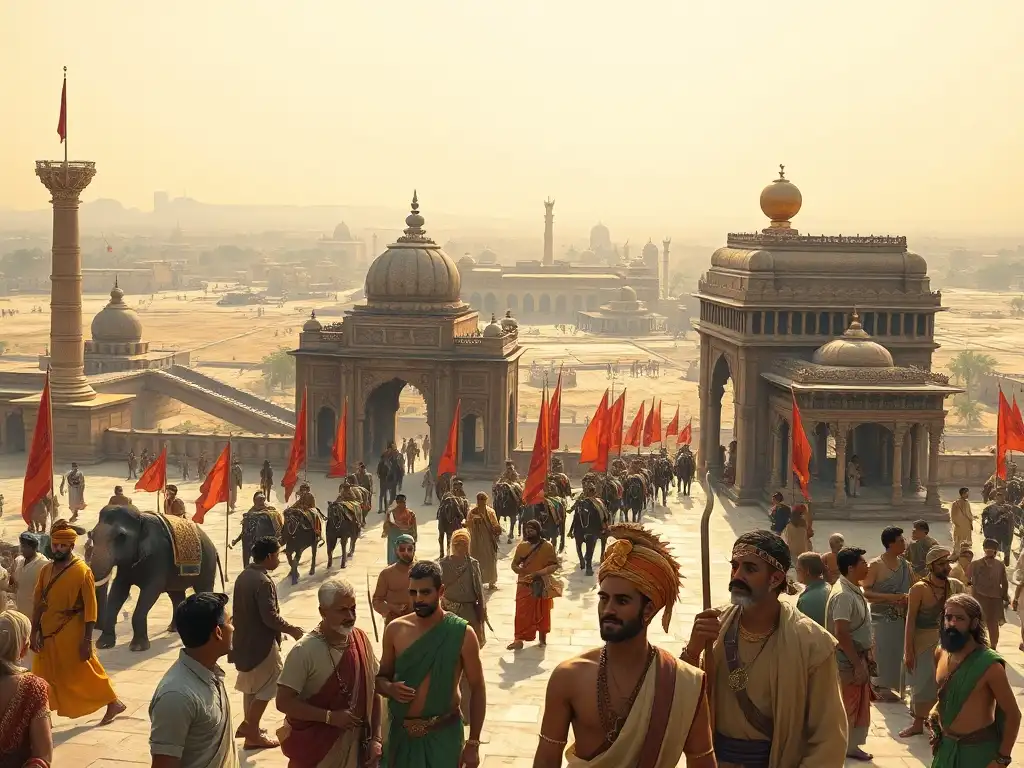
Chandragupta Maurya's reign, which marked the beginning of the Mauryan Empire around 321 BCE, was characterized by aggressive expansionist policies that significantly influenced neighboring civilizations. His strategic military campaigns not only consolidated power within the Indian subcontinent but also reached beyond its borders, establishing Mauryan dominance in several regions.
- Conquest of the Nanda Empire:
- One of Chandragupta's earliest and most notable conquests was the overthrow of the Nanda Dynasty, which controlled a vast territory in northern India.
- This victory was pivotal as it not only established Chandragupta as a formidable ruler but also set the stage for further military campaigns into the northwest.
- Campaigns in the Northwest:
- Following the defeat of the Nandas, Chandragupta turned his attention to the northwestern frontier, where he engaged in campaigns against the Greek satraps left behind by Alexander the Great.
- His ability to adapt Greek military strategies while employing traditional Indian tactics showcased his shrewdness as a leader. The decisive battles against these satraps allowed him to expand Mauryan influence into present-day Afghanistan and parts of Iran.
- Diplomatic Alliances:
- In addition to military conquests, Chandragupta strategically formed alliances with local rulers, utilizing diplomacy as a tool for expansion.
- This approach not only minimized bloodshed but also facilitated the establishment of Mauryan authority in newly acquired territories.
The successful implementation of these expansionist policies laid the groundwork for the Mauryan Empire’s vast reach, which would later influence trade routes, cultural exchanges, and political structures in neighboring regions.
The Legacy of Military Tactics on Neighboring Armies
Chandragupta Maurya's military strategies and tactics left an indelible mark on the armies of neighboring civilizations, fundamentally altering their approaches to warfare and governance. His innovative methods were characterized by several key elements:
- Integrated Army Composition:
- Chandragupta's forces were composed of infantry, cavalry, and war elephants, creating a versatile and formidable military unit. This integrated approach influenced neighboring armies to adopt similar compositions, enhancing their combat effectiveness.
- Use of Intelligence and Espionage:
- The Mauryan military was notable for its sophisticated use of intelligence and espionage. Chandragupta employed spies to gather information about enemy movements and strategies, a tactic that neighboring states soon recognized as crucial for effective military operations.
- Fortification and Defense:
- The construction of fortified cities and strategic defense systems became a hallmark of Chandragupta’s reign. His emphasis on fortified positions inspired neighboring states to strengthen their own defenses, leading to a significant shift in regional military architecture.
- Cultural Exchange of Military Practices:
- The interactions fostered through military campaigns and conquests facilitated cultural exchanges that included the sharing of military knowledge and practices. Neighboring armies began to adopt Mauryan techniques, leading to a transformation in warfare across the region.
Chandragupta Maurya's military strategies not only established him as a powerful ruler but also set a precedent for military organization and tactics that would influence neighboring civilizations for generations. His legacy in military innovation continues to be studied, showcasing the enduring impact of his reign on the course of ancient history.
Chandragupta Maurya's Relations with Hellenistic Cultures
Interaction with Alexander the Great’s Successors
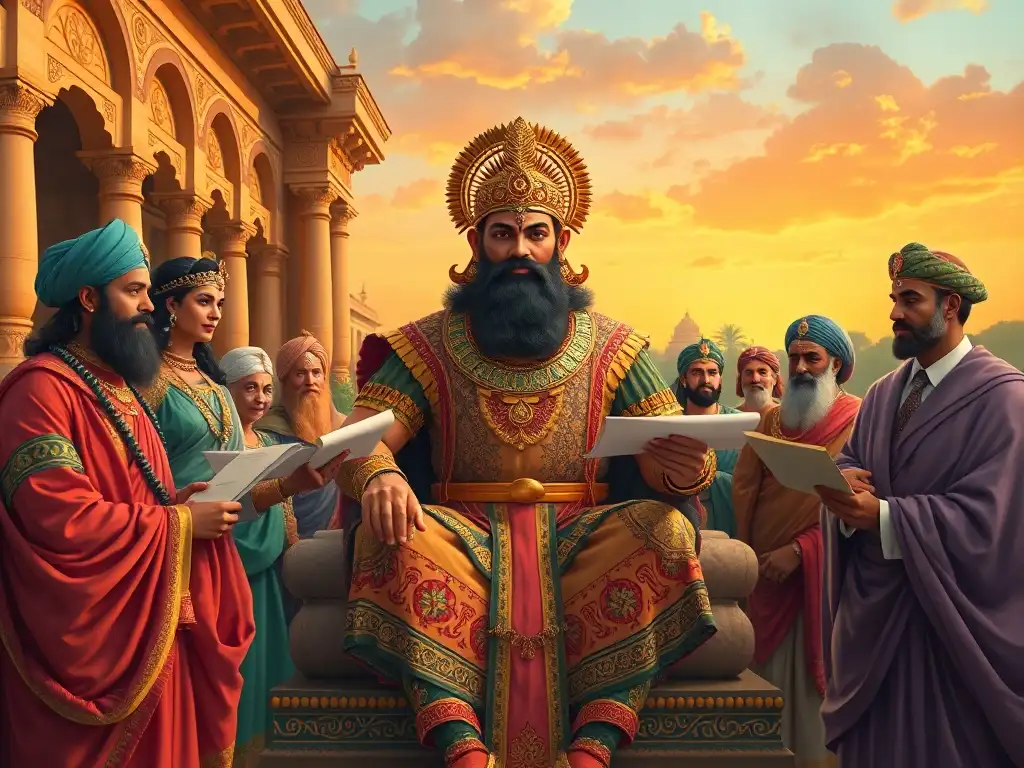
Chandragupta Maurya’s rise to power coincided with the aftermath of Alexander the Great’s campaigns in the Indian subcontinent. Following Alexander's invasion, his empire began to fragment, leading to the emergence of several Hellenistic states in the region. Chandragupta capitalized on this political vacuum, establishing himself as a formidable leader.
During this period, Chandragupta engaged in strategic alliances and confrontations with the successors of Alexander, notably the Seleucid Empire. The most significant interaction occurred when Chandragupta faced Seleucus I Nicator, one of Alexander’s generals, who sought to consolidate his power in the eastern territories. The clash between these two figures culminated in the Battle of the Indus, where Chandragupta showcased his military prowess. Although the details of the battle remain sparse, it is believed that Chandragupta’s forces managed to repel Seleucus, leading to a diplomatic resolution.
In 303 BCE, Chandragupta and Seleucus signed a peace treaty that was pivotal in establishing a lasting relationship between their empires. This treaty not only secured Chandragupta’s dominion over northern India but also facilitated trade and cultural exchanges. Seleucus, acknowledging Chandragupta’s strength, agreed to cede territories in exchange for 500 elephants—a significant military asset that would bolster Seleucid forces.
Cultural and Political Exchanges with Greek States
The interactions between Chandragupta Maurya and the Hellenistic world were not limited to military engagements; they also encompassed profound cultural and political exchanges. The peace treaty with Seleucus I Nicator opened avenues for increased commerce and the movement of ideas between the Mauryan Empire and the Greek states. This interaction fostered a unique blend of cultural influences that shaped the socio-political landscape of ancient India.
The presence of Greek ambassadors, such as Megasthenes, who served at the Mauryan court, facilitated the exchange of knowledge and cultural practices. Megasthenes’ accounts provided invaluable insights into the Mauryan administration, society, and economy. His work, Indica, described the wealth of the Mauryan capital, Pataliputra, and highlighted the advanced urban planning and governance systems employed by Chandragupta.
Moreover, the influence of Hellenistic art and architecture on Indian styles during this period cannot be overstated. The introduction of new artistic techniques and motifs led to the development of the Gandhara style, which merged Greek artistic elements with Indian traditions, exemplified in the sculptures of the period that depicted Buddhist themes with Hellenistic aesthetics.
Chandragupta Maurya's reign significantly influenced neighboring civilizations through a combination of military strategy, diplomatic acumen, and cultural exchanges. His ability to engage with the Hellenistic world not only fortified his empire but also enriched the cultural tapestry of ancient India, leaving a lasting legacy that would resonate through subsequent generations.
The Enduring Legacy of Chandragupta Maurya's Influence
Long-Term Effects on Neighboring Civilizations
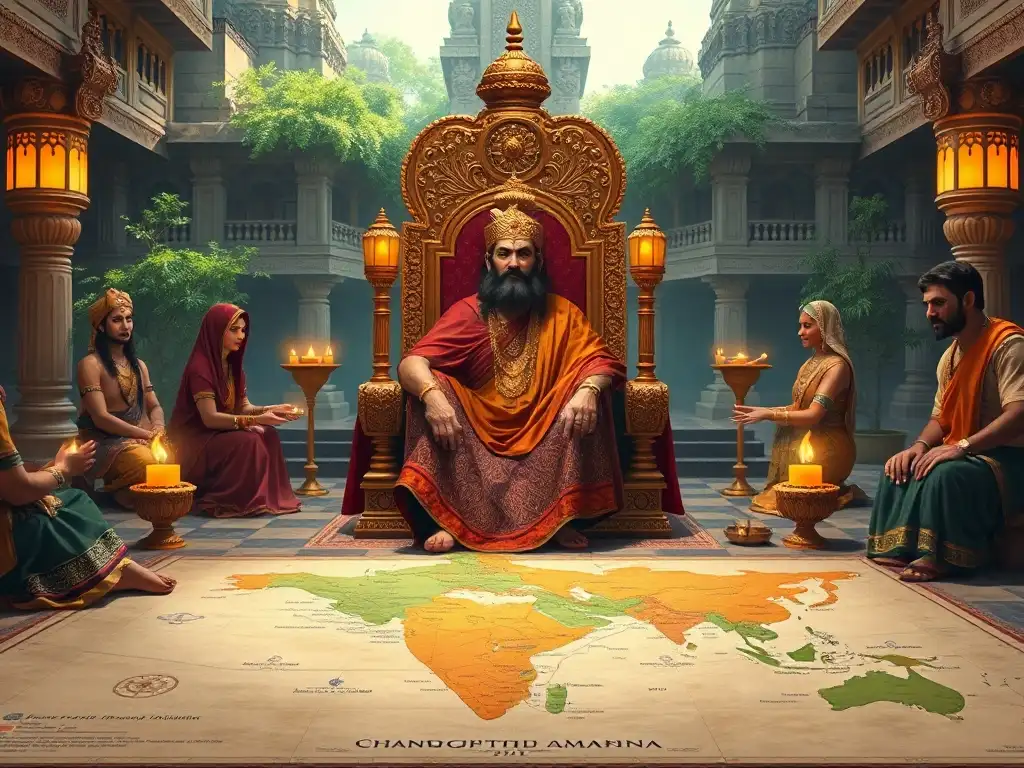
Chandragupta Maurya's rule marked a significant turning point not only in Indian history but also in the broader context of neighboring civilizations. His establishment of the Maurya Empire set a precedent that would resonate across borders, influencing political structures, trade routes, and cultural exchanges.
-
Political Systems
Chandragupta's centralized governance model inspired various kingdoms in regions such as present-day Afghanistan and Pakistan. The Mauryan administration emphasized a structured bureaucracy, which included appointed officials who reported directly to the emperor. This model was later emulated by the Indo-Greek kingdoms and the Kushan Empire, which adopted similar administrative practices.
-
Economic Influence
The Maurya Empire was known for its robust trade networks that extended beyond the Indian subcontinent. Under Chandragupta, trade flourished, leading to increased economic interactions with neighboring cultures, such as the Persian Empire. The introduction of standardized weights and measures facilitated trade, which became a blueprint for economic systems in regions like Central Asia.
-
Cultural Exchange
The era of Chandragupta was marked by the spread of ideas, art, and religion. The Mauryan Empire served as a cultural melting pot where diverse traditions coexisted. This interaction laid the groundwork for the dissemination of Buddhism, which would later influence cultures in regions as far as Southeast Asia and East Asia. The Edicts of Ashoka, his grandson, further propagated these teachings, showcasing how Chandragupta’s reign fostered intercultural dialogue.
How His Reign Shaped Future Indian Empires
Chandragupta Maurya’s reign not only established a powerful empire but also set the stage for future Indian empires, influencing their governance, military strategies, and cultural practices.
-
Foundation for Successors
Chandragupta's military conquests and administrative reforms created a strong foundation for subsequent rulers like his son, Bindusara, and grandson, Ashoka. These leaders continued and expanded upon his policies, ensuring that the Mauryan influence was felt across generations. The focus on effective governance and the promotion of trade became hallmarks of succeeding empires, such as the Gupta Empire.
-
Military Innovations
The military strategies employed by Chandragupta, including the formation of alliances and a well-trained army, became templates for future Indian rulers. The emphasis on cavalry and war elephants was especially significant, as these tactics were adopted and adapted by later empires, enhancing their military capabilities and territorial expansions.
-
Cultural and Religious Developments
Chandragupta’s reign laid the groundwork for the flourishing of arts and literature in India. The patronage given to scholars and artists led to the creation of significant literary works and architectural marvels that defined Indian culture. Additionally, the promotion of Buddhism during Ashoka's rule can be traced back to the religious tolerance established during Chandragupta’s time, which encouraged various philosophical ideas to thrive.
Chandragupta Maurya's influence on civilizations extended far beyond his immediate reign. The mechanisms of governance, economic strategies, and cultural exchanges he initiated not only shaped the Maurya Empire but also left an indelible mark on the historical trajectories of neighboring civilizations and future Indian empires. His legacy is a testament to the interconnectedness of ancient societies and their enduring impacts.
Conclusion
Summary of Chandragupta Maurya's Influence on Civilizations
Chandragupta Maurya, the founder of the Maurya Empire, significantly shaped the socio-political landscape of ancient India and influenced neighboring civilizations through his strategic governance, military conquests, and diplomatic approaches. His reign marked a pivotal transition from fragmented regional powers to a centralized empire, which laid the groundwork for subsequent rulers.
- Political Unification:
- Chandragupta's establishment of a centralized state brought together diverse regions under a single administration. This unification not only fostered stability but also facilitated trade and cultural exchange across the empire.
- His ability to consolidate power set a precedent for future dynasties, influencing governance models in regions such as Afghanistan and parts of present-day Pakistan.
- Cultural Exchange:
- The Mauryan Empire served as a cultural melting pot, where ideas, art, and philosophy flourished. The spread of Buddhism, which Chandragupta initially supported, created a ripple effect across Asia, influencing cultures as far as Central Asia and China.
- The establishment of trade routes during his reign encouraged interactions with neighboring civilizations, leading to a rich exchange of goods and ideas that enriched all parties involved.
- Military Strategy:
- Chandragupta's military campaigns not only expanded his empire but also showcased advanced warfare techniques that neighboring states adopted. His use of elephants in battle and innovative siege tactics enhanced the military capabilities of subsequent leaders.
- The Mauryan military organization served as a model for future empires, including the Seleucid Empire, which had to adapt to the Mauryan threat.
- Economic Impact:
- The Mauryan Empire's economic policies under Chandragupta, including taxation and agrarian reforms, influenced the economic structures of neighboring regions. His approach to resource management and trade regulations became templates for emerging states in the region.
- The flourishing trade networks established during his reign facilitated the spread of commodities and cultural artifacts, further integrating regional economies.
Reflections on the Importance of His Legacy in Ancient History
Chandragupta Maurya's legacy is essential for understanding the evolution of ancient Indian civilization and its influence on global history. His reign not only transformed the Indian subcontinent but also set a standard for governance and cultural integration that resonated across borders.
- Influence Beyond Borders: The administrative and military frameworks he implemented were emulated by various rulers in the region, impacting governance structures in places such as Persia and the Hellenistic world. His diplomatic relations, particularly with the Greeks, opened avenues for cultural and intellectual exchanges that enriched both civilizations.
- Cultural and Religious Diffusion: The promotion of Buddhism and other philosophical schools during his rule catalyzed a significant cultural shift. This diffusion of ideas and practices extended well beyond India, inspiring movements in Southeast Asia and shaping spiritual and philosophical landscapes.
- Historical Significance: As a key figure in ancient history, Chandragupta Maurya stands as a testament to the complexities of leadership and governance. His ability to navigate challenges and unify diverse groups speaks to the resilience and adaptability of human societies throughout history.
The influence of Chandragupta Maurya on civilizations extends far beyond his immediate reign, leaving a lasting imprint that continues to be studied and admired today. His legacy serves as a reminder of the interconnectedness of ancient cultures and the enduring impact of visionary leadership.
Frequently Asked Questions
What was the significance of Chandragupta Maurya's reign?
Chandragupta Maurya founded the Maurya Empire, which marked the beginning of a unified Indian state and significantly influenced neighboring civilizations through political and military strength.
How did Chandragupta Maurya influence trade in ancient India?
Under his reign, trade routes were expanded and secured, which facilitated increased economic interaction with neighboring regions, enhancing cultural exchanges and prosperity.
What role did Chandragupta Maurya play in the spread of Buddhism?
Chandragupta was an early supporter of Buddhism and his reign encouraged the spread of Buddhist teachings, paving the way for future rulers like Ashoka to promote the religion further.
How did his administration impact neighboring regions?
Chandragupta's effective administrative strategies and governance model influenced surrounding kingdoms, leading to the adoption of similar practices in administration and law.
What were the lasting legacies of Chandragupta Maurya's rule?
His establishment of a centralized government and promotion of trade and cultural integration left a lasting impact on the political landscape of South Asia for centuries.
Final Reflection: The Enduring Legacy of Chandragupta Maurya's Influence on Civilizations
Chandragupta Maurya's reign serves as a powerful reminder of how one leader's vision can shape not only their own nation but also the surrounding civilizations. In today's interconnected world, the impact of historical figures like Chandragupta resonates profoundly, illustrating how leadership can foster cultural exchange, economic growth, and political stability. His ability to unify diverse regions under a single banner is a testament to the transformative power of visionary governance.
Clearly, the influence of Chandragupta Maurya extends far beyond the borders of ancient India; it has left an indelible mark on the cultural and social landscapes of neighboring civilizations. His strategies and policies not only strengthened the Mauryan Empire but also set a precedent for governance that would inspire future leaders across Asia. As historian Romila Thapar noted, The Mauryan Empire was a turning point in the history of India, influencing the political and cultural fabric of the region for centuries to come.
This ongoing legacy invites us to reflect on how the principles of unity and diplomacy can still be applied in our contemporary world.
As we contemplate the lessons from Chandragupta Maurya's reign, let us embrace the call to action: to be leaders in our own right, fostering connections and understanding among diverse communities. Reflect on how you can embody the spirit of collaboration and innovation in your daily life, drawing inspiration from the past to influence the future positively. By recognizing the power of our actions and decisions, we can contribute to a legacy that echoes through time, much like that of Chandragupta Maurya.
Unveil the Legacy of Chandragupta Maurya!
Thank you for taking the time to explore how **Chandragupta Maurya's remarkable reign** shaped neighboring civilizations. You've gained valuable insights into the intricate web of influence that can still be felt today. Now, it’s time to take action and delve deeper into this fascinating history!
- Dive Deeper: Learn about the impacts of other influential leaders in ancient India and their connections to global history.
- Join the Conversation: Share your thoughts and insights on our discussion forum regarding the effects of Maurya's reign—each perspective enriches our understanding!
- Explore the Culture: Visit a local library or museum to discover exhibits or literature related to ancient Indian civilizations, and uncover more about their incredible legacy.
What new insights about the impact of Chandragupta Maurya and his reign are you excited to uncover next?