
The Influence of Ancient Indian Scripts on Neighboring Civilizations


Welcome to Ancient India History, where we embark on a fascinating journey through time, unraveling the rich tapestry of ancient Indian civilizations! In this exploration, we shine a spotlight on the influence of ancient Indian scripts—a key element that shaped not only our own culture but also left an indelible mark on neighboring civilizations. What secrets do these scripts hold, and how did they transcend borders to foster communication and connection? Dive deeper with us as we uncover the profound impact of these ancient writings on the world around them. Your adventure into the past begins now!
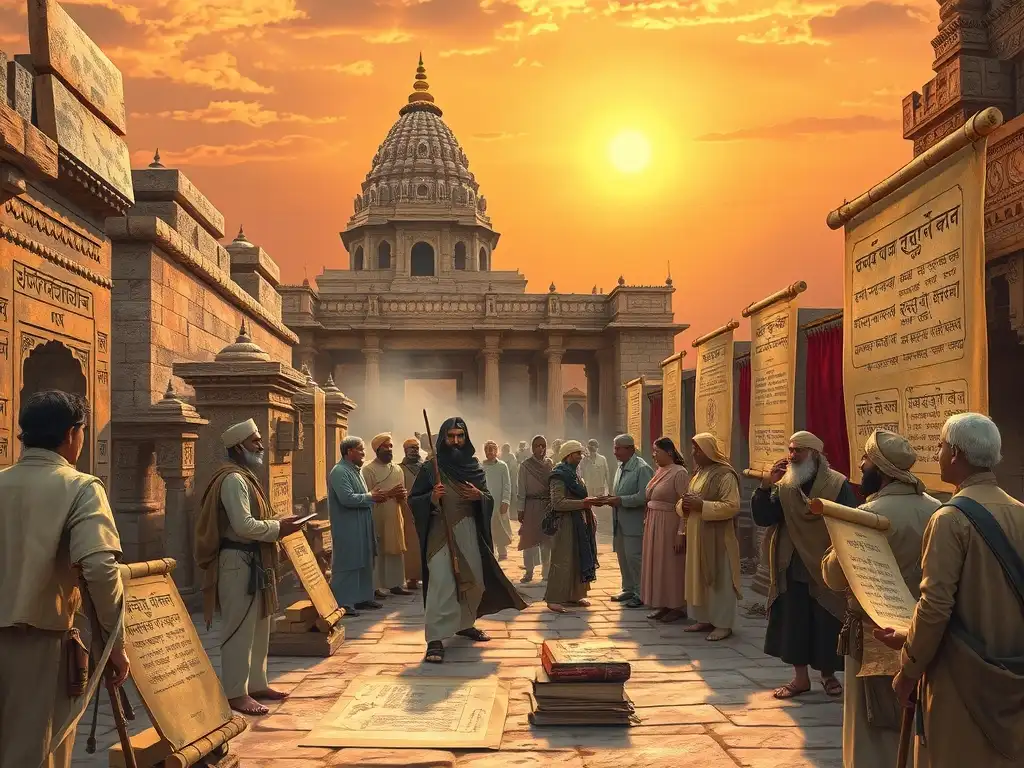
Introduction to Ancient Indian Scripts Influence
The influence of ancient Indian scripts on neighboring civilizations is a profound aspect of the historical narrative that showcases the intricate web of cultural exchange and interaction in the ancient world. From the early days of written communication, ancient Indian scripts played a pivotal role in shaping not only the linguistic landscape of the Indian subcontinent but also extending their reach far into regions such as Southeast Asia and Central Asia.
This article delves into the rich tapestry of these scripts, highlighting how they contributed to the dissemination of ideas, culture, and administration across borders. Understanding the significance of these scripts provides valuable insights into the interconnectedness of ancient societies and the legacy they have left for future generations.
Overview of Ancient Indian Scripts
Ancient Indian scripts are characterized by their diverse forms and regional adaptations, reflecting the varying linguistic needs of the time. Key scripts like Brahmi and Kharosthi emerged around the 3rd century BCE and became foundational for several others across Asia. These scripts were not merely tools for communication but were deeply intertwined with the philosophical, religious, and cultural contexts of the societies that used them.
- Brahmi: Often regarded as the ancestor of most Indian scripts, Brahmi's influence extended to Southeast Asia, where it evolved into scripts such as Devanagari, Thai, and Khmer.
- Kharosthi: Predominantly used in the northwest of India, Kharosthi played a crucial role in the dissemination of Buddhism, particularly across Central Asia and China.
The adaptability and evolution of these scripts showcase their pivotal role in facilitating trade, governance, and scholarly pursuits, making them a cornerstone of ancient Indian civilization.
Significance of Scripts in Cultural Exchange
The scripts of ancient India served as vital conduits for cultural exchange, enabling the flow of ideas, art, and religious beliefs between diverse civilizations.
- Trade and Commerce: Merchants and traders utilized these scripts for record-keeping and communication, which fostered economic ties between regions.
- Religion and Philosophy: The spread of Buddhism and Jainism was significantly supported by the use of Brahmi and Kharosthi, as sacred texts were inscribed in these scripts, reaching audiences far beyond India.
- Artistic Influence: The aesthetic qualities of scripts influenced local art forms, leading to unique adaptations in architecture and sculpture across Asia.
Through these interactions, ancient Indian scripts not only facilitated communication but also nurtured a rich cultural milieu that fostered collaboration and innovation.
Historical Context of Ancient Indian Scripts
Development of Scripts in Ancient India
The development of ancient Indian scripts can be traced back to the need for a structured form of writing that could effectively communicate complex ideas and administrative needs. The earliest inscriptions, like those found in the Indus Valley Civilization, hint at a written language that predates Brahmi and Kharosthi. However, it was during the Mauryan Empire that these scripts reached significant sophistication, which laid the groundwork for later developments.
Major Ancient Indian Scripts: Brahmi and Kharosthi
Brahmi and Kharosthi emerged as the two most influential scripts in ancient India, each serving distinct regions and purposes:
- Brahmi: Characterized by its rounded shapes and lines, Brahmi was used across various princely states and became the progenitor of numerous scripts. Its inscriptions can be found on rock edicts, coins, and manuscripts, signifying its widespread utility.
- Kharosthi: With a more angular design, Kharosthi was primarily used in the northwest and was closely associated with the spread of Buddhism into Central Asia. The script was instrumental in inscribing Buddhist texts and facilitating intercultural dialogue.
Role of Ancient Indian Scripts in Administration and Religion
Ancient Indian scripts were indispensable in both administrative and religious contexts.
- Administration: These scripts allowed for the efficient management of vast empires, enabling rulers to document laws, edicts, and administrative codes. The Ashoka Edicts, inscribed in Brahmi, are prime examples of governance through written communication.
- Religion: Scripts also played a crucial role in the preservation and dissemination of religious texts, ensuring that philosophical ideas and teachings could reach a wider audience. The ability to document sacred texts was vital for the growth of religious traditions, particularly Buddhism, which relied heavily on written scriptures for its teachings.
The influence of ancient Indian scripts on neighboring civilizations is a testament to their significance in shaping cultural, religious, and administrative landscapes across regions. Understanding this influence allows us to appreciate the complexity of ancient interactions and their lasting impact on global history.
Ancient Indian Scripts and Their Spread

Ancient Indian scripts, primarily derived from the Brahmi and Kharosthi scripts, played a pivotal role in the cultural and linguistic landscape of the Indian subcontinent and beyond. These scripts were not only tools for writing but also vehicles for disseminating ideas, philosophies, and religions. The spread of these scripts was closely tied to trade, conquests, and cultural interactions, which facilitated the exchange of knowledge and practices across regions.
The Brahmi script, in particular, is recognized as the ancestor of many scripts used across Asia today, including those in Southeast Asia and parts of Central Asia. Its versatility and adaptability allowed it to evolve into various regional scripts while retaining core characteristics. Consequently, the influence of ancient Indian scripts extended far beyond geographical boundaries, shaping the writing systems of neighboring civilizations and leaving a lasting legacy.
Trade Routes and Cultural Exchange
Trade routes, such as the Silk Road and maritime pathways, were instrumental in the diffusion of ancient Indian scripts. Merchants, pilgrims, and travelers carried not only goods but also cultural artifacts and linguistic elements. As trade flourished, so did the interactions between diverse cultures, leading to a rich tapestry of exchange.
Indian traders, particularly during the Mauryan and Gupta periods, established extensive networks that connected India with regions like Southeast Asia, the Middle East, and Central Asia. These interactions enabled the spread of Indian scripts, especially Brahmi, to places like Sri Lanka, Indonesia, and beyond. The establishment of Indianized kingdoms in Southeast Asia, such as Funan and Srivijaya, further exemplified this cultural exchange, as local rulers adopted Indian scripts to document their languages and administrative affairs.
Influence on Neighboring Civilizations: Overview
The influence of ancient Indian scripts on neighboring civilizations is evident in various aspects, including language, religion, and administrative practices. As Indian scripts were adopted, local languages were often written in these scripts, leading to the development of hybrid scripts that reflected a blend of local and Indian linguistic traditions.
Furthermore, the spread of Buddhism and Hinduism, which were closely associated with Indian scripts, significantly contributed to their influence. Monasteries and temples became centers of learning, where these scripts were taught, thus ensuring their propagation. This cultural and religious exchange created a foundation for the development of new writing systems that embodied the essence of both Indian and local traditions.
Case Studies of Influence on Neighboring Civilizations
Influence on Southeast Asian Scripts
The influence of ancient Indian scripts on Southeast Asian scripts, particularly the Khmer and Javanese scripts, is profound. The Brahmi script's structure and phonetics were adapted to fit the local languages, resulting in unique scripts that maintained a connection to their Indian origins. For instance, the Khmer script, used in Cambodia, evolved directly from the Indian writing system, showcasing the lasting impact of Indian literacy and culture in the region.
Moreover, inscriptions in these scripts often contain religious texts and royal decrees that reflect the Indian cultural influence, emphasizing the significance of Hinduism and Buddhism in shaping the sociopolitical landscapes of Southeast Asian nations.
Impact on Central Asian Cultures
Central Asian cultures, particularly those influenced by the Silk Road trade networks, also bore the imprint of ancient Indian scripts. The Kharosthi script, used primarily in the northwest of India, found its way into regions like Afghanistan and further into Central Asia. As merchants and Buddhist missionaries traveled along these routes, they brought with them the Kharosthi script, which influenced the writing systems of local languages.
The adoption of these scripts facilitated the spread of Buddhist texts, which played a crucial role in the cultural and religious life of Central Asian societies, leading to a synthesis of Indian and local traditions that enriched their cultural heritage.
Effects on the Development of Tibetan and Mongolian Scripts
The influence of ancient Indian scripts also extended to the development of Tibetan and Mongolian scripts. The Tibetan script, which emerged in the 7th century, was heavily influenced by the Indian Brahmi script, particularly in its structure and phonetic representation. This connection is evident in the way Tibetan script was employed to transcribe Buddhist texts, thereby ensuring the preservation and propagation of Indian philosophical thought in Tibet.
Similarly, the Mongolian script, which evolved in the 13th century, also reflects influences from Indian writing systems, especially through the transmission of Buddhism from India to Mongolia. The integration of elements from ancient Indian scripts helped shape the linguistic and cultural identity of the Mongolian people, demonstrating the enduring legacy of Indian scripts in shaping regional writing systems.
Linguistic Features Borrowed from Ancient Indian Scripts
The influence of ancient Indian scripts extends beyond mere writing systems; it encompasses a diverse array of linguistic features that neighboring civilizations adopted and adapted. This interaction is particularly evident in phonetic characteristics, script design elements, and lexical borrowings. Each of these aspects illustrates how ancient Indian scripts shaped the linguistic landscape of the regions around them, fostering cultural exchange and communication.
Phonetic Characteristics
Ancient Indian scripts, particularly Brahmi and its derivatives, introduced unique phonetic characteristics that were influential in shaping the languages of neighboring civilizations. For instance, the meticulous representation of phonemes allowed for the accurate transcription of sounds, which was crucial for the development of phonetics in languages such as Sinhala and Tibetan.
- Syllabic Structure: The use of syllabic representation in Brahmi facilitated the phonological development in languages, enabling speakers to express complex sounds more accurately.
- Diacritics: The introduction of diacritics to denote various phonetic nuances enhanced the scripts' ability to capture the intricate sounds of local languages, promoting clearer communication.
Overall, these phonetic features not only enriched the local languages but also promoted literacy and learning, as they provided a more systematic approach to sound representation.
Script Structure and Design Elements
The structural features of ancient Indian scripts played a significant role in their influence on neighboring writing systems. The design elements of Brahmi and its derivatives, such as Kharosthi, were characterized by specific stylistic choices that were later integrated into local scripts.
- Cursive Forms: The evolution of cursive forms in scripts like Gupta and its adaptations in Southeast Asia demonstrate how neighboring cultures embraced the fluidity of Indian scripts, making them more suitable for local writing needs.
- Modular Design: The modular structure of Indian scripts, where letters can be combined to form ligatures, was adopted by scripts such as the Khmer and the Thai scripts, allowing for more efficient writing systems.
These design elements not only influenced the visual aesthetics of scripts but also contributed to their functionality, making writing more efficient and expressive.
Vocabulary and Lexical Borrowings
The interaction between ancient Indian civilizations and their neighbors resulted in significant lexical borrowings, particularly in terms of vocabulary related to religion, administration, and culture. This exchange was facilitated by trade, migration, and the spread of religious texts.
- Religious Terminology: Words associated with Hinduism, Buddhism, and Jainism were adopted into languages such as Thai and Burmese, illustrating the profound impact of Indian religious texts on local vocabularies.
- Administrative Lexicon: Terms related to governance and administration, often derived from Sanskrit, enriched local languages, facilitating the establishment of bureaucratic systems.
This lexical borrowing not only expanded the vocabulary of neighboring languages but also helped in the dissemination of Indian cultural and religious practices across regions.
Preservation and Adaptation of Scripts

The preservation and adaptation of ancient Indian scripts by neighboring civilizations reflect a dynamic process of cultural exchange. This interaction enabled neighboring societies to retain elements of Indian scripts while also innovating based on local needs and contexts.
How Neighboring Civilizations Preserved Indian Scripts
Neighboring civilizations adopted and preserved Indian scripts through various means, including religious texts, trade interactions, and scholarly exchanges. The preservation of these scripts is evident in historical manuscripts and inscriptions found across Asia.
- Religious Texts: Buddhist texts written in Pali and Sanskrit were meticulously copied and preserved in regions such as Sri Lanka and Southeast Asia, ensuring the survival of Indian script traditions.
- Inscriptions: Stone inscriptions and coins bearing Brahmi script found in various regions attest to the influence and longevity of Indian writing systems. These artifacts serve as crucial historical evidence of script preservation.
Through these practices, neighboring cultures not only maintained the integrity of Indian scripts but also integrated them into their own historical narratives.
Adaptations and Innovations in Local Contexts
As neighboring civilizations preserved ancient Indian scripts, they also adapted and innovated these systems to suit their linguistic and cultural contexts. This process of adaptation resulted in the development of unique script forms that reflected local identities.
- Local Phonetics: Scripts such as the Khmer script evolved to accommodate the phonetic intricacies of the Khmer language, showcasing how local phonological needs prompted adaptations of Indian script features.
- Cultural Symbolism: The incorporation of indigenous symbols and stylistic elements into Indian-derived scripts created a unique fusion, allowing for a representation of local culture within the framework of Indian writing traditions.
These adaptations not only highlight the flexibility of ancient Indian scripts but also demonstrate how they fostered a sense of identity and continuity among neighboring civilizations, bridging the gap between cultures while enriching their own.
Conclusion: The Lasting Legacy of Ancient Indian Scripts
The influence of ancient Indian scripts on neighboring civilizations is a testament to the profound cultural exchange and intellectual collaboration that characterized ancient times. Scripts such as Brahmi and Kharosthi not only served as vehicles for communication but also facilitated the spread of ideas, religion, and governance across vast regions. The adoption and adaptation of these scripts by various cultures underscore their significance, illustrating how ancient Indian civilizations contributed to the development of writing systems in Asia.
As we examine the historical trajectory of these influences, it becomes clear that the legacy of ancient Indian scripts extends far beyond their original geographic and cultural contexts. They laid the groundwork for the evolution of various scripts in Southeast Asia, the Middle East, and Central Asia, demonstrating their integral role in shaping linguistic landscapes. The continued relevance of these scripts in modern languages and cultures further highlights their enduring impact.
Summary of Key Influences
Several key influences of ancient Indian scripts on neighboring civilizations can be identified:
- Southeast Asia: The Brahmi script heavily influenced the development of scripts across Southeast Asia, including the Khmer and Thai scripts. This influence is evident in both religious texts and administrative documents.
- Central Asia: The Kharosthi script found its way into Central Asia, particularly among the Gandharan culture, which facilitated the spread of Buddhism along trade routes.
- Tibetan and Mongolian Scripts: The adoption of the Brahmi script by Tibetan and Mongolian cultures played a crucial role in the transcription of Buddhist texts, further cementing the cultural ties between these regions.
- Persian Influence: The interaction between ancient Indian scripts and Persian scripts during the Achaemenid Empire led to mutual exchanges that enriched both writing systems.
These influences illustrate the interconnectedness of ancient civilizations and the pivotal role of scripts as carriers of culture and knowledge.
Continuing Relevance in Modern Language and Culture
The legacy of ancient Indian scripts is not confined to historical texts; it continues to resonate in modern language and culture. Many contemporary languages in South Asia, such as Hindi, Bengali, and Marathi, derive their scripts from ancient Indian writing systems. This connection underscores the importance of these scripts in maintaining cultural identity and linguistic heritage.
Moreover, the resurgence of interest in ancient Indian scripts has led to their study in various academic fields. Linguists, historians, and cultural scholars explore the etymological roots of modern languages, tracing back to the ancient scripts that shaped them. Additionally, the revival of ancient scripts through educational initiatives and digital platforms reflects a growing appreciation for the rich history they represent.
In art and literature, ancient Indian scripts continue to inspire contemporary creators. Calligraphy, poetry, and visual arts often incorporate elements from these scripts, celebrating their aesthetic and historical significance.
References
Suggested Further Reading on Ancient Indian Scripts Influence
- "The History of Writing in India" by R. N. Sharma - A comprehensive exploration of the evolution of writing systems in India and their effects on surrounding regions.
- "Scripts of Ancient India: A Historical Overview": by A. Kumar - This book delves into the origins and influences of ancient Indian scripts, particularly Brahmi and Kharosthi.
- "Cultural Exchanges Along the Silk Routes" by M. Gupta - An examination of how ancient Indian scripts influenced cultures across Asia, particularly through trade and religious exchanges.
Notable Scholars and Works in the Field
- Irina A. H. Koval - Known for her research on the Brahmi script and its impact on Southeast Asian languages.
- Salvatore M. C. G. B. D'Auria - A prominent scholar who has written extensively on the connections between ancient Indian scripts and Buddhist texts in Central Asia.
- S. P. Verma - Authored several influential papers discussing the adaptations of ancient scripts in modern South Asian languages.
- N. T. Nair - A linguist specializing in the historical linguistics of South Asian languages and their scriptural influences.
These resources and scholars provide a deeper understanding of the influences and legacies of ancient Indian scripts, enriching our knowledge of their role in shaping language and culture in the region and beyond.
- Introduction to Ancient Indian Scripts Influence
- Overview of Ancient Indian Scripts
- Significance of Scripts in Cultural Exchange
- Historical Context of Ancient Indian Scripts
- Ancient Indian Scripts and Their Spread
- Case Studies of Influence on Neighboring Civilizations
- Linguistic Features Borrowed from Ancient Indian Scripts
- Preservation and Adaptation of Scripts
- Conclusion: The Lasting Legacy of Ancient Indian Scripts
- References
Frequently Asked Questions
What are ancient Indian scripts?
Ancient Indian scripts, such as Brahmi and Kharosthi, are writing systems that originated in India and were used to document a variety of languages. These scripts are crucial for understanding the cultural and historical context of ancient Indian civilizations.
How did ancient Indian scripts influence neighboring civilizations?
Ancient Indian scripts significantly influenced neighboring cultures, particularly in Southeast Asia, where they were adapted for local languages. This led to the development of scripts like Thai and Khmer, showcasing the interconnectedness of ancient civilizations.
What role did trade play in the spread of these scripts?
Trade routes, such as the Silk Road, facilitated the exchange of ideas and scripts. Merchants and travelers carried written texts, which helped disseminate ancient Indian scripts to diverse regions, enhancing cultural exchange.
Are there any surviving examples of ancient Indian scripts?
Yes, numerous inscriptions and manuscripts exist, including those found at sites like Ashoka's edicts and ancient universities such as Nalanda. These examples provide invaluable insight into the linguistic and cultural heritage of ancient India.
Why is studying ancient Indian scripts important today?
Studying ancient Indian scripts allows us to understand the historical narratives of ancient civilizations, their cultural practices, and their contributions to literacy and writing systems worldwide. This knowledge enriches our appreciation of global history.
Final Reflection: The Enduring Legacy of Ancient Indian Scripts
The influence of ancient Indian scripts on neighboring civilizations is not just a historical footnote; it is a testament to the power of communication and cultural exchange. As we navigate a world that is increasingly interconnected, the impact of these scripts serves as a reminder of how language can bridge divides and foster understanding. The intricate designs and profound meanings embedded in these scripts continue to resonate, shaping identities and narratives across regions.
The legacy of ancient Indian scripts extends far beyond their geographical origins, influencing art, literature, and philosophy in diverse cultures. Their adaptability and richness have inspired countless generations, creating a tapestry of shared knowledge and creativity. Language is the road map of a culture. It tells you where its people come from and where they are going.
This quote encapsulates the essence of how ancient Indian scripts have not only preserved history but have also paved the way for future dialogues among civilizations.
As you reflect on the profound influence of ancient Indian scripts, consider how you can apply the lessons of cultural exchange and appreciation in your own life. Embrace the diversity of languages and scripts around you, and recognize the beauty in their stories. By fostering an environment of curiosity and respect for different cultures, we can contribute to a more harmonious world, where the legacies of the past inspire the innovations of the future.
Unveil the Rich Legacy of Ancient Indian Scripts!
Thank you for diving into the captivating world of ancient Indian scripts! You've uncovered how these scripts shaped cultures and communities across civilizations. Now it's time to take this knowledge further and explore the influence of these ancient languages in your own way.
Here are some engaging actions you can take right now:
- Join a local or online workshop focused on learning ancient scripts. Experience the beauty and intricacies of these languages firsthand!
- Share your thoughts on social media using the hashtag #AncientIndianScripts to connect with others who share your passion.
- Research the impact of these scripts on your own culture or language, and initiate discussions with friends and family about your findings.
What new insights have you gained about the power of language and its ability to unite diverse cultures?