
The Interaction of Sanskrit with Other Ancient Languages


Welcome to Ancient India History, where we embark on a journey through the vibrant tapestry of India’s past. Here, we explore the intriguing interaction of Sanskrit with other ancient languages, a topic that not only sheds light on linguistic evolution but also reveals the profound cultural exchanges that shaped civilizations. What secrets do these ancient tongues hold, and how did they influence one another? Dive deeper into this fascinating exploration and uncover the pivotal role that Sanskrit played in the legacy of ancient India. Your adventure into history begins now!

Introduction to Sanskrit and Its Historical Context
The interaction of Sanskrit with other ancient languages is a fascinating topic that sheds light on the profound and intricate relationships that have shaped linguistic and cultural landscapes throughout history. Sanskrit, one of the oldest languages in the world, serves as a linchpin in the study of ancient languages, offering insights into the development of numerous linguistic traditions, not only within the Indian subcontinent but also across the broader Indo-European family. This article will delve into the rich tapestry of Sanskrit's interactions, exploring its connections with other ancient languages and its impact on linguistic evolution.
Overview of Sanskrit as a Classical Language
Sanskrit is often referred to as the classical language of India, known for its extensive literary and philosophical contributions. With a history that spans over three millennia, it has been used in various forms, from the Vedic texts of the early period to the classical literature of the Gupta Empire. Its grammatical structure, codified by the ancient scholar Panini, has influenced many modern languages, making it a cornerstone of linguistic study.
- Classical Literature: Important works such as the Mahabharata, Ramayana, and various Upanishads exemplify the depth of Sanskrit literature.
- Linguistic Structure: The precision and complexity of Sanskrit grammar have made it a subject of study in both ancient and modern linguistics.
Significance of Sanskrit in Ancient Indian Civilizations
Sanskrit played a pivotal role in the cultural, religious, and intellectual life of ancient Indian civilizations. It was not just a means of communication; it was a vehicle for the transmission of knowledge and a medium through which various schools of thought flourished.
- Religious Texts: Many foundational religious texts, including the Vedas and Puranas, were composed in Sanskrit, making it integral to Hindu philosophy and spirituality.
- Cultural Identity: Sanskrit served as a unifying force, fostering a shared cultural identity among diverse groups across the Indian subcontinent.
The Roots of Sanskrit: Ancestry and Origins
Understanding the roots of Sanskrit involves examining its ancestry within the Indo-Aryan language family and its connections to earlier linguistic forms. This exploration reveals how Sanskrit not only developed in isolation but interacted dynamically with other ancient languages.
Exploring the Indo-Aryan Language Family
Sanskrit belongs to the Indo-Aryan branch of the larger Indo-European language family. This classification highlights its connections to a range of languages spoken across Europe and Asia.
- Language Evolution: The evolution of the Indo-Aryan languages from Old Indo-Aryan to Middle Indo-Aryan illustrates the transformative journey of Sanskrit through various historical contexts.
- Influence on Regional Languages: Many modern Indian languages, such as Hindi, Bengali, and Marathi, have roots in Sanskrit, showcasing its lasting impact on the linguistic landscape of the region.
Connections Between Sanskrit and Proto-Indo-European Languages
The similarities between Sanskrit and Proto-Indo-European (PIE) languages unveil intriguing links that date back to ancient times. Linguists have identified common elements that suggest a shared ancestry.
- Lexical Similarities: Many words in Sanskrit share cognates with PIE languages, providing a glimpse into the linguistic heritage of ancient civilizations.
- Grammatical Structures: The grammatical rules of Sanskrit exhibit parallels with those of other Indo-European languages, reinforcing the notion of a common linguistic origin.
Through this exploration of the interaction of Sanskrit with other ancient languages, we can appreciate not only its historical significance but also its enduring legacy in shaping language and culture.
Sanskrit's Interaction with Dravidian Languages
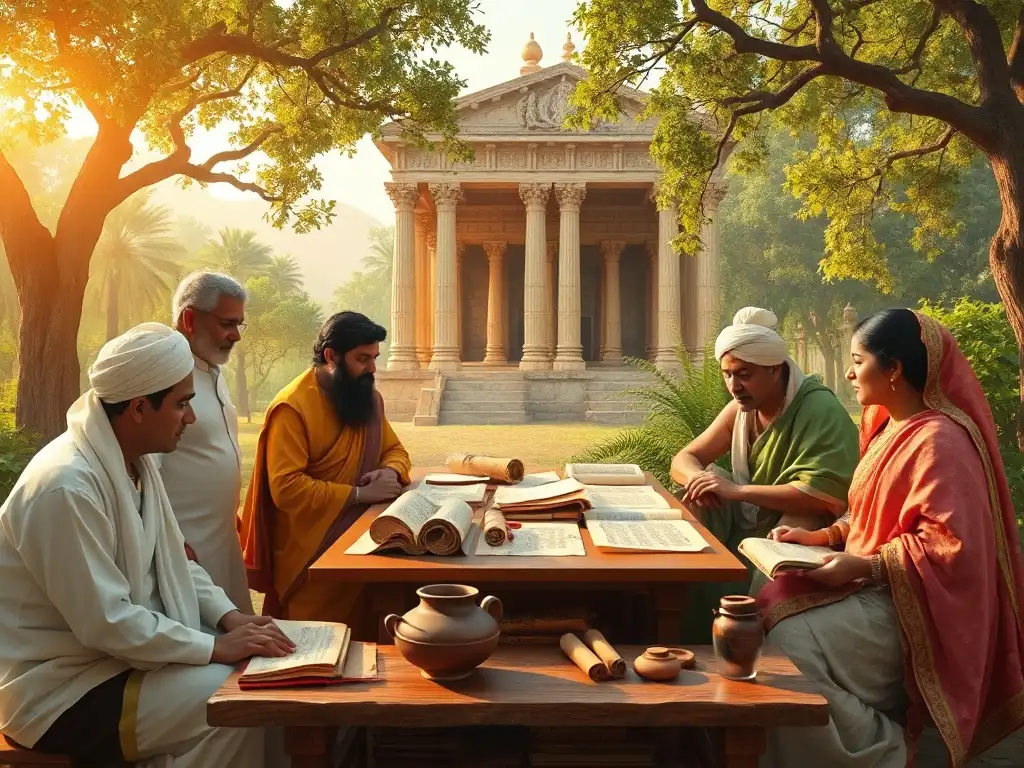
The interaction between Sanskrit and the Dravidian languages is a fascinating aspect of linguistic history in ancient India. Dravidian languages, primarily spoken in southern India, include languages like Tamil, Telugu, Kannada, and Malayalam. This interaction occurred over centuries, especially during periods of cultural exchange, trade, and the spread of religious ideologies. Sanskrit, as a classical language of ancient India, played a significant role in shaping various aspects of Dravidian languages, from vocabulary to syntax.
Linguistic Features of Dravidian Languages
Dravidian languages showcase distinct linguistic features that set them apart from Indo-Aryan languages, including Sanskrit. They are characterized by a rich system of agglutination, where words are formed by stringing together various morphemes. This feature allows for the creation of complex words that convey precise meanings. Additionally, Dravidian languages typically exhibit a different phonetic structure, with unique consonant and vowel sounds that are not present in Sanskrit.
Another notable aspect is the use of retroflex consonants, which are more prevalent in Dravidian languages. The grammatical structure also differs significantly; for instance, Dravidian languages often utilize an SOV (Subject-Object-Verb) order, contrasting with the SVO (Subject-Verb-Object) structure commonly found in Sanskrit. Despite these differences, the interaction with Sanskrit has led to some shared features, particularly in terms of vocabulary and phonology.
Influence of Sanskrit on Dravidian Vocabulary and Syntax
The influence of Sanskrit on Dravidian languages is particularly evident in vocabulary and syntax. Extensive borrowing occurred during the early medieval period, especially with the rise of Hinduism and the spread of Sanskrit literature. Many Dravidian languages incorporated Sanskrit terms related to religion, philosophy, administration, and art, enriching their lexicon.
For example, Tamil, one of the oldest Dravidian languages, has absorbed numerous Sanskrit words, particularly in the domain of religious texts and rituals. The usage of terms such as "puja" (worship) and "sastra" (scripture) are common in Tamil. Additionally, the syntax of Dravidian languages has been influenced by Sanskrit, especially in literary contexts, leading to the adoption of certain syntactic structures that resemble those found in Sanskrit texts.
The Relationship Between Sanskrit and Other Ancient Indian Languages
Sanskrit has had profound interactions with various ancient Indian languages, notably Pali and Prakrit, which emerged as significant languages in the Indian subcontinent. These languages not only influenced each other but also shared a common cultural and religious milieu, contributing to the linguistic landscape of ancient India.
Contributions of Pali and Prakrit
Pali and Prakrit are often considered the vernacular counterparts to Sanskrit. Pali, primarily the language of Theravada Buddhism, shares many features with Sanskrit but is more accessible. It has played a crucial role in the transmission of Buddhist teachings across Asia. The use of Pali in Buddhist texts allowed for the dissemination of ideas that were crucial in shaping the spiritual and cultural framework of ancient Indian society.
Prakrit languages, on the other hand, include a variety of regional dialects that evolved from Sanskrit. These languages were commonly spoken in various regions and served as a medium for literature and drama, exemplified by works such as "Shakuntala" by Kalidasa. The development of Prakrit also illustrates the linguistic democratization of Sanskrit, allowing broader segments of society to engage with literary and cultural productions.
The Influence of Sanskrit on Regional Languages
The influence of Sanskrit extends beyond Dravidian and Indo-Aryan languages into several regional languages across India. Languages such as Bengali, Marathi, Gujarati, and others have incorporated a significant number of Sanskrit words and phrases into their lexicons. This influence is especially notable in the realms of literature, philosophy, and science.
Sanskrit has also impacted the grammatical structures of these regional languages, leading to a degree of syntactic convergence. For instance, the use of compound words, a hallmark of Sanskrit, has found its way into many regional languages, enhancing their expressiveness. Moreover, the resurgence of interest in Sanskrit during the colonial period further solidified its influence on the modern forms of these languages, enriching their cultural and literary heritage.
The interaction of Sanskrit with other ancient languages, including Dravidian, Pali, and various regional dialects, illustrates a dynamic and complex linguistic tapestry that has shaped the rich cultural landscape of ancient India. The mutual influences have not only enriched vocabulary and syntax but have also fostered a deeper understanding of the historical and cultural connections that bind these languages together.
Sanskrit and Its Interaction with Persian
The interaction between Sanskrit and Persian is a fascinating aspect of linguistic evolution in ancient India. This relationship emerged primarily during the period of the Persian Empire's influence in the Indian subcontinent, particularly under the Achaemenid Empire and later during the rule of Persian dynasties in northern India. The exchange was marked by various socio-political and cultural interactions that led to significant developments in both languages.
Historical Context of Persian Influence in India
The historical context of Persian influence in India can be traced back to the conquest of the Indian subcontinent by Darius I of the Achaemenid Empire in the 6th century BCE. This marked the beginning of a series of interactions between Persian and Indian cultures. The Persian administrative system, language, and customs were introduced to the Indian populace, especially in regions like Gandhara and Punjab.
Later, during the Mughal Empire in the 16th to 18th centuries, Persian became the court language and significantly influenced the vernacular languages of northern India, including Hindi and Urdu. This period saw a resurgence of cultural exchange, and the interaction between Sanskrit and Persian became more pronounced, leading to a blending of literary traditions and ideas.
Lexical Borrowings and Cultural Exchange
The lexical borrowings from Persian into Sanskrit are notable, particularly in the realms of administration, warfare, and culture. Words related to governance, such as "daroga" (officer) and "sher" (lion), found their way into Sanskrit from Persian.
Cultural exchanges also played a crucial role, with Persian poetry and literature influencing Sanskrit literary forms. The integration of Persian motifs and themes into Sanskrit literature enriched the poetic traditions, leading to the emergence of new genres. Additionally, the use of Persian script to transcribe Sanskrit texts began to appear, demonstrating the depth of this linguistic interaction.
The Impact of Sanskrit on the Development of Tibetan Language
The impact of Sanskrit on the development of the Tibetan language is profound, particularly in the context of religious and scholarly exchanges. This relationship primarily stemmed from the spread of Buddhism from India to Tibet, where Sanskrit served as the primary liturgical and scholarly language.
Historical Ties Between Sanskrit and Tibetan
Historical ties between Sanskrit and Tibetan can be traced back to the 7th century CE, during the reign of King Songtsen Gampo, who played a pivotal role in promoting Buddhism in Tibet. To facilitate the translation of Buddhist texts from Sanskrit into Tibetan, scholars like Thonmi Sambhota developed the Tibetan script, which was heavily influenced by Sanskrit phonetics.
This period marked the beginning of a rich tradition of translating and adapting Indian philosophical texts into Tibetan, establishing a foundation for Tibetan Buddhism and scholarship. The close relationship between the two languages continued to evolve through centuries of cultural exchange and religious influence.
Influence of Sanskrit Texts on Tibetan Buddhism
Sanskrit texts had a profound influence on Tibetan Buddhism, serving as the source for many foundational teachings and practices. Key Buddhist scriptures, such as the "Tripitaka" and various Mahayana texts, were translated into Tibetan, often accompanied by commentaries that reflected the original Sanskrit teachings.
The impact of these translations is evident in Tibetan religious practices, rituals, and philosophical thought. The terminology used in Tibetan Buddhism often derives from Sanskrit, which helped shape Tibetan monastic education and spiritual discourse. This deep-rooted connection between Sanskrit and Tibetan language and culture has left a lasting legacy that continues to influence Tibetan society today.
Comparative Analysis: Sanskrit and Greek

The interaction between Sanskrit and Greek languages provides a fascinating insight into the linguistic, philosophical, and cultural exchanges that occurred between ancient civilizations. Both languages, while distinct in their roots and evolution, exhibit remarkable similarities and shared influences, particularly in their syntax, grammar, and vocabulary. By examining these aspects, we can gain a deeper understanding of how ancient cultures communicated their ideas and philosophies across vast distances.
Similarities in Syntax and Grammar
Sanskrit and Greek share several grammatical features that underscore their common Indo-European heritage. Both languages use an inflectional system that modifies word endings to express grammatical relationships, such as case, number, and gender.
- Noun Cases: Both languages employ a comprehensive case system. Sanskrit has eight grammatical cases, while Greek traditionally has five. This allows for flexibility in sentence structure, where the position of words can vary without altering the fundamental meaning.
- Verb Conjugation: The verb systems of both languages are complex, featuring multiple tenses, moods, and voices. For instance, Sanskrit verbs can be conjugated to indicate not only time but also aspect and mood, paralleling the intricate verb forms found in Greek.
- Word Order: While the default word order in Sanskrit is Subject-Object-Verb (SOV), Greek typically follows a Subject-Verb-Object (SVO) structure. However, both languages exhibit a degree of flexibility in word order, allowing for emphasis and stylistic variation.
These syntactical and grammatical similarities have sparked interest among linguists, suggesting a deeper connection that may have facilitated the exchange of ideas and cultural practices between the speakers of these ancient languages.
Cultural Exchanges Between Ancient India and Greece
The cultural exchanges between ancient India and Greece were significant, particularly during the period of Alexander the Great's conquests in the 4th century BCE. This interaction fostered a blend of philosophical ideas, artistic practices, and scientific knowledge.
- Philosophy and Religion: Greek philosophers, such as Pythagoras and Plato, were influenced by Indian thought, particularly through concepts like metaphysics and ethics that resonate with Hindu and Buddhist philosophies. This cross-pollination enriched both traditions and contributed to the development of philosophical discourses in both cultures.
- Art and Aesthetics: The artistic styles of Hellenistic culture and Indian art began to intertwine, leading to new forms of expression. The Gandhara school of art, for instance, reflects this synthesis, showcasing Greco-Buddhist art that combined Indian iconography with Greek artistic techniques.
- Trade and Diplomacy: The establishment of trade routes facilitated not only the exchange of goods but also the sharing of knowledge and culture. The Silk Road and maritime trade routes connected India and Greece, allowing for the movement of philosophers, traders, and ideas.
These cultural exchanges laid the groundwork for a rich tapestry of interlinked traditions, demonstrating how Sanskrit and Greek influenced one another through their respective languages and cultural practices.
The Role of Sanskrit in the Spread of Knowledge
Sanskrit played a pivotal role in the dissemination of knowledge across ancient civilizations, functioning as a scholarly and liturgical language. Its extensive literary and philosophical corpus has significantly shaped the intellectual landscape of not only India but also other regions influenced by its teachings.
Sanskrit as a Language of Religion and Philosophy
Sanskrit is deeply intertwined with the religious and philosophical traditions of ancient India. It served as the medium for sacred texts, including the Vedas, Upanishads, and various philosophical treatises.
- Sacred Texts: The Vedas, composed in Sanskrit, form the foundation of Hindu religious thought and practice. They encapsulate rituals, hymns, and philosophical discussions that have shaped Indian spirituality for millennia.
- Philosophical Discourse: The language facilitated the articulation of complex philosophical concepts, making it a vehicle for various schools of thought, including Vedanta, Samkhya, and Yoga. These systems of thought have had a lasting influence not only in India but also in the broader context of global philosophy.
- Influence on Other Religions: As Buddhism and Jainism emerged, Sanskrit became instrumental in transmitting their teachings. Many Buddhist texts, such as the Mahayana Sutras, were composed in Sanskrit, further extending its reach.
Through its use in religious and philosophical contexts, Sanskrit has helped shape and preserve the intellectual traditions of ancient India, influencing subsequent generations and cultures.
The Transmission of Scientific Knowledge through Sanskrit
Sanskrit also played a crucial role in the transmission of scientific knowledge in ancient times. Scholars and scientists used Sanskrit to document their findings in various fields, including mathematics, astronomy, and medicine.
- Mathematics: Ancient Indian mathematicians like Aryabhata and Brahmagupta wrote extensively in Sanskrit, introducing concepts such as zero and the decimal system. Their works laid the groundwork for future developments in mathematics across the globe.
- Astronomy: Sanskrit texts, such as the Surya Siddhanta, provided comprehensive knowledge of astronomy, including calculations related to planetary movements and eclipses. These texts influenced both Islamic and Western astronomical traditions during the Middle Ages.
- Medicine: The foundational texts of Ayurveda, such as the Charaka Samhita and Sushruta Samhita, were composed in Sanskrit. They encompass a vast amount of medical knowledge, including surgical techniques and herbal remedies, contributing to the field of medicine in India and beyond.
The transmission of this scientific knowledge through Sanskrit not only enriched ancient Indian civilization but also facilitated the exchange of ideas that would eventually influence various cultures, underscoring the importance of Sanskrit in the broader narrative of human knowledge and progress.
Conclusion: The Legacy of Sanskrit's Interactions
The interactions of Sanskrit with other ancient languages have left an indelible mark on the linguistic landscape of South Asia and beyond. As a classical language, Sanskrit not only served as a vehicle for religious and philosophical texts but also facilitated the exchange of ideas across cultures. Its interaction with languages such as Prakrit, Pali, and various Dravidian languages has fostered a rich tapestry of linguistic evolution, where borrowings, influences, and adaptations have created a dynamic linguistic heritage.
This legacy is evident in the way Sanskrit has contributed to the vocabulary, grammar, and phonetics of many modern languages in the region. The interplay of Sanskrit with other languages illustrates the fluid nature of language as a cultural phenomenon, highlighting how languages shape and are shaped by the societies that speak them.
Lasting Impact of Sanskrit on Modern Languages
The influence of Sanskrit on modern languages, particularly in India, is profound. Many contemporary Indian languages—such as Hindi, Bengali, Marathi, and Kannada—have borrowed extensively from Sanskrit, enriching their lexicons and grammatical structures. For instance, approximately 30% of Hindi vocabulary is derived from Sanskrit, demonstrating the language's enduring relevance.
Additionally, the grammatical framework of Sanskrit has influenced linguistic studies worldwide, providing a foundation for grammatical theory and comparative linguistics. The precision and structure inherent in Sanskrit grammar have informed the study of Indo-European languages, establishing connections that continue to be explored in modern linguistic research.
Moreover, the resurgence of interest in Sanskrit due to its historical significance and cultural richness has led to its incorporation into educational curricula, resulting in a renewed appreciation of its role in shaping modern languages and cultures.
The Importance of Studying Sanskrit in Historical Linguistics
Studying Sanskrit is crucial for understanding the development of historical linguistics, as it acts as a key to unlocking the evolution of many languages in the Indo-European family. By analyzing Sanskrit's phonetics, morphology, and syntax, linguists can trace the historical pathways of language change and migration.
Sanskrit serves as a reference point for reconstructing proto-languages and understanding language divergence. Its extensive literary corpus provides a wealth of data for comparative analysis, allowing scholars to examine how languages have influenced one another over time. This study not only enhances our understanding of language development but also sheds light on the cultural exchanges that have shaped civilizations throughout history.
References and Further Reading
Recommended Books and Articles on Sanskrit and Ancient Languages
- "Sanskrit: An Essential Grammar for Readers and Writers": by James W. Gair and Angela R. K. Gair - This book provides a comprehensive overview of Sanskrit grammar, making it accessible for both beginners and advanced learners.
- "The Sanskrit Language" by Robert P. Goldman - An in-depth examination of Sanskrit's structure, history, and its impact on other languages and cultures.
- "The Indo-European Language Family: A Phylogenetic Perspective": by Robert Blust - This work offers insights into the relationships among Indo-European languages, with a focus on the role of Sanskrit.
- "Sanskrit and the History of Linguistics" by Michael Witzel - An article discussing the contributions of Sanskrit to the field of linguistics and its significance in historical studies.
Online Resources for Exploring Sanskrit's Linguistic Interactions
- Sanskrit Dictionaries and Online Lexicons: Websites like Sanskrit Dictionary provide extensive resources for understanding the meanings and uses of Sanskrit words in various contexts.
- Digital Libraries: Platforms such as the Digital Library of India offer access to ancient texts in Sanskrit, facilitating research into the language's interactions with others.
- Online Courses: Institutions like the Oxford Centre for Hindu Studies offer online lectures and courses on Sanskrit, covering its linguistics and historical implications.
- Linguistic Research Databases: Resources like the Linguistic Data Consortium (LDC) provide datasets and research papers on Sanskrit and its interaction with other languages, aiding scholars in their studies.
By exploring these resources, learners and researchers can gain deeper insights into the rich tapestry of Sanskrit's linguistic interactions and its lasting legacy in the realm of language development.
- Introduction to Sanskrit and Its Historical Context
- Overview of Sanskrit as a Classical Language
- Significance of Sanskrit in Ancient Indian Civilizations
- The Roots of Sanskrit: Ancestry and Origins
- Sanskrit's Interaction with Dravidian Languages
- The Relationship Between Sanskrit and Other Ancient Indian Languages
- Sanskrit and Its Interaction with Persian
- The Impact of Sanskrit on the Development of Tibetan Language
- Comparative Analysis: Sanskrit and Greek
- The Role of Sanskrit in the Spread of Knowledge
- Conclusion: The Legacy of Sanskrit's Interactions
- References and Further Reading
- What is the significance of Sanskrit in ancient languages?
- How did Sanskrit interact with other ancient languages?
- What were some key contributions of Sanskrit to ancient civilizations?
- How did trade impact the interaction of Sanskrit with other languages?
- What role did the Gupta Empire play in the development of Sanskrit?
Frequently Asked Questions
What is the significance of Sanskrit in ancient languages?
Sanskrit is often regarded as the mother of many languages in the Indo-European family, influencing the development of several ancient languages across Asia.
How did Sanskrit interact with other ancient languages?
The interaction of Sanskrit with other ancient languages led to cultural exchanges, enriching literary traditions and enhancing linguistic diversity throughout the region.
What were some key contributions of Sanskrit to ancient civilizations?
Sanskrit contributed significantly to philosophy, literature, and sciences, shaping the foundation of various texts and concepts that are still influential today.
How did trade impact the interaction of Sanskrit with other languages?
Trade routes facilitated the exchange of ideas and language, allowing Sanskrit to blend with local dialects and other ancient languages, promoting cultural diffusion.
What role did the Gupta Empire play in the development of Sanskrit?
The Gupta Empire was a golden age for Sanskrit, as it became the lingua franca of administration, literature, and education, leading to a flourishing of Sanskrit literature and scholarly works.
Final Reflection: The Enduring Legacy of Sanskrit and Ancient Languages Interaction
The interaction of Sanskrit with other ancient languages is not just a historical curiosity; it is a testament to the profound interconnectedness of human thought and culture. Today, as we navigate an increasingly globalized world, understanding these linguistic relationships can illuminate the ways in which ideas, philosophies, and traditions have transcended borders. The rich tapestry woven by Sanskrit and its contemporaries serves as a reminder that language is a living entity, constantly evolving and shaping our collective consciousness.
Sanskrit's influence on other ancient languages has left an indelible mark on the cultural and social landscape of civilizations. From the philosophical texts of ancient India to the poetic verses of the Greeks and Romans, the cross-pollination of ideas has fostered a deeper understanding of humanity's shared heritage. As linguist and philosopher Noam Chomsky once said, Language is a process of free creation.
This notion underscores the importance of recognizing how languages like Sanskrit have not only contributed to the development of others but have also enriched the very fabric of human expression and identity.
As we reflect on the lessons gleaned from the interaction of Sanskrit with ancient languages, let us embrace the call to explore our own linguistic and cultural roots. I invite you to delve into the stories behind the words you speak, to appreciate the connections that bind us across time and space. By doing so, we honor the legacy of our ancestors and contribute to the ongoing dialogue that shapes our world today. Let us celebrate the beauty of language as a bridge to understanding, fostering a spirit of curiosity and respect for the diverse tapestry of human experience.
Unveil the Connections of Ancient Languages!
Thank you for diving into the fascinating world of Sanskrit and its interactions with other ancient languages! You've not only enriched your understanding of linguistic history but also uncovered the intricate web that connects cultures and civilizations. Now, let’s go beyond the page and take meaningful actions to further explore this captivating topic.
- Join a language exchange group: Connect with enthusiasts of ancient languages to share insights, resources, and experiences.
- Explore ancient texts: Immerse yourself in original works of Sanskrit and other ancient languages for a firsthand experience of their beauty and complexity.
- Share your insights: Discuss what you've learned with friends or engage with online communities—sparking conversations can lead to a deeper understanding!
What new perspective on language interaction has inspired you the most?