
The Linguistic Heritage of Prakrit: A Journey Through Time


Welcome to Ancient India History, where we embark on a captivating journey through the rich tapestry of India's past! Today, we delve into the intriguing world of the Prakrit language, exploring its history and evolution. This remarkable language not only reflects the diverse cultural heritage of ancient Indian civilizations but also serves as a vital link to understanding the philosophical and literary expressions of the time.
As you navigate through our exploration, prepare to uncover the profound impact of Prakrit on the languages and scripts that followed. Join us in this enlightening adventure that promises to deepen your appreciation for the linguistic heritage of ancient India!
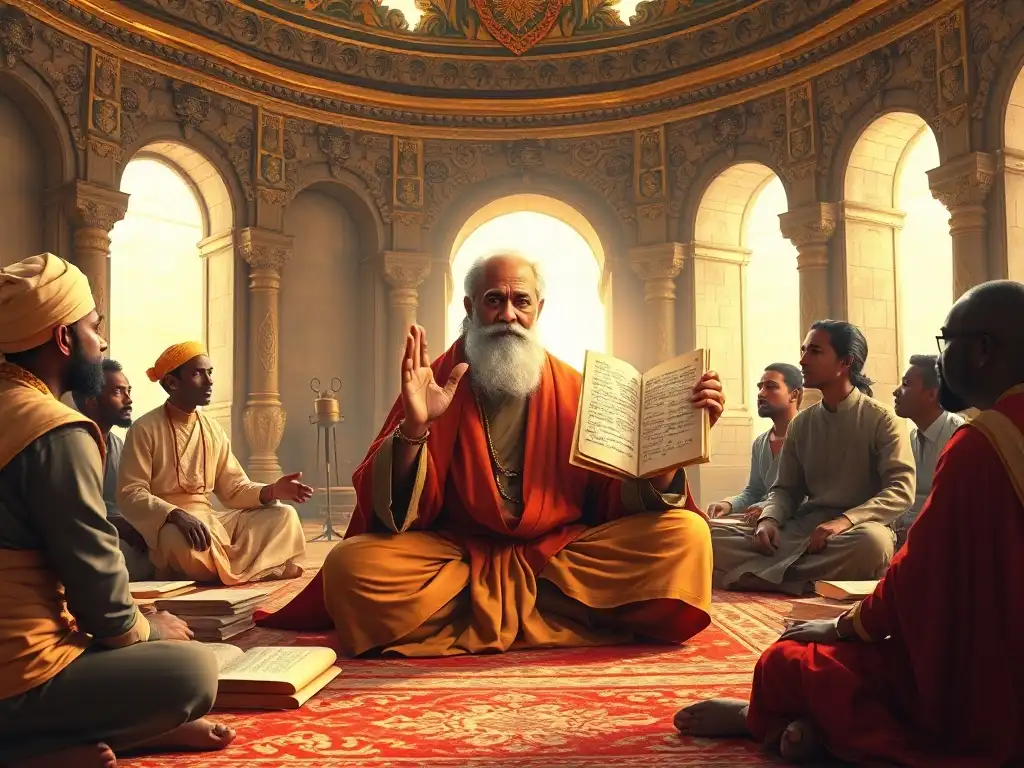
Introduction to Prakrit Language History and Evolution
The Prakrit languages, a fascinating branch of ancient Indian linguistics, represent a crucial element in understanding the linguistic tapestry of the subcontinent. Evolving from the Vedic Sanskrit, Prakrit emerged as a vernacular form of expression that flourished between the 6th century BCE and the 6th century CE.
This article embarks on a journey through the history and evolution of the Prakrit language, examining its rich heritage and the profound influence it has had on the cultural and literary developments of ancient India. By delving into the intricacies of Prakrit, we can uncover the layers of linguistic diversity that shaped the communication and artistic expressions of bygone civilizations.
Overview of Prakrit and Its Importance in Ancient Indian Linguistics
Prakrit encompasses a group of Middle Indic languages that were spoken in various regions of ancient India. Unlike Sanskrit, which was primarily reserved for religious and scholarly texts, Prakrit was used in everyday communication and literature, making it accessible to a broader audience. Its significance lies in its role as a bridge between the elite and the common people, facilitating the spread of ideas, philosophies, and artistic expressions.
- Diversity of Prakrit Languages:
- Ardhamagadhi
- Maharashtri
- Sauraseni
Each of these dialects played a unique role in the cultural and literary landscape of ancient India, contributing to the development of regional literature and serving as a medium for various philosophical schools.
Significance of Studying Prakrit Language Heritage
Understanding the heritage of the Prakrit language is vital for several reasons:
- Cultural Insights:
- Prakrit literature offers a glimpse into the social, political, and religious life of ancient India.
- Linguistic Evolution:
- The study of Prakrit aids in tracing the evolution of languages in the Indian subcontinent, revealing the shifts in phonetics, grammar, and vocabulary.
- Connection to Other Languages:
- Prakrit serves as a link to both Indo-Aryan and Dravidian language families, highlighting the linguistic interplay in ancient India.
- Influence on Modern Languages:
- Prakrit has left an indelible mark on several modern languages in India, including Hindi and Marathi, making its study relevant for understanding contemporary linguistic dynamics.
The Origins of Prakrit Language
Historical Context of Prakrit Language Development
The origins of Prakrit are deeply intertwined with the socio-political changes occurring in ancient India. The rise of regional kingdoms and the decline of the Mauryan Empire around the 3rd century BCE set the stage for the proliferation of vernacular languages. This period saw the emergence of Prakrit as a distinct linguistic entity, gradually gaining prominence in literature and daily communication.
Influences from Other Ancient Languages
Prakrit did not develop in isolation; rather, it was influenced by various languages and dialects present in ancient India. The interaction with languages such as Aramaic and Greek, particularly during the time of the Mauryan Empire and later Hellenistic influences, contributed to its evolution. The incorporation of loanwords and stylistic elements from these languages enriched the Prakrit lexicon, making it a dynamic and evolving form of communication.
The Role of Prakrit in the Indus Valley Civilization
While the direct evidence of language use in the Indus Valley Civilization (c. 3300–1300 BCE) remains elusive, the linguistic roots that eventually blossomed into Prakrit can be traced back to this ancient civilization. The script and symbols found in archaeological sites suggest a complex system of communication that laid the groundwork for later languages. The cultural and commercial interactions that thrived during this period likely contributed to the linguistic diversity that would give rise to Prakrit and its dialects.
The linguistic heritage of Prakrit is a testament to the rich tapestry of ancient Indian civilization, reflecting the evolution of language and its profound impact on culture and society.
The Evolution of Prakrit Through the Ages
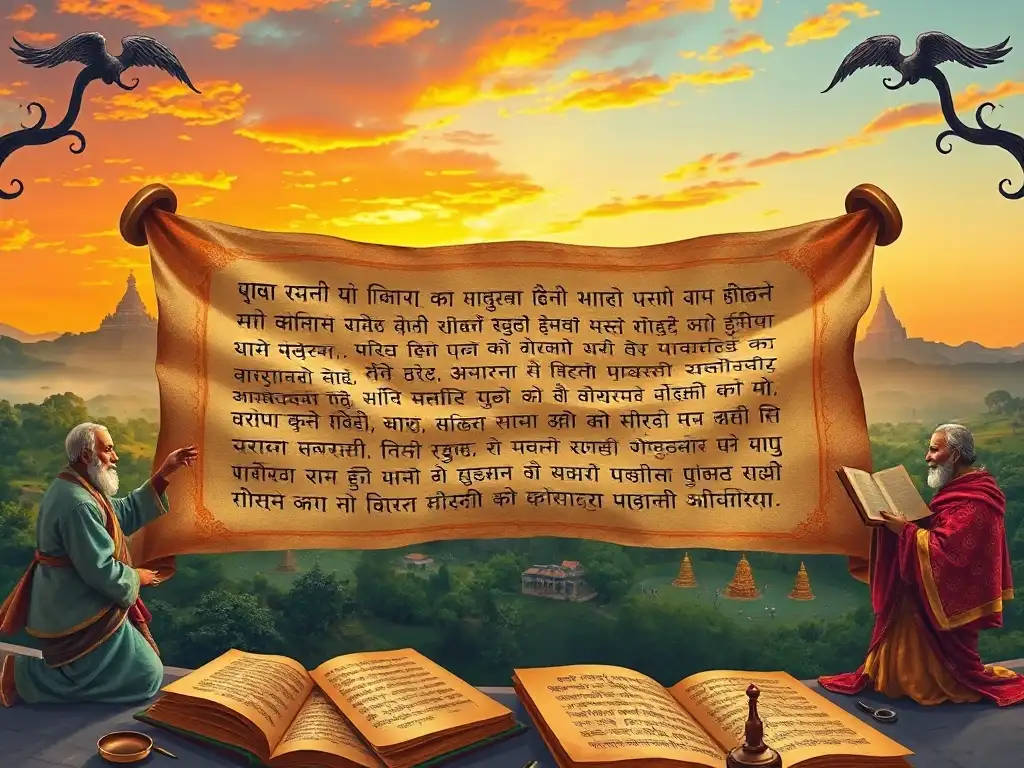
The Prakrit languages represent a significant linguistic heritage that evolved from the ancient Indo-Aryan languages. This evolution can be traced back to the 6th century BCE, during which Prakrit emerged as a vernacular counterpart to the more formal Sanskrit. Its development is marked by a series of dialectal variations that reflect the geographical and cultural diversity of ancient India. Over the centuries, Prakrit underwent significant transformations influenced by social, political, and religious factors, leading to the development of distinct dialects such as Ardha Magadhi, Maharashtri, and later, Apabhramsha.
Early Forms of Prakrit: Ardha Magadhi and Maharashtri
Ardha Magadhi and Maharashtri are among the earliest forms of the Prakrit language, each serving unique roles in ancient Indian society. Ardha Magadhi, primarily spoken in the regions of modern-day Bihar and Eastern India, was notably used in early Buddhist texts. Its phonetic characteristics and vocabulary were influenced by the Magadhan dialect, which was prevalent during the rise of the Magadha kingdom.
On the other hand, Maharashtri emerged in the western regions of India, particularly in Maharashtra. This dialect became prominent in the 1st century CE and is often associated with the rise of dramatic literature. Maharashtri served as the medium for various forms of poetry, including the famous Natya Shastra by Bharata Muni. Both dialects played a crucial role in the cultural and literary landscape of ancient India, acting as a bridge between formal Sanskrit and the vernacular languages that emerged later.
Transition from Prakrit to Apabhramsha
The transition from Prakrit to Apabhramsha marks a fascinating phase in the linguistic evolution of ancient Indian languages. Apabhramsha can be seen as a late form of Prakrit that emerged around the 6th century CE. This transition was characterized by a significant simplification of grammatical structures and the introduction of new vocabulary, influenced by regional languages and dialects.
Apabhramsha was not merely a degradation of Prakrit; rather, it was a dynamic language that reflected the socio-political changes of the time. It became a vehicle for literary expression, particularly in the medieval period, leading to the development of various regional languages. The linguistic shift from Prakrit to Apabhramsha illustrates the adaptability of language and its ability to evolve in response to changing cultural contexts.
Key Historical Periods Influencing Prakrit Language Evolution
Several historical periods significantly influenced the evolution of the Prakrit language.
- The Maurya Empire (322-185 BCE): This period saw the spread of Buddhism, which utilized Prakrit in its teachings, leading to its wider acceptance.
- The Gupta Empire (c. 240-550 CE): The flourishing of arts and literature during this time contributed to the standardization of various Prakrit dialects.
- Medieval Period (6th-13th centuries CE): The rise of regional kingdoms and the patronage of local literature fostered the development of Apabhramsha, further diversifying the linguistic landscape.
These periods not only influenced the phonetic and grammatical aspects of Prakrit but also enriched its vocabulary by incorporating elements from local dialects and languages.
The Cultural Impact of Prakrit Language
The Prakrit languages have left an indelible mark on the cultural landscape of ancient India. Their usage in various literary and religious texts highlights their significance in shaping the socio-cultural fabric of the time.
Prakrit in Ancient Indian Literature and Poetry
Prakrit served as a crucial medium for literary expression in ancient India. It was prominently featured in the plays and poems of renowned playwrights like Kalidasa and Bhasa. The choice of Prakrit in these works allowed for a more relatable and accessible form of storytelling, resonating with the common people. The emotional depth and lyrical quality of Prakrit poetry exemplified its cultural richness, making it an integral part of the literary canon of ancient India.
The Use of Prakrit in Jain and Buddhist Texts
Prakrit played a vital role in the scriptures of both Jainism and Buddhism. Jain texts, such as the Tattvarthasutra, were composed in Ardhamagadhi, showcasing the linguistic diversity within the Prakrit family. Similarly, the Buddhist canon utilized various forms of Prakrit, particularly in the Pali texts, to disseminate teachings among the masses. This usage underscores Prakrit's significance as a language of spirituality and philosophy, bridging the gap between the elite and the common populace.
Prakrit's Influence on Regional Languages of India
The influence of Prakrit on modern Indian languages is profound and far-reaching. As Prakrit evolved, it laid the groundwork for several regional languages, including Marathi, Gujarati, and Hindi. Many linguistic features, vocabulary, and phonetic elements of these languages can be traced back to their Prakrit roots. Moreover, as regional dialects emerged, they absorbed various aspects of Prakrit, enriching their linguistic heritage. This interaction illustrates the lasting legacy of Prakrit in shaping the linguistic diversity of contemporary India.
The Structure and Characteristics of Prakrit
Prakrit, a group of Middle Indo-Aryan languages, is characterized by its unique structure and distinct features that set it apart from its predecessor, Sanskrit, and its successors, the modern Indo-Aryan languages. It encompasses various forms that were spoken in different regions of ancient India, showcasing a rich linguistic tapestry. The structure of Prakrit is notably simpler than that of Sanskrit, making it more accessible to the common people. This simplicity is reflected in its phonology, grammar, and vocabulary.
Prakrit languages exhibit a variety of phonological features. They include a rich inventory of vowels and consonants, including aspirated and unaspirated sounds. The language often adopts a more relaxed pronunciation compared to Sanskrit, leading to the omission of certain phonemes and simplified syllable structures. This phonological adaptation is crucial for understanding how Prakrit evolved and influenced subsequent languages.
Phonological Features of Prakrit Language
The phonological features of Prakrit are integral to its identity, showcasing a blend of both simplicity and complexity. Vowel harmony is prevalent, where vowels within a word tend to agree in terms of their phonetic qualities. Prakrit languages often exhibit a reduction in the number of vowel lengths compared to Sanskrit, favoring shorter and more direct vowel sounds.
Additionally, the presence of nasal sounds is significant in Prakrit, influencing the formation of words and their meanings. Consonant clusters, while present, are less complex than in Sanskrit, contributing to the smoother flow of speech. For instance, the transformation of Sanskrit's retroflex sounds into more palatable forms in Prakrit makes it easier for speakers to articulate words. These phonological features not only define the sound system of Prakrit but also reflect the linguistic preferences of its speakers.
Grammatical Aspects of Prakrit: Syntax and Morphology
Prakrit's grammatical structure is marked by its morphological simplicity, which distinguishes it from the more complex system of Sanskrit. The syntax of Prakrit is generally subject-object-verb (SOV), a characteristic it shares with many modern Indo-Aryan languages. This syntactical order aids in understanding the relationships between words, making it easier for speakers to convey meaning.
Morphologically, Prakrit shows a tendency towards the use of fewer inflections. While Sanskrit employs a rich system of declensions and conjugations, Prakrit simplifies these forms, often relying on context rather than overt morphology to indicate grammatical relationships. This reduction in inflectional complexity makes Prakrit more accessible to non-scholars and facilitates everyday communication.
Dialectal Variations within Prakrit Language
Prakrit is not a monolithic language but rather encompasses a range of dialects that reflect geographical and cultural diversity. Major dialects include Ardhamagadhi, Maharashtri, and Shauraseni, each with its own distinct phonological and grammatical features.
- Ardhamagadhi: Primarily associated with Jain literature, this dialect is known for its specific phonetic characteristics and vocabulary.
- Maharashtri: Spoken in the Maharashtra region, this dialect has influenced the development of Marathi, showcasing a significant historical lineage.
- Shauraseni: This dialect was prevalent in the western regions of India and has contributed to various modern dialects of Hindi.
These dialectal variations highlight the adaptability of Prakrit in different cultural contexts and its role in shaping regional languages.
The Decline of Prakrit and Its Legacy
The decline of Prakrit as a prominent spoken language can be attributed to several interrelated factors that led to its gradual overshadowing by Sanskrit and later, regional vernaculars.
Factors Leading to the Decline of Prakrit Language
One of the primary factors contributing to the decline of Prakrit was the rise of Sanskrit as the language of scholarship, religion, and administration during the later stages of ancient Indian civilization. As Brahmanical traditions gained prominence, Sanskrit became increasingly associated with higher status and education, leading to the marginalization of Prakrit.
Moreover, the socio-political shifts in ancient India, including the rise of regional kingdoms, diminished the uniformity of Prakrit usage. The emergence of regional languages, influenced by local dialects and cultures, further accelerated the decline of Prakrit. The gradual evolution of languages like Hindi, Marathi, and Gujarati marked the transition from Prakrit to more modern forms of communication.
The Transition to Modern Languages: Continuity and Change
The transition from Prakrit to modern languages illustrates a fascinating evolution characterized by both continuity and change. While Prakrit itself faded, its legacy persisted through the linguistic frameworks and vocabulary that influenced subsequent languages. Elements of Prakrit can be traced in modern Indo-Aryan languages, which exhibit phonological and syntactical features reminiscent of their Prakrit predecessors.
Furthermore, the literary traditions established in Prakrit laid the groundwork for the development of regional literatures. Many literary works, including poetry and prose, derived their themes and stylistic choices from the rich narratives found in Prakrit texts. This continuity demonstrates how ancient languages can shape and enrich modern linguistic identities.
Preserving the Linguistic Heritage of Prakrit
Efforts to preserve the linguistic heritage of Prakrit are crucial for understanding the historical and cultural contexts of ancient India. Academic institutions and linguistic researchers have undertaken initiatives to study Prakrit texts, including inscriptions, literature, and religious scriptures, ensuring that this linguistic heritage is not lost to time.
Moreover, the resurgence of interest in Prakrit through modern educational programs and cultural studies is vital for promoting awareness and appreciation of this ancient language. By fostering a deeper understanding of Prakrit, scholars contribute to the broader narrative of India’s linguistic diversity and historical richness, ensuring that the echoes of Prakrit continue to resonate through the ages.
Conclusion: The Enduring Influence of Prakrit Language History
The Prakrit languages, emerging from the linguistic milieu of ancient India, constitute a vital chapter in the narrative of Indian linguistic evolution. Their influence is not merely confined to the past but continues to resonate through various aspects of modern languages, literature, and cultural identities in the Indian subcontinent. Prakrit, with its rich oral traditions and literary outputs, played a pivotal role in shaping the vernaculars that followed, bridging the gap between the classical language of Sanskrit and the contemporary languages spoken today.
The historical significance of Prakrit cannot be overstated; it served as a medium for philosophical discourse, religious texts, and a vast array of literature that reflects the social and cultural fabric of ancient India. Its evolution from the spoken vernaculars of the time to a structured form of literary expression showcases the adaptability and dynamic nature of language as a living entity that evolves in tandem with society.
Reflection on Prakrit's Role in Shaping Indian Linguistic Identity
Prakrit languages have played a crucial role in the formation of a distinct Indian linguistic identity, highlighting the regional diversities and cultural nuances across different parts of the subcontinent. By functioning as a bridge between the elite Sanskrit tradition and the everyday speech of the common people, Prakrit languages facilitated literary and cultural expressions that were accessible to a broader audience.
This democratization of language underscored the importance of local dialects and vernaculars, which became essential in the transmission of knowledge and culture. The impact of Prakrit is evident in its influence on various Indian languages, including Hindi, Marathi, and Gujarati, where many Prakrit-derived words and syntactic structures can still be traced today. This linguistic heritage not only reflects the historical complexities of language development in India but also serves as a testament to the rich tapestry of its cultural history.
Future Directions in Prakrit Language Studies
As the field of linguistics continues to evolve, the study of Prakrit languages presents numerous avenues for exploration. Future research could focus on:
- Comparative Linguistics: Investigating the connections between Prakrit and other ancient languages, including Sanskrit and Pali, to gain a deeper understanding of their interrelations and influences.
- Dialectal Studies: Examining the various regional dialects of Prakrit and their evolution can provide insights into the social and cultural dynamics of ancient Indian communities.
- Digital Humanities: Utilizing modern technology to digitize and analyze ancient texts can facilitate broader access to Prakrit literature and enhance collaborative research efforts.
- Interdisciplinary Approaches: Integrating linguistic studies with anthropology, history, and literary analysis can offer a more holistic understanding of the role of Prakrit in shaping Indian culture and identity.
By pursuing these directions, scholars can continue to uncover the vast and intricate legacy of Prakrit, ensuring its relevance in contemporary linguistic and cultural discourse.
References
Key Texts and Resources on Prakrit Language History and Evolution
- "The Prakrit Languages: Their History and Evolution" by [Author Name]
- An in-depth exploration of the origins and developments of various Prakrit languages.
- "Prakrit Literature" by [Author Name]
- A comprehensive study of the literary contributions of Prakrit, highlighting key texts and authors.
- "Sanskrit and Prakrit: A Comparative Study" by [Author Name]
- This book delves into the linguistic features that differentiate and connect Sanskrit and Prakrit.
Recommended Further Reading on Ancient Indian Linguistics
- "A History of Indian Literature" by [Author Name]
- This work provides a broader context of Indian literature, including the significance of Prakrit in its evolution.
- "The Languages of Ancient India" by [Author Name]
- A detailed examination of the languages spoken in ancient India, with a focus on the role of Prakrit.
- "Prakrit and Pali: The Languages of Buddhism" by [Author Name]
- This book discusses the significance of Prakrit and Pali in Buddhist texts and their influence on religious discourse.
- "The Linguistic Landscape of Ancient India" by [Author Name]
- An analysis of the various languages in ancient India, emphasizing the cultural and social implications of linguistic diversity.
By engaging with these texts, readers can deepen their understanding of the intricate history and evolution of the Prakrit languages and their lasting impact on Indian linguistic heritage.
- Introduction to Prakrit Language History and Evolution
- Overview of Prakrit and Its Importance in Ancient Indian Linguistics
- Significance of Studying Prakrit Language Heritage
- The Origins of Prakrit Language
- The Evolution of Prakrit Through the Ages
- The Cultural Impact of Prakrit Language
- The Structure and Characteristics of Prakrit
- The Decline of Prakrit and Its Legacy
- Conclusion: The Enduring Influence of Prakrit Language History
- Reflection on Prakrit's Role in Shaping Indian Linguistic Identity
- Future Directions in Prakrit Language Studies
- References
Frequently Asked Questions
What is the Prakrit language?
The Prakrit language refers to a group of ancient Indian languages that evolved from Sanskrit and were widely used in literature and religion during ancient times.
How did Prakrit influence modern languages?
Prakrit has significantly influenced several modern Indian languages, especially through its vocabulary and grammatical structures, contributing to their linguistic diversity.
What are the main dialects of Prakrit?
The main dialects of Prakrit include Pali, Ardhamagadhi, and Maharastri, each with unique features and historical significance in ancient Indian literature.
How did Prakrit evolve over time?
Prakrit evolved through various stages, influenced by regional dialects and the cultural exchanges during the Mauryan and Gupta periods, leading to its eventual decline in favor of modern languages.
What contributions did Prakrit make to literature?
Prakrit literature includes a rich array of poetry, plays, and philosophical texts, reflecting the cultural and spiritual life of ancient Indian societies, particularly in Jain and Buddhist traditions.
Final Reflection: Embracing the Legacy of Prakrit Language
The exploration of Prakrit language history and evolution reveals a profound connection between our past and present. As we delve into the intricate tapestry of linguistic heritage, we uncover how Prakrit not only shaped ancient societies but also continues to influence modern languages and cultures. The enduring significance of Prakrit serves as a reminder that our linguistic roots are deeply intertwined with our identity and cultural expression.
The impact of Prakrit extends far beyond its historical context; it resonates within the cultural and social landscapes of today. As we navigate through the complexities of language, we find ourselves reflecting on the shared human experience that transcends time and geography. Language is the road map of a culture. It tells you where its people come from and where they are going.
This quote encapsulates the essence of how Prakrit has paved the way for contemporary languages and dialogues, fostering a sense of unity among diverse communities while celebrating their unique identities.
As we conclude this journey through the rich heritage of Prakrit, I invite you to reflect on your own linguistic journey. Consider how the languages you speak shape your worldview and connect you to your roots. Let the lessons from Prakrit inspire you to embrace and celebrate the diversity of languages around you. In doing so, you contribute to the preservation of cultural legacies and the evolution of language, ensuring that the voices of the past continue to resonate in the future.
Unveil the Depths of Prakrit Heritage!
Thank you for joining us on this enlightening journey through the linguistic treasures of Prakrit! We hope you’ve gained valuable insights into its rich history and cultural significance. Now, let’s put this knowledge into action!
- Explore further: Dive deeper into the world of Prakrit by reading classic texts or researching its evolution into modern languages.
- Share your knowledge: Discuss your insights with friends or engage in online communities to spread awareness about the significance of Prakrit.
- Join our community: Subscribe to Ancient India History for more engaging articles and connect with fellow history enthusiasts!
Which aspect of Prakrit’s heritage resonates most with you, and how do you plan to explore it further?