
The Cultural Significance of Rock Edicts in Ancient India

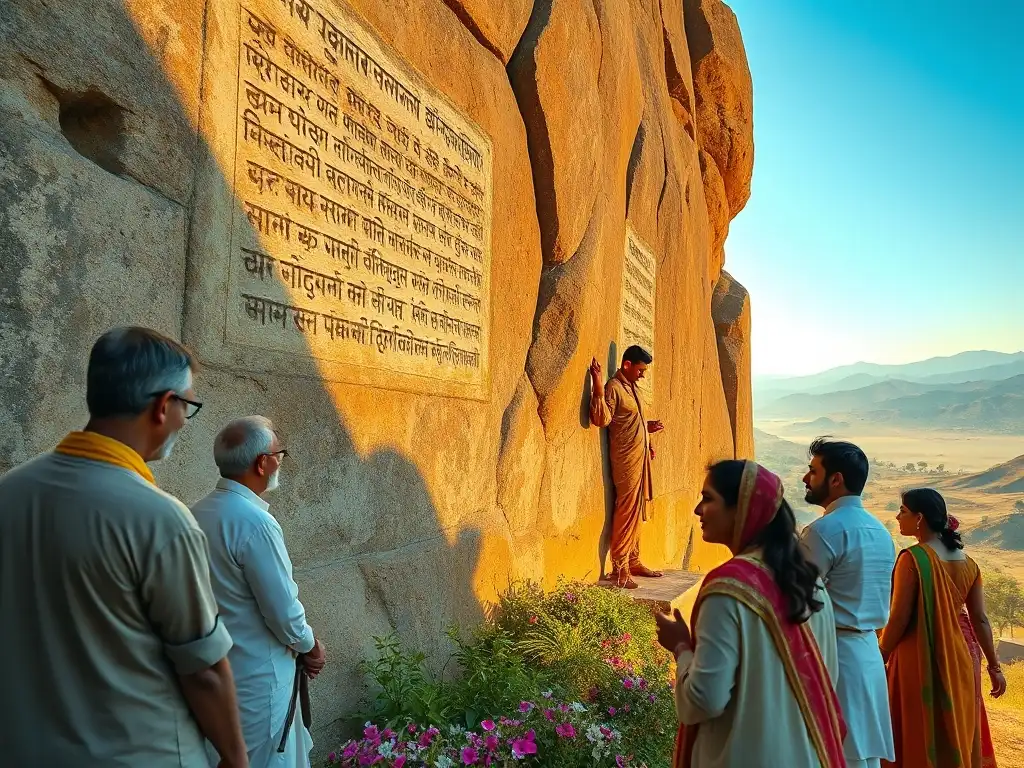
Welcome to Ancient India History, where we embark on a fascinating journey through the rich tapestry of ancient Indian civilizations. Delve into the cultural importance of rock edicts, a profound aspect that reveals the ethos and values of societies long past. As we explore these monumental inscriptions, you'll uncover how they not only shaped communication but also reflected the moral and philosophical underpinnings of their time. Get ready to uncover the stories etched in stone that continue to resonate through the ages—your exploration starts here!

The rock edicts of ancient India serve as a profound testament to the cultural, ethical, and philosophical landscape of the time. Inscribed on rocks and pillars, these edicts emanated from the reign of Emperor Ashoka during the 3rd century BCE, marking a pivotal shift towards governance infused with moral and ethical considerations.
The significance of these inscriptions extends beyond mere historical documentation; they encapsulate the values and beliefs of a society in transition, reflecting the intricate tapestry of ancient Indian civilization. This article delves into the cultural importance of rock edicts, exploring their definition, historical context, and the enduring legacy they contribute to our understanding of ancient Indian culture.
Introduction to Rock Edicts
Definition and Historical Context of Rock Edicts
Rock edicts are a series of inscriptions carved into stone by Emperor Ashoka, primarily found in various locations across the Indian subcontinent. These edicts are pivotal for understanding the evolution of governance and the dissemination of ethical values during Ashoka's reign. The inscriptions typically advocate for moral virtues, social justice, and compassion towards all living beings, highlighting Ashoka's commitment to Buddhism after his conversion post the Kalinga War.
- Key Characteristics of Rock Edicts:
- Material: Primarily engraved on rock surfaces and pillars.
- Language: Written in Brahmi script and Prakrit language.
- Themes: Ethics, governance, social welfare, and Buddhism.
The historical context surrounding these edicts is significant; they emerged during a time of consolidation of power and cultural integration, reflecting both local and broader influences that shaped ancient Indian society.
Overview of Ashoka and His Role in the Rock Edicts
Emperor Ashoka, one of the most celebrated rulers of ancient India, played a crucial role in the creation and propagation of rock edicts. After witnessing the devastating effects of the Kalinga War, Ashoka embraced Buddhism and sought to govern with principles of non-violence and compassion. His rock edicts served as a means to communicate his vision of a just and moral society.
- Ashoka's Contributions:
- Promotion of Buddhism: Used edicts to promote Buddhist values across his empire.
- Social Welfare Initiatives: Advocated for the welfare of animals and the poor through public policies.
- Cultural Integration: Fostered a sense of unity among diverse cultural groups within his realm.
The Cultural Importance of Rock Edicts
Understanding the Cultural Context of Ancient India
The cultural landscape of ancient India was rich and multifaceted, characterized by a blend of various philosophies, languages, and traditions. The rock edicts reflect this complexity, as they were not merely political tools but also instruments of cultural expression. They provide insight into the moral frameworks and societal norms that guided everyday life.
- Cultural Elements Reflected in Rock Edicts:
- Religious Diversity: Acknowledgement of various religions and philosophies.
- Social Values: Emphasis on non-violence, tolerance, and ethical conduct.
- Community Welfare: Calls for the betterment of society as a whole.
How Rock Edicts Reflect Ancient Indian Values and Beliefs
The rock edicts are a significant reflection of the values and beliefs that permeated ancient Indian society. By promoting concepts such as dharma (moral duty) and ahimsa (non-violence), Ashoka's inscriptions resonate with the ethical principles that were vital to the cultural identity of the time.
- Values Illustrated in the Edicts:
- Compassion: Encouragement to treat all living beings with kindness.
- Moral Responsibility: Call for citizens to act righteously.
- Unity in Diversity: Recognition of the need for harmony among different communities.
The cultural importance of rock edicts transcends their historical context, offering valuable lessons on governance, ethics, and societal values that continue to influence contemporary thought in India and beyond.
The Language and Scripts of Rock Edicts
The rock edicts of ancient India serve as a crucial link to understanding the linguistic and cultural landscape of the time. These inscriptions are primarily written in two scripts: Brahmi and Kharosthi, which were instrumental in conveying the messages of rulers, particularly Emperor Ashoka. The choice of language and script not only reflects the administrative practices of the period but also the cultural diversity within the regions where these edicts were found.
Languages Used in Rock Edicts
The languages utilized in the rock edicts are predominantly Prakrit, a group of Middle Indo-Aryan languages. Prakrit was chosen for its accessibility to the common populace, contrasting with the more formal Sanskrit used in religious texts. The edicts aimed to communicate moral and ethical principles to a broad audience, ensuring that the messages transcended social and linguistic barriers. Notably, the edicts were often inscribed in local dialects, which further enhanced their reach and relevance among diverse communities.
Analysis of Scripts: Brahmi and Kharosthi
The scripts of Brahmi and Kharosthi are foundational to understanding the development of writing in ancient India.
- Brahmi: This script is considered one of the earliest writing systems in the Indian subcontinent. It is characterized by its use of phonetic symbols, where each character typically represents a consonant with an inherent vowel sound. Brahmi inscriptions are found across various sites, demonstrating its widespread use during the Mauryan Empire.
- Kharosthi: In contrast, Kharosthi was used primarily in the northwest regions of ancient India, particularly in Gandhara. This script exhibits a more cursive style and is read from right to left. Kharosthi inscriptions often appear on coins and seals, indicating its importance in trade and administration.
Both scripts played a significant role in documenting the edicts, providing insights into the administrative language and the cultural exchanges occurring during this period.
The Themes and Messages Conveyed in Rock Edicts
The rock edicts are not merely inscriptions but represent a profound moral and ethical framework that Emperor Ashoka sought to instill in his subjects. The themes articulated in these edicts resonate deeply with the values of ancient Indian society and continue to be relevant today.
Key Themes: Dharma, Non-Violence, and Social Welfare
Three central themes emerge from the rock edicts: Dharma, Non-Violence, and Social Welfare.
- Dharma: Ashoka's edicts emphasize the importance of Dharma, or righteous living. The concept underlines moral conduct, justice, and the welfare of all living beings. Ashoka sought to align his governance with these principles, advocating for ethical behavior among his subjects.
- Non-Violence: Perhaps the most notable theme is non-violence (Ahimsa). Following the Kalinga War, Ashoka renounced aggression and promoted compassion and tolerance. The edicts call for the respectful treatment of all creatures and discourage war and conflict as means to achieve political objectives.
- Social Welfare: Ashoka's commitment to social welfare is evident in the edicts that address the wellbeing of all citizens. This includes provisions for healthcare, education, and the support of the underprivileged. The idea was to create a just society where individuals could thrive in harmony with others.
The Role of Edicts in Promoting Moral and Ethical Conduct
The rock edicts served as a powerful tool for promoting moral and ethical conduct among the populace. By publicly inscribing these principles, Ashoka sought not only to inform his subjects but also to instill a sense of responsibility and accountability.
- Public Awareness: The visibility of these inscriptions meant that the ideals of Dharma and non-violence were not confined to the elite but were accessible to the general populace, encouraging a collective adherence to these values.
- Cultural Legacy: The enduring nature of these messages has contributed to the cultural legacy of India, influencing later philosophies and governance models. The rock edicts remind us of the potential for rulers to lead by example and inspire ethical conduct in society.
In essence, the rock edicts encapsulate a vision of governance rooted in ethical principles, making them a cornerstone of ancient Indian history and a testament to the cultural importance of these inscriptions.
The Impact of Rock Edicts on Society

The rock edicts of ancient India, particularly those associated with Emperor Ashoka, played a significant role in shaping the social and cultural landscape of the time. These inscriptions, carved into stone across various locations, served not only as proclamations of royal decrees but also as moral guidelines for the populace.
The messages contained within them promoted ethical conduct, social responsibility, and the importance of welfare, thereby influencing the societal norms and values of the era. The dissemination of these edicts helped in unifying diverse groups under a common ethical framework, fostering a sense of community among the citizens of the vast Mauryan Empire.
Influence on Governance and Administration
The rock edicts directly impacted governance and administration in ancient India by establishing a standardized set of principles that transcended regional laws and customs. Ashoka's edicts emphasized the idea of Dharma, which underscored justice, moral governance, and the welfare of the people. This philosophical approach to governance prompted rulers to consider the well-being of their subjects, leading to a more humane administration.
The edicts also served as a means of communication between the emperor and his subjects, allowing for transparency in governance and reinforcing the ruler's commitment to ethical leadership. Furthermore, the localized translations of these edicts into various languages showcased an early understanding of inclusive governance, acknowledging the linguistic diversity within the empire.
Effects on Religion and Philosophy in Ancient India
The rock edicts had a profound impact on the religious and philosophical landscape of ancient India. Ashoka's embrace of Buddhism, as reflected in his inscriptions, not only promoted Buddhist ideals but also encouraged a broader dialogue among various religious traditions. The edicts advocate for tolerance, compassion, and non-violence, aligning closely with the core tenets of Buddhism while also resonating with other faiths present in the region.
This religious pluralism fostered a climate of mutual respect among different communities, allowing for a more harmonious coexistence. Additionally, the philosophical dimensions of the edicts contributed to the evolution of moral thought in ancient India, encouraging individuals to reflect on their actions and their impact on society and the environment.
Archaeological Discoveries and Interpretations
The archaeological discoveries of rock edicts have illuminated our understanding of ancient Indian culture and society. These inscriptions provide a direct link to the thoughts and values of one of India's most influential emperors, offering insights into the governance, religious practices, and social norms of the time. The careful examination of these edicts has led to a resurgence of interest in ancient Indian history, prompting scholars to explore not just the content of the inscriptions but also their broader implications for understanding the civilization as a whole.
Major Sites of Rock Edicts in India
Prominent sites of rock edicts in India include the famous Ashoka Pillars at locations such as Sarnath, where the edicts articulate principles of moral governance and Buddhist teachings. Other notable sites include the rock edicts found in Lumbini, the birthplace of the Buddha, which serve to highlight the confluence of political power and religious significance.
The inscriptions at places like Dhauli and Kalinga further illustrate the campaign of moral conquest that Ashoka undertook following the Kalinga War. Each of these sites reflects not only the geographic reach of Ashoka's influence but also the varying contexts in which these edicts were inscribed, revealing insights into the local cultures and practices of ancient India.
The Role of Archaeology in Understanding Cultural Significance
Archaeology plays a crucial role in interpreting the cultural significance of rock edicts. The methodical excavation and analysis of sites where these inscriptions are found have allowed historians to reconstruct the historical context surrounding their creation. Archaeologists employ techniques such as stratigraphy and carbon dating to establish timelines, while epigraphists decode the inscriptions to reveal their meanings.
This interdisciplinary approach has enriched our understanding of ancient Indian civilization, demonstrating how these rock edicts served not only as political propaganda but also as vital cultural artifacts that embody the ethical and philosophical ideals of the time. Through these efforts, rock edicts are revealed to be more than mere inscriptions; they are foundational documents that encapsulate the essence of ancient Indian culture and its enduring legacy.
The Legacy of Rock Edicts in Modern Times
The rock edicts of ancient India, particularly those inscribed by Emperor Ashoka during the 3rd century BCE, continue to resonate in modern times, serving as a powerful symbol of moral governance and ethical leadership. These inscriptions, carved into stone across the Indian subcontinent, were not merely administrative directives; they encapsulated profound philosophical messages that have transcended time. The emphasis on dharma (righteousness) and ahimsa (non-violence) found within these edicts has influenced contemporary moral and ethical discourses, making them relevant in today's socio-political landscape.
In addition, the rock edicts have ignited a sense of historical identity and pride among modern Indians. They are often referenced in discussions about India's ancient civilization and its contributions to global cultural heritage. The preservation and study of these inscriptions have also led to a resurgence of interest in ancient Indian languages, scripts, and philosophies, fostering a broader appreciation of the cultural significance of India's historical narratives.
Rock Edicts as a Symbol of Peace and Tolerance
One of the most notable aspects of the rock edicts is their advocacy for peace and tolerance. Ashoka's commitment to non-violence, particularly after the Kalinga War, is vividly articulated in these inscriptions. He urged his subjects to practice compassion, restraint, and respect towards all living beings, highlighting the importance of ethical behavior in governance. This message of peaceful coexistence is especially relevant in today's world, where conflicts arise from misunderstandings and intolerance.
The rock edicts promote a vision of universal brotherhood, urging individuals to rise above sectarian divides and embrace compassion for others. This ethos has inspired various movements for peace and social justice in modern India and beyond. Organizations and leaders advocating for communal harmony often draw upon the principles articulated in Ashoka's edicts, reinforcing their enduring relevance.
Influence on Contemporary Indian Culture and Society
The cultural importance of rock edicts extends into various facets of contemporary Indian society, including literature, art, and education. Their themes of ethics, governance, and social responsibility have influenced writers, artists, and thinkers who seek to integrate these ancient ideals into modern narratives. Educational curriculums often include discussions about Ashoka’s rock edicts, fostering an understanding of India's historical commitment to ethical governance among students.
Moreover, the inscriptions serve as a source of inspiration for various social movements in India today. Activists and scholars invoke the principles found in the edicts when addressing issues such as environmental conservation, social justice, and human rights. The rock edicts remind contemporary society of the importance of promoting a just and compassionate world, thus reinforcing their cultural significance.
Conclusion
Summary of the Cultural Importance of Rock Edicts
The rock edicts of ancient India represent a profound cultural legacy that extends far beyond their historical context. Their messages of peace, tolerance, and ethical governance resonate with contemporary values, making them a cornerstone of India's cultural identity. These inscriptions not only preserve the philosophical insights of a bygone era but also continue to inspire modern discourses on ethics and social responsibility.
The Lasting Impact of Rock Edicts on Ancient Indian History and Culture
The lasting impact of rock edicts on ancient Indian history and culture is evident in their role as a bridge between the past and the present. They encapsulate the essence of Ashoka’s vision for a benevolent and just society, influencing subsequent generations and shaping India's cultural landscape. The rock edicts are a testament to the sophisticated governance of ancient India, reflecting the civilization's commitment to moral values that remain relevant in today's world. As such, they are not only historical artifacts but also living legacies that continue to inspire and guide the cultural and ethical frameworks of Indian society.
- Introduction to Rock Edicts
- The Cultural Importance of Rock Edicts
- The Language and Scripts of Rock Edicts
- The Themes and Messages Conveyed in Rock Edicts
- The Impact of Rock Edicts on Society
- Archaeological Discoveries and Interpretations
- The Legacy of Rock Edicts in Modern Times
- Conclusion
Frequently Asked Questions
What are Rock Edicts?
Rock Edicts are inscriptions carved on rocks and pillars, primarily associated with the reign of Emperor Ashoka of the Maurya Dynasty, conveying his moral and ethical principles.
Why were Rock Edicts important in ancient India?
The Rock Edicts served as a means of communication to promote Buddhist values and social ethics, reflecting the emperor's commitment to the welfare of his subjects.
How did Rock Edicts impact the spread of Buddhism?
Rock Edicts played a crucial role in the dissemination of Buddhist teachings, helping to establish Buddhism as a significant cultural and religious force across Ancient India and beyond.
Where can Rock Edicts be found today?
Many Rock Edicts can still be found across India, particularly in locations such as Lumbini, Sarnath, and Kalinga, showcasing their cultural and historical significance.
What themes are commonly found in the Rock Edicts?
The Rock Edicts address themes like non-violence, compassion, and moral living, emphasizing the importance of ethical conduct in society and governance.
Final Reflection: The Enduring Legacy of Rock Edicts
The cultural importance of rock edicts transcends their historical context, resonating deeply within contemporary society. These inscriptions, crafted during the reign of Emperor Ashoka, serve not only as a testament to ancient governance and moral philosophy but also as a beacon of ethical leadership and social harmony that remains relevant today. In an era marked by division and conflict, the principles etched into stone remind us of the enduring power of compassion and non-violence.
The influence of rock edicts extends beyond their physical presence; they have shaped the cultural and social landscape of India and beyond. These edicts represent a commitment to justice, tolerance, and the welfare of all beings, principles that continue to inspire movements for peace and equality. As Mahatma Gandhi once said, “The best way to find yourself is to lose yourself in the service of others.” This sentiment echoes the essence of Ashoka's message, urging us to reflect on our responsibilities toward society and the moral imperatives that guide our actions.
As we contemplate the lessons from the rock edicts, let us embrace the call to action they present. Reflect on how you can embody the values of compassion and understanding in your daily life. Whether through acts of kindness, advocacy for justice, or simply fostering dialogue in your community, each small step contributes to a larger movement toward a more harmonious world. The legacy of these ancient inscriptions is not merely a relic of the past; it is a living philosophy that invites us to engage with the world meaningfully and purposefully.
Unveil the Fascinating Stories of Rock Edicts!
Thank you for diving deep into the rich world of ancient Indian history with us! You've uncovered the incredible significance of rock edicts and their profound impact on culture and governance. Now, let's turn your newfound knowledge into action!
- Discover more: Visit local historical sites or museums that showcase ancient artifacts to deepen your understanding of early forms of communication.
- Share the wisdom: Discuss what you've learned about rock edicts with friends or family—spark a conversation about the ancient world over coffee!
- Join a community: Engage with online forums or local history groups dedicated to ancient civilizations and share your insights on rock edicts.
What aspect of the rock edicts intrigues you the most, and how do you think they could influence our understanding of leadership in today's world?