
The Puranas: Unlocking the Mysteries of Ancient Indian Lore

Welcome to Ancient India History, where we embark on an enlightening journey through the rich tapestry of ancient Indian civilizations. In our feature article, "The Puranas: Unlocking the Mysteries of Ancient Indian Lore," we delve into the captivating realm of ancient Indian lore and mythology. Discover how these timeless tales and texts not only shaped the cultural landscape but also continue to influence our understanding of history today. Are you ready to unlock the secrets of the past? Dive in and explore the profound connections between myth and reality that await you!
Introduction to Ancient Indian Lore and Mythology
Ancient Indian lore and mythology form a profound tapestry woven from the tales, traditions, and beliefs of various civilizations that flourished across the Indian subcontinent. At the heart of this rich narrative lies the Puranas, a genre of ancient texts that provide invaluable insights into the spiritual, cultural, and historical aspects of Indian society.
These texts not only encompass myths and legends but also serve as a bridge connecting the past with the present, showcasing the evolution of thought and philosophy throughout centuries. Understanding the Puranas is essential for anyone seeking to delve deeper into the vibrant world of ancient Indian mythology, as they encapsulate the ethos and values that have shaped the Indian identity.
Understanding the Importance of Puranas in Indian Culture
The Puranas hold a significant position within Indian culture, functioning as a repository of knowledge and wisdom. They are often regarded as sacred texts, revered alongside the Vedas and Upanishads. The Puranas cover a wide array of subjects, including cosmology, mythology, genealogy of gods and sages, and the moral and ethical lessons that guide human conduct.
- Cultural Transmission: The Puranas have played a pivotal role in transmitting cultural values, rituals, and traditions from one generation to another.
- Religious Significance: They provide narratives that underpin various Hindu beliefs and practices, making them essential for understanding Hindu philosophy.
- Literary Contribution: The style and storytelling techniques employed in the Puranas have influenced countless works of literature and art throughout history.
By exploring these texts, scholars and enthusiasts alike can gain a deeper appreciation for the complexity and richness of ancient Indian civilization.
Overview of Ancient Indian Lore's Role in Society
Ancient Indian lore, encompassing the Puranas, has been instrumental in shaping societal norms and values. These narratives address fundamental human experiences, such as love, duty, and morality, resonating with audiences across ages. The Puranas not only entertain but also educate, offering moral lessons through the lives of gods and heroes.
- Societal Reflection: The stories often mirror the socio-political conditions of the times they were written in, reflecting the aspirations and struggles of the people.
- Ritual and Ceremony: Many Puranic tales are integral to religious rituals and festivals, reinforcing community bonds and cultural identity.
- Philosophical Inquiry: The narratives encourage philosophical reflection, prompting individuals to ponder life's deeper questions.
Through their multifaceted roles, the Puranas remain a vital part of India's cultural heritage, fostering a sense of continuity and belonging among its people.
The Puranas: An Overview
The Puranas, with their vast array of stories and teachings, represent a key component of ancient Indian literature that deserves closer examination. These texts not only provide a glimpse into the divine and the human experience but also form a crucial part of the collective memory of Indian civilization.
Definition and Classification of Puranas
The term Purana translates to "ancient" or "old," indicating that these texts are repositories of ancient lore. Traditionally, there are eighteen major Puranas, each classified based on various factors including their content, themes, and the deities they primarily focus on.
- Major Puranas: These include the Vishnu Purana, Shiva Purana, and Bhagavata Purana, among others, each offering unique perspectives and narratives.
- Minor Puranas: In addition to the major texts, there exists a group of lesser-known Puranas that contribute to the overall understanding of ancient Indian mythology.
Each Purana serves distinct purposes, ranging from cosmological descriptions to genealogies of gods and saints, illustrating the diversity within ancient Indian lore.
Historical Context of Puranas in Ancient Indian Literature
The Puranas emerged during a time of significant transition in Indian society, particularly during the early centuries of the Common Era. They reflect a synthesis of various cultural and religious influences that shaped ancient India, including Vedic traditions, local folklore, and regional customs.
- Evolution of Texts: Initially oral traditions, the Puranas were eventually written down, leading to their preservation and propagation throughout history.
- Cultural Synthesis: The Puranas encapsulate the amalgamation of various beliefs and practices, demonstrating the adaptability and resilience of Indian culture.
- Influence on Later Literature: The themes and narratives of the Puranas have significantly influenced subsequent literary works, poetry, and even modern adaptations in various media.
As such, the Puranas not only enrich our understanding of ancient Indian mythology but also provide a context for the evolution of Indian literature as a whole.
Key Themes in Ancient Indian Lore
Ancient Indian lore, particularly as captured in the Puranas, showcases a rich tapestry of themes that reflect the cultural, spiritual, and philosophical ideals of ancient Indian civilization. These narratives serve as a crucial link to understanding the values, beliefs, and practices that shaped society.
One of the central themes is cosmology, which explains the universe's origin, structure, and eventual destruction. The Puranas articulate various creation myths that highlight the cyclical nature of existence, emphasizing the eternal interplay between creation, preservation, and destruction.
Another prominent theme is the divinity of deities, where gods and goddesses are not only personifications of natural forces but also embody moral ideals, human emotions, and the complexities of life. The narratives often explore the relationships between these deities, providing insights into their roles in the cosmic order.
Additionally, the Puranas delve into moral and philosophical teachings. Through allegorical tales and parables, they impart lessons on dharma (righteousness), karma (action and its consequences), and the pursuit of spiritual enlightenment. This blend of mythology and morality makes the Puranas a vital source of guidance for ethical living.
Cosmology and Creation Myths in the Puranas
The Puranas present an intricate understanding of cosmology, often depicted through vivid narratives that illustrate the universe's creation, preservation, and dissolution. Central to these myths is the concept of Brahman, the ultimate reality or cosmic spirit, from which all creation emanates.
One of the most well-known creation stories is found in the Vishnu Purana, where the universe is said to have emerged from the cosmic ocean of chaos, with Vishnu as the preserver who awakens from the primordial waters. This theme of emergence from chaos symbolizes the transformative power of creation and aligns with the cyclical view of time prevalent in ancient Indian philosophy.
Moreover, the Puranas often describe the four yugas (ages), which represent a cosmic cycle of decline and renewal. Each yuga has distinct characteristics, with the present age, Kali Yuga, characterized by moral decay. This cyclical concept underscores the belief in eternal renewal and the possibility of redemption through righteous living.
Deities and Divine Narratives in Ancient Indian Mythology
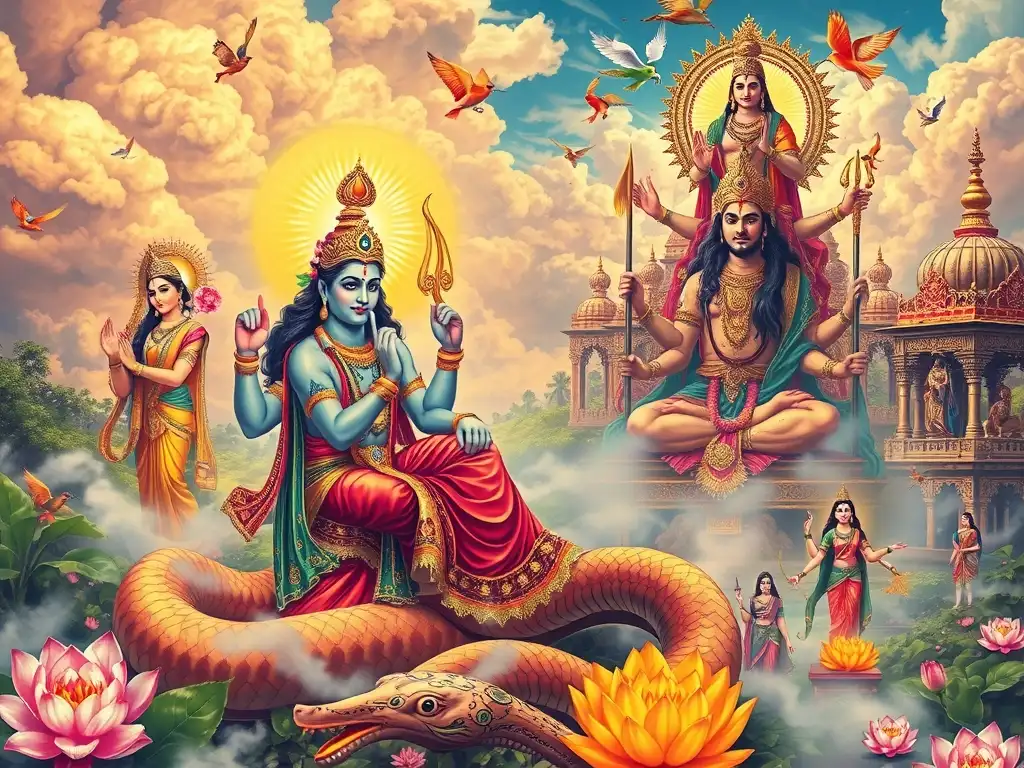
The Puranas are replete with divine narratives that highlight the lives and exploits of deities, each embodying specific attributes and serving particular roles within the cosmic order. Vishnu, the preserver, is celebrated for his ten avatars, including well-known forms like Rama and Krishna, which illustrate his interventions in human affairs to restore dharma.
Shiva, the destroyer, embodies transformation and regeneration. The Shiva Purana narrates his cosmic dance, the Tandava, symbolizing creation and destruction's cyclical nature. His complex relationships with other deities, such as Parvati and Ganesha, reflect the interdependence of divine forces.
The Puranas also emphasize the feminine divine, particularly in texts like the Devi Bhagavata Purana, where the goddess is portrayed as the source of all creation, embodying power and wisdom. These narratives not only honor the feminine aspect of divinity but also challenge patriarchal norms, presenting the goddess as a central figure in spiritual practice.
Moral Lessons and Philosophical Insights within the Puranas
The Puranas extend beyond mere storytelling; they are rich in moral lessons and philosophical insights. Each narrative is imbued with teachings that guide individuals toward ethical living and spiritual development. The concept of dharma is paramount, emphasizing the importance of righteousness in one's actions and decisions.
Through allegorical tales, the Puranas illustrate the consequences of good and bad karma, portraying how one's actions shape their destiny. For instance, the story of King Harishchandra exemplifies unwavering commitment to truth and justice, even in the face of tremendous adversity.
Philosophical insights, such as the nature of reality and the self, are explored through dialogues and discourses among sages and deities. These discussions encourage introspection and the pursuit of moksha (liberation), underscoring the Puranas' role as spiritual guides for seekers of truth.
Major Puranas and Their Significance
The Puranas encompass a diverse collection of texts, each with its unique focus and significance within ancient Indian lore. While there are eighteen major Puranas, three stand out prominently due to their widespread influence and comprehensive narratives.
Vishnu Purana: Exploring the Preserver's Tales
The Vishnu Purana, one of the most revered texts, primarily focuses on the glories of Lord Vishnu and his numerous avatars. It provides a detailed account of cosmology, creation, and the cyclical nature of time. The text also emphasizes the importance of devotion (bhakti) to Vishnu, illustrating how surrendering to divine will leads to spiritual liberation. Its narratives inspire millions of devotees and have significantly shaped Hindu worship practices.
Shiva Purana: The Mystique of the Destroyer
The Shiva Purana delves into the enigmatic persona of Shiva, exploring his role as the destroyer and transformer. It contains myths surrounding his family, including Parvati and Ganesha, and celebrates his asceticism and compassion. The text also articulates the philosophical underpinnings of Shaivism, emphasizing the significance of understanding the dualities of existence. Its profound teachings continue to resonate with followers of Shiva today.
Devi Bhagavata Purana: The Goddess and Feminine Power
The Devi Bhagavata Purana elevates the feminine divine, celebrating the goddess as the source of all creation and power. It narrates the goddess's various forms, such as Durga and Kali, and her battles against evil forces. This text serves as a foundational scripture for Shakti worship, empowering women and promoting the idea of divine femininity within Hindu philosophy. The narratives inspire devotion and reverence for the divine feminine.
Other Notable Puranas: A Brief Overview
In addition to the major Puranas, several other notable texts contribute richly to the landscape of ancient Indian lore.
- Bhagavata Purana: Celebrated for its detailed accounts of Lord Krishna's life, it emphasizes the importance of devotion and love towards God.
- Agni Purana: Focuses on rituals, cosmology, and astrology, providing practical insights into Vedic rituals and practices.
- Markandeya Purana: Contains the revered Devi Mahatmya, celebrating the goddess's victory over demons, reinforcing the theme of good triumphing over evil.
These texts collectively enrich the understanding of ancient Indian mythology and philosophy, ensuring that the lore remains vital and relevant through generations.
The Influence of Puranas on Indian Culture
The Puranas, a vast genre of ancient Indian literature, have played a pivotal role in shaping the cultural and spiritual landscape of India. These texts, consisting of mythological narratives, cosmology, and genealogies of gods, heroes, and sages, have not only preserved ancient Indian lore but also influenced various aspects of daily life. Their impact is seen across diverse fields, including art, architecture, music, dance, and religious practices, making them a cornerstone of Indian heritage.
Impact on Art and Architecture in Ancient India
The narratives and themes found in the Puranas have significantly inspired the art and architecture of ancient India. Temples built during different dynasties often drew heavily from Puranic stories, with intricate carvings and sculptures depicting various deities, celestial beings, and mythological events. For example, the famous Brihadeeswarar Temple in Thanjavur showcases sculptures that narrate stories from the Puranas, celebrating the divine and mortal realms.
In addition to temple architecture, the Puranas have influenced mural paintings and frescoes, particularly in regions like Rajasthan and Madhya Pradesh. These artworks often illustrate scenes from the Puranas, bringing to life tales of gods like Vishnu and Shiva in vibrant colors and detailed forms. The artistic expressions rooted in Puranic lore thus reflect a fusion of spirituality, creativity, and cultural identity.
Contributions to Dance and Music through Mythology
Dance and music in India have been profoundly shaped by the themes and characters from the Puranas. Classical dance forms such as Bharatanatyam, Kathak, and Odissi often incorporate stories and motifs derived from these ancient texts. Performers express the emotions and narratives of Puranic figures, allowing audiences to connect with the rich tapestry of mythology through movement and rhythm.
Musical compositions, too, frequently evoke the themes of the Puranas. Traditional ragas and folk songs often narrate stories of divine exploits, moral lessons, and cosmic events. Festivals celebrating deities like Durga and Krishna are marked by specific musical renditions that pay homage to their Puranic origins, reinforcing the connection between music, dance, and mythology in the cultural fabric of India.
The Role of Puranas in Festivals and Rituals
The Puranas serve as essential texts in the observance of various Indian festivals and rituals. They provide the guidelines for conducting ceremonies, establishing the significance of specific deities and the mythological events associated with them. For instance, the celebration of Navaratri involves the worship of Goddess Durga, with rituals often narrated in the Devi Bhagavata Purana, highlighting her victory over evil.
Moreover, the Puranas outline the importance of specific days and rituals in the Hindu calendar, such as the observance of Makara Sankranti or Diwali, linking them to mythological events that underscore their spiritual significance. By guiding the rituals performed during these festivals, the Puranas enrich the cultural and religious experiences of the community, fostering a sense of unity and continuity.
The Puranas in Modern Context
The relevance of the Puranas extends beyond their historical roots, as they continue to resonate in contemporary contexts. Their narratives are being rediscovered and reinterpreted, showcasing their adaptability and enduring significance in modern society.
Reinterpretation of Ancient Indian Lore in Contemporary Literature
In recent years, there has been a resurgence of interest in ancient Indian lore, with numerous authors reimagining Puranic tales for modern audiences. This reinterpretation often aims to make ancient narratives relatable to contemporary readers, addressing themes such as identity, morality, and human relationships. Novels like "The Palace of Illusions" by Chitra Banerjee Divakaruni and "Asura: Tale of the Vanquished" by Anand Neelakantan breathe new life into Puranic figures, offering fresh perspectives and narratives that challenge traditional interpretations.
These modern retellings not only highlight the timelessness of Puranic stories but also encourage a dialogue between ancient wisdom and contemporary issues, fostering a deeper appreciation for India's literary heritage.
Influence of Puranic Stories in Popular Culture
The narratives of the Puranas have found their way into various forms of popular culture, including television, cinema, and theater. Television adaptations of epic tales, such as "Mahabharat" and "Ramayan," have captivated audiences, often drawing on Puranic stories to enhance their plots. Films like "Baahubali," while primarily rooted in fiction, incorporate elements of mythology and lore reminiscent of the Puranas, reflecting their influence on storytelling in Indian cinema.
Moreover, graphic novels and animated series inspired by Puranic tales have emerged, catering to younger audiences and introducing them to the richness of ancient Indian mythology. This crossover into popular culture ensures that the Puranas remain relevant and engaging, bridging the gap between tradition and modernity.
Preservation and Study of Puranas in Modern Academia
The scholarly study of the Puranas has gained momentum in modern academia, with researchers exploring their historical, cultural, and literary significance. Universities and institutions are increasingly offering courses on ancient Indian literature, focusing on Puranic texts as a vital source for understanding the complexities of Indian civilization.
Academic discourse often involves analyzing the Puranas in relation to other historical texts, such as the Vedas and the Itihasas, to provide a comprehensive understanding of ancient Indian philosophy and cosmology. Additionally, the translation and critical editions of Puranic texts are being produced to make them accessible to a wider audience, ensuring their preservation for future generations.
This scholarly engagement not only enriches the understanding of ancient Indian lore and mythology but also underscores the importance of the Puranas in the ongoing narrative of India’s cultural heritage.
Conclusion: The Lasting Legacy of Ancient Indian Lore
The Puranas stand as a testament to the rich tapestry of ancient Indian lore and mythology, embodying the spiritual, cultural, and historical essence of the civilizations that contributed to them. These texts not only serve as a bridge connecting the past with the present but also illuminate the values, beliefs, and practices that shaped ancient Indian society. Through intricate narratives filled with divine beings, moral teachings, and cosmic principles, the Puranas have provided generations with a framework to understand life, ethics, and the universe.
Moreover, the Puranas have transcended their original purpose as religious and historical texts to become integral components of Indian cultural identity. Festivals, rituals, and local traditions often draw upon stories from these texts, showcasing their adaptability and enduring relevance. As such, the Puranas continue to inspire art, literature, and spirituality, ensuring that the wisdom contained within them remains accessible to contemporary audiences.
Reflections on the Relevance of Puranas Today
In today’s rapidly changing world, the teachings of the Puranas resonate with timeless truths that address moral dilemmas, environmental challenges, and the quest for spiritual fulfillment. The narratives encourage individuals to reflect on their own lives and relationships, prompting a deeper understanding of duty (dharma) and the interconnectedness of all beings.
The Puranas also serve as a source of inspiration for various fields, including psychology, sociology, and ecology. Modern scholars and practitioners often find relevance in their teachings on human behavior, social justice, and the importance of living in harmony with nature. For instance, tales of divine incarnations (avatars) emphasize the need for righteous action in the face of adversity, echoing the principles of resilience and courage that are vital in contemporary life.
Additionally, the Puranas promote cultural diversity and tolerance, showcasing a tapestry of beliefs and practices that enrich the philosophical landscape of India. This diversity fosters a spirit of inclusivity and dialogue, encouraging individuals to explore the myriad ways in which ancient Indian lore can inform and enhance modern perspectives.
The Future of Ancient Indian Mythology and Lore Studies
The field of ancient Indian mythology and lore studies is poised for significant growth as scholars and enthusiasts alike continue to explore the Puranas' multifaceted contributions. With the advent of digital humanities, researchers can now access, analyze, and disseminate ancient texts more effectively than ever. This technological advancement opens the door for new interpretations and interdisciplinary approaches to understanding the Puranas' place in both historical and contemporary contexts.
As interest in ancient wisdom and indigenous knowledge systems rises globally, the Puranas are likely to attract attention from diverse audiences. This interest can lead to increased academic research, public lectures, and collaborative projects that delve into the narratives and teachings of these texts. Furthermore, the integration of Puranic stories into popular culture—through films, literature, and art—can create a renewed appreciation for ancient Indian lore, ensuring its relevance for future generations.
The enduring allure of the Puranas lies not only in their historical significance but also in their ability to adapt and resonate with the complexities of modern life. As we unlock the mysteries of ancient Indian lore, we pave the way for a deeper understanding of our shared human experience and the timeless wisdom that guides us through the ages.
- Introduction to Ancient Indian Lore and Mythology
- The Puranas: An Overview
- Key Themes in Ancient Indian Lore
- Cosmology and Creation Myths in the Puranas
- Deities and Divine Narratives in Ancient Indian Mythology
- Moral Lessons and Philosophical Insights within the Puranas
- Major Puranas and Their Significance
- The Influence of Puranas on Indian Culture
- The Puranas in Modern Context
- Conclusion: The Lasting Legacy of Ancient Indian Lore
- Reflections on the Relevance of Puranas Today
- The Future of Ancient Indian Mythology and Lore Studies
Frequently Asked Questions
What are the Puranas in ancient Indian lore and mythology?
The Puranas are a genre of ancient Indian texts that encompass mythology, legend, and history, serving as a crucial link to understanding the cultural heritage of ancient Indian civilizations.
How do the Puranas contribute to our understanding of ancient Indian culture?
The Puranas offer insights into the values, traditions, and beliefs of ancient societies, revealing how deities, heroes, and cosmology shaped the cultural landscape of ancient India.
Are the Puranas considered sacred texts?
Yes, the Puranas are regarded as sacred by many, alongside texts like the Vedas and Upanishads, and they play a significant role in the spiritual and ritualistic aspects of Hinduism.
What themes are prevalent in the Puranas?
The Puranas encompass a variety of themes, including creation, destruction, mythical tales, and genealogies of gods and heroes, illustrating the complexity of ancient Indian mythology.
How do the Puranas influence modern Indian society?
The Puranas continue to influence modern Indian society through their cultural narratives, festivals, and rituals, keeping alive the ancient traditions and mythological stories that resonate with contemporary life.
Final Reflection: Embracing the Wisdom of Ancient Indian Lore
The exploration of ancient Indian lore and mythology is not merely an academic pursuit; it is a vital connection to our shared human experience. In a world increasingly driven by technology and rapid change, the timeless narratives found in the Puranas offer profound insights into the human condition, morality, and the cosmos. These stories resonate with us today, reminding us of the values and lessons that have shaped civilizations for centuries.
The Puranas serve as a bridge between the past and the present, influencing our cultural and social landscapes in ways that are often overlooked. Their themes of creation, destruction, and rebirth echo in our modern narratives, from literature to film, and continue to inspire countless individuals seeking meaning in their lives. As Joseph Campbell once said, “Myth is much more than a story; it is a map of the human psyche.” > This quote encapsulates the enduring relevance of these ancient texts, as they provide a framework for understanding our own journeys and struggles.
As we reflect on the wisdom embedded in ancient Indian lore, let us take a moment to consider how these teachings can enrich our lives today. I invite you to delve into these narratives, to explore their depths, and to allow them to guide you in your personal and spiritual growth. By embracing the lessons of the Puranas, we can cultivate a deeper understanding of ourselves and our place in the universe, fostering a sense of connection that transcends time and culture.
Unveil the Secrets of the Puranas!
Thank you for diving into the enchanting world of the Puranas with us! You've uncovered fascinating insights into ancient Indian lore that can broaden your understanding of history, culture, and spirituality. Now, it's time to take the next step and explore these ancient tales even further.
Here’s how you can deepen your journey into the wonders of the Puranas:
- Embark on a Reading Journey: Choose a specific Purana that has caught your interest and dedicate time to read it in full. You might discover unexpected wisdom and guidance!
- Join a Discussion Group: Connect with fellow enthusiasts online or in your community to share interpretations and insights on the Puranas, enriching your experience through collective engagement.
- Write Your Reflections: Start a blog or keep a personal journal to reflect on what you’ve learned and how these ancient stories resonate with modern life.
Now, here’s a thought for you: Which aspect of the Puranas resonates most with your own life experiences, and how can you apply these ancient lessons in your daily life?