
The Impact of Warfare on Ancient Indian Trade Routes and Economy

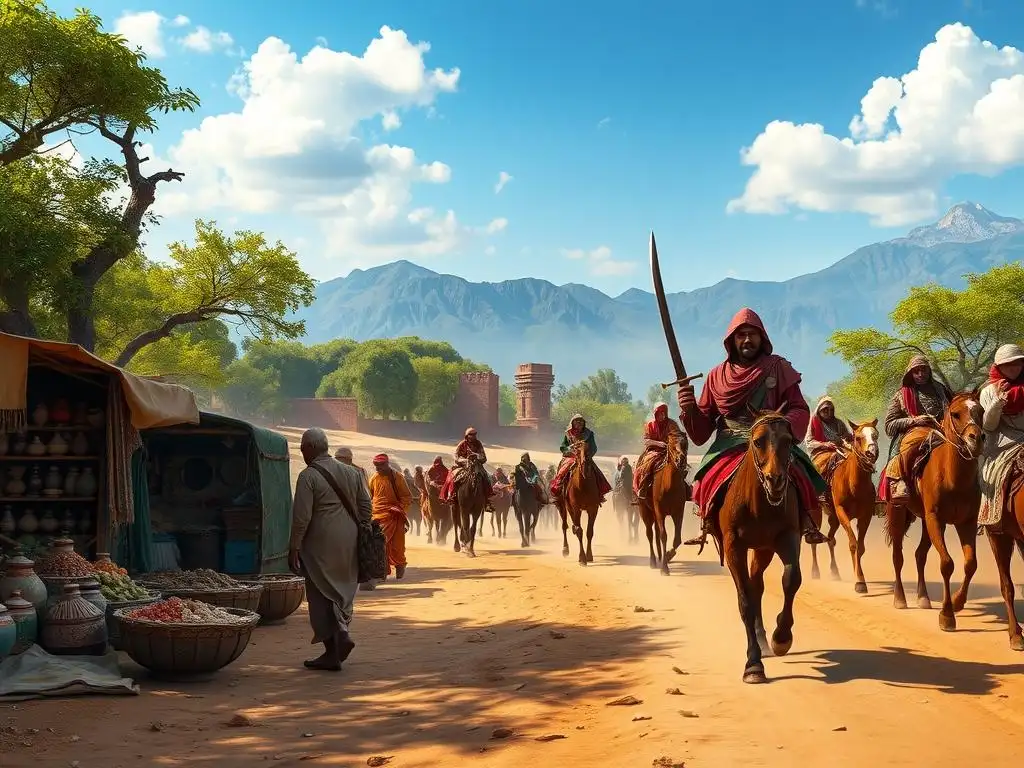
Welcome to Ancient India History, where we embark on an exhilarating journey through the rich tapestry of ancient Indian civilizations. In this exploration, we delve into the intriguing impact of warfare on ancient Indian trade routes and economy. How did conflicts shape the bustling networks of commerce that connected diverse cultures? Join us as we unravel the complexities of these historical threads, revealing the profound connections between military strategies and economic prosperity. Prepare to be captivated as we unveil stories that have shaped not only India but also the world. Dive deeper to discover more!
Introduction to Ancient Indian Trade Routes
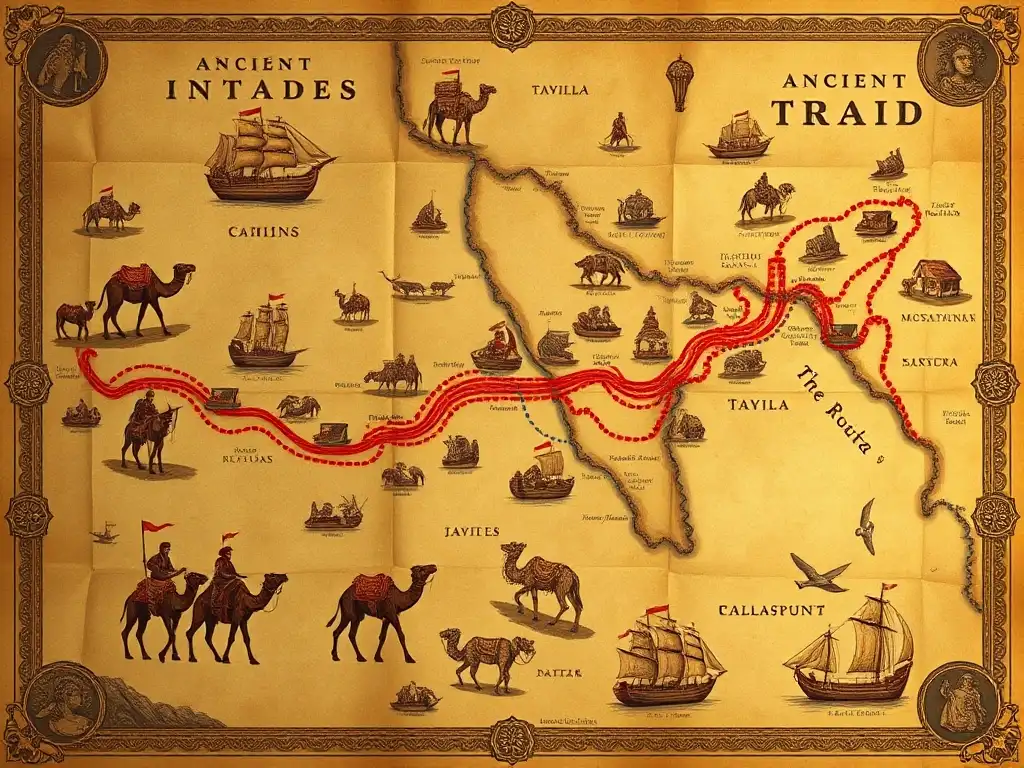
The intricate web of trade routes in ancient India served as vital arteries for commerce, culture, and communication, connecting diverse regions and civilizations. Spanning thousands of miles, these routes facilitated the exchange of goods, ideas, and innovations, significantly impacting the economy and society of ancient Indian civilizations. The evolution of these trade networks was profoundly influenced by warfare, which not only shaped the geographical landscape but also determined the prosperity or decline of trade activities. Understanding the impact of warfare on ancient Indian trade routes is crucial for comprehending the broader economic and cultural developments during various historical periods.
Overview of Ancient Indian Trade Networks
Ancient Indian trade routes were extensive and multi-dimensional, encompassing both land and maritime pathways. Key trade networks included:
- Silk Road: Connecting India to Central Asia and beyond, facilitating the exchange of silk, spices, and precious stones.
- Indian Ocean Maritime Routes: Linking India with the Middle East, Africa, and Southeast Asia, these routes were crucial for the trade of textiles, spices, and luxury goods.
- Regional Trade Networks: Localized routes within the Indian subcontinent, connecting various kingdoms and tribes, fostering regional trade and cultural exchange.
These networks not only enabled the flow of goods but also promoted interactions among diverse cultures, leading to significant cultural exchanges and the spread of ideas.
Importance of Trade in Ancient Indian Economy
Trade was a cornerstone of the ancient Indian economy, contributing to wealth accumulation, urbanization, and social development. The significance of trade can be highlighted through several key points:
- Economic Prosperity: Trade facilitated access to resources, leading to the growth of cities and prosperity among merchant classes.
- Cultural Exchange: The movement of traders and goods fostered cultural interactions, enriching the social fabric of Indian civilization.
- Political Power: Control over trade routes often translated into political power, as rulers sought to dominate critical networks to enhance their economic standing.
The flourishing trade not only supported local economies but also positioned ancient India as a pivotal player in global commerce.
The Role of Warfare in Shaping Trade Routes
Historical Context of Warfare in Ancient India
Warfare has been an integral aspect of ancient Indian history, influenced by regional rivalries, invasions, and the quest for territorial expansion. Conflicts arose from various factors, including:
- Dynastic Rivalries: Competing kingdoms often waged wars to expand their territories and secure lucrative trade routes.
- Invasions: Foreign invasions, such as those by the Persians and later the Greeks, disrupted existing trade networks and redefined territorial control.
- Internal Strife: Local conflicts among city-states and tribes impacted trade routes, leading to shifts in trade dynamics and economic stability.
The historical context of warfare reveals how military actions were instrumental in shaping the landscape of trade, with far-reaching consequences for the economy.
Major Conflicts Affecting Trade Routes
Several significant conflicts had a profound impact on ancient Indian trade routes, altering their course and affecting economic stability. Notable examples include:
- The Mauryan Empire's Expansion: Under Ashoka, the Mauryan Empire sought to secure trade routes, which facilitated commerce but also led to military engagements with neighboring regions.
- The Gupta Empire's Decline: The decline of the Gupta Empire marked a period of instability, leading to disruptions in trade and a decline in economic prosperity.
- Invasions by the Huns: The invasions during the 5th and 6th centuries CE resulted in significant disruptions to trade routes, causing economic challenges across the Indian subcontinent.
These conflicts illustrate the intricate relationship between warfare and trade, emphasizing how military actions could both enhance and hinder economic activities throughout ancient Indian history.
Direct Impact of Warfare on Trade Routes
Warfare in ancient India had profound effects on trade routes, influencing both the paths merchants took and the volume of goods exchanged. The various conflicts, whether local skirmishes or large-scale invasions, often resulted in the physical destruction of infrastructure that facilitated trade, such as roads, bridges, and trading posts. Additionally, the presence of military forces in key trade areas could deter merchants from passing through, leading to significant shifts in trade dynamics and economic activity.
The historical records indicate that major empires, such as the Maurya and Gupta Empires, utilized their military might to protect trade routes, but they also waged wars that disrupted these same routes. Trade became a double-edged sword; while it was essential for economic prosperity, it also made regions vulnerable to attacks and invasions from rival kingdoms or external forces. Thus, the impact of warfare on ancient Indian trade routes was both immediate and far-reaching, dictating the flow of goods and the economic health of regions.
Disruption of Trade Activities During Conflicts
During periods of conflict, the immediate disruption of trade activities was often evident. Merchants faced challenges such as:
- Increased Risks: The threat of violence or looting made merchants hesitant to travel along established routes.
- Blockades: Warring factions frequently imposed blockades on key trade routes, preventing the movement of goods.
- Sieges: In cases where cities were under siege, local markets would face severe shortages of essential goods, leading to inflated prices and economic instability.
For example, during the invasions by the Huns in the 5th century CE, several prosperous trade cities experienced significant decline as routes were blocked and merchants fled, leading to a sharp decrease in trade volume and the availability of goods.
Changes in Trade Route Patterns Due to Warfare
The patterns of trade routes not only shifted during conflicts but also transformed permanently in some cases. Warfare led to the development of alternative routes that were perceived as safer. Key changes included:
- Diversification of Routes: Merchants began to explore less conventional paths to avoid conflict zones, leading to the establishment of new trading hubs.
- Increased Overland Trade: As maritime routes became perilous due to piracy or naval conflicts, land routes gained prominence, influencing the development of inland cities as trading centers.
- Realignment of Trade Alliances: Political alliances forged during times of war also affected trade routes, as new partnerships could create more secure passageways for merchants.
The impact of these changes was significant, as they not only altered the geography of trade but also influenced cultural exchange and economic interdependence among different regions.
Economic Consequences of Warfare on Trade
The economic consequences of warfare on trade were profound, causing both immediate disruptions and long-term structural changes in ancient Indian economies. The interconnectedness of trade and warfare meant that conflicts could trigger a chain reaction of economic challenges.
Short-term Economic Disruptions
In the short term, warfare led to:
- Decline in Trade Volume: With merchants refraining from travel, the volume of goods exchanged plummeted, impacting local economies reliant on trade.
- Price Volatility: Scarcity of goods due to disrupted trade routes often led to inflation, making basic necessities unaffordable for many.
- Job Losses: Artisans, traders, and laborers dependent on trade faced unemployment, leading to social unrest and economic hardship.
These immediate effects could be devastating for local economies. For instance, the prolonged conflicts during the rise of the Maurya Empire strained regional trade systems, leading to a significant downturn in economic activity in affected areas.
Long-term Changes in Economic Structures
In the long run, the impact of warfare on ancient Indian trade resulted in profound changes in economic structures, including:
- Shift in Economic Centers: As certain regions became less viable for trade due to ongoing conflicts, new economic centers emerged, often in safer areas.
- Emergence of New Trade Alliances: Warfare forced states to form new alliances, changing the dynamics of trade and creating new markets.
- Investment in Defensive Infrastructure: To protect trade routes, states began to invest in fortifications and military presence, which further altered economic priorities and resource allocation.
These long-term changes helped reshape the economic landscape of ancient India, with lasting effects on trade practices, regional relationships, and cultural exchanges. The evolution of trade routes and economic structures during and after periods of warfare illustrates the intricate interplay between military history and economic development in ancient Indian civilizations.
Case Studies of Specific Conflicts and Their Impact
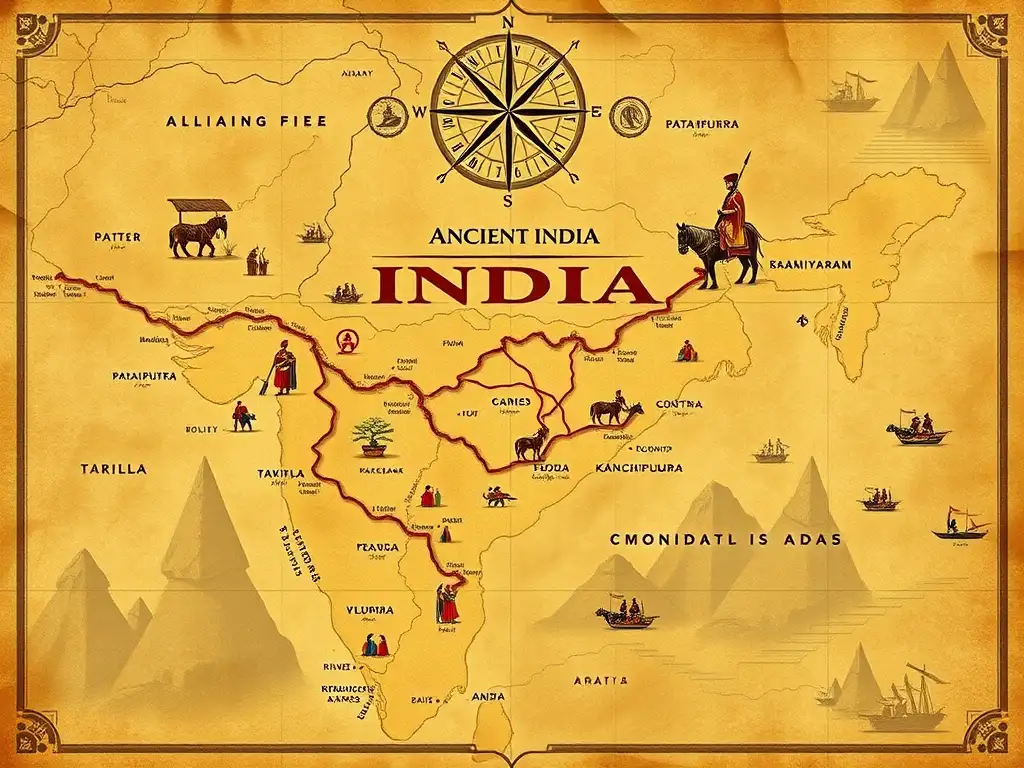
Understanding the impact of warfare on ancient Indian trade routes and economy can be elucidated through specific conflicts that shaped the socio-economic landscape of the region. Two notable case studies are the Kalinga War during the Maurya Empire and the regional conflicts during the Gupta Empire. Each conflict had profound effects on trade dynamics, shifting routes, and economic practices, thereby influencing the overall prosperity of ancient Indian civilizations.
The Maurya Empire and the Kalinga War
The Kalinga War (c. 261-263 BCE) fought between the Maurya Empire, under Emperor Ashoka, and the state of Kalinga is a pivotal example of warfare affecting trade routes. Kalinga was strategically located along the eastern coast of India, making it a vital hub for trade, especially in maritime commerce. The war resulted in heavy casualties and destruction, but it also spurred significant changes in trade practices.
Post-war, Ashoka's adoption of Buddhism and his policies of Dhamma led to a focus on non-violence and stability, which in turn encouraged trade. The Mauryan administration improved infrastructure, such as roads and ports, and established safe passage for merchants, thereby revitalizing trade routes that had been disrupted during the conflict. The integration of Kalinga into the Maurya Empire opened new avenues for commerce, facilitating trade with Southeast Asia and beyond, which enriched both the Mauryan economy and the cultural exchanges of the time.
The Gupta Empire and Regional Conflicts
During the Gupta Empire (c. 320-550 CE), regional conflicts, particularly with the Huns and various local kingdoms, also had significant implications for trade routes and economic stability. The invasions and skirmishes led to the temporary disruption of established trade networks, particularly along the northwestern frontiers of India.
Despite these disruptions, the Gupta period is often noted for its advancements in trade practices. Merchants adapted to the changing circumstances by diversifying their routes and establishing new trade partnerships. For instance, the decline of certain overland routes prompted merchants to explore maritime routes, which connected India to markets in the Mediterranean and East Asia. This adaptability allowed the Gupta Empire to maintain a thriving economy, even amidst the challenges posed by warfare.
Responses and Adaptations in Trade Practices
The impact of warfare on ancient Indian trade routes necessitated innovative responses and adaptations by traders and merchants. As conflicts often disrupted established routes, the ability to adapt became crucial for maintaining economic stability.
Strategies Employed by Traders to Mitigate Risks
To mitigate the risks associated with warfare, traders in ancient India employed various strategies:
- Diversification of Routes: Traders began to use multiple routes, including overland and maritime paths, to ensure that they could continue trading even if one route was compromised.
- Alliances with Local Rulers: Forming alliances with local kings and rulers provided traders with protection and facilitated smoother passage through regions affected by conflict.
- Increased Use of Goods as Currency: In times of instability, traders often relied on barter systems or the use of goods as currency to conduct transactions, reducing reliance on coinage that might be affected by economic fluctuations.
- Establishment of Trading Posts: Creating fortified trading posts along key routes offered traders a safe haven from potential threats and helped stabilize trade in volatile regions.
Evolution of Trade Routes Post-Warfare
The aftermath of warfare in ancient India saw a significant evolution of trade routes. Following conflicts, several trends emerged:
- Shift to Maritime Trade: Conflicts often led to the underutilization of overland routes, prompting a shift towards maritime trade, especially along the coasts of the Indian subcontinent. This shift enhanced trade with Southeast Asia and other distant lands.
- Emergence of New Trade Hubs: Cities and regions that were previously less significant began to flourish as new trade hubs. For example, ports along the eastern coast, such as Puri and Chandraketugarh, became increasingly important for maritime trade.
- Infrastructural Developments: The need for secure and efficient trade routes led to improvements in infrastructure. Roads were constructed, and rest stops were established along key routes, facilitating smoother trade operations.
- Cultural Exchanges: The evolution of trade routes post-warfare not only affected economic practices but also fostered cultural exchanges, as merchants brought diverse goods, ideas, and cultures into contact with one another.
Through these adaptations and evolutions, ancient Indian civilizations demonstrated resilience in the face of warfare, allowing them to sustain and even enhance their trade networks and economic prosperity in the long run.
Conclusion: The Legacy of Warfare on Ancient Indian Trade Routes and Economy
The intricate relationship between warfare and trade in ancient India has left a profound legacy that shaped the socio-economic landscape of the region. The impacts of military conflicts, whether through direct disruption of trade routes or through the establishment of new trade networks, have had lasting effects that can still be traced in modern economic practices. Understanding these historical dynamics provides insight into the resilience and adaptability of Indian trade systems, which evolved in response to the challenges posed by warfare.
Summary of Key Impacts
- Disruption of Trade Routes: Wars often led to the temporary closure or destruction of key trade routes, particularly during invasions such as those by the Persians and later the Mughals. This disruption not only affected local economies but also had ripple effects on long-distance trade, as traders sought safer passages.
- Emergence of New Trade Networks: Conversely, warfare also prompted the emergence of new trade routes. For instance, the need for resupply and communication between military outposts led to the establishment of alternative paths that sometimes enhanced trade efficiency in the long run.
- Shift in Economic Power: The outcomes of military conflicts frequently resulted in shifts in economic power. Conquerors often imposed tribute systems or redirected trade flows to favor their own regions, leading to the rise of new centers of commerce while diminishing the importance of previously dominant areas.
- Cultural Exchange and Innovation: Warfare facilitated not only the exchange of goods but also the exchange of ideas, technologies, and cultural practices. This cross-pollination enriched the local economies and led to innovations in trade practices and goods, such as the introduction of new crops and techniques.
The Lasting Influence on Modern Trade Practices in India
The legacy of ancient warfare on trade routes continues to influence modern trade practices in India. Many contemporary trade corridors still follow the paths established during ancient times, demonstrating the resilience of these routes. The historical precedence of shifting trade dynamics as a response to conflict can be observed in how modern Indian trade adapts to geopolitical changes.
- Strategic Trade Routes: Modern infrastructure projects, such as the development of highways and railways, often aim to revive and enhance these ancient trade corridors, reflecting a recognition of their historical importance.
- Economic Policies: Contemporary trade policies in India also exhibit an awareness of historical trade practices. The government’s initiatives to foster international trade agreements and participation in global markets can be seen as a continuation of ancient trade traditions that thrived despite the challenges of warfare.
- Cultural Heritage in Commerce: The impact of warfare on trade routes has contributed to the rich tapestry of India's cultural heritage, which continues to be a significant selling point in modern commerce. Artisanal goods, textiles, and spices that have historical significance are marketed globally, leveraging the storied past of ancient trade.
The intricate interplay between warfare and trade routes in ancient India has not only shaped historical economic practices but also laid a foundation for modern trade dynamics. By examining these influences, we gain a deeper understanding of India's economic resilience and the enduring significance of its ancient trade routes.
- Introduction to Ancient Indian Trade Routes
- The Role of Warfare in Shaping Trade Routes
- Direct Impact of Warfare on Trade Routes
- Economic Consequences of Warfare on Trade
- Case Studies of Specific Conflicts and Their Impact
- Responses and Adaptations in Trade Practices
- Conclusion: The Legacy of Warfare on Ancient Indian Trade Routes and Economy
- What were the main trade routes in ancient India?
- How did warfare affect ancient Indian trade routes?
- What economic impacts did warfare have on ancient Indian civilizations?
- Did any ancient Indian empires benefit from warfare related to trade routes?
- How did ancient Indian trade routes influence cultural exchange?
Frequently Asked Questions
What were the main trade routes in ancient India?
Ancient India had several key trade routes like the Silk Road and Maritime routes connecting it with regions like the Middle East, Africa, and Southeast Asia, facilitating the exchange of goods and culture.
How did warfare affect ancient Indian trade routes?
Warfare often disrupted trade routes, leading to a decline in trade activities and economic instability. This resulted in decreased commerce and affected the prosperity of various regions.
What economic impacts did warfare have on ancient Indian civilizations?
The impact of warfare included loss of revenue, destruction of infrastructure, and decreased agricultural output, all of which contributed to the overall decline of economies in affected areas.
Yes, some empires, like the Gupta Empire, capitalized on conflicts to expand their territories, which in turn allowed them to control key trade routes and enhance their economic power.
How did ancient Indian trade routes influence cultural exchange?
Trade routes were vital for the exchange of ideas, art, and religion, leading to a rich tapestry of cultural diversity. This interconnectedness helped shape the development of ancient Indian society.
Final Reflection: The Enduring Legacy of Ancient Indian Trade Routes
The intricate web of ancient Indian trade routes not only facilitated commerce but also shaped the socio-economic landscape of the region, highlighting the profound impact of warfare on these vital arteries of exchange. Today, as we navigate a world increasingly defined by globalization and interconnectedness, understanding the historical significance of these trade routes becomes essential. The lessons learned from the past can illuminate our current economic strategies and diplomatic relations, reminding us that the flow of goods is often intertwined with the currents of conflict.
The influence of ancient Indian trade routes extends far beyond mere economic transactions; they were conduits of culture, ideas, and innovation. The disruptions caused by warfare not only altered trade patterns but also fostered resilience and adaptability among communities. As we reflect on this dynamic, we are reminded of the words of historian R.C. Majumdar: Trade is not merely an exchange of goods; it is a bridge that connects civilizations.
This observation underscores the importance of trade routes in fostering relationships and cultural exchanges that have shaped societies throughout history.
As we contemplate the lessons of ancient Indian trade routes, let us embrace the call to action: to recognize the interconnectedness of our world and to strive for peace and cooperation in our economic endeavors. Reflect on how the past informs our present and future, and consider how you can contribute to building bridges in your own community. By fostering understanding and collaboration, we can ensure that the legacy of these ancient routes continues to inspire a more harmonious and prosperous world.
Unveil the Legacy of Ancient Trade: Take Action Now!
Thank you for exploring the intricate relationship between warfare and the economy of ancient Indian trade routes! With fresh insights into how conflicts shaped commerce, you are now equipped with a deeper understanding of our rich history. Let’s channel this knowledge into meaningful actions!
- Explore further: Delve into our recommended readings on ancient trade and its impact on regional economies to discover more fascinating connections!
- Engage with others: Share your thoughts about the article on social media or join our community discussions—your insights could inspire others!
- Contribute: Consider writing your reflections or personal discoveries about ancient Indian trade routes. Your voice can add valuable perspectives to our collective history!
What aspect of ancient trade routes or their influence on economies intrigues you the most? We invite you to share your thoughts below!