
The Essence of Reality: Unpacking the Sankhya School of Thought in Ancient India

Welcome to Ancient India History, where we embark on a captivating journey through the rich tapestry of ancient Indian civilizations. Today, we delve into the profound depths of Sankhya philosophy, a cornerstone of Indian thought that unravels the essence of reality and existence. As we explore the intricacies of the Sankhya School of Thought, prepare to uncover the wisdom that has shaped philosophical discourse for centuries.
What insights might this ancient framework reveal about the nature of consciousness and the universe? Join us as we uncover these timeless truths and invite you to explore the fascinating legacy of ancient Indian philosophy!
The Sankhya philosophy, one of the six orthodox schools of Indian philosophy, represents a profound inquiry into the nature of reality, existence, and the self. Emerging during a time when spiritual and philosophical thought flourished in ancient India, Sankhya offers a unique dualistic perspective that distinguishes between the material and the immaterial. Its teachings illuminate the complexities of human experience and the cosmos, making it a cornerstone in the broader discourse of Indian philosophy.
Delving into the intricacies of Sankhya philosophy allows us to appreciate not only its historical significance but also its enduring influence on subsequent philosophical and spiritual traditions, including Yoga and Vedanta. As we unpack the essence of Sankhya, we explore its foundational concepts, including the classification of reality into purusha (consciousness) and prakriti (matter), and its implications for understanding the self and the universe. This article aims to provide a comprehensive overview of the Sankhya school of thought, highlighting its contributions to ancient Indian civilization and its relevance in contemporary philosophical discussions.
The Origins of Sankhya Philosophy
The roots of Sankhya philosophy can be traced back to the Vedic texts, with its formal articulation found in the Sankhya Karika, composed by the philosopher Ishvara Krishna in the 4th century CE. This foundational text outlines the system's core principles and serves as a reference for thinkers throughout history. The philosophy emerged in a rich tapestry of ideas, influenced by earlier traditions such as the Upanishads, which introduced essential concepts of consciousness and reality.
Core Principles of Sankhya
At the heart of Sankhya philosophy lies a meticulous classification of reality. Here, we will delve into its key components:
- Purusha (Consciousness): The eternal, unchanging observer that stands apart from the material world.
- Prakriti (Nature): The dynamic, ever-changing physical realm, consisting of three gunas (qualities): sattva (purity), rajas (passion), and tamas (darkness).
This dualism posits that true understanding arises when one recognizes the distinction between purusha and prakriti, leading to liberation (moksha) from the cycle of birth and rebirth (samsara).
Influence and Legacy of Sankhya Philosophy
Sankhya's impact on other Indian philosophies cannot be overstated. Its ideas laid the groundwork for various schools, particularly in the development of Yoga and Vedanta. The emphasis on self-realization and the distinction between the self and the material world continues to resonate in modern spiritual practices.
Conclusion
Understanding the essence of Sankhya philosophy is essential for grasping the complexities of ancient Indian thought. By exploring its origins, core principles, and lasting influence, we gain insight into not only the philosophical landscape of ancient India but also the enduring quest for knowledge and self-awareness that transcends time and culture.
As we proceed through this article, we will further dissect the nuances of Sankhya philosophy, its historical context, and its relevance in contemporary philosophical discussions.
- The Origins of Sankhya Philosophy
- Core Principles of Sankhya
- Influence and Legacy of Sankhya Philosophy
- Conclusion
Introduction to Sankhya Philosophy in Ancient India
The Sankhya philosophy stands as one of the oldest philosophical systems in ancient India, intricately weaving together metaphysics, epistemology, and ethics. This dualistic framework, attributed to the sage Kapila, explores the nature of reality, consciousness, and the cosmos. Sankhya, which translates to "number" or "enumeration," emphasizes the classification of reality into distinct categories, ultimately aiming to uncover the essence of existence. Understanding Sankhya philosophy in ancient India not only sheds light on its profound impact on subsequent Indian philosophies, such as Yoga and Vedanta, but also offers insights into the broader cultural and intellectual currents of the time.
Overview of Sankhya Philosophy
Sankhya philosophy is characterized by its fundamental distinction between Purusha (consciousness) and Prakriti (matter). This dualistic approach posits that Purusha is the eternal, unchanging observer, while Prakriti is the ever-changing material world encompassing all forms of life and nature.
Key Concepts of Sankhya Philosophy:
- Purusha and Prakriti: The core dualism that defines existence. Purusha is unmanifested consciousness, while Prakriti is the source of all manifestations.
- The Gunas: The three fundamental qualities of nature— Sattva (purity), Rajas (activity), and Tamas (inertia)—that influence human behavior and the universe's dynamics.
- The 25 Tattvas: Sankhya enumerates 25 principles (tattvas) that constitute reality, leading from the ultimate Purusha down to the physical elements of nature.
This framework serves as a foundation to understand human suffering and the path to liberation (moksha) through knowledge (jnana) and discernment (viveka). By recognizing the interplay between Purusha and Prakriti, individuals can transcend the distractions of the material world and achieve spiritual enlightenment.
Historical Context of the Sankhya School
The Sankhya school emerged in the context of ancient Indian philosophical thought around the 6th century BCE, during a time of significant intellectual and spiritual exploration. It is believed that the formulation of Sankhya philosophy coincided with the rise of other philosophical systems, such as Jainism and Buddhism, which provided alternative perspectives on existence and suffering.
Influential Texts:
- The Sankhya Karika, composed by Ishvara Krishna in the 4th century CE, is the most prominent text that consolidates the principles of Sankhya philosophy.
- Earlier references in the Upanishads also hint at the foundational ideas that would later be fully developed in the Sankhya school.
The historical significance of Sankhya lies in its role as a precursor to various Indian philosophies. It laid the groundwork for the development of Yoga, particularly in the Yoga Sutras of Patanjali, which integrate Sankhya's metaphysical concepts with practical methodologies for spiritual practice.
Importance of Sankhya in Ancient Indian Thought
Sankhya philosophy holds a pivotal position within the broader spectrum of ancient Indian thought. Its analytical approach to understanding reality and existence has influenced numerous philosophical systems and practices across time.
Contributions to Indian Philosophy:
- Conceptual Framework: Sankhya provides a systematic and rational framework for analyzing the nature of existence, which has shaped dialogues in later schools, including Buddhism and Advaita Vedanta.
- Ethical Implications: By distinguishing between the observer (Purusha) and the observed (Prakriti), Sankhya philosophy underscores the importance of self-realization and ethical living as pathways to liberation.
- Integration with Yoga: The synthesis of Sankhya and Yoga highlights the practical application of philosophical insights, emphasizing the necessity of disciplined practice to attain knowledge and liberation.
The Sankhya school of thought offers profound insights into the nature of reality and existence, making it a cornerstone of ancient Indian philosophy. Its influence extends beyond its own philosophical boundaries, serving as a bridge to various schools of thought that followed. Understanding Sankhya philosophy in ancient India is essential for appreciating the rich tapestry of ideas that have shaped Indian intellectual heritage.
Key Principles of Sankhya Philosophy
Sankhya philosophy, one of the six orthodox schools of Indian philosophy, is characterized by its analytical approach to understanding reality. At its core, it seeks to explain the relationship between the material world and consciousness, proposing a dualistic framework that distinguishes between the observer and the observed. The essence of Sankhya philosophy lies in its systematic categorization of reality into fundamental components, thereby providing a comprehensive explanation of existence, knowledge, and liberation.
Dualism in Sankhya: Purusha and Prakriti
The cornerstone of Sankhya philosophy is its dualistic nature, represented by the concepts of Purusha and Prakriti.
- Purusha refers to the conscious self or the soul, which is immutable and transcendent. It embodies pure consciousness and is distinct from the material world.
- Prakriti, on the other hand, signifies nature or the material world, which is dynamic and evolving. It is composed of three intrinsic qualities known as Gunas: Sattva (purity, knowledge), Rajas (activity, passion), and Tamas (inertia, ignorance).
In Sankhya thought, the interaction between Purusha and Prakriti leads to the manifestation of the universe. This dualism not only delineates the spiritual from the material but also serves as a basis for understanding how individuals can achieve liberation (moksha) by realizing their true nature as Purusha, unattached to the fluctuations of Prakriti.
The Concept of Evolution in Sankhya Philosophy
Sankhya philosophy presents a unique perspective on the evolution of the universe through a systematic process. The theory of evolution in this context is not solely biological but encompasses the development of consciousness and matter.
- The Process of Evolution:
- Initial State: The universe begins in a state of equilibrium where the three Gunas are balanced in Prakriti.
- Disturbance: When the balance is disturbed, evolution begins, resulting in the emergence of various forms of existence.
- Manifestation: From this disturbance, elements such as the five great elements (Pancha Mahabhuta) and the senses arise, culminating in the formation of complex structures, including the mind and intellect.
- Cosmic Evolution:
- This process is not linear but cyclical, reflecting the nature of existence in Sankhya. Each cycle of creation, preservation, and dissolution contributes to a deeper understanding of reality.
By understanding the evolution of Prakriti in relation to Purusha, practitioners of Sankhya philosophy can recognize the transient nature of the material world and strive towards spiritual enlightenment.
The Role of Gunas in Understanding Reality
The concept of Gunas plays a pivotal role in Sankhya philosophy, as it provides a framework for understanding the dynamics of Prakriti and its influence on the human experience.
- Gunas Defined:
- Sattva: Represents clarity, harmony, and purity. It is associated with knowledge, wisdom, and virtue. A predominance of Sattva leads to enlightenment and tranquility.
- Rajas: Embodies activity, desire, and restlessness. It is linked to passion and ambition. When Rajas prevails, individuals may experience attachment and suffering.
- Tamas: Represents darkness, inertia, and ignorance. It is associated with lethargy and confusion. A dominance of Tamas can result in stagnation and delusion.
- Interaction of Gunas:
- The interplay of these three Gunas influences thoughts, behaviors, and emotions. Understanding their dominance in one's life allows for self-awareness and personal growth.
- Path to Liberation:
- In Sankhya philosophy, achieving balance among the Gunas is essential for spiritual progress. By cultivating Sattva and minimizing Rajas and Tamas, individuals can attain a clearer perception of reality and ultimately realize their true nature as Purusha.
The key principles of Sankhya philosophy, through its dualistic nature, evolutionary concepts, and the role of Gunas, provide a profound framework for understanding reality and the self in ancient Indian thought. By exploring these principles, one can appreciate the depth and richness of Sankhya philosophy in ancient India.
The Influence of Sankhya Philosophy on Other Schools
Sankhya philosophy, one of the six orthodox schools (darshanas) of Hindu philosophy, has significantly influenced various other philosophical traditions in ancient India. Its systematic approach to understanding the nature of reality, the soul (purusha), and the material world (prakriti) laid the groundwork for many subsequent philosophical discussions. By examining its connections with other schools, we can appreciate the depth and breadth of its impact.
Sankhya and Yoga: A Comparative Analysis
The relationship between Sankhya and Yoga is particularly profound, as both schools share foundational concepts while diverging in practice and methodology.
- Common Ground
- Purusha and Prakriti: Both philosophies acknowledge the distinction between purusha (consciousness) and prakriti (matter). This dualism is central to understanding the human experience and the liberation from suffering.
- Goal of Liberation: Both schools seek moksha, or liberation, from the cycle of birth and death (samsara). They propose that understanding the nature of reality is essential for achieving this state.
- Differences in Approach
- Sankhya: Primarily theoretical, it focuses on knowledge (jnana) and understanding the nature of existence through philosophical inquiry.
- Yoga: Emphasizes practical techniques such as meditation, postures, and ethical living (yamas and niyamas) to achieve the experiential realization of truth.
- Integration in Practice
- Yoga practitioners often draw upon Sankhya principles to frame their understanding of the mind-body relationship, using Sankhya's metaphysical insights to enhance their meditative practices. This synergy has led to the development of various yogic texts that integrate both philosophies, showcasing their interdependence.
The Relationship Between Sankhya and Vedanta
Sankhya philosophy also plays a crucial role in the development of Vedanta, another significant school of Indian thought. The interplay between these two traditions highlights their philosophical divergence and convergence.
- Metaphysical Foundations
- Brahman vs. Prakriti: While Sankhya posits two fundamental realities (purusha and prakriti), Vedanta primarily focuses on Brahman as the ultimate reality. The distinction between the individual soul (Atman) and Brahman is a central theme in Vedanta, which evolves from the Sankhya framework.
- Dualism vs. Monism: Sankhya's dualism is often contrasted with Vedanta’s monism, where all distinctions are ultimately seen as illusory (Maya).
- Philosophical Dialogues
- Influence on Texts: Key texts in Vedanta, such as the Upanishads, reflect Sankhya concepts, particularly in discussions about the nature of reality and self-realization. This incorporation demonstrates the philosophical dialogue between both schools.
- Critiques and Adaptations: Vedanta critiques Sankhya’s emphasis on mere intellectual understanding, advocating for a more devotional and experiential approach to realizing Brahman.
- Legacy of Synthesis
- The synthesis of Sankhya and Vedanta has led to a rich tapestry of philosophical thought in India, with many later thinkers drawing upon both schools to articulate their views on existence, consciousness, and the nature of the divine.
Impact on Buddhist Philosophy and Thought
Sankhya philosophy has also influenced Buddhist thought, particularly in its early formulations. The interactions between these two schools reveal the dynamic philosophical landscape of ancient India.
- Concept of Reality
- Emphasis on Impermanence: While Sankhya posits a dualistic framework, Buddhism asserts the impermanence of all phenomena (anicca). This divergence leads to different understandings of existence and suffering.
- No-Self vs. Purusha: The Buddhist concept of anatta (no-self) challenges the Sankhya view of an immutable purusha. This fundamental difference has spurred significant philosophical discourse.
- Common Philosophical Issues
- Both schools address the nature of suffering and the path to liberation. Despite their differing ontological positions, they share a commitment to overcoming ignorance and achieving a transformed state of consciousness.
- Buddhist Adaptations
- Buddhist scholars have engaged with Sankhya ideas, adapting them to fit their framework. For instance, the analysis of mental states (citta) in Buddhism can be seen as a response to the Sankhya categorization of consciousness.
The influence of Sankhya philosophy in ancient India extends beyond its own doctrines, shaping and interacting with various philosophical traditions. Its legacy can be seen in the interconnections with Yoga, Vedanta, and Buddhism, establishing a rich dialogue that continues to resonate through Indian philosophy.
Major Texts and Commentaries on Sankhya
The Samkhya Karika: An In-depth Look
The Samkhya Karika, composed by Isvara Krishna in the 4th century CE, is the foundational text of the Sankhya philosophy in ancient India. This concise treatise consists of 72 verses that systematically outline the fundamental principles of Sankhya thought. The text serves as both a philosophical framework and a practical guide to understanding the dualism of Purusha (consciousness) and Prakriti (matter).
Key Themes:
- Dualism: The Karika emphasizes the distinction between the eternal, unchanging Purusha and the ever-changing Prakriti, which underlies the material world.
- Evolution of Prakriti: It describes the process of creation, detailing how the three gunas (sattva, rajas, tamas) interact to produce the variety of forms and experiences in the universe.
- Liberation (Moksha): The text addresses the path to liberation, emphasizing knowledge (jnana) as the means to realize the true nature of the self and achieve freedom from the cycle of birth and rebirth.
The Samkhya Karika is often considered the most authoritative text on Sankhya philosophy, influencing numerous other philosophical and spiritual traditions, including Yoga and Vedanta.
Key Commentators and Their Contributions
Throughout history, various philosophers and scholars have contributed to the interpretation and understanding of Sankhya philosophy through their commentaries on the Samkhya Karika and other texts.
- Gaudapada: Gaudapada, a notable figure in the 8th century, is known for his work Mandukya Karika, which integrates ideas from Sankhya with Advaita Vedanta. His interpretations emphasize non-duality and provide a comparative view of Sankhya and Vedanta.
- Vijnana Bhikshu: In the 16th century, Vijnana Bhikshu offered a comprehensive commentary on the Samkhya Karika, clarifying complex concepts and bridging traditional Sankhya thought with emerging philosophical trends. His work helped revive interest in Sankhya during a time when it was overshadowed by other schools.
- Kapila: Often regarded as the founder of Sankhya, Kapila's teachings, although less directly documented, have been referenced throughout various texts, laying the groundwork for later commentaries. His emphasis on the empirical study of the universe and the nature of reality remains central in Sankhya discussions.
These commentators have played a vital role in elucidating Sankhya philosophy, ensuring its relevance and adaptability in various philosophical contexts.
Modern Interpretations of Ancient Sankhya Texts
In contemporary scholarship, the Sankhya philosophy in ancient India has gained renewed interest, particularly in fields like psychology, cognitive science, and philosophy of mind. Modern interpretations often focus on the following aspects:
- Psychological Perspectives: Researchers explore the dualism presented in Sankhya, paralleling it with modern psychology's understanding of consciousness and the mind-body problem. The distinction between Purusha and Prakriti is likened to the separation of mental processes and physical existence.
- Comparative Philosophy: Scholars frequently compare Sankhya with Western philosophical traditions, particularly Cartesian dualism. The analytical framework of Sankhya provides insights into discussions regarding the nature of reality, perception, and existence.
- Yoga and Meditation: Modern practitioners of yoga often draw from Sankhya principles, particularly in understanding the philosophical underpinnings of meditation practices. The goal of achieving self-realization and understanding the nature of consciousness resonates with contemporary spiritual seekers.
Through these modern interpretations, the rich legacy of Sankhya philosophy continues to influence diverse fields and inspire new inquiries into the nature of reality and existence.
Practical Applications of Sankhya Philosophy
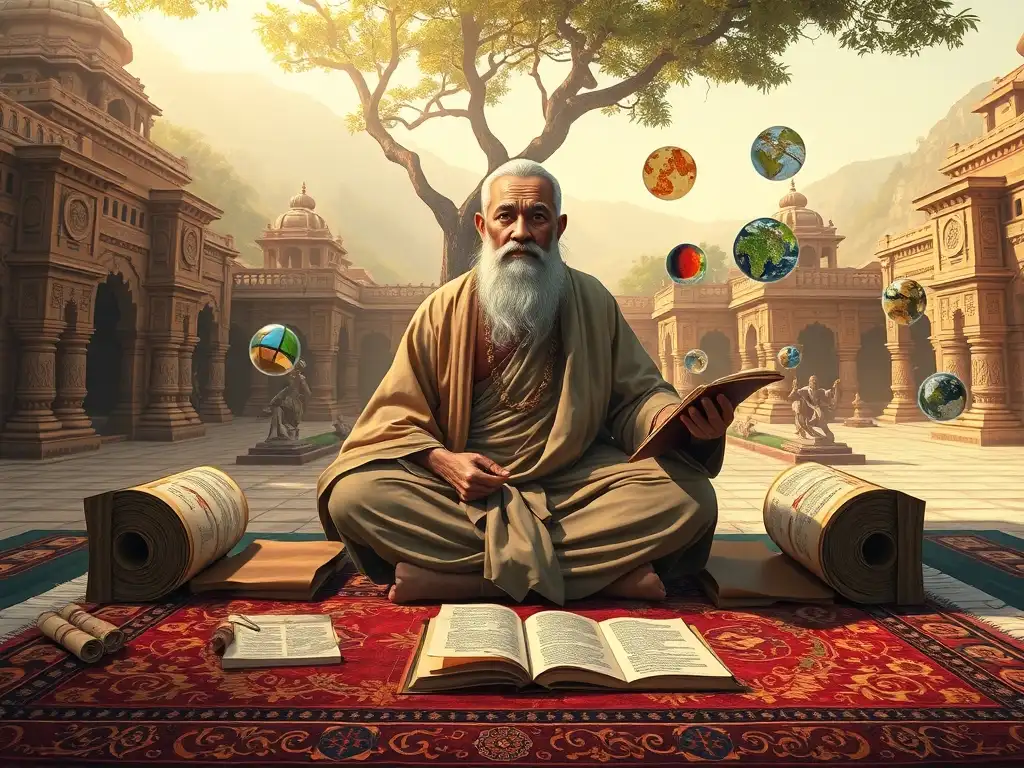
Influence on Meditation and Mindfulness Practices
Sankhya philosophy has significantly influenced various meditation and mindfulness practices throughout history, particularly in how practitioners understand the nature of reality and the self. At the core of Sankhya is the dualism between Purusha (the conscious self) and Prakriti (the material world). This distinction is crucial for practitioners seeking deeper self-awareness and understanding of their place in the universe.
- Understanding the Self: Sankhya teaches that true knowledge arises from understanding the distinction between the self (Purusha) and the physical body and mind (Prakriti). This insight forms the foundation for practices like meditation, where the goal is to transcend the fluctuations of the mind and connect with the unchanging self.
- Mindfulness: The Sankhya approach to mindfulness emphasizes observing thoughts and sensations without attachment. By recognizing the transient nature of Prakriti, practitioners can cultivate a state of detachment, leading to greater peace and clarity in their meditation practice.
- Practical Techniques: Techniques rooted in Sankhya philosophy often include breath control (Pranayama) and focused attention (Dharana). These practices align with the Sankhya belief in refining the mind to achieve higher states of consciousness, ultimately enabling practitioners to experience Kaivalya (liberation).
Relevance of Sankhya in Contemporary Philosophy
Sankhya philosophy holds significant relevance in contemporary philosophical discussions, particularly in the fields of metaphysics, epistemology, and ethics. Its dualistic framework allows for a nuanced understanding of existence that resonates with modern philosophical debates.
- Metaphysics and Dualism: The Sankhya dualism mirrors contemporary discussions around mind-body interactions. The philosophical inquiry into whether consciousness can exist independently of the physical body finds parallels in Sankhya's delineation of Purusha and Prakriti. This perspective invites ongoing exploration of how these concepts can inform current theories of consciousness.
- Epistemology: The Sankhya philosophy posits that knowledge arises from the distinction between the observer and the observed. This epistemological stance encourages a critical examination of how we acquire knowledge, emphasizing the importance of direct experience and introspection, which aligns with contemporary trends in phenomenology and existentialism.
- Ethical Implications: The Sankhya view on liberation and the nature of suffering offers a framework for addressing ethical dilemmas in modern times. Understanding the interplay between individual actions (Karma) and their consequences can guide contemporary discussions on moral responsibility and ethical living.
Sankhya’s Contribution to Psychology
Sankhya philosophy has made notable contributions to the field of psychology, particularly in understanding the mind and behavior. By providing a systematic approach to the human experience, Sankhya has influenced both ancient and modern psychological thought.
- Classification of Mental States: Sankhya categorizes mental states into three Gunas (qualities): Sattva (purity, harmony), Rajas (activity, chaos), and Tamas (inertia, darkness). This classification can be utilized in contemporary psychology to assess personality traits and behavioral tendencies, facilitating a deeper understanding of individual differences.
- Therapeutic Applications: The insights from Sankhya can enhance therapeutic practices. For instance, mindfulness-based therapies often draw on the principles of Sankhya by encouraging clients to recognize the distinction between their thoughts and their true selves, fostering greater emotional resilience and self-acceptance.
- Holistic Approach: Sankhya's emphasis on the interplay between mental and physical health aligns with modern holistic psychology. By recognizing that psychological well-being is interconnected with bodily health, practitioners can adopt a more integrated approach to mental health treatment, promoting overall wellness.
By exploring these practical applications, it becomes clear that Sankhya philosophy is not merely an ancient system of thought but a living tradition that continues to inform various aspects of human life, from spirituality to psychological well-being.
Criticisms and Misconceptions of Sankhya Philosophy
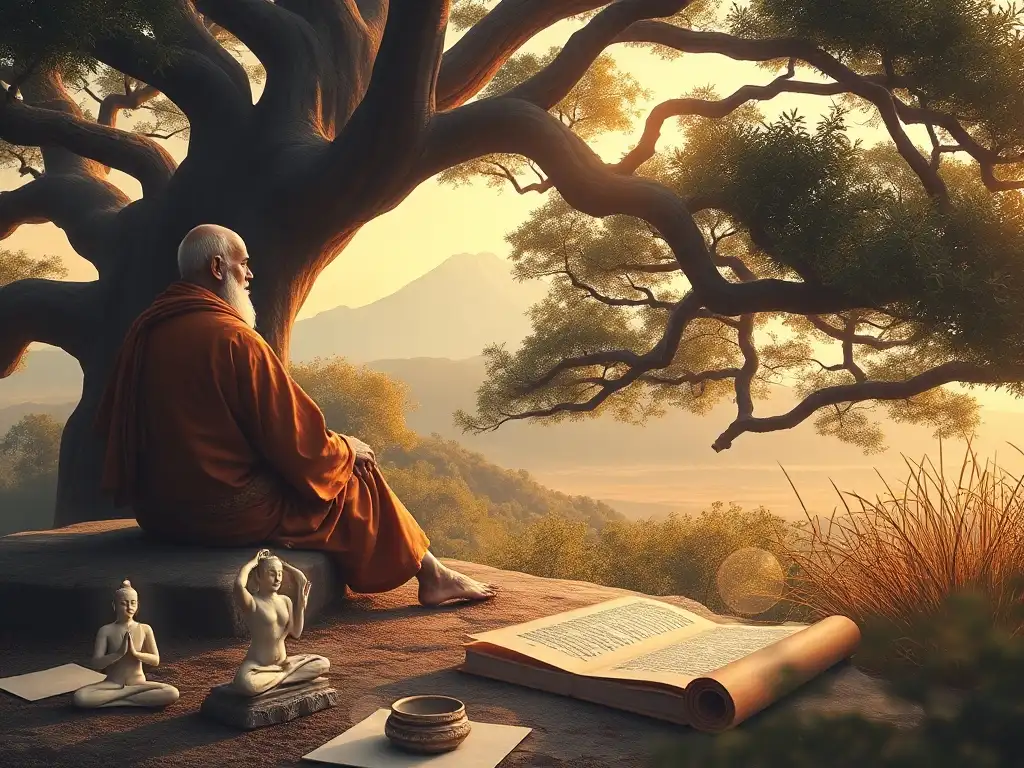
Sankhya philosophy, one of the six orthodox schools of Indian philosophy, has been the subject of numerous critiques and misunderstandings over the centuries. While it provides a comprehensive framework for understanding the nature of reality, consciousness, and the material world, various misconceptions and criticisms have emerged from both within and outside the philosophical community. This section delves into the common misunderstandings, critiques from other philosophical traditions, and the responses from proponents of Sankhya philosophy.
Common Misunderstandings about Sankhya Thought
One prevalent misunderstanding of Sankhya philosophy is its perceived dualism. Critics often label it as a strict dualistic system, suggesting that it rigidly separates consciousness (Purusha) from matter (Prakriti). However, this interpretation oversimplifies the nuanced relationship between the two. In reality, Sankhya posits that while Purusha and Prakriti are distinct, they are interdependent. The interaction between them leads to the manifestation of the universe, underscoring a more complex dynamic than mere separation.
Another common misconception is that Sankhya is solely focused on abstract metaphysical concepts, lacking practical application. Detractors argue that its theories are too speculative and disconnected from everyday life. However, this view neglects the practical implications of Sankhya's insights into suffering and liberation. Sankhya provides a philosophical framework for understanding the nature of existence, which can be applied to personal development and ethical living.
- Key Misunderstandings:
- Dualism: Misinterpretation as a strict division between Purusha and Prakriti.
- Lack of Practicality: Overlooking the practical applications of its metaphysical principles.
Critiques from Other Philosophical Schools
Sankhya philosophy has faced significant critiques from other philosophical schools, most notably from Advaita Vedanta and Buddhism.
- Advaita Vedanta:
- Non-Dualism: Proponents of Advaita Vedanta argue that Sankhya's dualistic approach is flawed. They maintain that the ultimate reality is non-dual (Brahman), and the distinction between Purusha and Prakriti is illusory. This critique emphasizes the oneness of existence, challenging Sankhya's separation of consciousness and matter.
- Maya: Advaitins assert that Sankhya fails to adequately explain the role of Maya (illusion) in perceiving reality. They argue that Sankhya's framework does not account for the illusory nature of the material world, leading to further philosophical disputes.
- Buddhism:
- No-Self Doctrine: Buddhist philosophers critique Sankhya's notion of a permanent self (Purusha) as a significant misunderstanding of the nature of existence. Buddhism posits that all phenomena, including the self, are transient and devoid of inherent essence. This fundamental difference leads to contrasting views on the nature of reality and liberation.
The Response of Sankhya Proponents to Criticisms
Proponents of Sankhya philosophy have robustly defended their system against criticisms, offering clarifications and counterarguments that highlight its depth and relevance.
- Clarifying Dualism: In response to the dualism critique, Sankhya advocates emphasize that the distinction between Purusha and Prakriti does not imply separation in functionality. Instead, they argue that this distinction illustrates the interplay of consciousness and matter, which is essential for understanding the dynamics of existence. This interactive model underscores the idea that both elements are integral to the process of creation and realization.
- Practical Relevance: Sankhya advocates point out that its philosophical tenets are foundational for various schools of thought, including Yoga and Ayurveda. They argue that Sankhya provides essential insights into human psychology, ethics, and the nature of suffering, making it highly applicable to everyday life.
- Addressing Critiques from Other Schools: In response to Advaita Vedanta, Sankhya proponents argue that acknowledging distinctions does not negate the ultimate unity of existence. They suggest that understanding these distinctions is crucial for personal growth and liberation. Regarding Buddhism, Sankhya philosophers maintain that the concept of Purusha does not conflict with the idea of impermanence, as it represents the observer rather than a permanent self.
While criticisms and misconceptions about Sankhya philosophy exist, its proponents continue to defend and elucidate its complex ideas, emphasizing its relevance in understanding the human experience and the nature of reality.
Conclusion: The Enduring Legacy of Sankhya Philosophy in Ancient India
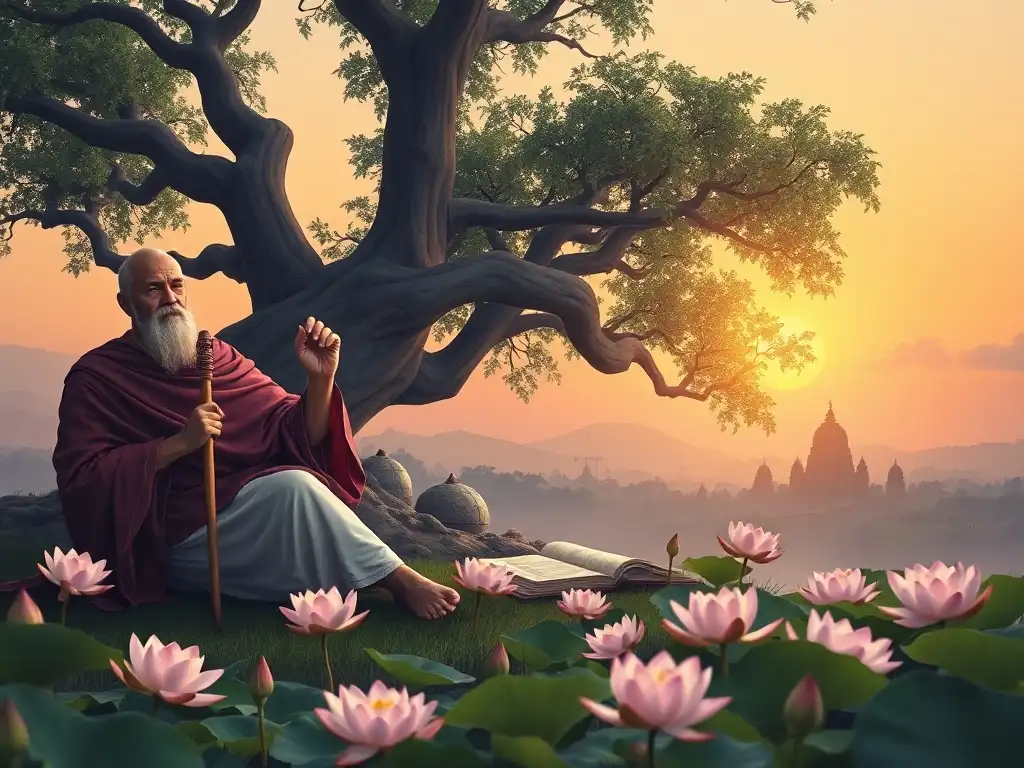
Sankhya philosophy represents one of the most profound and influential schools of thought in ancient India. Its systematic approach to understanding the universe, consciousness, and the nature of reality has left an indelible mark on Indian philosophy and beyond. By meticulously dissecting the concept of dualism between Purusha (consciousness) and Prakriti (matter), the Sankhya school has provided a framework that not only addresses metaphysical inquiries but also practical aspects of human existence, such as suffering and liberation.
Summary of Key Insights on Sankhya
- Dualism: At the heart of Sankhya philosophy is the distinction between Purusha and Prakriti. Purusha represents the eternal, unchanging self, while Prakriti embodies the material world, constantly changing and evolving. This dualism forms the basis for understanding human experience and consciousness.
- Evolution of Prakriti: The Sankhya system outlines a detailed process of evolution, explaining how the manifest universe emerges from the unmanifested. This evolutionary theory encompasses the development of mahat (intellect), ahamkara (ego), and the five elements, illustrating a comprehensive cosmology.
- The Role of Knowledge: Knowledge (jnana) is seen as the path to liberation (moksha). By understanding the nature of reality and the interplay between Purusha and Prakriti, individuals can attain self-realization and freedom from the cycles of birth and rebirth (samsara).
- Influence on Other Philosophies: The principles of Sankhya have significantly influenced various other schools of Indian philosophy, including Yoga, which incorporates Sankhya's metaphysical framework while focusing on practical techniques for achieving liberation.
The Lasting Impact of Sankhya on Indian Philosophy
Sankhya philosophy has profoundly influenced the trajectory of Indian thought. Its emphasis on rational inquiry and systematic categorization has led to a rich tradition of philosophical discourse. The concepts developed within the Sankhya school have permeated various aspects of Indian culture, from spiritual practices to the arts and sciences.
- Integration with Yoga: The amalgamation of Sankhya with Yoga philosophy has created a holistic approach to understanding the self and achieving spiritual goals. This synthesis emphasizes the practical application of Sankhya's theoretical insights, making it accessible to a broader audience.
- Influence on Buddhist Philosophy: Sankhya's ideas, particularly regarding the nature of suffering and the self, have resonated within Buddhist teachings. Although Buddhism diverges in its metaphysical stance, the dialogue between these two schools has enriched both traditions.
- Modern Relevance: In contemporary discussions of philosophy and psychology, Sankhya's exploration of consciousness and reality continues to inspire scholars and practitioners alike. Its insights into the nature of the mind and reality have found parallels in modern scientific inquiries into consciousness.
Future Directions for Study and Exploration of Sankhya Philosophy
The study of Sankhya philosophy presents numerous avenues for future exploration. As scholars delve deeper into ancient texts and their interpretations, several key areas emerge:
- Interdisciplinary Approaches: Integrating insights from psychology, cognitive science, and comparative philosophy can shed new light on Sankhya's concepts of consciousness and reality. Collaborative research across disciplines may yield innovative perspectives on ancient thought.
- Revival of Interest: There is a growing interest in traditional Indian philosophies within global contexts. Promoting Sankhya philosophy through academic programs, workshops, and public discourse can enhance its visibility and relevance in a contemporary setting.
- Digital Humanities: Utilizing technology to digitize texts and create accessible platforms for the study of Sankhya philosophy can foster a global community of scholars and enthusiasts. Online resources and courses can introduce a wider audience to these ancient ideas.
The enduring legacy of Sankhya philosophy in ancient India continues to inspire and challenge thinkers today. By exploring its insights and implications, we not only honor the wisdom of the past but also pave the way for future philosophical inquiry.
References and Further Reading on Sankhya Philosophy in Ancient India
Recommended Books and Articles
To gain a comprehensive understanding of Sankhya philosophy in ancient India, several foundational texts and scholarly works are essential. Below are some highly recommended books and articles that delve into the intricacies of this ancient philosophical system:
- "Sankhya: A Dualist Perspective" by Gerald James Larson
- This book provides an in-depth analysis of the dualistic aspects of Sankhya philosophy, exploring its historical context and its influence on other Indian philosophical systems.
- "The Philosophy of the Sankhya System" by S. Radhakrishnan
- A classic work that not only outlines the principles of Sankhya but also discusses its implications for understanding consciousness and reality.
- "The Sankhya Karika: The Fundamental Text of Sankhya Philosophy" translated by K. Satchidananda Murty
- This translation of the primary text of the Sankhya school offers insights into its foundational concepts and the philosophical debates surrounding them.
- "Sankhya: An Introduction to the Philosophy of the Sankhya" by J. N. Mohanty
- A contemporary introduction that contextualizes Sankhya within the broader spectrum of Indian philosophy, providing clarity on its key concepts and arguments.
- "The Evolution of Sankhya Philosophy" by A. K. Bhattacharya
- This article traces the historical development of Sankhya thought, examining significant philosophers and texts that contributed to its evolution.
- "A Comparative Study of Sankhya and Buddhism" by J. F. Staal
- A scholarly article that explores the similarities and differences between Sankhya philosophy and Buddhist thought, enriching the reader's understanding of both traditions.
Online Resources for Deeper Understanding of Sankhya
The digital age has made a wealth of information accessible at our fingertips. Here are some valuable online resources for those looking to deepen their understanding of Sankhya philosophy in ancient India:
- Stanford Encyclopedia of Philosophy: Sankhya
- This comprehensive entry provides a detailed overview of Sankhya philosophy, discussing its historical background, key concepts, and its significance within Indian philosophy.
- Internet Archive
- A treasure trove of texts, the Internet Archive hosts a variety of historical and contemporary works on Sankhya philosophy, many of which can be accessed for free.
- Academia.edu
- Scholars often upload their papers and articles here. Searching for "Sankhya philosophy" will yield a plethora of academic writings, discussions, and critiques that can enhance your understanding.
- The Philosophy of India: A Digital Resource
- This resource offers curated content on various Indian philosophical schools, including Sankhya, providing access to lectures, discussions, and articles.
- YouTube Educational Channels
- Many educational channels provide lectures on Indian philosophy that include segments on Sankhya. Channels like "The School of Indian Philosophy" often break down complex ideas into digestible formats.
By engaging with these resources, readers can cultivate a nuanced understanding of the Sankhya philosophy in ancient India, appreciating its depth and relevance in the context of not only Indian thought but also global philosophical discourse.
Frequently Asked Questions
What is Sankhya philosophy in ancient India?
Sankhya philosophy is a dualistic system that explores the relationship between consciousness (Purusha) and matter (Prakriti). It is one of the oldest philosophical systems, emphasizing the nature of reality and the path to liberation.
Who founded the Sankhya school of thought?
The Sankhya school is traditionally attributed to Kapila, an ancient sage. His teachings laid the groundwork for understanding the mechanisms of the universe and human existence.
How does Sankhya philosophy influence modern thought?
Sankhya's principles have influenced various fields, including psychology and spirituality. Its ideas on the nature of reality and the mind continue to resonate in contemporary philosophical discussions.
What are the main concepts of Sankhya philosophy?
Key concepts include Purusha (the self), Prakriti (the material world), and the evolution of the cosmos through the interaction of these two entities. The philosophy outlines how understanding these concepts can lead to self-realization.
How does Sankhya relate to other Indian philosophies?
Sankhya serves as a foundational philosophy that interacts with other systems like Yoga and Vedanta. It provides a framework for understanding the interconnectedness of existence and the ultimate goal of moksha (liberation).
Final Reflection: Embracing the Depths of Sankhya Philosophy
In our fast-paced modern world, the teachings of Sankhya philosophy in ancient India resonate with an urgency that is hard to ignore. As we navigate the complexities of existence, the dualistic nature of reality that Sankhya elucidates offers profound insights into the interplay between consciousness and matter.
This ancient framework not only enriches our understanding of the self but also invites us to question the very fabric of our reality. The relevance of Sankhya today lies in its ability to guide us through the chaos of contemporary life, reminding us that there is more to our existence than meets the eye.
The influence of Sankhya philosophy extends far beyond its historical roots, shaping the cultural and spiritual landscape of not just India, but the world. As we engage with its principles, we find ourselves reflecting on the nature of suffering, joy, and the pursuit of knowledge. The teachings encourage a deeper exploration of our inner selves and our connection to the universe. The mind is everything. What you think you become.
This quote encapsulates the essence of Sankhya, emphasizing the power of thought and perception in shaping our reality. By understanding the dualities presented in Sankhya, we can foster a more balanced approach to life, embracing both the material and the spiritual.
As we conclude our exploration of Sankhya philosophy, I invite you to reflect on its teachings and consider how they can be woven into the fabric of your own life. What aspects of your reality can you examine through the lens of Sankhya? Embrace the opportunity to delve deeper into your consciousness and recognize the interplay of the seen and unseen in your journey. Let the wisdom of ancient India inspire you to cultivate a more profound understanding of yourself and the world around you, guiding you toward a more harmonious existence.
Uncover Deeper Insights into Sankhya Philosophy!
Thank you for exploring the fascinating world of the Sankhya school of thought with us! We hope this journey has enriched your understanding of ancient Indian philosophy and its profound impact on our perception of reality. Now, let's take this knowledge to the next level!
- Dive deeper into Sankhya: Consider reading scholarly books or exploring reputable online resources to expand your knowledge of Sankhya and its principles.
- Join a discussion group: Engage with fellow enthusiasts by participating in online forums or local meet-ups focused on ancient philosophies.
- Share your insights! Express your thoughts on social media or within your community to spark conversations about the relevance of Sankhya in today's world.
What aspect of Sankhya resonates most with you, and how do you see it influencing modern philosophy?