
The Legacy of Nyaya: How It Shaped Indian Educational Systems

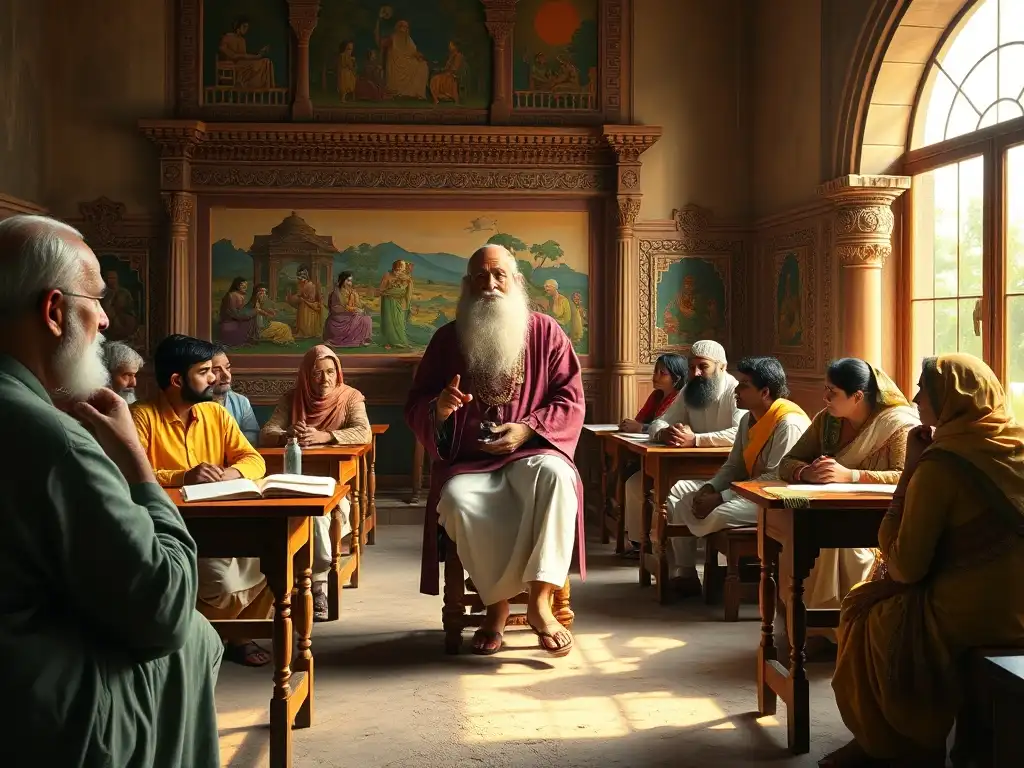
Welcome to Ancient India History, where we embark on an enlightening journey through the rich tapestry of ancient Indian civilizations. Today, we delve into the intriguing realm of Nyaya philosophy in Indian education, a cornerstone that shaped not just the intellectual landscape but also the very fabric of learning in ancient India. Discover how this profound philosophical system influenced educational systems from the Indus Valley to the Gupta Empire, paving the way for critical thinking and logical reasoning. Prepare to be captivated as we unravel the legacy of Nyaya and its enduring impact on the quest for knowledge!

Introduction to Nyaya Philosophy in Indian Education
The Nyaya philosophy is a cornerstone of Indian thought that has significantly influenced educational systems throughout history. Rooted in the ancient texts of the Nyaya Sutras, this school of philosophy emphasizes logic, reasoning, and the pursuit of knowledge as fundamental to understanding reality. The principles of Nyaya not only shaped philosophical discourse but also laid the groundwork for educational methodologies that prioritize critical thinking and analytical skills. By exploring the relevance of Nyaya philosophy in Indian education, we can uncover its profound impact on shaping intellectual traditions and institutional frameworks that have persisted through centuries.
Overview of Nyaya Philosophy
At its core, Nyaya is a system of logic and epistemology that seeks to establish the means of valid knowledge, or "prama." It operates on the premise that gaining knowledge requires a structured approach to reasoning, which includes:
- Perception: Direct sensory experience.
- Inference: Drawing conclusions based on observation.
- Comparison: Understanding similarities and differences.
- Testimony: Relying on the word of credible sources.
This systematic methodology not only aims to clarify concepts but also fosters a critical approach to knowledge acquisition, making it a vital component of educational philosophy.
Importance of Nyaya in Indian Thought
Nyaya holds a prominent position in the landscape of Indian philosophy, functioning as a critical counterbalance to other schools of thought such as Vedanta and Buddhism. Its emphasis on logical reasoning has led to the development of a rich discourse around epistemology and metaphysics. The focus on argumentation and debate has encouraged a culture of intellectual rigor that is foundational to Indian educational practices. Furthermore, Nyaya has contributed to the broader discourse on ethics and justice, influencing the moral frameworks within which education is situated.
Historical Context of Nyaya Philosophy
Origins of Nyaya: Historical Background
The origins of Nyaya can be traced back to around the 6th century BCE, making it one of the oldest philosophical traditions in India. The foundational text, the Nyaya Sutras, attributed to Gautama, outlines the principles and methodologies that characterize this school of thought. Historically, Nyaya emerged during a period of rich intellectual activity, where competing philosophies sought to address existential questions and provide frameworks for understanding the world. As such, Nyaya philosophy became instrumental in shaping not only individual thought but also the collective educational ethos of ancient India.
Key Figures in the Nyaya School of Thought
Throughout its history, Nyaya has been shaped by several key figures who have contributed to its evolution:
- Gautama (Gotama): The founder, renowned for systematizing Nyaya principles.
- Vatsyayana: A prominent commentator whose works further clarified and expanded upon the original Sutras.
- Uddyotakara: Known for his contributions to logic and epistemology in the Nyaya tradition.
These thinkers have played a crucial role in establishing Nyaya as a vital force in Indian philosophy, influencing both contemporary thought and educational practices.
Development of Nyaya Philosophy through the Ages
The development of Nyaya philosophy has been marked by a continuous dialogue with other philosophical schools and the socio-political landscape of India. From its early days to the Gupta Empire, Nyaya evolved, adapting to new challenges and integrating insights from various disciplines. Its principles have been applied not only in philosophical discourse but also in jurisprudence, ethics, and education, illustrating its enduring legacy. The Nyaya school remains pivotal in understanding the evolution of Indian educational systems, where critical thinking and logical reasoning continue to be emphasized as essential skills for learners.
Principles of Nyaya Philosophy
Nyaya philosophy, one of the six orthodox schools of Indian thought, is primarily concerned with epistemology and logic. Its principles have significantly influenced various aspects of Indian culture, particularly in shaping educational systems. The core tenets of Nyaya revolve around the pursuit of knowledge through logical reasoning, debate, and systematic inquiry. This philosophy emphasizes pramanas (means of knowledge), which serve as the foundation for understanding reality and establishing truth.
The Nyaya Sutras, composed by Gautama (also known as Akshapada) in the 2nd century BCE, outline the methodological framework for logical analysis. The primary objective of Nyaya is to distinguish valid knowledge from erroneous beliefs, thus promoting a rigorous approach to education. By emphasizing analysis and critical thinking, Nyaya philosophy encourages learners to engage with material actively, fostering a culture of inquiry that is essential for effective education.
Fundamental Concepts of Nyaya
At the heart of Nyaya philosophy are several fundamental concepts that underpin its approach to knowledge:
- Pramana: The means through which knowledge is acquired. Nyaya identifies four primary pramanas: perception (pratyaksha), inference (anumana), comparison (upamana), and testimony (shabda).
- Inference (Anumana): This concept involves drawing conclusions based on premises. Nyaya’s logical framework outlines rules for valid inference, establishing a systematic approach to reasoning.
- Debate (Vada): Nyaya encourages dialectical engagement through debate, allowing differing viewpoints to be examined critically. This practice not only aids in refining arguments but also enhances understanding and retention of knowledge.
- Error (Bhrama): Understanding the nature of error is crucial in Nyaya. The philosophy provides tools to identify misconceptions and invalid arguments, thus promoting clarity and precision in thought.
These concepts form the bedrock of Nyaya philosophy, establishing a robust framework that has been instrumental in shaping educational practices throughout Indian history.
Logical Framework of Nyaya
The logical framework of Nyaya is characterized by its structured approach to reasoning and argumentation. Central to this framework is the Nyaya syllogism, which delineates a clear method for establishing conclusions based on premises. The syllogism typically follows a five-part structure:
- Pratijna (Assertion): A statement of the conclusion to be proven.
- Hetu (Reason): The rationale supporting the assertion.
- Uddeshya (Example): An example that illustrates the reasoning.
- Upanaya (Application): The application of the reasoning to the case at hand.
- Niyama (Conclusion): The final affirmation that reinforces the assertion.
This logical progression not only fosters critical thinking but also enhances the ability to engage in constructive discourse. The emphasis on clarity, coherence, and systematic reasoning has left a lasting impact on Indian educational methodologies, encouraging students to develop analytical skills that are essential for intellectual growth.
Nyaya Philosophy's Influence on Indian Educational Systems
The influence of Nyaya philosophy on Indian educational systems is profound, shaping pedagogical practices and curricula throughout history. Its emphasis on logic and reasoning has led to the establishment of a systematic approach to education that prioritizes critical thinking and analytical skills. This legacy has persisted through various educational reforms and continues to inspire contemporary educational frameworks in India.
Integration of Nyaya in Ancient Indian Education
In ancient India, educational institutions such as Gurukuls and Buddhist monasteries often incorporated Nyaya philosophy into their curricula. The study of Nyaya was essential for students pursuing advanced education in subjects like philosophy, law, and science. The integration of Nyaya encouraged students to engage with texts critically, fostering an environment of inquiry and debate.
Nyaya's principles were also instrumental in shaping the methods of teaching and evaluation. Educators utilized the dialectical method to encourage students to articulate their thoughts and challenge assumptions, thereby promoting a dynamic learning atmosphere. This approach not only facilitated a deeper understanding of subjects but also prepared students for practical applications of their knowledge in their respective fields.
Educational Methodologies Derived from Nyaya
The methodologies derived from Nyaya philosophy have had a significant impact on the structure of Indian education. Key features include:
- Socratic Method: Similar to the Socratic method in Western philosophy, Nyaya promotes dialogue and questioning as a means of uncovering knowledge. This method encourages students to think critically and articulate their reasoning.
- Critical Analysis: The focus on distinguishing valid arguments from fallacies has led to the development of courses that emphasize critical thinking skills. Students are trained to analyze texts and arguments rigorously.
- Interdisciplinary Learning: Nyaya's influence extends beyond philosophy to subjects such as logic, mathematics, and law, promoting an interdisciplinary approach that enhances the overall educational experience.
The legacy of Nyaya philosophy in shaping Indian educational systems is undeniable. Its principles of logic, debate, and critical inquiry continue to resonate within contemporary educational practices, ensuring that the pursuit of knowledge remains a foundational aspect of learning in India.
Case Studies: Nyaya Philosophy in Practice
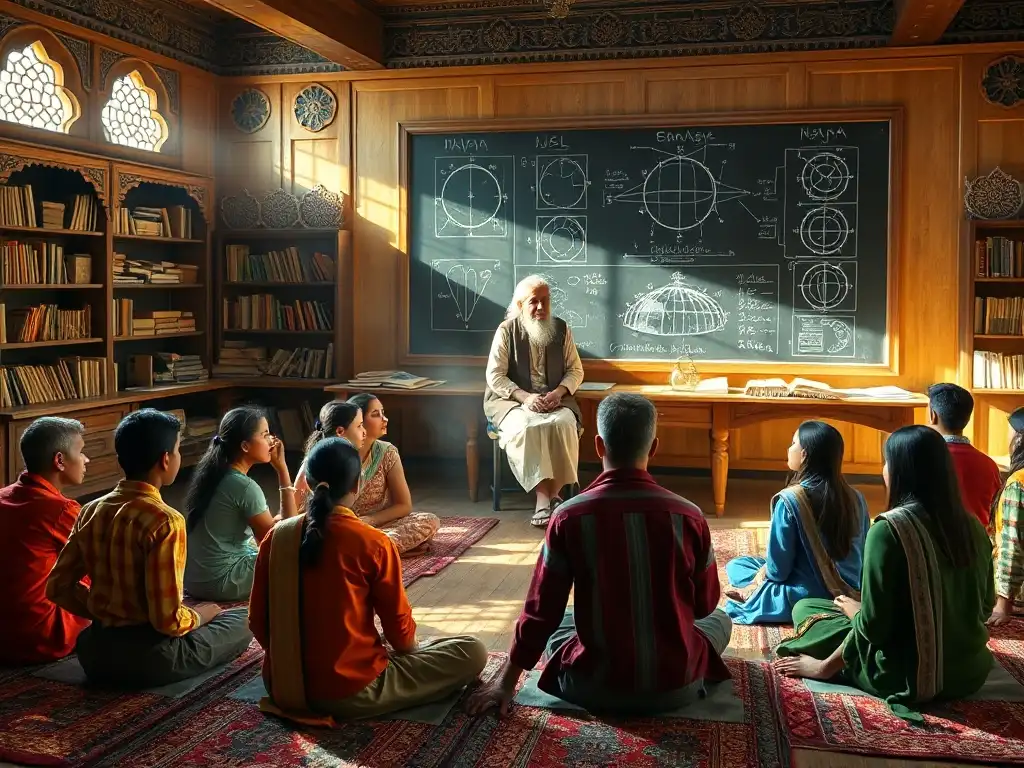
The practical application of Nyaya philosophy in educational settings has had profound implications throughout Indian history. One notable case is the establishment of the ancient Nalanda University, which flourished between the 5th and 12th centuries CE. The university was not only a hub for Buddhist learning but also embraced various philosophical schools, including Nyaya. The emphasis on logic and reasoning that Nyaya advocates was evident in its curriculum, which fostered critical thinking, debate, and dialectical methods among students.
Another compelling example is the Mithila University, where Nyaya principles were integrated into the study of law and ethics. Here, students engaged with texts that emphasized the importance of logical reasoning in legal matters, reflecting Nyaya's influence on the development of jurisprudence in India. This approach enhanced students' abilities to analyze, argue, and apply philosophical concepts in practical scenarios.
Notable Institutions Influenced by Nyaya
Numerous institutions in ancient and modern India have been influenced by the principles of Nyaya philosophy. Among them, the following stand out:
- Nalanda University: As previously mentioned, this ancient university was pivotal in shaping educational practices that emphasized logic, debate, and reasoning.
- Vikramshila University: Founded by the Pala dynasty, this institution also integrated Nyaya philosophy into its curriculum, focusing on the importance of critical inquiry in various subjects.
- Benares Hindu University (BHU): Established in the 20th century, BHU incorporated Nyaya concepts into its philosophy and law programs, fostering a tradition of logical reasoning among its students.
These institutions reflect the enduring legacy of Nyaya philosophy in shaping educational frameworks that prioritize rational thought and analytical skills.
Impact of Nyaya on Contemporary Indian Education
Nyaya philosophy continues to exert a significant influence on contemporary Indian education. Its principles are evident in various aspects of the modern curriculum, particularly in fields such as law, philosophy, and the humanities. The emphasis on critical thinking and logical reasoning is a cornerstone of higher education in India today, inspired by Nyaya's systematic approach to knowledge acquisition.
Moreover, the increasing focus on multidisciplinary studies in Indian universities can be traced back to Nyaya's advocacy for a comprehensive understanding of various subjects. This holistic educational approach encourages students to apply logical reasoning across disciplines, fostering the development of well-rounded individuals equipped to tackle complex problems.
Challenges and Critiques of Nyaya Philosophy in Education
Despite its significant contributions, Nyaya philosophy has faced challenges and critiques within the educational landscape. Critics argue that its rigid adherence to logical reasoning may overlook the importance of emotional intelligence and creativity in learning. This critique suggests that while logic is essential, it should not be the sole measure of educational success.
Common Misinterpretations of Nyaya Principles
One common misinterpretation of Nyaya philosophy is the belief that it promotes a purely mechanistic view of knowledge acquisition. Some critics assert that Nyaya reduces learning to a formulaic process of logical deduction, neglecting the subjective and experiential aspects of education. However, proponents of Nyaya argue that the philosophy encompasses a broader understanding of knowledge, including practical application and experiential learning.
Critiques from Other Philosophical Perspectives
Nyaya philosophy also faces critiques from other philosophical schools, such as the Advaita Vedanta and Buddhism. Advocates of Advaita Vedanta argue that Nyaya's focus on dualistic reasoning fails to capture the non-dual nature of reality, which they believe is essential for true understanding. Similarly, Buddhist critiques emphasize the impermanence and emptiness of concepts, suggesting that rigid logical structures may hinder deeper insights into the nature of existence.
The Relevance of Nyaya in Modern Educational Discourse
Despite the critiques, Nyaya philosophy remains relevant in modern educational discourse. Its emphasis on logical reasoning and analytical skills is increasingly recognized as vital in an age characterized by information overload and critical thinking deficits. Educational reforms in India are beginning to incorporate Nyaya principles, advocating for curricula that foster reasoning, debate, and inquiry.
Furthermore, as the global educational landscape evolves, Nyaya's systematic approach to knowledge can serve as a foundation for developing interdisciplinary studies that encourage students to think critically and engage with complex ideas. By bridging the ancient wisdom of Nyaya with contemporary educational needs, educators can cultivate a generation of learners equipped to navigate an intricate world.
Conclusion: The Enduring Legacy of Nyaya in Indian Educational Systems

The Nyaya philosophy, rooted in principles of logic and reasoning, has significantly influenced the evolution of educational systems in India. Its emphasis on rational thought and critical analysis has shaped not only the content of educational curricula but also the methodologies employed in imparting knowledge. The legacy of Nyaya is evident in the structured approach to debate, inquiry, and the systematic exploration of truth, which remains integral to Indian education today. As learners engage with these foundational aspects, they cultivate skills that extend beyond academia, fostering a generation capable of nuanced thinking and ethical reasoning.
Summary of Key Contributions of Nyaya to Education
- Emphasis on Logic and Reasoning: Nyaya philosophy introduced rigorous methods of logical inquiry, which laid the groundwork for critical thinking in education. The methods of syllogism, inference, and debate encouraged students to engage with ideas analytically.
- Establishment of Formal Education Systems: The Nyaya school played a crucial role in developing formal educational institutions, known as "Gurukuls." These centers emphasized a structured curriculum, focusing on philosophy, logic, and ethics.
- Integration of Ethics and Morality: Nyaya philosophy stressed the importance of ethical reasoning in education. This integration has fostered a holistic approach to learning, intertwining knowledge with moral development.
- Influence on Other Schools of Thought: The methodologies and epistemological frameworks established by Nyaya have been adopted and adapted by other philosophical schools in India, enriching the overall educational landscape.
Future Implications of Nyaya Philosophy in Education
The teachings of Nyaya continue to hold relevance in contemporary educational discourse. As the world faces complex challenges requiring innovative solutions, the principles of Nyaya can guide educators in fostering critical thinking and ethical reasoning among students. By emphasizing logical analysis and debate, educational institutions can prepare learners to navigate the intricacies of modern society. The revival of interest in Nyaya philosophy could lead to the development of curricula that prioritize reasoning skills, ensuring that students are equipped to tackle future challenges with confidence and clarity.
References
Key Texts on Nyaya Philosophy
- Nyaya Sutras by Gautama: This foundational text outlines the principles of logic and epistemology that are central to the Nyaya school.
- Bhasya by Vatsyayana: A commentary on the Nyaya Sutras that elaborates on the theories and practical applications of Nyaya philosophy.
- Tattva Chintamani by Gangesha Upadhyaya: A pivotal text that synthesizes Nyaya thought with other philosophical doctrines, influencing educational practices.
Suggested Readings on Indian Educational History
- "A History of Indian Education" by R. N. Sharma: This comprehensive book covers the evolution of education in India, highlighting the contributions of various philosophical schools, including Nyaya.
- "The Educational Philosophy of India" by R. S. Sharma: A detailed examination of how Indian philosophies, particularly Nyaya, have shaped educational practices over centuries.
- "Indian Philosophy: A Very Short Introduction" by Sue Hamilton: This book offers insights into the various schools of Indian philosophy, including Nyaya, and their implications for education and society.
- Introduction to Nyaya Philosophy in Indian Education
- Historical Context of Nyaya Philosophy
- Principles of Nyaya Philosophy
- Nyaya Philosophy's Influence on Indian Educational Systems
- Case Studies: Nyaya Philosophy in Practice
- Notable Institutions Influenced by Nyaya
- Impact of Nyaya on Contemporary Indian Education
- Challenges and Critiques of Nyaya Philosophy in Education
- Conclusion: The Enduring Legacy of Nyaya in Indian Educational Systems
- Summary of Key Contributions of Nyaya to Education
- Future Implications of Nyaya Philosophy in Education
- References
Frequently Asked Questions
What is Nyaya philosophy?
Nyaya philosophy is one of the six orthodox schools of Indian philosophy, focusing on logic, reasoning, and epistemology. It aims to provide a framework for understanding knowledge and truth.
How did Nyaya influence Indian education?
Nyaya introduced critical thinking and logical analysis into the educational systems of ancient India, promoting rigorous debate and discussion as essential components of learning.
What are the key contributions of Nyaya philosophy?
The key contributions of Nyaya include the development of formal logic and methods of argumentation, which have significantly influenced both philosophical thought and educational practices in India.
In what ways is Nyaya relevant today?
Today, Nyaya remains relevant as it emphasizes the importance of rational discourse and critical thinking in education, which are essential skills in the modern world.
How did Nyaya philosophy interact with other Indian philosophies?
Nyaya often engaged with other philosophical systems, such as Vedanta and Buddhism, leading to a rich exchange of ideas that shaped the intellectual landscape of ancient India.
Final Reflection: The Enduring Influence of Nyaya Philosophy in Indian Education
The legacy of Nyaya philosophy remains profoundly relevant today, as it underscores the importance of critical thinking and logical reasoning in education. In a world increasingly driven by information overload and rapid technological advancements, the principles of Nyaya challenge us to cultivate discerning minds capable of navigating complexities with clarity and precision. The call for a robust educational framework that emphasizes analytical skills is more pressing than ever, reminding us that the roots of our educational systems are steeped in a rich philosophical tradition that values inquiry and rational discourse.
The impact of Nyaya philosophy extends far beyond its historical context; it continues to shape the cultural and social landscape of Indian education. As we witness a resurgence of interest in traditional knowledge systems, the principles of Nyaya inspire educators and learners alike to engage in meaningful dialogue and critical analysis. Education is not the filling of a pail, but the lighting of a fire.
This quote encapsulates the essence of Nyaya, urging us to ignite curiosity and foster a love for learning that transcends rote memorization. The ongoing integration of these philosophical tenets into modern curricula signifies a commitment to nurturing thoughtful citizens who can contribute to society with wisdom and integrity.
As we reflect on the teachings of Nyaya, let us embrace the challenge to apply its principles in our own lives and educational pursuits. Consider how you can cultivate a mindset of inquiry, encouraging not just the acquisition of knowledge, but the development of wisdom through critical engagement. By embodying the spirit of Nyaya, we can contribute to a future where education empowers individuals to think deeply, question boldly, and act ethically, ensuring that the legacy of this profound philosophy continues to illuminate the path for generations to come.
Embrace the Wisdom of Nyaya and Transform Your Learning Journey!
Thank you for exploring the rich legacy of Nyaya and its profound impact on Indian education. Your interest in this transformative philosophy opens doors to a deeper understanding and growth in your educational practices.
Now, let’s take action to elevate your learning experience:
- Explore foundational texts related to Nyaya to enhance your critical thinking skills.
- Join a local or online discussion group to engage with individuals who share your passion for educational philosophies.
- Share this article with friends or colleagues who value the significance of historical education systems and inspire them to learn more!
Which aspect of Nyaya resonates most with you, and how do you envision applying its principles in your own educational journey?