
The Nyaya School of Thought: A Comprehensive Guide to Ancient Indian Logic


Welcome to Ancient India History, where we embark on a fascinating journey through the rich tapestry of ancient Indian civilizations. From the groundbreaking innovations of the Indus Valley to the profound philosophies of the Gupta Empire, we delve deep into the culture and contributions that have shaped human thought. In this article, we invite you to explore the intricate world of Ancient Indian logic principles, with a special focus on The Nyaya School of Thought.
Discover how these timeless teachings continue to influence modern philosophy and spark new ideas. Join us as we uncover the wisdom and insights that lie within this captivating aspect of ancient Indian heritage!
The Nyaya School of Thought is one of the most significant philosophical traditions in ancient India, known for its rigorous and systematic approach to logic and epistemology. Originating around the 6th century BCE, the Nyaya philosophy sought to analyze the processes of reasoning, argumentation, and the acquisition of knowledge. It stands as a cornerstone in the study of ancient Indian logic principles, providing insights that have influenced not only Indian philosophy but also the broader discourse on logic and reasoning throughout the ages.
In this comprehensive guide, we will delve into the fundamental aspects of the Nyaya School, exploring its key concepts, methodologies, and contributions to the understanding of logic. By examining the intricate principles that define this school of thought, we can appreciate its enduring relevance in both historical and contemporary contexts. Join us as we uncover the layers of ancient Indian logic and highlight the intellectual legacy of the Nyaya philosophers, whose ideas continue to resonate in various fields, including philosophy, mathematics, and science.
- Introduction to the Nyaya School of Thought
- Historical Context of the Nyaya School
- Core Principles of Ancient Indian Logic
- The Methodology of Nyaya Logic
- Comparison with Other Schools of Thought
- Applications of Nyaya Logic
- Conclusion
- Further Reading and Resources
- Frequently Asked Questions
- Final Reflection: Embracing the Wisdom of Ancient Indian Logic
- Unlock the Wisdom of Ancient Indian Logic!
Introduction to the Nyaya School of Thought

The Nyaya School of Thought represents one of the six orthodox systems of Indian philosophy, known for its rigorous analysis of logic and epistemology. Established around the 2nd century CE by the sage Gautama (also known as Akṣapāda), Nyaya emphasizes the importance of logical reasoning as a means to attain knowledge and truth. This school of thought serves not only as a philosophical framework but also as a foundational component for various other Indian philosophical traditions.
Overview of Ancient Indian Philosophy
Ancient Indian philosophy is characterized by its diversity and depth, encompassing various schools of thought, each contributing uniquely to the intellectual landscape of the time. Nyaya is often associated with:
- Epistemology: The study of knowledge, its scope, and limits.
- Metaphysics: Discussing the nature of reality and existence.
- Ethics: Exploring moral values and duties.
Nyaya philosophers engaged in a systematic examination of logic, arguing that sound reasoning is essential for discerning truth. They categorized knowledge into four valid sources, known as pramanas:
- Pratyaksha (perception)
- Anumana (inference)
- Upamana (comparison)
- Shabda (verbal testimony)
This framework laid the groundwork for critical debates in the realms of metaphysics and ethics, influencing not only Indian philosophy but also later philosophical thought across various cultures.
Significance of Logic in Ancient Indian Civilization
The significance of logic in ancient Indian civilization cannot be overstated. It played a crucial role in various aspects:
- Debate and Discourse: Logic was central to intellectual debates, enabling philosophers to defend their perspectives rigorously. Nyaya's principles provided the tools for structured arguments, enhancing the quality of philosophical discussions.
- Religious Texts: Many religious texts, including the Vedas and Upanishads, utilized logical reasoning to convey complex ideas. The application of Nyaya principles helped in interpreting these texts, allowing for a deeper understanding of spiritual concepts.
- Legal Systems: Ancient Indian legal systems also adopted logical reasoning, ensuring fair judgments based on sound principles. This use of logic in law reflects the broader societal value placed on rational thought and clarity.
The contributions of the Nyaya School highlighted the importance of logic in fostering a rich intellectual tradition, which continues to influence contemporary philosophical inquiry.
Purpose of the Guide to Ancient Indian Logic Principles
This guide aims to provide an in-depth exploration of the ancient Indian logic principles as articulated by the Nyaya School. The key purposes include:
- Educational Resource: To serve as a comprehensive educational resource for students and enthusiasts of philosophy, offering clarity on the core principles of Nyaya logic.
- Cultural Insight: To enhance understanding of how ancient Indian logic principles have shaped not only philosophical thought but also various aspects of Indian culture, including law, ethics, and education.
- Comparative Analysis: To facilitate a comparative analysis between Nyaya logic and other philosophical traditions, fostering a deeper appreciation for the uniqueness of ancient Indian thought.
Through this guide, readers will gain valuable insights into the intricate world of ancient Indian logic, empowering them to appreciate the intellectual heritage of India and its enduring relevance in contemporary discourse.
Historical Context of the Nyaya School
Origins and Development of Nyaya Philosophy
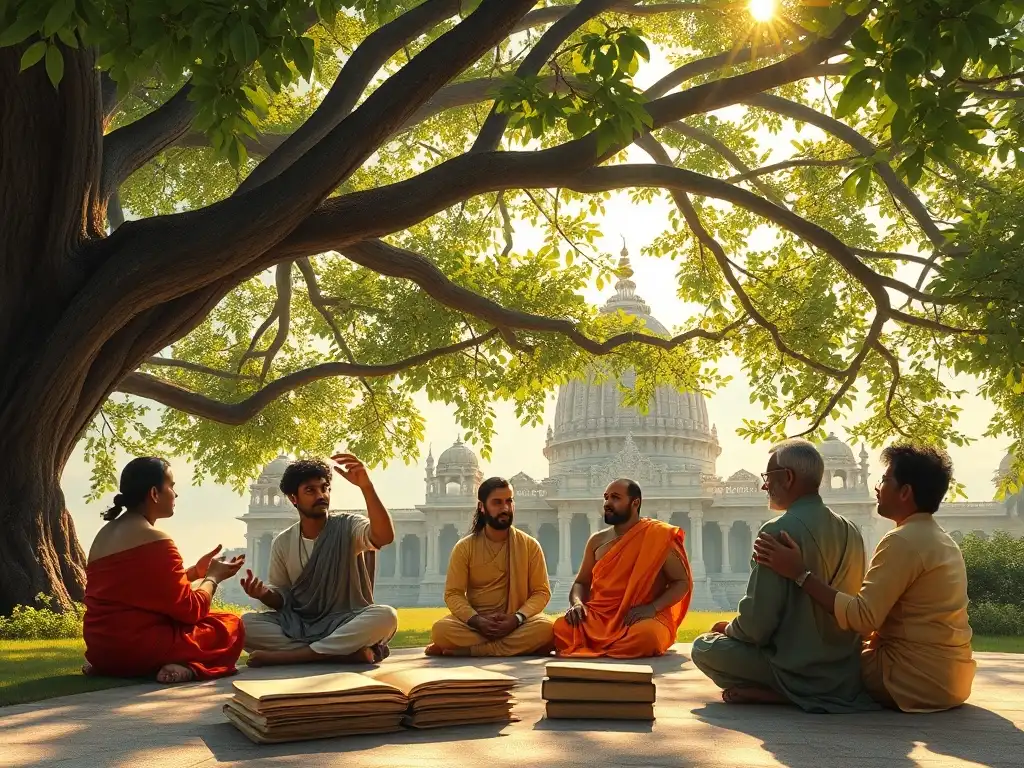
The Nyaya School of Thought, one of the six orthodox philosophies of ancient India, is primarily concerned with the principles of logic and epistemology. Its origins trace back to the Nyaya Sutras, authored by Gautama (also known as Gotama or Akshapada) around the 2nd century BCE. This foundational text laid the groundwork for a systematic approach to reasoning and argumentation, distinguishing Nyaya as a formal discipline in Indian philosophy.
Initially, Nyaya philosophy emerged as a response to the challenges posed by other philosophical schools, particularly the Buddhists and Jains. It sought to refute their assertions by providing rigorous methodologies for valid reasoning and sound knowledge. The development of Nyaya can be divided into several key phases:
- Early Formation (2nd century BCE - 4th century CE):
- The Nyaya Sutras established core principles of logic.
- Early commentators like Vatsyayana expanded upon these ideas, making them more accessible.
- Classical Period (4th - 12th centuries CE):
- The school saw significant elaboration through works such as Nyaya Bhashya and Tattvacintāmaṇi by Udayana.
- This period marked the integration of Nyaya with other philosophical systems, notably the Vedanta and Mimamsa schools.
- Medieval and Modern Influence (12th century onwards):
- Nyaya continued to evolve, influencing both Hindu and non-Hindu philosophical discourse.
- Its principles were adapted by later thinkers, contributing to the broader landscape of Indian philosophy.
Key Figures in the Nyaya Tradition
The Nyaya School has produced several influential philosophers whose contributions have shaped its development and dissemination. Some of the most notable figures include:
- Gautama (Gotama):
- Founder of Nyaya philosophy and author of the Nyaya Sutras.
- His work established the importance of logical reasoning and inference in the pursuit of knowledge.
- Vatsyayana:
- A prominent commentator on the Nyaya Sutras.
- His Nyaya Bhashya provided clarity and interpretation of Gautama's ideas, solidifying the school's foundational concepts.
- Udayana:
- A key figure in the classical period of Nyaya, known for his works like Tattvacintāmaṇi.
- He introduced concepts of perception, inference, and testimony as valid sources of knowledge.
- Jayanta Bhatta:
- A later philosopher who contributed significantly to Nyaya through his works, such as Nyayamanjari.
- He engaged in debates with Buddhist philosophers, defending Nyaya's epistemological framework.
These philosophers not only advanced Nyaya's logical principles but also engaged in dialogues with other schools, enriching the philosophical discourse in ancient India.
Influence of Nyaya on Other Philosophical Schools
Nyaya's impact extends beyond its own tradition, influencing various philosophical schools within and outside the Indian context. The key areas of this influence include:
- Incorporation of Logical Principles:
- The systematic approach to argumentation established by Nyaya has been adopted by other schools, including Mimamsa and Vedanta.
- These schools integrated Nyaya's methods to refine their own epistemological inquiries.
- Engagement with Buddhist Philosophy:
- Nyaya philosophers actively engaged with Buddhist thinkers, leading to significant developments in logic and epistemology.
- The exchanges allowed for the formulation of counterarguments and the establishment of a more robust logical framework.
- Western Influence:
- Elements of Nyaya's logical structure can be seen in later Western philosophical movements, particularly in the realms of analytical philosophy.
- The emphasis on clarity, precision, and structured reasoning resonates with contemporary philosophical methodologies.
The Nyaya School of Thought not only contributed to the richness of ancient Indian logic principles but also played a pivotal role in shaping the broader philosophical landscape, both within India and beyond. Its legacy continues to be a subject of study and appreciation in contemporary philosophical discourse.
Core Principles of Ancient Indian Logic
Definition of Nyaya Logic
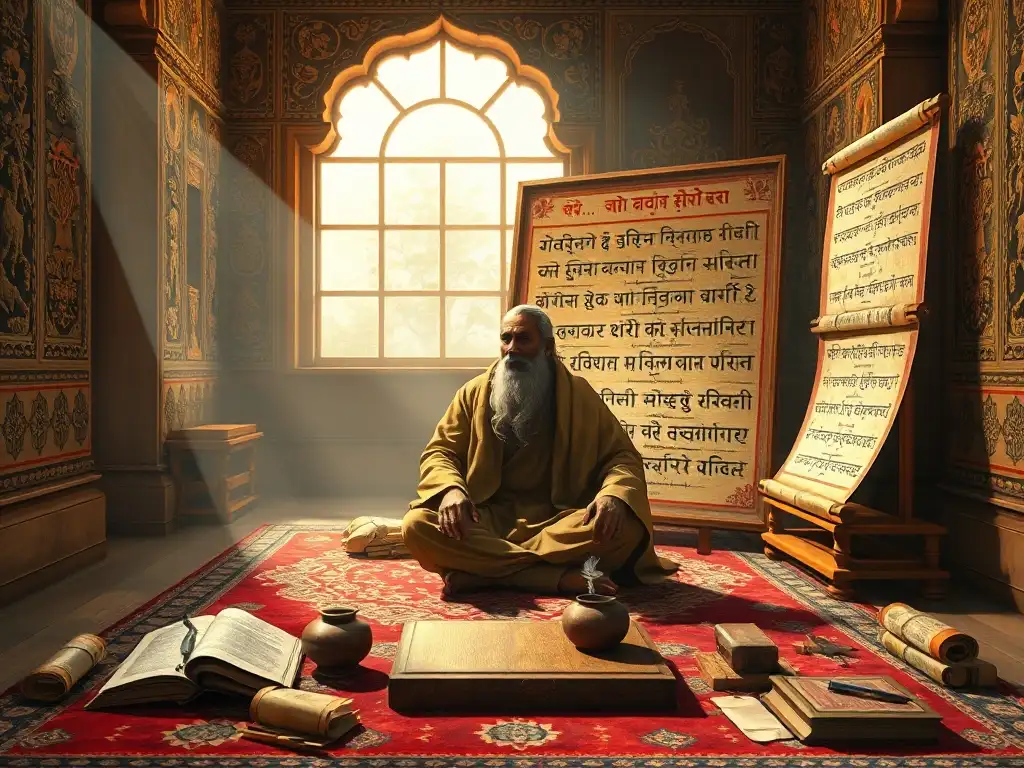
Nyaya logic, originating from the Nyaya school of thought, is a significant aspect of ancient Indian logic principles. This philosophical framework emphasizes the processes of reasoning, debate, and epistemology, focusing on the establishment of knowledge through logical means. The Nyaya school, established around the 2nd century BCE, offers a systematic approach to understanding the nature of reality, knowledge, and the methods employed to attain valid conclusions.
At its core, Nyaya logic is concerned with the validity of arguments and the reliability of knowledge sources. It asserts that knowledge must be based on logical reasoning, which is structured and methodical. By analyzing arguments, the Nyaya philosophers aimed to establish criteria for distinguishing between valid and invalid inferences, laying the groundwork for rigorous debate and intellectual discourse in ancient India.
Key Concepts in Ancient Indian Logic Principles
The principles of ancient Indian logic within the Nyaya framework are built upon several key concepts, each contributing to the overall understanding of reasoning and knowledge acquisition. These concepts include:
Pramana (Means of Knowledge)
Pramana is the foundational concept in Nyaya logic, referring to the valid means through which knowledge is obtained. The Nyaya school identifies four primary pramanas:
- Pratyaksha (Perception): Direct observation or sensory experience.
- Anumana (Inference): Logical reasoning based on premises and conclusions.
- Upamana (Comparison): Knowledge gained through analogy or comparison.
- Arthapatti (Postulation): Knowledge derived from assumptions or postulates.
Each pramana serves as a method to validate knowledge claims and is essential for establishing truth in philosophical discourse.
Pratyaksha (Perception)
Pratyaksha, or perception, is considered the most immediate and direct means of knowledge in the Nyaya system. It encompasses sensory experiences that provide firsthand information about the external world. This form of knowledge is divided into two categories:
- Savikalpaka: Perception that includes cognitive processing, allowing for recognition and categorization.
- Nirvikalpaka: Non-conceptual perception, representing raw sensory data without any interpretation.
Pratyaksha is regarded as a reliable source of knowledge, though it is not infallible, as it can be influenced by factors such as illusion or subjective interpretation.
Anumana (Inference)
Anumana, or inference, is the process of deducing conclusions based on premises. This method of reasoning is foundational to logical argumentation in the Nyaya tradition. Anumana can be understood through the following structure:
- Major Premise: A general rule or universal statement.
- Minor Premise: A specific instance or observation.
- Conclusion: The deduction that logically follows from the premises.
The effectiveness of anumana lies in its ability to draw conclusions that extend beyond immediate experience, allowing for broader insights into reality based on limited evidence.
Upamana (Comparison)
Upamana, or comparison, involves acquiring knowledge through analogical reasoning. This method allows for understanding new concepts by relating them to known ones. For example, if one has experience with a particular kind of fruit, one can understand a new fruit by comparing its characteristics to those of the familiar fruit. Upamana is crucial in expanding knowledge beyond direct experience and plays an essential role in language development and communication.
Arthapatti (Postulation)
Arthapatti, or postulation, refers to knowledge that is derived from assumptions made to explain certain facts. This form of reasoning is particularly useful when direct evidence or observation is lacking. For instance, if a person is known to be always present at a particular location yet is absent one day, one might postulate that they are likely unwell. This reasoning allows for the establishment of conclusions based on circumstantial evidence and logical necessity.
Anupalabdi (Non-perception)
Anupalabdi, or non-perception, is a unique pramana that deals with knowledge acquired from the absence of evidence. This concept is particularly significant in understanding the limits of perception and inference. For instance, if one searches for an object in a room and finds it missing, one can conclude that the object is not present based on the lack of perception. Anupalabdi highlights the importance of absence as a valid source of knowledge, emphasizing that what is not observed can also inform our understanding of reality.
The core principles of ancient Indian logic, as articulated by the Nyaya school, provide a comprehensive framework for understanding knowledge acquisition and reasoning. These principles not only contribute to philosophical discourse but also lay the groundwork for various fields, including science, ethics, and epistemology in ancient Indian culture.
The Methodology of Nyaya Logic
The Nyaya School of Thought is renowned for its rigorous approach to logic, emphasizing reasoning and debate. At its core, the methodology of Nyaya logic involves a systematic framework for evaluating arguments and drawing conclusions. This framework is pivotal in understanding the principles of ancient Indian logic.
In Nyaya, the methodology consists of several essential components that guide logical reasoning:
- Pramana (Means of Knowledge): The Nyaya philosophers identified four primary pramanas, which are:
- Pratyaksha (Perception)
- Anumana (Inference)
- Upamana (Comparison)
- Shabda (Word/Testimony)
- Nyaya Sutras: The foundational texts of the Nyaya school, primarily authored by Gautama (also known as Akshapada), provide a detailed exposition of logical principles and argumentative reasoning. The sutras serve as guidelines for formulating logical arguments.
- Debate and Discussion: Nyaya logic emphasizes the role of dialogue in refining arguments. The dialectical method is employed to challenge and defend positions, fostering clarity and precision in reasoning.
- Categorization of Arguments: Nyaya categorizes arguments into distinct types, each with its own rules and structures. This classification is crucial for understanding how different forms of reasoning operate within the school.
Structure of Nyaya Arguments
The structure of Nyaya arguments is meticulously defined and revolves around a logical sequence that includes premises leading to a conclusion. This structure often follows a specific format:
- Pratijna (Assertion): The initial claim or statement to be proven.
- Hetu (Reason): The supporting reason or evidence for the assertion.
- Udaharana (Example): An illustrative example to clarify the reasoning.
- Upanaya (Application): The application of the reasoning to the specific case at hand.
- Nigamana (Conclusion): The final conclusion drawn from the premises.
This structured approach ensures that arguments are coherent and logically valid, allowing for thorough analysis and critique.
Types of Nyaya Reasoning
Nyaya identifies various types of reasoning that reflect different methodologies employed in argumentation. The two primary types are direct inference and indirect inference, each serving distinct purposes in logical analysis.
Direct and Indirect Inference
- Direct Inference (Anumana): This involves drawing conclusions directly from observed phenomena. For instance, if one sees smoke, one can infer the presence of fire. The logical structure can be summarized as follows:
- Major Premise: Wherever there is smoke, there is fire.
- Minor Premise: There is smoke here.
- Conclusion: Therefore, there is fire here.
- Indirect Inference: This type of reasoning involves drawing conclusions from what is not immediately visible or from the context. It relies on more complex relationships and often requires a deeper understanding of the subject matter. An example might include inferring the existence of unseen elements based on their effects.
Syllogistic Structure in Nyaya
Nyaya logic employs a syllogistic structure, which is a form of deductive reasoning that allows philosophers to build logical arguments systematically. The syllogistic framework can be broken down into the following components:
- Major Premise: A general statement that establishes a universal truth.
- Minor Premise: A specific instance that falls under the general statement.
- Conclusion: The deduction that logically follows from the premises.
This structure enables Nyaya scholars to formulate arguments with clarity, ensuring that each step in the reasoning process is logically sound. The syllogistic approach is integral to the broader principles of ancient Indian logic, as it facilitates a deeper understanding of causal relationships and the validation of knowledge claims.
The methodology of Nyaya logic encapsulates a detailed and structured approach to reasoning, incorporating both direct and indirect inference as well as a robust syllogistic framework. This comprehensive understanding is crucial for exploring the rich landscape of ancient Indian logic principles.
Importance of Validity and Soundness in Arguments
In the realm of Nyaya logic, the concepts of validity and soundness are paramount in assessing the quality of arguments. These principles form the foundation upon which logical reasoning is built, ensuring that conclusions drawn from premises are both reliable and justifiable.
Validity
Validity refers to the structural integrity of an argument. An argument is considered valid if the conclusion logically follows from the premises, regardless of the truth of the premises themselves. In other words, if the premises are true, the conclusion must also be true. This principle is crucial in Nyaya, as it emphasizes the importance of logical structure over the actual content of the statements involved.
- Example of Validity:
- All humans are mortal.
- Socrates is a human.
- Therefore, Socrates is mortal.
In this example, the argument is valid because the conclusion follows logically from the premises.
Soundness
Soundness, on the other hand, takes validity a step further by incorporating the truth of the premises. An argument is sound if it is valid and its premises are actually true. This concept is vital in ensuring that not only the logical structure is intact but also that the premises reflect reality, leading to conclusions that are both valid and true.
- Example of Soundness:
- All mammals are warm-blooded.
- A dog is a mammal.
- Therefore, a dog is warm-blooded.
This argument is both valid and sound, as the premises are true and lead to a true conclusion.
Relevance to Ancient Indian Logic Principles
The emphasis on validity and soundness in Nyaya logic underscores the rigorous analytical approach that ancient Indian philosophers adopted. By prioritizing these principles, the Nyaya school sought to refine argumentative practices, enabling clear distinctions between acceptable and unacceptable reasoning. This methodological rigor not only influenced subsequent Indian philosophical traditions but also contributed to the broader discourse on logic and epistemology.
The concepts of validity and soundness are essential in the study of Nyaya logic, serving as the bedrock for constructing strong, persuasive arguments. By understanding and applying these principles, scholars of ancient Indian logic can engage in more profound and meaningful philosophical discussions, thereby enriching the legacy of the Nyaya school and its contributions to the field of logic.
Comparison with Other Schools of Thought

Nyaya vs. Mimamsa: Logic and Rituals
The Nyaya school of thought, known for its systematic approach to logic and epistemology, stands in contrast to the Mimamsa school, which primarily emphasizes rituals and the interpretation of Vedic texts. While both schools arose in ancient India and share a common cultural background, their focal points diverge significantly.
- Epistemological Foundations:
- Nyaya: The Nyaya school identifies four sources of valid knowledge (pramāṇas): perception (pratyakṣa), inference (anumāna), comparison (upamāna), and testimony (śabda). This framework allows for a rigorous analysis of reasoning and argumentation.
- Mimamsa: In contrast, Mimamsa focuses on the authority of the Vedas and the performance of rituals (karman). It holds that knowledge derived from Vedic texts is paramount, often sidelining logical inquiry in favor of ritualistic practice.
- Purpose and Practice:
- Nyaya: The goal of Nyaya is to establish truth through rational discourse and logical reasoning, leading to liberation (moksha) via knowledge.
- Mimamsa: Mimamsa aims at achieving dharma through the correct execution of rituals, emphasizing the importance of action over philosophical speculation.
- Methodology:
- Nyaya: Utilizes a formalized method of debate and discourse, focusing on argumentation and counter-argumentation to achieve clarity and truth.
- Mimamsa: Relies on textual analysis and tradition, often employing a hermeneutic approach to understand the deeper meanings of the Vedic texts.
The interplay between Nyaya’s logical rigor and Mimamsa’s ritualistic emphasis illustrates the diverse intellectual landscape of ancient Indian philosophy. While both schools contribute significantly to the philosophical discourse, their foundational principles and methodologies highlight the richness of ancient Indian thought.
Nyaya vs. Advaita Vedanta: Knowledge and Reality
The Nyaya and Advaita Vedanta schools represent two distinct approaches to understanding knowledge and reality in ancient Indian philosophy. While Nyaya emphasizes the process of reasoning and logical analysis, Advaita Vedanta is centered around the concept of non-duality (Advaita) and the nature of the self (Atman) in relation to the ultimate reality (Brahman).
- Concept of Reality:
- Nyaya: Nyaya posits a pluralistic view of reality, asserting that both the material world and the self are real. It argues for the existence of multiple substances and emphasizes their interrelations through logical frameworks.
- Advaita Vedanta: In contrast, Advaita Vedanta teaches that the apparent multiplicity of the universe is an illusion (Maya). It asserts that the ultimate reality is non-dual, where Atman and Brahman are one and the same, leading to a more monistic view of existence.
- Approach to Knowledge:
- Nyaya: Knowledge is achieved through valid means (pramāṇas), with a strong emphasis on the analytical methods of reasoning. Nyaya philosophers engage in debates to clarify concepts and resolve contradictions.
- Advaita Vedanta: Knowledge is viewed as realization (Jnana) rather than mere intellectual understanding. The path to knowledge involves meditation and self-inquiry, culminating in the experience of unity with Brahman.
- Methodological Differences:
- Nyaya: Engages in detailed logical analysis and argumentation, often addressing counter-arguments to refine its positions.
- Advaita Vedanta: Focuses more on mysticism and experiential knowledge, often relying on the teachings of revered texts such as the Upanishads.
These differences illustrate the contrasting methodologies and philosophical objectives of the Nyaya and Advaita Vedanta schools. While Nyaya provides a structured approach to logical inquiry, Advaita Vedanta invites practitioners to transcend dualistic thinking in pursuit of spiritual liberation.
Unique Contributions of Nyaya to Indian Philosophy
The Nyaya school of thought has made several unique contributions to the broader landscape of Indian philosophy, particularly in the realm of logic, epistemology, and critical thinking. Its influence extends beyond philosophy, impacting various fields such as law, ethics, and science.
- Formal Logic:
- Nyaya is credited with developing one of the earliest systems of formal logic in the world. Its classification of pramāṇas and structured approach to reasoning has laid the groundwork for subsequent philosophical discourse in India and influenced modern logical systems.
- Debate and Dialectics:
- The emphasis on debate (vāda) as a method of inquiry is a hallmark of Nyaya philosophy. This practice not only fosters critical thinking but also encourages the rigorous examination of ideas, ensuring that philosophical assertions are supported by sound reasoning.
- Influence on Other Schools:
- Nyaya’s logical frameworks and epistemological insights have influenced various other philosophical schools, including Buddhist logic and later Hindu philosophies. Its ideas on inference and perception have become foundational elements in the study of epistemology across different traditions.
- Ethical Implications:
- The Nyaya school’s approach to ethics is rooted in the pursuit of truth and justice. Its logical principles are applied to ethical dilemmas, emphasizing the importance of reasoned decision-making in moral contexts.
The Nyaya school of thought stands out for its rigorous methodologies, contributions to logic and epistemology, and its lasting impact on the philosophical landscape of ancient India and beyond. Its principles continue to resonate in contemporary discussions on logic and critical thinking, underscoring the relevance of ancient Indian logic principles in modern discourse.
Applications of Nyaya Logic

Relevance of Ancient Indian Logic Principles in Modern Context
The ancient Indian logic principles, particularly those articulated by the Nyaya school, hold significant relevance in today's intellectual landscape. Nyaya, meaning "rule" or "method," is foundational in understanding logical reasoning, and its principles have permeated various fields.
- Critical Thinking:
- The Nyaya school's emphasis on rigorous debate and analysis fosters critical thinking skills. Modern education systems can benefit from integrating these principles to enhance students' analytical abilities.
- Legal Reasoning:
- The structured approach to argumentation in Nyaya is mirrored in contemporary legal practices. Courts today often rely on logical frameworks that can trace their roots back to Nyaya principles, aiding in the formulation of coherent arguments and judgments.
- Artificial Intelligence:
- In the realm of AI, the logical systems derived from Nyaya provide a robust framework for developing algorithms that mimic human reasoning. The principles of inference and validation can be utilized to enhance machine learning models.
Influence on Contemporary Indian Philosophy and Logic
The influence of the Nyaya school extends profoundly into contemporary Indian philosophy and logic. Its principles continue to shape philosophical discourse, influencing both traditional and modern thinkers.
- Integration with Other Philosophical Systems:
- Nyaya has harmonized with various Indian philosophical traditions, such as Vedanta and Buddhism. This synthesis has enriched Indian philosophical discourse, allowing for a more comprehensive understanding of metaphysics and epistemology.
- Contemporary Philosophical Movements:
- Modern Indian philosophers have revisited Nyaya principles to address contemporary issues. For instance, debates on ethics and morality often invoke Nyaya's analytical methods to dissect arguments, thereby ensuring clarity and precision in philosophical discussions.
- Academic Curriculum:
- Nyaya's methodologies are increasingly incorporated into academic syllabi, promoting a deeper understanding of logical reasoning among philosophy students. By studying its texts, students gain insights into the evolution of thought and its implications in modern contexts.
Nyaya’s Impact on Science and Epistemology
The Nyaya school's contributions to science and epistemology are profound, laying foundational principles that continue to resonate in various scientific disciplines.
- Methodology of Science:
- Nyaya emphasizes observation, inference, and reasoning—core components of the scientific method. The systematic approach to knowledge acquisition advocated by Nyaya has influenced scientific inquiry, encouraging a methodical examination of evidence.
- Epistemological Framework:
- The Nyaya classification of knowledge, particularly its delineation of pramana (means of knowledge), provides a robust framework for understanding different sources of knowledge, such as perception and inference. This epistemological groundwork is essential for contemporary philosophy of science.
- Interdisciplinary Connections:
- The principles of Nyaya have found applications in various scientific fields, including cognitive science and psychology, where logical reasoning plays a critical role in understanding human thought processes. By examining how Nyaya logic aligns with modern cognitive theories, researchers can bridge ancient wisdom with contemporary scientific inquiry.
The applications of ancient Indian logic principles, particularly those from the Nyaya school, offer rich insights and methodologies that remain pertinent in various spheres today. From enhancing critical thinking to influencing scientific methodologies, the legacy of Nyaya continues to enrich modern thought and practice.
Conclusion

Summary of Key Takeaways on Ancient Indian Logic Principles
The Nyaya School of Thought stands as a cornerstone of Ancient Indian logic principles, offering profound insights that have shaped philosophical discourse for centuries. Here are the key takeaways:
- Foundational Concepts: The Nyaya system emphasizes the importance of prama (valid knowledge) and the methods of acquiring it, including perception, inference, comparison, and testimony.
- Three Categories of Inference:
- Savyabhichara: The fallacy of an invalid inference.
- Asambhava: Arguments based on impossibilities.
- Pratyaksha: Direct perception as the most reliable source of knowledge.
- Logic and Debate: The Nyaya tradition not only framed logical principles but also formalized the art of debate, teaching practitioners how to engage effectively and reach valid conclusions.
- Influence on Other Schools: Nyaya’s methodologies significantly influenced other philosophical traditions in India, including Vaisheshika, Mimamsa, and even Buddhism, underscoring its pervasive impact.
The principles laid down by the Nyaya philosophers continue to resonate, providing a rigorous framework for critical thinking and logical reasoning that remains relevant in contemporary discourse.
The Lasting Legacy of the Nyaya School of Thought
The Nyaya School's legacy transcends its historical context, influencing not only Indian philosophy but also global philosophical landscapes. Here are some aspects of its enduring impact:
- Integration of Logic and Ethics: Nyaya philosophers argued that sound reasoning leads to ethical conclusions, thereby intertwining logic with moral philosophy. This integration established a precedent for later thinkers who sought to explore the relationship between ethics and rationality.
- Educational Framework: The Nyaya system contributed to the development of a structured approach to education in ancient India, where logic was taught as an essential skill. This educational model emphasized critical analysis and debate, fostering a culture of inquiry and intellectual rigor.
- Modern Relevance: Concepts from the Nyaya School have found their way into modern philosophical discussions, particularly in epistemology and the philosophy of language. The ideas of inference and validity continue to inform contemporary logic and analytical philosophy.
- Cultural Significance: The Nyaya School's teachings reflect the rich tapestry of Indian culture, emphasizing dialogue, debate, and the pursuit of truth. This cultural ethos encourages open-mindedness and the value of diverse perspectives.
The Nyaya School of Thought remains a pivotal chapter in the narrative of Ancient Indian logic principles, illustrating not only the sophistication of ancient Indian intellectual traditions but also their relevance to modern philosophical inquiry. By fostering a deep understanding of logic, the Nyaya philosophers laid the groundwork for future generations to explore the complexities of thought and reason.
Further Reading and Resources
Recommended Texts on Nyaya Philosophy
To delve deeper into the principles of Nyaya philosophy and the broader context of ancient Indian logic, several key texts are indispensable. Here are some recommended readings:
-
"Nyaya Sutras" by Gautama
This foundational text outlines the core concepts of the Nyaya school, including the theory of inference and the process of logical reasoning. It serves as an essential reference for understanding ancient Indian logic principles.
-
"The Nyaya Theory of Knowledge" by Bimal K. Matilal
Matilal provides an insightful analysis of the epistemological aspects of Nyaya philosophy, exploring how knowledge is acquired and validated through logical reasoning.
-
"Logic, Language, and Reality: Essays in Honor of G. J. Whitrow" edited by G. J. Whitrow
This collection includes essays that discuss the intersection of logic and language, with contributions that touch upon ancient Indian logic principles.
-
"Indian Philosophy: A Very Short Introduction" by Sue Hamilton
This book offers a concise overview of various schools of Indian philosophy, including Nyaya, making it accessible for those new to the subject.
-
"The Nyaya Philosophy: An Introduction" by K. Satchidananda Murty
This introductory text covers the essential aspects of Nyaya philosophy and its significance in the broader philosophical landscape of ancient India.
Online Resources for Exploring Ancient Indian Logic Principles
In addition to classical texts, numerous online resources can help you explore ancient Indian logic principles and the Nyaya school of thought. Here are some valuable platforms:
-
Stanford Encyclopedia of Philosophy
A comprehensive entry on Nyaya philosophy that provides an overview of its history, key figures, and philosophical contributions. This resource is well-researched and regularly updated.
-
Internet Archive
A treasure trove of scanned books and documents related to Nyaya philosophy. You can find original texts and translations that are invaluable for deeper study.
-
Academia.edu
A platform where scholars upload their research papers. You can find numerous academic articles on Nyaya logic and its implications in contemporary philosophy.
-
YouTube Lectures
Many universities and philosophers offer lecture series on Indian philosophy, including specific discussions on Nyaya. These can be an engaging way to learn about complex ideas.
-
Philosophy Stack Exchange
An interactive Q&A platform where you can ask questions and engage with experts on Nyaya and ancient Indian logic principles.
By utilizing these texts and online resources, you can gain a comprehensive understanding of the Nyaya school of thought and its significant contributions to ancient Indian logic.
Frequently Asked Questions
What is the Nyaya School of Thought?
The Nyaya School is one of the six orthodox schools of Hindu philosophy, primarily focused on logic and epistemology. It emphasizes the principles of reasoning and argumentation to attain knowledge.
How did the Nyaya School influence ancient Indian logic?
The Nyaya School laid the foundations of ancient Indian logic principles, introducing methods of valid reasoning and debate, which significantly influenced subsequent philosophical schools and thinkers in India.
What are the key contributions of the Nyaya School?
Key contributions include the development of logical analysis, the classification of different types of inference, and a systematic approach to debate and discussion, enhancing the understanding of knowledge acquisition.
Who were notable philosophers associated with the Nyaya School?
Notable philosophers include Gautama, the founder, and later scholars like Vatsyayana and Uddyotakara, who expanded on Nyaya principles and integrated them with other philosophical ideas.
How do ancient Indian logic principles compare to Western logic?
Ancient Indian logic principles, particularly from the Nyaya School, focus on contextual reasoning and perception, contrasting with the more formalized structures of Western logic, which emphasize symbolic representation and deductive reasoning.
Final Reflection: Embracing the Wisdom of Ancient Indian Logic
The principles of ancient Indian logic are not just relics of the past; they hold profound relevance in today's complex world. As we navigate the intricacies of modern life, the logical frameworks established by the Nyaya School offer invaluable insights into reasoning and critical thinking. In an age where misinformation can spread rapidly, the ability to discern truth from falsehood is more crucial than ever. The teachings of Nyaya remind us that logic is not merely an academic exercise but a vital tool for understanding and engaging with the world around us.
Cultural and social landscapes are continually shaped by the philosophies we embrace. The Nyaya School's emphasis on rigorous debate and systematic inquiry has influenced various fields, from philosophy to science, fostering a culture of intellectual curiosity and critical analysis. As we reflect on its enduring impact, we recognize that these ancient principles encourage us to question assumptions and seek clarity in our thoughts and discussions. The essence of logic is not merely to understand the world but to engage with it meaningfully.
This quote encapsulates the spirit of the Nyaya School, urging us to apply these principles in our daily lives.
As we conclude this exploration of ancient Indian logic, I invite you to reflect on how these timeless teachings can inspire your own journey of understanding. Consider how you can incorporate the principles of Nyaya into your decision-making processes, discussions, and personal growth. By embracing the wisdom of the past, we can cultivate a more thoughtful and discerning approach to the complexities of modern life. Let the legacy of the Nyaya School guide you toward a future where logic and reason illuminate your path.
Unlock the Wisdom of Ancient Indian Logic!
Thank you for diving into the fascinating world of the Nyaya School of Thought! We hope you feel inspired and enriched by the ancient insights into logic and philosophy that this article offers. Now, let’s take those ideas and put them into action!
Here are some ways you can further explore and apply what you've learned:
- Participate in a philosophical debate with friends or online groups to discuss the principles of Nyaya and their relevance in today's world.
- Read a primary text from the Nyaya tradition, such as the "Nyaya Sutras," to deepen your understanding of its concepts.
- Share this article with someone who appreciates philosophy and engage in a discussion about the insights you gained.
What do you think is the most impactful lesson from Nyaya philosophy that can enhance modern reasoning?