
The Impact of Buddhism on Southern Indian Societies: A Historical Analysis


Welcome to Ancient India History, where we embark on a fascinating journey through the rich tapestry of ancient Indian civilizations. Today, we delve into the profound influence of Buddhism on Southern India, exploring how this transformative faith shaped societies and cultures from the heights of the Indus Valley to the flourishing Gupta Empire. Uncover the echoes of history that resonate through the ages, and discover the remarkable legacies that continue to affect our world.
Are you ready to unravel the intricate connections between spirituality and societal evolution? Dive into our main article, "The Impact of Buddhism on Southern Indian Societies: A Historical Analysis," and let the past illuminate the present!
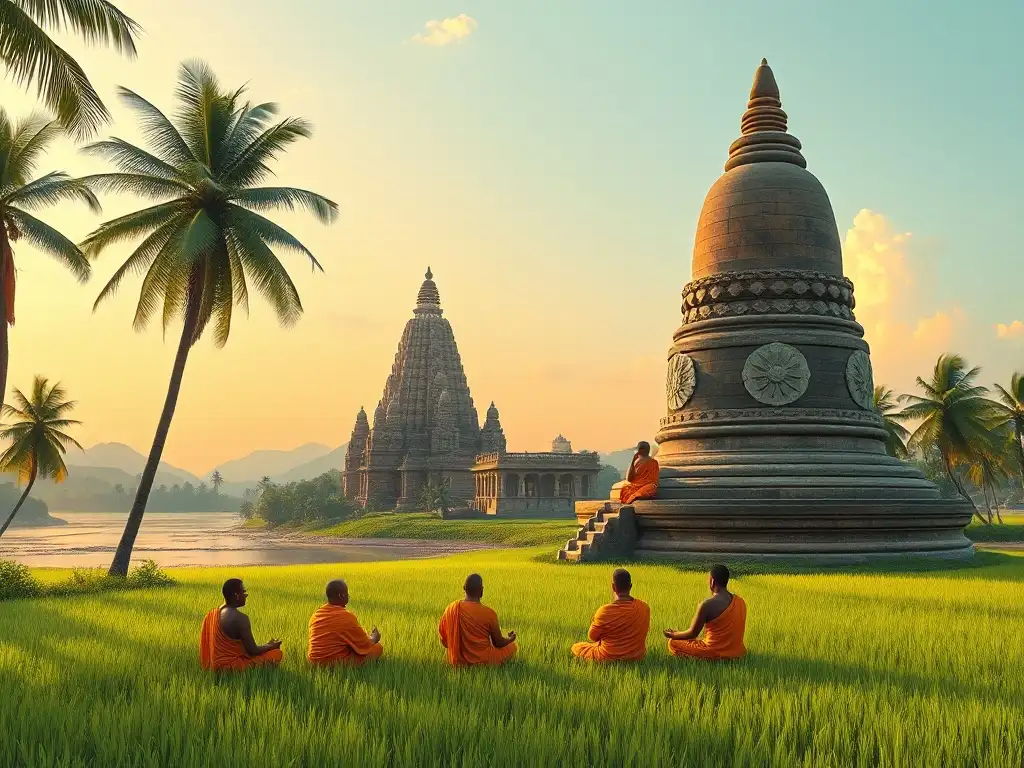
Introduction to Buddhism in Southern India
Buddhism, one of the world's major religions, has had a profound and lasting influence on Southern Indian societies. Emerging from the teachings of Siddhartha Gautama, known as the Buddha, this faith spread rapidly across the Indian subcontinent, profoundly impacting various aspects of life, culture, and governance.
In Southern India, Buddhism not only took root but also adapted to local traditions and customs, resulting in unique expressions of the religion that contributed to the region's rich tapestry of history. This analysis will delve into the multifaceted impact of Buddhism on Southern Indian societies, exploring its arrival, social structures, economic contributions, and political implications.
Overview of Buddhism's Arrival in Southern India
Buddhism's introduction to Southern India can be traced back to the 3rd century BCE, during the reign of Emperor Ashoka, who played a pivotal role in promoting the religion across his vast empire. Ashoka's edicts, inscribed on stone pillars, advocated for the principles of Dharma (moral law) and encouraged the spread of Buddhism. Notably, Southern India became a focal point for Buddhist missionaries, who brought with them teachings, texts, and monastic practices that would take root in the region.
- Key Events in Arrival:
- Emperor Ashoka's Support: His conversion and subsequent missionary activities.
- Establishment of Monasteries: Institutions like the Mahabodhi Temple influenced local practices.
- Trade Routes: Buddhist teachings traveled along trade routes connecting Southern India to other regions.
Key Historical Contexts Influencing Buddhism's Spread
The spread of Buddhism in Southern India was influenced by various historical contexts, including trade, political dynamics, and cultural exchanges. The region's strategic location along important trade routes facilitated not only the movement of goods but also the exchange of ideas and beliefs.
- Influential Factors:
- Trade Networks: The flourishing trade with Southeast Asia and beyond.
- Support from Local Rulers: Various kingdoms, such as the Chola and Pandya dynasties, embraced Buddhism.
- Cultural Syncretism: The blending of local traditions with Buddhist practices.
The Role of Buddhism in Shaping Southern Indian Societies

Buddhism's influence on Southern Indian societies extended beyond spirituality, deeply affecting social structures, economic development, and political landscapes. The religion's egalitarian principles challenged existing social hierarchies, while its monastic communities became centers of economic activity and political influence.
Social Structure and Buddhism's Influence
Buddhism introduced significant changes to the social fabric of Southern India. Its emphasis on equality and community living contributed to the gradual erosion of rigid caste distinctions, fostering a more inclusive society.
- Social Changes:
- Monastic Communities: Provided education and social services.
- Missionary Work: Engaged with marginalized populations.
- Cultural Integration: Local practices and festivals incorporated Buddhist elements.
Economic Contributions of Buddhism in Southern India
The economic impact of Buddhism in Southern India was notable, as monasteries became hubs of economic activity. They engaged in agriculture, trade, and crafts, significantly contributing to local economies.
- Economic Activities:
- Agricultural Development: Monasteries cultivated land and improved agricultural techniques.
- Trade: Centers of trade emerged around monasteries, promoting local goods.
- Craftsmanship: Monks and lay followers contributed to various artisanship, enhancing local economies.
Political Impacts: Buddhism and Southern Indian Kingdoms
Buddhism's rise also influenced the political landscape of Southern India. Various kingdoms recognized the religion's growing popularity and leveraged it for political gain, leading to the establishment of Buddhist patronage.
- Political Dynamics:
- Royal Patronage: Kings supported Buddhist institutions for legitimacy.
- Diplomatic Relations: Buddhist emissaries fostered ties with other regions.
- Cultural Exchange: Buddhism facilitated dialogue between diverse cultures and political entities.
Buddhism's influence on Southern India is a testament to how religions can shape societies in profound ways. From social reforms to economic growth and political alliances, the legacy of Buddhism resonates throughout Southern Indian history, reflecting a rich interplay between faith, culture, and governance.
Key Historical Figures and Events in Buddhism's Influence
Buddhism's influence on Southern India was shaped by various historical figures and pivotal events that played a significant role in its spread and integration into local societies. The presence of Buddhism in this region can be traced back to the reign of Emperor Ashoka in the 3rd century BCE, who is often credited with promoting the faith through his edicts and the establishment of monastic sites. Under his patronage, Southern India witnessed the initial seeds of Buddhist culture being sown, which later flourished through various dynasties and influential leaders.
The arrival of merchants and monks from other regions, including the Mauryan Empire, also facilitated the dissemination of Buddhist teachings and practices. This cross-cultural exchange led to the establishment of various Buddhist centers, which became pivotal in shaping the spiritual and cultural landscape of Southern India. Key historical events, such as the construction of stupas and monasteries, were instrumental in attracting followers and fostering a vibrant Buddhist community.
Prominent Buddhist Kings and Their Contributions
Several rulers in Southern India played a crucial role in promoting Buddhism through their patronage and support. Among them, the Mauryan Emperor Ashoka stands out as a transformative figure. His rock edicts, which promoted Buddhist values such as compassion and non-violence, were instrumental in spreading the faith across the region. Following him, the Satavahana dynasty (approximately 230 BCE - 220 CE) is noted for its support of Buddhist monastic institutions, which led to the establishment of important sites like Nagarjunakonda and Amaravati.
During the Kadamba dynasty (4th - 6th centuries CE), kings such as Mayurasharma and Banavasi furthered Buddhism by constructing stupas and supporting monks, contributing significantly to the religion's infrastructure. The Pallava dynasty, particularly under King Mahendravarman I, saw the construction of rock-cut temples that showcased Buddhist iconography and reflected the religious syncretism of the time. These rulers not only provided material support but also integrated Buddhist teachings into their governance, influencing societal norms and values.
Significant Buddhist Councils and Their Outcomes
Buddhist councils served as pivotal gatherings that shaped the trajectory of Buddhist thought and practice in Southern India. The Third Buddhist Council, convened during Emperor Ashoka's reign, aimed to consolidate the teachings of Buddhism and address issues such as sectarian disputes. While this council primarily took place in the north, its outcomes had far-reaching implications, leading to the dispatch of missionaries to various regions, including Southern India.
Later councils, such as the Fourth Council held in Kanishka's reign around the 1st century CE, emphasized the need for a unified Buddhist doctrine. While not directly located in Southern India, the discussions and decisions made during these councils influenced the monastic traditions that developed in the region, leading to a more structured approach to Buddhist teachings and practices. The establishment of the Theravada and Mahayana branches during these periods further diversified the Buddhist landscape, impacting local interpretations and practices in Southern Indian societies.
Major Monastic Centers in Southern India
Southern India became home to several important Buddhist monastic centers that played a vital role in the propagation of Buddhist teachings and practices. Noteworthy among these is Nagarjunakonda, located in present-day Andhra Pradesh, which served as a thriving center of Buddhist learning and culture during the 2nd century CE. This site housed numerous stupas, monasteries, and sculptures that reflected the artistic and spiritual achievements of the time.
Another significant center was Amaravati, known for its grand stupa adorned with intricate sculptures depicting various Jataka tales and Buddhist motifs. This site became a vital pilgrimage destination and a hub for Buddhist scholars. The Kanchipuram area, under the patronage of the Pallavas, also facilitated the growth of Buddhist monasticism, with rock-cut caves and temples that showcased the fusion of Buddhist and local artistic styles.
These monastic centers not only served as places of worship and meditation but also became important educational institutions where scholars and monks engaged in philosophical debates, scriptural studies, and the dissemination of Buddhist thought.
Cultural Transformations Due to Buddhism
Buddhism's introduction and subsequent integration into Southern Indian societies led to profound cultural transformations, influencing various aspects of daily life, art, and philosophy. The interaction between Buddhist teachings and local customs resulted in a unique synthesis that enriched the region's cultural heritage.
Artistic Contributions: Sculpture and Architecture
One of the most significant impacts of Buddhism on Southern Indian culture is evident in its art and architecture. The period of Buddhist patronage saw the emergence of distinctive styles in sculpture and architecture, characterized by intricate carvings and symbolic representations. The Amaravati Stupa, with its elaborate friezes depicting scenes from the Buddha's life, is a prime example of this artistic flowering.
The rock-cut architecture of the Mahendra caves in Kanchipuram and the Ajanta-like caves of Andhra Pradesh showcase the blend of local artistic traditions with Buddhist themes. These sites featured stupas, monastic cells, and intricate sculptures that not only served religious purposes but also reflected the aesthetic sensibilities of the time. Artistic representations of the Buddha, Bodhisattvas, and Jataka tales became prevalent, influencing subsequent artistic movements in the region.
Literature and Philosophy: The Buddhist Influence
Buddhism also significantly influenced literature and philosophical thought in Southern India. The Pali Canon, which contains the scriptures of Theravada Buddhism, and various Sanskrit texts contributed to the intellectual discourse of the time. Buddhist texts often engaged with local philosophical traditions, leading to dialogues that enriched both Buddhist and indigenous thought.
Scholars like Asvagosa, a prominent figure in Buddhist literature, played a pivotal role in articulating Buddhist ideas through poetry and philosophical treatises. His works, often infused with local cultural elements, helped bridge the gap between Buddhist teachings and the existing literary traditions of Southern India. The influence of Buddhist philosophy on local thinkers led to a broader contemplation of concepts such as ethics, morality, and the nature of existence, fostering a unique intellectual environment.
Festivals and Rituals: Buddhism's Integration into Local Cultures
Buddhism's arrival in Southern India also brought about the incorporation of its festivals and rituals into local cultures. Celebrations such as Buddha Purnima, which marks the birth, enlightenment, and death of the Buddha, became important communal events. Local adaptations of these festivals showcased the syncretism between Buddhist and regional customs.
Rituals such as offerings at stupas, chanting, and meditative practices were integrated into the local religious landscape, often influencing Hindu practices as well. The blending of Buddhist rituals with local traditions created a rich tapestry of cultural expressions, fostering communal harmony and a shared spiritual ethos among diverse populations. This integration is evident in the way local communities embraced Buddhist practices, leading to a vibrant cultural milieu that celebrated both Buddhist and indigenous traditions.
Decline of Buddhism in Southern India

The decline of Buddhism in Southern India is a significant historical phenomenon that occurred between the 7th and 10th centuries CE. Once a thriving religion with a substantial following, Buddhism faced numerous challenges that led to its gradual fade. The socio-political landscape, competition with other religions, and shifts in cultural practices played pivotal roles in this decline.
As Buddhism waned, many of its monasteries and stupas fell into disrepair, and the number of active practitioners dwindled. Despite its decline, the influence of Buddhism did not completely vanish; rather, it amalgamated into the broader cultural and religious practices of Southern India.
Factors Leading to the Decline of Buddhism
Several key factors contributed to the decline of Buddhism in Southern India:
- Political Changes: The rise of new dynasties, particularly the Cholas and the Pandyas, who were staunch proponents of Hinduism, led to the diminishing patronage of Buddhist institutions. These political shifts often resulted in the appropriation of Buddhist resources and the repurposing of monasteries for Hindu use.
- Economic Shifts: The economic support that Buddhism had relied upon began to decline as trade routes shifted and local economies evolved. This decrease in financial backing made it increasingly difficult for monasteries to maintain their activities and infrastructure.
- Religious Competition: The resurgence of Hinduism, particularly in its Bhakti form, which emphasized personal devotion and emotional connection to deities, attracted many followers away from Buddhism. This shift was further fueled by the establishment of temples and rituals that provided a sense of community and belonging.
- Cultural Assimilation: Over time, many Buddhist practices and philosophies were absorbed into Hindu traditions, leading to a syncretic culture where the distinctiveness of Buddhism became less pronounced. This cultural blending made it harder for Buddhism to maintain a separate identity.
The Rise of Hinduism and Its Impact on Buddhism
The rise of Hinduism during the medieval period had a profound impact on Buddhism in Southern India. As Hinduism evolved, it adopted various elements that were previously associated with Buddhism, creating a synthesis that diminished Buddhism's unique appeal. Key aspects of this transformation included:
- Integration of Similar Philosophies: Many Buddhist concepts, such as karma, dharma, and moksha, found their way into Hindu thought. This overlap blurred the lines between the two religions, making it easier for followers to transition from one to the other.
- Temple Architecture and Art: Hindu temples began to emerge in places that were once Buddhist centers. The architectural styles and artistic motifs often reflected Buddhist influences, showcasing a cultural continuity despite the decline of Buddhism.
- Changes in Ritual Practices: Hindu rituals became more elaborate and community-focused, which contrasted with the monastic and ascetic practices of Buddhism. This shift towards more accessible and communal forms of worship contributed to the appeal of Hinduism over Buddhism.
Lasting Legacy of Buddhism in Southern Indian Societies
Despite its decline, Buddhism left a lasting legacy on Southern Indian societies that can still be observed today. Its historical presence has influenced various aspects of culture, art, and philosophy in the region.
Contemporary Influence of Buddhism in Modern Southern India
In contemporary Southern India, the influence of Buddhism can be seen in several ways:
- Cultural Revivals: There has been a resurgence of interest in Buddhist teachings and practices, particularly among marginalized communities. This revival has led to the establishment of new Buddhist centers and organizations that promote the philosophy of Buddhism.
- Awareness and Education: Educational initiatives focused on the history and teachings of Buddhism have emerged, contributing to a greater understanding of its contributions to Indian culture and society. These efforts often highlight the importance of non-violence and compassion, principles that resonate with modern social movements.
- Interfaith Dialogues: The principles of Buddhism have influenced interfaith dialogues aimed at promoting peace and understanding among various religious communities in Southern India.
Preservation of Buddhist Heritage Sites and Practices
The preservation of Buddhist heritage sites is crucial for maintaining the cultural history of Southern India. Efforts to conserve these sites include:
- Archaeological Research: Ongoing excavations and studies at ancient Buddhist sites, such as the rock-cut caves at Ajanta and Ellora, are essential for uncovering the history and significance of Buddhism in the region.
- Tourism and Awareness: Heritage tourism initiatives help raise awareness of Buddhist sites, encouraging visitors to appreciate their historical and cultural significance. This influx of tourism can also provide funding for conservation efforts.
- Community Involvement: Local communities play a vital role in preserving Buddhist practices, often engaging in festivals and rituals that reflect their historical roots. These activities help keep the essence of Buddhism alive, even as the religion itself has diminished in prominence.
While Buddhism in Southern India has faced significant challenges leading to its decline, its legacy continues to shape the region's cultural landscape. Efforts to preserve its heritage and promote its teachings remain vital in contemporary society.
Conclusion
Buddhism has played a crucial role in shaping the socio-cultural landscape of Southern India, influencing various aspects of life from art and architecture to philosophy and governance. As it spread throughout the region, Buddhism facilitated cultural exchanges and interactions that enriched local traditions while introducing new ideas and practices. The historical journey of Buddhism in Southern India is marked by the establishment of monasteries, the patronage of rulers, and the integration of Buddhist thought into the societal fabric.
Summary of Buddhism's Influence on Southern Indian Societies
Buddhism’s influence on Southern Indian societies can be summarized through several key aspects:
- Cultural Exchange:
- The arrival of Buddhist missionaries fostered cultural interactions between different regions and communities. This led to the exchange of ideas, art forms, and practices, enriching the local culture.
- Art and Architecture:
- Southern India is home to numerous rock-cut caves and stupas that showcase the architectural brilliance of Buddhist influence. Sites like the Ajanta and Ellora caves illustrate the unique blend of indigenous art styles with Buddhist iconography.
- Philosophical Contributions:
- Buddhist teachings contributed to the philosophical discourse in Southern India. Concepts such as impermanence and compassion influenced local philosophical schools, leading to a more nuanced understanding of ethics and morality.
- Political Patronage:
- Several dynasties, including the Mauryas and later the Pallavas and Cholas, adopted Buddhism as a state religion, providing patronage for its propagation. This support was instrumental in establishing a robust network of monasteries and educational institutions.
- Social Practices:
- The egalitarian principles of Buddhism contributed to social reforms, challenging caste hierarchies and promoting a more inclusive approach to spirituality and community life.
Final Thoughts on the Historical Significance of Buddhism in Southern India
The historical significance of Buddhism in Southern India extends beyond its religious teachings. It served as a catalyst for social change, cultural enrichment, and philosophical development. The legacy of Buddhism continues to resonate in contemporary Southern Indian societies, where its influence remains evident in art, literature, and social practices.
As scholars continue to explore this rich tapestry of history, it becomes increasingly clear that Buddhism’s impact was not merely confined to religious circles; rather, it permeated various facets of life, contributing to the evolution of Southern Indian identity. Understanding this historical context enhances our appreciation for the complexities of ancient Indian civilizations and their enduring legacies.
- Introduction to Buddhism in Southern India
- Overview of Buddhism's Arrival in Southern India
- Key Historical Contexts Influencing Buddhism's Spread
- The Role of Buddhism in Shaping Southern Indian Societies
- Key Historical Figures and Events in Buddhism's Influence
- Cultural Transformations Due to Buddhism
- Decline of Buddhism in Southern India
- Lasting Legacy of Buddhism in Southern Indian Societies
- Conclusion
- What is the significance of Buddhism in Southern India?
- How did the Gupta Empire contribute to the spread of Buddhism in Southern India?
- What are some key artistic contributions of Buddhism to Southern Indian culture?
- How did Buddhism influence trade in Southern India?
- What legacy did Buddhism leave in Southern Indian societies?
Frequently Asked Questions
What is the significance of Buddhism in Southern India?
Buddhism played a crucial role in shaping the cultural and social dynamics of Southern India, influencing art, architecture, and philosophy from its introduction in the 3rd century BCE.
How did the Gupta Empire contribute to the spread of Buddhism in Southern India?
The Gupta Empire facilitated the patronage of Buddhism, leading to the construction of monasteries and educational institutions that attracted scholars and practitioners to Southern India.
What are some key artistic contributions of Buddhism to Southern Indian culture?
Buddhist art in Southern India is renowned for its intricate sculptures, cave temples, and stupas, which reflect the spiritual and aesthetic values of the time.
How did Buddhism influence trade in Southern India?
The establishment of Buddhist trade routes helped to enhance commerce in Southern India, connecting it with other regions and facilitating the exchange of goods, ideas, and cultural practices.
What legacy did Buddhism leave in Southern Indian societies?
Buddhism's legacy in Southern India includes philosophical thought, community organization, and the promotion of non-violence and tolerance, which continue to influence contemporary society.
Final Reflection: The Enduring Influence of Buddhism on Southern India
The impact of Buddhism on Southern Indian societies remains profoundly relevant today, as its teachings continue to shape cultural, spiritual, and social frameworks. The historical analysis presented in this article highlights how Buddhism not only influenced religious practices but also fostered a spirit of inquiry and compassion that resonates in contemporary society. As we navigate a world increasingly marked by division, the principles of Buddhism serve as a reminder of the potential for unity and understanding among diverse communities.
The legacy of Buddhism in Southern India is evident in the region's art, architecture, and social structures, reflecting a rich tapestry of cultural exchange and philosophical thought. The teachings of the Buddha have inspired countless individuals to seek inner peace and mindfulness, fostering a sense of community and shared values. Buddhism teaches that we are all interconnected, and through understanding this connection, we can cultivate compassion for all beings.
This ongoing influence encourages us to reflect on our own lives and the ways in which we can embody these teachings in our daily interactions.
As you contemplate the insights shared in this article, I invite you to consider how the principles of Buddhism can be woven into your own life. Reflect on the values of compassion, mindfulness, and interconnectedness that Buddhism promotes, and think about how you can contribute to a more harmonious society. By embracing these teachings, we can honor the rich history of Buddhism in Southern India and ensure its relevance for future generations, fostering a world where understanding and kindness prevail.
Unveil the Transformative Power of Buddhism Today!
Thank you for taking the time to explore the profound impact of Buddhism on Southern Indian societies. We hope this historical analysis has deepened your understanding of how spiritual beliefs can shape cultures and communities over time. Now, it’s time to take action and connect with this rich legacy.
Here are some steps you can take right now:
- Visit local Buddhist centers or temples to experience the teachings and practices firsthand.
- Read a book or watch a documentary that delves into Buddhist philosophy and explores its relevance in today's world.
- Share your thoughts or insights about Buddhism in the comments section below or on social media to ignite discussions among friends and family.
Are you ready to embark on a journey of discovery and connection with the teachings of Buddhism? What experiences or reflections do you have about its impact on contemporary culture?