
The Interactions of Western Indian Civilizations with Neighboring Regions

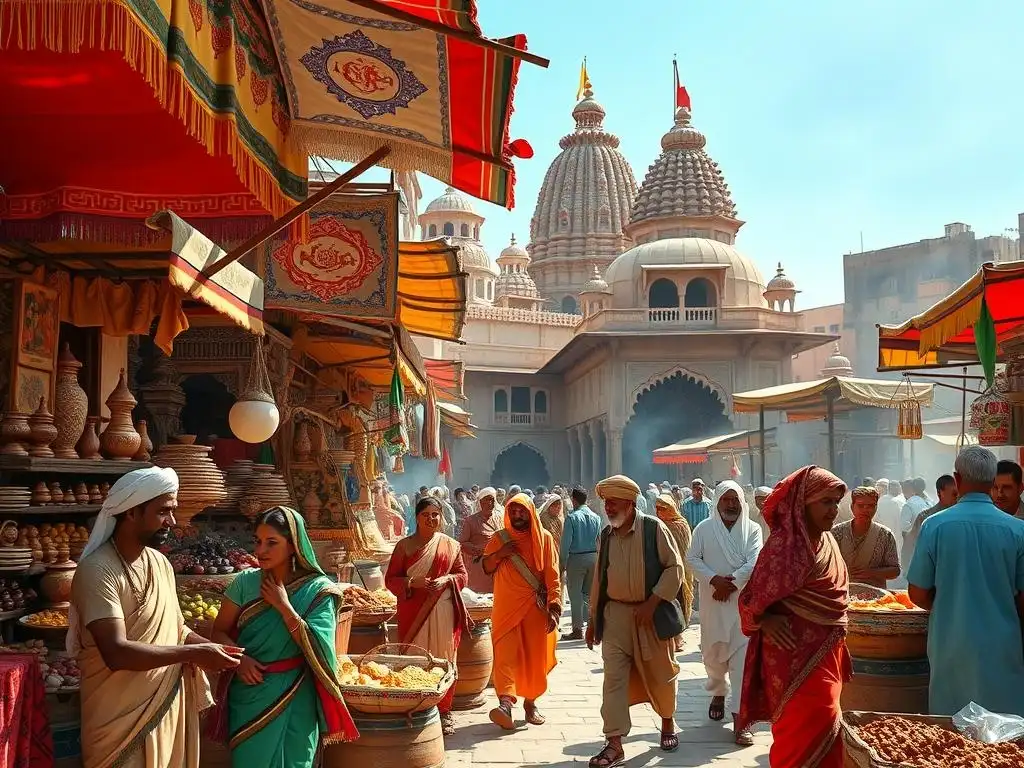
Welcome to Ancient India History, where we embark on an enthralling journey through the rich tapestry of ancient Indian civilizations. From the awe-inspiring Indus Valley to the illustrious Gupta Empire, our exploration reveals the profound cultural and historical contributions that have shaped not just India, but the world. In our featured article, "The Interactions of Western Indian Civilizations with Neighboring Regions," we delve into how these vibrant societies engaged with their surroundings, fostering connections that transcended borders.
Prepare to be captivated as we unravel the stories of collaboration, conflict, and cultural exchange that defined this remarkable era. Your adventure into the past begins here—let's uncover the legacies that continue to inspire us today!
- Introduction to Western Indian Civilization Interactions
- Historical Context of Western Indian Civilizations
- Trade Interactions of Western Indian Civilizations
- Cultural Interactions of Western Indian Civilizations
- Political Interactions of Western Indian Civilizations
- Religious Interactions of Western Indian Civilizations
- Conclusion on Western Indian Civilization Interactions
- References and Further Reading on Western Indian Civilization Interactions
-
Frequently Asked Questions
- What were the main Western Indian civilizations discussed in the article?
- How did Western Indian civilizations interact with neighboring regions?
- What contributions did Western Indian civilizations make to the world?
- How did geographical factors influence these interactions?
- Why is the study of Western Indian civilization interactions important today?
- Final Reflection: The Enduring Legacy of Western Indian Civilization Interactions
- Embrace the Past and Shape the Future!
Introduction to Western Indian Civilization Interactions
The history of Western Indian civilizations is a tapestry woven from diverse threads of culture, trade, and interactions with neighboring regions. From the bustling urban centers of the Indus Valley Civilization to the later flourishing empires of the Mauryas and Guptas, this region has played a crucial role in shaping the socio-political landscape of ancient India.
The interactions of Western Indian civilizations with neighboring territories, including trade, diplomacy, and cultural exchanges, were instrumental in fostering a rich cultural milieu that influenced not only India but also foreign lands. This article delves deeper into the intricate web of relationships that Western Indian civilizations maintained with their neighbors, showcasing how these interactions contributed to their development and legacy.
Overview of Western Indian Civilizations
Western India, encompassing present-day states like Gujarat, Maharashtra, Rajasthan, and parts of Madhya Pradesh, has been home to several prominent civilizations throughout history. Key civilizations in this region include:
- Indus Valley Civilization (circa 3300–1300 BCE): One of the earliest urban cultures, known for its advanced city planning, trade networks, and script.
- Maurya Empire (circa 322–185 BCE): A vast empire that unified much of the Indian subcontinent, promoting trade and cultural exchange.
- Gupta Empire (circa 320–550 CE): Often referred to as the Golden Age of India, it was marked by significant achievements in arts, science, and political stability.
These civilizations were not isolated; rather, they thrived through extensive interactions with neighboring regions, including Central Asia, the Middle East, and Southeast Asia. Trade routes such as the Silk Road and maritime paths along the Arabian Sea facilitated the exchange of goods, ideas, and cultures, leading to a dynamic and evolving society.
Importance of Interactions with Neighboring Regions
The interactions of Western Indian civilizations with neighboring regions were vital for several reasons:
- Economic Growth: Trade with regions such as Persia, Arabia, and beyond provided access to valuable resources, including spices, textiles, and precious metals. This economic interdependence fostered prosperity and urban development.
- Cultural Exchange: The flow of ideas and cultural practices enriched the local traditions. For example, the introduction of foreign art styles, religious beliefs, and technological innovations contributed to the diversity of Western Indian culture.
- Political Alliances: Diplomatic relationships with neighboring states often resulted in strategic alliances that enhanced security and stability. These alliances could also lead to military collaborations against common foes.
- Social Integration: Interactions with various ethnic groups and cultures led to a more cosmopolitan society. The blend of different customs and practices resulted in a unique social fabric that defined the identity of Western Indian civilizations.
The interactions of Western Indian civilizations with neighboring regions were not only essential for their survival and growth but also played a significant role in shaping the historical narrative of ancient India. Understanding these interactions provides crucial insights into the complexities of ancient Indian society and its enduring legacy.
Historical Context of Western Indian Civilizations
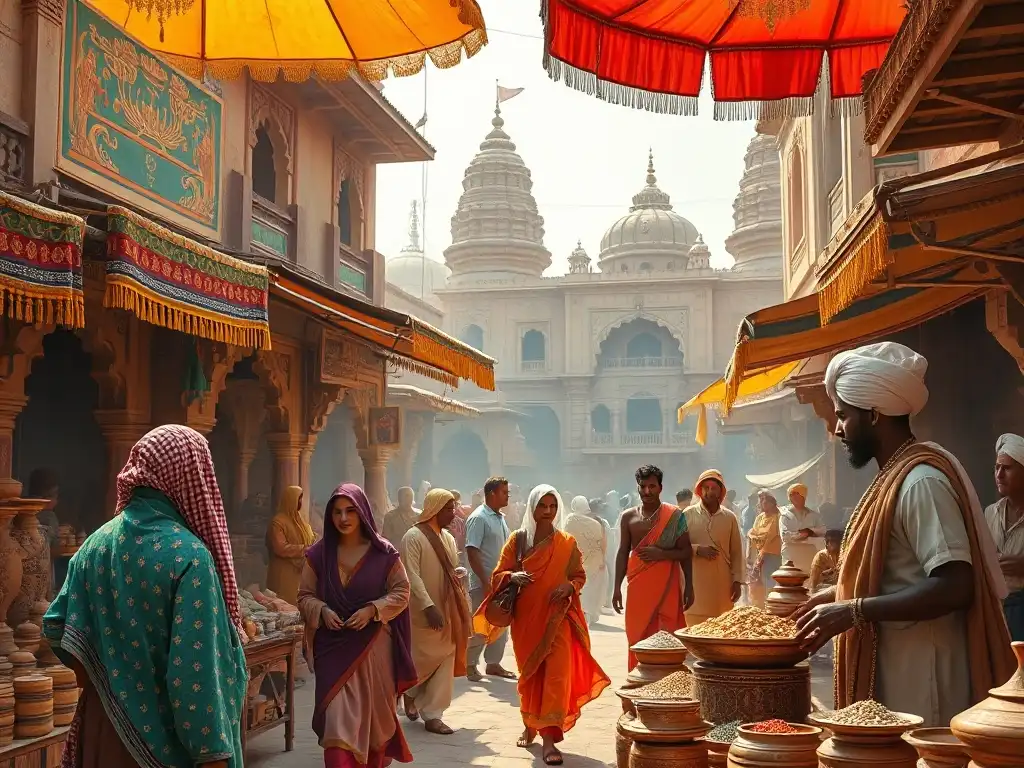
Major Civilizations in Western India
Western India has been a cradle for several prominent civilizations that have significantly influenced the region's history and culture. Among these, the Indus Valley Civilization, the Maurya Empire, and the Gupta Empire stand out as key players in shaping the socio-political landscape of ancient India.
The Indus Valley Civilization
The Indus Valley Civilization (IVC), flourishing around 3300 to 1300 BCE, is one of the world's earliest urban cultures. Located primarily in present-day Pakistan and northwest India, the IVC was characterized by advanced urban planning, architecture, and social organization. Cities like Harappa and Mohenjo-Daro featured:
- Grid-patterned streets: Demonstrating sophisticated urban design.
- Drainage systems: Indicating advanced engineering skills.
- Standardized weights and measures: Suggesting a complex trade system.
The interactions of the IVC with neighboring regions, including Mesopotamia and Persia, were marked by trade and cultural exchange. Archaeological findings reveal seals and artifacts that imply a network of trade routes, facilitating the exchange of goods such as textiles, beads, and pottery. This interaction not only enriched the local economy but also led to the assimilation of foreign cultural elements.
The Maurya Empire
The Maurya Empire (c. 322 to 185 BCE) emerged as a significant power in ancient India, particularly under the reign of Emperor Ashoka. Its vast territory included much of the Indian subcontinent, including western regions. The empire's interactions with neighboring territories were multifaceted:
- Military Conquests: The Mauryan military campaigns extended their influence into regions such as present-day Afghanistan and parts of Persia.
- Cultural Exchange: The spread of Buddhism, particularly during Ashoka's rule, facilitated cultural and philosophical exchanges with various regions. Ashoka's edicts, inscribed on pillars and rocks, promote moral values and governance principles that resonated across cultures.
- Trade Networks: The Maurya Empire played a pivotal role in establishing trade routes connecting western India with Central Asia, facilitating the movement of goods, ideas, and cultures.
The Gupta Empire
The Gupta Empire (c. 240 to 550 CE) is often regarded as a golden age in Indian history, particularly in the fields of art, science, and literature. Its influence extended into western India, where several key developments occurred:
- Cultural Flourishing: The Gupta period witnessed the rise of classical Indian art and literature, with notable figures like Kalidasa contributing to Sanskrit literature.
- Scientific Advancements: Scholars such as Aryabhata made significant contributions to mathematics and astronomy, which were disseminated throughout the region and beyond.
- Interregional Interactions: The Gupta Empire maintained trade relations with the Roman Empire and Southeast Asia, enhancing the cultural and economic exchanges across regions. The Silk Road, in particular, became a conduit for the movement of goods and ideas.
Geographical Significance of Western India
Western India, encompassing regions such as Gujarat, Maharashtra, and Rajasthan, holds considerable geographical significance that has influenced its historical interactions.
- Strategic Location: Situated along vital trade routes connecting the Indian subcontinent with the Middle East and beyond, western India served as a gateway for commerce and cultural exchange. The Arabian Sea facilitated maritime trade, enabling the movement of goods such as spices and textiles.
- Diverse Landscapes: The varied geography, from coastal plains to arid deserts, supported different agricultural practices and resource availability. This diversity allowed for the development of distinct regional cultures and economic practices.
- Cross-cultural Interactions: The geographic positioning of western India fostered interactions with various civilizations, including the Persian Empire and the Hellenistic world. These exchanges contributed to the richness of the region’s cultural tapestry, influencing everything from art to religious practices.
The historical context of Western Indian civilizations reveals a complex interplay of cultural, economic, and political interactions that have shaped the region's identity and legacy. The major civilizations that emerged in this area laid the groundwork for future developments and set the stage for continued interactions with neighboring regions.
Trade Interactions of Western Indian Civilizations
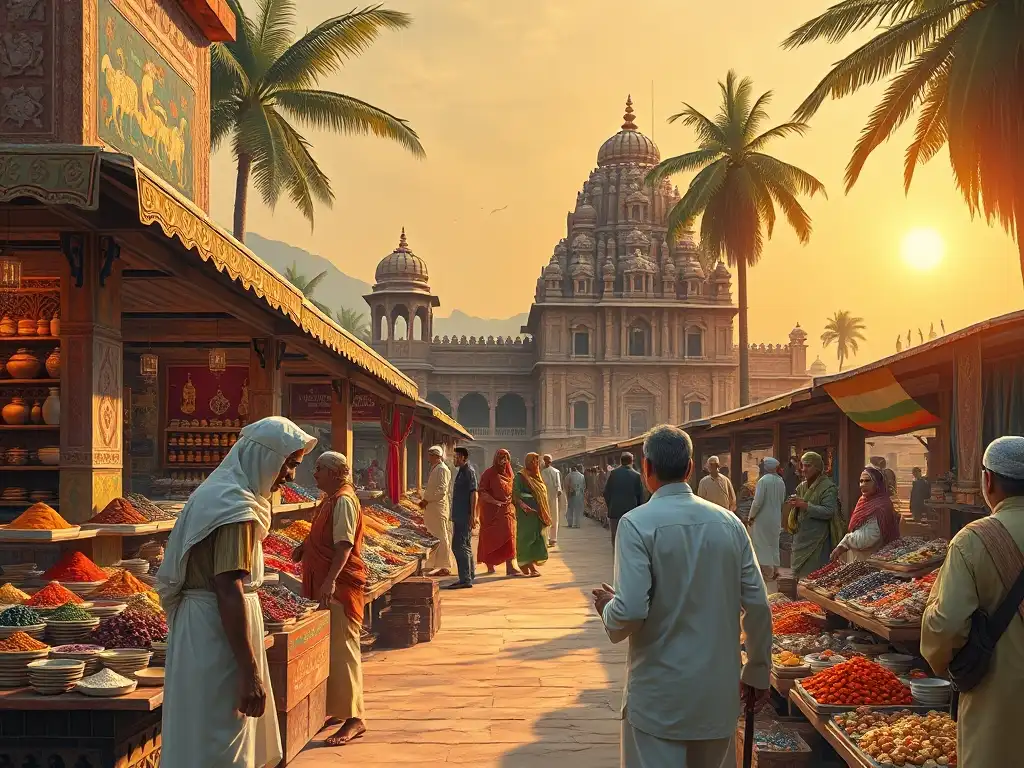
Trade Routes Connecting Western India
Western Indian civilizations, particularly during the ancient periods, thrived on extensive trade networks that connected them with neighboring regions. The most notable trade routes included both land and maritime pathways, facilitating the exchange of goods, ideas, and culture.
One of the primary overland routes was the Silk Road, which, while primarily associated with Central Asia, had branches that extended into western India. This route enabled merchants to transport silk, spices, and other valuable commodities to and from the western Indian ports.
Maritime trade routes were equally significant, particularly through the Arabian Sea. The ports of Surat, Diu, and Khambhat emerged as bustling trade hubs. These ports connected Western India to the Middle East, Southeast Asia, and even as far as East Africa. The monsoon winds played a crucial role in navigation, allowing traders to sail with ease during specific seasons, further enhancing trade efficiency.
Commodities Exchanged with Neighboring Regions
The interactions of Western Indian civilizations were marked by a vibrant exchange of various commodities with neighboring regions. This exchange not only included local products but also items that were highly sought after in distant lands.
Spices and Textiles
Spices and textiles were among the most significant commodities traded by Western Indian civilizations. The region was renowned for its high-quality spices such as black pepper, cardamom, and cinnamon, which were in great demand in markets across Asia and Europe. These spices were not only valued for their culinary uses but also for their medicinal properties.
Textiles, particularly cotton and silk fabrics, were another major export. The art of weaving in Western India produced exquisite fabrics adorned with intricate designs. Gujarat was particularly famous for its fine cotton textiles, which were sought after both domestically and internationally. The trade in textiles facilitated cultural exchanges and influenced fashion trends in various neighboring regions.
Precious Metals and Gems
Western India was also a hub for the exchange of precious metals and gems. The region was rich in resources like gold, silver, and precious stones such as diamonds, rubies, and emeralds. These commodities were not only traded locally but also exported to distant lands, contributing to the wealth of Western Indian civilizations.
The quest for precious metals and gems spurred interactions with regions such as Persia and the Roman Empire. Artisans in Western India crafted intricate jewelry, which was highly sought after and often used as a medium of exchange in trade. This exchange of wealth through precious commodities helped to establish Western India as a significant player in the ancient global economy.
The trade interactions of Western Indian civilizations with neighboring regions were multifaceted and influential, shaping the economic landscape of the time and contributing to the cultural richness of the area. The legacy of these interactions continues to be a subject of interest for historians and scholars exploring the dynamics of ancient trade networks.
Impact of Trade on Western Indian Civilization Development
The trade interactions of Western Indian civilizations significantly influenced their development, shaping not only economic prosperity but also cultural exchanges and technological advancements. The region's strategic geographical position, particularly along the Arabian Sea, facilitated trade routes that connected it to various parts of the world, including Africa, the Middle East, and Southeast Asia.
Economic Prosperity and Urbanization
Trade brought considerable wealth to Western Indian civilizations, leading to the emergence of prosperous cities like Surat, Broach, and Bharuch. These urban centers became bustling hubs of commerce, attracting merchants and artisans from across the globe. The influx of wealth contributed to urbanization, with improved infrastructure, including roads and ports, facilitating smoother trade operations. As a result, the economy diversified, with growth in industries such as textiles, spices, and precious metals, which were highly sought after in international markets.
Cultural Exchanges and Syncretism
The interactions through trade were not limited to economic benefits; they also fostered cultural exchanges. Merchants and travelers brought with them new ideas, religions, and customs, which contributed to a rich tapestry of cultural syncretism. For instance, the trade routes facilitated the introduction of Buddhism and Jainism from the eastern regions, while the influence of Persian and Arab cultures became apparent in art, architecture, and language. This blending of cultures enhanced the social fabric of Western Indian societies, promoting tolerance and a sense of shared identity among diverse communities.
Technological Advancements
Trade also acted as a catalyst for technological advancements in Western Indian civilizations. The need for efficient transportation and storage of goods led to innovations in shipbuilding and navigation techniques. The skilled craftsmen of the region developed advanced maritime technologies that not only improved commercial activities but also enhanced naval capabilities. Furthermore, the exchange of knowledge with foreign traders introduced new agricultural practices and tools, increasing productivity and contributing to the overall prosperity of the region.
Diplomatic Relations and Political Dynamics
The prominence of trade in Western Indian civilizations also influenced diplomatic relations with neighboring regions. Trade agreements often served as a basis for political alliances, allowing Western Indian states to negotiate favorable terms with foreign powers. These interactions played a crucial role in the establishment of trade routes, securing safe passage for merchants, and fostering stability in the region. The resultant political dynamics often led to the rise of influential kingdoms that leveraged their economic strength to expand their territorial reach.
The impact of trade on the development of Western Indian civilizations was profound, encompassing economic prosperity, cultural exchanges, technological progress, and political diplomacy. These interactions not only enriched the local societies but also positioned Western India as a significant player in the broader narrative of ancient global trade networks.
Cultural Interactions of Western Indian Civilizations
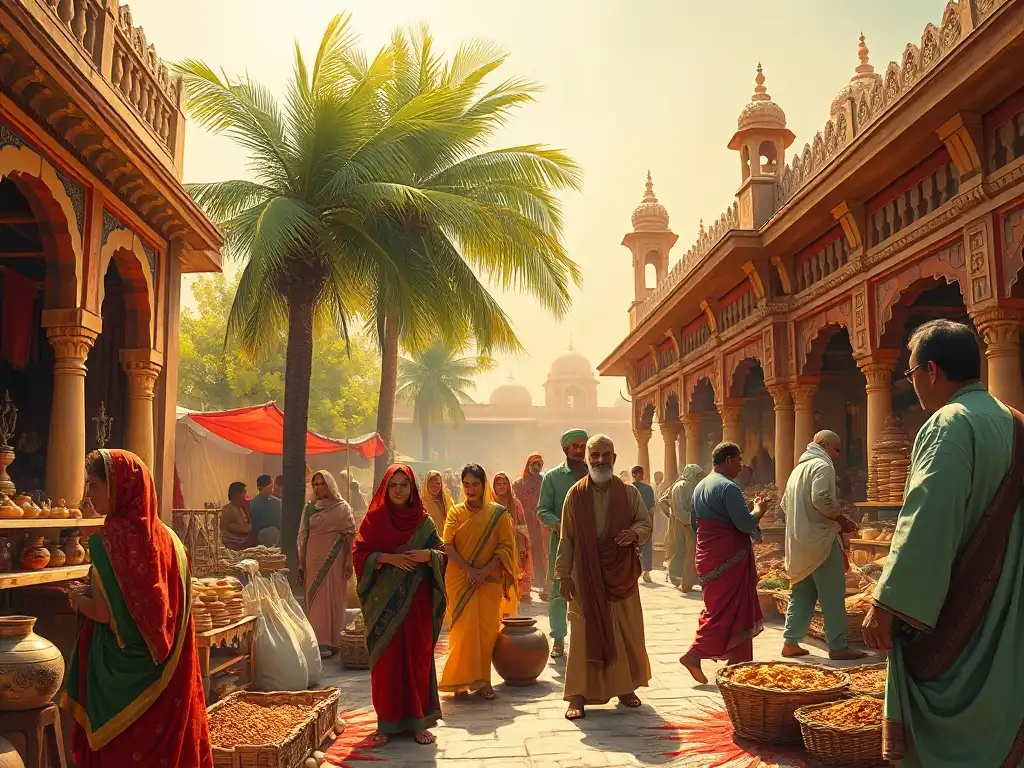
Influence of Neighboring Cultures on Western India
The interactions of Western Indian civilizations with neighboring regions significantly shaped the cultural landscape of the area. This influence can be traced through various aspects, including trade, religion, and governance. Western India, particularly through regions like Gujarat and Maharashtra, acted as a vibrant crossroads where diverse cultures converged, leading to a rich tapestry of social and cultural exchanges.
Persian Influence
The Persian Empire, at its height, established extensive trade routes that extended into the Indian subcontinent. This interaction resulted in the transmission of ideas, art, and architectural styles. Persian administrators, merchants, and artisans brought their customs, which influenced local practices in several ways:
- Trade Relations: Persian traders introduced Western Indian merchants to new goods and trade practices, fostering economic growth. The exchange of spices, textiles, and precious metals became commonplace, enhancing the wealth of Western Indian cities.
- Cultural Exchange: The fusion of Persian and Indian artistic styles is evident in the decorative arts, particularly in textiles and pottery. Persian motifs and techniques were adopted in local craftsmanship, leading to unique hybrid forms.
- Political Structures: The influence of Persian governance can be seen in the administrative practices of Western Indian states. Concepts of centralized governance and bureaucratic systems were borrowed, which helped to streamline local administration.
Hellenistic Influence
The arrival of Hellenistic culture in Western India can be traced back to the campaigns of Alexander the Great. Although his conquests were relatively short-lived in the region, the cultural impact of Hellenism had lasting effects:
- Cultural Syncretism: The blending of Hellenistic and Indian cultures is particularly prominent in art and philosophy. The Greco-Buddhist art movement, especially in regions like Gandhara, showcases this fusion, with Greek artistic elements infused into Buddhist iconography.
- Trade Routes: The establishment of trade connections between the Hellenistic world and Western India facilitated the exchange of ideas and commodities, including the spread of scientific knowledge, mathematics, and philosophy.
- Urban Development: The influence of Hellenistic urban planning can be seen in the layout of cities. Features such as wide avenues and public spaces were incorporated into the design of Western Indian cities, enhancing their functionality and aesthetics.
Artistic and Architectural Exchange
The artistic and architectural landscape of Western India was profoundly affected by its interactions with neighboring cultures. The synthesis of various influences resulted in a distinctive style that is celebrated for its diversity and innovation.
Temples and Sculpture
One of the most striking manifestations of cultural interaction in Western India is found in its temples and sculpture:
- Architectural Styles: The design of temples often incorporated elements from Persian and Hellenistic architecture, resulting in unique structures that blended local traditions with foreign influences. For instance, the intricate carvings and grandeur of temples like the Sun Temple at Modhera reflect these exchanges.
- Sculptural Techniques: The techniques used in sculpture evolved through interactions with other cultures. The introduction of new tools and methods from neighboring regions led to more refined and elaborate sculptures, particularly in Buddhist and Jain art.
- Iconography: The iconography within temples often reflects a mixture of local and foreign deities, illustrating the syncretic nature of religious practices in Western India. This blend is evident in the sculptures that depict both Indian gods and figures inspired by foreign mythology.
Urban Planning and Infrastructure
The urban development of Western Indian civilizations was greatly influenced by interactions with neighboring cultures, leading to significant advancements in infrastructure and city planning:
- Road Systems: The establishment of well-planned road networks facilitated trade and communication, drawing inspiration from Persian and Hellenistic models. These routes connected Western India with distant lands, promoting economic exchange.
- Water Management: Innovative techniques for water management, including wells, stepwells, and reservoirs, were adopted from neighboring cultures. This expertise contributed to the sophistication of urban centers in Western India, exemplified by the stepwells of Gujarat.
- Public Spaces: The concept of public spaces, including markets and assembly areas, was influenced by Hellenistic urban planning. These spaces became central to community life, fostering social interactions and commerce.
The interactions of Western Indian civilizations with neighboring regions were pivotal in shaping their cultural, artistic, and architectural identities. The influences from Persian and Hellenistic cultures, coupled with local traditions, created a vibrant and dynamic society that continues to be studied and admired today.
Political Interactions of Western Indian Civilizations
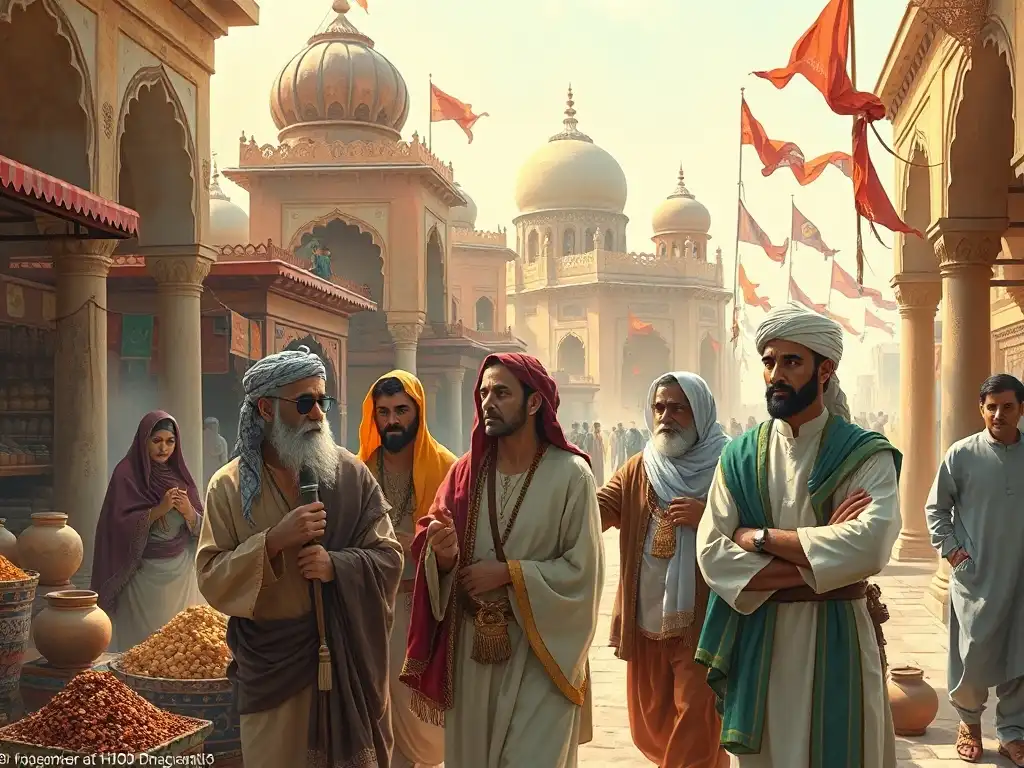
Alliances and Conflicts with Neighboring Regions
The political landscape of Western Indian civilizations was characterized by a series of alliances and conflicts with neighboring regions, significantly shaping the dynamics of power in ancient India. These interactions were crucial for trade, territorial expansion, and cultural exchanges.
The Role of the Satavahanas
The Satavahana dynasty, which flourished from around 230 BCE to 250 CE, played a pivotal role in establishing political interactions in Western India. They emerged as a powerful dynasty in the Deccan region, effectively governing areas that included parts of modern Maharashtra, Madhya Pradesh, and Andhra Pradesh.
- Trade Relations: The Satavahanas established extensive trade networks with the western coastal regions, facilitating commerce with foreign traders. The ports of Bharukaccha (modern-day Bharuch) became significant trade hubs, connecting Western India with the Roman Empire and the Arabian Peninsula.
- Military Campaigns: They engaged in military campaigns against neighboring kingdoms, such as the Shakas and the Kushans, which not only expanded their territory but also established dominance in the region. The Satavahana rulers, like Gautamiputra Satakarni, are noted for their military prowess against the Shaka invaders, highlighting the importance of conflict in their political strategy.
The Gupta Empire's Expansion
The Gupta Empire (circa 320 to 550 CE) marked another significant chapter in the political interactions of Western Indian civilizations. Under the leadership of rulers like Chandragupta I and Samudragupta, the Gupta Empire expanded its influence across vast regions of India, including Western India.
- Conquests and Annexations: The Guptas effectively utilized military conquests to annex neighboring territories, including parts of present-day Gujarat and Rajasthan. This expansion not only solidified their power but also facilitated cultural and economic exchanges with the regions they conquered.
- Cultural Integration: The Gupta rulers promoted a culture of learning and patronage, leading to a flourishing of arts and sciences. This cultural integration with Western Indian civilizations was significant, as it fostered a sense of unity despite diverse local traditions.
Diplomatic Relations with Foreign Powers
Western Indian civilizations also engaged in diplomatic relations with foreign powers, which were essential for maintaining trade and political relationships.
Relations with the Persian Empire
The interactions between Western Indian civilizations and the Persian Empire were marked by both trade and conflict. The Achaemenid Empire (circa 550-330 BCE) extended its influence into the Indian subcontinent, with significant implications for Western India.
- Trade Routes: Persian control over trade routes enhanced the flow of goods such as textiles, spices, and precious stones between India and Persia. This trade fostered economic prosperity in Western Indian regions, particularly in coastal ports.
- Cultural Exchanges: The interactions also led to cultural exchanges, seen in the adoption of Persian administrative techniques and art forms. The influence of Persian architecture can be observed in some Western Indian structures of the time.
Interactions with the Roman Empire
The Western Indian civilizations had vibrant interactions with the Roman Empire, which significantly impacted trade and cultural exchanges.
- Trade Networks: The trade routes established during this period were crucial for the exchange of goods such as silk, spices, and gems. Indian merchants traded extensively with Romans, leading to a mutual economic dependency that lasted for centuries.
- Cultural Influence: The influence of Roman art and culture on Western Indian civilizations is notable, as seen in the adoption of certain motifs and styles in local art. Additionally, the presence of Roman coins in archaeological sites in Western India indicates the depth of these interactions.
The political interactions of Western Indian civilizations with neighboring regions were complex and multifaceted, encompassing alliances, conflicts, and diplomatic relations that significantly influenced the historical trajectory of the region. Understanding these dynamics provides valuable insights into the rich tapestry of ancient Indian history.
Religious Interactions of Western Indian Civilizations
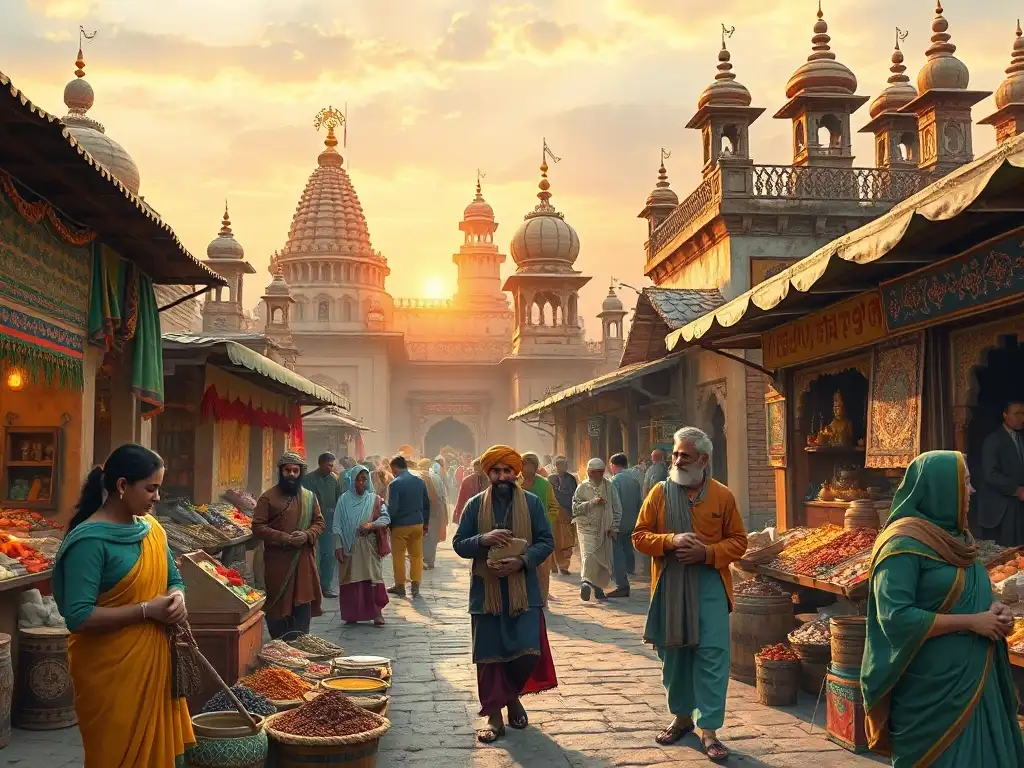
Spread of Religions in Western India
Western Indian civilizations experienced a rich tapestry of religious interactions, significantly shaping the region's cultural landscape. The spread of religions such as Buddhism, Jainism, and Hinduism in this area can be traced back to various socio-political dynamics and trade routes that facilitated the exchange of ideas and beliefs.
Buddhism and Jainism
Buddhism and Jainism emerged as prominent religions during the 6th century BCE. Both of these faiths shared similar ethical precepts, emphasizing non-violence ( ahimsa) and asceticism, which resonated deeply with the people of Western India.
- Buddhist Influence: The Mauryan Empire, particularly under Emperor Ashoka, played a pivotal role in the propagation of Buddhism. Ashoka's edicts, which were inscribed on rocks and pillars throughout the region, promoted Buddhist values and attracted followers. The Ajanta and Ellora Caves, adorned with intricate frescoes and sculptures, stand as testimonies to this period, showcasing the artistic and spiritual zenith of Buddhist culture.
- Jainism's Growth: Jainism too found a fertile ground in Western India, with notable figures such as Mahavira, the 24th Tirthankara, advocating for a life of strict asceticism and spiritual purity. The Gujarat region became a center for Jain communities, where they established temples and contributed to local economies through trade and craftsmanship.
Hinduism's Evolution
Hinduism in Western India has evolved through a confluence of indigenous beliefs and practices, as well as influences from various cultures over centuries.
- Regional Variants: The region witnessed the emergence of distinct sects and traditions, including Shaivism and Vaishnavism, which adapted local customs and deities into their practices. This adaptability allowed Hinduism to thrive in diverse environments, integrating elements from neighboring cultures while maintaining its core philosophies.
- Temple Architecture: The architectural grandeur of temples, such as the Sun Temple in Konark and the Brihadeeswarar Temple in Thanjavur, reflects the richness of Hindu cultural expressions in Western India. These temples not only served as places of worship but also as centers of learning and community gatherings.
Syncretism and Religious Exchange
The interactions between Western Indian civilizations and neighboring regions led to a remarkable syncretism, where diverse religious ideas blended and coexisted, enriching the spiritual fabric of the area.
Influence of Zoroastrianism
The arrival of Zoroastrian communities, particularly after the fall of the Sassanian Empire, introduced new religious elements to Western India.
- Parsis: The Parsis, descendants of Persian Zoroastrians who fled to India to escape religious persecution, significantly influenced the region’s culture. Their practices and beliefs, particularly concerning fire worship and the concepts of purity and pollution, were integrated into the local ethos.
- Cultural Exchange: Zoroastrianism’s dualistic nature and emphasis on ethical living resonated with some Hindu philosophies, leading to a cross-pollination of ideas. This interaction is evident in the shared reverence for elements such as fire and water, which are central to both faiths.
Interaction with Greek Philosophical Thought
The contact between Western Indian civilizations and Greek culture, particularly during and after Alexander the Great's invasion in the 4th century BCE, introduced significant philosophical exchanges.
- Hellenistic Influence: Greek thinkers and scholars brought with them various philosophical traditions, including Stoicism and Epicureanism. These ideas found their way into Indian thought, influencing local philosophers and contributing to the intellectual climate of the time.
- Cultural Syncretism: The fusion of Hellenistic and Indian thought is visible in the sculptures and art forms that emerged during this period, such as the Gandhara art, which exhibits a blend of Greek and Indian artistic styles. The dialogue between philosophers from both cultures fostered a spirit of inquiry and reflection that enriched the philosophical landscape of Western India.
Through these profound religious interactions, Western Indian civilizations not only preserved their unique identities but also embraced and integrated diverse influences, leading to a vibrant cultural and spiritual heritage.
Conclusion on Western Indian Civilization Interactions
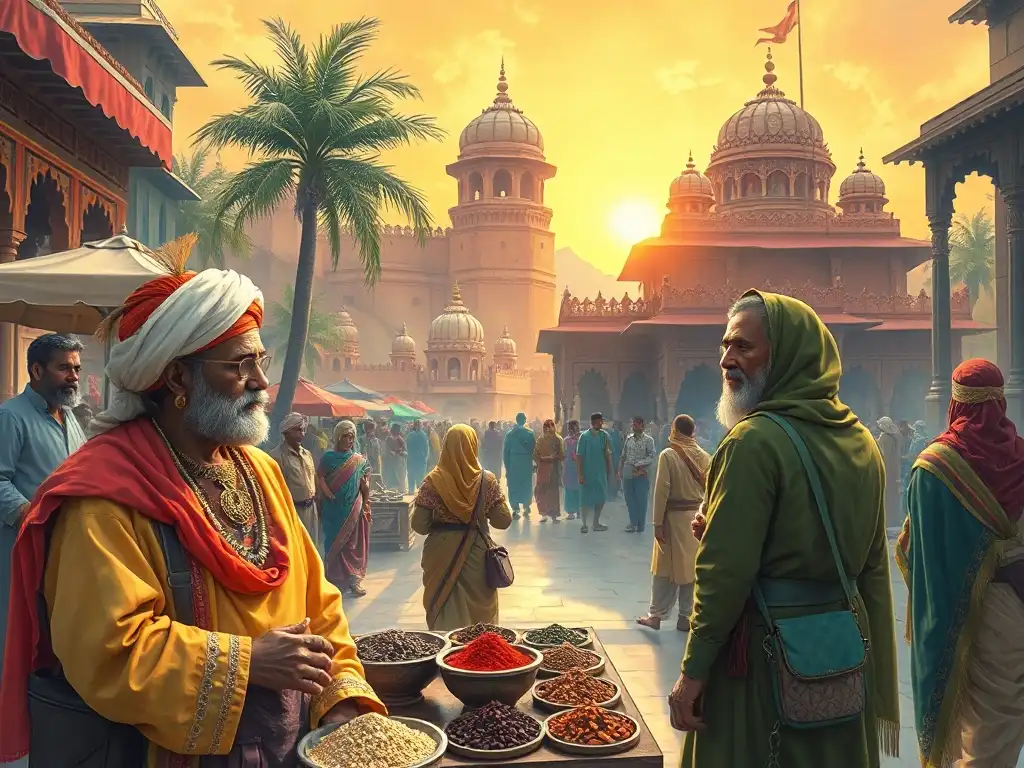
The history of Western Indian civilization interactions is a testament to the intricate networks that shaped not only the region itself but also influenced neighboring cultures and societies. The interactions, whether through trade, cultural exchange, or military engagements, played a pivotal role in establishing Western India as a significant player on the subcontinental stage. Through these engagements, Western Indian civilizations contributed to a rich tapestry of shared knowledge, art, and societal structures that resonate to this day.
Summary of Key Interactions
- Trade Routes and Economic Exchange
- The Western Indian coast, particularly regions like Gujarat and Konkan, served as crucial nodes for maritime trade.
- Goods such as spices, textiles, and precious stones were exchanged with traders from Persia, Arabia, and later, the Roman Empire.
- The emergence of ports like Diu and Surat facilitated not just economic prosperity but also cultural interactions where ideas and innovations were shared.
- Cultural and Religious Influence
- The influx of diverse populations, including traders and travelers, led to a rich cultural blending.
- The spread of Buddhism and Jainism from Western India to the rest of the subcontinent is a prime example of how religious ideas traversed borders.
- Architectural styles, as seen in rock-cut caves like those at Ajanta and Ellora, reflect interactions with nearby regions, integrating various artistic influences.
- Political Alliances and Conflicts
- The establishment of dynasties such as the Maurya and Gupta Empires saw Western India forging alliances with other regional powers, leading to military and political collaborations.
- However, conflicts also arose; for instance, the invasions by the Scythians and later, the Islamic conquests, were pivotal in shaping the geopolitical landscape of the region.
- Agricultural Practices and Innovations
- The introduction of new agricultural techniques and crops through interactions with neighboring civilizations enhanced food security in Western India.
- The sharing of irrigation techniques, particularly from regions like Mesopotamia, contributed to the agricultural development of Western Indian states.
The Legacy of Interactions in Modern Context
The legacy of Western Indian civilization interactions can be seen in contemporary India, where the influences of these ancient exchanges still resonate.
- Cultural Diversity: The rich tapestry of languages, festivals, and culinary traditions in Western India, such as the vibrant celebrations of Ganesh Chaturthi and Navratri, are a direct reflection of this historical interaction with various cultures.
- Economic Collaborations: Modern trade practices and economic policies in Western India continue to draw from the region's historical role as a trade hub, fostering relationships with global markets.
- Architectural Heritage: The architectural marvels of Western India, including the intricate designs of temples and forts, stand as a testament to the artistic influences absorbed through centuries of interaction.
- Social Dynamics: The intermingling of communities over centuries has resulted in a rich social fabric, promoting pluralism and tolerance that are essential features of India's identity today.
The interactions of Western Indian civilizations with neighboring regions have left an indelible mark on the historical and cultural landscape of India, shaping its present and future. Understanding these interactions provides valuable insights into the complexities of regional histories and their ongoing relevance in today's world.
References and Further Reading on Western Indian Civilization Interactions
Suggested Books and Articles
-
"The Ancient Indus Valley: Exploring the Earliest Cities" by Jane McIntosh
This book offers a comprehensive look at the Indus Valley Civilization, detailing its urban planning, trade networks, and interactions with neighboring cultures. It emphasizes how these interactions shaped both local and regional developments.
-
"Western India in the Ancient Period" by M. A. Dhaky
Dhaky's work dives into the political and cultural dynamics of Western Indian civilizations, highlighting their interactions with other regions. The book discusses the significance of trade routes and cultural exchanges during various periods.
-
"Trade and Traders in Early Indian History" by R. S. Sharma
This is an essential read for understanding the economic interactions of Western Indian civilizations with neighboring regions. Sharma explores the role of trade in fostering relationships and cultural exchanges between ancient societies.
-
"The Gupta Empire: A Historical Overview" by Ram Sharan Sharma
In this book, Sharma provides insights into the Gupta Empire, focusing on its interactions with other regions. The text discusses how the Gupta's cultural and administrative practices influenced neighboring civilizations.
-
"Cultural Interactions in the Western Indian Ocean: An Archaeological Perspective" edited by A. K. Narayan
This collection of essays examines the archaeological evidence of cultural interactions within the Western Indian Ocean, including Western India. It provides a multidisciplinary approach to understanding these complex exchanges.
Online Resources and Archives
-
Digital South Asia Library
A vast repository of resources related to South Asian history, including documents, maps, and scholarly articles focused on Western Indian civilization interactions.
-
The Indian History Congress
This organization publishes a wealth of research papers and articles on various aspects of Indian history. Their archives include studies specifically addressing the interactions of Western Indian civilizations.
-
Asia Society: India’s Ancient Trade Routes
This online resource provides an overview of ancient trade routes that connected Western India with other regions. It includes interactive maps and scholarly articles discussing the impact of these routes on cultural exchanges.
-
National Archives of India
The National Archives offer digitized documents and manuscripts that shed light on the historical interactions of Western Indian civilizations with neighboring regions. Researchers can access primary sources that are crucial for in-depth studies.
-
Internet Archive: Ancient Indian Texts
A collection of digitized ancient Indian texts that can provide insights into the philosophical, cultural, and trade interactions of Western Indian civilizations. This resource is valuable for understanding the historical context of these interactions.
By exploring these resources, readers can deepen their understanding of the rich tapestry of interactions that shaped the Western Indian civilizations and their relationships with neighboring regions.
Frequently Asked Questions
What were the main Western Indian civilizations discussed in the article?
The article highlights the Indus Valley Civilization, the Maurya Empire, and the Gupta Empire as key civilizations that flourished in Western India.
How did Western Indian civilizations interact with neighboring regions?
Trade, cultural exchanges, and military alliances were significant methods of interaction, fostering relationships with regions like Persia, Greece, and Southeast Asia.
What contributions did Western Indian civilizations make to the world?
These civilizations contributed to mathematics, astronomy, and architecture, with notable advancements such as the concept of zero and intricate temple designs.
How did geographical factors influence these interactions?
The geography of Western India, with its coastal access and trade routes, facilitated maritime trade and cultural exchanges with foreign powers.
Why is the study of Western Indian civilization interactions important today?
Understanding these interactions helps reveal the rich tapestry of cultural and historical connections, which continue to influence modern societies in the region.
Final Reflection: The Enduring Legacy of Western Indian Civilization Interactions
The interactions of Western Indian civilizations with neighboring regions have shaped not only the historical landscape but also the cultural and social dynamics we experience today. These exchanges, marked by trade, migration, and the sharing of ideas, have left an indelible mark on the identity of the region and continue to influence contemporary society. The richness of these interactions serves as a reminder of the interconnectedness of human experiences across time and space.
The legacy of these interactions is evident in the vibrant tapestry of cultures that define Western India today. From the culinary delights that blend flavors from various regions to the artistic expressions that reflect a confluence of traditions, the impact is profound. As Mahatma Gandhi once said, “Our ability to reach unity in diversity will be the beauty and the test of our civilization.” This quote encapsulates the essence of how Western Indian civilization interactions have fostered a sense of unity amidst diversity, creating a cultural mosaic that thrives on collaboration and mutual respect.
As we reflect on the lessons from these historical interactions, let us embrace the spirit of connection and understanding in our own lives. Consider how you can foster relationships that transcend boundaries, whether they be cultural, geographical, or ideological. By engaging with the world around us and appreciating the richness of diverse perspectives, we can contribute to a more harmonious and inclusive society. The past teaches us that our strength lies in our ability to interact and learn from one another, paving the way for a brighter future.
Embrace the Past and Shape the Future!
Thank you for diving into the fascinating world of Western Indian civilizations and their interactions with neighboring regions! Your exploration of this rich history has opened doors to understanding cultural exchanges that continue to influence us today. Now it’s your turn to take action and engage further!
Here are a few ways you can deepen your journey:
- Dive deeper into local history: Visit a nearby museum or historical site to experience the past firsthand.
- Share your newfound knowledge! Discuss the significance of these interactions with friends or on social media—spark a conversation that can illuminate new perspectives.
- Join online communities that focus on ancient civilizations to share insights and connect with like-minded enthusiasts.
What fascinating stories or insights from Western Indian interactions do you believe could inspire our understanding of today’s global relationships?