
Unveiling the Gupta Empire: The Golden Age of Northern India and Its Cultural Flourishing


Welcome to Ancient India History, where we embark on an exhilarating journey through the vibrant tapestry of India's past. Dive deep into the Gupta Empire's cultural contributions, a period often celebrated as the Golden Age of Northern India. Here, we unravel the remarkable achievements in art, science, and philosophy that defined this era. What innovations emerged from this flourishing civilization, and how did they shape the world as we know it today? Join us as we explore these fascinating questions and discover the legacy of the Gupta Empire that continues to inspire and intrigue.

Introduction to the Gupta Empire
The Gupta Empire, often heralded as the Golden Age of Northern India, represents a remarkable period in the region's history characterized by extensive cultural, scientific, and artistic advancements. Spanning from approximately 320 CE to 550 CE, this empire emerged after the decline of the Mauryan Empire and set the stage for a flourishing of intellectual and cultural achievements that would leave a lasting legacy on subsequent generations.
The Gupta rulers fostered an environment of stability and prosperity, enabling significant contributions in various fields, including mathematics, astronomy, literature, and art. As we delve into the cultural contributions of the Gupta Empire, it becomes evident how this era not only shaped the identity of Northern India but also influenced broader historical narratives across Asia.
Overview of the Gupta Empire's Historical Context
The rise of the Gupta Empire was marked by a series of strategic alliances and conquests that allowed it to dominate Northern India. Following the fragmentation of power after the Mauryan Empire, local rulers and regional powers vied for control. The Gupta dynasty, founded by Chandragupta I, took advantage of this political landscape to establish a centralized authority. This period was characterized by a resurgence of Hindu culture and the reinforcement of traditional values, which were pivotal in differentiating the Gupta Empire from its predecessors.
Key historical events during this time included the consolidation of power by Chandragupta I, followed by the military exploits of his son, Samudragupta, who is often referred to as the "Napoleon of India" for his unparalleled expansionist campaigns. The Gupta Empire not only unified vast territories but also facilitated the spread of trade, commerce, and cultural exchange across the region.
Significance of the Gupta Empire in Northern Indian History
The Gupta Empire's significance in Northern Indian history cannot be overstated. It is often regarded as a pivotal point that laid the groundwork for the cultural and political landscape of India in subsequent centuries. This era is distinguished by the flourishing of arts and sciences, leading to groundbreaking developments in mathematics, such as the concept of zero and the decimal system, which are foundational to modern mathematics.
Moreover, the Gupta period saw a revival of Sanskrit literature, with poets and playwrights like Kalidasa gaining prominence, reflecting the era's artistic excellence. The religious tolerance practiced by the Gupta rulers also fostered a harmonious coexistence of Hinduism, Buddhism, and Jainism, contributing to a rich tapestry of cultural diversity that characterized this period.
The Rise of the Gupta Empire
Founding Figures: Chandragupta I and Samudragupta
The Gupta Empire's origins can be traced back to Chandragupta I, who ascended to power in the early 4th century CE. Through strategic marriages and alliances, he expanded his influence and laid the groundwork for what would become a powerful dynasty. His reign was marked by significant administrative reforms and the establishment of a cohesive governance system that would enable the empire to thrive.
Following Chandragupta I, his son Samudragupta took the throne and is often celebrated for his military genius and ambition. His campaigns against neighboring kingdoms, including the powerful Shakas and Kushanas, expanded the empire's territory significantly. Samudragupta's conquests not only solidified Gupta power but also facilitated the integration of various cultures, contributing to the empire's rich and diverse cultural landscape.
Key Events Leading to the Empire's Expansion
Several key events were instrumental in the expansion of the Gupta Empire. The initial consolidation of power through diplomatic marriages and strategic alliances set the stage for military campaigns. Samudragupta's extensive military campaigns, detailed in the Allahabad Pillar Inscription, showcase his victories and the subsequent annexation of territories, which brought various regions under Gupta control.
Additionally, the establishment of a robust trade network, both overland and maritime, allowed for economic prosperity that further strengthened the empire. The flourishing of trade routes facilitated cultural exchanges with neighboring regions and established the Gupta Empire as a critical hub of commerce and culture in ancient India. This period of growth set the foundation for the remarkable cultural contributions that would define the Gupta Empire and its legacy in history.
The Golden Age of the Gupta Empire
The Gupta Empire, which flourished from approximately 320 to 550 CE, is often heralded as a Golden Age of Northern India. This period is characterized by remarkable advancements in various fields, including science, mathematics, literature, and the arts. The political stability, economic prosperity, and cultural flourishing during this time laid the foundation for a vibrant society that would influence generations to come. The Gupta rulers, particularly Chandragupta I and his successors, played a pivotal role in establishing a centralized administration that facilitated trade and cultural exchange, both domestically and across borders.
The Gupta Empire's capital, Pataliputra, became a hub of intellectual and artistic activity, attracting scholars and artists from far and wide. The era is marked not only by its achievements in governance but also by a profound impact on the cultural landscape of India. This period saw the rise of major philosophical schools, significant advancements in scientific thought, and the creation of enduring works of art and literature that continue to be celebrated today.
Defining the Golden Age: Characteristics and Timeline
The Golden Age of the Gupta Empire can be defined by several key characteristics, including:
- Political Stability: The Gupta rulers established a robust political system that minimized internal conflicts, allowing for the flourishing of culture and trade.
- Economic Prosperity: Increased agricultural production and extensive trade networks contributed to a thriving economy, which in turn funded cultural and artistic endeavors.
- Cultural Flourishing: The period witnessed a remarkable blossoming of arts, literature, and sciences, with significant contributions from scholars and artists.
The timeline of the Gupta Empire's Golden Age is generally accepted to span from 320 CE, with the coronation of Chandragupta I, to around 550 CE, when the empire began to decline due to external invasions and internal strife. Notable milestones during this period include the reign of Samudragupta (c. 335–375 CE), known for his military conquests and patronage of the arts, and Chandragupta II (c. 375–415 CE), who further expanded the empire's influence and cultural achievements.
Gupta Empire Cultural Contributions
The Gupta Empire is renowned for its substantial cultural contributions that have left a lasting legacy in various domains. The empire's emphasis on artistic expression and intellectual pursuits fostered an environment where creativity flourished, resulting in innovations that have shaped Indian culture and beyond.
Advancements in Arts and Architecture
The Gupta period is often referred to as a high point in Indian art and architecture. Notable advancements include:
- Sculpture: The era saw the emergence of intricate sculptures, particularly those depicting Hindu deities and scenes from mythology. The Gupta style is characterized by its realism and attention to detail, evident in works such as the sculptures from the caves at Ajanta and Ellora.
- Architecture: The construction of temples during the Gupta period marked a significant evolution in architectural design. The use of stone and brick, along with the introduction of elaborate carvings and intricate designs, led to the development of iconic temple complexes, including the famous Vishnu Temple at Deogarh.
- Painting: Gupta art also extended to painting, with the Ajanta Caves showcasing exquisite frescoes that illustrate various aspects of life and spirituality. These paintings are notable for their vivid colors and dynamic compositions, reflecting the cultural richness of the time.
Developments in Literature and Philosophy
The Gupta Empire was a crucible for literary and philosophical advancements, producing influential works that remain vital in the study of Indian heritage. Key contributions include:
- Literature: This era witnessed the creation of significant literary works, notably the plays of Kalidasa, such as "Shakuntala" and "Malavikagnimitra". These texts not only showcased the beauty of the Sanskrit language but also explored themes of love, duty, and morality.
- Philosophy: The period was marked by vibrant philosophical discourse, with scholars like Aryabhata making groundbreaking contributions in mathematics and astronomy. His work "Aryabhatiya" introduced concepts that would influence both Indian and Islamic scholars for centuries.
- Poetry and Prose: The Gupta period also produced a wealth of poetry and prose that reflected the social, religious, and philosophical milieu of the time. Writers explored various genres, from epic poetry to didactic literature, contributing to the rich tapestry of Indian literary tradition.
The Gupta Empire's cultural contributions are vast and varied, encompassing significant advancements in arts, literature, and philosophy. This Golden Age not only enriched the cultural heritage of India but also laid the groundwork for future generations, making the Gupta Empire's legacy an indelible part of world history.
Scientific and Technological Innovations
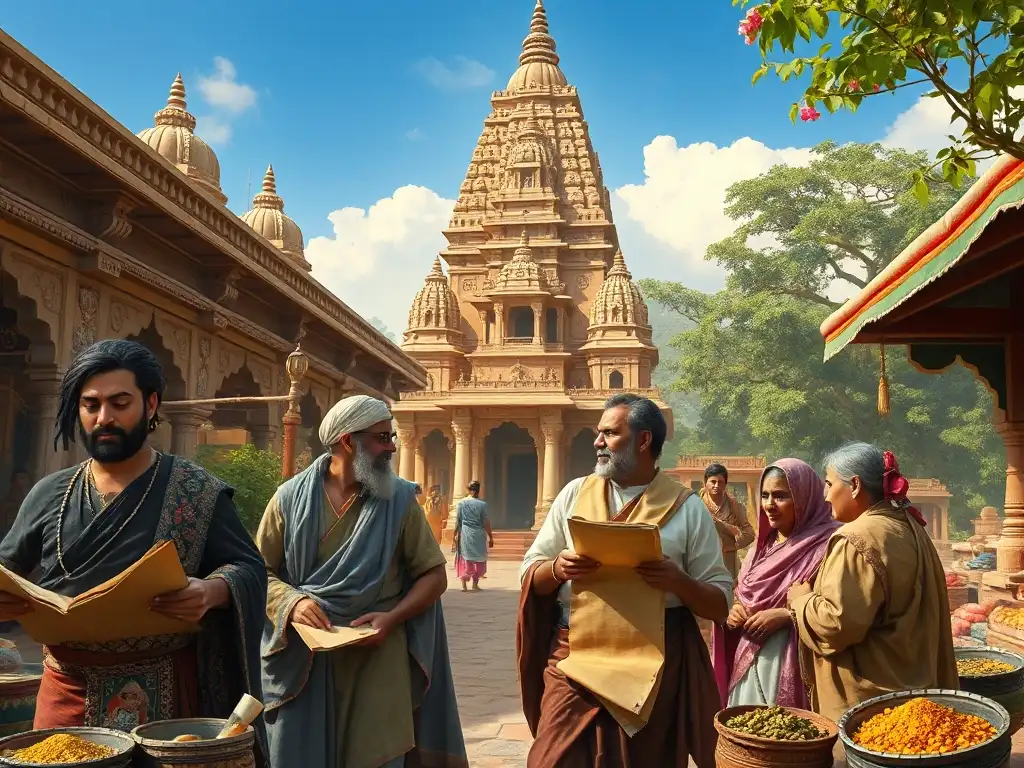
The Gupta Empire, often referred to as the Golden Age of India, was a period marked by remarkable advancements in various fields, particularly in science and technology. This era saw a flourishing of intellectual pursuit and a dedication to scholarly activities that laid the groundwork for future innovations. The Gupta scholars contributed significantly to mathematics, astronomy, medicine, and metallurgy, establishing a legacy that would resonate through the ages.
The Gupta Empire's emphasis on education and learning was instrumental in fostering an environment conducive to scientific inquiry. Universities like Nalanda became hubs of knowledge, attracting scholars from different parts of the world. This intellectual climate encouraged experimentation and observation, leading to groundbreaking discoveries that not only enriched Indian civilization but also influenced global scientific thought.
Mathematics: The Birth of Zero and Decimal System
One of the most significant contributions of the Gupta Empire to mathematics is the invention of the concept of zero and the development of the decimal system. The mathematician Aryabhata, who lived during this period, is often credited with this revolutionary idea. His work, "Aryabhatiya," elaborated on mathematical concepts, including arithmetic operations, algebra, and geometry, and introduced the numeral zero as a placeholder, which transformed mathematical calculations.
The adoption of the decimal system facilitated easier computation and significantly influenced mathematical practices worldwide. The Gupta mathematicians' work laid the foundation for modern mathematics, enabling future generations to engage in more complex calculations and scientific analyses. The spread of these mathematical concepts beyond India would later play a crucial role in the development of mathematics in various cultures, including the Islamic Golden Age and ultimately Europe.
Astronomy: Gupta Contributions to Celestial Studies
In the realm of astronomy, the Gupta Empire made remarkable strides that advanced the understanding of celestial phenomena. Aryabhata's astronomical theories, presented in his works, included calculations of the Earth's circumference, the concept of planetary orbits, and the explanation of eclipses. His heliocentric model, which suggested that the Earth rotates on its axis, was a groundbreaking concept that challenged contemporary views.
The Gupta astronomers employed sophisticated observational techniques and instruments, which allowed them to chart the movements of celestial bodies with remarkable accuracy. Their contributions not only enriched Indian astronomy but also laid the groundwork for future astronomical studies in the Islamic world and beyond. This emphasis on empirical observation and mathematical precision distinguished Gupta astronomy and showcased its enduring significance.
The Influence of Gupta Culture on Subsequent Civilizations
The cultural contributions of the Gupta Empire extended far beyond its temporal limits, influencing subsequent civilizations in profound ways. The advancements in arts, literature, and philosophy during this period set a benchmark for cultural achievements that would echo through history. The Gupta period's commitment to education, artistic expression, and scientific inquiry established a cultural framework that would shape the Indian subcontinent and beyond.
Lasting Impact on Indian Society and Culture
The Gupta Empire's cultural contributions left an indelible mark on Indian society. The flourishing of literature, epitomized by the works of Kalidasa, promoted the use of Sanskrit and enriched Indian literature with themes of beauty, love, and morality. The Gupta period also witnessed advancements in sculpture and architecture, with the construction of intricately carved temples and stupas that reflected the era's artistic sensibilities.
Moreover, the Gupta emphasis on education and knowledge dissemination cultivated a scholarly tradition that inspired future generations. The establishment of educational institutions ensured that the values of learning and intellectual pursuit remained integral to Indian culture. This legacy of cultural richness and intellectual vigor continued to influence Indian society for centuries, shaping its philosophy, art, and ethical frameworks.
Global Influence and Legacy of Gupta Innovations
The innovations and cultural achievements of the Gupta Empire had far-reaching implications beyond the Indian subcontinent. As trade routes expanded, ideas and knowledge traveled, leading to the diffusion of Gupta advancements across Asia and into the Islamic world. The mathematical concepts introduced by Gupta scholars, particularly the numeral system and the concept of zero, were adopted and adapted by various cultures, fundamentally altering their mathematical practices.
Furthermore, the Gupta contributions to astronomy and medicine also found their way into the global scholarly discourse. The synthesis of Indian knowledge with that of other cultures played a pivotal role in the development of scientific thought in different regions, particularly during the Renaissance in Europe. The legacy of the Gupta Empire, thus, is not merely a historical narrative but a testament to how cultural contributions can transcend borders and time, shaping civilizations across the globe.
Conclusion: The Enduring Legacy of the Gupta Empire
The Gupta Empire, often heralded as the Golden Age of Northern India, has left an indelible mark on the cultural landscape of the region. Its contributions to art, science, literature, and philosophy have not only enriched Indian civilization but have also influenced cultures far beyond its borders. The period from approximately 320 to 550 CE was characterized by significant advancements that laid the foundation for future generations. As we reflect on the achievements of the Gupta Empire, it becomes clear that its legacy continues to resonate, shaping the identity and heritage of contemporary India.
The flourishing of various disciplines during this era demonstrates the Gupta rulers' patronage of intellectual and artistic endeavors. From the exquisite sculptures of the period to the profound literary works, the Gupta Empire's cultural contributions are a testament to its vibrant society. Moreover, the emphasis on education and the establishment of renowned universities, such as Nalanda, fostered an environment where knowledge thrived and scholars from diverse backgrounds came together, further enhancing the empire's intellectual legacy.
Summarizing the Gupta Empire's Cultural Contributions
The Gupta Empire's cultural contributions are multifaceted, encompassing a wide array of achievements in various fields. Key highlights include:
- Art and Architecture: The Gupta period is marked by the creation of stunning sculptures, intricate carvings, and monumental temples. Notable examples include the rock-cut caves of Ajanta and Ellora, which feature elaborate frescoes and sculptures that depict religious narratives and everyday life. The architectural style of the period also laid the groundwork for later developments in Indian temple architecture.
- Literature: This era produced some of the most significant literary works in Indian history. Kalidasa's plays and poetry, particularly "Shakuntala," are celebrated for their poetic beauty and depth of emotion. Additionally, the Puranas were compiled during this time, preserving ancient myths, legends, and cosmology.
- Mathematics and Science: The Gupta period is renowned for its advancements in mathematics, notably the concept of zero and the decimal system, attributed to mathematicians like Aryabhata. Furthermore, advancements in astronomy and medicine, including the work of physicians like Sushruta and Charaka, laid the groundwork for future scientific inquiry.
- Philosophy and Religion: The Gupta Empire was a time of philosophical exploration, where Hinduism and Buddhism coexisted and flourished. The synthesis of various philosophical ideas contributed to the rich tapestry of Indian thought, influencing spiritual practices and ethical frameworks.
These contributions highlight the Gupta Empire's role as a cultural beacon that illuminated the paths of knowledge and creativity, influencing not only India but also the broader world.
Reflection on the Gupta Empire's Role in Shaping Northern India’s History
The Gupta Empire played a pivotal role in shaping the historical trajectory of Northern India. Its era marked a significant consolidation of power, leading to a sense of stability and prosperity that allowed for cultural and intellectual pursuits to thrive. This period is often viewed as a turning point, where the foundations of Indian civilization were not only preserved but also enhanced.
The political unity established by the Gupta rulers fostered trade and communication across regions, facilitating the exchange of ideas, goods, and cultural practices. This interconnectedness enriched the diverse tapestry of Northern Indian society and promoted a sense of shared identity among its inhabitants. Moreover, the Gupta Empire's commitment to education and the arts laid the groundwork for future empires and dynasties that followed, influencing their governance and cultural policies.
The Gupta Empire's legacy is evident in the enduring cultural contributions it made, which continue to influence contemporary Indian society. Its role in shaping Northern India's history underscores the importance of this remarkable period, reminding us that the achievements of the past serve as a foundation for the future. The Gupta Empire's cultural contributions are not merely historical artifacts; they are living elements of a rich heritage that continues to inspire and inform the identity of India today.
- Introduction to the Gupta Empire
- The Rise of the Gupta Empire
- The Golden Age of the Gupta Empire
- Gupta Empire Cultural Contributions
- Scientific and Technological Innovations
- The Influence of Gupta Culture on Subsequent Civilizations
- Conclusion: The Enduring Legacy of the Gupta Empire
Frequently Asked Questions
What were the key cultural contributions of the Gupta Empire?
The Gupta Empire is renowned for its advancements in arts, literature, and science, marking a period often referred to as the Golden Age of India.
How did the Gupta Empire influence arts and literature?
The era saw the emergence of classical Sanskrit literature and notable works like Kalidasa's poetry, which greatly influenced subsequent Indian literature and drama.
What scientific advancements occurred during the Gupta Empire?
The Gupta scholars made significant strides in mathematics, such as the concept of zero, and advancements in astronomy, including the calculation of planetary movements.
How did religion play a role in Gupta cultural contributions?
The Gupta period was marked by a harmonious blend of Hinduism and Buddhism, leading to the creation of magnificent temples and sculptures that reflected spiritual themes.
Why is the Gupta Empire considered a Golden Age?
The term Golden Age refers to the period's remarkable cultural flourishing, where significant developments in art, science, and philosophy established lasting legacies in Indian history.
Final Reflection: Embracing the Legacy of the Gupta Empire's Cultural Contributions
The Gupta Empire stands as a beacon of cultural flourishing and intellectual advancement, a testament to the heights that human creativity can achieve. Today, as we navigate an increasingly interconnected world, the lessons from this golden age resonate more than ever. The Gupta period reminds us of the power of cultural contributions in shaping societies, fostering innovation, and bridging divides. The echoes of this era are not just historical footnotes; they are vital reminders that our cultural heritage can inspire progress and unity in our contemporary lives.
The influence of the Gupta Empire is deeply woven into the fabric of modern culture, from mathematics and astronomy to art and literature. As we reflect on the profound impact of this era, we recognize that its contributions continue to inspire and inform our understanding of the world. The advancements made during this time laid the groundwork for future generations, showcasing the importance of nurturing creativity and knowledge. The greatest gift of the Gupta Empire was not merely its achievements but the spirit of inquiry and exploration it instilled in its people.
This spirit is a call to action for us today, urging us to cultivate our own intellectual pursuits and cultural expressions.
As we conclude our exploration of the Gupta Empire, I invite you to reflect on how you can embrace the lessons of this remarkable period in your own life. Consider how you can contribute to the cultural tapestry of your community, whether through art, education, or innovation. Let the legacy of the Gupta Empire inspire you to seek knowledge, celebrate diversity, and foster creativity in all its forms. Together, we can honor the past while shaping a vibrant future that echoes the brilliance of this golden age.
Embrace the Legacy of the Gupta Empire!
Thank you for diving into the fascinating world of the Gupta Empire with us! You've uncovered the rich tapestry of culture, art, and innovation that defined this golden age of Northern India. Now, it’s time to bring this knowledge to life and explore the impact of this era further!
Here are some exciting steps you can take next:
- Join a discussion group focused on ancient civilizations to share insights and hear diverse perspectives on the Gupta Empire's enduring legacy.
- Visit a local museum or explore online exhibits dedicated to Gupta art and culture to appreciate the beauty and sophistication of this remarkable era.
- Challenge yourself to read a book or watch a documentary about another ancient civilization, drawing meaningful comparisons with the achievements of the Gupta Empire.
What aspect of the Gupta Empire resonates most with you, and how do you think it influences our understanding of cultural progress today?